What Is Gion in Kyoto, And Where Does It Start And End Along Shijo Street?
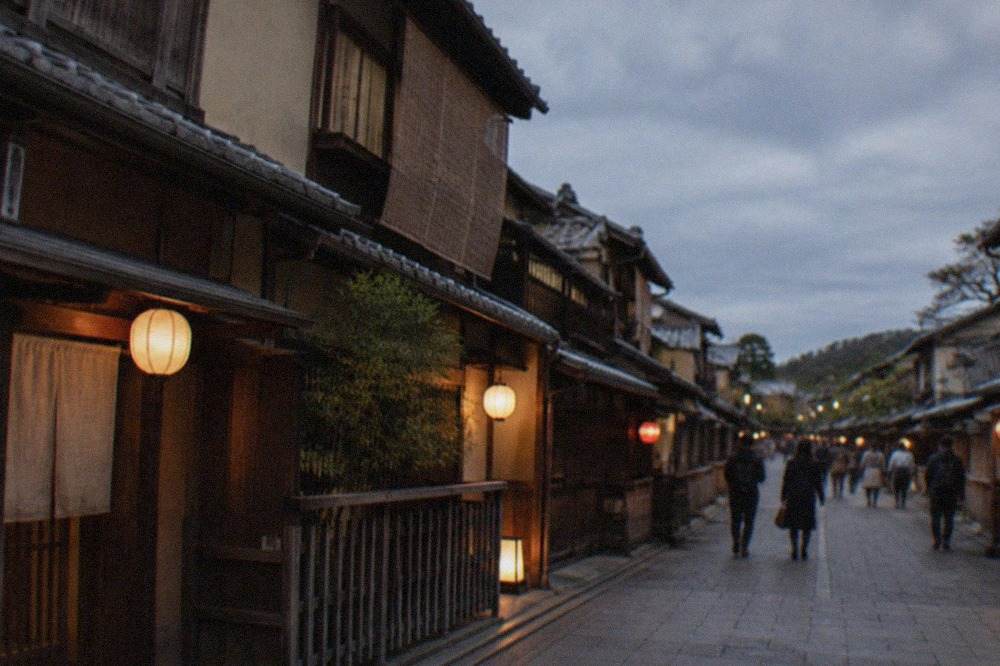
Gion is Kyoto's best-known entertainment district, and its spine is Shijo Street, running from the Kamo River in the west up to Yasaka Shrine at the eastern end. Everything people picture when they picture Kyoto, wooden teahouses, lantern-lit alleys, the chance of glimpsing a geiko, sits inside a few compact blocks either side of that street.
Short answer
Gion is Kyoto's historic geisha and entertainment district on the east bank of the Kamo River. Its working core runs along Shijo Street from Kawabata-dori at the river to the gate of Yasaka Shrine, with Hanamikoji Street cutting south through the middle. The wider Gion area stretches from the river to Higashiyama-ku's temple slopes.
Gion began in the Middle Ages as a settlement serving pilgrims on the road to Yasaka Shrine, then called Gion Shrine, and that origin still shapes its geography. The district is not a single street but a grid of lanes between the Kamo River and the eastern hills, and its fortunes have always been tied to the shrine at its top end. The city's 2025 tourism survey, released 12 June 2026, recorded a record 62.79 million visitors to Kyoto across the year, and a large share of them walk through this grid. This page, from the editorial desk at Kyoto Travel Guide, sets out what Gion actually is, where it starts and stops, and how to spend an evening here without stepping on the wrong alley.
What Is Gion, And Where Does It Start And End Along Shijo Street?
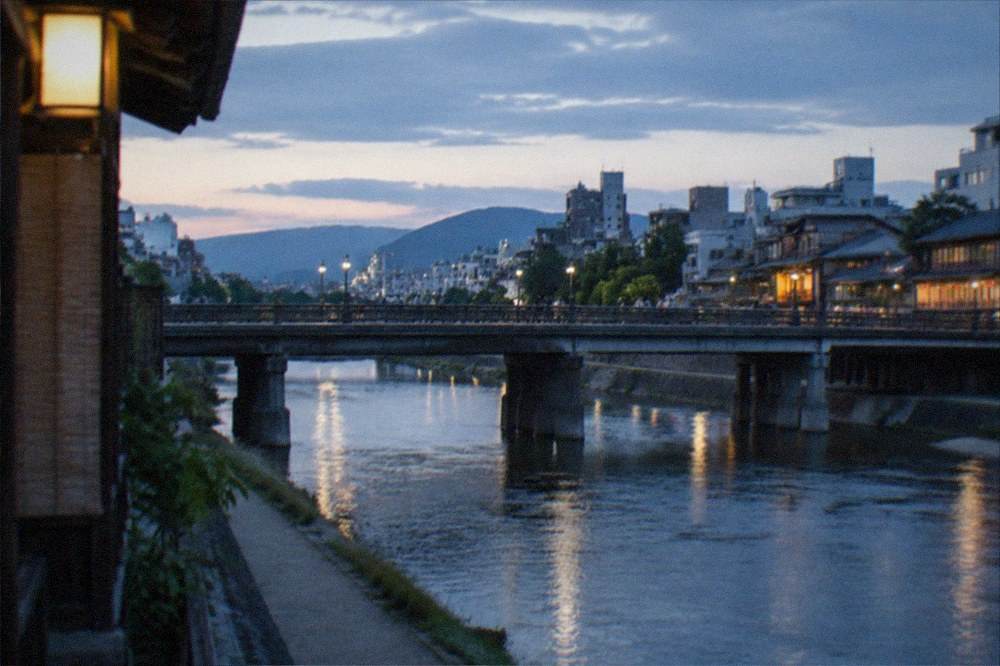
Gion is Kyoto's historic geisha and entertainment district, sitting on the east bank of the Kamo River. Its spine is Shijo Street, which starts at Kawabata-dori on the river and climbs east to end at the gate of Yasaka Shrine. The teahouse lanes, above all Hanamikoji Street, run south of Shijo between the river and the Higashiyama temple slopes, and that rectangle is what most people mean when they say Gion.
The boundaries matter more than they first appear, because the name gets stretched across half of eastern Kyoto. Strictly, Gion is the entertainment district that grew along the old shrine approach road, today's Shijo Street, and its licensed quarters were formalised in the Edo period. Walk west along Shijo from Yasaka Shrine and you cross Hanamikoji, then Yamatooji-dori, then reach the Kamo River at Shijo Bridge in about ten minutes at a normal pace. North of Shijo, the district shades into the bars and restaurants around Shirakawa and Shinmonzen; south of Hanamikoji it runs down toward Kawabata-dori and the Gion Shinmonzen area.
What you should not do is treat Gion and Higashiyama as one place. The temple district of Higashiyama, with Kiyomizu-dera's slopes and the Ninenzaka and Sannenzaka lanes, lies south and east of Gion proper, across Yamatooji-dori. Our Higashiyama area guide covers that side. Gion is smaller, denser and flatter, and it is about evening rather than temple hours. If you are planning a first day in the city, the one-day Kyoto itinerary pairs the two districts back to back, Gion after dark.
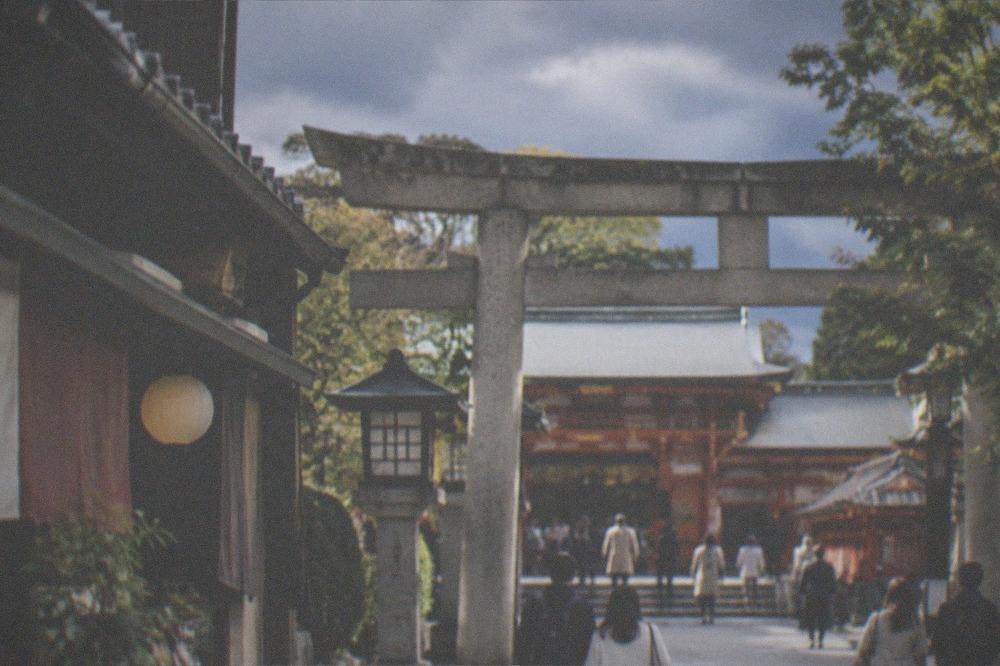
The name itself comes from Gion Shrine, the older name of Yasaka Shrine, which still anchors the district's eastern end. The shrine's summer festival, Gion Matsuri, takes over Shijo Street every July, and its floats are built and displayed in the lanes just north of Shijo throughout the month.
Where Do Geiko And Maiko Actually Live And Work In Gion?
Gion is one of five geisha districts still operating in Kyoto, and it is the largest. The performers here are geiko, the Kyoto term for what Tokyo calls geisha, and maiko, their apprentice stage, typically teenagers in their first years of training. They live and work in okiya, the houses that train them, and entertain at ochaya, the teahouses where banquets are held, most of them concentrated in the lanes off Hanamikoji.
The system is older and more commercial than most visitors realise. An ochaya bills the client monthly through an established relationship; a first-time guest must be introduced by an existing patron, which is why the banquets are not something a traveller can simply book into. The entertainers are professionals performing music, dance and conversation, and the district's calendar runs around ozashiki, the banquets, plus public stage performances. The dance recitals held in spring are the one moment each year when the art is on open sale to anyone with a ticket.
Kyoto's five districts, called hanamachi, are Gion Kobu, the largest and most prestigious, plus Gion Higashi, Pontocho, Kamishichiken and Miyagawacho. Each is independent, with its own registry, its own crest and its own performance calendar.
| District | Location | Character |
|---|---|---|
| Gion Kobu | Lanes south of Shijo, around Hanamikoji | The largest district; the ochaya teahouse core of what visitors call Gion |
| Gion Higashi | East side, near Yasaka Shrine | Smaller sister district, shared origin with Gion Kobu |
| Pontocho | Narrow lane along the Kamo River | Dining and entertainment alley, its own registry |
| Kamishichiken | North of Nijo, near Kitano Tenmangu | Kyoto's oldest district, near the Nishijin weaving quarter |
| Miyagawacho | South of Kamo River, near Gojo | District with a theatre tradition |
The distinction between geiko and maiko is worth learning before you visit, because the two look different and the difference is easy to spot. A maiko wears an elaborate kimono with a long hanging obi, tall wooden sandals and her own hair dressed with ornaments; a geiko wears a plainer kimono, a compact knot obi and a wig. Maiko are trainees, geiko are the finished professionals. The geisha in Kyoto guide covers the training pipeline in detail.
The city's own conduct guidance, published by the Kyoto City Tourism Association, asks visitors not to touch, chase or photograph geiko and maiko without permission. That is the whole of the official rule at city level, and it is a rule about behaviour rather than money. The lanes where they work are narrow, the evening rush to banquets happens between about 17:30 and 19:00, and a person running in geta sandals down a stone alley while being followed by cameras is exactly what the guidance exists to prevent.
A guided walk is the honest way to learn the system, because the guides explain the architecture and the history while keeping you off the private lanes. The Magical Gion Night Walk runs 1 hour 40 minutes, is rated 4.9 from 4,616 reviews, and covers geisha culture with a local guide; the Gion night walking tour page has the details, or Check availability for current departures.
What Are The Photography Rules In Gion's Private Alleys?
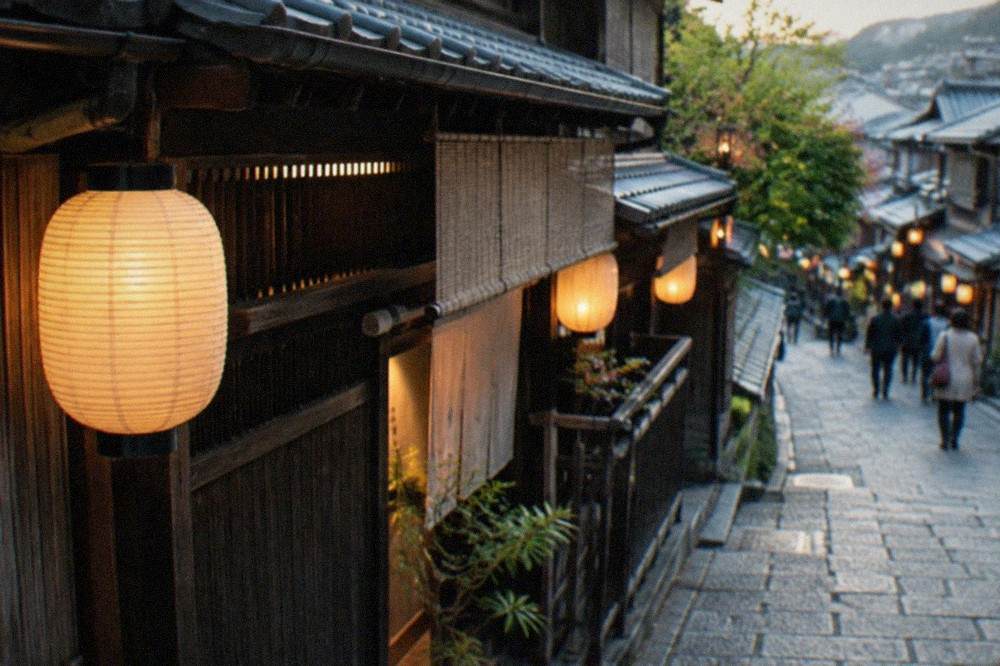
On the private alleys off Hanamikoji, signs posted by the Gion South Side district council threaten a 10,000 yen penalty for unauthorised photography or entry. Hanamikoji's main street is a public road and photography there is not restricted by those signs. The city-level guidance from the Kyoto City Tourism Association asks visitors not to photograph geiko and maiko without permission and not to enter or photograph private property where prohibited.
The distinction between the public street and the private alleys is the entire point, and it is where most visitors get it wrong. Hanamikoji-dori itself, the famous lane lined with ochaya fronts, is a public road. The narrow alleys running off its east side between Shijo-dori and Kennin-ji, places like Kosode-koji, are private roads owned by the district's residents and businesses, and the council there put up the signage. The penalty is threatened on those signs, put up by the district council, and it is not a municipal fine issued by the city or police. Write that on your hand if you need to: the signs belong to the district, not the city.
The practical version is simple. Photograph the buildings and the lanterns on the public street all you like. Do not walk down the private alleys even without a camera, because entry itself is what the signs restrict. Do not photograph a geiko or maiko without her permission, and never chase one for a shot. The city's four guidelines, published in English by the tourism association, spell out the conduct expectations, and they are about respect rather than enforcement.
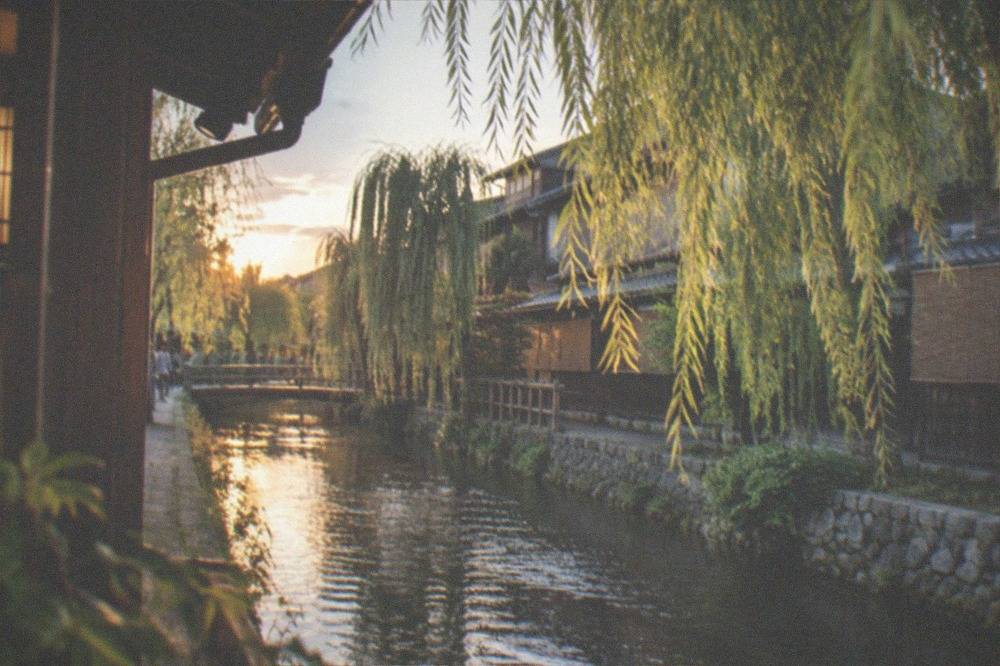
What you can photograph freely is the district itself. The Shirakawa canal section at the north of Gion, with its willows and surviving machiya fronts, is a public street and one of the most photographed corners of Kyoto. Kennin-ji, the Zen temple at the district's southern edge, is open to visitors for an admission fee and its screens and gardens are the district's oldest sight. The Kyoto etiquette guide covers the wider rules for temples and shrines across the city.
For visitors who want the evening explained rather than just photographed, a guided walk keeps you on the right streets. The Gion Geisha District & Hidden Gems Walking Tour, rated 4.8 from 4,599 reviews over 2 hours, is a strong option.
The guided format earns its keep precisely in this section of the district, because the guides know which alleys are public and which are not, and that knowledge is the difference between a respectful walk and a mistake. For anyone weighing the two evening options, the Magical Gion Night Walk is the higher-rated and shorter of the pair, and it keeps its groups to the public lanes throughout.
When Is The Best Time To Walk Hanamikoji Street?
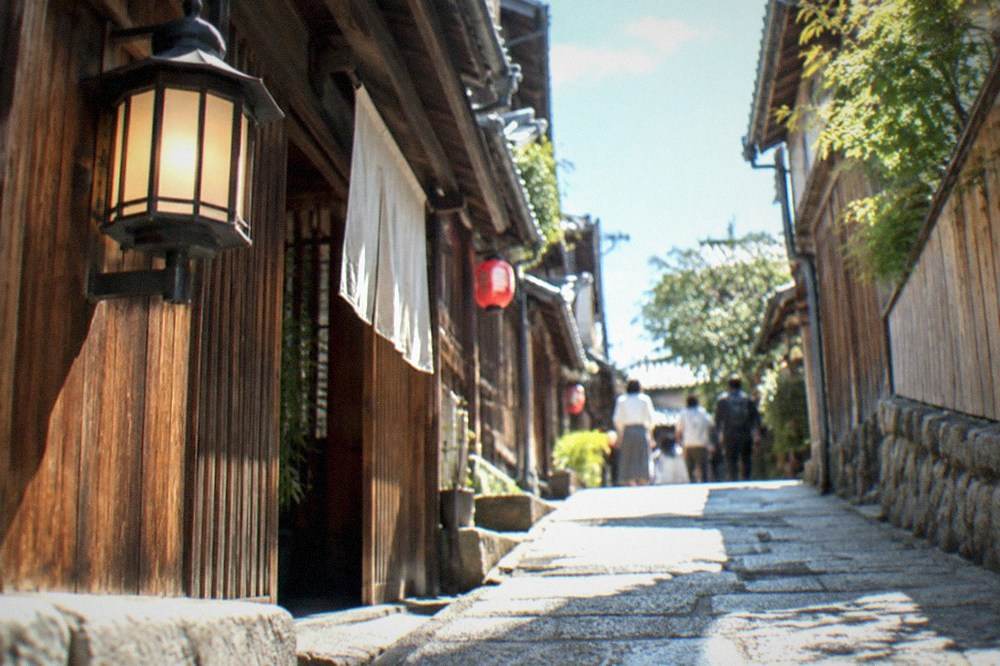
There is no single best hour with a number attached, because no source publishes one, but the district's rhythm is predictable: the teahouses light their lanterns from late afternoon, the geiko and maiko travel to banquets between about 17:30 and 19:00, and the lanes stay busy into the night. Early morning is the quiet alternative, with the lanes nearly empty and the lanterns unlit.
The honest framing is that Gion's crowd problem is real but measurable rather than vague. The city's 2025 tourism survey, released 12 June 2026, counted 62.79 million visitors across the year, up from 56.06 million in 2024, with 46.20 million of them day visitors. Overnight guests reached a record 16.59 million, and tourism spending a record 2.0474 trillion yen. Satisfaction ran above 90% for both Japanese and foreign visitors, yet about half of Japanese visitors reported something disappointing about their trip against about 20% of foreign visitors, which tells you the crowding is felt more by residents and repeat domestic visitors than by first-time foreign guests.
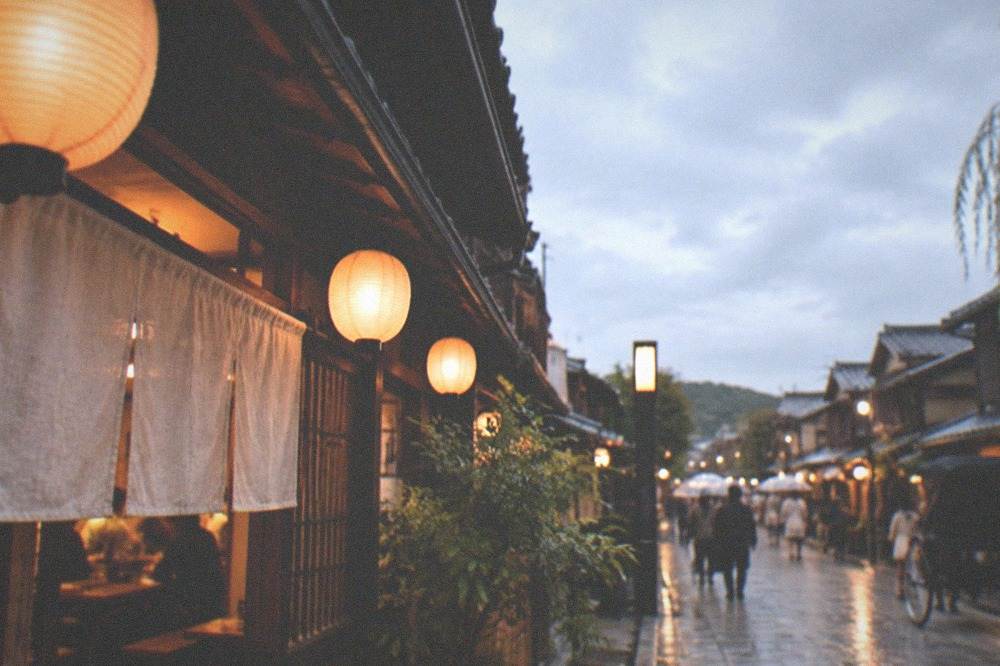
What that means for timing is a choice between two different experiences. Evening is when Gion performs its function: lanterns lit, restaurants full, the possibility, never a promise, of seeing a maiko on her way to a banquet. Morning is when Gion is a piece of architecture: the machiya fronts, the canal at Shirakawa, Kennin-ji's opening hour, all nearly empty. The shrine at the top of Shijo is open around the clock, and its gate makes a good morning anchor. The Kyoto crowds guide applies the city's own comfort forecast tool to the whole city, and the shrine links to that forecast from its own site.
Season matters as much as hour. The best time to visit Kyoto question has a climate answer: July, not June, is Kyoto's wettest month in the JMA 1991-2020 normals, with 223.6 mm against June's 199.7 mm, and August is the hottest, with a mean daily maximum of 33.7 C. Cherry blossom in Gion, along the Shirakawa canal especially, peaked on 30 March in 2026 against a normal full-bloom date of 4 April, per the JMA observatory. July brings Gion Matsuri, which transforms Shijo Street entirely for a month.
| Time | What Gion looks like | Who it suits |
|---|---|---|
| 6:00-9:00 | Lanes empty, lanterns unlit, shrine quiet | Photographers, temple visitors |
| 10:00-16:00 | Shops and Kennin-ji open, steady foot traffic | Casual sightseeing, shopping |
| 17:00-20:00 | Lanterns lit, restaurants opening, banquet travel begins | Evening walkers, diners |
| 20:00-23:00 | Dining and bar hours, quieter lanes | Nightlife, Pontocho Alley |
What Does It Cost To Visit Gion?
Walking Gion itself costs nothing: the streets, the shrine and the riverbank are free. The paid items are optional and few. Kennin-ji charges admission, a guided walking tour runs from about 20 to 30 US dollars depending on the operator, and dinner in the district ranges from a few thousand yen at a standing bar to well above 30,000 yen at a top kaiseki house, with Hyotei's own menu showing kaiseki from 31,625 yen at lunch.
The fee picture is genuinely lopsided, because the district's main attractions are its streets and those are public. The paid layer sits on top. Kennin-ji, the Zen temple at the district's southern edge, charges admission set by the temple itself. A licensed guided walk, discussed below, is the most common paid item visitors choose. Beyond that, the money goes to food and drink.
| Item | Cost | Notes |
|---|---|---|
| Walking the streets, shrine, riverbank | Free | Public space, no ticket |
| Kennin-ji temple | Admission set by the temple | Check the temple's own notice for the current fee |
| Guided Gion evening walk | from about $22 per person | Magical Gion Night Walk, 1h 40m, rated 4.9 |
| Gion geisha walk, 2 hours | from about $23 per person | Hidden Gems tour, rated 4.8 |
| Chopsticks making class in Gion | from $6 per person | 1 hour, rated 4.9 from 4,252 reviews |
| Kaiseki, top house | from 31,625 yen at lunch | Hyotei's own menu, tax and service included |
| Casual dinner | a few thousand yen | Izakaya and standing-bar range |
The kaiseki figure deserves its caveat, because it is one restaurant's published price, not a Kyoto norm. Hyotei, by Nanzen-ji, prints kaiseki from 31,625 yen at lunch and 37,950 yen at dinner on its own site, tax and service included, while the same house's annex serves asa-gayu porridge at 5,445 yen and a bento at 7,260 yen. Those are Hyotei's prices for its own rooms and dates, and they show the honest spread: the top tier of Kyoto dining sits above 30,000 yen, while the same kitchen's casual annex sits near 6,000. The kaiseki in Kyoto guide covers the mid-range.
For a cheap and excellent hour in Gion, the chopsticks making class is the best value in the district: from 6 US dollars per person, one hour, rated 4.9 from 4,252 reviews, with an engraving option.
How Do You Get To Gion?
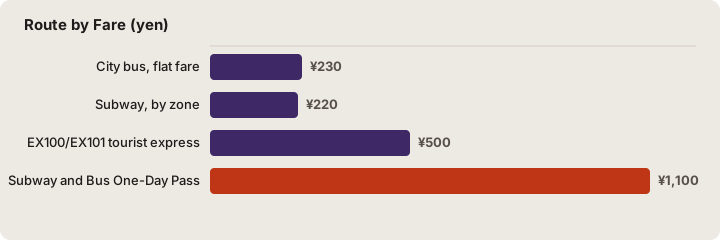
The nearest stations are Gion-Shijo on the Keihan line, on the river at the west end of the district, and Kawaramachi or Karasuma on the Hankyu line, a short walk north of Shijo. From Kyoto Station, the Karasuma subway line to Karasuma Oike with a transfer, or the EX100 tourist express bus direct to Gion, are the main options. A single city bus ride is a flat 230 yen and the Subway and Bus One-Day Pass costs 1,100 yen.
The transport facts are stable and verified. The Kyoto City Bus flat fare is 230 yen for adults and 120 yen for children aged 6 to 11. The subway runs 220 to 360 yen by zone. The one-day product is the Subway and Bus One-Day Pass at 1,100 yen for adults and 550 yen for children; the old bus-only pass was abolished, with sales ending in September 2023 and the last day of use 31 March 2024, so any guide still recommending it is out of date. The EX100 and EX101 tourist express buses, run by the city to spread visitors off the crowded ordinary routes, charge 500 yen for adults and 250 for children, and the EX100 runs from Kyoto Station past Gojo-zaka, Gion and Okazaki to Ginkaku-ji.
From Kansai Airport, the JR West HARUKA One-way Ticket for foreign visitors costs 2,200 yen to Kyoto. Once you are in the city, Gion is walkable from downtown: downtown Kawaramachi sits immediately north across Shijo, and the whole rectangle from the river to the shrine takes fifteen minutes end to end.
| Route | Fare | Time |
|---|---|---|
| City bus, flat fare | 230 yen adult / 120 yen child | varies by route |
| Subway, by zone | 220-360 yen adult | Karasuma line from Kyoto Station |
| EX100/EX101 tourist express | 500 yen adult / 250 yen child | Kyoto Station direct to Gion |
| Subway and Bus One-Day Pass | 1,100 yen adult / 550 yen child | unlimited, one day |
| Keihan, Gion-Shijo from Kyoto Station area | by zone | short hop from the river side |
One warning that comes from the city itself: large luggage may be refused on crowded buses, and the city actively promotes hands-free travel, with station counters and delivery services listed on its tourism site. Plan around it if you are checking out and sightseeing on your last day.
Where Do You Eat Around Gion?
Gion's own food runs from standing bars to kaiseki, and the district's western edge blends into the Kawaramachi dining belt. The classic Gion experience is an izakaya or a kaiseki counter on a machiya lane; the budget end clusters near the river, and the night bar culture spills down toward Pontocho Alley. Nishiki Market, the covered food street, is a fifteen-minute walk northwest.
The honest way to eat Gion is to match the format to the budget. The top of the market is the kaiseki house, and Hyotei's published menu, described above, anchors what that means in yen. The middle is small izakaya and obanzai, Kyoto's home-style cooking, at a few thousand yen per person. The budget end is the standing bars and the food floors of the department stores along Teramachi Street. The Kyoto street food guide covers the snacking layer, and Nishiki Market's own rule, printed by the market association, is that you eat at the stall rather than while walking.
For an evening that combines the eating with the district, two guided options stand out. The Nishiki Market brunch walking tour, 3 hours with 7 tastings plus brunch, rated 4.9 from 1,497 reviews, starts the day on the food side. The Kawaramachi local bar and izakaya crawl, 3 hours from $37, rated 4.9 from 1,042 reviews, runs the evening side and starts a few minutes' walk north of Shijo.
Where Should You Stay In Gion Or Nearby?
Gion itself has a limited hotel stock, much of it high-end, because the district is protected and low-rise. The practical choices are a ryokan or boutique hotel inside Gion for atmosphere, the Kawaramachi and Kyoto Station areas for range and price, and the Higashiyama slopes for temple-side quiet. The accommodation tax changed on 1 March 2026, and a room rate between 20,000 and 50,000 yen now carries 1,000 yen per person per night, up from 500.
The tax change is the number most guides still get wrong. Kyoto's accommodation tax moved to five tiers on 1 March 2026: rooms under 6,000 yen carry 200 yen per person per night, 6,000 to under 20,000 carry 400, 20,000 to under 50,000 carry 1,000, 50,000 to under 100,000 carry 4,000, and 100,000 yen and up carry 10,000. The tax base is the room-only charge excluding meals and consumption tax.
| Area | Character | Best for |
|---|---|---|
| Gion proper | Low-rise, protected, high-end ryokan and boutique | Atmosphere, walking home through the lanes |
| Higashiyama slopes | Temple-side, hilly, guesthouses to luxury | Quiet mornings, Kiyomizu-dera proximity |
| Downtown Kawaramachi | Dining and shopping belt, widest price range | Value and nightlife |
| Kyoto Station area | Transport hub, business hotels | Arrivals, day trips |
The where to stay in Kyoto guide covers the full range of neighbourhoods and price bands, and the downtown or Gion answer directly compares the two most common first-visit choices. For the traditional format, a Kyoto ryokan explanation of what a rate includes and what it does not is worth reading before you book.
What Should You Not Do In Gion?
The short list: do not enter the private alleys off Hanamikoji, do not photograph geiko or maiko without permission, do not touch or chase them, and do not treat the district as a theme park. The signs on the private alleys threaten a 10,000 yen penalty posted by the district council, and the city's own guidance asks for respectful conduct rather than promising enforcement. Everything else, walking the public streets, visiting the shrine, eating and drinking, is straightforward.
The fuller answer is about understanding what Gion is. It is a working entertainment district and a residential neighbourhood, not a stage set. The machiya are businesses and homes. The people in kimono moving through the lanes in the early evening are professionals going to work, and the residents have organised, through their district council, to protect their private roads from tour-group traffic. The city's 2025 survey recorded 62.79 million visitors in a single year, and the measures Kyoto has taken, tourist express buses, luggage delivery, dispersal campaigns, all exist because the pressure is real and measured rather than imagined.
Practical etiquette beyond the alleys: take your shoes off where asked, keep your voice down in the lanes at night, and queue properly for the small restaurants. Temple and shrine conduct citywide, including the photography permissions some shrines require for rites, follows the same logic of asking before doing.
Is Gion Worth Visiting, And How Does It Compare With The Rest Of Kyoto?
Gion is worth an evening of any Kyoto trip, and for most first-time visitors it is the district they remember, but it is one neighbourhood among many. The honest comparison: Gion gives you the geisha district and the lantern lanes, Higashiyama gives you the temples, Pontocho gives you the river dining, and downtown Kawaramachi gives you the shopping and the nightlife spine. A first visit should walk Gion after dark and see the temples elsewhere.
The question we get most often, is Gion in Kyoto worth visiting, has a measurable answer in the satisfaction data: above 90% of both Japanese and foreign visitors to Kyoto in 2025 reported being satisfied with their trip, with a repeat rate of about 60% for Japanese visitors and about 20% for foreign. The disappointment gap, about half of Japanese visitors reporting something disappointing against about 20% of foreign visitors, suggests the crowding bothers repeat domestic visitors more than first-timers, which is an argument for going early or late rather than skipping the district.
For planning the rest of the trip, the things to do in Kyoto page is the full index, and the evening and calendar layers, from bar culture to the festival year, extend naturally from a Gion evening. If July brings you here, Gion Matsuri runs the whole month, with the Yamaboko Junko processions on 17 and 24 July and the shrine's mikoshi processions tied to those dates.
Common Questions About Gion
What Is Gion, And Where Does It Start And End Along Shijo Street?
Gion is Kyoto's historic geisha and entertainment district east of the Kamo River. Along Shijo Street it starts at Kawabata-dori by the river and ends at the gate of Yasaka Shrine, with the teahouse lanes, above all Hanamikoji, running south of Shijo in between.
Can You See Geisha In Gion?
You may see geiko or maiko travelling to evening banquets, typically between about 17:30 and 19:00, but there is no guarantee and no viewing spot that ensures it. The city's guidance asks visitors not to touch, chase or photograph them without permission. The reliable way to see the art is a public stage performance or dance recital, which are ticketed events.
Is Photography Banned In Gion?
Photography is not banned in Gion as a whole. Hanamikoji's main street is public and unrestricted. On the private alleys off Hanamikoji, signs posted by the Gion South Side district council threaten a 10,000 yen penalty for unauthorised photography or entry. The city's tourism association separately asks visitors not to photograph geiko and maiko without permission.
How Much Time Do You Need In Gion?
An evening walk from Shijo Bridge to Yasaka Shrine and back through Hanamikoji takes about an hour at a relaxed pace. Add time for Kennin-ji, dinner, or a guided walk; the standard guided evening tours run about two hours, and the Magical Gion Night Walk runs 1 hour 40 minutes.
What Is The Difference Between Gion And Gion Corner?
Gion Corner is a ticketed theatre venue in Yasaka Hall that presents condensed demonstrations of traditional arts, including tea ceremony, dance and flower arrangement, aimed at visitors. Gion itself is the working district described on this page. The two share a name but are different experiences.
Is Gion Open At Night?
The public streets are open at all hours, and the district's restaurants and bars run into the late evening. The shops close earlier, and Kennin-ji keeps daytime temple hours. Evening is when the lanterns are lit and the district is at its most atmospheric.
Gion rewards an evening and punishes a checklist. Walk Shijo from the river to the shrine, turn down Hanamikoji while the lanterns are lit, respect the private alleys and the people working in them, and you will have seen the district the way it actually functions, which is the only way worth seeing it.