Kyoto Etiquette For Visitors
Kyoto received a record 62.79 million visitors in 2025, and the city now publishes explicit conduct rules. Here is what official sources actually ask of you, from the Gion alleys to temple halls to the back of a city bus.
Short answer
The core of Kyoto etiquette is simple: photograph nothing in Gion's private alleys, never touch or chase geiko and maiko, follow the posted rules at temples and shrines, and keep eating, noise and luggage off the buses. The city's own guidance, not folklore, is the standard to follow.
Kyoto recorded 62.79 million visitors in 2025, a record, and 12.68 million of them were from outside Japan. The city's own June 2026 survey release tells you why etiquette stopped being a soft suggestion: satisfaction stays above 90 percent, but about half of Japanese visitors and a fifth of foreign visitors still report "something disappointing" about their trip. The response has been explicit, published rules rather than unspoken expectations. The Kyoto City Tourism Association now posts conduct guidelines for Gion, the Gion South Side district council has put penalty signs on its private alleys, and market and shrine authorities publish their own behaviour pages. This guide sets out what those official sources actually say, situation by situation, so you can spend your attention on the city rather than on second-guessing it. For the wider picture of what to see, start with our things to do in Kyoto overview.
What Is The Kyoto Akimahen List Of Tourist Don'ts?
The Akimahen list is Kyoto's published set of visitor don'ts, built around the word "akimahen", Kyoto dialect for "must not do". It gathers the behaviour rules the city and its districts actually enforce or ask for: no photography in Gion's private alleys, no touching or chasing geiko and maiko, no eating while walking in crowded market lanes, no luggage on packed buses, and respect for temple and shrine grounds. Each rule traces back to a specific authority, from the tourism association to the market's own association site.
Akimahen is not a single ordinance with a single penalty. It is better understood as a family of official asks, each owned by whoever owns the ground. The Gion rules come from the Kyoto City Tourism Association's "A Message from Southern Gionmachi" and from the district council's signage. The market rules come from the market's own association. The transport rules come from the city's transport bureau. The shrine rules come from the shrines themselves, and Kamigamo Shrine, for instance, requires advance permission to photograph rites and for any drone flight, on its own published terms.
That structure matters for you as a visitor. There is no single fine that covers everything, and most of the list is enforced by signage, social pressure and the occasional refusal of service rather than by police. The one place where money is named is the Gion private alleys, covered in the next section. Everywhere else, the honest summary is that Kyoto's authorities have asked in writing, in English, for specific behaviour, and that following the published rules is both the courteous and the reliable course.
The reason the list exists at all is scale. A city of about 1.4 million residents absorbed 62.79 million visitors in 2025, with 46.20 million of them day visitors moving through the same narrow lanes and the same buses. The city's response, published on its tourism pages, has been to spread people across time, season and location, and to make the ground rules legible. The Akimahen framing is the visitor-facing half of that effort.
Why Are The Gion Alleys Closed To Photographs?
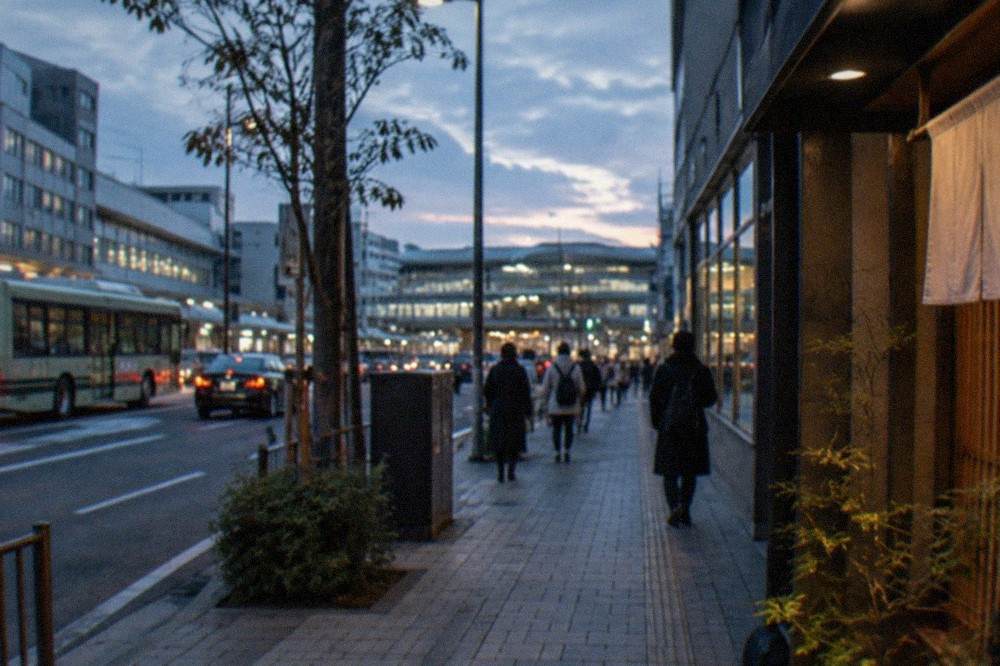
On the private alleys running off Hanamikoji-dori, signs put up by the Gion South Side district council threaten a 10,000 yen penalty for photography or entry. These are private roads, not public streets, and the ban is the council's signage, not a city ordinance. Hanamikoji's main street itself remains public and photography is allowed there. The city-level guidance adds conduct rules: do not touch, chase or photograph geiko and maiko without permission, and do not enter or photograph private property where prohibited.
The distinction between public and private ground is the entire point. Hanamikoji-dori, the broad street everyone photographs, is a public road and stays photographable. The narrow lanes off it, such as the alleys between Shijo-dori and Kennin-ji, are private roads maintained by the district, and the residents and tea houses behind them asked for the restrictions after years of intrusive behaviour. The 10,000 yen figure appears on the council's signs, and it should be attributed to those signs, not described as a municipal fine or a police matter.
The city's own guidance, published by the Kyoto City Tourism Association under "A Message from Southern Gionmachi", is about conduct rather than money. It asks visitors not to touch, chase or photograph geiko and maiko without permission, and not to enter private property or photograph it where that is prohibited. A geiko or maiko walking between engagements is a person commuting, not a performer appearing for the public, and the association's wording reflects that.
Two practical consequences follow. First, if a lane has a sign, the sign is the rule, and the penalty figure is printed on it. Second, the geisha districts are working neighbourhoods in the evening, and the respectful pattern is to enjoy the public streets, book a licensed performance or tea ceremony if you want an encounter, and leave the alleys alone. Our Kyoto neighborhoods guide covers the district and its culture in detail.
| Rule | Where it applies | Who set it | Consequence stated |
|---|---|---|---|
| No photography or entry | Private alleys off Hanamikoji-dori | Gion South Side district council signage | 10,000 yen penalty on the signs |
| No touching, chasing or unpermitted photos of geiko and maiko | All of Southern Gion | Kyoto City Tourism Association | Conduct guidance, no money figure |
| No entering or photographing private property where prohibited | All of Southern Gion | Kyoto City Tourism Association | Conduct guidance |
| Advance permission for photographing rites, and for any drone flight | Kamigamo Shrine grounds | Kamigamo Shrine | Permission requirement |
A guided walk is one way to see the district with the context and the boundaries built in. The Gion magical night walking tour keeps to the public streets while explaining what the private alleys are, and a calmer alternative is the free, tip-based Gion Legacy of Geishas walk on GuruWalk, where the guru leads the route and sets the tone for the group.
Either way, the evening ends better when the alleys stay quiet and the public streets carry the crowd.
How Should You Behave At Kyoto Temples And Shrines?
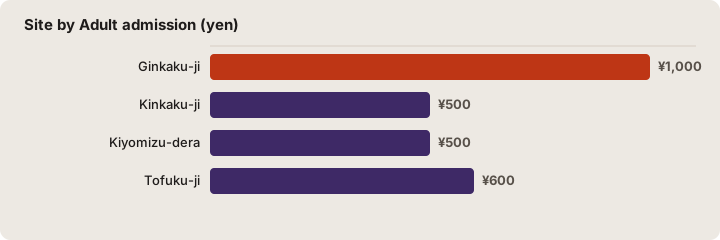
At temples, pay the admission where one is charged, follow any one-way route, and keep photography to the areas where it is allowed, with interiors and specific halls often off limits. At shrines, bow at the torii, purify hands and mouth at the water pavilion, and keep to the paths. Kyoto's major temples charge admission, two of them changed their fees in 2026, and the fee notice at the gate is the authoritative source for both the price and the implied contract of respectful entry.
The admission fees are worth knowing precisely because a fee copied from an older guide can be wrong. Ginkaku-ji doubled its adult admission to 1,000 yen from 1 April 2026, its first change in 32 years, and Tofuku-ji revises its fees on 1 November 2026, introducing a 1,000 yen combined ticket for the Tsutenkyo bridge and Kaisando during the autumn foliage period. Kinkaku-ji remains at 500 yen for adults, set on 1 April 2023. Fushimi Inari Taisha charges nothing at all, which is the shrine's own published position.
Behaviour inside follows a few consistent patterns. Remove shoes where racks or plastic bags are provided, especially in temple halls and villas. Keep your voice low, and lower still inside buildings. Do not touch statues, gates, ropes or garden features unless invited to. At Fushimi Inari, the shrine's own FAQ describes about 10,000 torii across the whole mountain, and climbing through them is permitted at any hour because the paths have no closing time, but the shrine links to crowd cameras and the city's comfort forecast so you can pick a quieter slot. Our Kyoto shrines overview and our Kyoto temples overview go deeper on individual sites.
| Site | Adult admission | What the fee buys | Etiquette note |
|---|---|---|---|
| Ginkaku-ji | 1,000 yen from 1 April 2026 | Grounds and Silver Pavilion approach | Fee doubled in 2026; shoes off where marked |
| Kinkaku-ji | 500 yen | Grounds circuit past the Golden Pavilion | One-way garden route |
| Kiyomizu-dera | 500 yen | Main hall, stage and grounds | Opens 6:00 daily; crowded from mid-morning |
| Tofuku-ji | 600 yen Tsutenkyo until 31 Oct 2026, 1,000 yen in foliage season | Bridge and Kaisando area | Fee revision effective 1 November 2026 |
| Fushimi Inari Taisha | Free | All paths, any hour | Purify at the pavilion; bow at the torii |
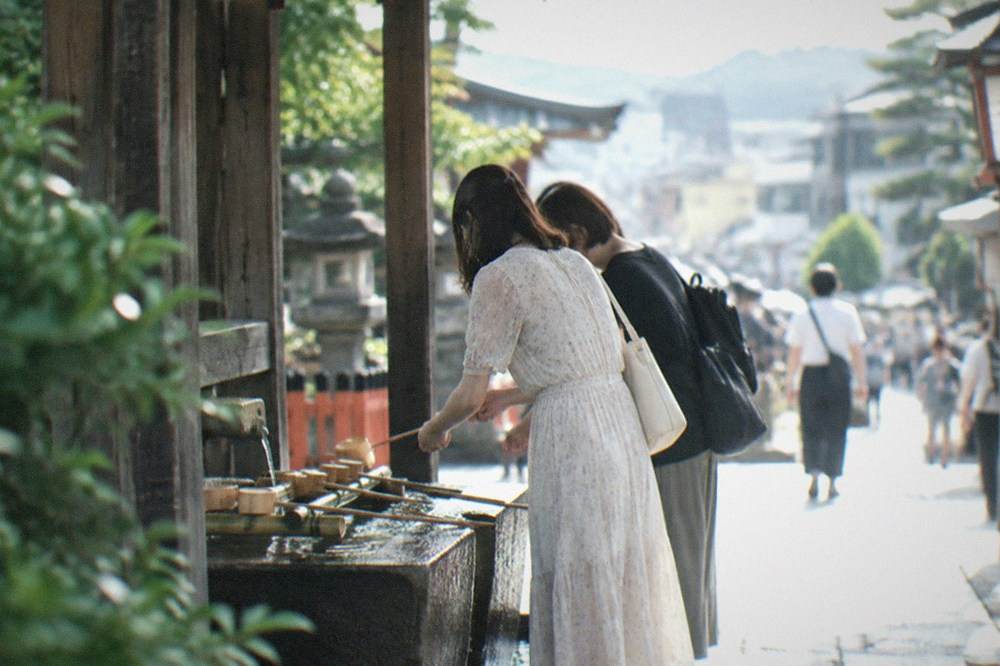
Shrines add a short ritual sequence that takes under a minute. Bow once facing the torii as you enter, wash hands and rinse your mouth at the temizuya, and at the main hall the standard pattern is two bows, two claps, one bow, though local practice varies and following the people ahead of you is entirely acceptable. Photography at the worship hall itself is usually discouraged during prayer times; look for signage.
A guided day is also the easiest way to get the temple sequence right, because a guide handles the shoe racks, the one-way routes and the quiet hours while you take in the halls. The Fushimi Inari, Kinkakuji and bamboo grove one-day bus tour is the strongest fit for a first visit, moving between the three sites that generate the most etiquette questions.
With the ground rules covered, the next question is how to move between the sites without adding to the crowding the city is trying to manage.
What Are The Rules For Riding Kyoto Buses And Trains?
Board at the rear door on flat-fare city buses, touch your IC card or take a numbered ticket, and pay at the front when you alight. The flat fare is 230 yen for adults and 120 yen for children aged 6 to 11. Keep luggage off crowded buses, because drivers may refuse bulky bags, and keep phone calls, eating and loud conversation off all public transport. The Subway and Bus One-Day Pass at 1,100 yen covers both networks and the EX100 and EX101 tourist expresses.
The boarding sequence catches first-time visitors more than anything else. Kyoto's flat-fare buses are rear-entry: you get on at the back, and you pay or tap when you get off at the front. If you have a paper transfer or a one-day pass, show it to the driver on the way out. The bus-only one-day pass no longer exists; sales ended in September 2023 and the last day of use was 31 March 2024, because the transport bureau found that 90 percent of buyers were non-residents and that the pass concentrated tourists on the buses. The current product is the Subway and Bus One-Day Pass at 1,100 yen for adults and 550 yen for children.
Luggage is the friction point the city keeps returning to. The transport bureau's guidance encourages minimal luggage on buses, and consistent reports of city policy note that drivers may refuse large or bulky bags on crowded services. The city's hands-free tourism programme exists for exactly this reason: station counters, delivery services and lockers let you send a suitcase to your hotel or store it for the day rather than carry it onto a bus.
| Situation | What to do | Source of the rule |
|---|---|---|
| Boarding a flat-fare city bus | Enter at the rear, exit and pay at the front | City transport bureau fare pages |
| Large luggage | Keep it off crowded buses; use delivery or lockers | City hands-free tourism programme |
| Phone calls on buses and trains | Take them off the vehicle or keep them silent | Standard Japanese transport etiquette |
| Eating on buses and trains | Do not, including market food bought nearby | Standard etiquette, reinforced by market rules |
| Tourist express EX100 / EX101 | Adult 500 yen, child 250 yen; fewer stops, faster | City transport bureau express page |
The EX100 and EX101 tourist expresses are worth knowing because they were created to relieve exactly the overcrowding the etiquette rules respond to. The EX100 runs from Kyoto Station past Gojo-zaka for Kiyomizu, through Gion and Okazaki to Ginkaku-ji, and the EX101 runs direct to the Kiyomizu side, running every 7 to 8 minutes in the morning on operating days. Both accept the one-day pass. Standing on the left on escalators, letting passengers off first, and keeping backpacks in your hands or in front of you on crowded cars round out the unspoken rules that locals will notice.
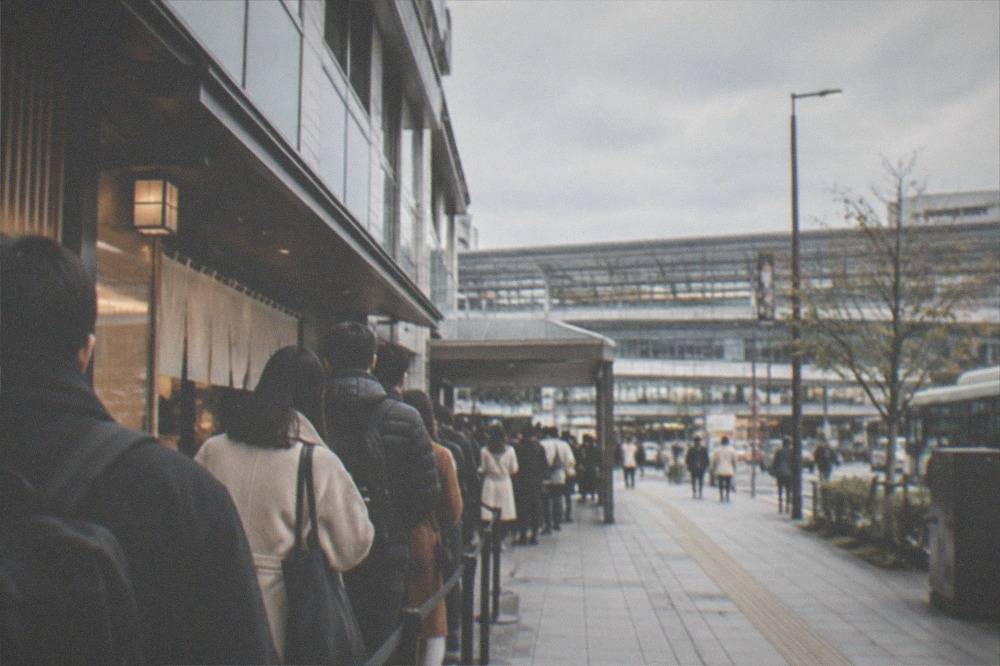
Is Eating While Walking Really Banned In Kyoto?
In Nishiki Market, yes in practice: the market's guidance discourages eating while walking and asks you to eat at the stall or a designated area, because the lane is narrow and crowded. There is no citywide law against eating while walking, and no unified market opening hours exist because each shop keeps its own. Outside Nishiki, eating while walking is discouraged in crowded lanes and on transport rather than prohibited outright.
Nishiki's rule is the one with a real authority behind it. The market's own association publishes the guidance, and the reason is physical: a covered lane about 400 stalls long, with shoppers moving in both directions, is no place for someone walking with a skewer. Buy at the stall, eat at the stall, dispose of the stick there, and move on. The market association's site also declines to publish unified hours, because each shop sets its own, roughly 9 or 10:00 to 17 or 18:00, with individual closures such as some Wednesdays. Our Nishiki Market guide covers the stalls worth planning around.
Elsewhere the rule is context rather than law. Eating while walking through Gion's lanes, temple grounds or the bamboo grove is discouraged by signage and by the simple fact that these are crowded, often private or sacred spaces, and litter bins are scarce across the whole city. Kyoto's streets are famously short of public bins, so the practical etiquette is to carry your rubbish with you until you find a convenience store or return to your hotel.
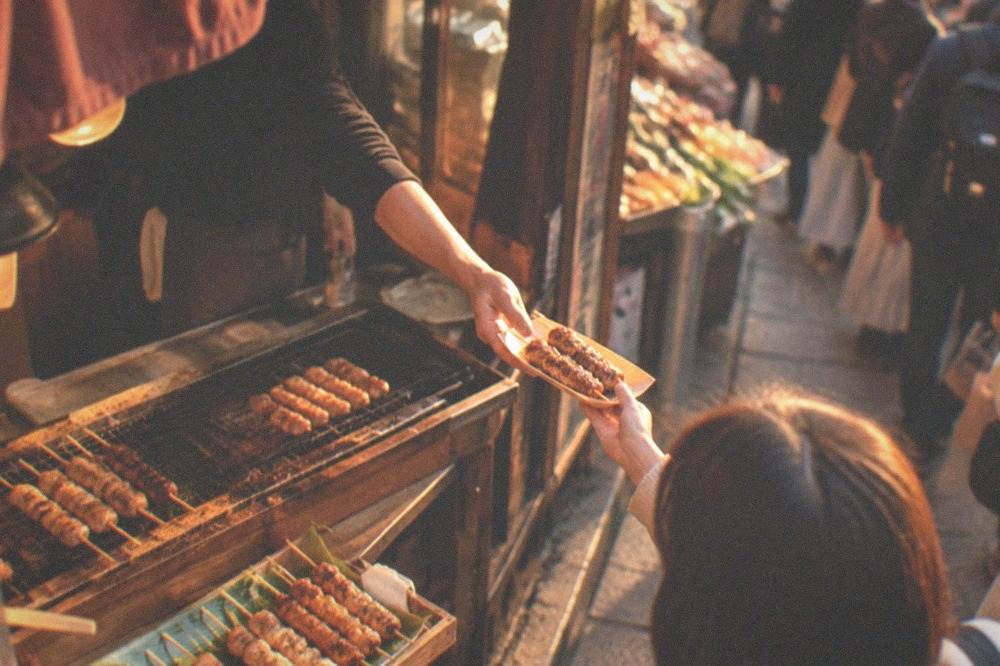
Dining etiquette follows a shorter list than most guides suggest. Saying "itadakimasu" before eating and "gochisosama" after is appreciated but optional for visitors. Slurping noodles is normal and not rude. Tipping is not practised in Japan and can create genuine confusion: staff may chase you to return money left on the table. Payment is typically at a till, often by tray rather than hand, and cash is still widely used, though IC cards and contactless payment have spread fast. Our Kyoto food guide and street food guide cover where to eat, and our best restaurants in Kyoto guide explains the formal end of the spectrum, where Hyotei's own menu prices kaiseki from 31,625 yen at lunch while its annex serves from 5,445 yen, a spread that tells you how different the tiers of Kyoto dining are.
What Should You Know About Kimono, Geisha And Personal Space?
Renting a kimono is welcomed, and Kyoto has a large, well-reviewed rental industry, but wearing one carries expectations: keep it closed and tidy, wear the provided footwear, and behave as the garment implies, calmly. Never touch, chase or photograph a geiko or maiko without permission, never block a lane to wait for one, and respect queue culture everywhere, because orderly single-file lines are the default at bus stops, platforms and popular food stalls.
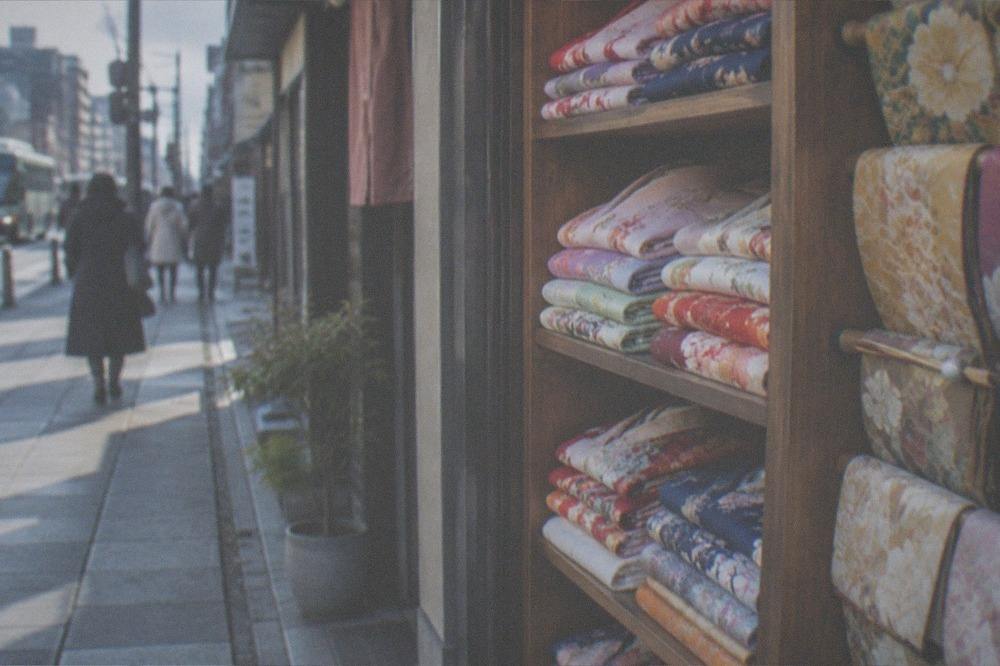
Kimono rental is one of the most popular visitor activities in the city, and the industry is entirely comfortable with tourists wearing the garment. The etiquette is in how you wear it. Keep the left side over the right, the reverse being associated with funeral dress. Accept help with the obi and footwear, walk in the shorter steps the garment encourages, and be aware that some temples and shrines ask you to sit or pose carefully in historic rooms. Rental shops handle the logistics, including hair styling at many shops, and our Kyoto shopping guide covers what to expect buying and renting in the city.
The geisha boundary is the one with published rules, and it is worth restating plainly because it is the most-violated rule in the city. The Kyoto City Tourism Association's guidance asks visitors not to touch, chase or photograph geiko and maiko without permission, and not to enter or photograph private property where prohibited. A maiko hurrying down Hanamikoji in the early evening is travelling to an appointment. The correct response is to let her pass. Never wait in an alley for one to appear, both because the alleys are private and because the residents asked the city for exactly that behaviour to stop.
Personal space and queue culture are quieter but constant. Lines at bus stops form in single file and board in order. Escalator users stand on the left in Kyoto, as in Osaka, unlike Tokyo's right. Phone conversations on trains are kept to a whisper if at all, and the priority seats near the doors are vacated for elderly, pregnant or injured passengers. Blowing your nose loudly in public is frowned on, but masking a cold is normal and unremarkable. None of this is policed; all of it is noticed.
What Onsen And Ryokan Etiquette Applies In Kyoto?
At a Kyoto onsen or sento bath, wash your whole body at the shower stations before entering the bath, keep your hair and towel out of the water, do not swim or dunk, and keep the bathing area quiet. Small towels go beside the bath or on your head, never in it. Tattoos may restrict access at some facilities, so check ahead. At a ryokan, remove shoes at the entrance, keep to the provided slippers, and follow the room attendant's lead on meal times and futon hours.
The washing-before-bathing rule is absolute and hygienic rather than social: the bath is for soaking, and the shower stations outside it are for cleaning. Sit on the low stool, use the basin to rinse, and only enter the bath once you are clean and rinsed. Towels, hair and bathing suits stay out of the water. The small modesty towel most facilities provide is carried with you and set beside the bath or folded on your head while you soak. Facilities with mixed-gender or private baths, including some family and kashikiri options, relax some of these rules, and our Kyoto onsen guide lists which are foreigner-friendly.
Tattoos remain the one genuine access issue. Some onsen and sento prohibit tattoos because of their historical association with organised crime, while others accept them, offer cover stickers, or have private baths where the rule does not apply. Checking the facility's own page before you travel is the reliable course; arriving and being turned away is the avoidable one.
| Situation | Do | Do not |
|---|---|---|
| Before the bath | Wash and rinse fully at a shower station | Enter the bath before washing |
| In the bath | Soak quietly, towel folded on your head or beside you | Put hair, towel or suit in the water |
| Ryokan entrance | Remove shoes, use the provided slippers | Walk in with outdoor footwear |
| Tattooed guests | Check the facility's policy or book a private bath | Assume all facilities accept tattoos |
| Meal times | Follow the room attendant's schedule | Ask for the meal to be moved without notice |
Ryokan etiquette is largely about yielding to the house's rhythm. Shoes come off at the genkan, slippers change again at the toilet, and the room attendant lays out the futon at a time of the house's choosing, usually during dinner. Meals are served at fixed hours, often in your room or a dining room, and kaiseki courses are timed as a sequence. Our ryokan guide covers how to choose one, and the best hotels guide covers the western-style alternative.
What Should You Do If You Make A Mistake?
If you break a rule in Kyoto, the proportionate response is a brief apology, a small bow, and stopping the behaviour. Nobody expects visitors to know every convention, and the city's own guidance is written as asks rather than accusations. If you are corrected by a resident, a shopkeeper or a driver, accept it gracefully rather than arguing. If you accidentally photograph a private alley in Gion, delete the photo if asked and move on. Escalation is rare, and apology is the locally recognised repair.
The city's tone tells you what to expect. The Kyoto City Tourism Association's Gion message is a request framed as a message from residents, not a warning of enforcement. The transport bureau's luggage guidance is an encouragement, not a refusal policy, though drivers do retain discretion. The one place where a stated consequence exists, the Gion alley signage, is also the one place where compliance is simply a matter of reading the sign and walking on.
A few phrases carry disproportionate weight. "Sumimasen" covers excuse me, sorry and getting attention. "Gomen nasai" is the fuller apology. A small bow while saying either is the complete repair in almost every situation a visitor will encounter. Japan's low crime rate and the general safety of walking Kyoto late at night mean the etiquette stakes are social rather than physical, and social repairs are cheap.
The honest summary of Kyoto etiquette is that it is mostly legible and mostly published. The city that absorbed 62.79 million visitors in 2025 has responded by writing its expectations down, in English, on the pages of its own tourism association, transport bureau, market association and shrines. Read the signs, keep your voice and your luggage small, eat at the stall, and let the maiko pass, and you will have done what the city asked. For everything else, the Kyoto Travel Guide homepage collects the practical planning pages, from where to stay to the Kyoto weather guide.
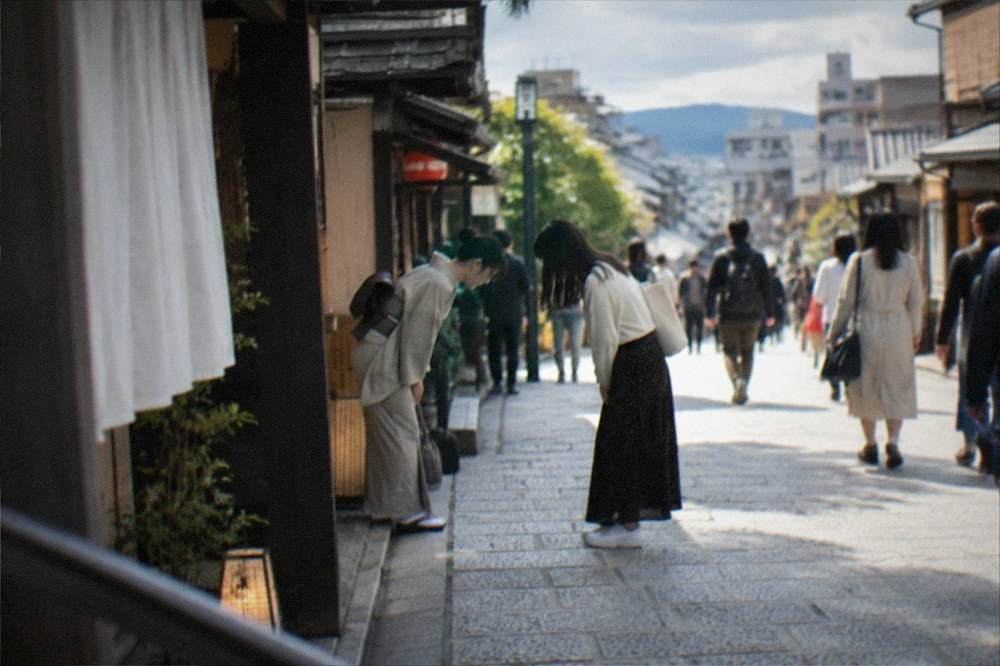
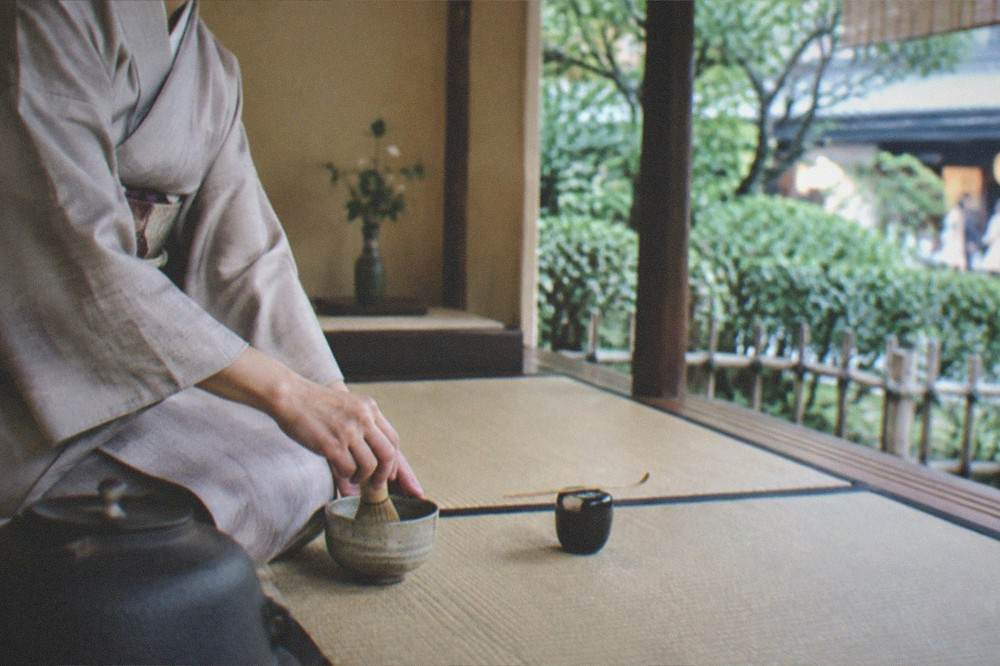
A tea ceremony is the single best etiquette lesson available in the city, because the whole event is a structured exercise in guest behaviour: the bow at the garden gate, the order of entering the room, the handling of the bowl, the compliment to the host. The tea ceremony at Jotokuji Temple teaches it in about an hour, and our Kyoto tea ceremony guide explains the sequence so nothing on the day is a surprise.
Between the ceremony, the shrines and the market lanes, the pattern repeats: Kyoto's etiquette is a series of small, published asks, and each one is easy to honour once you have read it.
Common Questions About Kyoto Etiquette
What Is The Kyoto Akimahen List Of Tourist Don'ts?
It is the city's published family of visitor don'ts, named for the Kyoto-dialect word meaning "must not do". The rules come from different authorities: the tourism association's Gion conduct guidance, the Gion South Side district council's alley signage, the market association's eating rules, the transport bureau's luggage guidance, and individual shrine rules such as Kamigamo Shrine's permission requirement for photographing rites and flying drones. It is a set of asks rather than one law.
Can You Take Photos In Gion?
Yes on the public streets, including Hanamikoji-dori's main street. No on the private alleys off it, where signs put up by the Gion South Side district council threaten a 10,000 yen penalty for photography or entry. The city's tourism association also asks visitors not to touch, chase or photograph geiko and maiko without permission.
Is It Rude To Eat While Walking In Kyoto?
It is discouraged rather than illegal. Nishiki Market's own guidance asks you to eat at the stall or a designated area rather than while walking, because the lane is narrow and crowded. Crowded lanes, temple grounds and public transport are all places where eating while walking is frowned on, and public bins are scarce, so carry your rubbish with you.
Do You Need To Tip In Kyoto?
No. Tipping is not practised in Japan and can cause confusion, with staff sometimes chasing visitors to return money left behind. Pay the printed price, by tray or till, and thank the staff verbally.
Can You Wear A Kimono As A Tourist In Kyoto?
Yes, and the rental industry is large and welcoming. Keep the left side folded over the right, accept help with the obi and footwear, and move calmly in the garment. Remove it before any activity, such as an onsen bath, where it is impractical.
What Happens If You Break A Rule In Kyoto?
Almost always nothing beyond a correction. A brief apology, a small bow and stopping the behaviour is the locally recognised repair. The only stated money consequence is the 10,000 yen figure on the Gion alley signage, which is a district-council sign, not a city fine.