Gion Matsuri Kyoto: When Are The Yamaboko Junko Parades Held In July?
Gion Matsuri runs the whole of July, and the two Yamaboko Junko parades on the 17th and 24th are its climax. Here is the full calendar, what each event costs, and where to stand.
Short answer
The Yamaboko Junko parades are held on 17 July (saki-matsuri) and 24 July (ato-matsuri). The festival itself runs all month, from Kippu-iri on 1 July to Nagoshi-sai at Ekijinja on 31 July.
The Yamaboko Junko parades are held on 17 July and 24 July, and those two mornings are the reason millions of people build a Kyoto trip around this month. Gion Matsuri is not a single day. According to Yasaka Shrine, the festival's own organiser, it runs from Kippu-iri on 1 July to Nagoshi-sai at Ekijinja on 31 July, a full month of rites, street parties and processions anchored in the Gion district. The shrine's event page gives the two parade dates, the saki-matsuri on the 17th and the ato-matsuri with its Hanagasa procession on the 24th, and records that the mikoshi, the shrine's sacred palanquins, leave Yasaka on the evening of the 17th and return late on the 24th.
This guide lays out the whole month, what each part costs, where to watch the parades from, and how the festival interacts with the district it is named after. The short version: the parades are free to watch from the street, July is Kyoto's wettest month, and the whole thing sits on top of a city that recorded 62.79 million visitors in 2025, so a little planning goes a long way. For the wider festival calendar, see our Kyoto festivals overview, and for the district itself, start with our Gion area guide.
When Are The Gion Matsuri Yamaboko Junko Parades Held In July?
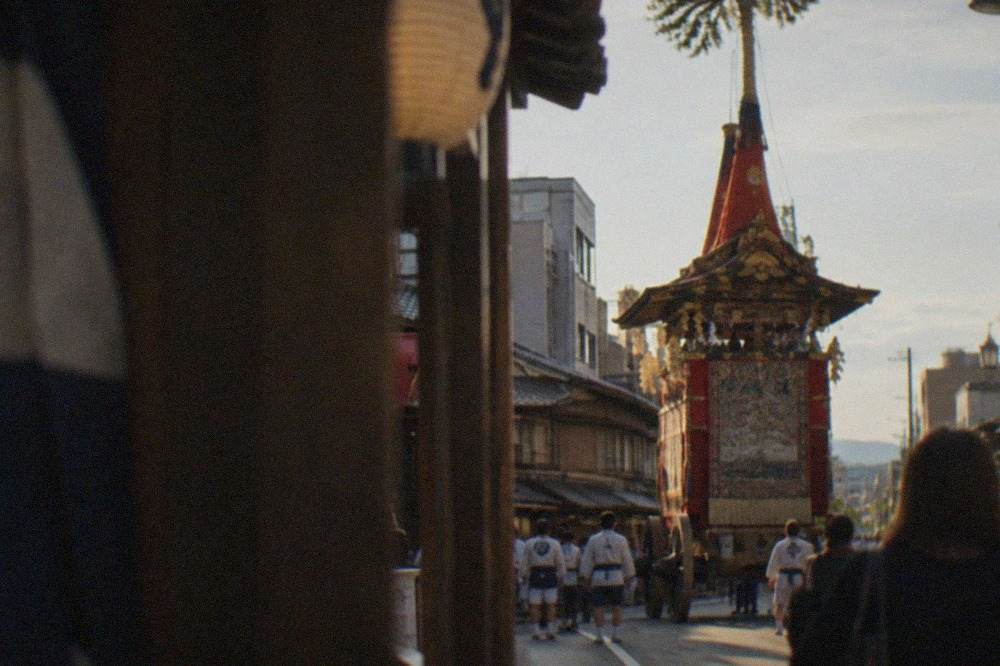
The saki-matsuri parade is held on the morning of 17 July and the ato-matsuri on the morning of 24 July, closing with the Hanagasa procession. Yasaka Shrine, the festival's organiser, gives these dates, along with the mikoshi leaving the shrine on the evening of the 17th and returning late on the 24th. The festival as a whole runs from Kippu-iri on 1 July to Nagoshi-sai at Ekijinja on 31 July, so the two parades are the climaxes of a month-long observance rather than standalone events.
The two processions are related but not identical. The saki-matsuri on the 17th sends the first group of floats through the centre of Kyoto, and the ato-matsuri on the 24th brings the second group out, closing with the Hanagasa procession. Yasaka Shrine notes that the two parades were merged into one for a period from 1966 and re-split later, which is why older guidebooks sometimes describe a single procession. Both start in the morning, and both follow routes through Shijo-dori, Kawaramachi-dori and the surrounding grid.
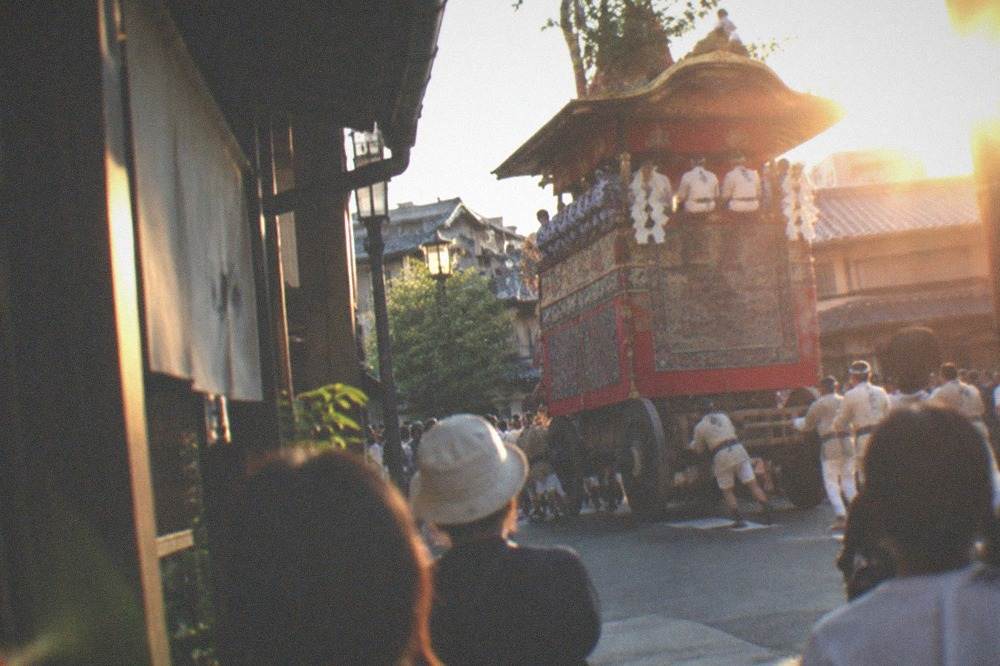
The floats themselves, the yamaboko, are the visual signature of the festival. Some tower to the height of a several-storey building, are pulled entirely by hand, and carry teams of musicians. The word hoko refers to the tall pole-topped floats; yama are the smaller ones. Between them the two parade days move dozens of these machines through streets that were laid out long before anything with wheels this size existed, which is why the turns, performed with bamboo plates and water under the runners, draw their own crowds.
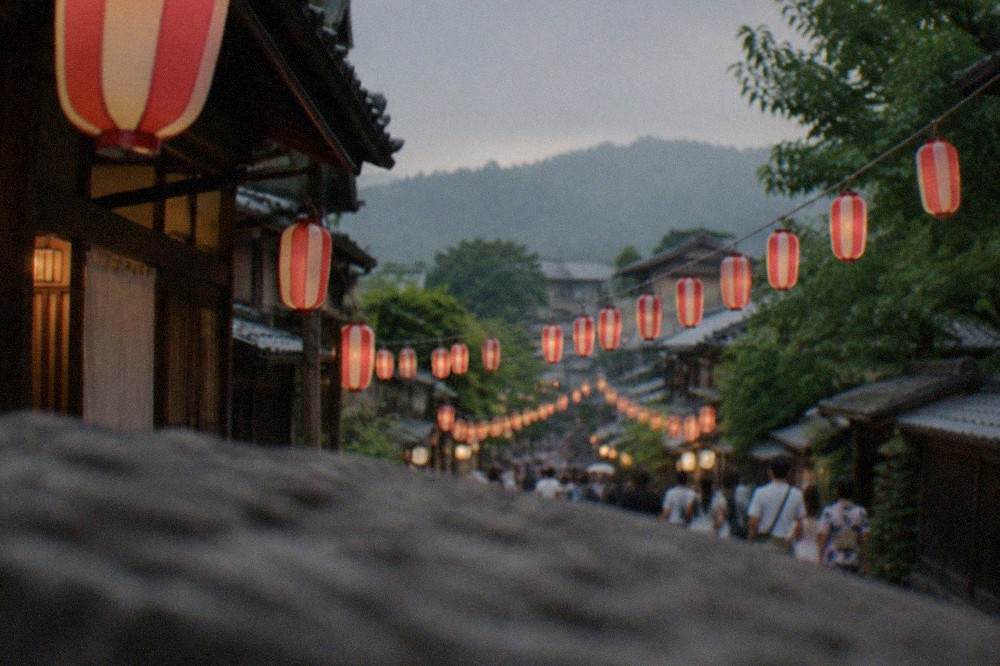
A practical note on timing: the parades move slowly and the streets fill early. The morning start times mean the serious viewing positions are claimed well before the floats appear. If a morning at the barriers does not appeal, the evenings before each parade, when the floats stand lit in the streets, are the calmer half of the experience, and they are covered in their own section below.
For visitors fitting the festival into a bigger trip, our one day in Kyoto itinerary can be reshuffled around a parade morning, and the question of whether Gion is worth visiting gets a different answer in July than in any other month.
What Happens During The Rest Of The Gion Matsuri Month In Kyoto?
The month opens with Kippu-iri on 1 July, the rite that begins the festival, and closes with Nagoshi-sai at Ekijinja on 31 July. Between those bookends come the float-building period in the first half of July, the saki-matsuri parade on the 17th, the mikoshi departure the same evening, the ato-matsuri with its Hanagasa procession on the 24th, and the mikoshi's return late on the 24th. Yasaka Shrine's own event page is the source for this full sequence.
The first two weeks are the quiet half, at least by Gion Matsuri standards. The neighbourhoods that maintain floats raise them, assemble them without nails in the traditional method, and hang the tapestries and lanterns that make each one distinct. Walking the float districts during the build is free and, on weekday mornings, genuinely uncrowded. The shrine's calendar puts the purification and blessing rites for the floats in this stretch too.
The middle of the month belongs to the saki-matsuri. The 17th is the pivot of the whole festival: the parade in the morning, and in the evening the mikoshi leave Yasaka Shrine and move through the city, carrying the deity of the shrine into the community for the duration. The ato-matsuri on the 24th reverses the flow. The second group of floats parades in the morning, the Hanagasa procession closes it, and late that night the mikoshi return to the shrine, which in effect ends the religious core of the festival even though the calendar runs to the 31st.
Here is the month as Yasaka Shrine's event page lays it out:
| Date | Event | What it is |
|---|---|---|
| 1 July | Kippu-iri | The opening rite that begins the festival |
| Early to mid July | Float building | Neighbourhoods raise and decorate the yamaboko |
| 14 to 16 July | Yoiyama (saki) | Pedestrian evenings before the first parade, secondary sources |
| 17 July | Yamaboko Junko, saki-matsuri | The first parade, morning start |
| 17 July, evening | Mikoshi departure | The shrine's palanquins leave Yasaka |
| 21 to 23 July | Yoiyama (ato) | Pedestrian evenings before the second parade, secondary sources |
| 24 July | Yamaboko Junko, ato-matsuri | The second parade plus the Hanagasa procession |
| 24 July, late night | Mikoshi return | The palanquins come back to the shrine |
| 31 July | Nagoshi-sai at Ekijinja | The closing purification rite |
The last week of July is the wind-down. Nagoshi-sai at Ekijinja on the 31st is a small, local rite, a purification through a ring of woven reeds, and it is nothing like the parade mornings in scale. If your dates only cover late July, you will get the festival's atmosphere in the district rather than its spectacles.
Kyoto's other two great festivals follow the same pattern of fixed dates. The Aoi Matsuri guide covers the 15 May procession, and the Jidai Matsuri guide covers the 22 October costume parade. Between them and Gion Matsuri, the city's three biggest events are spread across May, July and October, and July is by far the largest.
What Are The Yoiyama Nights Like In Kyoto During Gion Matsuri?
In the three evenings before each parade, the float districts turn into pedestrian zones with street food stalls, and the floats stand lit in the streets. The nights commonly cited for this are 14 to 16 July before the saki-matsuri and 21 to 23 July before the ato-matsuri, though these Yoiyama dates rest on secondary sources rather than the shrine's own calendar, so treat them as the usual pattern rather than a confirmed schedule. No ticket is needed; the streets are public.
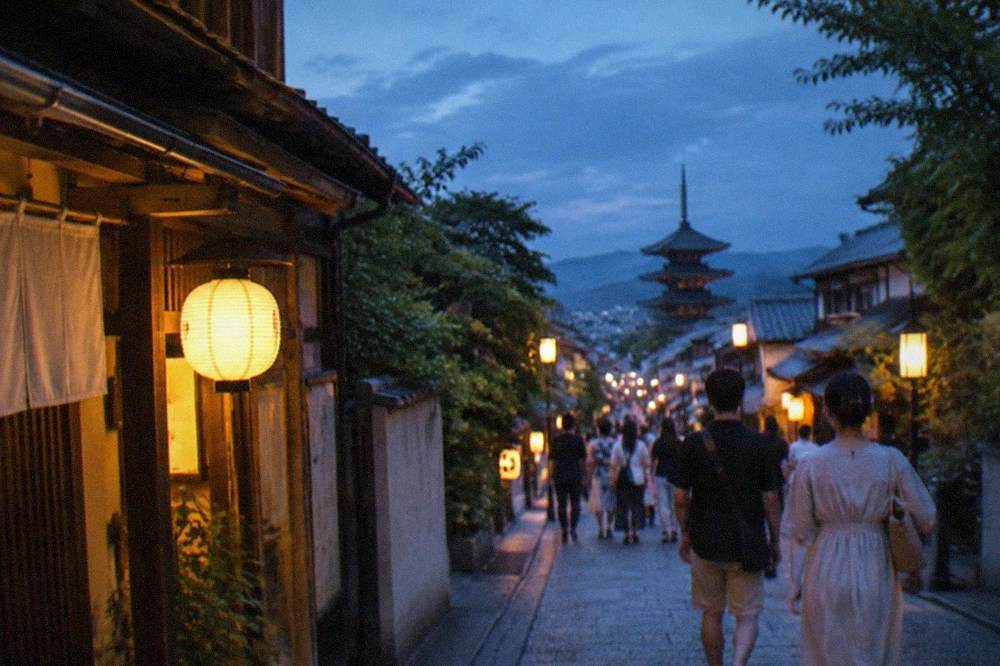
Yoiyama is the festival's street party, and for many visitors it is the part they remember longest. The float streets close to traffic in the evenings, food and drink stalls line the blocks around Karasuma and Shijo, and families walk between the parked floats in yukata. The floats are lit, the musicians aboard some of them play, and the whole grid of central Kyoto hums until late.
The honest caveat on dates: Yasaka Shrine's event page, the source this site relies on for the parade dates and the month's structure, does not print the Yoiyama evenings. The 14 to 16 and 21 to 23 July pattern is widely and consistently reported, but it is not shrine-issued, so plan around it loosely and check the city's event listings closer to your travel dates. The parade dates themselves, the 17th and the 24th, are firm.
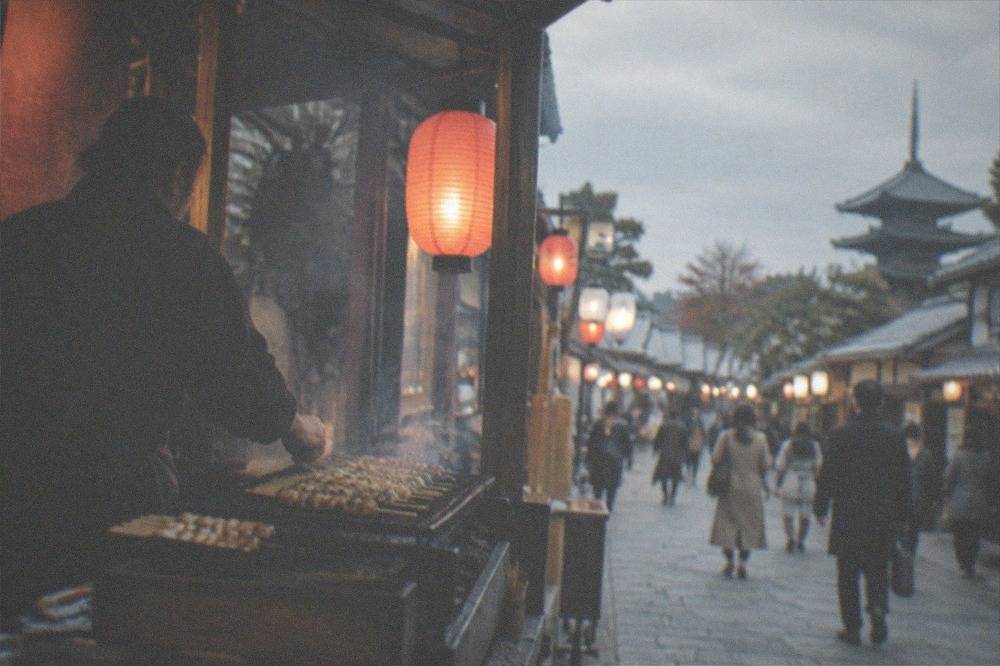
What Yoiyama costs depends almost entirely on what you eat and drink. The streets are free, the stalls take cash, and the food is festival pricing rather than restaurant pricing. A realistic budget for an evening of grazing is a few thousand yen per person, but that is a planning range, not an operator's figure, and the stalls set their own prices.
The nights are also the most crowded the district gets all year, which is saying something in a city that drew 62.79 million visitors in 2025, a record according to the city's own survey released in June 2026. The city's overtourism measures for 2025 and 2026, published on its own pages, include dispersal campaigns pushing visitors toward off-peak times and less-famous areas, and Yoiyama is exactly the kind of event those campaigns are working around. Go early in the evening or late, pick a side street over the main drag, and you will move at a walk rather than a shuffle.
How Much Does Attending Gion Matsuri In Kyoto Cost?
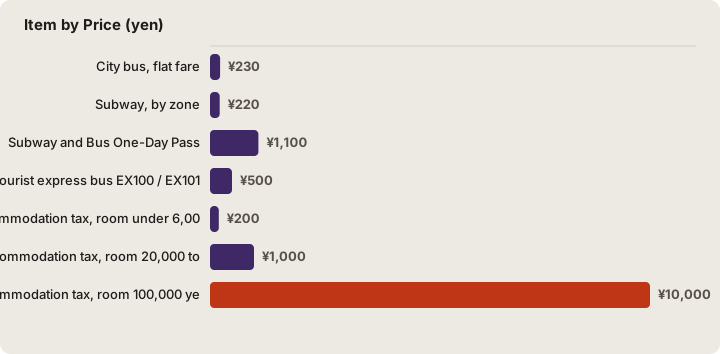
Watching both parades and all the Yoiyama evenings is free, because every one of them happens on public streets. The real costs are getting there and sleeping there: a city bus ride is 230 yen, the subway runs 220 to 360 yen by zone, and the Subway and Bus One-Day Pass is 1,100 yen. Accommodation is the big line, and Kyoto's accommodation tax, which changed on 1 March 2026, now charges 1,000 yen per person per night on a room between 20,000 and 50,000 yen.
The festival itself has no gate, no ticket and no product to buy, and this site does not sell anything for it. The parade routes are public streets, the float districts during Yoiyama are public streets, and the shrine rites at Yasaka are observances, not shows. Anyone who tries to sell you a Gion Matsuri ticket is selling something the festival does not require.
Here is what the verified numbers look like for a day of festival-going:
| Item | Price | Notes |
|---|---|---|
| City bus, flat fare | 230 yen adult, 120 yen child | City of Kyoto fare page |
| Subway, by zone | 220 to 360 yen adult | Five zones |
| Subway and Bus One-Day Pass | 1,100 yen adult, 550 yen child | Covers the EX100 and EX101 tourist expresses too |
| Tourist express bus EX100 / EX101 | 500 yen adult, 250 yen child | Kyoto Station to Kiyomizu, Gion, Ginkaku-ji |
| Accommodation tax, room under 6,000 yen | 200 yen per person per night | Unchanged in the 2026 revision |
| Accommodation tax, room 20,000 to under 50,000 yen | 1,000 yen per person per night | Was 500 before 1 March 2026 |
| Accommodation tax, room 100,000 yen and up | 10,000 yen per person per night | Was 1,000 before 1 March 2026 |
The tax table matters more than most visitors expect, because July is peak season and hotel rates climb into the higher tiers, where the tax climbs with them. The city's own announcement sets the base as the room-only charge excluding meals and consumption tax, so a package with dinner is taxed on the room component. Our Kyoto accommodation tax guide breaks down all five tiers, and the best hotels in Kyoto guide covers where those tiers actually bite.
One more cost line: July weather. The JMA 1991-2020 normals put July as Kyoto's wettest month at 223.6 mm of rain, ahead of June's 199.7 mm, a fact that surprises most visitors and most guidebooks. A cheap umbrella from a convenience store is part of the honest budget.
Where Is The Best Place To Watch The Yamaboko Junko Parades In Kyoto?
The strongest general advice is the corner turns: the floats are at their most dramatic where the route changes direction, around Shijo-Karasuma and the Kawaramachi intersections, and the turning of a multi-tonne float on bamboo plates is the parade's signature manoeuvre. Anywhere along Shijo-dori or Kawaramachi-dori gives a view, but the corners reward arriving earliest, and the side streets one block off the route trade spectacle for breathing room.
The parade routes run through the commercial heart of the city, and the geometry is the thing to understand. Long straight stretches let you see the floats coming from a distance; corners let you see them work. The crews water the street, lay bamboo plates under the runners, and haul the float around by rope, and at the big corners this takes minutes and draws the loudest reactions of the morning.
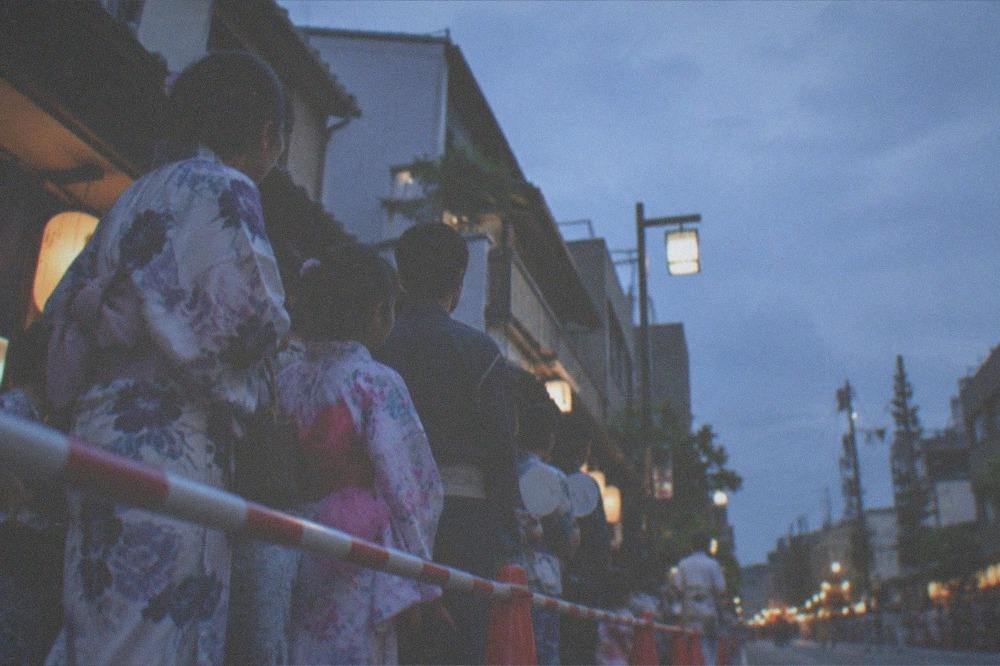
If you want a seat rather than a standing spot, some businesses along the route sell reserved seating or balcony access in advance, but those are private arrangements, not festival products, and this site does not list or sell them. The free option is the pavement, claimed early. On both mornings the serious positions fill well before the floats move, and the parade takes hours to pass any given point, so a folding stool and water are not indulgences in late July.
The counter-programming option is the float districts away from the route. On parade days the floats that are not yet out, or that have already gone, stand in their home streets, sometimes with crews still working on them, and those blocks are far quieter than the route itself. It is the same festival seen from backstage.
For the district's ordinary, non-festival character, which July largely suspends, see our Gion area guide. For an evening in the district with a local guide, the magical Gion night walking tour covers the geisha quarters' history and layout, rated 4.9 across 4,616 reviews and running about an hour and 40 minutes.
What Should You Know About Crowds And Etiquette In Gion During The Festival?
The Kyoto City Tourism Association's conduct guidance asks visitors not to touch, chase or photograph geiko and maiko without permission, and not to enter private property or photograph it where that is prohibited. Separately, on the private alleys off Hanamikoji, signs put up by the Gion South Side district council threaten a 10,000 yen penalty for photography. Hanamikoji's main street is public; the alleys off it are not, and that distinction is the whole rule.
The festival does not suspend the district's rules; it stress-tests them. Gion is a living geisha district, and July puts millions of feet through it. The verified city-level guidance is about conduct, not money: the Tourism Association's message from Southern Gionmachi asks for restraint toward geiko and maiko and respect for private property. The 10,000 yen figure is different in kind: it appears on signage erected by the district council on private alleys, and this site reports it as exactly that, a penalty threatened on signs, not a municipal fine.
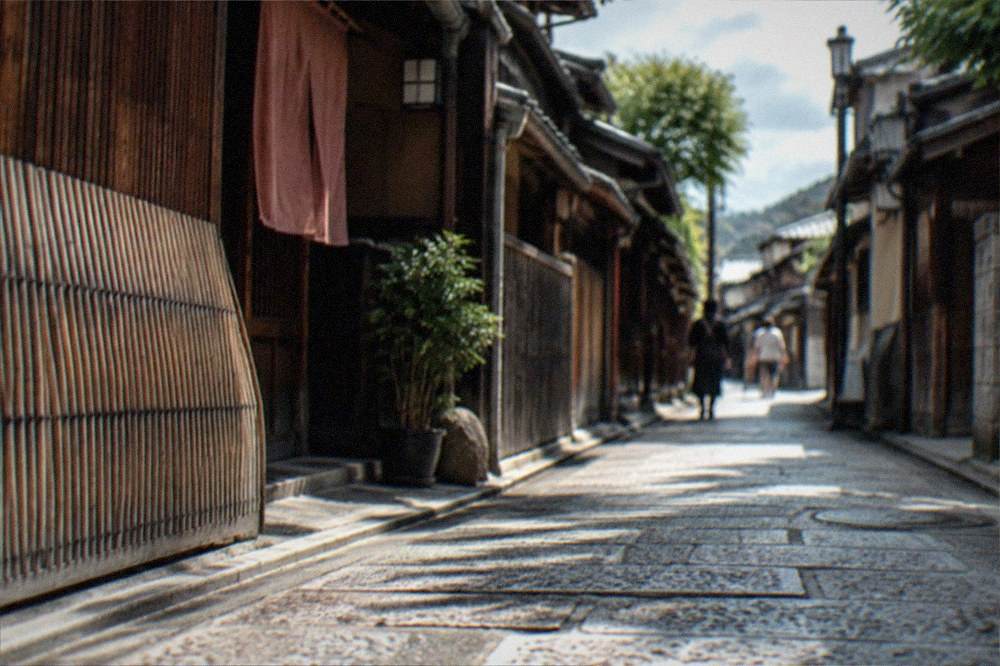
Practically, this means: photograph the floats, the lanterns and the streets as much as you like on public roads; do not photograph the alleys that the signs mark; and never pursue or block a geiko or maiko moving between engagements. Nobody should be told to expect a posed encounter; the association's guidance exists precisely because working professionals crossing the district are not part of the show.
The crowd picture in July is citywide. The city's 2025 survey, released in June 2026, recorded 62.79 million visitors for the year, of which day visitors accounted for 46.20 million, and its 2025-2026 measures include dispersal campaigns, extra buses on key routes and park-and-ride. During Yoiyama and the parade mornings, the city's bus network is at its most strained, and the practical advice about timing your day around the peaks applies doubly during the festival.
A calmer pairing for a festival trip: a morning at the parade, then a walk out of the centre. The kimono tea ceremony in Gion, rated 4.9 across 1,871 reviews, sits a short walk from the festival streets and gives the afternoon a slower rhythm.
How Do You Get Around Kyoto During Gion Matsuri?
The subway is the reliable spine during the festival, at 220 to 360 yen by zone, because central streets close to traffic on Yoiyama evenings and parade mornings. The Subway and Bus One-Day Pass at 1,100 yen covers both networks plus the EX100 and EX101 tourist expresses, which run 500 yen a ride otherwise. The old bus-only one-day pass no longer exists; its sales ended in September 2023 and its last day of use was 31 March 2024.
Street closures are the detail that catches visitors out. When the float districts go pedestrian-only in the evenings and the parade routes shut in the mornings, buses reroute or crawl, and the city's own transport pages acknowledge the strain with tourist express services and frequency increases on key routes. The subway, which runs under all of it, is unaffected, and Karasuma, Shijo and Kawaramachi stations all put you inside the festival zone without a bus.
| Option | Price | Why it matters during the festival |
|---|---|---|
| Subway single | 220 to 360 yen adult | Immune to street closures |
| City bus single | 230 yen flat | Reroutes during closures; crowded |
| Subway and Bus One-Day Pass | 1,100 yen adult, 550 yen child | Best value if you mix networks |
| EX100 / EX101 tourist express | 500 yen adult | Kyoto Station to Kiyomizu, Gion, Ginkaku-ji, fewer stops |
| ICOCA card | 2,000 yen including a 500 yen deposit | Tap on buses and subway without tickets |
The EX100 and EX101 deserve a specific mention: the city's transport pages give the EX100 route as Kyoto Station to Gojo-zaka, Gion, the Okazaki area and Ginkaku-ji, and the EX101 as a direct run to the Kiyomizu side, running every 7 to 8 minutes in the morning on operating days. On a parade morning, when you want to reach the route before the crowds but the local buses are stuck in them, these expresses are the shortcut, and the one-day pass covers them.
Walking is the other answer. The festival zone is compact, the grid is flat, and in the closures the streets belong to pedestrians anyway. Assume the buses are worse and the subway is fuller in July than at any other time of year, and plan your day around the closures rather than against them.
Where Should You Stay For Gion Matsuri In Kyoto?
Stay within walking distance of the parade grid, meaning the Shijo-Karasuma-Kawaramachi triangle or the stations that serve it, because street closures make cross-town travel slow on festival days. Expect peak-season rates, and expect the accommodation tax to scale with them: since 1 March 2026 a room between 50,000 and 100,000 yen carries 4,000 yen per person per night and a room of 100,000 yen or more carries 10,000. Book months ahead; July sells out early.
The geography argument is simple. The parade routes and the Yoiyama zones sit in central Kyoto, between Karasuma in the west and the Kamo River in the east, Shijo-dori running through the middle. A hotel anywhere in that rectangle puts the festival at your feet in the morning and a short walk home at night, which matters when the streets close and the buses reroute. Our where to stay in Kyoto guide maps the neighbourhoods in detail.
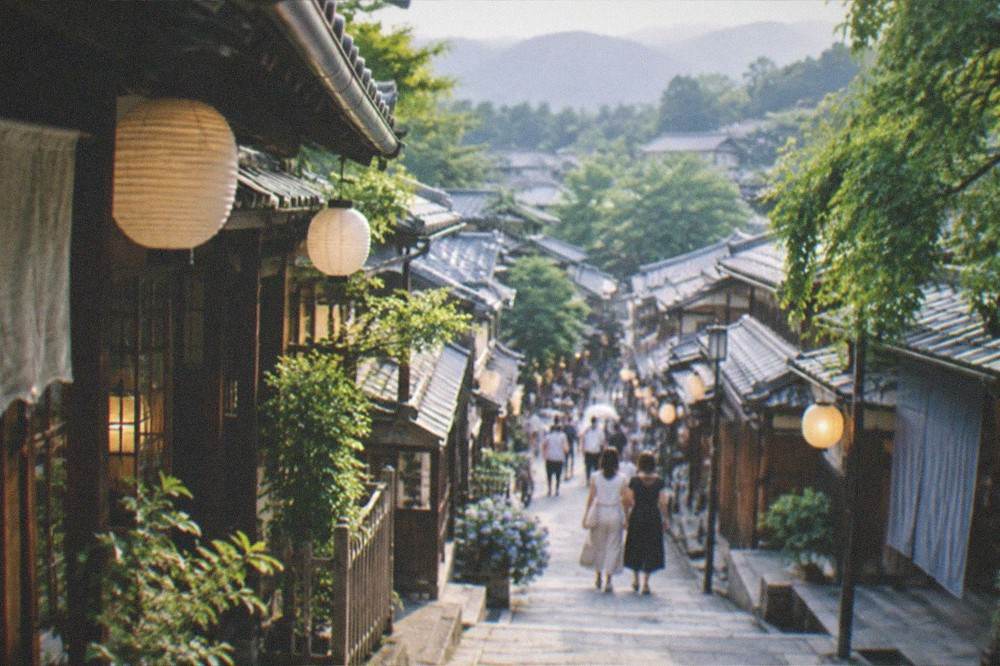
The trade-off is price and noise. Central Kyoto in July is the year's most expensive window, and the streets around the festival zone stay lively late. A stay one or two subway stops out, along the Karasuma line, keeps the walk short while dropping the rate and the decibels. A traditional Kyoto ryokan in or near the district is the atmospheric choice, at a price to match, and books up furthest in advance.
Book as early as you can manage. The festival is a national event in peak season, and the accommodation tax revision of 1 March 2026 means the expensive rooms now carry a heavier per-night charge than most 2025-published guides state. The five tiers, from 200 yen on the cheapest rooms to 10,000 yen on the most expensive, are laid out in the cost table above.
What If You Want A Break From The Gion Matsuri Crowds In Kyoto?
The strongest escape is a morning or a full day in the hills outside the centre: the Fushimi Inari Hidden Hiking Tour, rated 5 from 1,931 reviews at about three hours, takes the mountain paths above the shrine, and the shrine's own FAQ notes the paths have no closing time, so an early start beats both the heat and the crowds. Kyoto Station to Inari is a short JR ride, and the shrine charges no admission.
Every festival needs a counterweight, and Kyoto in July supplies them well. Fushimi Inari is the classic one: the shrine is free to enter, its own FAQ describes about 10,000 torii across the whole mountain, and the upper paths thin out fast once you climb past the main tunnels. The shrine links to the city's crowd-comfort forecast and its own approach cameras, which lets you check conditions before you leave the hotel.
The other direction is the river and the north. The Kyoto in summer guide collects the city's hot-weather answers, from shaded temple gardens to riverbank dining, and the Kyoto nightlife guide covers what the evenings offer once the festival streets empty. For food between parade days, the best restaurants in Kyoto guide keeps you central without needing a parade route to justify the walk.
A note on expectations for the whole month: Gion Matsuri rewards planning more than spontaneity. The parade dates are fixed, the weather is the year's most demanding, and the crowds are the year's largest, but the festival is also free, public and repeated in full every single year. Go with the dates, the tax tiers and the rain figures in mind, and the month gives back more than it takes. For everything the city offers beyond the festival, see the full things to do in Kyoto roundup, and for the wider picture of the city's seasons and districts, Kyoto Travel Guide is where this site keeps its full library.
Common Questions About Gion Matsuri
When Are The Gion Matsuri Yamaboko Junko Parades Held In July?
The saki-matsuri parade is held on 17 July and the ato-matsuri, closing with the Hanagasa procession, on 24 July. Yasaka Shrine gives both dates, along with the mikoshi leaving the shrine on the evening of the 17th and returning late on the 24th.
Is Gion Matsuri free to attend?
Yes. The parades, the Yoiyama evenings and the shrine rites all take place on public streets or at the open shrine, with no ticket or gate. Your costs are transport, food and accommodation.
What are the Yoiyama nights?
The three evenings before each parade, when the float districts become pedestrian zones with food stalls and the floats stand lit in the streets. The commonly cited dates are 14 to 16 and 21 to 23 July, though these come from secondary sources rather than the shrine's own calendar.
What is the difference between the 17 July and 24 July parades?
The 17th moves the first group of floats, the saki-matsuri, and ends with the mikoshi leaving Yasaka Shrine that evening. The 24th moves the second group, the ato-matsuri, closes with the Hanagasa procession, and ends with the mikoshi returning late that night.
Does it rain during Gion Matsuri?
Often. The JMA 1991-2020 normals make July Kyoto's wettest month at 223.6 mm, ahead of June, with a mean daily maximum of 32.0 C. Bring rain gear and plan for heat.
Can you book tickets for Gion Matsuri?
No, and this site sells nothing for it. The festival is not a ticketed product. Some businesses along the route sell reserved seating privately, but no purchase is needed to watch from the public streets.