Where To Stay In Kyoto
Kyoto drew a record 62.79 million visitors in 2025, and where you sleep decides how much of the city you actually enjoy. This guide compares the main districts on verified fares, the accommodation tax tiers and real walking logic.
Short answer
For a first visit, downtown Kawaramachi is the strongest base: it sits between the subway and the Kamo River, walks to Gion and Nishiki Market, and keeps dinner options open late. Gion wins on atmosphere but costs more per night, and Kyoto Station wins on transport at the price of a quieter evening scene.
Kyoto recorded 62.79 million visitors in 2025, a record, against 56.06 million the year before, and the city's own survey, released in June 2026, counts 16.59 million overnight stays. Those two numbers explain why the hotel question matters more here than in most cities: the base you pick determines which temples you can reach before the crowds thicken, where you eat after 20:00, and how much of your budget survives the trip. This guide compares the districts honestly, on fares and tax rates this site has verified from the city and the operators, not on atmosphere alone.
One thing to settle first, because most competing guides still print the old numbers: Kyoto's accommodation tax changed on 1 March 2026, and the top tier went from 1,000 yen to 10,000 yen per person per night. The tax is charged on the room-only rate, excluding meals and consumption tax, and the city expects about 12.6 billion yen a year from the new schedule. The full tier table is further down, but the short version is that a mid-range room under 20,000 yen still carries 400 yen a night, while a room in the 50,000 to 100,000 yen band now carries 4,000. Budget accordingly.
Which Kyoto Area Suits A First Visit: Downtown Kawaramachi, Gion Or Kyoto Station?
For a first visit, downtown Kawaramachi is the strongest all-round base: it sits between two subway lines and the Kamo River, walks to Gion in minutes and to Nishiki Market in fewer, and keeps the largest concentration of dinner and bar options open late. Gion is the more atmospheric choice at a higher nightly rate, and Kyoto Station is the most convenient for rail day trips but the least interesting after dark.
The logic behind that ranking is transport and evening gravity. Downtown Kawaramachi, the Shijo-Kawaramachi intersection and the streets around it, is the one district where you can reach everything a first-time visitor wants without a bus: east to Gion and Yasaka Shrine, north to Nishiki Market and the museum quarter, west to the subway Karasuma Line, south to Kyoto Station in one straight ride. The downtown Kawaramachi area guide covers the streets in detail.
Gion trades a little of that practicality for wood, lanterns and the geisha districts. It is walkable to the same downtown core, but the hotel stock skews boutique and expensive, and the private alleys now carry conduct rules that matter to any guest stepping out at night. Kyoto Station, finally, is unbeatable for arriving and departing: the HARUKA from Kansai Airport terminates there, and every regional day trip starts there. Its weakness is the evening. The station complex itself is lively, but the immediate surrounds are offices and chain hotels, and dinner means a short train ride back into town.
If the choice is between the three on a first trip of three nights or fewer, take downtown. If the trip is five nights or more, splitting it, a few nights downtown and one near the station for an early departure, is a legitimate structure rather than indecision.
How Much Does A Night In Each Kyoto Area Cost, Including The New Tax?
The room itself is only half the number: since 1 March 2026 the accommodation tax runs from 200 yen per person per night on a room under 6,000 yen up to 10,000 yen on a room of 100,000 yen or more, and the middle tiers changed sharply. A room priced between 20,000 and 50,000 yen now carries 1,000 yen per person per night, double the old 500, and the 50,000 to 100,000 yen band went from 1,000 to 4,000.
The tax is charged per person, per night, on the room-only charge excluding meals and consumption tax, so every guest in the room pays it individually, not once per booking. The change is the single most useful thing to know about Kyoto hotel pricing right now, because most English-language guides still quote the pre-March schedule and understate the bill at exactly the rates luxury travelers book.
| Room rate per night (room only) | Tax per person per night, from 1 March 2026 | Before the change |
|---|---|---|
| Under 6,000 yen | 200 yen | 200 yen, unchanged |
| 6,000 to under 20,000 yen | 400 yen | 400 yen, unchanged |
| 20,000 to under 50,000 yen | 1,000 yen | 500 yen |
| 50,000 to under 100,000 yen | 4,000 yen | 1,000 yen |
| 100,000 yen and above | 10,000 yen | 1,000 yen |
What this means by district is straightforward. A business-style double near Kyoto Station and a downtown Kawaramachi room at the same mid-range price carry the same tax, so the levy does not decide between areas at the budget and mid tiers, where the 400 yen rate has not moved. It bites at the top: a Gion room in the 50,000 to 100,000 yen band now adds 4,000 yen per person per night for each guest, and the top tier adds 10,000, which is real money multiplied across a multi-night stay. The city's own announcement, which this site read, sets the tiers and expects about 12.6 billion yen a year from them.
For the rooms themselves, this site keeps a separate best hotels in Kyoto guide with named properties, and a ryokan guide for the traditional-inn question. One honest note on newness: several high-profile hotels are reported to have opened in 2025 and 2026, but those reports come from hotel-news aggregators rather than the operators' own pages, so this site does not name any property as newly open. Check the hotel's own site before booking anything on the strength of a "new opening" claim.
The season is a book and the district is the bookmark. Two rooms at the same price in April, one downtown and one in the north, will sit in the same tax tier but live in completely different trips. That is the honest frame for everything that follows in this guide, and it is why the sections below rank the districts on what each one lets you do after you drop the bags, not on the thread count. The strongest activities for a first evening, a first morning and a first full day, from the tours this site has vetted, are below.
Is Gion Worth The Premium As A Place To Stay?
Gion is worth the premium if the evening atmosphere of the geisha districts is a priority rather than a bonus, because the hotel stock there is boutique-scale, the streets after dark are the most photogenic in the city, and everything downtown is a short walk east. It is not worth the premium if you mainly need a bed near transport, because Gion has no subway station of its own and the rules on its private alleys now limit where you can point a camera.
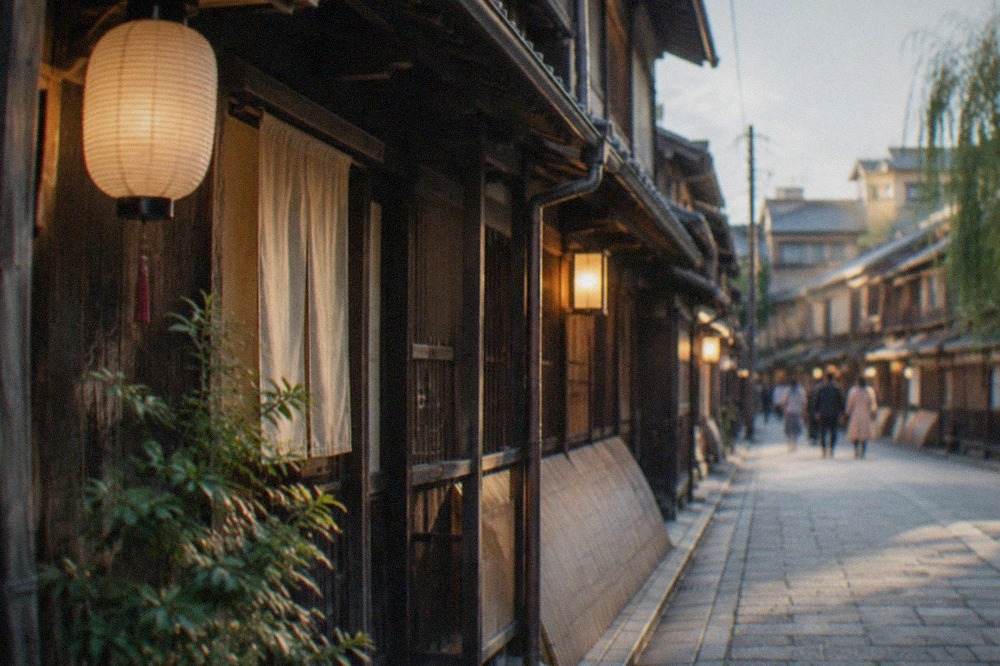
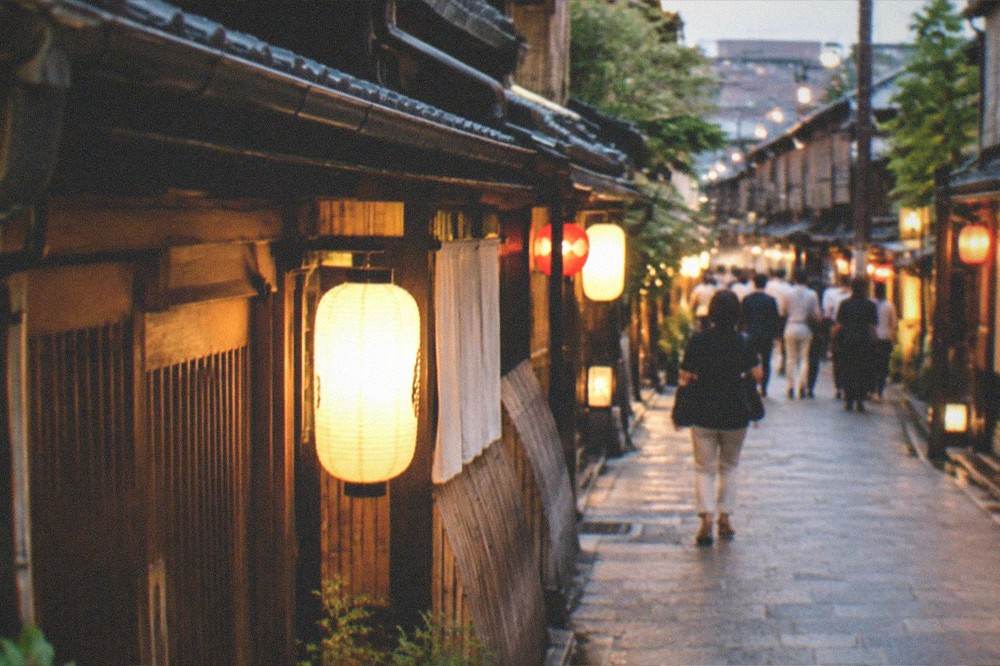
The honest case for Gion is the two hours after sunset. Hanamikoji's lantern-lit main street, the Shirakawa canal with its willows and wooden facades, the teahouse doors: that stretch of evening is what a large share of Kyoto's visitors remember most, and staying in the district puts you in it without a night bus home. The Gion area guide and the deeper piece on whether Gion is worth visiting cover the ground in detail.
The case against is practical. Gion's nearest stations are Gion-Shijo on the Keihan line and Sanjo Keihan, both at the district's northern edge, and neither is a subway stop. The subway's east-west Tozai Line runs through Sanjo Keihan, so it is not isolated, but a Kyoto Station or downtown base reaches the Karasuma Line more directly. And the district's conduct rules deserve a clear statement, because a guest who does not know them can end up on the wrong side of signage that was written for exactly that visitor.
On the private alleys off Hanamikoji, signs put up by the Gion South Side district council threaten a 10,000 yen penalty for unauthorized photography or entry. That is council signage on private roads, not a city fine and not a police matter, and it is worth writing it exactly that way. The main Hanamikoji street is public and photography there is allowed. The city-level guidance from the Kyoto City Tourism Association is about conduct: do not touch, chase or photograph geiko and maiko without permission, and do not enter private property or photograph it where that is prohibited. A Gion guest sees this signage daily, which is one more reason the district rewards people who actually want to be there.
A guided walk is the efficient way to learn the district's geography and rules on a first evening, and the Gion night walk below is the strongest option on this site's roster for exactly that slot.
Is Kyoto Station The Right Base Or Just The Arrivals Hall?
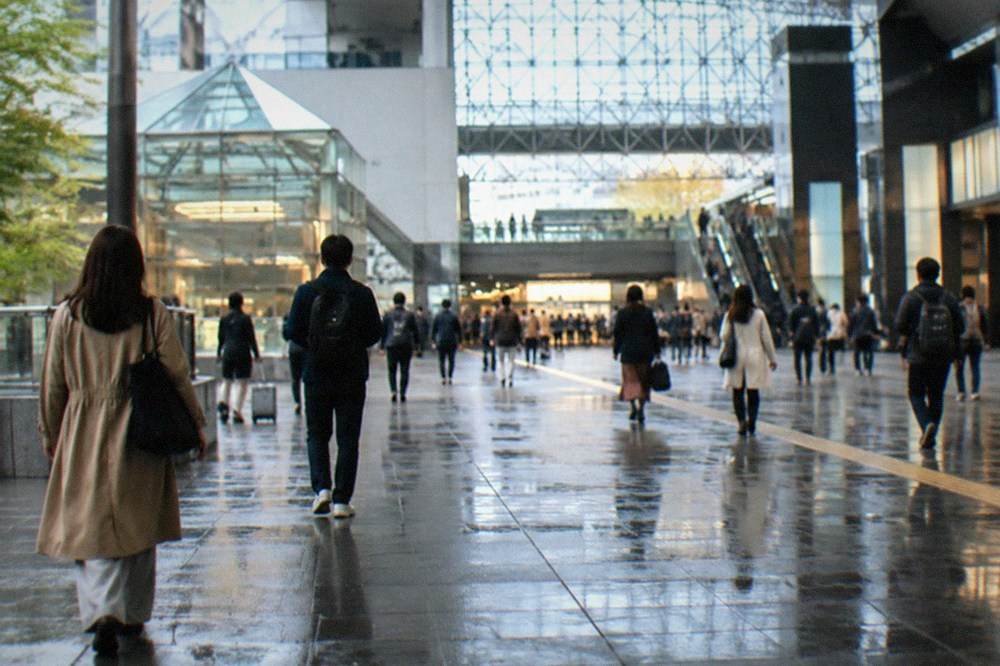
Kyoto Station is the right base if rail day trips are the spine of your trip: the HARUKA from Kansai Airport terminates there, the JR lines to Nara, Uji and Arashiyama leave from there, and the subway's Karasuma Line runs straight to downtown in a few minutes. It is the wrong base if evening atmosphere matters, because the blocks around the station are commercial and quiet after the office crowd goes home.
The station complex itself is more than a transport hub: it holds a department store, a food floor, a ramen street on the tenth level and the Kyoto Tower across the street. The Kyoto Station area guide covers all of it. But the honest description of the surrounding district is offices, chain hotels and bus terminals, and the dinner scene within a ten-minute walk is thinner than downtown's by a wide margin.
The transport case is strong and specific. From Kansai International, the JR West HARUKA One-way Ticket for foreign visitors costs 2,200 yen adult and 1,100 yen child, and the journey runs about 80 minutes. From Itami, the Hankyu Kanko limousine bus costs 1,500 yen adult and 750 yen, about 50 to 55 minutes from the Hachijo exit, and has taken contactless card payment since 1 March 2026. Both airport routes are covered in depth elsewhere on this site.
| Journey | Fare | Notes |
|---|---|---|
| Kansai Airport to Kyoto, HARUKA One-way Ticket (foreign visitors) | 2,200 yen adult, 1,100 child | JR West product, verified on its own page |
| Itami Airport to Kyoto Station, limousine bus | 1,500 yen adult, 750 child | Hankyu Kanko Bus, about 50-55 minutes |
| Kyoto Station to downtown (Shijo), subway Karasuma Line | 220 yen | Zone 1 to 2 fare |
| Kyoto Station to Nara, JR Miyakoji Rapid | about 720 yen | About 45 minutes |
| Kyoto Station to Uji, JR Nara Line | 240 yen | Local line |
The structural point is that Kyoto Station is a decision about days, not nights. If your itinerary leans on day trips, Nara, Uji, Himeji, the station saves an awkward morning transfer every single day. If your itinerary is Kyoto itself, the temples and gardens inside the city, downtown wins and the station becomes a place you pass through.
One way to have both is to let a guided day tour carry the scattered sights while the hotel stays where the evenings are. The one-day bus tour below bundles Fushimi Inari, Kinkaku-ji and the Arashiyama bamboo grove into a single loop from the station, which is worth considering before committing the whole stay to the station district.
How Do The Areas Compare For Getting Around Without A Car?
Downtown Kawaramachi has the best all-round transport position in Kyoto: the Karasuma subway line underneath it, the Tozai line a short walk north, the Kamo River paths for walking east, and flat 230 yen bus fares in every direction. Gion relies on the Keihan line and the Tozai line at Sanjo, and Kyoto Station has the rail network but sits at the south end of everything.
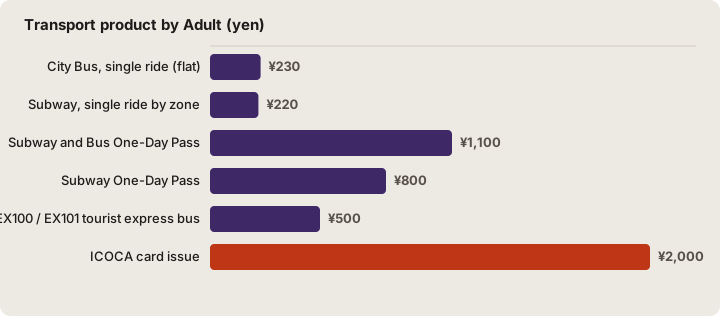
The city's own fares, verified on its transport pages, make the comparison concrete. A City Bus ride is a flat 230 yen for adults and 120 yen for children aged 6 to 11. The subway runs 220, 260, 290, 330 and 360 yen by zone. The product that matters to a visitor is the Subway and Bus One-Day Pass at 1,100 yen adult and 550 yen child, which breaks even at roughly four bus rides or a mixed day of subway and bus legs. The subway-only day pass is 800 yen and 400.
One warning that still catches readers of older guides: the bus-only one-day pass no longer exists. Sales ended at the end of September 2023 and the last day of use was 31 March 2024. The city's stated reason was that about 90% of pass buyers were non-residents and the pass concentrated tourists on the buses, so any guide recommending it is steering you toward a product you cannot buy. This site's bus and subway pass guide covers the current products in full.
| Transport product | Adult | Child | Where it wins |
|---|---|---|---|
| City Bus, single ride (flat) | 230 yen | 120 yen | Short hops, no IC card needed |
| Subway, single ride by zone | 220-360 yen | 110-180 yen | Speed across town, off-street |
| Subway and Bus One-Day Pass | 1,100 yen | 550 yen | Mixed days, the visitor default |
| Subway One-Day Pass | 800 yen | 400 yen | Subway-only days |
| EX100 / EX101 tourist express bus | 500 yen | 250 yen | Kyoto Station to Gion, Kiyomizu, Ginkaku-ji |
| ICOCA card issue | 2,000 yen including 500 deposit | same | Tap-on convenience across operators |
The EX100 and EX101 tourist express buses deserve a line in a where-to-stay discussion because they change the arithmetic of a Kyoto Station base. They run from the station to Gojo-zaka for the Kiyomizu side, through Gion and on toward Ginkaku-ji, with fewer stops than the regular routes, at 500 yen adult and 250 child in cash, and they accept IC cards. A station-based visitor with a morning Kiyomizu-dera plan has a direct, low-friction link.
For luggage, the city runs a hands-free scheme with station counters, delivery services and lockers aimed at exactly the bus-crowding problem. The short version: arriving at Kyoto Station, sending bags ahead to the hotel and starting sightseeing unencumbered is a supported, official flow, not a hack.
What About The Quieter Districts: Higashiyama, Arashiyama And The North?
The quieter districts suit a second or third visit better than a first: Higashiyama, the temple district east of Gion, puts you within walking distance of Kiyomizu-dera, Kodai-ji and the Sannenzaka slopes at the cost of thinner dining and hillier streets; Arashiyama on the western edge is beautiful and badly positioned for anything east; and the north around Daitoku-ji and the Golden Pavilion is peaceful and far from everything at night.
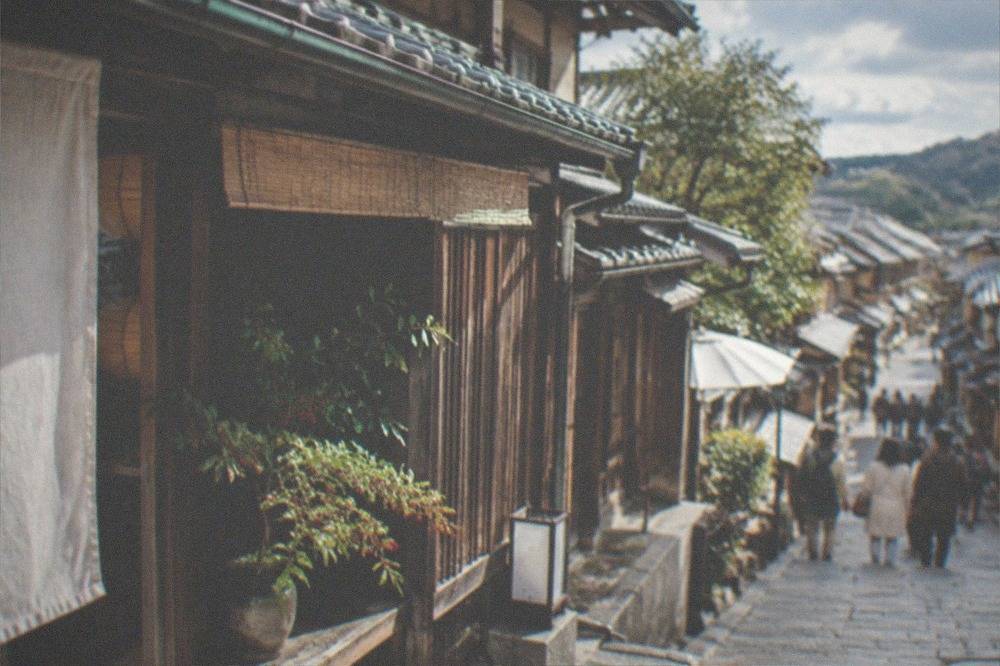
Higashiyama is the strongest of the three for a first-timer who has already ruled out downtown. Its lanes, Ninenzaka and Sannenzaka above all, are the postcard version of Kyoto, and the Higashiyama area guide maps the walking logic. The trade is that the district empties early: much of it is temples and souvenir streets, and the restaurants cluster at its edges rather than its heart. Kiyomizu-dera opens at 6:00 daily, so a Higashiyama base buys you the one genuinely quiet hour at the city's most famous temple, though this site will not promise a crowd margin no source supports.
Arashiyama is a lovely place to be and an awkward place to stay for a general first visit. The bamboo grove, Tenryu-ji and the Sagano Romantic Train, 880 yen adult one way and 440 yen child on the operator's own fares, fill a full day. But the district sits on the far western edge, and every trip to the east side, Fushimi Inari, Gion, the museum quarter, means a cross-town ride each way.
The northern districts around Daitoku-ji, Ryoan-ji and Kinkaku-ji, 500 yen admission, 9:00 to 17:00 year-round, are where visitors go to escape other visitors, and staying there works if the trip is built around temples and early nights. The honest caveat is dinner: the area is residential, and eating late means traveling south.
How Does The Season Change Where You Should Stay?
The season changes the tax not at all and the experience a great deal: July is Kyoto's wettest month at 223.6 mm against June's 199.7 mm in the 1991-2020 normals, August is the hottest at a mean of 28.5 C, and the peak crowds of spring cherry and late-November maple season make a downtown or station base, where you can walk or ride short distances without standing at a bus stop, worth more than any view from the window.
The climate record, from the Japan Meteorological Agency's 1991-2020 normals for the Kyoto station, is worth internalizing before you book, because it runs against the guidebook shorthand. June is the rainy season, yes, but July is the wetter month in the measured record, and August is both the hottest, mean 28.5 C with a mean daily high of 33.7 C, and the sunniest at 182.7 hours. January is the coldest at a mean of 4.8 C and the driest at 53.3 mm. The Kyoto weather guide holds the full monthly table.
| Month | Rain | Mean C | Mean daily high C | Sunshine hours |
|---|---|---|---|---|
| January | 53.3 mm | 4.8 | 9.1 | 123.5 |
| April | 117.0 mm | 14.4 | 20.1 | 177.3 |
| July | 223.6 mm | 27.3 | 32.0 | 142.7 |
| August | 153.8 mm | 28.5 | 33.7 | 182.7 |
| November | 73.9 mm | 12.5 | 17.3 | 140.7 |
For hotel strategy, the seasons split three ways. Cherry season, with the Japan Meteorological Agency's 2026 flowering on 23 March and full bloom on 30 March, against normals of 26 March and 4 April, fills the city weeks ahead. Maple season, with the official red-leaf marker normally 5 December, later than most guides claim, fills it again. In both peaks, the district choice matters less than booking early, because the city's 16.59 million overnight stays in 2025 were not evenly spread across the calendar.
Midsummer and midwinter are the bargains. August is brutally hot, three of Kyoto's six hottest days on record fell in the summers of 2024, 2025 and 2026, and February is cold, but both months reward a downtown base with short walks, subway access for every long leg, and hotel rates that reflect the weather rather than the demand.
Should You Stay In Kyoto Or Osaka And Commute?
Staying in Kyoto is the better call for a trip of three nights or more built around the city itself, because the 16.59 million overnight guests the city recorded in 2025 are the crowd you are competing with either way, and commuting from Osaka adds a cross-city leg to every day. Osaka as a base wins only when the trip is mostly Osaka with two or three Kyoto days bolted on, or when Kyoto's peak-season rates make the arithmetic absurd.
The honest version of this debate is on this site already, in the dedicated Kyoto or Osaka answer, and the short form is a time-and-money count. The commute is real and cheap, but it is twice daily, and it lands you at Kyoto Station, which is the south end of everything you came for. A downtown Kyoto base puts the evening back where the day was spent.
The related question, whether Kyoto works as a base for a Tokyo-and-Kyoto trip, and how the two cities split a first visit to Japan, has its own treatment in the Kyoto versus Tokyo guide, and the first-time visitor itinerary sequences the whole thing day by day.
What Can You Actually Do From Each Base On A Given Evening?
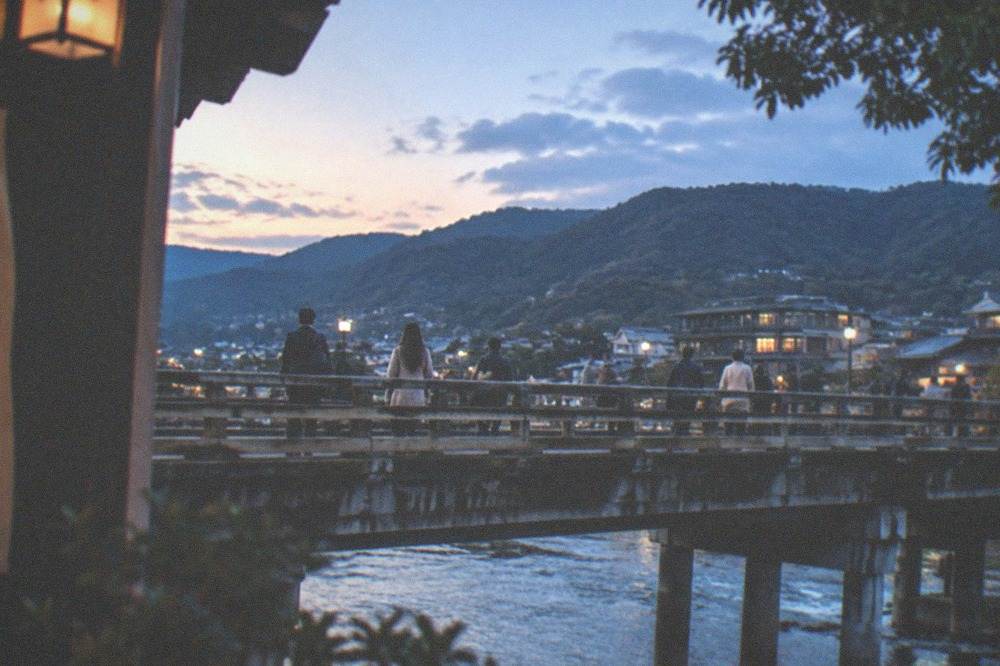
From downtown Kawaramachi you can walk to Nishiki Market's closing hour, dinner in Pontocho, and the bars of Kiyamachi without a single fare; from Gion you add the lantern streets and the Shirakawa canal to that same walk; and from Kyoto Station your evening options are the station's own food floors, the Kyoto Tower observation deck open to 21:00, or a 220 yen subway ride back into town.
The evening is where the districts genuinely separate, and it is the part of the day most itineraries ignore. A downtown base puts the Pontocho alley and the Kamo River banks within a flat walk, and the city's late dining and bar scene clusters in the same few blocks. Gion extends that walk east into the geisha district, with the conduct rules above applying to the private alleys. Kyoto Station's evening is more contained but not empty: the station building's restaurant floors run late, and Nidec Kyoto Tower's observation deck admits until 20:30 with adult entry at 900 yen.
The honest planning note is that Kyoto's evening geography is narrow. Outside the downtown core, Gion's edges, the station complex and a few pockets, the city closes early, and a base in Higashiyama or the north means planning dinner deliberately rather than drifting into it. That is a feature for some travelers and a bug for others, and it is better decided before booking than discovered on the first night.
For the first evening specifically, a guided walk does the orientation work in two hours that would otherwise take a day of wandering. And for the slow afternoon before it, a kimono rental pairs naturally with a downtown or Gion base, since the rental shops cluster in those districts and the walking routes from them are the photogenic ones. On a first visit the rental-and-walk combination is one of the cheapest ways to spend the hours between the morning temple and the evening meal.
How Many Days Should The Stay Cover, And Where Should Each Night Be?
For a first visit, three nights is the honest minimum and five is comfortable: three nights cover Fushimi Inari, the Higashiyama temple chain, Arashiyama and one evening district, while five adds Nara or Uji as a day trip and a second evening in whichever district the first stay missed. Two nights works only with a ruthless plan, and one night in Kyoto on a Kansai trip is a taste, not a visit.
The city's own numbers back the three-night floor. Of the 62.79 million visitors in 2025, 46.20 million were day visitors, which means a large share of the crowds at the famous sites arrive, peak and leave within a single day. An overnight guest sees the city before 8:00 and after 18:00 in a way a day-tripper structurally cannot, and Kiyomizu-dera's 6:00 opening is the sharpest example of that advantage.
This site's itinerary pages sequence the days in detail: one day in Kyoto for the compressed version, and the autumn leaves itinerary for the peak-season structure. The where-to-stay decision feeds directly into these: a one-day plan argues for a station or downtown base reached early, while a five-day plan can afford a split stay.
What Should You Check Before Booking Any Kyoto Hotel?
Before booking, check four things: the exact room-only rate, because the accommodation tax tiers jump at 20,000, 50,000 and 100,000 yen; the walking distance to a named subway station, because bus dependence is the classic Kyoto booking mistake; the cancellation terms, because peak-season plans change; and whether the rate includes breakfast, because the tax excludes meals and an included breakfast changes the real nightly cost.
The tax check is the one with money on the line. A room priced just under the 20,000 yen boundary carries 400 yen per person per night; one priced just over carries 1,000. Two travelers crossing that boundary on a three-night stay pay noticeably more in tax for a marginally better room, and knowing the boundary lets you decide deliberately rather than discover it on the bill. The accommodation tax guide covers the whole schedule.
The transport check is the one that shapes every day. Ask the hotel, or check the map, for the nearest subway station by name: Shijo or Karasuma on the Karasuma Line for downtown, Sanjo Keihan on the Tozai Line for the Gion-Higashiyama edge, Kyoto Station for the south. A hotel whose honest answer is a bus stop rather than a station will still work, the flat fare is only 230 yen, but it will cost time at exactly the hours the buses are fullest, and the city's own overtourism measures, tourist express buses and hands-free luggage flows, exist because of those hours.
The cancellation check matters most in cherry and maple season, when plans shift with the bloom and the leaf. And the breakfast check is arithmetic: the tax is charged on the room-only rate, so a rate that bundles breakfast is taxed on the room component, and a breakfast included in the rate can beat a nominally cheaper room once the morning walk is counted.
Where To Stay In Kyoto For Specific Trips
For a first visit, downtown Kawaramachi. For a romantic trip, Gion or a riverside machiya stay. For a rail-heavy itinerary of day trips, Kyoto Station. For a temple-focused second visit, Higashiyama or the north. For a budget trip, the station's south side and the business hotels along the Karasuma Line, where a room in the unchanged under-20,000 yen tax tier keeps the nightly levy at 400 yen.
Each of those recommendations stands on the verified facts above rather than on mood. The budget line deserves one expansion, because it is the most under-used: Kyoto's business-hotel belt along the Karasuma subway line, from Kyoto Station north to Shijo and beyond, offers small clean rooms at rates that sit in the two unchanged tax tiers, on a line that reaches both downtown and the station in minutes.
For the romantic trip, the traditional machiya townhouse rentals are the strongest version of it, and the neighborhoods overview maps every district this page has compared, plus several this page has not, with the same honesty about what each one is and is not.
The one booking pattern worth stating plainly, because it survives every season and every budget: put the first and last nights where the transport is, and the middle nights where the evening is. On a five-night trip that means the station district at the start and the end, with downtown or Gion in between, and it is the single structure that wastes the fewest hours of any plan this site can construct from the verified fares above. The bus tour option below is the natural companion to that pattern, carrying the scattered headline sights on one loop while the hotel does the evenings.
With the district chosen, the tax tier known and the transport arithmetic settled, the stay is planned honestly. The remaining decisions, which temple on which morning, which dinner on which night, are the easy ones, and they are where a guide earns its keep.
Common Questions About Where To Stay In Kyoto
Which Kyoto Area Suits A First Visit: Downtown Kawaramachi, Gion Or Kyoto Station?
Downtown Kawaramachi, for its walkability, its two subway lines and its evening scene. Gion is the atmospheric alternative at a higher rate, and Kyoto Station is the transport-first choice that suits a day-trip-heavy itinerary more than a first city visit.
How much is the Kyoto accommodation tax in 2026?
Per person per night, charged on the room-only rate: 200 yen under 6,000 yen, 400 yen from 6,000 to under 20,000, 1,000 yen from 20,000 to under 50,000, 4,000 yen from 50,000 to under 100,000, and 10,000 yen at 100,000 and above. The top three tiers rose on 1 March 2026.
Is Gion too expensive for a first trip?
Not necessarily, but the district skews boutique and the tax bites hardest at its top rates: a room in the 50,000 to 100,000 yen band now carries 4,000 yen per person per night in accommodation tax. Staying downtown and walking into Gion for the evening keeps the atmosphere at a downtown rate.
Can you photograph geisha in Gion if you stay there?
The main Hanamikoji street is public and photography is allowed there. On the private alleys off it, signs put up by the Gion South Side district council threaten a 10,000 yen penalty for unauthorized photography or entry. The city-level guidance adds: do not touch, chase or photograph geiko and maiko without permission.
Is it cheaper to stay in Osaka and visit Kyoto?
Sometimes on the room rate, but the commute adds a cross-city leg to every single day, and it lands at Kyoto Station, the south end of the city's main sights. For a trip built around Kyoto itself, three nights or more, staying in Kyoto is the better structure.
Does the Kyoto bus pass still exist?
The bus-only one-day pass does not. Sales ended in September 2023 and the last day of use was 31 March 2024. The current product is the Subway and Bus One-Day Pass at 1,100 yen adult and 550 yen child.
The final word is the one this page opened with: Kyoto hosted 62.79 million visitors in 2025, and the difference between a trip that felt crowded and one that felt manageable was rarely the itinerary, it was the bed. A downtown base with subway access, booked with the new tax tiers in mind and priced against the honest evening geography of each district, is the strongest start a first visit can get. For everything that follows the hotel decision, this site's Kyoto Travel Guide hub and the things to do in Kyoto page pick up exactly here.