Higashiyama, Kyoto: The Classic Walk From Kiyomizu-dera To Yasaka Shrine
The Higashiyama walk from Kiyomizu-dera down to Yasaka Shrine is the single most walked route in Kyoto, a straight line of slopes, temples and preserved streets that packs a thousand years of the city into a couple of kilometres.
Short answer
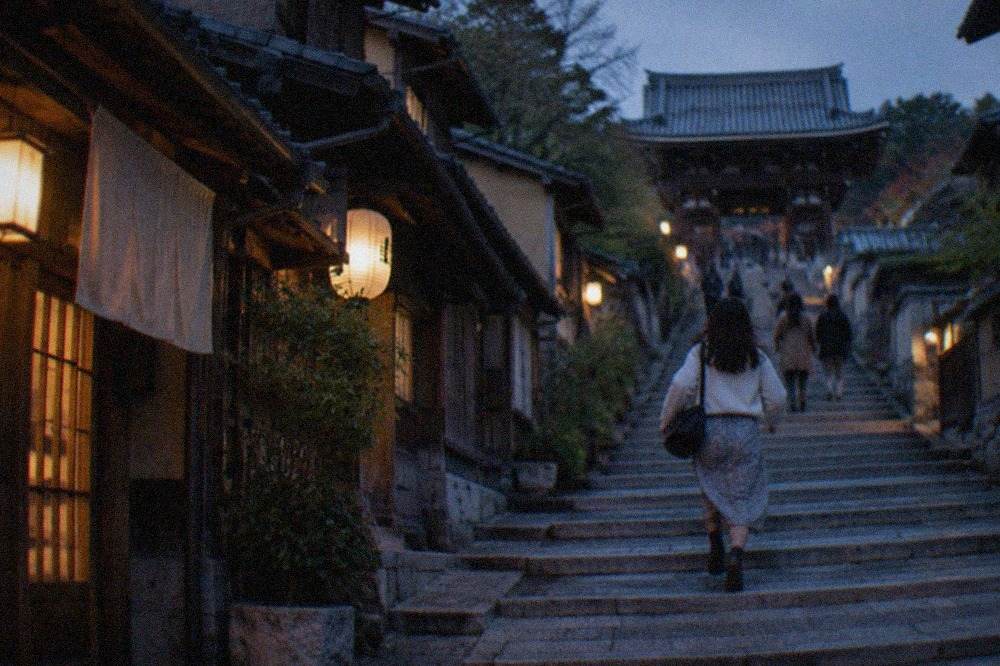
The classic Higashiyama walk runs from Kiyomizu-dera in the south, down the Ninenzaka and Sannenzaka slopes, past Kodai-ji and Maruyama Park, through the Gion district to Yasaka Shrine, roughly two kilometres end to end. Kiyomizu-dera opens at 6:00 daily, and starting early matters: the city's 2025 survey counted a record 62.79 million visitors, and most of them walk this route.
The Higashiyama district is the eastern spine of Kyoto, the wooded hills that the city was built with its back against, and the walk that runs down its slope from Kiyomizu-dera to Yasaka Shrine is the one route almost every visitor ends up doing. It is not a marked trail or a ticketed attraction. It is a chain of streets, temple gates and stone slopes that happens to connect two of the most famous places in Japan through some of the best-preserved cityscape left in the country.
The reason this page exists is that the walk is deceptively simple on a map and surprisingly easy to get wrong in practice. Fees changed in 2026, closing times move by season, the Gion end of the route now has enforceable conduct rules, and the crowds are record-breaking. The city's 2025 tourism survey, released 12 June 2026, counted 62.79 million visitors, up from 56.06 million the year before, and no part of the city absorbs more of them than this slope. Everything below is laid out in walking order, south to north, so you can read it once and then just walk it.
What Is The Classic Higashiyama Walk From Kiyomizu-dera To Yasaka Shrine?
The classic Higashiyama walk starts at Kiyomizu-dera on its hillside terrace, descends the Ninenzaka and Sannenzaka slopes past preserved machiya shopfronts, passes Kodai-ji and the Entoku-in sub-temple, cuts through Maruyama Park, and finishes at Yasaka Shrine at the edge of the Gion district, roughly two kilometres end to end. Most walkers cover it in two to three hours at a relaxed pace with temple stops, and the whole route is walkable on foot from morning to night.
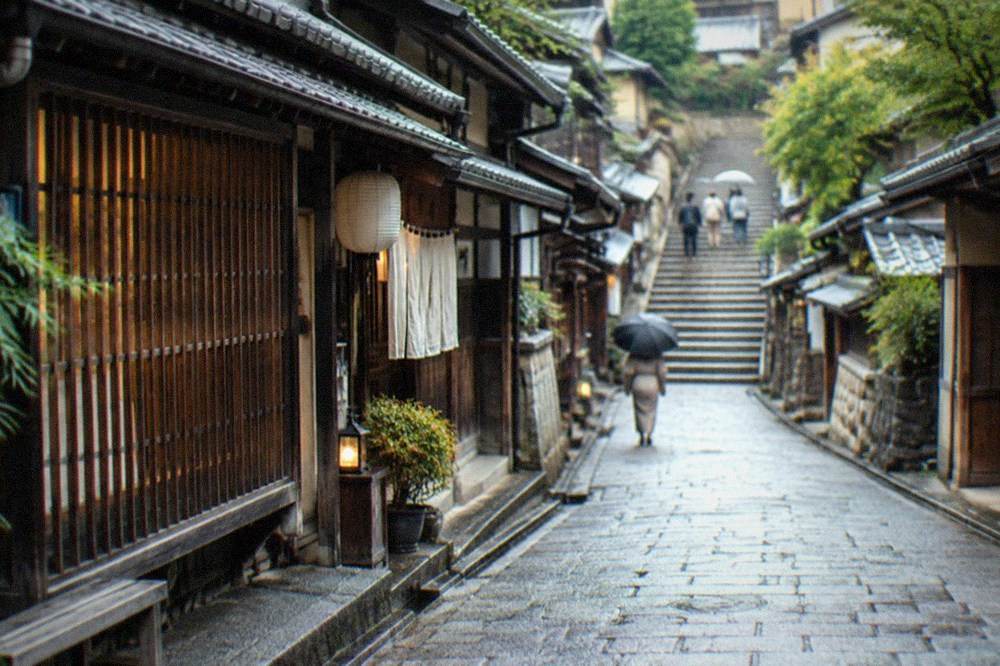
The route works because it follows the geography rather than fighting it. Kiyomizu-dera sits high on the Higashiyama hill, and from its terrace the walk is downhill almost the entire way, which is why generations of pilgrims and every tour bus since have used the same direction. The order matters for another reason too: the preserved slopes of Ninenzaka and Sannenzaka, the two stone-paved streets immediately below the temple, are at their best before the midday crowds arrive, and starting at the top means you hit them first.
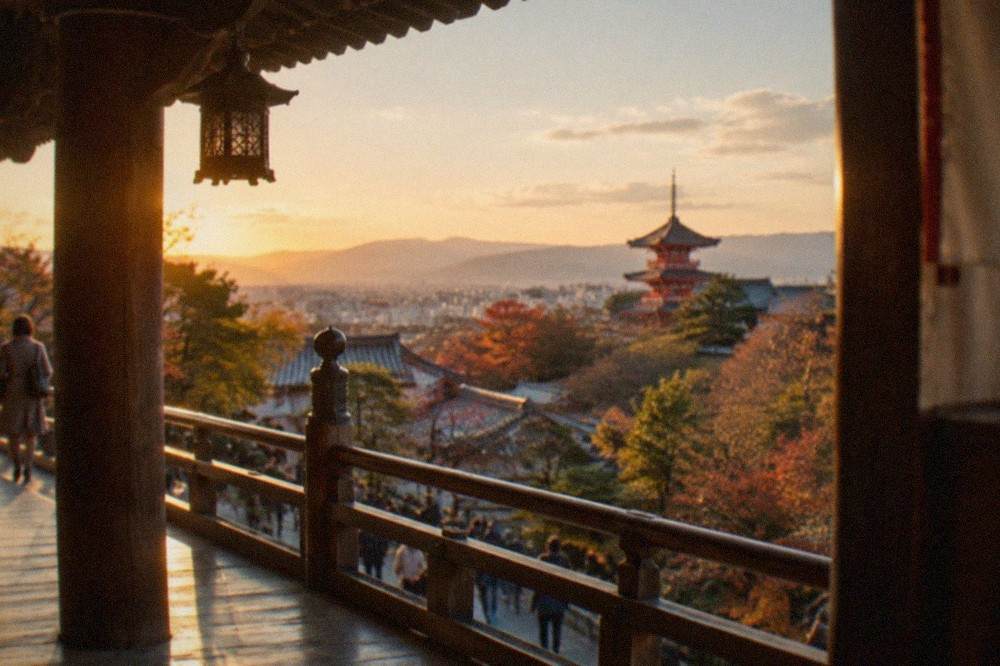
The full sequence, in the order you meet it: Kiyomizu-dera and its stage, the Sannenzaka slope, the Ninenzaka slope, the Kiyomizu-zaka approach down to the Gojo-zaka bus stops, then a left turn north up Matsubara-dori past Kodai-ji, Entoku-in and Ryozen Kannon, into Maruyama Park, past Chion-in's massive gate, and finally through the Gion streets to Yasaka Shrine, whose lantern-hung dance stage sits at the foot of the shrine's own hill. For the temple itself, our Kiyomizu-dera guide covers the stage, the waterfall and the viewing dates in detail.
How Long Does The Higashiyama Walk Take?
Plan on two to three hours for the walk itself at a relaxed pace with stops at Kiyomizu-dera, the slopes and one or two temples along the way, and half a day if you add Kodai-ji's garden, Chion-in or the museums in Okazaki beyond it. The distance is short, roughly two kilometres, but the slopes are steep, the streets are for browsing, and the crowds slow everything down midday.
The honest planning advice is to treat the walk as a morning or an evening, not a transit leg. Kiyomizu-dera opens at 6:00 daily, a fact the temple's own FAQ states plainly, and the first two hours after opening are the quietest the route gets all day. The closing time moves by season: the temple's published 2026 schedule runs 6:00 to 18:00 for most of the year, extends to 18:30 through July and August, and stretches to 21:30 with last entry at 21:00 for the spring night viewing from 27 March to 5 April and the autumn night viewing from 21 to 30 November. Night viewing turns the walk into an evening itinerary, and the illuminated slopes are a genuinely different experience from the daytime version.
If you would rather have the route interpreted than work it out yourself, the Kiyomizu-Dera & Fushimi Inari tour pairs the temple with Fushimi Inari Taisha in one guided day, and it is a sensible pairing: both sit on the same east side of the city, and doing them on separate self-guided days means crossing the same ground twice.
For a broader first-day sweep of the city that includes the Higashiyama slope among its stops, the Perfect 1-Day Bus Tour covers the headline sites in eight to nine hours. The three options below cover the district from different angles: the guided pairing, the full-day bus format and a river-rafting half day for the western side of the city.
What Are The Entry Fees Along The Higashiyama Route?
The route itself is free to walk, but three of the stops along it charge admission: Kiyomizu-dera at 500 yen for adults and high school students, Kodai-ji at 800 yen for adults or 1,200 yen combined with Entoku-in, and Sanjusangen-do at 600 yen general if you detour to its hall of 1,001 Kannon statues. Yasaka Shrine and Maruyama Park charge nothing, and the slopes and streets are public.
One caveat on that Kiyomizu-dera figure: the temple does not print the 500 yen fee on its own site, so treat it as widely reported rather than official, and check the ticket desk on arrival. The other fees are printed by the venues themselves. The full picture for the walk's stops and the near detours:
| Stop on the route | Adult admission | Notes |
|---|---|---|
| Kiyomizu-dera | 500 yen | Single source, not printed by the temple; opens 6:00 daily |
| Kodai-ji | 800 yen | 1,200 yen combined with Entoku-in; elementary and under free with an adult |
| Sanjusangen-do (detour) | 600 yen | 1,001 Kannon statues, stated by the temple itself |
| Chion-in (gate and grounds) | no fee for the grounds | The vast Sanmon gate is viewable from the street |
| Maruyama Park | free | Open public park, the classic rest stop |
| Yasaka Shrine | free | The shrine publishes no admission for its grounds |
The 2026 fee situation in wider Kyoto matters here too, because guides copied from last year are wrong in both directions. Ginkaku-ji, at the northern end of the same Higashiyama hill if you extend the walk, doubled its admission to 1,000 yen for adults from 1 April 2026, its first change in 32 years. Tofuku-ji revises its fees on 1 November 2026, with the Hojo garden rising from 500 to 600 yen and a new 1,000 yen combined ticket. Nothing on the classic walk itself changed in 2026, but if you are building a multi-day plan from older material, re-check every temple fee. Our Kyoto crowds and costs coverage keeps the verified numbers in one place.
Kodai-ji deserves its 800 yen more than most. The temple runs night illumination from 23 October to 13 December 2026, with the grounds lit from 17:00 to 22:00 and reception to 21:30, which makes it the natural anchor for an evening version of the walk rather than a daytime add-on.
When Is The Best Time Of Day To Walk Higashiyama?
Early morning is the best time to walk Higashiyama: arrive at Kiyomizu-dera between 6:00 and 8:00 and you get the slopes and the shrine grounds before the tour groups arrive, because the temple opens at 6:00 while most group itineraries reach the district between 10:00 and 15:00. The alternative is the evening version, from around 17:30, when the day crowds drain out and Kodai-ji's autumn illumination and the Gion lanterns take over. Avoid 11:00 to 16:00 in peak season.
The city's own crowd tool is worth knowing about before you set a time. The Kyoto Tourism Comfort Forecast, run by the city's tourism association, publishes a five-level crowd comfort rating for major spots and time slots, built from smartphone location data, weather and day-of-week patterns. It is the closest thing to a live answer to "will Ninenzaka be unbearable at 2 p.m. on a Saturday", and the shrine at the other end of the walk, Fushimi Inari Taisha, links to it from its own front page. Our guide to Kyoto crowds explains how to read it.
Season changes the walk as much as the hour does. The Japan Meteorological Agency's Kyoto observatory records the cherry flowering and full-bloom dates every year: in 2026 flowering came on 23 March and full bloom on 30 March, against a 1991 to 2020 normal of 26 March and 4 April. The maple marker is later than most guides claim, with the official red-leaf date at a 5 December normal and 2025 observed on 10 December, though the Arashiyama and Higashiyama display peaks run earlier than the observatory's specimen tree.
| Season marker (JMA Kyoto) | 2026 observed | 1991-2020 normal | What it means for the walk |
|---|---|---|---|
| Cherry flowering | 23 March | 26 March | Slopes lined with early blossom |
| Cherry full bloom | 30 March | 4 April | Peak week, heaviest crowds of spring |
| Ginkgo yellow leaves | not yet at time of writing | 24 November | Golden street trees on the slopes |
| Maple red leaves | not yet at time of writing | 5 December | Late-season colour, quieter streets |
For a season-by-season plan built around these dates, the Kyoto autumn leaves itinerary places the Higashiyama walk in the right week of the colour season.
What Are The Rules In Gion At The End Of The Walk?
Gion's rules are enforced by signage, not suggestion: photography is banned on the private alleys off Hanamikoji-dori, signs threaten a 10,000 yen penalty for unauthorised photography or entry on those private roads, and the city's tourism association separately asks visitors not to touch, chase or photograph geiko and maiko without permission. The main Hanamikoji street remains public and photographable. The rules come from the Gion district councils and the Kyoto City Tourism Association, not from a city ordinance.
The distinction matters because the walk deposits you right at the edge of the geisha district, and the last few hundred metres are where most of the trouble happens. The 10,000 yen penalty is posted by the Gion South Side district council on the private alleys themselves, so write it down as council signage rather than a municipal fine. The tourism association's four guidelines, published on the city's own tourism site, cover the rest: no touching or chasing of geiko and maiko, no photographs without permission, no entering private property, and no photography where it is prohibited. More of these guides are collected on Kyoto Travel Guide.
The practical version is simple. Walk Hanamikoji freely, photograph the streets and the machiya fronts freely, and treat every narrow alley with a sign on it as off-limits. If you see a geiko or maiko moving between appointments in the early evening, which is a real possibility on this route around 17:30 to 18:30, the rule is the same as anywhere in the district: no blocking, no following, no photographs without consent. Our longer answer on why you cannot photograph geisha in Kyoto covers the history of the ban, and the question of walking Kyoto late at night is a separate one with a reassuring answer.
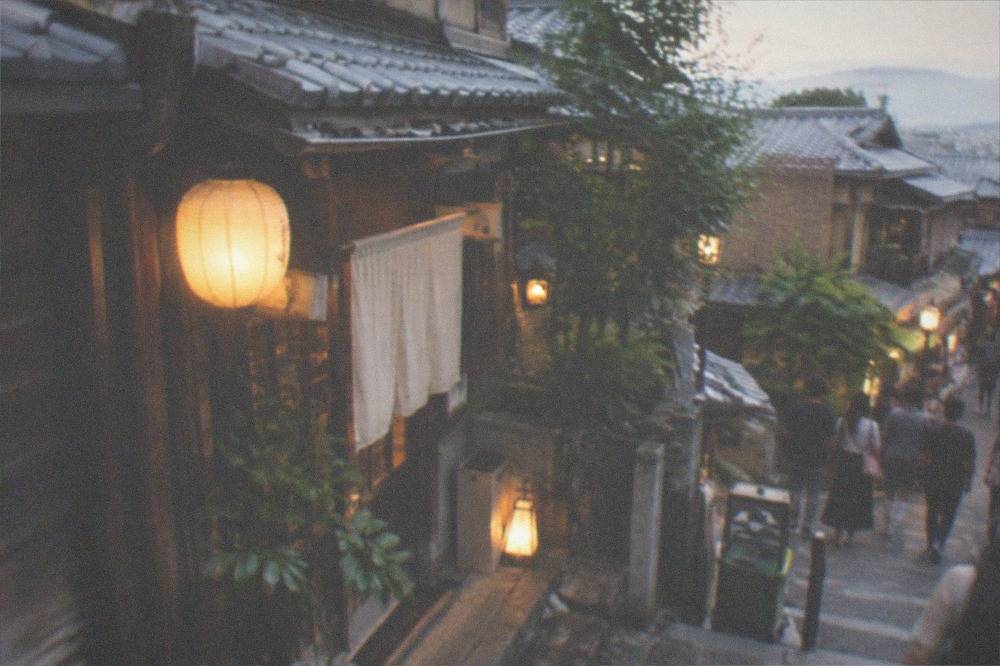
The Gion end of the walk is also its best evening. The Magical Gion Night Walk runs the district in an hour and forty minutes with a guide who can read the streets, and it slots neatly onto the end of an afternoon arrival at Kiyomizu-dera.
What Should You Not Miss Between The Slopes And The Shrine?
Between the Ninenzaka slopes and Yasaka Shrine, the stops most walkers regret skipping are Kodai-ji's garden, the Chion-in Sanmon gate, and Maruyama Park's weeping cherry, in that order, with Sanjusangen-do's hall of 1,001 Kannon statues as the one detour worth leaving the route for. The Ryozen Kannon statue and Entoku-in are worthwhile if the timing works, but the three headline stops plus one detour is a full half day on its own.
Kodai-ji, formally associated with the Higashiyama hill's southern temples, holds a designed garden that photographs best in the first hour after opening and in the illumination season. Its own site sets hours at 9:00 to 17:30 with reception to 17:00, which makes it a mid-morning or late-afternoon stop rather than an early one. The combined 1,200 yen ticket with Entoku-in next door is fair value if the garden is your priority.
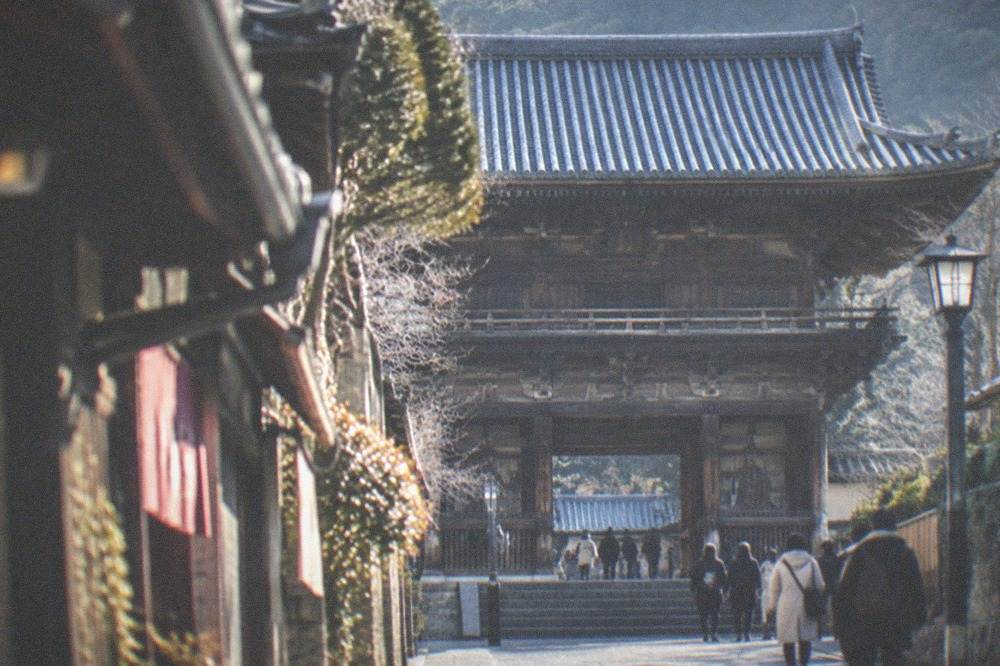
Chion-in's Sanmon gate is one of the largest wooden gates in Japan and it costs nothing to stand under. The temple complex behind it, head temple of the Pure Land school, is the reason the whole district exists in its present form, and the gate's scale explains why the walk funnels past it. Maruyama Park behind that is the city's favourite public park, and its central weeping cherry is the most photographed tree in Kyoto in the first week of April.
The Sanjusangen-do detour is a fifteen-minute walk south from the Kiyomizu end rather than north, so do it before the walk, not after. The temple states on its own site that 1,001 Kannon statues stand in the hall, a figure the temple itself calls a forest of statues, and the hall is long enough that the number stops sounding like a statistic about halfway down the aisle. Admission is 600 yen general, and the hall is open every day of the year, 8:30 to 17:00 from 1 April to 15 November and 9:00 to 16:00 through the winter. Our Kyoto temples guide covers it among the city's other major halls.
How Do You Get To The Start Of The Walk?
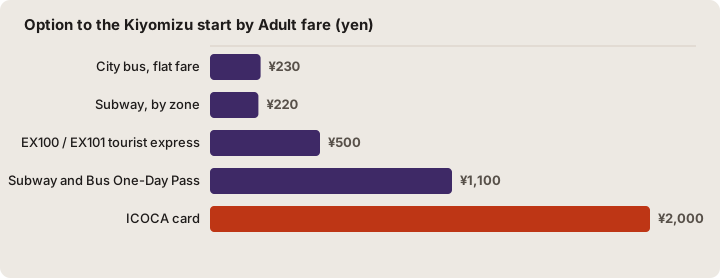
The cheapest way to the start is the city bus at a flat 230 yen adult fare to the Gojo-zaka or Kiyomizu-michi stops below the temple, with the subway as the faster alternative at 220 to 360 yen by zone and the EX100 and EX101 tourist express buses running 500 yen direct from Kyoto Station to the Kiyomizu side on operating days.
A day of heavy walking across the city is cheaper on the Subway and Bus One-Day Pass at 1,100 yen, which replaced the abolished bus-only pass.
The bus-only one-day pass no longer exists: sales ended in September 2023 and the last day of use was 31 March 2024, a fact the city's transport bureau explains bluntly, noting that 90 percent of pass buyers were non-residents and that the pass concentrated tourists on the buses. The product now is the Subway and Bus One-Day Pass at 1,100 yen adult and 550 yen child. The EX100 and EX101 express buses were the bureau's answer to the crowding: the EX100 runs Kyoto Station to Gojo-zaka, Gion, the Okazaki museum quarter and Ginkaku-ji, and the EX101 runs direct to the Kiyomizu side, with the city's transport site noting EX101 runs every 7 to 8 minutes in the morning on operating days. Either costs 500 yen for an adult ride, or nothing extra if you are already carrying the one-day pass.
| Option to the Kiyomizu start | Adult fare | Notes |
|---|---|---|
| City bus, flat fare | 230 yen | Child 6-11: 120 yen |
| Subway, by zone | 220-360 yen | Karasuma or Tozai Line plus a walk |
| EX100 / EX101 tourist express | 500 yen | Covered by the one-day pass; fewer stops |
| Subway and Bus One-Day Pass | 1,100 yen | Child 550; bus-only pass abolished 2024 |
| ICOCA card | 2,000 yen including a 500 yen deposit | Tap-and-go on bus, subway and JR |
If you are arriving from the airport rather than the station, the HARUKA express from Kansai takes about 80 minutes to Kyoto Station, and JR West prices its visitor one-way ticket at 2,200 yen adult. From the station, the express buses above are the simplest connection to the walk's start.
Where Should You Eat On The Higashiyama Walk?
Eat on the slopes rather than at the temple end: the Sannenzaka and Ninenzaka streets hold the preserved machiya cafes and the matcha dessert houses, the lanes around Ninenzaka serve yudofu and kaiseki-style lunches from midday, and the Gion end takes over for dinner with restaurants running late into the evening. For a budget version, the stands near Maruyama Park and the Gion corner sell street food through the afternoon, and a sit-down lunch in the district typically costs more than the same meal downtown.
The food culture of the district is worth a paragraph of honesty. Higashiyama is where Kyoto's most photographed desserts live, and the matcha parfait houses on the slopes queue from opening. The district also holds some of the city's serious kaiseki rooms, and the price gap between the two experiences is enormous: at Hyotei, by Nanzen-ji a little north of the walk, the restaurant's own site prints kaiseki from 31,625 yen at lunch and 37,950 yen at dinner, while the same house's annex serves asa-gayu rice porridge at 5,445 yen and a shokado bento at 7,260 yen. Those are Hyotei's own published prices for its own rooms, not a Kyoto norm, but they frame the range honestly: the famous version of Kyoto dining starts above 30,000 yen a head, and a very good version exists from about 5,400.
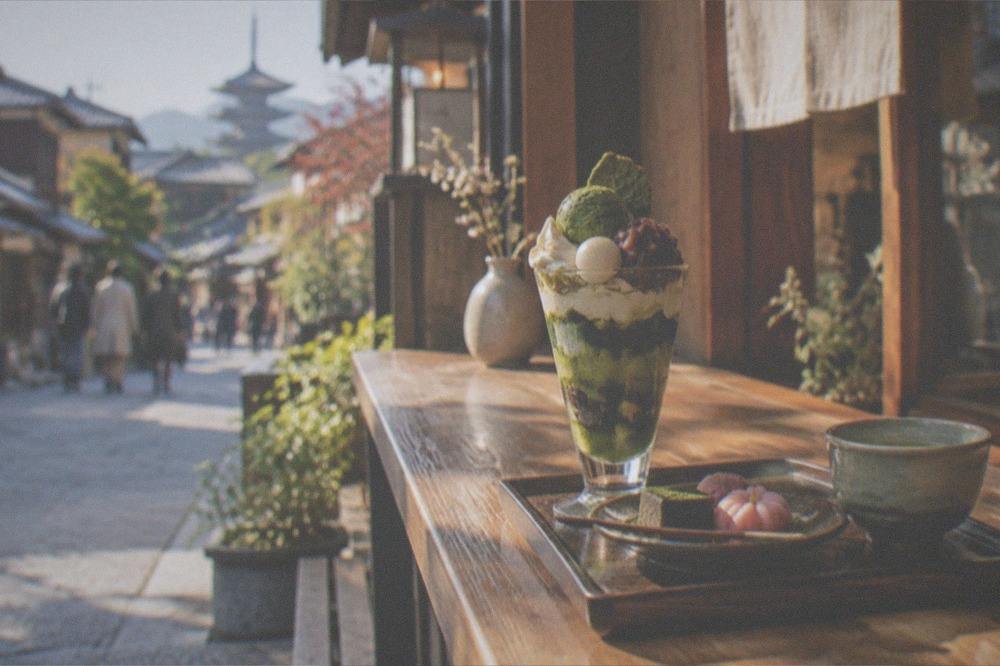
For planning meals around the walk, our restaurant guide covers the district's serious rooms, the matcha guide covers the dessert houses on these slopes specifically, and the street food guide covers what you can eat standing. The one rule to know before you buy anything portable: Nishiki Market, the other famous food street, prohibits eating while walking, and the same etiquette applies on these slopes, where the lanes are narrow and the shopfronts fragile.
Can You Extend The Walk Beyond Yasaka Shrine?
Yes, and the two classic extensions are north along the canal to Nanzen-ji and the Philosopher's Path, adding an hour and two temple admissions, or east into the Okazaki museum quarter for Heian Shrine's giant torii and the museums, adding an hour at no admission cost for the grounds. Southward, the extension is Sanjusangen-do and the Kyoto Station area, which pairs better with the start of the walk than the end.
The northern extension is the more famous one. From Yasaka Shrine, the Shirakawa canal leads toward Nanzen-ji, whose Hojo garden charges 600 yen and whose Sanmon gate charges 600 yen separately, with hours of 8:40 to 17:00 through the season and 8:40 to 16:30 in winter, and no general visits from 28 to 31 December. Beyond it, the Philosopher's Path runs the canal line north toward Ginkaku-ji, whose admission is now 1,000 yen for adults after the April 2026 doubling. Doing the full Higashiyama spine from Kiyomizu-dera to Ginkaku-ji in one day is possible and popular, but it is a full day, not a walk.
The eastern extension into Okazaki is the quieter choice, and the Heian Shrine grounds with their giant torii and garden sit at the centre of it. The museum quarter holds enough for a second half-day, which is why our one-day Kyoto itinerary splits the district across a morning and a separate afternoon.
Should You Take A Guided Tour Instead Of Walking It Alone?
Walk it alone if you want the 6:00 start and the freedom to linger, because no tour beats the temple's opening hour and the slopes are impossible to get lost on. Take a guided tour if you want the district explained, because Higashiyama's story, the temple histories, the geisha district's rules and the festival calendar are the parts a map cannot give you, and the guided options covering this ground run from inexpensive walking formats to full-day bus tours.
The guided formats split cleanly. The Kiyomizu-Dera and Fushimi Inari pairing suits a first day, covering the east side's two headline sites with transport and interpretation handled. The full-day bus tours suit travellers who want the whole city's headline list ticked in one movement, with the Higashiyama walk as one stop among several. The Gion evening walks suit anyone ending the route at dusk, which is when the district is at its most atmospheric and its most rule-bound, and a guide who knows which alleys are off-limits is genuinely useful there.
Among those three, the bus format is the one that fits the walk itself into a whole-city day, and it earns its place for first-time visitors who would otherwise spend half their trip working out train platforms.
There is also a free format worth knowing about: GuruWalk lists a free, tip-based walking tour of Kyoto, three hours, rated 4.93 across 1,128 reviews, and a free Gion geisha walk at 4.89 across 1,047. Those are GuruWalk's gurus, not this site's tours, the platform is the place to find them, and the price is whatever you tip. For a first visit with a thin budget, a free walk plus a self-guided Higashiyama morning covers the district honestly.
Common Questions About The Higashiyama Walk
What Is The Classic Higashiyama Walk From Kiyomizu-dera To Yasaka Shrine?
The classic walk starts at Kiyomizu-dera, descends the Sannenzaka and Ninenzaka slopes, passes Kodai-ji and Maruyama Park and the Chion-in gate, and finishes at Yasaka Shrine at the edge of Gion, roughly two kilometres end to end, walked in two to three hours at a relaxed pace.
How Much Does The Higashiyama Walk Cost?
The route itself is free. The paid stops along it are Kiyomizu-dera at a widely reported 500 yen, Kodai-ji at 800 yen or 1,200 combined with Entoku-in, and Sanjusangen-do at 600 yen as a detour, so a full version with every interior costs the sum of whichever of those you enter.
What Time Does Kiyomizu-dera Open?
The temple's own FAQ states it opens at 6:00 daily. Closing moves by season, from 18:00 for most of the year to 18:30 in high summer and 21:30 during the spring and autumn night-viewing periods.
Can You Walk Higashiyama At Night?
Yes, and in the illumination seasons it is the better version. Kodai-ji lights its garden from 17:00 to 22:00 between 23 October and 13 December 2026, Kiyomizu-dera runs night viewing to 21:30 in spring and autumn, and the Gion streets at the end of the route are at their most atmospheric after dark.
Is The Higashiyama Walk Suitable For Children And Strollers?
The slopes are steep and stone-paved, so a carrier beats a stroller on Ninenzaka and Sannenzaka, and the temple approach involves long stair flights. The rest of the route, Matsubara-dori through Maruyama Park to Yasaka Shrine, is flat and stroller-friendly.
Where Does The Higashiyama Walk End?
At Yasaka Shrine, whose lantern-hung dance stage sits at the foot of the shrine hill at the edge of Gion. From there, Gion's Hanamikoji street, the Pontocho dining alley and the Kawaramachi shopping district are all within a short walk, and our Kyoto at night itinerary picks up the route from that point.
The Higashiyama walk is the one piece of Kyoto that delivers on its own postcard, and the difference between a good version of it and a miserable one is almost entirely timing: start at 6:00 or after 17:30, carry the verified fees rather than the ones a 2024 guide told you, respect the Gion alleys at the end, and the two kilometres between the temple terrace and the shrine lanterns will do the rest.