Kyoto Vs Nara: Is Nara A Day Trip Or Does It Deserve A Night?
Kyoto drew a record 62.79 million visitors in 2025. Nara Park counted 1,687 deer. The two cities sit 45 minutes apart by train, and the question of how to split your time between them has a real answer.
Short answer
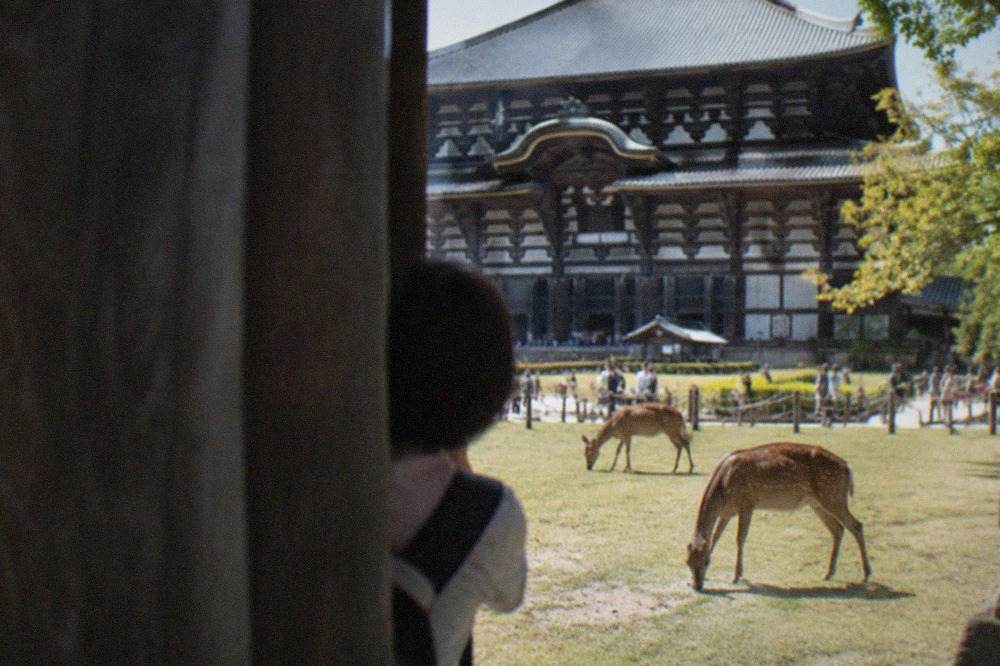
Nara works as a day trip from Kyoto for most travellers, at about 45 minutes and roughly 720 to 760 yen each way, but an overnight stay rewards anyone visiting in peak season, since the day-trip crowds thin after 16:00 and Todai-ji, Nara Park and Kasuga Taisha are all walkable from a central base.
Kyoto and Nara were both imperial capitals, both sit on the same rail corridor, and both are drowning in visitors, though at very different scales. The city's own 2025 tourism survey, released in June 2026, counted a record 62.79 million visitors to Kyoto, of whom 12.68 million were foreign. Nara publishes no comparable headline, but its park authority counted 1,687 deer in and around Nara Park on 15 and 16 July 2026, up 222 on the previous year, which tells you the pressure is rising there too. The question most travellers actually face is not which city is better. It is how to divide a finite trip between them, and whether Nara is a half-day errand or a destination with its own evenings.
This guide compares the two cities on the numbers that matter: rail time and fare, entrance fees, crowd patterns, food and what changes if you stay the night. The short version, argued in full below, is that Nara rewards a night more than most guides admit, because its daytime crowds are almost entirely day-trippers and they leave on the evening trains. For the wider picture of what the bigger city holds, the things to do in Kyoto roundup is the companion page.
How Far Apart Are Kyoto And Nara?
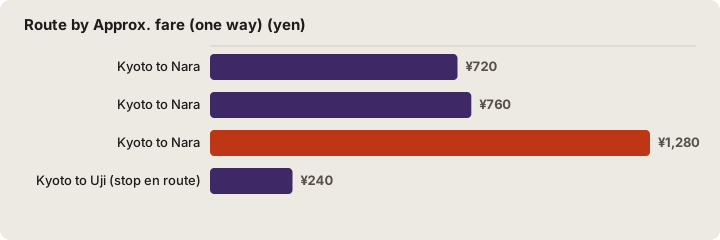
Nara sits about 45 minutes from Kyoto by train, with two competing railways and no need for a reserved seat. The JR Miyakoji Rapid covers the run in roughly 45 minutes at about 720 yen one way, while Kintetsu charges about 760 yen, or 1,280 yen with the 520 yen limited-express surcharge that cuts the trip to about 35 minutes. Both base fares come from secondary sources rather than operator fare pages, so treat them as close approximations and check the fare gate.
The two lines arrive at different ends of Nara. JR Nara Station sits west of the park, a 15 to 20 minute walk to Todai-ji through the Naramachi district. Kintetsu Nara Station is closer to the park itself, about 10 minutes on foot to Sarusawa Pond and the approach to Kasuga Taisha. For a day trip built around the park, Kintetsu's station position is the more convenient arrival point even before the limited-express time saving, and the base fare difference between the two operators is trivial.
Trains run frequently on both lines through the day, so the decision is really about your starting point in Kyoto. If you are staying near Kyoto Station, either line is a short walk to the platform. If you are based in the Higashiyama or downtown areas, the Karasuma subway line feeds Kyoto Station directly, and the Kyoto subway and bus pass covers the city leg before you transfer to JR or Kintetsu.
| Route | Operator | Approx. time | Approx. fare (one way) | Notes |
|---|---|---|---|---|
| Kyoto to Nara | JR Miyakoji Rapid | ~45 min | ~720 yen | Frequent, no reservation needed |
| Kyoto to Nara | Kintetsu express | ~45 min | ~760 yen | Station closer to Nara Park |
| Kyoto to Nara | Kintetsu limited express | ~35 min | ~1,280 yen | 520 yen surcharge, reserved seat |
| Kyoto to Uji (stop en route) | JR Nara Line | ~30 min | ~240 yen | Pairs with a Byodo-in visit |
A useful pattern for a longer trip is to break the journey at Uji, which sits on the JR Nara Line between the two cities. The Uji day trip adds Byodo-in, whose garden and museum entry is 700 yen for adults on the temple's own fee page, and a matcha district, before you continue to Nara.
Is Nara A Day Trip Or Does It Deserve A Night?
Nara works as a day trip for most first-time visitors, since the core sights, Todai-ji, Nara Park and Kasuga Taisha, sit within a 20 minute walk of each other and can be covered between trains. But it deserves a night if you are travelling in cherry blossom or autumn foliage season, or if you want the park after the day crowds leave, because the visitors who fill Nara between 10:00 and 16:00 almost all return to Kyoto or Osaka on the evening trains.
The arithmetic behind the day-trip answer is honest. Todai-ji's Daibutsuden, the Great Buddha hall, charges 800 yen for adults and university students and 400 yen for elementary school children, and opens 7:30 to 17:30 from April to October, 8:00 to 17:00 from November to March, every day, according to the temple's own information page. Nara Park is free, open and unavoidable, since the deer wander through it. Kasuga Taisha and the Naramachi merchant streets fill a full day without strain, and a return train in the early evening puts you back in Kyoto for dinner.
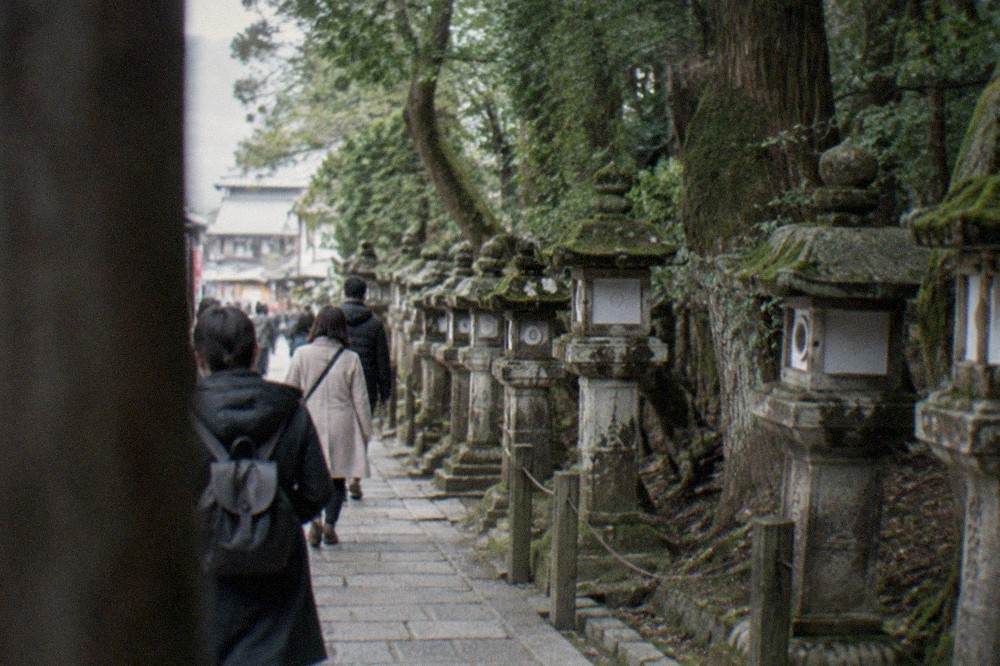
The case for the night is about the hours the day-trippers never see. The deer census gives a sense of the daytime scale: 1,687 animals counted in July 2026, of which 990 were does, 411 stags and 286 fawns. That population shares the park with a visitor flow that arrives on the morning trains and leaves on the evening ones. After 17:00, when Todai-ji's reception closes, the park quiets, the lantern-lit approach to Kasuga Taisha changes character, and the restaurants around Naramachi serve a local rather than a transient crowd. The same logic applies in reverse in Kyoto, where an overnight stay is the default, so the marginal value of a second or third Kyoto night is lower than the first Nara night.
The honest middle position: one night in Nara, at the start or end of your Kyoto stay, costs you little and buys you the park at dawn, when the deer gather near Todai-ji before the tour buses arrive. Travellers who skip the night rarely regret it. Travellers who take it, in peak season especially, almost never give it back.
If you would rather not plan the rail leg yourself, a guided product that includes Nara handles the transfer timing for you, and the options above are the ones worth comparing. The rest of this guide assumes you are deciding independently, because the independent version is genuinely easy on this corridor.
What Do Kyoto And Nara Cost To Visit Side By Side?
Kyoto is the more expensive city per day, chiefly because its temples charge admission individually and its accommodation tax rose sharply on 1 March 2026, with the top tier now 10,000 yen per person per night on rooms of 100,000 yen and up. Nara's single headline fee is Todai-ji's Daibutsuden at 800 yen, and its park is free, so a Nara day costs far less in entrances than a Kyoto day spent moving between Kinkaku-ji, Ginkaku-ji and Kiyomizu-dera.
Kyoto's temple fees are individually small but cumulative. Kinkaku-ji charges 500 yen, per its own access page. Ginkaku-ji doubled its adult fee from 500 to 1,000 yen on 1 April 2026, the temple's first revision in 32 years. Kiyomizu-dera charges 500 yen, though the temple does not print the figure on its own site and the amount rests on secondary confirmation. A Kyoto day visiting five temples can easily spend 3,000 yen per person on entrances alone, before lunch, before transport, before the accommodation tax tiers that now run from 200 yen on a budget room to 10,000 yen on a luxury one.
| Item | Kyoto | Nara |
|---|---|---|
| Headline temple fee | Kinkaku-ji 500 yen, Ginkaku-ji 1,000 yen (from Apr 2026) | Todai-ji Daibutsuden 800 yen |
| Free anchor sight | Fushimi Inari, paths with no closing time | Nara Park, open ground |
| City bus flat fare | 230 yen adult | 230 yen zone, limited routes |
| Accommodation tax top tier | 10,000 yen per person per night (from 1 Mar 2026) | Same city tiers do not apply |
| Day-trip rail | Two one-way fares at the rates above | Two one-way fares at the rates above |
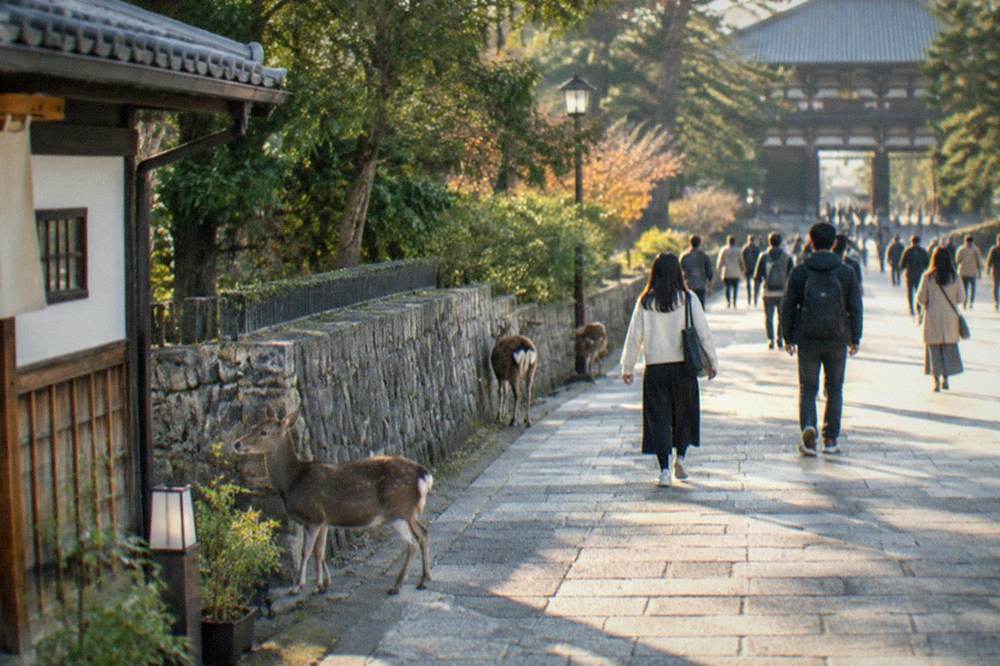
The comparison is not really about money, though. It is about density. Kyoto's 62.79 million visitors in 2025, of whom 46.20 million were day visitors, are spread across a city grid of temples, gardens and shopping streets. Nara's visitors concentrate in one park and one temple corridor. A Kyoto day can be engineered away from crowds by district and hour. A Nara day, between 10:00 and 15:00, cannot, because everyone is walking the same route from Kintetsu Nara Station to Todai-ji.
For budget planning across a whole trip, the Kyoto trip cost breakdown covers the city side, and the same rail fares and temple fees apply to the Nara leg. The pattern to remember is that Nara's costs are front-loaded into the train fare, while Kyoto's are scattered across a dozen small entrance fees that add up quietly.
A booked day tour also locks in your departure time, which is the single biggest lever on how Nara feels: the same park at 09:00 and at 15:00 are two different experiences. That is the strongest practical argument for letting someone else own the schedule, at least for one of your days.
Which City Has The Better Temples?
Kyoto has the deeper temple list, a dense cluster of UNESCO World Heritage sites inside and around the city, but Nara holds the older buildings and the single more overwhelming interior, the Daibutsuden, whose vast wooden hall houses the Great Buddha. The fair summary is that Kyoto rewards quantity and variety while Nara rewards age and scale, and Todai-ji's hall is older than any standing building in Kyoto's core temple set.
Nara's temples date from the eighth century, when the city was the capital, and Todai-ji's Daibutsuden remains one of the world's largest wooden buildings. Kyoto's era came later, from the late eighth century onward, and its surviving temple landscape is largely 14th to 17th century, rebuilt after fires that repeatedly swept the city. Sanjusangen-do, for instance, holds its 1,001 Kannon statues in a hall the temple itself calls a forest of statues, and the number is the temple's own count, but the building is a 13th century reconstruction of a 12th century original.
The deer are part of the temple question, not separate from it. Nara Park's deer are treated as divine messengers of Kasuga Taisha, which is why they roam protected across the temple district. The 2026 census recorded 140 deaths in the previous fiscal year, of which 36 were road accidents, a figure the park authority publishes openly. Feeding them is the famous tourist activity, and the etiquette is simple: bow, offer, and stop buying crackers when you want to leave, because the deer will follow the paper.
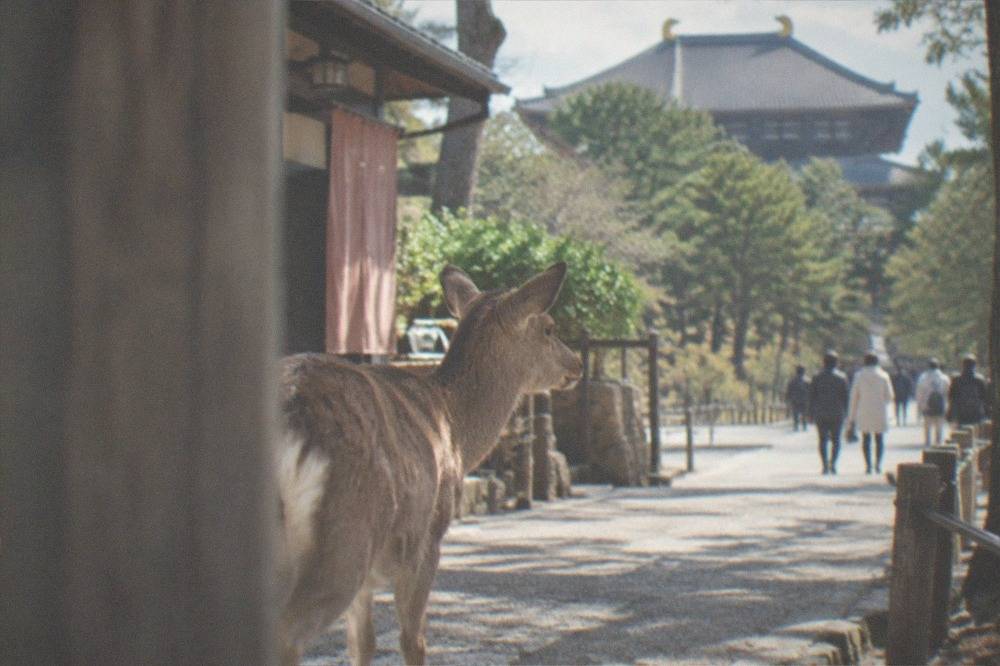
If temples are the trip's core purpose, the honest split is two-thirds Kyoto, one-third Nara. The one day in Kyoto itinerary shows how many temples a single day realistically holds. Nara then gets its own unhurried day rather than a compressed afternoon bolted onto a Kyoto morning, and an early start is the cheapest crowd tool you have.
An early-morning guided departure is the structured version of that advice: it puts you in the park before the mid-morning wave arrives from both cities. Whether you take a tour or simply set an alarm, the principle is identical, and it costs nothing.
When Are The Crowds Worst In Each City?
Kyoto's peak pressure falls in late March and early April for cherry blossom and late November for autumn foliage, while Nara's crowds track the same two windows plus every weekend, because its visitor base is overwhelmingly day-trippers arriving between 09:00 and 11:00 and leaving after 16:00.
The JMA phenology record gives the planning edge: Kyoto's cherries reached full bloom on 30 March in 2026 against a 1991-2020 normal of 4 April, and the maple red-leaf normal is 5 December, far later than most guides claim.
The Japan Meteorological Agency's Kyoto observatory tracks both. In 2025 the cherries flowered on 27 March and hit full bloom on 5 April. In 2026, flowering came on 23 March and full bloom on 30 March, a week ahead of the normal. Anyone booking a trip around the blossom should watch the JMA's live phenology feed rather than a fixed date, and should expect Nara's blossom to track Kyoto's within days, since the cities sit on the same plain.
Autumn is the more misplanned season. The JMA normal for the observatory's maple turning red is 5 December, and in 2025 the red leaves were observed on 10 December. The commercial foliage forecasts for the Arashiyama area in 2026 pointed to late November, which is a different thing from the official marker. The practical read: the last week of November is the crowd peak, and the first week of December is the better-kept secret, with thinner crowds and colour that the JMA's own record says is often still deepening.
| Season marker | 2026 observed | 1991-2020 normal | 2025 observed |
|---|---|---|---|
| Cherry flowering | 23 March | 26 March | 27 March |
| Cherry full bloom | 30 March | 4 April | 5 April |
| Maple red leaves | Not yet observed | 5 December | 10 December |
| Ginkgo yellow | Not yet observed | 24 November | 25 November |
The city's own crowd tool is worth knowing about: the Kyoto Tourism Comfort Forecast publishes a five-level crowd estimate for major spots and time slots, built from smartphone location data, weather and weekday patterns. It is the closest thing to a live crowd map either city offers, and Nara's day-trip flow is visible in it by proxy, since a red Kyoto morning usually means a red Nara afternoon.
Where Should You Stay, Kyoto Or Nara?
Stay in Kyoto and day-trip to Nara if your trip is four days or fewer, because Kyoto's sight density rewards a fixed base and the 45 minute rail link makes Nara a low-cost excursion. Split the stay, one or two nights in Nara, if your trip runs five days or more or if you are travelling in the March-April or November peaks, when the evening and early morning hours in Nara Park are the quietest sightseeing windows either city offers.
Kyoto's accommodation is broader and more expensive. The ryokan guide covers the traditional inn option, which is a Kyoto speciality at a price: Hyotei, the famous kaiseki house by Nanzen-ji, prints its own lunch kaiseki from 31,625 yen, which signals the level of the top tier. Remember the accommodation tax changed on 1 March 2026: a room between 20,000 and 50,000 yen now carries 1,000 yen per person per night, and rooms of 100,000 yen and up carry 10,000 yen.
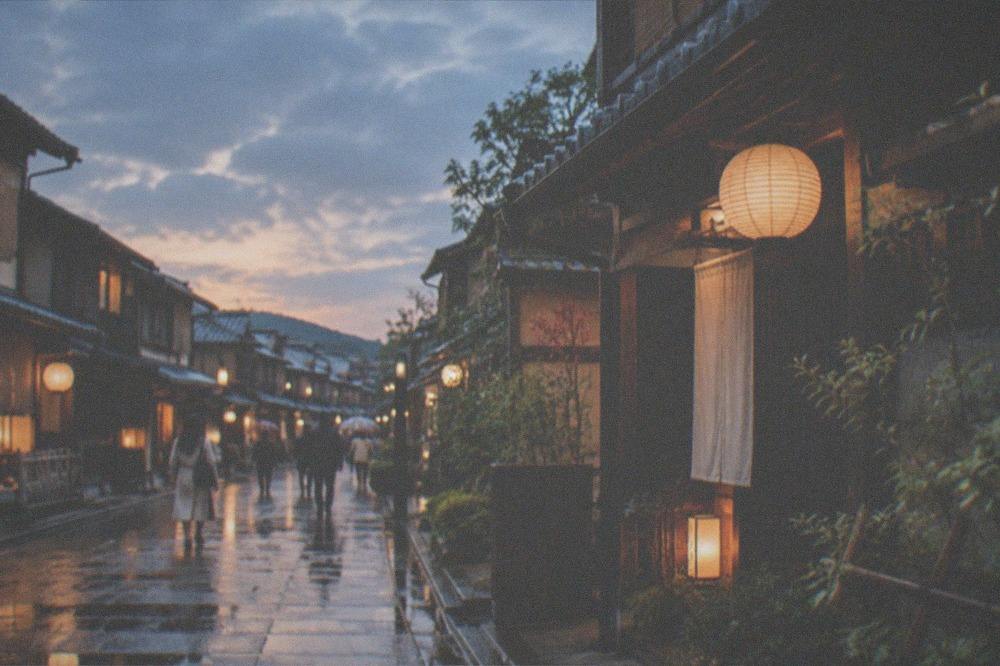
Nara's accommodation is smaller in scale but perfectly adequate for a night or two, clustered between the two stations and along the Naramachi streets. The advantage is not luxury. It is the park at first light, the deer at Todai-ji's wall before the first Kintetsu express unloads, and Kasuga Taisha's forest approach in the half-light. The Nara day trip guide covers the full sight list if you keep it to a day.
The rail logic also matters. If your trip includes Osaka, note that Nara sits between the two cities on the Kintetsu network, and the Kyoto vs Osaka comparison covers which base suits which itinerary. A Kyoto-Osaka-Nara triangle with a Nara night in the middle minimises backtracking, and the same triangle logic applies to the wider day trips from Kyoto set.
Can You Combine Kyoto And Nara In One Day?
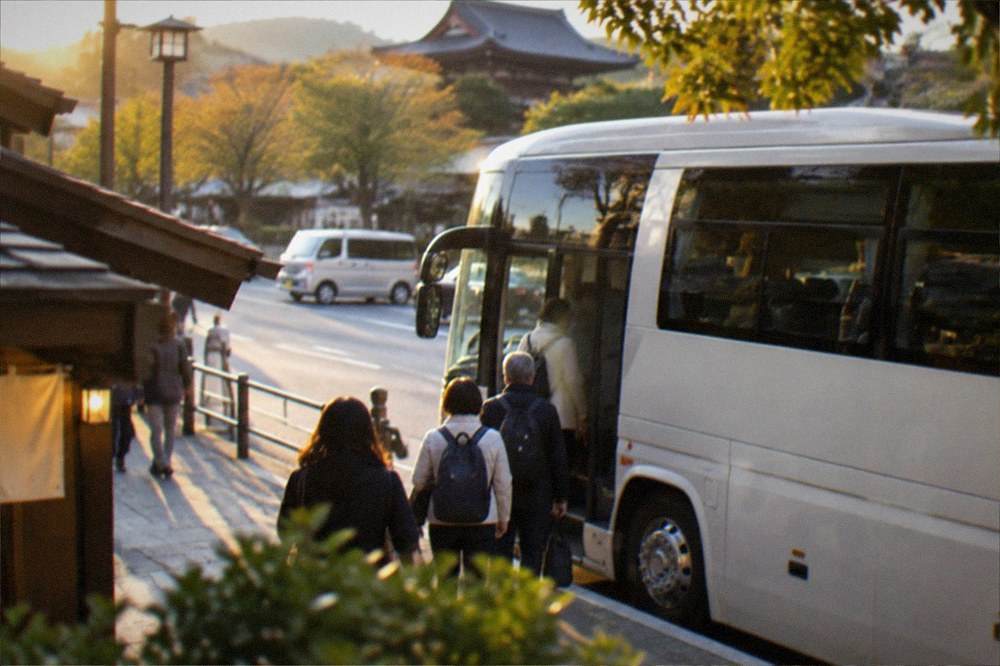
Yes, but only in the sense that a bus tour can do it: a guided one-day product covers Kyoto's headline sights and a Nara stop in a single 8 to 9 hour block, while doing both cities independently in one day means choosing two or three sights total and accepting that you will see neither city well. The independent version is a Kyoto morning at one temple plus a Nara afternoon, or the reverse, and nothing more.
The guided option solves the logistics problem, not the depth problem. The trade is real: a tour bus moves you efficiently between Kinkaku-ji, Fushimi Inari or Arashiyama and Nara Park, but each stop runs on the bus's clock. The independent version gives you the deer at your own pace and the temple hours on your own schedule, and the alternatives to the south and north of the city, including Kurama and Kibune and Miyama, reward the same early-start discipline.
The honest sequencing advice for a combined day: start in Kyoto at 08:30, when Ginkaku-ji opens at 08:30 in its summer season per its own hours page, take a late-morning train from Kyoto Station, arrive in Nara by noon, give the park and Todai-ji four hours, and return on an early-evening train. That is a full, workable day. Adding a third city, as some multi-stop products do, turns it into a windshield tour.
A multi-city bus product is the one case where combining stops in a single day genuinely works, because the operator owns the transfers. For everything slower and deeper, two separate days beat one compressed one, and the rail fares are low enough that the only real cost is time.
What About Food: Kyoto Or Nara?
Kyoto wins on range, from temple-town noodle lunches to Michelin-density kaiseki, while Nara's food identity is narrower and cheaper, built around kakinoha sushi, tea-pickled dishes and the Naramachi lunch set, with the practical note that a Nara food day costs roughly half a Kyoto one. Neither city is a food destination in the Osaka sense, and the Kyoto versus Osaka question is the more consequential food comparison on a Kansai trip.
Kyoto's food budget runs from inexpensive temple-town noodle lunches to Hyotei's kaiseki, which the restaurant's own site prices from 31,625 yen at lunch and 37,950 yen at dinner, tax and service included, while the same house's annex serves a morning rice porridge at 5,445 yen and a bento at 7,260 yen. Those are Hyotei's own published prices, not a city average, but they frame the ceiling honestly. On the everyday tier, Nishiki Market is the city's food street, though its shops keep their own hours and the association prints no unified opening times, so arrive mid-morning rather than trusting a single stated hour.
Nara's food is a lunch-and-snack town by visitor behaviour, because most of its visitors eat between 11:30 and 13:30 and leave. The restaurants around Naramachi and the two stations serve a solid midday set, and the evening scene, for those who stay, is local and unhurried. This is another quiet argument for the overnight: dinner in Nara is the meal the day-trippers never have.
| Comparison point | Kyoto | Nara |
|---|---|---|
| Headline meal ceiling | Kaiseki from 31,625 yen at one famous house | Mid-range set meals, no comparable ceiling |
| Market / street food | Nishiki Market, shops set own hours, no unified times | Naramachi lanes, daytime focus |
| Evening dining | Full range, late options | Local scale, thin after 21:00 |
| Signature item | Kaiseki, tofu, matcha sweets | Kakinoha sushi, tea-pickled cuisine |
For the fuller picture of the bigger city's food culture, Kyoto Travel Guide covers the restaurants, the matcha districts and the markets in depth. The food verdict between the two cities is really a scheduling verdict: eat seriously in Kyoto, eat simply and well in Nara, and save the ambitious meals for the city where you are sleeping.
Whichever way you split the stay, the products above are the ones that cover this corridor well, and each can be cancelled before travel if your plans shift. That flexibility matters on a two-city itinerary, where one delayed morning can cascade.
Common Questions About Kyoto Vs Nara
Is Nara A Day Trip Or Does It Deserve A Night?
Nara is a day trip for most travellers, at about 45 minutes and roughly 720 to 760 yen each way by train, with Todai-ji, Nara Park and Kasuga Taisha walkable from one arrival point. It deserves a night if you are travelling in cherry blossom or autumn foliage season, or if you want the park after the day-trip crowds leave on the evening trains.
How Many Days Should I Split Between Kyoto And Nara?
On a four-day trip, give Kyoto three full days and Nara one day trip. On a week-long trip, give Kyoto five days, Nara one day, and consider converting the Nara day into an overnight so you gain the early morning park hours before the first tour groups arrive.
Is Nara Closer To Kyoto Or Osaka?
Nara sits between the two cities on the Kintetsu network, reachable from either in under 45 minutes. The Kyoto to Nara run is about 45 minutes on the JR Miyakoji Rapid at roughly 720 yen, or about 35 minutes on a Kintetsu limited express with a surcharge, and the Osaka leg is comparable.
What Does It Cost To Enter Todai-ji?
The Daibutsuden charges 800 yen for adults and university students and 400 yen for elementary school children, per the temple's own information page. It opens 7:30 to 17:30 from April to October and 8:00 to 17:00 from November to March, every day.
Are The Deer In Nara Park Dangerous?
The deer are wild animals and the park authority treats them as such. The July 2026 census counted 1,687 deer, and the authority publishes its own figures on deer deaths, 140 in FY2025, of which 36 were road accidents. The practical etiquette is to bow, offer food only from official cracker sellers, and put your hands up and step away when you want to stop feeding.
Can I Visit Nara And Kyoto In The Same Day Without A Tour?
Yes, if you keep it to two or three sights. A Kyoto temple at opening time, a late-morning train from Kyoto Station, four afternoon hours in Nara, and an early-evening return is a full and workable independent day. Anything more ambitious needs a guided product or a second day.
The final word is a ratio, not a verdict. Give Kyoto the majority of your nights, because its 62.79 million annual visitors are chasing a sight list that genuinely needs days, and give Nara at least one unhurried daylight block, because its 1,687 deer and its eighth-century hall are 45 minutes and about 720 yen away. Whether that block ends with a return train ticket or a hotel key depends on your season and your appetite for empty parks at dusk, and both answers are right.