Day Trip From Kyoto To Miyama
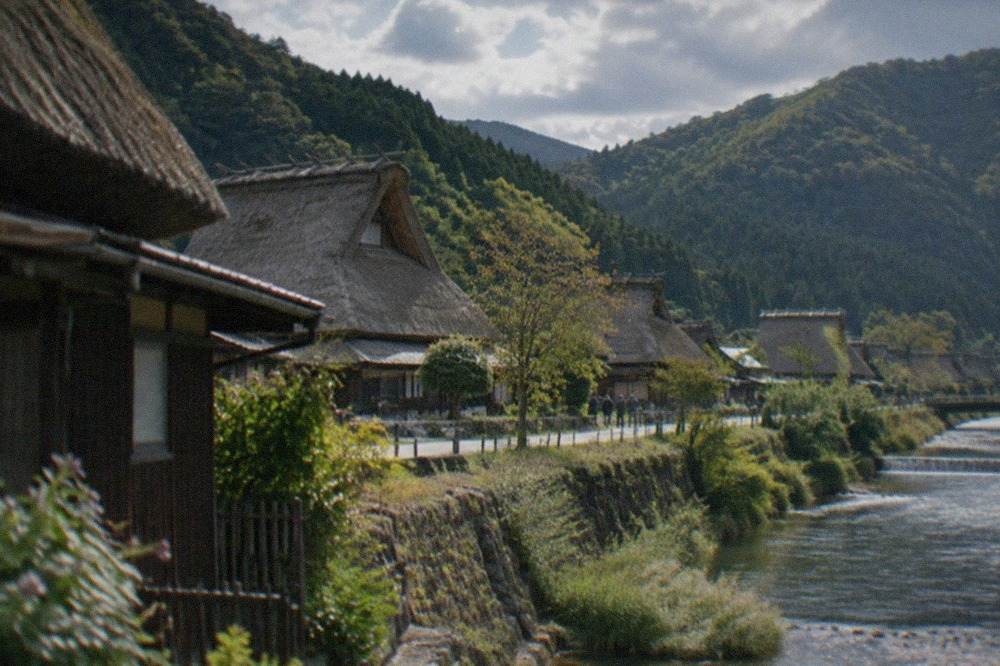
Miyama Kayabuki no Sato is a cluster of thatched-roof farmhouses in the mountains north of Kyoto, and it is one of the few places in Japan where people still live and work inside kayabuki houses rather than preserving them as museum pieces. Getting there without a car takes some planning, and this guide sets out the honest options.
Short answer
Miyama sits in the mountains of Nantan city, north of central Kyoto, and is reached by a combination of rail and connecting bus services rather than a single direct line. There is no bullet train and no subway; the practical choices are public transport with transfers, a hired private car with a driver-guide, or a guided day tour that bundles Miyama with Amanohashidate and the Ine boat houses on the same loop.
Miyama Kayabuki no Sato is a hamlet of steep-roofed thatched houses in the mountains north of Kyoto, and unlike most thatched-village attractions in Japan it is not a stage set. Residents live in the houses, farmers work the fields around them, and the settlement sits in a river valley that stays several degrees cooler than the city in summer and far snowier in winter. Kyoto drew a record 62.79 million visitors in 2025, according to the city's own June 2026 survey release, and almost all of them stayed inside the central basin; Miyama is what the mountains look like when the crowds thin out and the roads start climbing. This guide from Kyoto Travel Guide covers how to get there without a car, what the trip realistically costs, when to go, and how a guided tour compares with independent travel.
How Do You Get To Miyama Kayabuki no Sato From Kyoto Without A Car?
There is no direct train or bus from Kyoto Station to Miyama, so every car-free route involves at least one transfer, usually a rail leg from Kyoto toward the northern mountains followed by a connecting local bus into the valley. The rail operators and the local bus carrier each publish their own timetables and fares, and neither figure appears in this site's verified fact base, so the honest answer is to check the operators' current timetables before committing to a schedule.
The geography explains the awkwardness. Miyama lies in Nantan city, well north of the Kyoto basin, in a valley served by rural bus routes rather than the dense urban network of the city centre. Kyoto's own flat bus fare of 230 yen and its subway fares of 220 to 360 yen, both confirmed on the city's transport bureau pages, apply inside the city and stop at the municipal boundary; the northern legs are priced by different operators on different fare tables.
What that means in practice:
- Start from Kyoto Station on the rail line heading north, and change to the local bus that serves the Miyama area.
- The transfer point and the bus frequency matter more than the train speed, because rural buses run to a thin timetable and a missed connection can cost an hour or more.
- The last return buses run early in the afternoon in some seasons, so an independent day trip needs a planned departure time, not a vague intention to head back "before dark."
- Snow in winter occasionally suspends mountain bus services; check the operator's service notices the day before.
The city's 2025 survey recorded 62.79 million visitors against 56.06 million in 2024, and part of the response has been active dispersal: the city and the tourism association promote off-peak and out-of-basin destinations precisely because the central sights are saturated. Miyama is one of the destinations that benefits from that push, and the trade-off for the thin transport is a village that still feels like a working community rather than a queue.
For travellers who would rather not gamble on a rural bus connection, two alternatives exist. A hired private car with a driver-guide removes the timetable risk entirely, and a guided day tour that includes Miyama handles the logistics as part of a northern loop. Both are covered in the sections below.
What Is Miyama and Why Is It Worth The Trip From Kyoto?
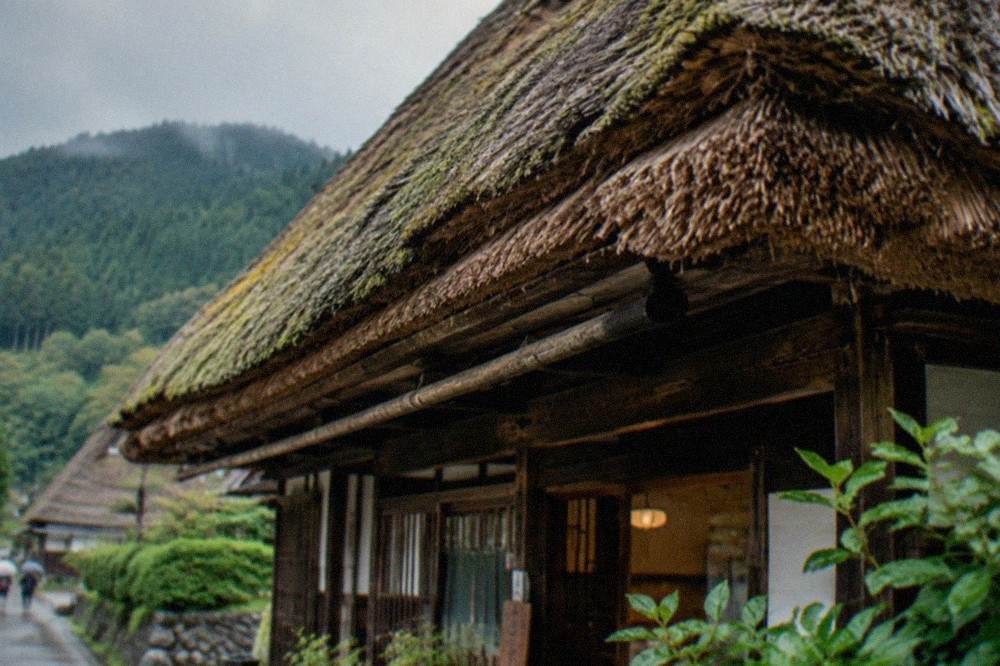
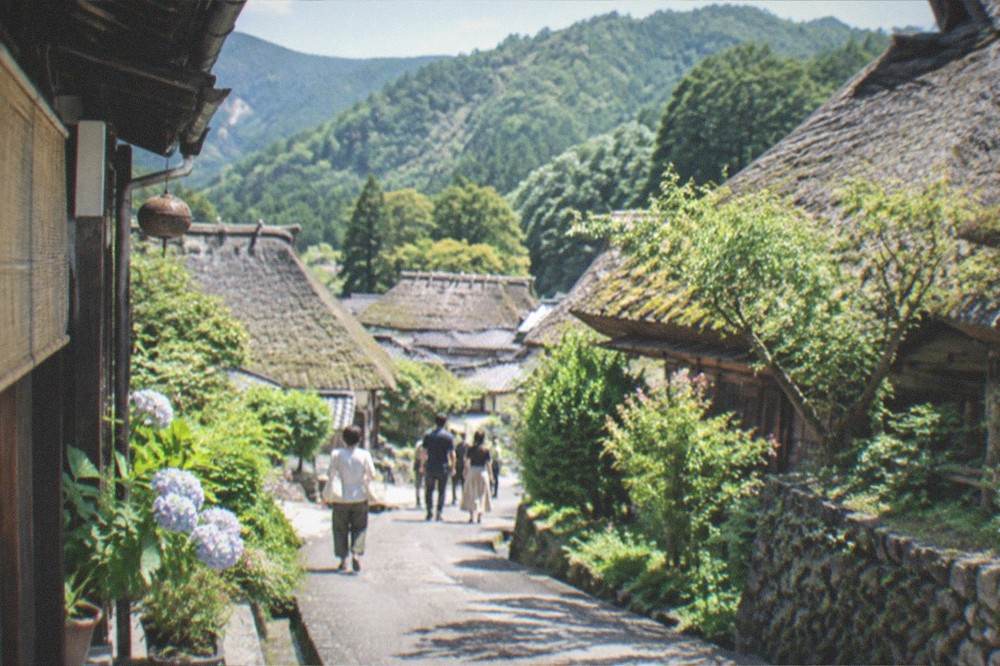
Miyama Kayabuki no Sato is a hamlet of thatched-roof houses, known in Japanese as kayabuki, where the buildings are homes and working farmhouses rather than museum reconstructions, set in a forested valley of the Miyama river north of Kyoto. The village's reputation rests on the density of surviving thatched houses in one place and on the fact that they are lived in, which separates it from open-air museums where similar buildings were relocated and roped off.
The thatched roof is the point. A kayabuki roof is thick, steep and organic, rebuilt in a communal re-thatching process that keeps the craft alive, and the hamlet's houses cluster along the river with vegetable gardens and rice paddies between them. Photographs of the village in snow, with the deep eaves white-edged and smoke rising from the hearths, are among the most widely circulated images of rural Japan, and the setting is what earns them: mountains close in on three sides, and the valley floor is narrow enough that the houses read as a single street.
What the verified fact base does not hold, this guide will not invent. No admission fee, founding year, house count or visitor statistic for Miyama appears in the research behind this site, so none is printed here. The hamlet does contain a small museum house, shops and places to eat, and opening arrangements change seasonally; the local tourism association's own pages are the source to check for current hours and any parking or facility fees before you travel.
Why it is worth the trip, in plain terms:
- It is the closest concentration of genuine thatched farmhouses to Kyoto that can be done, with effort, in a day.
- The valley is dramatically cooler in summer and deeply snowy in winter, so it offers weather the city cannot.
- It pairs naturally with other northern Kyoto Prefecture destinations, which is exactly how the better tours route it.
The contrast with the city is the whole appeal. Kyoto's central temples charge admission and two of them changed it in 2026, Ginkaku-ji doubling to 1,000 yen in April and Tofuku-ji revising on 1 November; Miyama asks for nothing comparable and delivers a completely different register of the prefecture. For a first-time visitor the standard advice holds: see the headline sights first, using a plan like our one-day Kyoto itinerary, and save Miyama for a second or third day when the temple fatigue sets in.
Is A Guided Tour To Miyama Better Than Going Independently?
For most travellers without a car, a guided tour is the better option, because the tour price buys the two things independent transport cannot guarantee: a seat all the way into the valley and a fixed return time. The strongest fit is the Kyoto and Osaka Amanohashidate, Ine Funaya and Miyama day tour, which runs about 10 hours from $52 per person and is rated 4.9 from 597 reviews, bundling Miyama into a northern loop that would take two separate bus journeys to replicate.
The arithmetic is not close. An independent trip means a rail fare, a rural bus fare each way, the risk of a missed connection in both directions, and time spent studying timetables in Japanese. A tour means one booking, one pickup, and a guide who knows which stop matters. The trade-off is control: you leave when the tour leaves and you see the village for as long as the schedule allows, not as long as you like.
The current tour options that include Miyama, from this site's verified product roster:
| Tour | Length | From | Traveller rating |
|---|---|---|---|
| Kyoto/Osaka: Amanohashidate, Ine Funaya and Miyama Day Tour | 10 hours | $52 per person | 4.9 from 597 reviews |
| Kyoto: Private Customizable Day Tour with Guide and Vehicle | 1 day | $335 per group | 4.8 from 719 reviews |
| Kyoto Private Car Tour, Full Day with Local Guide and Nara Option | 8 hours | $220 per person | 4.9 from 310 reviews |
The private options cost more and do not automatically include Miyama in their standard route, but a customizable car tour can be pointed at the northern mountains, and the driver solves the rural-bus problem entirely. For a group of three or four splitting a per-group price, the per-person gap against a coach tour narrows considerably, and you set the departure time.
One more option belongs on the list even though it does not reach Miyama: for travellers whose real goal is simply "Kyoto without the driving," the 10 Must-see Spots in Kyoto One Day Private Tour, from $190 per person and rated 5 from 1,373 reviews, covers the city's headline sights with a guide and vehicle, and its full write-up sits on the 10 Must-see Spots private tour page. A reasonable plan is one day of that, then a separate northern day.
Going independently still suits some travellers. If you travel slowly, read Japanese timetables comfortably, or are pairing Miyama with an overnight in the mountains, the bus-and-rail route is entirely workable, and the savings are real. What it is not, is a spontaneous decision made on the morning of the trip.
What Does A Miyama Day Trip From Kyoto Cost?
A car-free Miyama day trip costs a rail fare plus a rural bus fare each way, plus food, and the transport component is set by operators whose current fares are not in this site's verified fact base, so no single total is honestly printable. A guided tour instead costs from $52 per person for the 10-hour northern loop, and a private car day runs from $220 per person or $335 per group depending on the product.
What can be stated with confidence is the cost structure around the trip. Inside Kyoto city, the verified fares are the city bus flat fare of 230 yen, subway fares of 220 to 360 yen by zone, and the Subway and Bus One-Day Pass at 1,100 yen for adults and 550 yen for children, all confirmed on the city transport bureau's own pages. Those cover getting to and from Kyoto Station at the start and end of the day. The northern legs are priced separately.
The verified pieces of a day's budget:
| Item | Cost | Source status |
|---|---|---|
| City bus fare, each ride | 230 yen adult, 120 yen child | verified, city transport bureau |
| Subway fare, zones 1 to 5 | 220 to 360 yen adult | verified, city transport bureau |
| Subway and Bus One-Day Pass | 1,100 yen adult, 550 yen child | verified, city transport bureau |
| Northern rail and bus legs to Miyama | check the operators' fare tables | not in the verified fact base |
| Guided northern loop tour including Miyama | from $52 per person | verified product roster |
| Private car day tour, per person | from $220 per person | verified product roster |
Two Kyoto-wide costs are worth knowing before you book anything. The accommodation tax changed on 1 March 2026, and the top tier now runs to 10,000 yen per person per night for rooms of 100,000 yen and up, with a 20,000 yen room carrying 1,000 yen per person per night instead of the old 500; the tiers apply to the room-only charge. If you turn the Miyama trip into an overnight in the mountains, that tax applies to the lodging bill. And the old bus-only one-day pass no longer exists; sales ended in September 2023 and the final day of use was 31 March 2024. Any guide still recommending it is years out of date, and the current product is the Subway and Bus One-Day Pass.
Food in Miyama itself runs from simple soba and river-fish restaurants to farmhouse experiences, and prices are set by individual operators; treat any figure you see online as a planning range and confirm on the day. The village's facilities are modest by design, which is part of what you are travelling for.
When Is The Best Time Of Year To Visit Miyama From Kyoto?
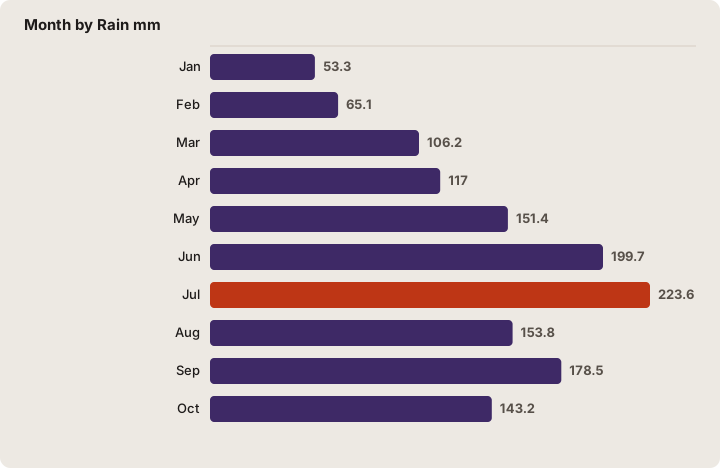
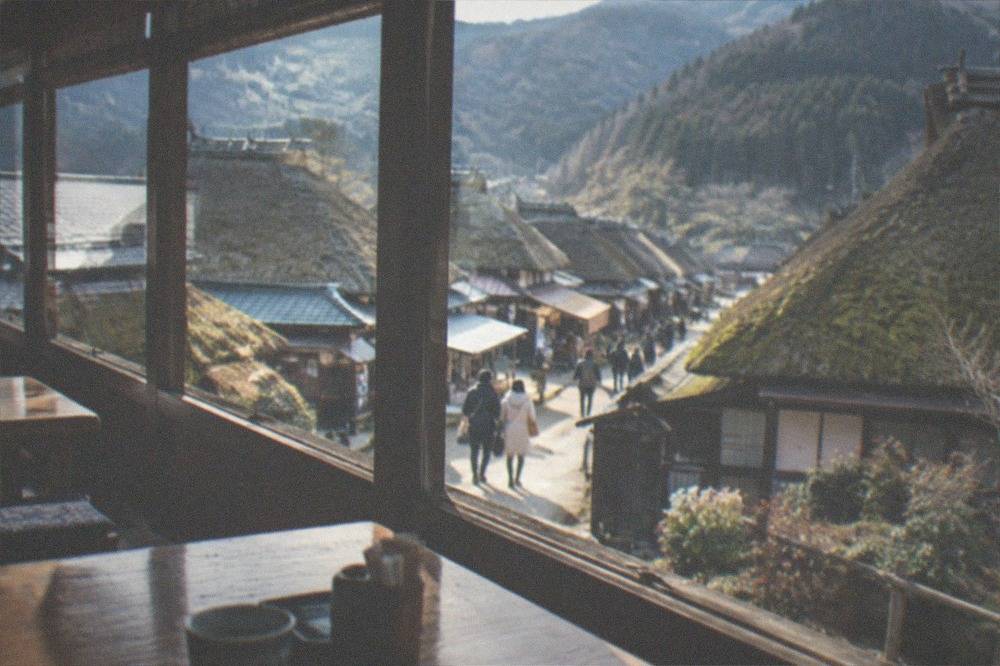
Deep winter and high summer are the two seasons that make Miyama worth the extra effort: January to February for snow settling on the thatched roofs, and July to August for a valley that runs several degrees cooler than the Kyoto basin. July is Kyoto's wettest month at 223.6 mm and August its hottest at a 28.5 C mean under the JMA 1991-2020 normals, so pack accordingly.
The climate table below is the JMA 1991-2020 normals for Kyoto station, the verified record behind every seasonal claim on this site. The mountain valley at Miyama shifts these numbers colder and snowier in winter and cooler in summer, but the city data gives the honest baseline for planning.
| Month | Rain mm | Mean C | Mean daily max C | Sunshine h |
|---|---|---|---|---|
| Jan | 53.3 | 4.8 | 9.1 | 123.5 |
| Feb | 65.1 | 5.4 | 10.0 | 122.2 |
| Mar | 106.2 | 8.8 | 14.1 | 155.4 |
| Apr | 117.0 | 14.4 | 20.1 | 177.3 |
| May | 151.4 | 19.5 | 25.1 | 182.4 |
| Jun | 199.7 | 23.3 | 28.1 | 133.1 |
| Jul | 223.6 | 27.3 | 32.0 | 142.7 |
| Aug | 153.8 | 28.5 | 33.7 | 182.7 |
| Sep | 178.5 | 24.4 | 29.2 | 142.7 |
| Oct | 143.2 | 18.4 | 23.4 | 156.0 |
| Nov | 73.9 | 12.5 | 17.3 | 140.7 |
| Dec | 57.3 | 7.2 | 11.6 | 134.4 |
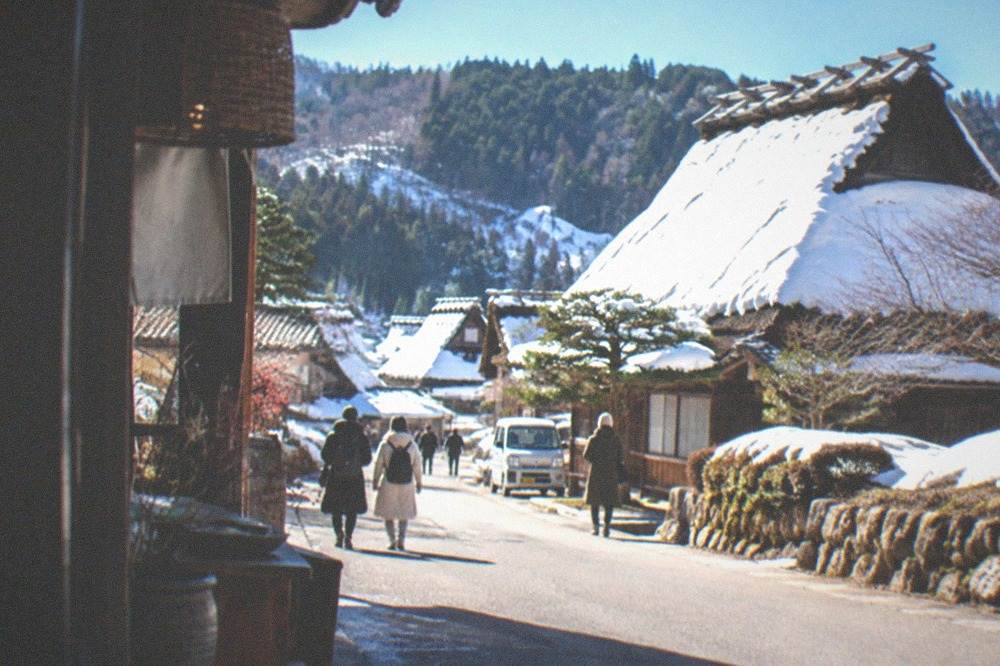
Read that table against Miyama's character. January is Kyoto's coldest and driest month, 4.8 C mean and 53.3 mm of rain, and in the northern valley that dry cold translates to stable snow on the roofs, the village's most photographed state. The trade-off is winter bus reliability: mountain roads and rural services can be disrupted by snow, so a winter independent trip needs a fallback plan, and a winter tour needs a weather-cancellation policy checked before booking.
Summer inverts the logic. The city's mean daily maximum hits 32.0 C in July and 33.7 C in August, and three of Kyoto's six hottest days on record fell in the summers of 2024, 2025 and 2026, per the JMA station records. Miyama's valley offers genuine relief, which is why the summer months are when the village earns its keep as a day trip. Bring rain gear either way: July's 223.6 mm makes it the wettest month of the year, ahead of June's 199.7 mm, a fact that surprises visitors who assume the rainy season peaks in June.
Autumn deserves a specific caveat. The JMA phenology record puts the normal date for the observatory's maple specimen turning red at 5 December, with 2025 observed on 10 December, and the 2026 private forecasts for the Kyoto area point to late November and early December. Mid-November trips to Miyama will find colour in the mountains, but the deep-red peak in that northern valley tends to arrive with the calendar rather than ahead of it. Our Kyoto weather guide carries the full seasonal breakdown.
Where Can You Combine Miyama With Other Day Trips From Kyoto?
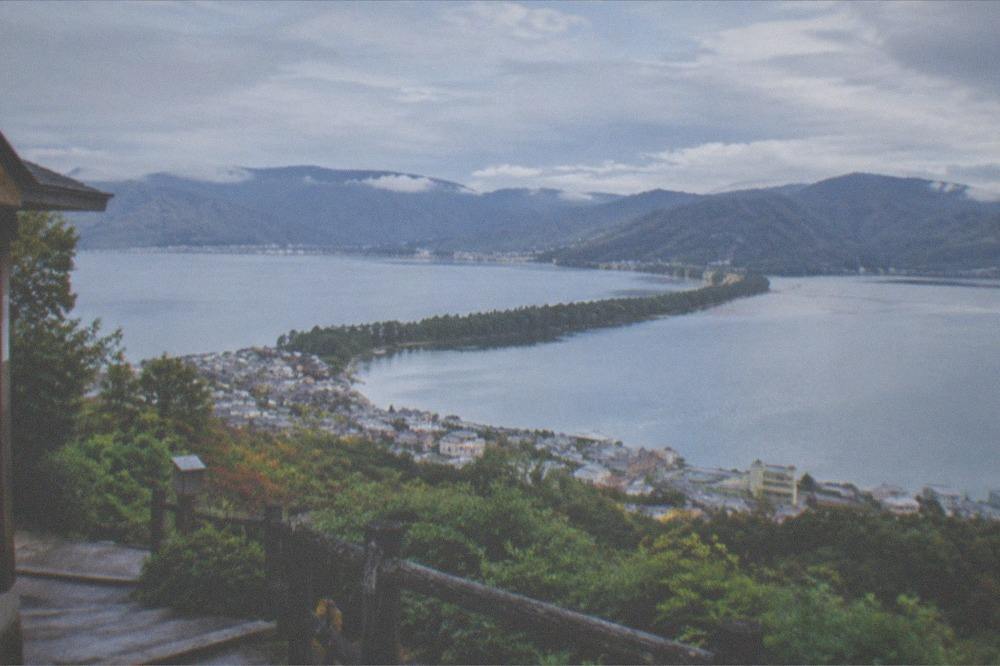
The natural pairing is the northern Kyoto Prefecture coast: Amanohashidate, the pine-barred sandbar, and Ine, the village of funaya boat houses on the water, both of which sit on the same loop that the guided tours run in a single 10-hour day. Inland alternatives from Kyoto include Kurama and Kibune for temple-and-river hiking, Ohara for mountain temples, and Takao for a quiet gorge, each reachable by rail or bus from the city.
The northern loop is the reason the tours work. Amanohashidate, Ine and Miyama are spread across a wide rural area that is slow to cover by public transport but efficient by coach, which is exactly the shape of the 10-hour tour at $52. Doing the same three independently would consume two days and several transfers, and the funaya boat houses in particular sit at the end of thin bus routes.
The inland options suit a different mood. Kurama and Kibune offer a mountain temple, a cedar-lined hike and river-side dining in summer, all on a rail line out of the city. Ohara is a temple village in its own mountain basin, quieter than Arashiyama and greener than Higashiyama. Takao narrows to a river gorge with temples and maples. And Amanohashidate and Ine is the coastal half of the Miyama loop if you want to split it across two days.
How the main northern and inland options compare:
| Destination | Character | Best season | Transport reality |
|---|---|---|---|
| Miyama Kayabuki no Sato | living thatched village | winter snow, summer cool | rail plus rural bus, or tour |
| Amanohashidate and Ine | sandbar and boat-house bay | spring to autumn | long loop, tour-friendly |
| Kurama and Kibune | mountain temple and river valley | summer and late autumn | direct rail from the city |
| Ohara | temple basin, gardens | autumn colour | bus from the city |
| Takao | gorge, quiet temples | late autumn | short rail plus walk |
For the full spread of options beyond the mountains, our day trips from Kyoto guide covers Nara, Osaka, Kobe and the coast, and the broader things to do in Kyoto page anchors the city itself. If the northern loop has won you over, the tour below is the one that runs it.
Should You Stay Overnight In Miyama Instead Of Day-Tripping?
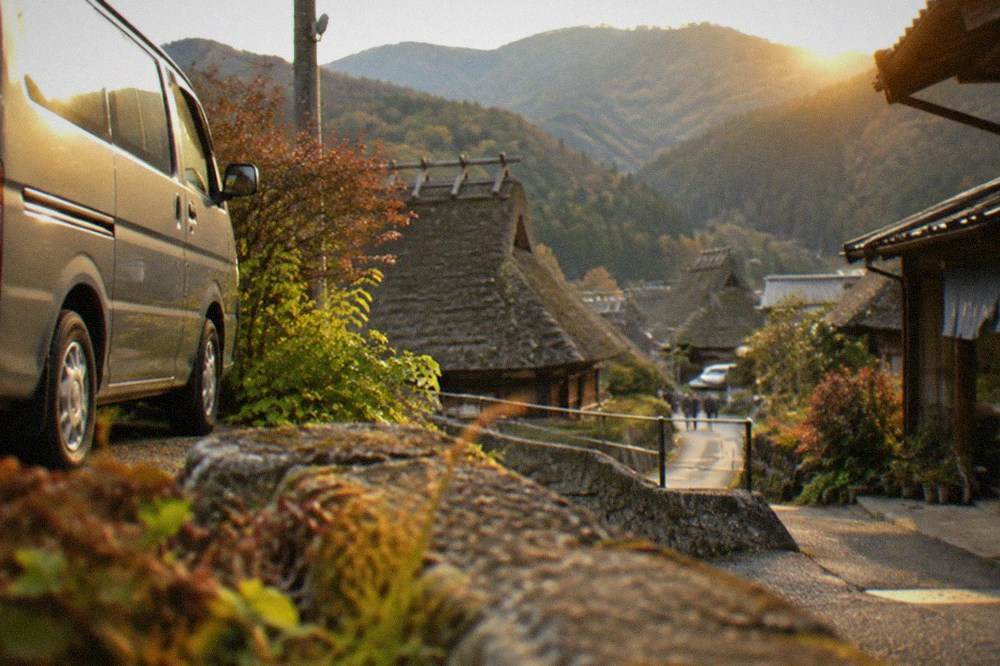
An overnight stay turns the trip from a logistics exercise into the point of the visit, because the valley's best hours are early morning and late evening, when the day-trippers are gone and the light moves across the thatch. The cost is limited accommodation in the village itself, mostly small guesthouses and farmhouse stays, plus Kyoto's revised accommodation tax, which from 1 March 2026 runs from 200 yen per person per night on the cheapest rooms up to 10,000 yen on the most expensive.
The tax table matters more than most visitors expect, because it is charged per person per night on the room-only rate, and the upper tiers changed sharply in 2026. A 20,000 yen room that carried 500 yen before March 2026 now carries 1,000 yen; a 50,000 yen room that carried 1,000 yen now carries 4,000 yen. The city's own announcement sets the expected revenue at about 12.6 billion yen a year, which gives a sense of scale.
| Room rate per night | Tax per person per night | Before 1 March 2026 |
|---|---|---|
| Under 6,000 yen | 200 yen | 200 yen |
| 6,000 to under 20,000 yen | 400 yen | 400 yen |
| 20,000 to under 50,000 yen | 1,000 yen | 500 yen |
| 50,000 to under 100,000 yen | 4,000 yen | 1,000 yen |
| 100,000 yen and above | 10,000 yen | 1,000 yen |
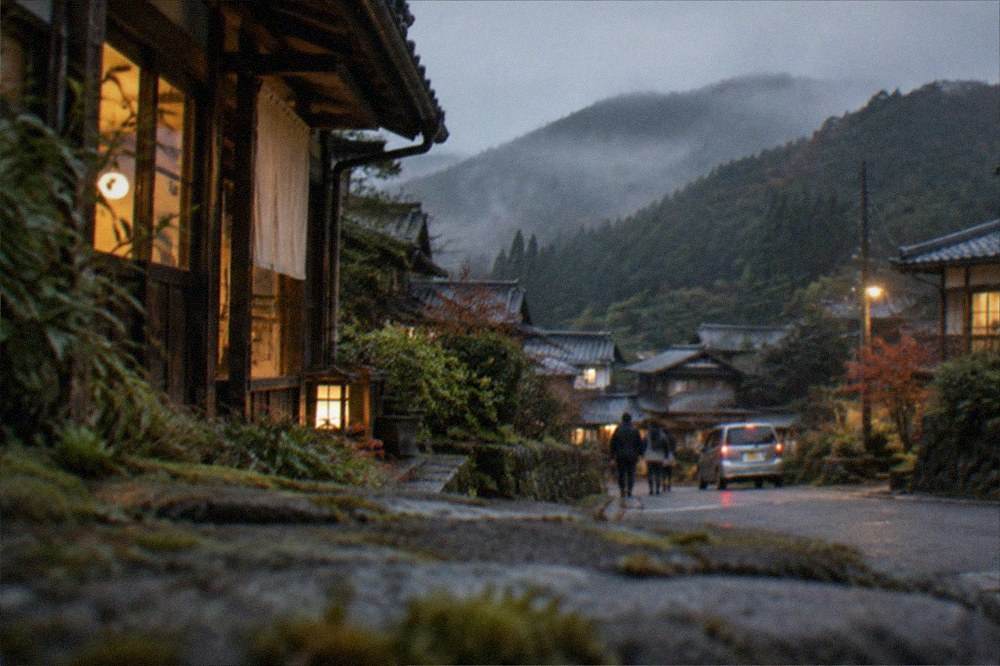
Whether the overnight is worth it depends on what you want from Miyama. Photographers and slow travellers get the village at dawn and dusk, hearth smoke in cold months, and no pressure to catch a return bus. Everyone else gets a very early night in a valley with limited dinner options. Book well ahead for any stay inside the hamlet, and confirm directly with the property what meals are included, because rural guesthouses often serve dinner only to pre-booked guests.
Common Questions About A Miyama Day Trip From Kyoto
How Do You Get To Miyama Kayabuki no Sato From Kyoto Without A Car?
By rail from Kyoto Station toward the northern mountains, then a connecting local bus into the Miyama valley. There is no direct service, the transfer is the schedule's weak point, and the current fares and timetables sit with the operators, so check them before you set a plan. A guided tour or a private car removes the connection risk entirely.
Is Miyama Worth The Trip Compared With Kyoto's Temples?
It depends on your pace. If you have two days or more in the region, Miyama offers something the temples cannot: a living thatched village in a mountain valley, cooler in summer and snowier in winter than the city. On a strict one-day first visit, the headline sights of Kyoto are the better use of the time.
Can You Visit Miyama And Amanohashidate On The Same Day?
Yes, and that combination is exactly what the guided northern loop tours run, covering Miyama, Amanohashidate and the Ine funaya boat houses in about 10 hours from $52 per person. Independently it is possible but slow, with multiple transfers on thin rural routes.
Does It Snow In Miyama?
Yes, and more reliably than in central Kyoto, because the village sits in a mountain valley north of the basin. Kyoto city's January mean is 4.8 C under the JMA 1991-2020 normals; the valley runs colder than that, and the thatched roofs in snow are the village's signature image. Check winter bus service notices before travelling independently.
Is There An Admission Fee For Miyama Kayabuki no Sato?
The hamlet is a living residential village rather than a gated attraction, and this site's verified fact base holds no admission figure for it, so none is printed here. Individual facilities inside the village, including the museum house, set their own fees and hours; the local tourism association's pages carry the current arrangements.
What Is The Cheapest Way To Reach Miyama From Kyoto?
Independent rail and bus is the cheapest in pure fare terms, though the northern legs' fares are not in this site's verified fact base. The cheapest structured option is the guided northern loop tour from $52 per person, which includes the transport that would otherwise be two operators' tickets plus the connection risk.
The Short Version On Miyama
Miyama rewards travellers who plan around its weaknesses: the thin bus timetables, the seasonal weather, the modest facilities. Go by tour if you want the northern loop in one day, go by private car if you want control, and go independently only if a rural transfer schedule genuinely appeals to you. Pick winter for the snow on the thatch or summer for the valley's cool, carry rain gear in July regardless, and confirm any figure not printed on this page with the operator rather than assuming it.
The village has kept its roofs thatched and its houses lived-in for generations, and it asks exactly one thing of its visitors: arrive having done the homework.