What Does A Night In A Kyoto Ryokan Cost With Kaiseki Dinner?
A night in a Kyoto ryokan with kaiseki dinner can run from modest family-run inn prices to above 37,000 yen per person at one of the city's most famous kaiseki houses, and the accommodation tax that applies changed on 1 March 2026.
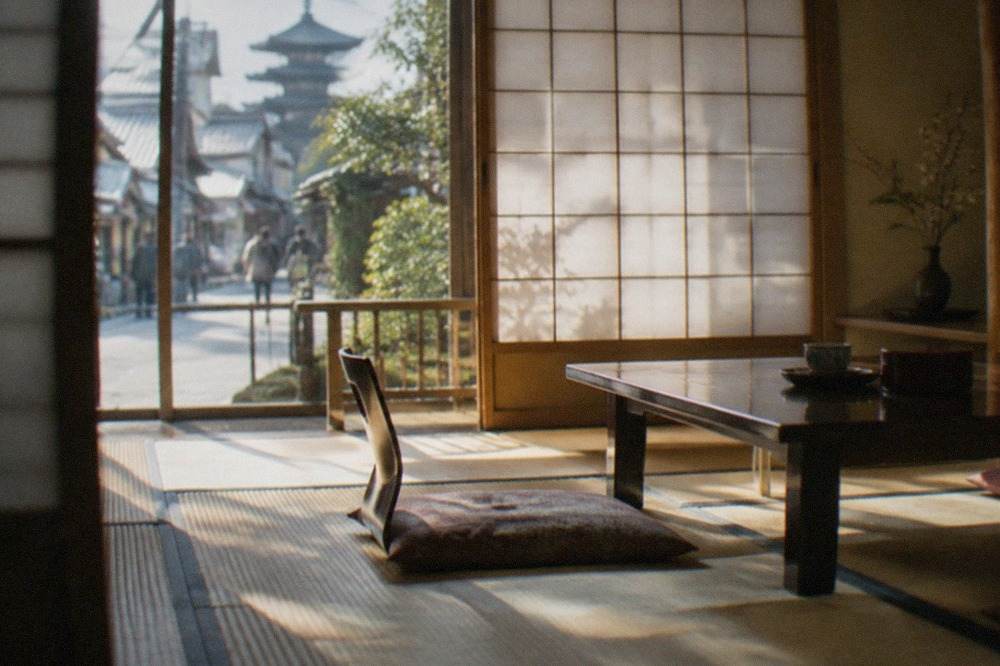
Short answer
Ryokan packages in Kyoto are priced per person per night with meals, kaiseki at the top houses opens above 30,000 yen per person (Hyotei's own menu lists kaiseki from 31,625 yen at lunch and 37,950 yen at dinner), and the accommodation tax now runs 200 to 10,000 yen per person per night depending on the room rate.
Staying in a ryokan is the single most expensive line in most Kyoto trip budgets, and it is also the line most guides price badly. The reason is simple: a ryokan is not a hotel room with a Japanese aesthetic. It is a package, usually one night with dinner and breakfast included, priced per person rather than per room, and the dinner half of that package is kaiseki, a multi-course meal whose price tier quietly decides the whole bill. Then, from 1 March 2026, the city changed its accommodation tax so that an expensive room now carries up to twenty times the tax of a mid-range one, and most English-language guides still print the old tiers. This guide puts real, sourced numbers on every piece of the bill: what the room costs, what the kaiseki actually runs at a house that publishes its own prices, how the new tax tiers bite, and where the honest savings are.
What Does A Night In A Kyoto Ryokan Cost With Kaiseki Dinner?
A night in a Kyoto ryokan with kaiseki dinner spans an enormous range: modest family-run inns price their packages at the low end of the scale, mid-range inns with private baths sit higher, and the top houses sit far above those. At Hyotei, one of the most famous kaiseki restaurants in the city, the kaiseki course alone opens from 31,625 yen at lunch and 37,950 yen at dinner, tax and service included, on the restaurant's own published menu.
The honest way to answer this question is to separate the three components that make up the bill, because they move independently. The room, the meal, and the tax each follow their own logic, and a package price hides all three.
Start with the meal, because it is the anchor. Kaiseki is the formal, seasonal, multi-course dinner that a serious ryokan builds its evening around, and at the very top of the city's dining culture it is not a bargain category. Hyotei, by Nanzen-ji, is a Kyoto institution, and it prints its prices on its own website, tax and service included. Kaiseki in the main building runs from 31,625 yen per person at lunch and from 37,950 yen at dinner. Those are Hyotei's prices for Hyotei's rooms on the dates it publishes, not a city average, and they should never be generalised into "kaiseki in Kyoto costs X". What they do establish is a threshold: at one of the most famous kaiseki houses in the city, the course itself opens above 30,000 yen per person.
The room sits on top of that. A ryokan prices per person per night, usually with two meals included, and the spread between a small family-run inn and a top-tier one is a factor of five or more. What you are paying for at the upper tiers is not just space but the meal's quality, the bath (private open-air rotenburo versus a shared one), the building's age and garden, and the ratio of staff to guests.
The tax is the newest and least understood piece. Kyoto charges an accommodation tax per person per night, on the room-only rate excluding meals and consumption tax, and the tiers changed on 1 March 2026. A room in the 20,000-to-50,000 yen band now carries 1,000 yen per person per night, where it carried 500 before. A suite at 100,000 yen or above carries 10,000 yen per person per night, where it carried 1,000 until the end of February 2026. The city expects about 12.6 billion yen a year from the revised tax. Print the tier that applies to the room you are actually discussing, never a flat figure.
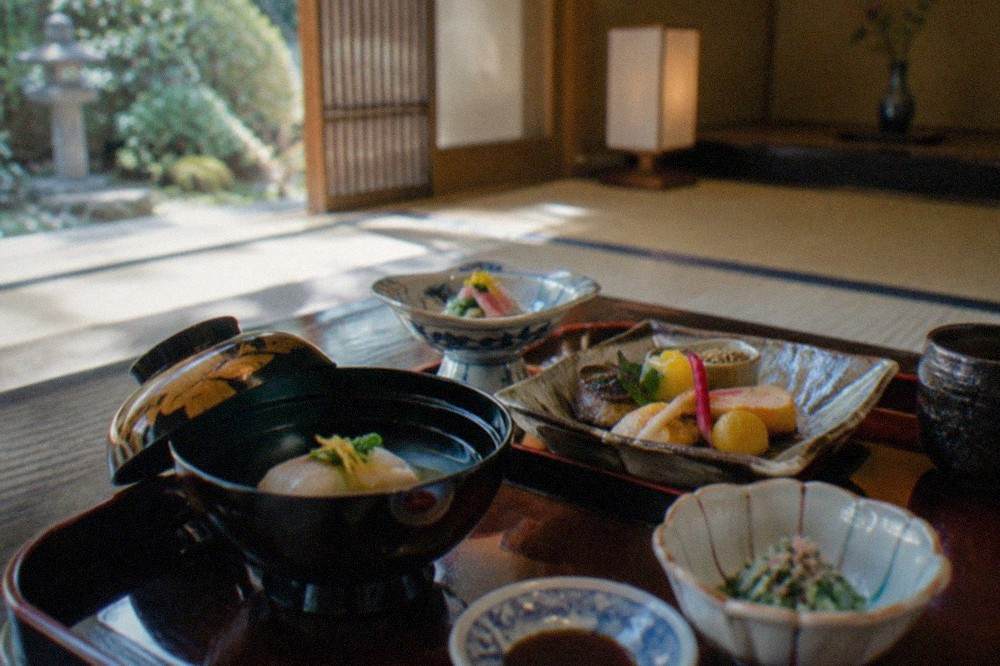
How The Kyoto Accommodation Tax Changed On 1 March 2026
Kyoto's accommodation tax is charged per person per night on the room-only rate, and from 1 March 2026 the top tier rose from 1,000 to 10,000 yen. The five tiers are: under 6,000 yen rooms pay 200, 6,000 to under 20,000 pay 400, 20,000 to under 50,000 pay 1,000, 50,000 to under 100,000 pay 4,000, and 100,000 yen and above pays 10,000 yen per person per night. The tax base excludes meals and consumption tax.
This is the fact most competing guides get wrong, because their pages were written before the revision. A 2024 or 2025 guide will tell you the maximum is 1,000 yen per night. It is now ten times that at the top, and the mid tiers moved too: the 20,000-to-50,000 band doubled from 500 to 1,000, and the 50,000-to-100,000 band quadrupled from 1,000 to 4,000.
| Room rate per person per night (room only) | Tax before 1 March 2026 | Tax from 1 March 2026 | Change |
|---|---|---|---|
| Under 6,000 yen | 200 yen | 200 yen | unchanged |
| 6,000 to under 20,000 yen | 400 yen | 400 yen | unchanged |
| 20,000 to under 50,000 yen | 500 yen | 1,000 yen | doubled |
| 50,000 to under 100,000 yen | 1,000 yen | 4,000 yen | quadrupled |
| 100,000 yen and above | 1,000 yen | 10,000 yen | ten times |
For a ryokan guest the base matters more than the rate. The tax is charged on the room-only portion of the bill, excluding meals. A ryokan package that bundles the room with a kaiseki dinner is taxed on the room component, not the package total, which is one reason serious inns itemise their pricing rather than quoting one lump sum. When you compare two ryokan quotes, ask each for the room-only rate so the tax tiers are comparable.
The city's own announcement of the revision, on the Kyoto City site, frames the increase as an overtourism measure: the revenue funds crowd management and tourism infrastructure. Kyoto recorded 62.79 million visitors in 2025, a record, according to the city's tourism survey released in June 2026, up from 56.06 million in 2024. The tax is one of the levers the city has pulled in response.
If you want the full detail on how this tax interacts with hotel pricing, read the accommodation tax explained, and for the wider budget picture, what a Kyoto trip actually costs breaks down every other line.
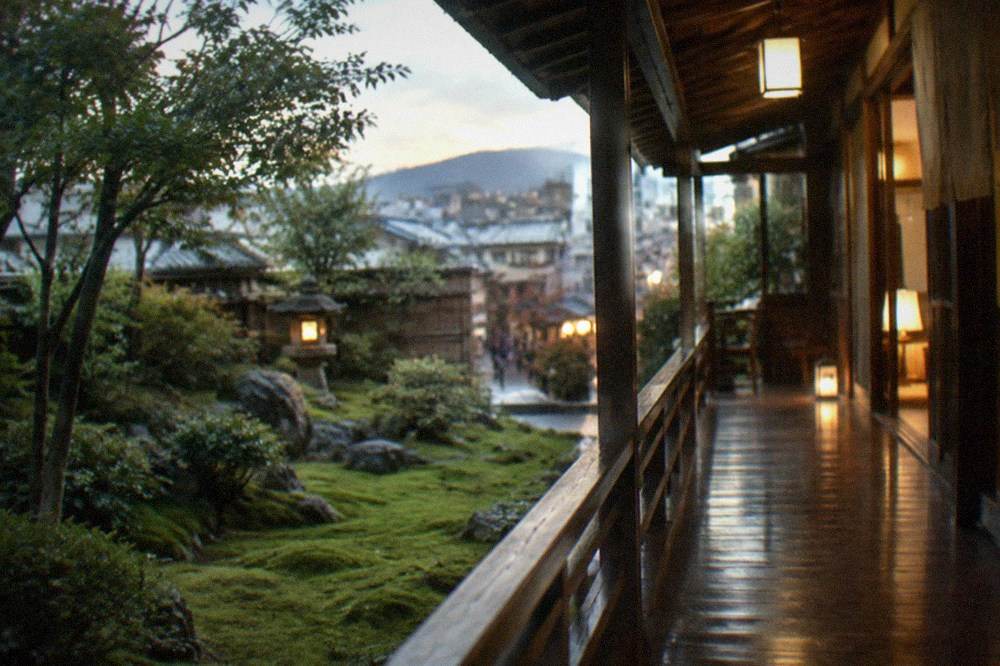
What Kaiseki Dinner Actually Costs At A House That Publishes Its Prices
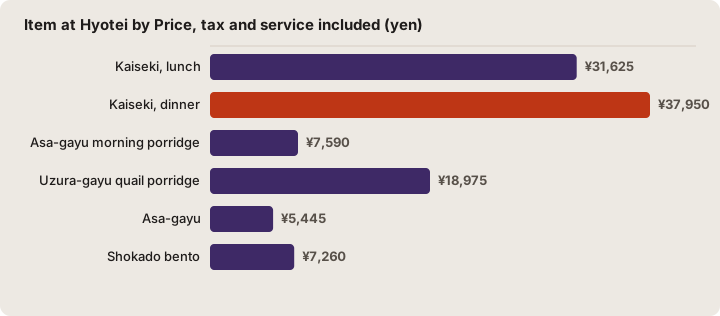
Hyotei, by Nanzen-ji, publishes its own prices, tax and service included: kaiseki from 31,625 yen per person at lunch and from 37,950 yen at dinner in the main building, while the same house's annex serves asa-gayu rice porridge at 5,445 yen and a Shokado bento at 7,260 yen. Reservations at the main building are taken from two people. These are Hyotei's figures for Hyotei's rooms, never a city-wide average.
This is the honest answer to the 30,000 yen question, and it comes from the restaurant's own front page rather than a guess. At one of the most famous kaiseki houses in Kyoto, the kaiseki course itself opens above 30,000 yen per person. Yet the same kitchen's annex, a short walk through the same grounds, serves from about 5,400 to 7,300 yen. The gap between the two is the most useful piece of pricing information in Kyoto dining: the same culinary house, the same lineage, two completely different formats.
| Item at Hyotei | Price, tax and service included | Where and when |
|---|---|---|
| Kaiseki, lunch | from 31,625 yen | main building, 12:00 to 15:00 |
| Kaiseki, dinner | from 37,950 yen | main building, 17:00 to 21:30 |
| Asa-gayu morning porridge | 7,590 yen | main building, 1 July to 31 August, 8:00 to 11:00 |
| Uzura-gayu quail porridge | 18,975 yen | main building, 1 December to 15 March |
| Asa-gayu | 5,445 yen | annex, 16 March to 30 November, 8:00 to 11:00 |
| Shokado bento | 7,260 yen | annex, 12:00 to 14:00 |
What this means for a ryokan stay is straightforward. A ryokan whose kaiseki dinner is in the Hyotei class is not selling you a room with a meal attached; it is selling you a seat at a top-tier kaiseki service that happens to come with a room. That is why the per-person package price at such inns clears the 50,000 yen tax threshold without effort, and why the accommodation tax tier that applies is the 4,000 or 10,000 yen one.
At the other end, plenty of excellent family-run ryokan serve honest, smaller-scale kaiseki that has nothing to do with the top houses, and their packages reflect it. The meal is the variable to interrogate when you book: ask the inn what the dinner consists of, how many courses, and whether the price is per person. An inn that hedges on the dinner is usually hedging because the dinner is the expensive half.
For the wider dining landscape, from budget bowls to the formal end, see where to eat in Kyoto and the guide to kaiseki dining in Kyoto. If you want to understand the cuisine before you pay top-tier prices for it, a guided food experience is the cheapest possible education.
Each of these three experiences costs a fraction of one kaiseki course and covers a different slice of the food culture a ryokan dinner assumes you already know: the market, the home kitchen, and the evening streets. If only one fits your schedule, the Nishiki brunch walk is the strongest all-rounder for a first visit.
Room Only Or Full Board: Which Ryokan Package Wins In Kyoto?
For a single night, the dinner-included package almost always wins, because a standalone kaiseki dinner at a comparable restaurant costs more than the package delta, and the ryokan's kitchen cooks for a fixed guest count. For two nights or more, mixing one dinner-included night with one room-only night is the smarter play: the second night's dinner is better spent elsewhere in the city, and room-only rates at the same inns drop sharply.
The arithmetic behind this is worth spelling out. When a ryokan quotes a package price with two meals and a separate room-only price, the difference between the two is the implied dinner-and-breakfast cost. At most comparable restaurants, a standalone kaiseki dinner of that quality, ordered a la carte, would cost more than that delta, and you would still need breakfast. The ryokan can price the meal this way because it knows its guest count in advance and buys accordingly. More of these guides are collected on Kyoto Travel Guide.
The failure mode is the opposite: booking three dinner-included nights and eating the same menu, or a slight variation on it, three times. Serious inns change the menu with the season, not nightly, and a repeat guest eating a near-identical dinner is paying a kaiseki premium twice for one experience. Kyoto has too many other kinds of dinner for that. Pontocho's alley restaurants, the izakaya of Kawaramachi, and a simple bowl at a counter somewhere are all better second-night uses of your appetite.
The Nishiki Market brunch walk is a good example of the format: seven tastings plus brunch, three hours, and it costs a fraction of one kaiseki course while covering more of the city's food culture in one sitting. The market itself has no unified hours, each shop keeps its own, roughly 9 or 10:00 to 17 or 18:00, and the stalls ask you to eat at the stall rather than walk with food.
Where To Book A Kyoto Ryokan And When To Commit
Book three to six months ahead for top-tier inns and any stay in the peak windows of late March to mid-April and mid to late November, because the best small houses have a handful of rooms and sell out first. Commit to dinner-included packages at the time of booking, since kitchens buy against a fixed guest count, and expect cancellation terms far stricter than a hotel's, often a full charge inside a week or ten days.
The seasonal pressure is real and measurable. The JMA's Kyoto observatory records the 1991-2020 normal for cherry full bloom as 4 April, and in 2026 full bloom landed on 30 March, a few days early. The maple normal is 5 December, though the JMA date is the observatory's own specimen tree, not the Arashiyama or Tofuku-ji peak, which runs earlier. Those windows, plus the Gion Matsuri period in July, are when ryokan inventory tightens most.
| Season in Kyoto | What it means for ryokan booking | Typical pressure |
|---|---|---|
| Late March to mid-April | Cherry bloom window, JMA normal full bloom 4 April | book 3 to 6 months ahead |
| Mid to late November | Foliage peak, night illuminations at temples | book 3 to 6 months ahead |
| 1 to 31 July | Gion Matsuri month, parades on 17 and 24 July | book 2 to 3 months ahead |
| 16 August | Gozan no Okuribi, five mountains lit at once | book 2 to 3 months ahead |
| Late June to mid-July | Rainy season tail, July is the wettest month at 223.6 mm | easiest availability |
| January to February | Cold, quiet, best value at the top inns | walk-in possible |
One scheduling note that surprises first-time visitors: July, not June, is Kyoto's wettest month, at 223.6 mm against 199.7 mm in the JMA 1991-2020 normals. The rainy-season shoulder is therefore a genuinely good value window for a ryokan stay, if you do not mind the chance of a wet garden. August is the hottest month, with a mean daily maximum of 33.7 C and a mean of 28.5 C, and three of Kyoto's six hottest days on record fell in the summers of 2024, 2025 and 2026, so the summer heat is now a real planning factor rather than a footnote.
If your dates are flexible and you are weighing the whole year, the guide to the best time to visit Kyoto covers the trade-offs in full, and cherry blossom season and autumn leaves each have their own planning pages.
What You Actually Get For The Money In A Kyoto Ryokan
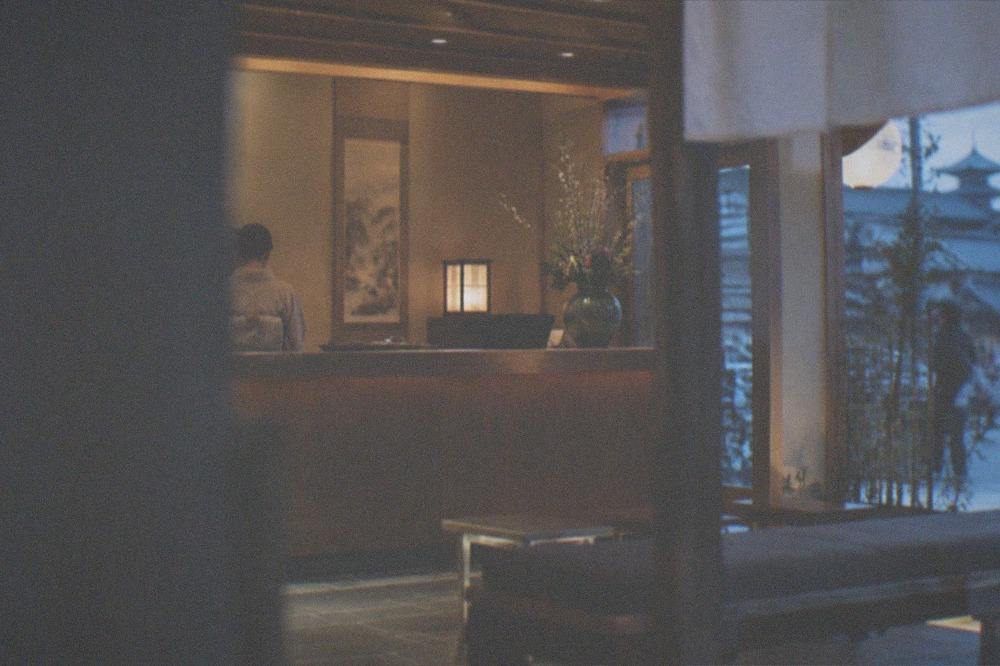
The package buys a sequence, not just a bed: check-in with tea and a sweet, a private tatami room with futon bedding laid out while you dine, the kaiseki dinner served in your room or a dining room, shared or private baths, and a Japanese breakfast before a late morning checkout, often 10:00. The service ratio is the hidden cost driver: the best inns run several staff per guest, which is why the price per person looks like a restaurant bill with a room attached.
The check-in sequence sets the tone. You remove your shoes at the entrance, change into the inn's yukata, and are served matcha or hojicha with a small seasonal sweet while the staff confirm your dinner time. If you have never worn a yukata properly or sat through a formal tea service, a short tea ceremony experience beforehand makes the whole evening read differently, and kimono rental covers the daytime equivalent if you want to walk Higashiyama dressed the part.
Dinner is the centrepiece and the reason the per-person pricing exists. Kaiseki is a sequence of courses that follows the season: a sakizuke appetiser, a wan soup, sashimi, a grilled course, a simmered course, a rice course and a dessert, each built around what the market held that morning. At the top houses this is where the 30,000-yen-plus money goes. At family inns the format is the same but the ingredients and the count of courses are scaled down, and honestly, the scaled-down version is often the better first experience: you learn the grammar of the meal without the pressure of a museum-grade one.
The bath schedule is worth asking about when you book. Shared baths in a small inn are typically gender-separated and rotate, with private family slots in the late afternoon, which is the window to request if you are travelling as a couple or with children. The large inns have multiple baths and no rotation, and some have in-room open-air baths, which is the single biggest price jump in the category.
Breakfast the next morning is not an afterthought. A proper ryokan breakfast is its own small kaiseki: grilled fish, tamago, pickles, tofu, miso soup and rice, served in the dining room with the same care as the night before. Checkout is usually by 10:00, and the inn will hold your luggage, which matters because you will want the last morning for one more walk. For the mechanics of the day, luggage storage options in Kyoto and the subway guide cover the rest.
The washoku bento class is the natural companion to a ryokan dinner: two and a half hours, small group, and you build the same style of seasonal box the inn's kitchen serves, which makes the next kaiseki menu considerably easier to read.
Common Ryokan Mistakes That Cost Money In Kyoto
The four expensive mistakes are: booking room-only at a top inn and paying restaurant prices for dinner separately, assuming the quoted price is per room when it is per person, ignoring the revised accommodation tax when comparing quotes, and arriving with luggage you must drag through a historic inn. Each one is avoidable at the booking stage, and together they can double the effective cost of a night.
The per-person pricing mistake is the most common. A ryokan quote is per person per night with two meals, so two guests, one night, means the quote multiplied by two, plus the accommodation tax on the room component for each guest. Travellers who expected the headline figure to be the room total discover a bill close to double what they budgeted. It is not a scam, it is the format: the meal is a seat at a dinner service, and seats are counted in people.
The second mistake is treating the dinner as optional. At the top inns it effectively is not. The kitchen exists to cook for staying guests, the room-only rate at such houses is not much below the package, and the standalone kaiseki alternative elsewhere in the city costs what Hyotei's menu shows: from 31,625 yen at lunch and 37,950 yen at dinner, per person, before you have booked any bed at all. If the kaiseki prices feel out of range, the honest move is to choose a different tier of inn, not the same inn minus the dinner.
The third is the tax. Since 1 March 2026 the tiers run 200, 400, 1,000, 4,000 and 10,000 yen per person per night by room rate, and a guide written before that date will tell you the maximum is 1,000. When comparing two inns, ask each for the room-only rate and compute the tier yourself: two rooms that sit either side of a tier boundary can differ by hundreds of yen per person per night in tax even when their package prices look identical.
The fourth is logistics. A historic machiya-style inn has narrow wooden corridors, stairs, and no bellhop trolley. Arriving with two large suitcases turns check-in into an ordeal and marks you as the guest the staff will quietly manage around. Pack a small bag for the ryokan night, or use a delivery service, and the whole stay runs smoother. The getting around Kyoto overview ties the transport and luggage pieces together for a full itinerary.
Before the final decision, one last way to spend a ryokan evening cheaply: the Gion geisha district walk runs two hours in the early evening, and it ends within walking distance of most Higashiyama inns, so it slots between the bath and dinner without a taxi.
Gion's own conduct rules, published by the city's tourism association, ask visitors not to touch, chase or photograph geiko and maiko without permission, and signs on the private alleys off Hanamikoji threaten a 10,000 yen penalty for unauthorised photography or entry, so walk the main street and leave the alleys alone.
Common Questions About Kyoto Ryokan Costs
What Does A Night In A Kyoto Ryokan Cost With Kaiseki Dinner?
A ryokan night with kaiseki dinner spans from modest family-run inn packages to well above the top restaurants' dinner prices. The kaiseki anchor is verifiable at Hyotei, which publishes its own prices: kaiseki from 31,625 yen at lunch and 37,950 yen at dinner, tax and service included, while the same house's annex serves from 5,445 to 7,260 yen. Add the accommodation tax on the room component, 200 to 10,000 yen per person per night under the tiers in force since 1 March 2026.
Is The Kyoto Accommodation Tax Charged On The Whole Ryokan Package?
No. The tax is charged per person per night on the room-only rate, excluding meals and consumption tax. A bundled package is split for tax purposes, so the kaiseki dinner portion is not taxed as accommodation. This is why serious inns itemise the room rate separately when you ask, and why two packages that look identical can carry different tax tiers.
Is It Cheaper To Book A Ryokan Room Only And Eat Out?
Usually not for a single night. The dinner-included package delta is typically smaller than a standalone kaiseki dinner of comparable quality, because the inn's kitchen cooks for a known guest count. For two or more nights, the smarter play is one dinner-included night and one room-only night, spending the second evening elsewhere in the city.
When Should I Book A Kyoto Ryokan?
Three to six months ahead for the peak windows: cherry bloom in late March to mid-April, the JMA normal full bloom date is 4 April, and the foliage season of mid to late November. Gion Matsuri in July and Gozan no Okuribi on 16 August also tighten inventory. The easiest value windows are the rainy-season shoulder in late June to mid-July and the quiet months of January and February.
Do Children Pay The Full Ryokan Rate?
Policies vary by inn, but most ryokan charge children a reduced package rate that reflects a smaller dinner portion, and some charge a futon-only rate without meals for very young children. The accommodation tax tiers apply per person per night on the room component regardless of age banding, so ask the inn for the itemised room-only rate for each guest when you book.
Can I Visit A Top Kaiseki Restaurant Without Staying At A Ryokan?
Yes, and the annex trick is the honest budget route. Hyotei's own site shows the pattern: the main building's kaiseki opens from 31,625 yen, while the same house's annex serves asa-gayu at 5,445 yen and a Shokado bento at 7,260 yen, tax and service included. Reservations at the main building are taken from two people. Those are Hyotei's prices, not a city average.
A ryokan night is the most Kyoto thing money can buy here, and it is priced like the restaurant bill it secretly is. Decide first what the dinner is worth to you, pick the inn whose kitchen matches that answer, check the room-only rate against the 2026 tax tiers, and book early enough in the peak windows that the choice is still yours to make.