What To Eat In Kyoto: Kyo-Ryori, Nishiki Market And Where The Food Culture Actually Came From
Kyoto's food culture grew out of the imperial court, Buddhist temple kitchens and the city's distance from the sea, and it still shows on every menu: vegetables over flash, seasonality over size, and a tolerance for slow, expensive meals that Tokyo never developed.
Short answer
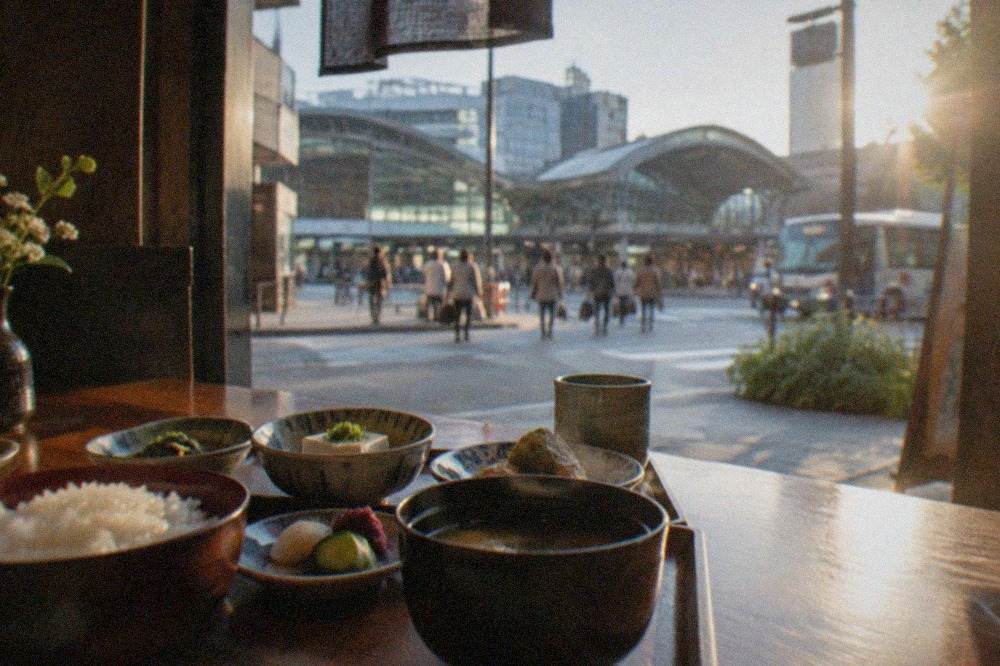
Kyo-ryori is Kyoto's own cuisine: court cooking, Buddhist shojin ryori and obanzai home dishes built around local vegetables, tofu and seasonal restraint. Tokyo food is louder, faster and built on Edo-period street culture and bay seafood. Expect delicate, seasonal, vegetable-forward plates in Kyoto and bolder, quicker, soy-heavy food in Tokyo.
Kyoto fed an imperial court for a thousand years before Tokyo existed as a capital, and the city's cooking still carries the mark of that history. Court kitchens wanted refinement, Buddhist temple kitchens wanted no meat, and the city's location an hour from the sea made freshwater fish, tofu and vegetables the raw material of everything. The result is kyo-ryori, Kyoto cuisine, a tradition of small seasonal dishes that rewards patience more than appetite.
This guide covers what that tradition actually contains, how it differs from the food of Tokyo, what a famous kaiseki house really charges on its own menu, and where to eat your way through the city: Nishiki Market, the tofu restaurants, the sweets shops and the sake district of Fushimi. If you want the broader sightseeing picture alongside the eating, start with our things to see and do overview.
What Is Kyo-Ryori And How Does It Differ From Tokyo Food?
Kyo-ryori is the cooking of Kyoto's imperial court, its Buddhist temples and its home kitchens: delicate, seasonal, vegetable-forward dishes built on local produce, tofu and freshwater fish. Tokyo food descends from Edo street culture and bay seafood, so it is bolder, faster and more soy-driven: think nigiri sushi, tempura and ramen against Kyoto's small, quiet, multi-course plates.
The split is historical before it is culinary. Kyoto was the capital for over a thousand years until 1868, and its aristocratic kitchens developed a cuisine of restraint: many small dishes, each announcing a season, nothing shouting. Buddhist shojin ryori, the vegetarian temple cooking that Kyoto's monks refined over centuries, gave the city its deep tofu and vegetable repertoire, and you can read the full story in our guide to tofu and shojin ryori in Kyoto. Obanzai, the home-style simmered and pickled side dishes of Kyoto housewives, is the third strand, and many izakaya in the city still list an obanzai section.
Tokyo, then Edo, was a warrior and merchant city of enormous size long before the modern era, and its food grew on the street. Sushi was fast finger food, tempura was fried in front of you, and the Kanto palate took its soy darker and its broth heavier than the Kanto-versus-Kansai split you still taste today: Kyoto's dashi is lighter, built on kombu, where Tokyo's leans on dried bonito. Tokyo sat on a bay full of seafood; Kyoto sat in a basin surrounded by mountains, so its cooks made an art of what was near: vegetables.
That vegetable tradition has a name worth knowing before you order anything. Kyoto-grown vegetables, the vegetables of the old capital's outlying farm villages, are called kyo-yasai, and varieties like Kamo eggplant, Shogoin daikon and mibuna greens appear on menus by name the way a wine list names a vineyard. A Kyoto menu in April will read entirely differently from the same menu in October, and that is the point.
What Are The Dishes You Should Actually Eat In Kyoto?
The core list is yudofu and the tofu traditions, kaiseki course dining, obanzai small plates, matcha and its sweets, pickles, and the freshwater fish dishes such as ayu and hamo that the city built its summer menus around. Nishiki Market adds the street-level layer: tamagoyaki, soy milk doughnuts, skewers and pickles eaten at the stall.
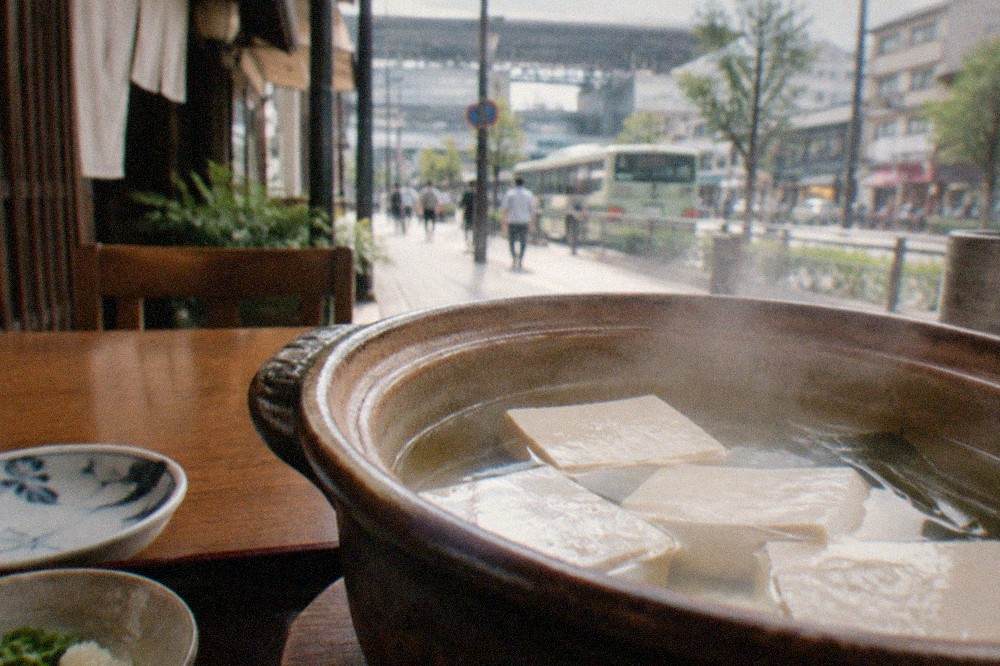
Start with tofu, because nowhere else in Japan treats it as Kyoto does. Yudofu, tofu simmered in kombu broth at your table, is the signature dish of the temple-adjacent restaurants around Nanzen-ji and Arashiyama, served in multi-course sets. A close relative of the tradition is the temple cooking itself, covered in depth in our shojin ryori guide, where the same soybean becomes goma-dofu, sesame tofu, a dish with almost no tofu in it at all.
Hamo, the hardy conger eel that survives the trip from the Inland Sea to landlocked Kyoto, is the summer fish of the classical cuisine, served pierced and poached with ume plum sauce. Ayu, sweetfish, grilled whole with salt, is the summer river fish. Neither is a Tokyo specialty, because Tokyo never needed to build a cuisine around fish that could survive a long inland journey.
Then the sweets. Kyoto is the home of Japanese tea culture, and where matcha is drunk, wagashi follow: namagashi, the seasonal fresh confections shaped like maple leaves or cherry blossoms, served before the bowl. Our matcha guide covers where to drink it; the eating version is the parfait and dessert culture of Gion and the tea houses around Uji, the green tea growing region half an hour south, where matcha is not a flavour but the local crop.
The honest quick-reference for the whole city, dish by dish:
| Dish | What it is | Where it is strongest | Season |
|---|---|---|---|
| Yudofu | Tofu simmered in kombu broth, tableside | Nanzen-ji, Arashiyama temple areas | Autumn and winter |
| Kaiseki | Multi-course seasonal tasting menu | Gion, Pontocho, near Nanzen-ji | All year, menus change monthly |
| Obanzai | Home-style simmered and pickled side dishes | Izakaya across the city | All year |
| Hamo | Conger eel, pierced and poached | Classical restaurants, Gion | Summer |
| Ayu | Sweetfish, grilled whole with salt | Kibune riverside restaurants | Summer |
| Matcha and namagashi | Whisked tea with seasonal confections | Uji, Gion, Higashiyama teahouses | All year |
| Kyo-yasai dishes | Named local vegetables, often simmered or fried | Everywhere serious | Varies by vegetable |
Kibune deserves its own sentence: the restaurants along that mountain stream north of the city build their summer trade on kawadoko, platforms built over the running water where you eat ayu and somen with your feet above the current. It is one of the few Kyoto eating experiences where the setting genuinely is the dish.
How Much Does Kaiseki In Kyoto Actually Cost?
At Hyotei, one of the most famous kaiseki houses in the city, the restaurant's own site lists kaiseki from 31,625 yen at lunch and from 37,950 yen at dinner in the main building, tax and service included, while the same house's annex serves asa-gayu rice porridge at 5,445 yen and a Shokado bento at 7,260 yen. Bookings are taken from two people.
That is the honest, sourced answer to the question every visitor asks, and it is worth reading carefully. The 30,000 yen figure you see in most guides is real, but it belongs to one restaurant's published menu, not to the city. Hyotei, by Nanzen-ji, a house with roughly four centuries of history, prints its prices on its own front page: the kaiseki course in the main building opens above 30,000 yen, and the annex of the very same kitchen serves a full morning meal for under 6,000. The difference between the two rooms is not the cooking, it is the format and the room.
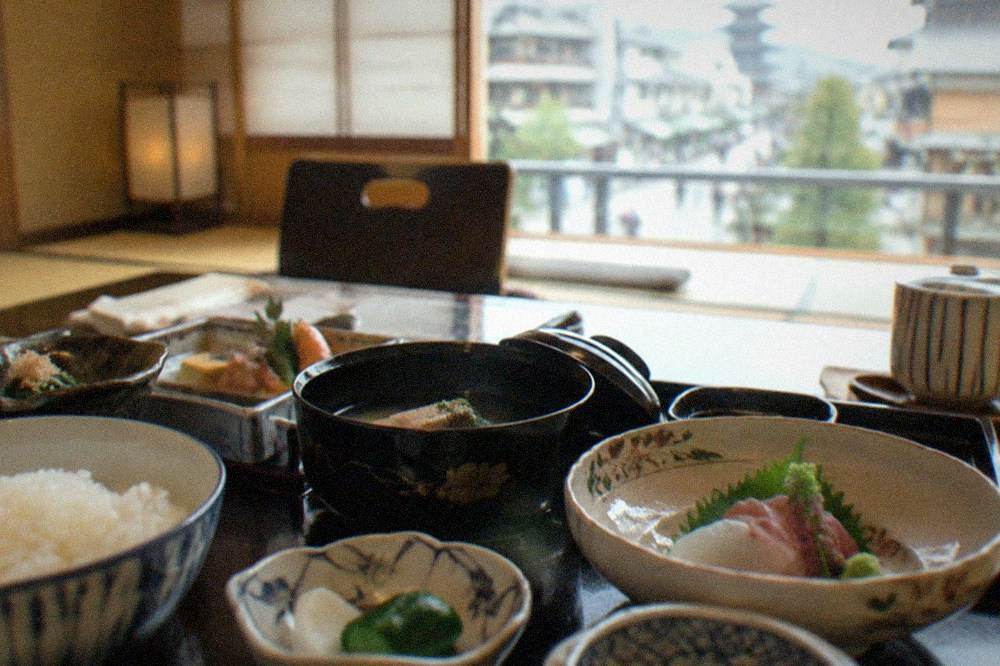
What you should take from that is a planning rule, not a price. Kaiseki in Kyoto spans a very wide range depending on the house, the room and the season, and no city-wide average exists that we can honestly print. What is verifiable is the shape of the market: the most famous names open well above 30,000 yen per person, the same kitchens often run annexes or bento formats at a fraction of that, and mid-range kaiseki and kaiseki-style lunch sets exist across the city at gentler prices, each on its own listing. If the full course is out of budget, the lunch bento at a serious house is the traditional way in, and it is how many Kyoto families themselves eat at those restaurants.
Reservations are the real barrier, not money. Classical houses take bookings by phone, often in Japanese, and the top rooms fill weeks ahead in cherry and maple season. If you want the experience with none of the phone call, a guided food walk or a cooking class gets you into the same tradition with a translator attached, and our restaurant guide lists the approachable options by neighbourhood.
Is Nishiki Market Worth Visiting For Food?
Nishiki Market is a covered street of roughly 130 shops a five-minute walk from Shijo Station, and it is the single densest concentration of Kyoto food in the city center: pickles, tamagoyaki omelet skewers, soy milk doughnuts, grilled scallops and matcha soft serve, eaten at the stall rather than while walking.
The market has been trading in some form for centuries, starting as a fish market serving the imperial court, and its nickname, Kyoto's Kitchen, is earned. It runs about 400 metres, roofed the whole way, and the shops keep their own hours: there is no unified opening time, with most shops running roughly from 9 or 10:00 to 17 or 18:00, and some closing on Wednesdays or other chosen days. Any guide that prints a single official opening time for the whole market is inventing it, because the market association prints none. More of these guides are collected on Kyoto Travel Guide.
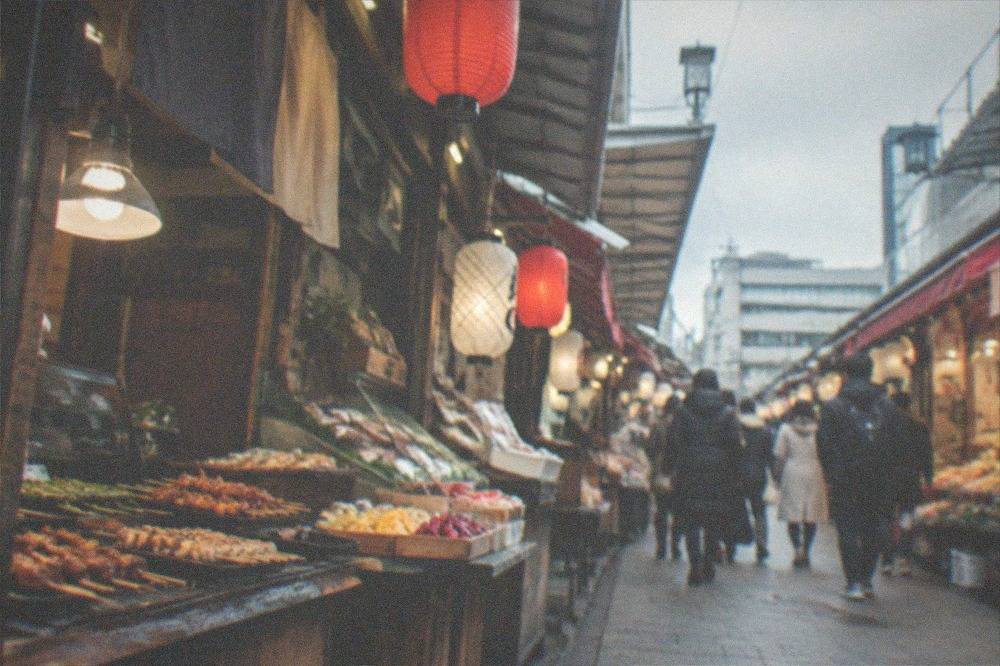
The etiquette that matters: stalls ask you to eat at the stall, not while walking, and the market's own materials discourage eating on the move. It is crowded by late morning and unpleasantly crowded in cherry season, so go at opening. The pickles are the thing to actually buy: Kyoto's senmaizuke, the thousand-slice pickle made from Shogoin daikon, is a genuine local specialty that travels well as a souvenir, and our souvenirs guide covers what else survives the flight home.
For the fuller picture of the market, including what to skip and what sells out by noon, see our Nishiki Market guide, and for the question everyone asks first, our answer page on the most famous food street in Kyoto puts Nishiki against the alternatives.
Where Do Locals Actually Eat In Kyoto?
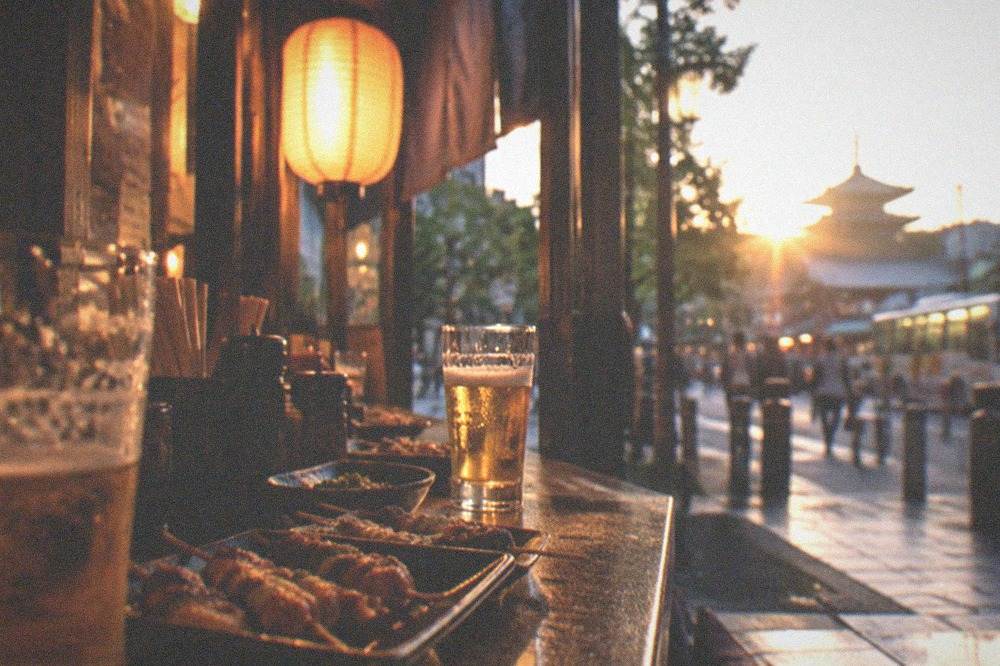
Locals eat away from the tourist lanes: the standing bars and small izakaya of downtown Kawaramachi and Kiyamachi, the obanza-ya restaurants of the residential districts, ramen shops at lunch, and the department store basements, the depachika of Kyoto Station and Kawaramachi, which are the city's real daily food halls.
The tourist gravity is Higashiyama and Gion; the eating gravity of people who live here is the downtown grid between Karasuma and the Kamo River. Pontocho and Kiyamachi fill at night with small bars, many of them counter places with six seats, and the Pontocho alley guide covers the prettiest of them. Our full answer page on where locals eat in Kyoto goes deeper, but the pattern is consistent: smaller rooms, further from the temples, better prices.
Ramen is the lunch exception that proves the Kyoto stereotype wrong. The city has a serious ramen identity of its own, Kyoto-style chicken-paochu broth ramen, rich and chicken-based rather than pork-based, plus a dense cluster of famous shops near Kyoto Station and in Ichijoji, the student district in the northeast that holds one of the best ramen streets in Japan. Our Kyoto ramen guide maps the styles and the shops, and it is the one place where the Kyoto-versus-Tokyo food question flips: on noodles, Kyoto holds its own against anyone.
Vegetarians should read the fine print everywhere, and our vegetarian Kyoto guide explains why: dashi, the kombu and bonito stock underlying nearly everything, is the obstacle, and the temples plus a growing set of modern cafes are the safe ground.
What Is The Deal With Sake In Kyoto?
Kyoto's Fushimi district, in the city's south, is one of Japan's largest sake brewing regions, with around 25 breweries drawing on the area's soft spring water, and it is reachable in about 10 minutes from Kyoto Station on the Keihan or JR lines. Tastings, brewery museums and food pairings are the standard visit format.
The water is the reason. Fushimi's underground springs are low in iron, which is exactly what rice fermentation wants, and the district's brewers have used it for centuries. The big names, Gekkeikan among them, run museums and tasting halls within walking distance of each other, and the brewery district is compact enough to cover on foot in an afternoon. Our Fushimi sake district guide covers the walk, the museums and which breweries welcome walk-ins.
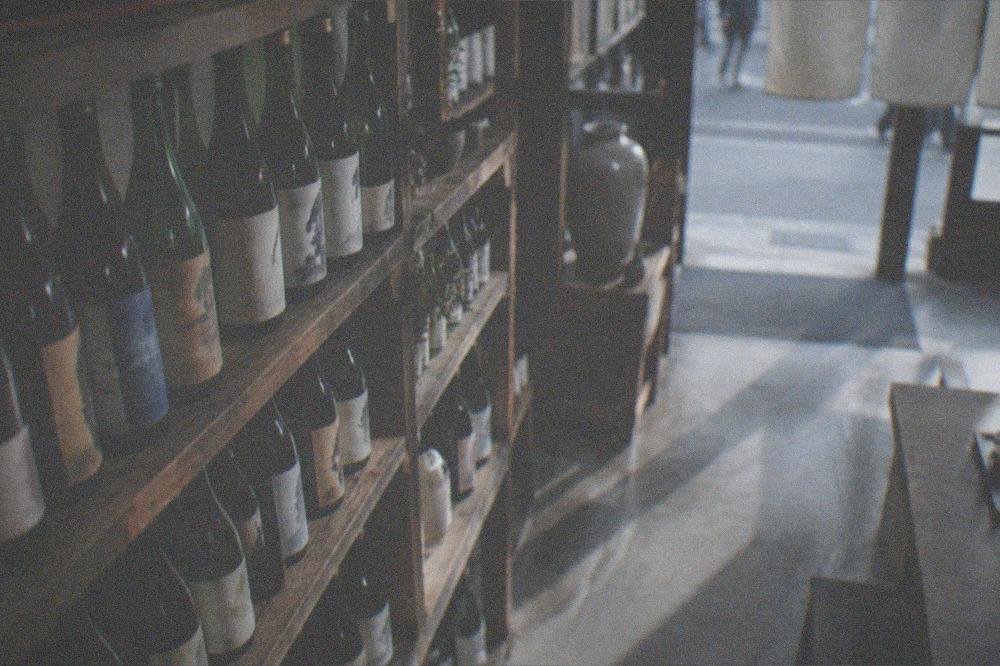
The pairing side is where the food and the drink meet. Kyoto's delicate cuisine is the reason the local sake style leans clean and slightly sweet rather than bone dry, and a guided tasting with food is one of the more efficient ways to understand both at once. The three-hour brewery walk below is the strongest of those on offer, with pairings built into the route:
When Is The Best Season For Food In Kyoto?
Autumn is the strongest eating season: maple season from mid-November brings the year's best kaiseki menus, chestnut and mushroom dishes, and the harvest vegetables that define kyo-yasai cooking. Spring runs second, with bamboo shoots and the cherry-season wagashi. Summer is the season for hamo, ayu and the Kibune river platforms, and winter for yudofu and hot-pot dishes.
The JMA phenology record for Kyoto puts the maple red-leaf marker, the official observatory tree, at a normal of 5 December, with 2025 observed on 10 December, but that tree is not the Arashiyama peak: private foliage forecasts for the famous viewing areas point to late November, and the two dates answer different questions. The kitchen calendar is simpler. Chestnut rice and matsutake mushrooms appear from September, the year's most ambitious kaiseki menus are written for October and November, and the new year brings osechi boxes and the mochi-pounding of the first days of January.
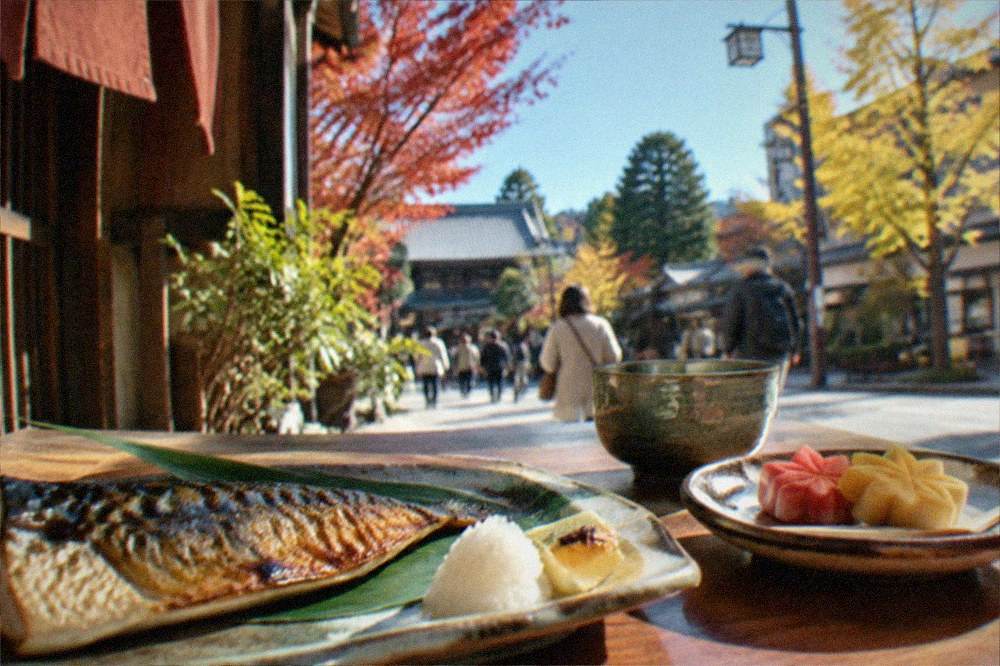
A rough seasonal map of the plate:
| Season | What the kitchens are serving | Where it peaks |
|---|---|---|
| Spring (Mar-May) | Bamboo shoots, cherry-leaf wrapped sweets, first flounder | Kaiseki houses, wagashi shops |
| Summer (Jun-Aug) | Hamo eel, ayu sweetfish, cold somen on the Kibune river platforms | Kibune, Gion classical restaurants |
| Autumn (Sep-Nov) | Matsutake mushrooms, chestnut rice, persimmon, the year's best menus | Everywhere; book ahead |
| Winter (Dec-Feb) | Yudofu, hot pots, new-year osechi, uzura-gayu porridge | Temple-area tofu restaurants, Hyotei's annex |
One climate note that belongs in a food plan: July, not June, is Kyoto's wettest month, at 223.6 mm against June's 199.7 mm in the JMA 1991-2020 normals, and August is the hottest at a mean daily high of 33.7 C. A July food itinerary should be built indoors, in Nishiki's covered lane and the depachika, or on a shaded brewery tour in Fushimi. Our weather guide has the full monthly table.
Can You Learn To Cook Kyoto Food Yourself?
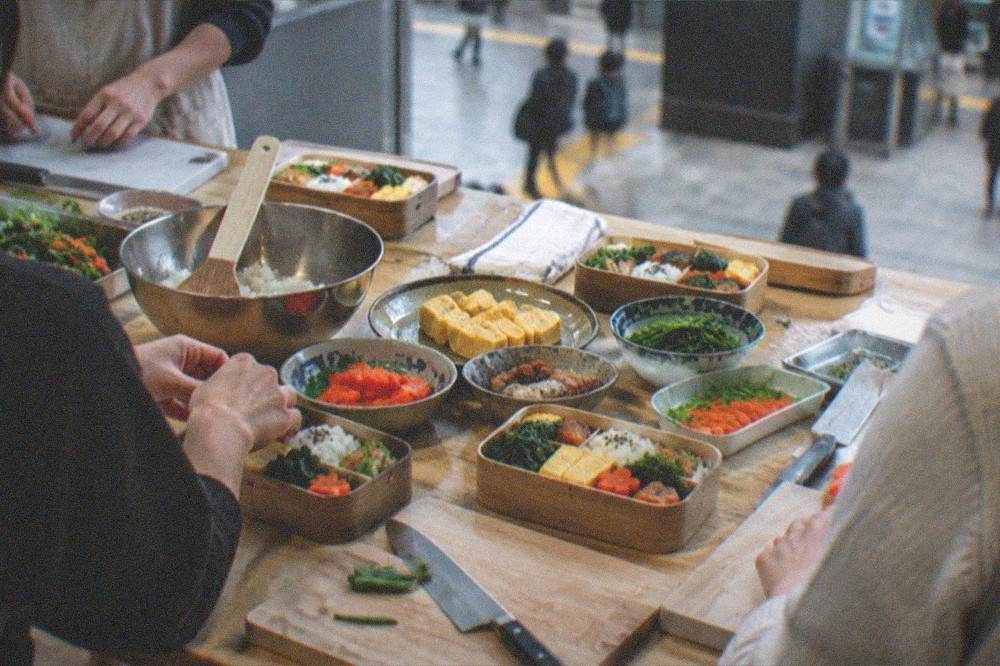
Yes, and it is one of the better-value experiences in the city: small-group washoku cooking classes teach a full bento of Kyoto home dishes in about two and a half hours, and ramen-making and matcha classes run alongside them. Classes suit beginners, cover market shopping in some cases, and end with eating what you cooked.
The cooking class scene in Kyoto is unusually good because the cuisine itself is teachable: obanzai home cooking is a set of techniques, not a mystery, and dashi, the stock everything rests on, is a 10-minute lesson that changes how you cook forever. The bento class below is the strongest washoku option on the site, small-group, with the full meal at the end.
For the deeper end, ramen-making from scratch covers noodles, broth and topping, and the tea ceremony classes teach the matcha side of the culture. Whichever you pick, book before you arrive: the small classes fill days ahead in high season, and the good ones cap numbers low.
How Does Eating In Kyoto Compare With Osaka And Tokyo?
Kyoto is the slow, seasonal, vegetable-forward end of the triangle; Osaka is the loud, cheap, flour-and-sauce end, famous for takoyaki and okonomiyaki; Tokyo is the everything-at-once middle, with the deepest sushi and ramen culture but no single defining style. Eating in all three in one trip is the best food itinerary in Japan.
The Kyoto-Osaka contrast is the sharpest because the two cities are 30 minutes apart and could not cook more differently. Osaka's food identity is street food and standing eating, born of its merchant culture; Kyoto's is the seated course and the quiet room. Our Kyoto versus Osaka guide covers the full comparison, and the Tokyo comparison does the same for the capital. If you are building a multi-city eating trip, the Tokyo to Kyoto guide handles the rail between the two food cultures.
| Kyoto | Osaka | Tokyo | |
|---|---|---|---|
| Defining style | Kaiseki, tofu, obanzai, wagashi | Takoyaki, okonomiyaki, kushikatsu | Sushi, ramen, everything |
| Base flavour | Light kombu dashi, mild soy | Sweet-savoury sauce, dashi-heavy | Darker soy, bonito-forward |
| Eating speed | Slow, multi-course | Fast, standing | Both |
| Price character | Expensive at the top, gentle at the bottom | Cheap and generous | Full range |
| Signature drink | Fushimi sake | Everything, loudly | Everything, quietly |
Common Questions About Kyoto Food
What Is Kyo-Ryori And How Does It Differ From Tokyo Food?
Kyo-ryori is Kyoto's court, temple and home cooking: delicate, seasonal, vegetable-forward dishes built on kyo-yasai vegetables, tofu and freshwater fish, with light kombu dashi. Tokyo food descends from Edo street culture and bay seafood, so it is bolder and faster, with darker soy and bonito-forward broth. Kyoto cooking announces the season in every course; Tokyo cooking feeds a city in a hurry.
What is Kyoto's most famous dish?
Yudofu, tofu simmered in kombu broth, is the dish most identified with the city, especially around the temple districts of Nanzen-ji and Arashiyama. Kaiseki course dining is the city's most famous eating format, and matcha sweets are its most famous export.
Is food in Kyoto expensive?
It ranges widely. At the top, Hyotei's own site lists kaiseki from 31,625 yen at lunch and 37,950 at dinner, while the same house's annex serves rice porridge at 5,445 yen and a bento at 7,260 yen. Market eating, ramen and izakaya dinners sit far below both, so the city is as expensive as the room you choose.
Is Kyoto good for vegetarians?
Better than most of Japan, with two caveats. The Buddhist shojin ryori tradition means fully vegetarian cooking exists here at a high level, and modern vegetarian and vegan cafes are numerous. The caveat is dashi: most ordinary restaurants use bonito-based stock even in vegetable dishes, so ask, or eat at the temples and the specialist places listed in our vegetarian guide.
What should I eat at Nishiki Market?
Tamagoyaki omelet skewers, soy milk doughnuts, grilled scallops, pickles including the local senmaizuke, and matcha soft serve. Eat at the stall rather than while walking, go near opening, and remember the shops keep individual hours, roughly 9 or 10:00 to 17 or 18:00, with no unified schedule.
Can you drink sake where it is brewed in Kyoto?
Yes. The Fushimi district in the city's south holds around 25 breweries drawing on soft local spring water, several with museums, tasting halls and pairing experiences, about 10 minutes from Kyoto Station. Guided brewery walks with tastings run regularly and are the easiest format for visitors.
The eating in Kyoto rewards the same patience its cuisine was built on: book the serious rooms ahead, eat the market early, follow the season rather than the top-ten list, and let the same kitchen's cheap annex show you that the cooking, not the price, is what you came for.