When Do Kyoto Autumn Leaves Peak: Mid Or Late November?
The Japan Meteorological Agency's own marker for Kyoto maple colour is 5 December, weeks later than the mid-November peak most guides promise. Here is what the official normals, the temple fee notices and the city's 2025 visitor survey actually say.
Short answer
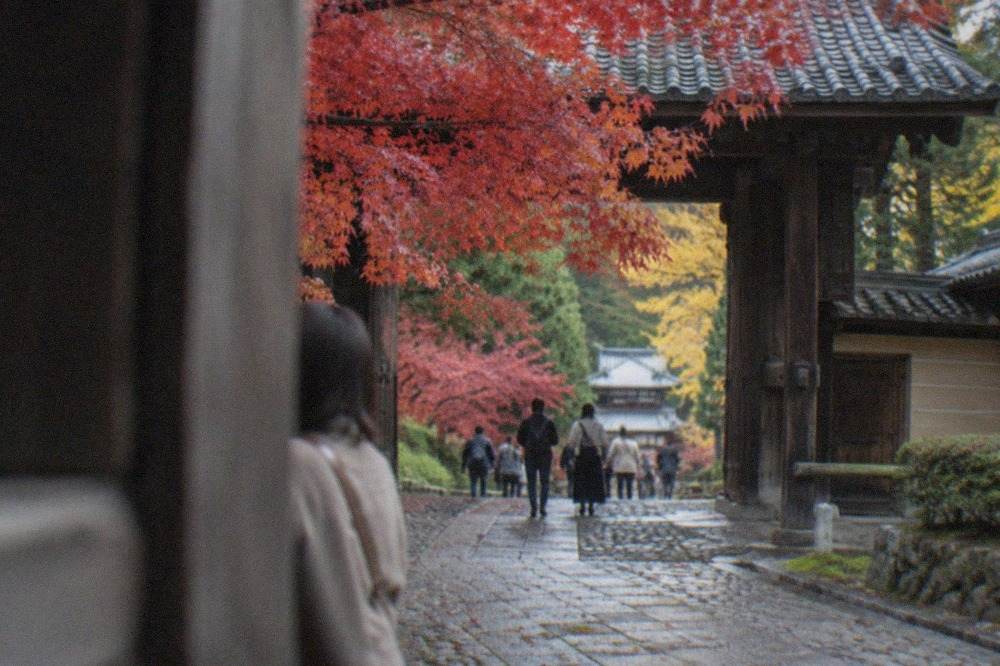
Kyoto's autumn colour builds through November and often runs into early December. The JMA normal for maple red leaves is 5 December and for ginkgo yellow 24 November, so late November is the safer bet for full colour, with valley spots like Kurama and Takao turning earlier.
Kyoto's maple red-leaf normal, the date the Japan Meteorological Agency's Kyoto observatory records its own specimen maple turning, is 5 December. The ginkgo yellow-leaf normal is 24 November. Both sit weeks past the "mid-November peak" that most competing guides print, and both are the official markers rather than a promise about any given year. This guide works from the JMA normals, from the temples' own fee notices and from the city's 2025 tourism survey, because autumn leaf season in Kyoto is a planning problem with real numbers attached: two temples changed their fees in 2026, night illuminations have published dates, and 62.79 million visitors came through the city last year. For the broader timing question, see the best time to visit Kyoto.
When Do Kyoto Autumn Leaves Peak: Mid Or Late November?
Kyoto's autumn leaves build through mid-November and peak in late November, with the official maple marker not arriving until 5 December. The JMA 1991-2020 normal for ginkgo yellow leaves is 24 November and for maple red leaves 5 December, and in 2025 the observatory's maple was recorded on 10 December. Late November is the stronger bet for full colour, and early December still catches it.
The reason the mid-November story survives is that it is half true. Colour starts in the mountain valleys well before the city basin turns: the higher and colder spots, Kurama, Takao and the northern hills, go red first, and the famous city-centre temple gardens follow two to three weeks later. A guide written from a single mid-November visit to Arashiyama generalises one week of one valley to the whole city.
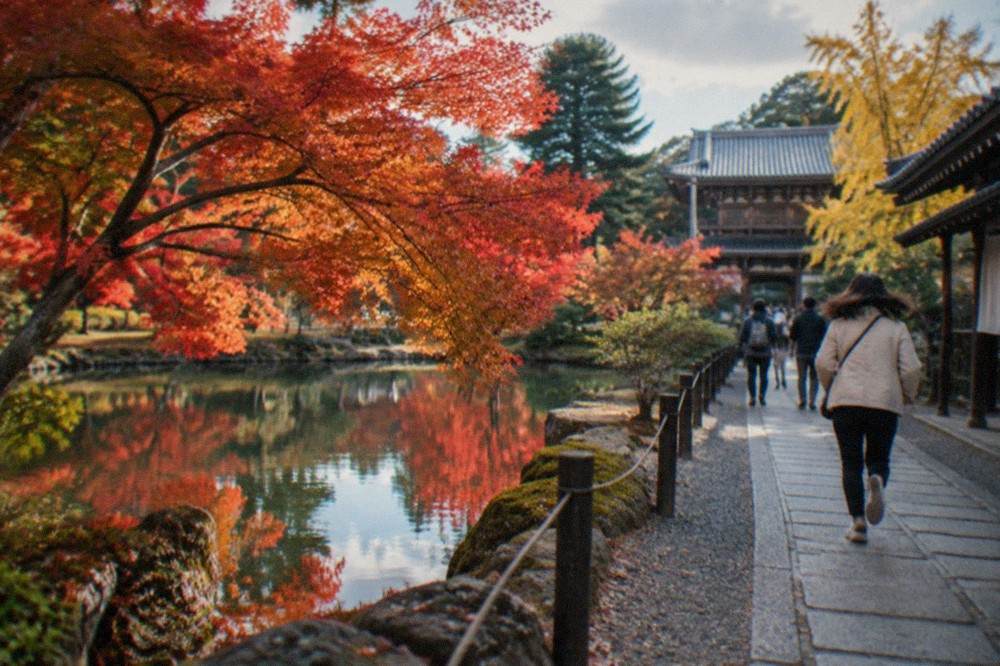
The honest framing is a gradient, not a date. Early to mid-November belongs to the mountains. Mid to late November belongs to the city gardens, Eikan-do, Tofuku-ji, Kodai-ji, Nanzen-ji. Late November into the first week of December is when the JMA observatory's own maple and ginkgo trees hit their marker, and in 2025 the recorded maple date was 10 December, five days past the normal. If your trip is locked to one week, the week beginning around 20 November covers the widest band of the gradient.
What Do The Official JMA Normals Say About Kyoto Maple Colour?
The JMA Kyoto observatory's 1991-2020 normals put ginkgo yellow leaves at 24 November and maple red leaves at 5 December. In 2025 the maple was observed on 10 December and the ginkgo on 25 November. The recorded range is wide: maple has turned as early as 10 November, in 1976, and as late as 20 December, in 2024.
A normal is a 30-year average, not a forecast, and the JMA date has a second caveat worth knowing: it records the observatory's own specimen tree turning, not the Arashiyama or Eikan-do peak. Treat it as the official marker of the season's endgame, not as the best week to visit. The two 2026 forecasts published so far, Weathernews putting Arashiyama colour around 24 November and tenki.jp putting Kyoto red leaves at 11 December, bracket the normal from both sides, which is exactly what you would expect from a normal with a recorded range of more than a month.
| JMA Kyoto marker | Normal (1991-2020) | 2025 observed | 2026 observed | Record earliest | Record latest |
|---|---|---|---|---|---|
| Ginkgo yellow leaves | 24 November | 25 November | not yet | 7 Nov (1976) | 7 Dec (1982) |
| Maple red leaves | 5 December | 10 December | not yet | 10 Nov (1976) | 20 Dec (2024) |
The phenology table is the single most useful planning tool on this page, so it is worth reading the range column carefully. A maple season that has landed anywhere from 10 November to 20 December across the record means no week is guaranteed, and any guide that promises one is guessing. What the normals do support is a shape: colour moves downhill and southward as November runs on, and the basin's big-name gardens are reliably in colour across the last ten days of the month.
The same JMA station's climate normals explain the mechanics. October averages 143.2 mm of rain and a mean of 18.4 C; November dries out to 73.9 mm and cools to 12.5 C, with a mean daily minimum of 8.4 C. Cold nights are what finish the colour, and November's dry, sunny pattern, 140.7 hours of sunshine on average, is what makes the season photograph well. The cherry side of the same dataset, with its own normals and 2026 dates, is covered in the Kyoto cherry blossom guide.
| Month | Rain mm | Mean C | Mean daily max C | Mean daily min C | Sunshine h |
|---|---|---|---|---|---|
| October | 143.2 | 18.4 | 23.4 | 14.4 | 156.0 |
| November | 73.9 | 12.5 | 17.3 | 8.4 | 140.7 |
| December | 57.3 | 7.2 | 11.6 | 3.5 | 134.4 |
For travellers who want the mountain end of the gradient, the Kurama to Kibune hike north of the city is the classic early-November option, and it is one of the three picks in the selection band below.
Which Kyoto Temples Charge More During The Autumn Foliage Season?
Tofuku-ji does. Its own notice revises fees from 1 November 2026: the Tsutenkyo bridge and Kaisando route rises to 1,000 yen for adults during the autumn foliage period, up from 600, and a new combined ticket appears at 1,000 yen. Kodai-ji, Eikan-do and most other foliage temples hold one price year-round, with Kodai-ji at 800 yen for adults.
The Tofuku-ji revision is the fee story of the 2026 season, and it is worth getting right because it is new. Until 31 October 2026 the bridge-and-Kaisando ticket is 600 yen for adults and 300 for children. From 1 November the foliage-period price is 1,000 yen for adults, the Hojo garden rises from 500 to 600 yen, and a combined ticket covering both goes on sale at 1,000 yen for adults and 500 for children. The temple's own notice, linked from its Japanese-language site, is the source; several secondary roundups still report no changes. The full details are in the Tofuku-ji attraction guide.
| Tofuku-ji ticket | Until 31 Oct 2026 | From 1 Nov 2026 | Foliage period (from 1 Nov 2026) |
|---|---|---|---|
| Tsutenkyo bridge + Kaisando, adult / child | 600 / 300 | 600 / 300 | 1,000 / 300 |
| Hojo garden, adult / child | 500 / 300 | 600 / 300 | 600 / 300 |
| Combined ticket, adult / child | none | 1,000 / 500 | 1,000 / 500 |
Elsewhere the fee picture is steadier. Kiyomizu-dera charges 500 yen for adults and high-school students, and its autumn night viewing, 21 to 30 November in 2026 with hours to 21:30, is on the same ticket schedule the temple publishes each year. Kodai-ji is 800 yen for adults, 400 for junior-high and high-school students, free for elementary and younger with an adult, and its combined Kodai-ji plus Entoku-in ticket is 1,200 yen. Nanzen-ji's Hojo garden is 600 yen and its Sanmon gate 600 yen, each ticketed separately.
One more 2026 change belongs in the same conversation, though it is not a foliage fee: Ginkaku-ji doubled its admission from 500 to 1,000 yen for adults from 1 April 2026, the temple's first rise in 32 years. The Philosopher's Path it anchors is a headline autumn walk, so budget accordingly. Kinkaku-ji stays at 500 yen, which makes it the cheaper of the two pavilions for the first time.
If stitching several of these gardens into one day without queueing for four separate buses appeals, the one-day bus tour below covers Fushimi Inari, Kinkaku-ji and the Arashiyama bamboo grove with transport handled.
Where Are Kyoto's Best Autumn Leaves Viewing Spots?
Tofuku-ji's Tsutenkyo bridge over a valley of maples is the definitive Kyoto foliage view, with Eikan-do, Nanzen-ji's aqueduct, Kodai-ji and the Arashiyama riverside as the supporting set. The mountain valleys, Kurama, Kibune and Takao, turn two to three weeks earlier and rescue early-November trips.
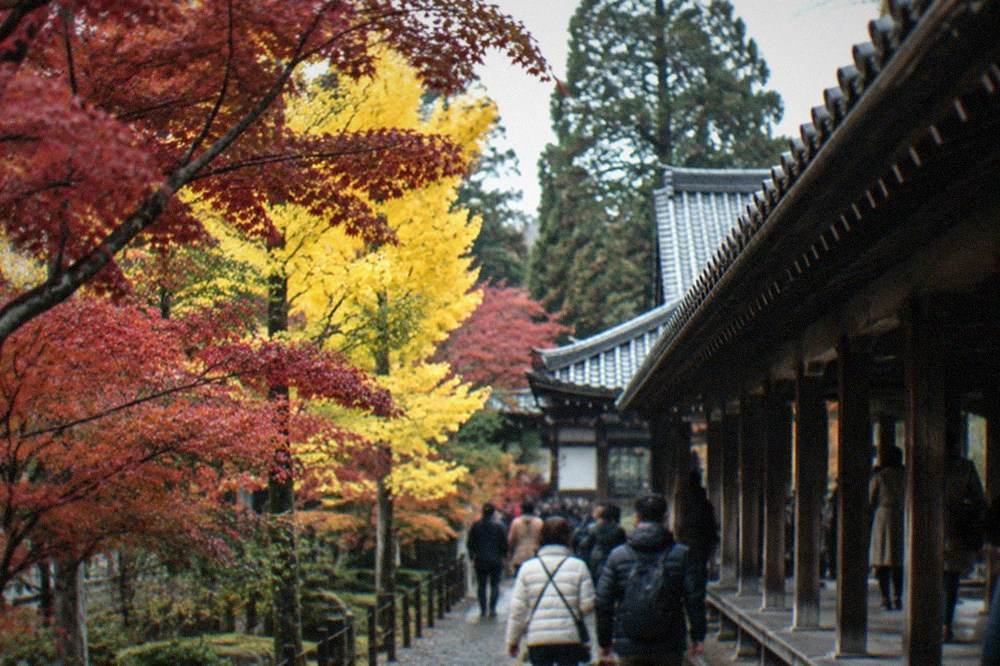
Tofuku-ji earns its reputation on geography: the Tsutenkyo bridge crosses a narrow valley planted with maples, so you look into a bowl of colour rather than at single trees, and the two-kilometre walk from Tofuku-ji station on the Keihan and JR Nara lines is flat. Eikan-do, next to Nanzen-ji in the Higashiyama east bank, is the temple most identified with autumn in the city, and its garden is the one most night illuminations are photographed from. The Eikan-do attraction guide covers the practical details.
Arashiyama works differently. The colour there follows the river corridor rather than garden walls: the Togetsukyo bridge approach, the riverside paths and the Okochi Sanso hillside above the bamboo grove, with the Arashiyama bamboo grove itself staying green while the maples around it turn. The Sagano Romantic Train, 880 yen one-way for adults and 440 for children per the operator's own ticket page, runs the Hozugawa valley and sells out in foliage season, so book ahead if you want the river view from the rails.
| Spot | Character | Typical colour window | Adult entry |
|---|---|---|---|
| Tofuku-ji Tsutenkyo | Maple valley from a bridge | Late Nov to early Dec | 1,000 yen (foliage period, from 1 Nov 2026) |
| Eikan-do | Garden and hillside maples | Mid to late Nov | see the temple's own notice |
| Kodai-ji | Night illumination garden | Late Oct to mid Dec | 800 yen |
| Nanzen-ji | Aqueduct and Hojo garden | Mid to late Nov | 600 yen per sub-site |
| Arashiyama | Riverside and valley colour | Late Nov | free paths; Sagano train 880 yen |
| Kurama and Kibune | Mountain valley, earliest | Early to mid Nov | shrine grounds free |
For the mountain end, Kurama and Kibune sit one stop apart on the Eizan railway from Demachiyanagi, and the hike between them takes in Kurama-dera's forested slopes. The guided version of that walk is worth considering in foliage season because the trail junctions are poorly signed and the trains fill up.
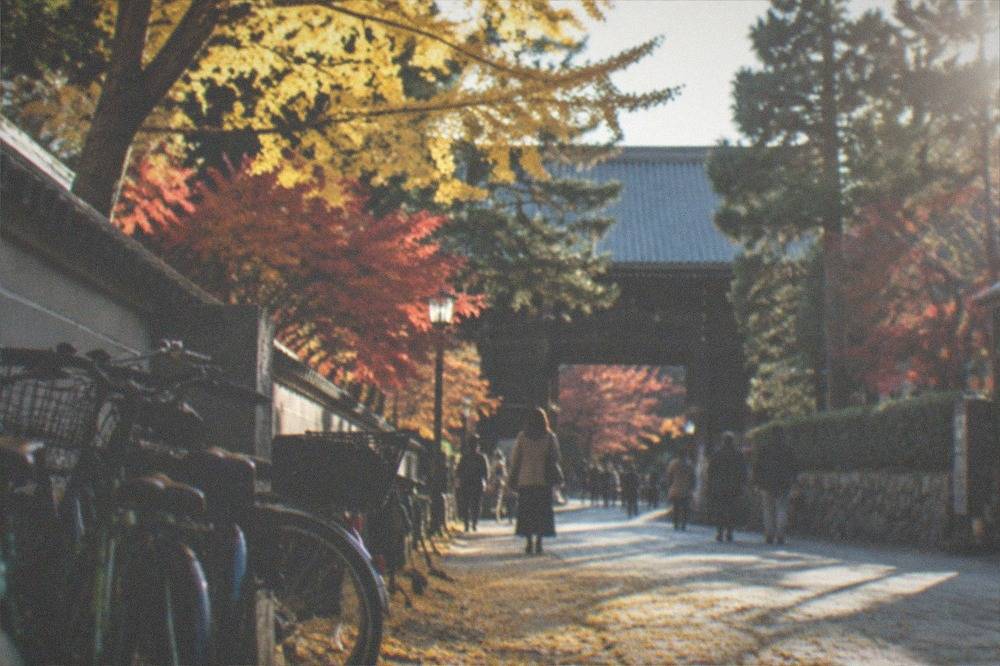
The ginkgo side of the season deserves its own sentence. Kyoto's ginkgo normal of 24 November is a week ahead of the maple, and the avenues, most famously around Kyoto Imperial Palace and along Horikawa-dori, go one saturated yellow before dropping in a single wind. If your dates straddle late November, you have a real chance of catching both the yellow avenues and the red gardens in the same 48 hours, which is the single best argument for that week over mid-November.
What Are The Best Night Illuminations In Kyoto In Autumn?
Kodai-ji's autumn night viewing runs 23 October to 13 December 2026, and Kiyomizu-dera's runs 21 to 30 November with entry to 21:30. Those two published 2026 dates are the anchors; Eikan-do and other gardens typically follow the same late-October-to-early-December pattern, with each temple confirming its own dates and hours.
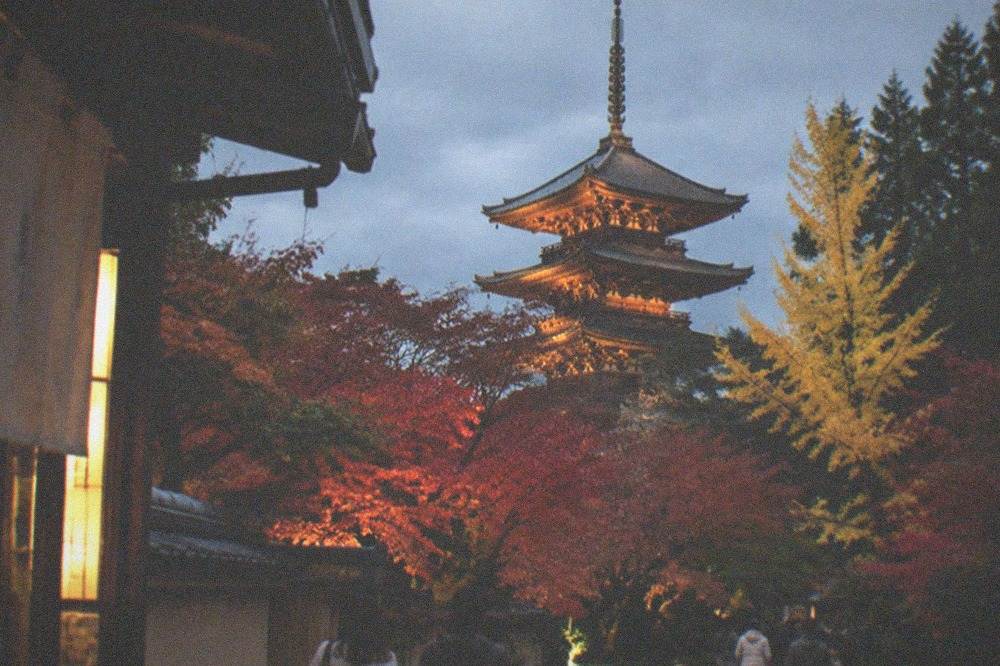
Night illumination is the part of Kyoto's autumn that most first-time visitors underestimate. The gardens are lit after dark, the maples read differently under floodlight than under sun, and the crowds redistribute rather than disappear: the evening slots at the big three are busy, but the daytime queues at the same temples are worse. Kodai-ji's published window, 17:00 to 22:00 with reception to 21:30, spans almost seven weeks, so it is the flexible option. Kiyomizu-dera's is short and fixed, and the view from its stage over the lit Higashiyama hillside is the season's signature image. The rest of the planning pages sit on Kyoto Travel Guide.
| Illumination | 2026 dates | Hours | Source |
|---|---|---|---|
| Kodai-ji | 23 Oct to 13 Dec | 17:00-22:00, reception to 21:30 | the temple's own site |
| Kiyomizu-dera | 21 to 30 Nov | 6:00-21:30, last entry 21:00 | the temple's access page |
| Eikan-do | typically early Nov to early Dec | evening slots | confirm with the temple |
Plan the evening around transport rather than the temple. The Higashiyama sites cluster along the east bank, so pairing Kodai-ji with Kiyomizu-dera in one evening is a walk of about 20 minutes between them, and the Keihan line at Kiyomizu-Gojo or Gion-Shijo gets you back to the centre quickly. The Kyoto subway guide covers the rail side, and the Higashiyama walk after dark is safe and well lit; the late-night safety answer page goes into detail.
How Crowded Is Kyoto In Autumn Leaf Season?
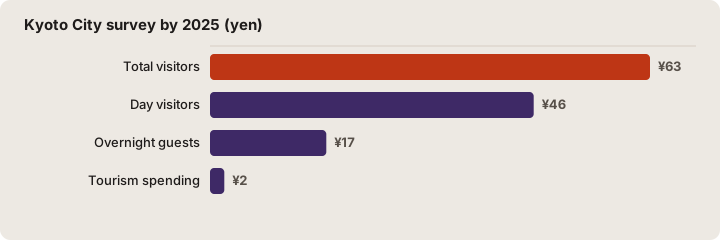
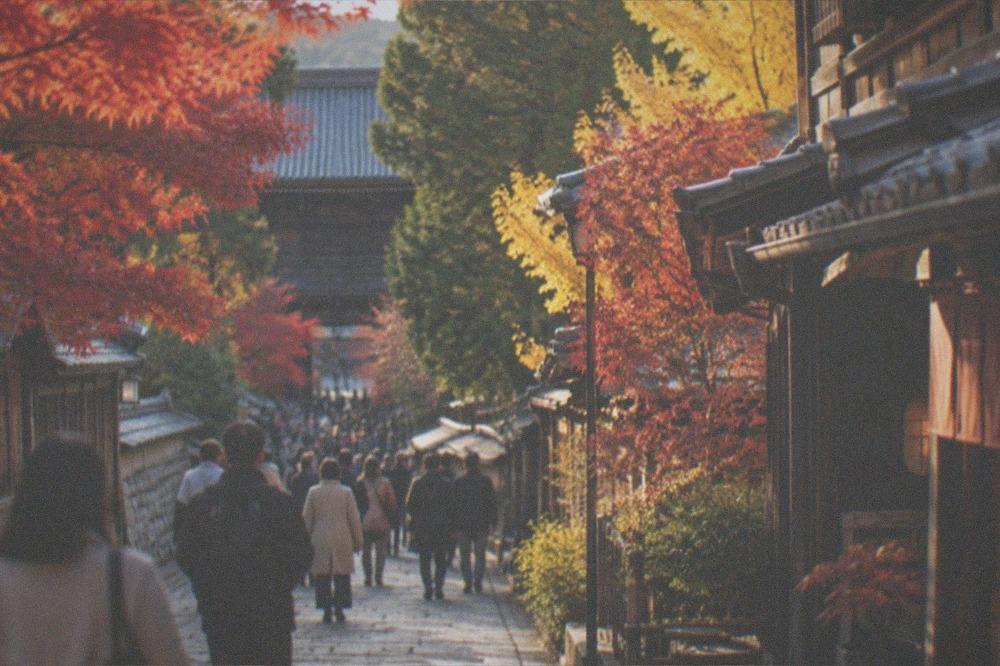
Kyoto drew a record 62.79 million visitors in 2025, up from 56.06 million in 2024, with 46.20 million of them day visitors, according to the city's own tourism survey released in June 2026. Autumn foliage weekends concentrate that flow into a handful of temple gardens, so weekday mornings at Tofuku-ji and Eikan-do are measurably calmer than Saturday afternoons.
The survey numbers are worth having in mind because they replace adjectives with quantities. Overnight guests hit a record 16.59 million in 2025, tourism spending a record 2.0474 trillion yen, and satisfaction stayed above 90 percent for both Japanese and foreign visitors. About half of Japanese visitors and about 20 percent of foreign visitors reported something disappointing, and the repeat rates run about 60 percent domestic and 20 percent foreign, which tells you the crowds are tolerable enough that most domestic visitors come back.
| Kyoto City survey | 2025 | 2024 |
|---|---|---|
| Total visitors | 62.79 million | 56.06 million |
| Day visitors | 46.20 million | 39.76 million |
| Overnight guests | 16.59 million | 16.30 million |
| Tourism spending | 2.0474 trillion yen | 1.8839 trillion yen |
Practically, the city publishes a crowd-comfort forecast that rates spots and time slots on five levels using location data, and Fushimi Inari links to it from its own site. The temple gardens do not publish queue times, and no source gives a best-arrival hour, so treat any specific "arrive by 7:00" claim you read elsewhere as invention. What is defensible from the data: weekends in late November are the peak of the peak, the night illuminations shift some pressure off the daytime, and the mountain valleys, Kurama, Kibune, Takao, Ohara, absorb the early-November weeks that the city gardens do not. The Kyoto crowds guide works through the dispersal tactics in full.
What Should You Pack For Kyoto In Late November?
Pack for a mean of 12.5 C and a mean daily minimum of 8.4 C, which is what the JMA November normals give, and expect the first week of December to sit near 7.2 C with nights around 3.5 C. Layers, a real jacket and comfortable walking shoes cover it; Kyoto has a genuine winter, with a station record low of -11.9 C, so late-season foliage trips are cold-weather trips.
The numbers behind that: November's mean daily maximum is 17.3 C, so afternoons in the sun feel mild and evenings at the illuminations feel sharp, a spread of roughly nine degrees across a single day. Rain eases through the month, 73.9 mm on average against October's 143.2 mm, but a folding umbrella still earns its place. December, if you are chasing the late maple, drops to 57.3 mm of rain and a mean daily minimum of 3.5 C.
The packing logic that follows is layers with a warm outer layer, because the day's shape is a cold walk to a temple, a warm queue in the sun, and a cold hour under floodlights. Shoes matter more than in most seasons: the foliage walks are long, the Higashiyama lanes are steep, and Kurama's trail is dirt and root. The Kyoto weather guide carries the full monthly table and the summer side of the record books.
Is A Kyoto Autumn Leaves Day Tour Worth It?
A day tour is worth it when the alternative is three separate bus queues in foliage-season crowds, and the one-day bus tour covering Fushimi Inari, Kinkaku-ji and the Arashiyama bamboo grove is the strongest fit for a first visit. Independent travel wins if you want Eikan-do and Tofuku-ji specifically, since no single tour strings the foliage gardens together.
The arithmetic is the argument. Kyoto's city bus flat fare is 230 yen and the subway runs 220 to 360 yen by zone, with the Subway and Bus One-Day Pass at 1,100 yen covering both networks, so the money is trivial either way. What a tour buys in late November is time and certainty: the bus-only one-day pass no longer exists, the 62.79-million-visitor year puts pressure on the routes to the big sites, and a tour's fixed itinerary sidesteps the decision fatigue of which garden on which day.
For the independent version, the one day in Kyoto itinerary sequences the foliage spots, and the Kyoto trip cost guide prices the whole thing out, including the accommodation tax change of 1 March 2026 that most budget guides still miss: a 20,000-yen room now carries 1,000 yen per person per night, and the top tier runs to 10,000 yen.
For an evening that is not about leaves at all, a tea ceremony class is the indoor counterpart to a cold garden, and it is the third pick in the band below.
The Gion evening walk is the other strong pairing with illumination season, since the lantern-lit lanes between the Kodai-ji and Kiyomizu-dera slots are on the same route. The Gion guide covers the conduct rules that matter there, including the photography ban on the private alleys off Hanamikoji, where signs posted by the district council threaten a 10,000 yen penalty.
Common Questions About Kyoto Autumn Leaves
When Do Kyoto Autumn Leaves Peak: Mid Or Late November?
Late November, on the official record. The JMA normal for maple red leaves is 5 December and for ginkgo yellow 24 November, and 2025's observed maple date was 10 December. Mid-November catches the mountain valleys and the start of the city gardens, not the peak.
Is Early December Too Late For Kyoto Autumn Leaves?
No. The maple normal is 5 December and the latest recorded turning is 20 December, in 2024. Early December reliably holds colour in the city gardens, with thinner crowds than late November, though the weather is colder, with a December mean of 7.2 C.
Which Kyoto Temples Have Night Illuminations In Autumn?
Kodai-ji runs 23 October to 13 December 2026, and Kiyomizu-dera runs 21 to 30 November with entry to 21:30. Eikan-do and other gardens typically illuminate from early November to early December; each temple confirms its own dates.
How Much Do The Foliage Temples Cost In 2026?
Tofuku-ji's foliage-period ticket is 1,000 yen for adults from 1 November 2026, up from 600. Kodai-ji is 800 yen, Nanzen-ji's sub-sites 600 yen each, Kiyomizu-dera 500 yen. Ginkaku-ji, on the Philosopher's Path, is now 1,000 yen after its April 2026 doubling.
Where Can You See Autumn Leaves In Early November In Kyoto?
The mountain valleys. Kurama, Kibune, Takao and Ohara, all north or north-west of the city, turn two to three weeks before the basin gardens, which makes them the right targets for a trip fixed to the first half of November.
Is The Sagano Romantic Train Worth It In Autumn?
The Hozugawa valley view from the rails is one of the season's best, at 880 yen one-way for adults and 440 for children, and tickets sell out in foliage season. The train runs roughly March to December with most Wednesdays closed, so check the operator's timetable before committing a day.
The shape of the season, then: mountains in early November, city gardens from mid-month, the official maple marker on 5 December and a recorded range that runs to 20 December. Plan for late November, hold early December as the fallback, and let the JMA normals rather than a guide's memory set the expectation.