ICOCA Card In Kyoto
One plastic card covers nearly every train, subway and bus in Kyoto, but the deposit, the refunds and the pass maths are where visitors lose money. Here is what the operators actually charge.
Short answer
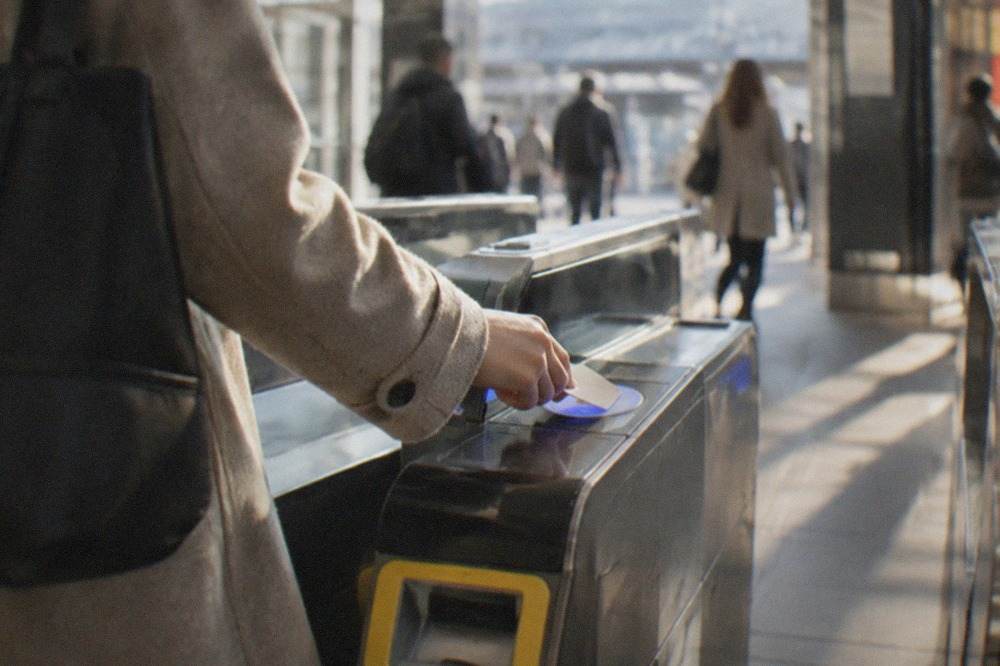
Yes. ICOCA works on Kyoto City Bus, the Kyoto Municipal Subway, Keihan, Hankyu, JR West and most private railways and buses across the Kansai region, plus vending machines and convenience stores. It costs 2,000 yen including a 500 yen refundable deposit, and it is the simplest way to pay every Kyoto fare from 230 yen bus rides to the airport express.
Kyoto's transit system is unusually fragmented for a city its size: a municipal subway, a flat-fare city bus network, three private railways and JR West all criss-cross the same grid of streets. The ICOCA smart card is the piece that stitches them together, and the operator that issues it, JR West, prices it at 2,000 yen including a 500 yen deposit. The city's own 2025 tourism survey counted 62.79 million visitors, and a large share of them touched a card on a reader at some point, so the mechanics of deposits, refunds and pass maths matter at real scale.
This guide covers what the card does on each Kyoto operator, what it costs to buy and to abandon, and the honest arithmetic of when the Subway and Bus One-Day Pass at 1,100 yen beats paying per ride. For the wider picture of moving around the city, see getting around Kyoto by subway and the companion page on Kyoto's city buses.
Does ICOCA Work On Kyoto Buses, Subway, Keihan, Hankyu And JR?
Yes, ICOCA works on all five. Kyoto City Bus, the Kyoto Municipal Subway, Keihan, Hankyu and JR West trains all accept ICOCA at the gate or on boarding, and so do most other railways and buses across Kansai, including the Kintetsu line to Nara and the Keihan line to Uji. The card also pays at convenience stores, vending machines and station lockers. The main things it cannot do are ride the Shinkansen, cover a guided tour, or beat a one-day pass on a heavy sightseeing day.
The card is part of Japan's interoperable IC card system. ICOCA is JR West's version, but the reader does not care which brand you hold: Suica, PASMO, Pitapa and the others work on the same machines in Kyoto. That matters for anyone arriving from Tokyo with a Suica already in a phone wallet, because there is no need to buy a second card for Kansai. The reverse holds too, so an ICOCA bought in Kyoto keeps working on the Tokyo network.
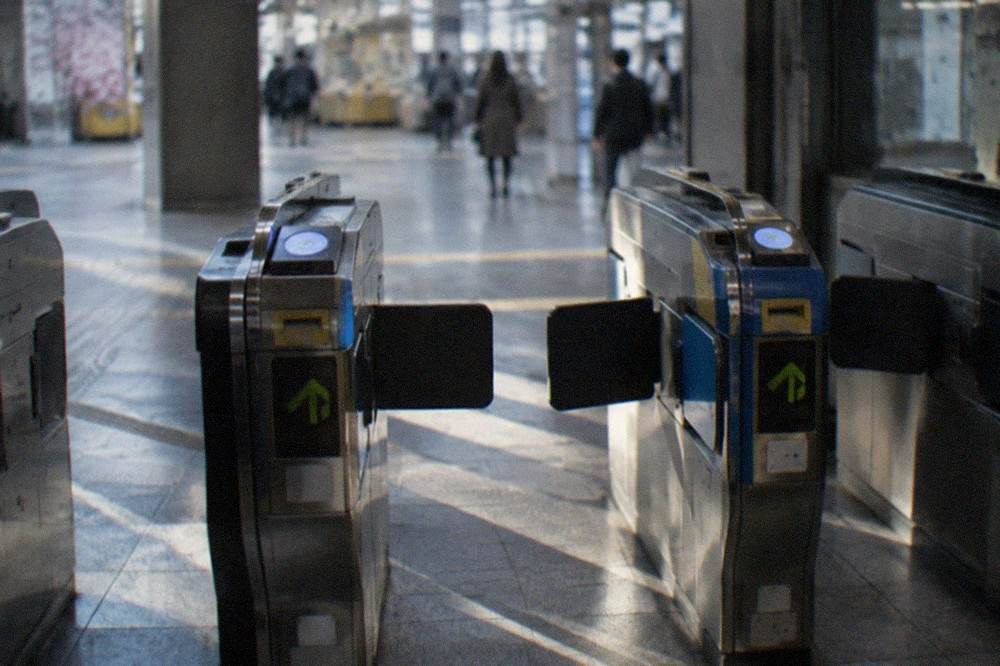
Within Kyoto itself, the practical coverage is close to total. The subway's two lines, the Karasuma and Tozai lines, take the card at every gate. Keihan runs down the Kamo River valley through Gion and on to Uji, Hankyu cuts across the city to Arashiyama and Katsura, and JR West's lines reach Nara, Osaka and the Sagano area. The city bus fleet takes it on boarding, with the fare deducted from the stored balance on exit or entry depending on the route type.
One edge case is worth naming: the EX100 and EX101 tourist express buses between Kyoto Station, Kiyomizu, Gion and Ginkaku-ji cost 500 yen adult and 250 yen child in cash, and the city's own fare page confirms they take IC cards as well as the Subway and Bus IC 24-hour ticket. The fare is fixed regardless of distance, so the card is simply a payment method there, not a discount.
| Operator | ICOCA accepted | Adult fare ICOCA pays | Notes |
|---|---|---|---|
| Kyoto City Bus | Yes | 230 yen flat | Child 6 to 11 pays 120 yen |
| Kyoto Municipal Subway | Yes | 220 to 360 yen by zone | Five fare zones |
| Keihan Railway | Yes | Distance-based | Serves Gion, Tofuku-ji, Uji |
| Hankyu Railway | Yes | Distance-based | Serves Arashiyama, Kawaramachi |
| JR West (local lines) | Yes | Distance-based | Nara, Osaka, Sagano lines |
| EX100 / EX101 express bus | Yes | 500 yen flat | Child 250 yen |
For anyone planning a fuller first visit rather than just the transport layer, the Perfect 1-Day Bus Tour bundles the headline temples and Fushimi Inari into one ticketed day, which removes the fare arithmetic entirely.
Where Do You Buy An ICOCA Card In Kyoto?
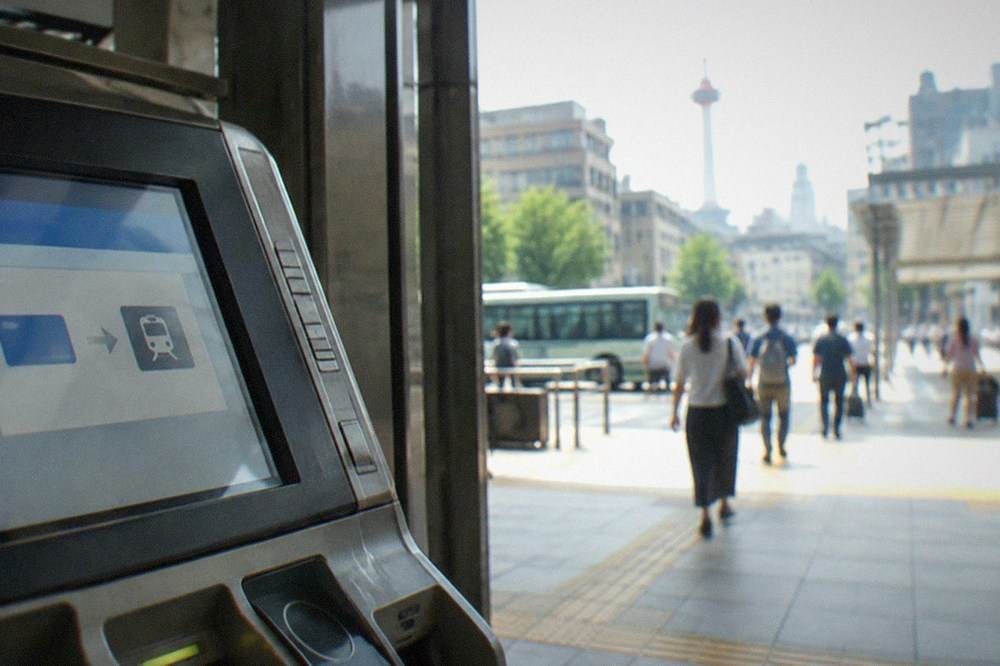
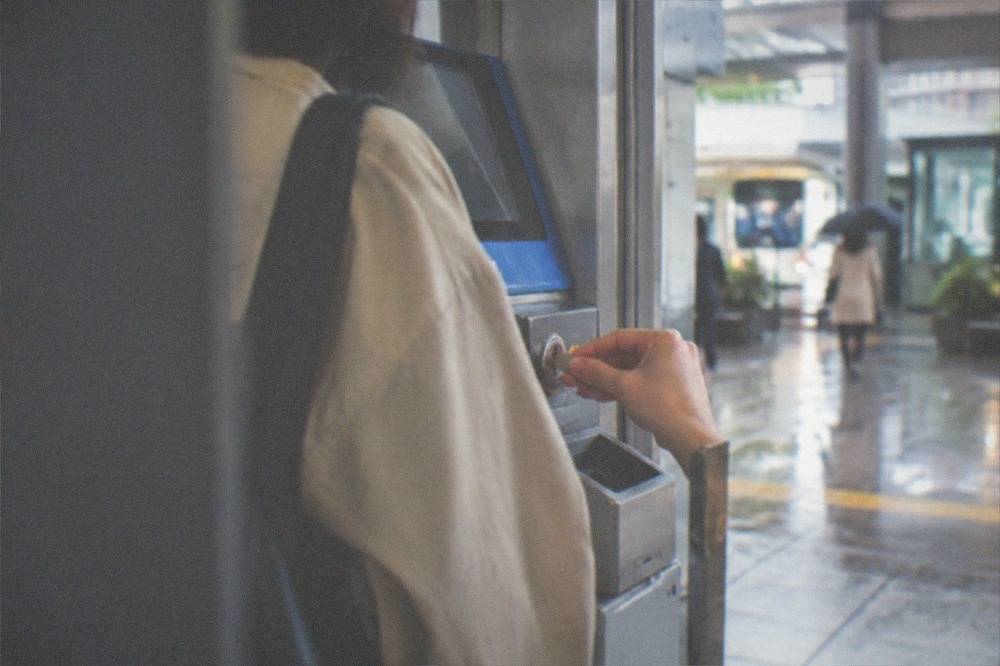
The simplest place is Kyoto Station, where JR West's ticket machines and the Midori no Madoguchi service counter both sell ICOCA, and the airport is even easier because the same machines sit in the arrivals hall at Kansai International. Any JR West station with a staffed window or a card-capable machine sells one, including the machines at subway and private railway stations elsewhere in the city. You need 2,000 yen in cash for the standard card: 500 yen becomes a refundable deposit and 1,500 yen rides immediately.
The purchase itself takes under two minutes at a machine. The language toggle switches to English, the ICOCA button is on the first menu, and the machine returns a physical card charged and ready. There is no registration, no passport check and no age verification for the standard version, which is why it remains the default choice for short visits.
A few practical notes that first-time buyers miss. The card is anonymous, so a lost card is a lost balance, and the deposit goes with it. Children aged 6 to 11 need a Child ICOCA, which requires the child to be present at a staffed counter and carries the child fare of 120 yen on the city bus. The standard card works in a phone wallet only if your phone supports Japanese mobile IC cards and a card was added there; a physical card bought at a machine cannot be moved into a phone later.
Visitors arriving from Tokyo should check the Tokyo to Kyoto guide before buying anything, and anyone landing at Itami instead of KIX will find the Itami to Kyoto limousine bus covered separately, since that bus takes 1,500 yen adult and now accepts contactless card payment since 1 March 2026, making an IC card optional there.
How Much Does An ICOCA Card Cost?
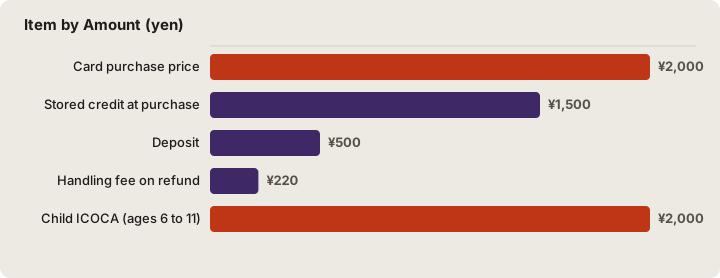
An ICOCA card costs 2,000 yen at purchase, of which 500 yen is a deposit and 1,500 yen is immediately usable stored credit, so the true cost of the card itself is zero if you refund it before leaving Japan. There is no purchase fee and no monthly charge. The only money you permanently lose is the deposit and any unspent balance if you discard the card, and the deposit comes back in full when you return the card at a JR West service counter.
The refund process is the part worth getting right. Returning the card at a JR West Midori no Madoguchi window pays back the 500 yen deposit plus whatever balance remains, with a 220 yen handling fee deducted from the balance if one exists. If the balance is zero, the deposit returns whole. The refund must happen in Japan, and JR West counters are the reliable place, which in Kyoto means Kyoto Station.
| Item | Amount | Refundable |
|---|---|---|
| Card purchase price | 2,000 yen total | Partly |
| Stored credit at purchase | 1,500 yen | Yes, spend or refund it |
| Deposit | 500 yen | Yes, returned at a JR West counter |
| Handling fee on refund | 220 yen from balance | No |
| Child ICOCA (ages 6 to 11) | Same 2,000 yen | Yes, same rules |
Topping up is free at any machine. Machines take cash, and an increasing number take contactless payment for top-ups, though a visitor should not assume every machine in a small station does. The balance carries no expiry for the standard card, which is why people keep one across repeat trips.
The honest comparison for a Kyoto visitor is not between IC cards, because they are interchangeable, but between an IC card and the day passes. That arithmetic is the next section, and it is where most of the money is actually won or lost.
Is The ICOCA Card Better Than The Subway And Bus One-Day Pass?
On a heavy sightseeing day, no: the Subway and Bus One-Day Pass at 1,100 yen beats ICOCA once you take more than about four bus or subway rides, since each bus ride is 230 yen and subway rides run 220 to 360 yen. On a light day of two or three rides, or any day involving private railways like Keihan, Hankyu or JR, ICOCA wins because the one-day pass covers only the municipal subway and city bus. The two are not rivals; many visitors carry both.
The pass maths is simple enough to do on the platform. Four city bus rides cost less than the pass; five cost more. The subway's zone fares stretch to 360 yen, so three long subway rides at 330 or 360 yen already brush the pass price. The break-even sits at roughly four to five rides, and a typical first-timer's day in Kyoto, Higashiyama and Arashiyama clears that comfortably. More of these guides are collected on Kyoto Travel Guide.
| Day pattern | ICOCA cost | One-Day Pass cost | Cheaper option |
|---|---|---|---|
| 3 bus rides only | 3 x 230 yen, under the pass | 1,100 yen | ICOCA |
| 5 bus rides | 5 x 230 yen, over the pass | 1,100 yen | Pass |
| 4 subway rides, longest zones | 4 x up to 360 yen, over the pass | 1,100 yen | Pass |
| 2 subway rides + 1 Keihan ride | 2 x subway fare + Keihan fare | pass invalid on Keihan | ICOCA |
| Bus, subway, Keihan and JR mixed | varies | pass invalid on private rail | ICOCA |
The critical limitation is the pass's network boundary. The Subway and Bus One-Day Pass covers the municipal subway and the city bus network, and nothing else. Keihan, Hankyu, JR West and the EX100 express buses sit outside it, although the EX100 does accept the separate Subway and Bus IC 24-hour ticket. Anyone staying near the Kamo River and riding Keihan into Gion gains nothing from the pass on those legs.
One warning that older guides get wrong: the bus-only one-day pass no longer exists. Sales ended at the end of September 2023 and the last day of use was 31 March 2024, so any page still recommending a 700 yen bus pass is describing a dead product. The current product is the combined Subway and Bus One-Day Pass at 1,100 yen adult and 550 yen child, with a subway-only version at 800 and 400 yen. The full breakdown is in the Kyoto bus and subway pass guide.
For the days when you leave the city entirely, whether to Nara or on a day trip to Himeji Castle, ICOCA is the default payment because those trips run on JR or Kintetsu, outside the municipal pass entirely.
Does ICOCA Work From Kansai Airport To Kyoto?
Yes, ICOCA works on the JR trains from Kansai Airport, but the airport to Kyoto leg is the one place where a different ticket is usually better: the JR West HARUKA One-way Ticket for foreign visitors costs 2,200 yen adult and 1,100 yen child to Kyoto, cheaper than the regular fare, and it is a paper or e-ticket rather than an IC balance. The journey takes about 80 minutes. Buy the ICOCA at the same station for use inside the city afterwards.
The HARUKA visitor ticket is the product JR West itself prices on its English page, and it undercuts the regular fare while including the reserved express seat. Itami arrivals have a separate route: the Hankyu Kanko limousine bus to Kyoto Station costs 1,500 yen adult and 750 yen child, takes about 50 to 55 minutes from the Hachijo exit, and has accepted contactless card payment since 1 March 2026.
| Airport route | Adult fare | Child fare | Time | ICOCA needed |
|---|---|---|---|---|
| KIX, HARUKA visitor ticket | 2,200 yen | 1,100 yen | about 80 min | No, separate ticket |
| Itami, limousine bus | 1,500 yen | 750 yen | 50 to 55 min | No, contactless accepted |
| KIX, regular HARUKA fare | higher, single source | about 80 min | IC possible |
The airport is also where the deposit question bites hardest. A traveller who buys ICOCA at KIX, uses it for five days and refunds it at Kyoto Station before departure recovers the full 500 yen deposit. A traveller who forgets and flies out of Kansai can still refund at the JR West counter there, but the queue at departure is longer than the one at Kyoto Station midweek.
The full arrival picture, including what to do with luggage, is in Kansai Airport to Kyoto, and the HARUKA express guide covers the ticket types in detail.
Where Does ICOCA Stop Working Around Kyoto?
ICOCA stops working on the Shinkansen, on most long-distance highway buses and on some rural bus routes, and it cannot pay for temple admissions, temple night illuminations or any booked tour. Within the Kansai region the coverage is otherwise broad: Nara, Osaka, Kobe, Uji and Lake Biwa are all reachable on IC-touchable trains. The card is a payment tool, not a pass, so it never reduces a fare below the printed one.
The regional boundary is generous. Kansai is one of the most interoperable areas in Japan, and a Kyoto-bought ICOCA rides the Osaka Metro, the Kobe subway, Kintetsu to Nara and the JR lines to Kobe or Lake Biwa without any adjustment. The failures visitors actually hit are the Shinkansen gate, where the card simply does not read, and the handful of sightseeing products that only exist as paper tickets.
A short list of things the card will not do in Kyoto:
- Ride the Shinkansen, which needs a separate base and express ticket
- Pay the 500 yen admission at Kinkaku-ji or the 800 yen castle entry at Nijo-jo Castle, both cash or card at the booth
- Replace the Sagano Romantic Train reservation, which is a seat ticket at 880 yen one way adult
- Cover any guided tour or transfer product, which are booked separately
On the JR Pass question, the card and the pass answer different problems, and the JR Pass for Kyoto guide works through whether the national pass pays off from a Kyoto base. For most visitors staying inside Kansai, it does not, and ICOCA plus the occasional one-day pass is the cheaper stack.
The 2,800 yen one-day JR West Kansai Area Pass exists for a heavy regional day, but it should be priced against individual fares rather than assumed. A same-day Kyoto to Nara return on the JR Miyakoji Rapid is twice the roughly 720 yen one-way fare, under the pass, while a loop taking in Himeji and Kobe can clear it.
What Are The Alternatives To An ICOCA Card In Kyoto?
The real alternatives are the one-day passes for heavy municipal days, single-journey paper tickets for light users, contactless bank card payment where operators accept it, and walking, since central Kyoto is compact. A visitor making two round trips a day on the subway can skip the IC card entirely and buy tickets at the machine each time, losing only convenience. The contactless option is spreading but is not yet universal on Kyoto City Bus, so an IC card remains the safe default.
The walkability point is underrated. Kawaramachi to Gion is a short walk, Gion to Kiyomizu-dera is uphill but close, and the Higashiyama lanes between them are the sight, not the transit. Many visitors find their IC usage drops sharply once they realise how much of eastern Kyoto is a single connected walk.
| Payment method | Best for | Weakness |
|---|---|---|
| ICOCA | Mixed networks, multiple days | Deposit to recover, balance to spend |
| Subway and Bus One-Day Pass | Heavy municipal days | Invalid on Keihan, Hankyu, JR |
| Single paper tickets | One or two rides a day | Slower, exact change on buses |
| Contactless bank card | Where accepted | Not universal on city buses |
| Walking | Central Higashiyama and downtown | Weather and stamina |
For the return leg to the airport, a private transfer sidesteps all of it: the departure transfer from Kyoto to Kansai International is booked as a product, not paid as a fare, and needs no deposit refund at a counter on a departure morning. Anyone travelling in a group or with heavy luggage tends to find the fixed price easier than the card arithmetic at 6 a.m.
The city's hands-free tourism programme, promoted through the official tourism association, adds another layer: luggage delivery between stations and hotels exists to keep bags off the crowded buses, and it pairs naturally with a light IC card balance and a day pass in the pocket.
Common Questions About The ICOCA Card In Kyoto
Does ICOCA Work On Kyoto Buses, Subway, Keihan, Hankyu And JR?
Yes, all five accept it. Kyoto City Bus charges the flat 230 yen adult fare, the subway charges by zone from 220 to 360 yen, and Keihan, Hankyu and JR West all read the card at the gate. The EX100 and EX101 tourist express buses also accept it at their flat 500 yen fare.
Can I get my 500 yen ICOCA deposit back in Kyoto?
Yes. Return the card at a JR West service counter, such as the Midori no Madoguchi at Kyoto Station, and the 500 yen deposit is refunded along with any remaining balance, minus a 220 yen handling fee taken from the balance if one exists. The refund must happen in Japan.
Is ICOCA better than a Suica in Kyoto?
They are interchangeable. Kyoto's readers accept Suica, PASMO and the other Japanese IC cards exactly as they accept ICOCA, so a Suica bought in Tokyo works on every Kyoto bus and train. Buy whichever you encounter first.
Does my child need a separate ICOCA card?
For the child fare, yes. Children aged 6 to 11 need a Child ICOCA issued at a staffed counter with the child present, which then pays the 120 yen child fare on the city bus and the child rates on trains. A regular adult card works for a child but pays full fare.
Can I use ICOCA from Kyoto to Osaka or Nara?
Yes. The JR and Kintetsu lines to Nara and the JR, Hankyu and Keihan lines to Osaka all accept ICOCA, and so do the Osaka Metro and Kobe subway at the far end. The only major train it cannot ride is the Shinkansen.
What happens to my ICOCA balance when I leave Japan?
Anything unspent is lost unless you refund the card before departure. Refund the card at a JR West counter to recover the 500 yen deposit and the balance, or spend the balance down at convenience stores and vending machines in the airport, which accept the card, and then refund the empty card.
The ICOCA card is a small piece of plastic doing an unglamorous job extremely well, and in Kyoto that job matters more than in most cities, because no single operator covers the city. Buy it at the airport or Kyoto Station for 2,000 yen, spend the 1,500 yen credit across whatever mix of buses, subways and private railways the day demands, keep a one-day pass in reserve for the heavy municipal days, and hand the card back before flying out to recover the deposit. That routine, plus a willingness to walk the Higashiyama grid, covers almost every transport decision a Kyoto visit will ask of you.