How To Use Kyoto Buses: Boarding, Fares And Passes Explained
Kyoto's buses are flat-fare, rear-entry and stubbornly simple once you know the sequence, and half the confusion travellers report comes from guides repeating a pass that no longer exists. The bus-only one-day pass died in 2024, the flat fare is 230 yen, and the product that replaced it covers the subway too.
Short answer
Board a Kyoto City Bus through the rear door, take a numbered ticket if the fare screen shows one, and pay when you get off through the front door, dropping 230 yen exact or tapping an IC card on the reader by the driver. The bus-only one-day pass no longer exists; the current product is the Subway and Bus One-Day Pass at 1,100 yen.
Kyoto recorded 62.79 million visitors in 2025, the city's own survey released in June 2026 confirms, and a large share of them moved between Kiyomizu-dera, Ginkaku-ji and Arashiyama on the same green and cream City Buses. The network is flat-fare, dense and tourist-heavy, which makes it both the easiest and the most crowded way to see the city. The boarding sequence confuses first-timers more than anything else, so this guide starts there and works outward through fares, passes, express buses and the moments when you should honestly take the subway instead.
How Do You Board And Pay On A Kyoto City Bus: Rear Door In, Front Door Out?
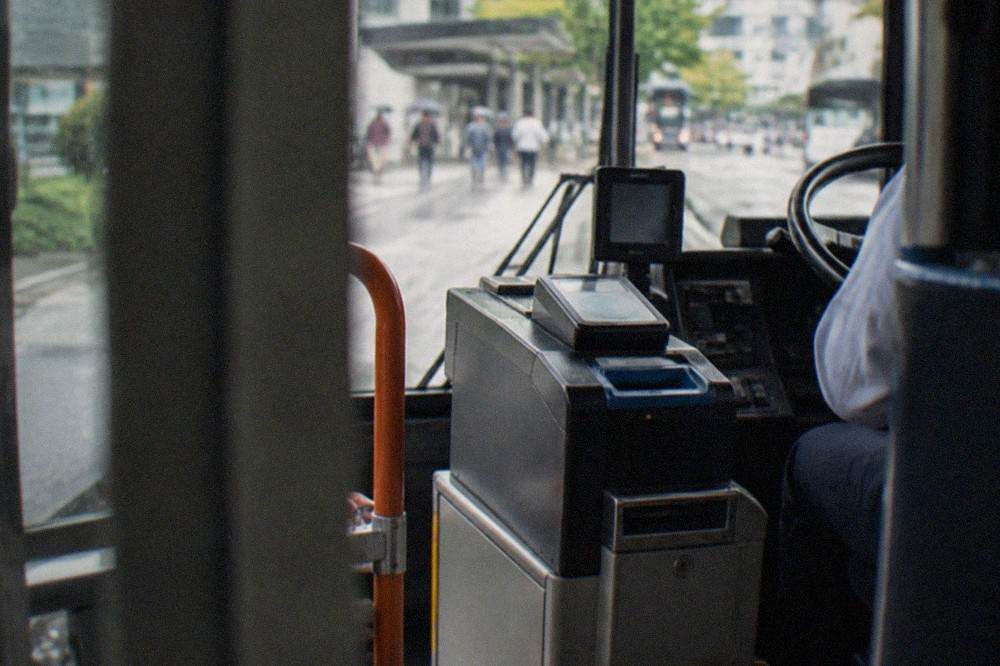
You board a Kyoto City Bus through the rear door, not the front. If the machine beside the rear door issues a numbered paper ticket, take one and keep it. You ride, watch the fare display at the front for your ticket number, and when your number appears you drop 230 yen in coins or tap an IC card at the box beside the driver, then exit through the front door. Children aged 6 to 11 pay 120 yen.
That is the whole ritual, and the city's transport bureau publishes each piece of it on its English fare pages. The numbered ticket matters only on the flat-fare city buses in a few variable-fare edge cases; on the standard flat-fare routes inside the city the rear-door tap or the front-door payment is all that happens. The front door is exit-only, so a crowd forming at the front as you board is a crowd getting off, not a queue joining you.
Two practical notes. First, the fare box gives change: feed a 1,000 yen note or coins and it sorts them, though drivers cannot break anything larger, and IC cards skip the problem entirely. Second, the city's own guidelines ask passengers with large or bulky luggage to avoid crowded buses, and drivers may refuse them. Kyoto's hands-free luggage delivery counters exist precisely because of this, and the city promotes them to keep buses moving.
If you are staying several days, read our Kyoto first-timers overview before deciding how much of your itinerary should depend on buses at all.
What Does A Kyoto City Bus Ride Cost?
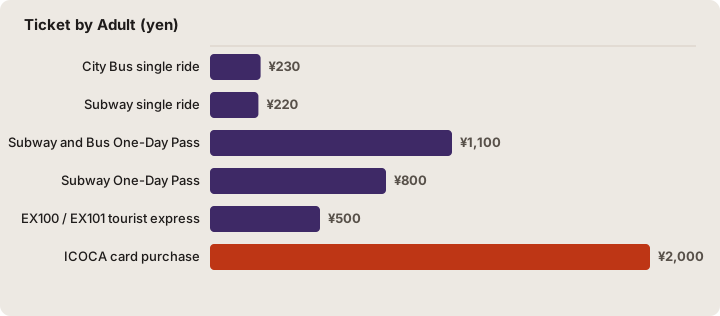
A single ride on a Kyoto City Bus costs a flat 230 yen for adults and 120 yen for children aged 6 to 11, regardless of distance travelled inside the flat-fare zone, and the fare is identical whether you pay cash or tap an ICOCA or other Japanese IC card. The subway is zoned instead, running 220, 260, 290, 330 or 360 yen for adults depending on how many zones you cross.
The city's transport bureau publishes both fare cards, and the contrast matters for planning. A short bus hop is marginally dearer than a one-zone subway ride, while a cross-town bus ride is far cheaper than the equivalent subway distance once you change lines. Buses also deliver you closer to temple gates, which the subway, with its limited network, often does not.
| Ticket | Adult | Child | Notes |
|---|---|---|---|
| City Bus single ride | 230 yen | 120 yen | Flat fare, any distance in the zone |
| Subway single ride | 220-360 yen | 110-180 yen | Zoned, by number of zones crossed |
| Subway and Bus One-Day Pass | 1,100 yen | 550 yen | Unlimited bus and subway for one day |
| Subway One-Day Pass | 800 yen | 400 yen | Subway only |
| EX100 / EX101 tourist express | 500 yen | 250 yen | Cash or IC, covered by the one-day pass |
| ICOCA card purchase | 2,000 yen | (deposit included) | Includes a 500 yen refundable deposit |
The ICOCA card, sold by JR West for 2,000 yen including a 500 yen deposit, is the single most useful object on this list. It works on buses, subway, JR and most private railways in the Kansai region, and our ICOCA card guide covers where to buy and recharge one.
Which Bus Pass Should You Buy In Kyoto?
The pass that fits most visitors is the Subway and Bus One-Day Pass at 1,100 yen for adults and 550 yen for children, valid on every Kyoto City Bus and every subway line for one calendar day. It pays for itself after five bus rides, or roughly three bus rides plus one subway trip. The bus-only one-day pass no longer exists: sales ended at the end of September 2023 and the last day it could be used was 31 March 2024.
The bureau's own discontinuation notice explains the reasoning: about 90 percent of bus-pass buyers were non-residents, and the pass concentrated tourists onto an already strained bus network. The combined pass deliberately pushes visitors toward mixing subway and bus, which spreads the load. Any guide still recommending a 700 yen bus-only day pass is at minimum two years out of date.
For a fuller comparison including the subway-only pass and multi-day arithmetic, see the complete pass breakdown.
A pass decision also depends on where you sleep. If your hotel sits near a subway station, you may never need five bus rides in a day, and plain IC-card pay-per-ride wins. If you are based in the Kyoto Station area and heading daily to Higashiyama and Arashiyama, the combined pass earns its price by mid-afternoon.
What Are The EX100 And EX101 Tourist Express Buses?
The EX100 and EX101 are limited-stop tourist express buses that link Kyoto Station directly with the Kiyomizu-dera area, Gion, the Okazaki museum district and Ginkaku-ji, skipping the local stops in between. A ride costs a flat 500 yen for adults and 250 yen for children, payable in cash or by IC card, and the Subway and Bus One-Day Pass covers them, which effectively makes them free on a pass day.
The city's transport bureau publishes the routes and fares on its limited-express bus page. The EX100 runs the full sightseeing corridor from Kyoto Station through Gojo-zaka, Gion and Heian Shrine territory to Ginkaku-ji, while the EX101 shoots straight from Kyoto Station to the Kiyomizu side, running every 7 to 8 minutes in the morning on operating days. They exist as overtourism measures, part of the city's 2025-2026 push to move visitors off local buses and spread them across the day.
| Service | Route | Adult fare | Runs |
|---|---|---|---|
| EX100 | Kyoto Station, Gojo-zaka, Gion, Okazaki, Ginkaku-ji | 500 yen | Primarily weekends and holidays |
| EX101 | Kyoto Station to Gojo-zaka direct | 500 yen | Every 7-8 minutes in the morning on operating days |
| City Bus, Gion-Kiyomizu loop | Kyoto Station, Higashiyama, Kiyomizu, Gion | 230 yen | Frequent, daily, very crowded |
| City Bus, Ginkaku-ji corridor | Kyoto Station, Gion, Ginkaku-ji | 230 yen | Frequent, daily |
The 500 yen express fare stings next to the 230 yen local bus, but the express saves 20 minutes or more on the Kiyomizu corridor and, on a one-day pass, costs nothing extra. Check the bureau page for operating days before relying on it, since the expresses run mainly on weekends and holidays outside peak periods.
One way to dodge bus crowding entirely is to start before the crowds do. A guided early-morning tour with an English-speaking guide moves you through the headline temples in the quiet hours, and pairs well with the EX101's morning frequency if you are making your own way to the start point.
Which Bus Routes Connect Kyoto's Main Sights?
The routes that matter to almost every visitor are the frequent local loops that link Kyoto Station with the Gion and Kiyomizu-dera side of Higashiyama and continue north to Ginkaku-ji, plus the cross-town services that reach Kinkaku-ji and Ryoan-ji territory in the north-west. All are flat-fare 230 yen rides, and all are covered by the Subway and Bus One-Day Pass, so you never need to think about route-specific tickets.
These are also, by the city's own crowd forecasting, the most congested buses in Japan's old capital. The Kyoto Tourism Comfort Forecast, run by the city tourism association, uses smartphone location data, weather and time-of-day modelling to grade spots, areas and time slots on a five-level comfort scale, and the Gion-Kiyomizu corridor reliably turns deep red from mid-morning. More of these guides are collected on Kyoto Travel Guide.
| Sight | How to reach it by bus from Kyoto Station | Typical ride |
|---|---|---|
| Kiyomizu-dera | Local loop to Gojo-zaka or the EX101 express | 15-20 min plus uphill walk |
| Gion and Yasaka Shrine | Local loop or EX100 express | 15 min |
| Ginkaku-ji | Gion corridor bus or EX100 express | 35-40 min |
| Kinkaku-ji | Cross-town service via the north of the city | 40-45 min |
| Ryoan-ji | Cross-town service plus a short walk | 45-50 min |
| Arashiyama | Bus to Sanjo, then JR or the Randen tram | 45 min total |
Stop announcements on the main tourist corridors are made in English as well as Japanese, and the destination signs above the windscreen carry route numbers alongside the Japanese terminus names. Match the number on the sign to the number on the bureau's route map or your hotel's printed directions rather than the destination text, because several routes share terminus words. For the temples themselves, our Kyoto temples guide maps which gates sit within walking distance of which stops, and the Arashiyama area guide explains why the tram and JR lines usually beat the bus there.
How Do You Get From The Airport Into Kyoto Without A Bus Nightmare?
Kyoto has no airport of its own. From Kansai International, the default link is the JR HARUKA train, and the JR West HARUKA One-way Ticket for foreign visitors costs 2,200 yen for adults and 1,100 yen for children, with a journey of about 80 minutes. From Itami Airport, the Hankyu Kanko limousine bus to Kyoto Station costs 1,500 yen for adults and 750 yen for children and takes about 50 to 55 minutes from the Hachijo exit.
The 2,200 yen figure is the visitor-specific product price printed by JR West; the regular non-reserved fare runs higher, at about 3,060 yen, so the visitor ticket is the one to buy. Contactless card payment arrived on the Itami limousine on 1 March 2026, which removes the last cash scramble on that route.
Full route detail, including the HARUKA product terms, is in our Kansai Airport to Kyoto guide.
| Route | Adult fare | Child fare | Time |
|---|---|---|---|
| Kansai International to Kyoto, HARUKA visitor ticket | 2,200 yen | 1,100 yen | about 80 minutes |
| Itami Airport to Kyoto Station, limousine bus | 1,500 yen | 750 yen | 50-55 minutes |
| JR West Kansai Area Pass, 1 day | 2,800 yen | varies | covers regional JR lines |
The Kansai Area Pass at 2,800 yen for one day suits travellers combining Kyoto with Osaka or Nara on JR lines, but for a simple airport-to-city transfer the HARUKA visitor ticket is cheaper and simpler.
What Rules Should You Follow On A Kyoto Bus?
The rules that actually get enforced are these: give up priority seats to those who need them, keep phones on silent and conversations low, carry your backpack in front when standing, and do not board with bulky luggage on crowded buses, which drivers may refuse. In Gion, the city tourism association's published guidelines prohibit touching, chasing or photographing geiko and maiko without permission, and signs on the private alleys off Hanamikoji threaten a 10,000 yen penalty for unauthorized entry or photography.
The Gion penalty is district-council signage, not a municipal fine, which is a distinction the local association is careful about and lazy guides are not. The main Hanamikoji road itself remains open to photography. The city's broader etiquette push, including the hands-free luggage programme and morning-and-evening dispersal campaigns, is documented on its tourism pages.
On the bus itself, the numbered-ticket sequence from the first section covers payment, but two behaviours matter for speed: have your fare or card ready before the bus stops, and exit promptly through the front. A Kyoto bus at Kiyomizu-michi can lose a minute to a single passenger digging for coins, and the schedule has no slack for it.
When Is A Bus The Wrong Choice In Kyoto?
A bus is the wrong choice when you are crossing the city east to west at peak times, when you are carrying luggage, and when the Comfort Forecast shows the corridor you need in its worst band, because Kyoto's buses sit in the same traffic as everything else. The subway covers the Karasuma north-south axis and the east-west Tozai line through Sanjo and the Kyoto Station area, and it is immune to congestion. Rainy days also push everyone onto buses at once.
July deserves a special warning, and it is the kind of fact most guides get backwards: July, not June, is Kyoto's wettest month, at 223.6 mm against June's 199.7 mm in the JMA 1991-2020 normals for station 47759. A wet July afternoon puts every tourist in Kyoto on a bus, and the 62.79 million visitors the city counted in 2025 do not fit on them all at once.
Alternatives by district: the Kyoto subway guide covers the two lines; the Randen tram and JR Sagano line serve Arashiyama better than any bus; and for the day you simply cannot face another crowded ride, the free things to do in Kyoto roundup includes plenty within walking distance of downtown lodging.
What Should You Do On Departure Day?
On departure day, the bus is almost never the right answer, because Kyoto City Bus rules allow drivers to refuse large luggage on crowded buses and the airport expresses are trains, not buses. From your hotel, the HARUKA from Kyoto Station covers Kansai International in about 80 minutes with the 2,200 yen visitor ticket, and a pre-booked private transfer collects you at the door with the luggage question solved before it starts.
The private departure transfer to Kansai International is the one product on this page that removes every variable at once: no fare box, no numbered ticket, no platform change at Tennoji. For a family with suitcases, the arithmetic against two HARUKA tickets and a taxi to the station is closer than it looks.
For travellers ending the trip with a museum morning instead, the Toei Kyoto Studio Park entry ticket is bookable in advance and reachable from the station side, though the park does not publish its admission price in readable form on its own ticket page, so confirm the current fee when you check availability.
Common Questions About Kyoto Buses
How Do You Board And Pay On A Kyoto City Bus: Rear Door In, Front Door Out?
Board through the rear door, take a numbered ticket if one is issued, and pay when you leave through the front door: 230 yen in coins or notes into the fare box, or a tap of an IC card on the reader beside the driver. Children aged 6 to 11 pay 120 yen.
Can You Pay With Cash On Kyoto Buses?
Yes. The fare box beside the driver accepts coins and 1,000 yen notes and gives change. Drivers cannot break larger notes, so keep small denominations or use an IC card.
Does The Kyoto Bus One-Day Pass Still Exist?
No. Sales ended at the end of September 2023 and the last day of use was 31 March 2024. The replacement is the Subway and Bus One-Day Pass at 1,100 yen for adults and 550 yen for children, valid on both networks.
Is The Subway And Bus One-Day Pass Worth It?
It pays for itself at five bus rides, or about three bus rides plus one subway trip. If your day is two rides, pay per ride with an IC card instead.
Do Kyoto Buses Take Luggage?
The city's guidelines discourage it and drivers may refuse bulky luggage on crowded buses. Use the hands-free luggage delivery counters or keep luggage days to the subway, the HARUKA or a private transfer.
What Is The EX100 Bus In Kyoto?
A limited-stop tourist express from Kyoto Station through Gojo-zaka, Gion and Okazaki to Ginkaku-ji, costing a flat 500 yen for adults and 250 yen for children, covered by the Subway and Bus One-Day Pass, and running mainly on weekends and holidays.
The bus system rewards a little preparation: an IC card in your pocket, the pass arithmetic done the night before, and the Comfort Forecast checked over breakfast. Kyoto Travel Guide covers the rest of the network in the subway and pass pages, and the boarding sequence above will carry you through every green bus in the city.