Day Trip From Kyoto To Himeji Castle
Himeji Castle sits about an hour west of Kyoto by Shinkansen, and it is the single most impressive castle in Japan. Here is how the train works, what the JR Pass covers, and how to plan the day.
Short answer
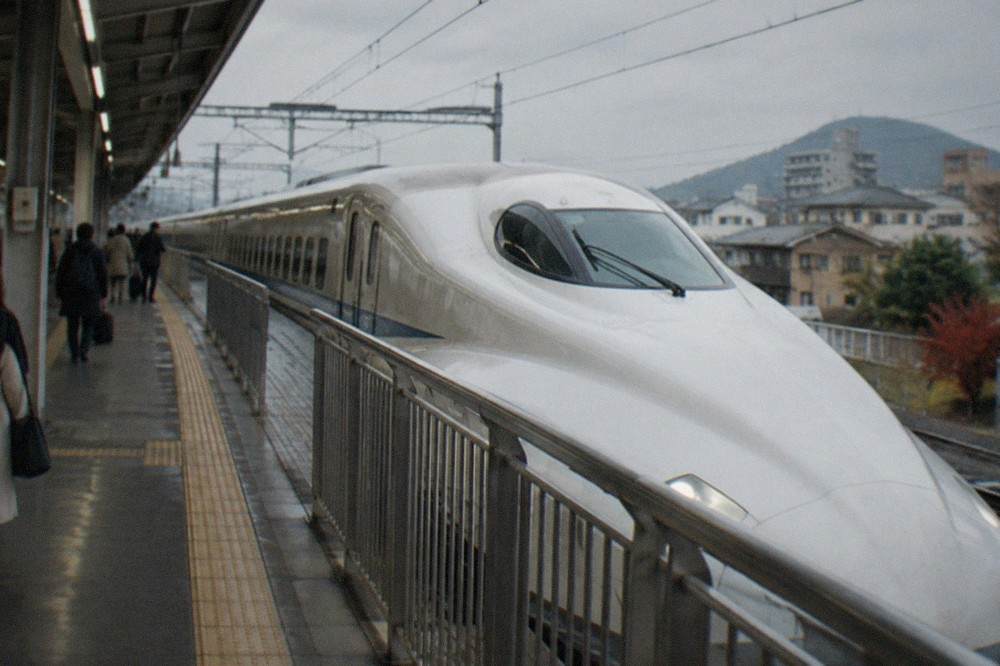
The Shinkansen from Kyoto to Himeji takes roughly an hour on the fastest direct trains, and the nationwide Japan Rail Pass covers the journey, with the caveat that the fastest train categories are typically excluded from pass use, so Hikari and Kodama are the trains to board. Himeji Station is a short walk from the castle.
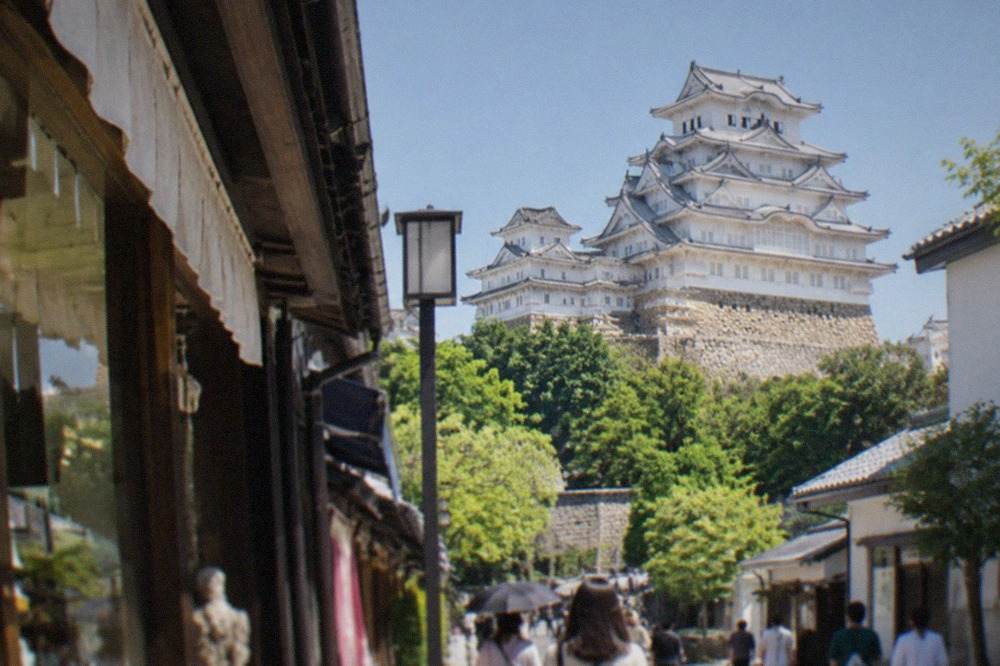
Himeji Castle, the white heron fortress that dominates the skyline of Hyogo Prefecture, is the strongest single day-trip argument west of Kyoto. Kyoto itself has Nijo-jo Castle, an extraordinary palace complex where the 15th shogun, Tokugawa Yoshinobu, proclaimed the end of Tokugawa political rule in October 1867, but Nijo-jo is a residence, not a military castle. Himeji is the real thing: a six-storey keep, a maze of defensive walls and gates, and a survival story that no other Japanese castle matches. This guide covers the train, the pass question, the costs and the timing, all from the Kyoto end.
How Long Is The Shinkansen From Kyoto To Himeji And Does The JR Pass Cover It?
The Shinkansen from Kyoto to Himeji takes roughly an hour on the fastest direct trains, with slower services taking up to about ninety minutes, and the nationwide Japan Rail Pass covers the base journey. The important caveat is train category: the fastest trains are typically excluded from pass use, so a pass holder should board a Hikari or Kodama rather than the quickest option, and reserve a seat before travel day.
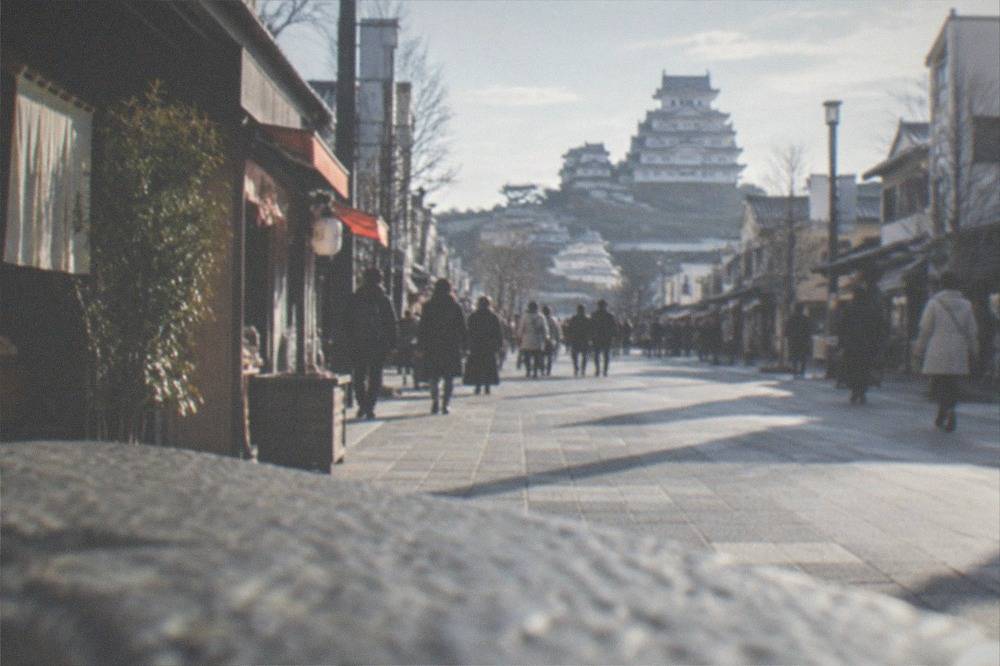
Kyoto and Himeji sit on the same Sanyo Shinkansen line, so there is no changing trains and no complication beyond picking the right service. The fastest trains call at only a handful of stations between the two; the all-stations Kodama trains stop more often and take longer. Either way, you arrive at Himeji Station, and the castle is visible from the station approach, a straight walk of roughly twenty minutes through the main street, or a five-minute ride on a loop bus.
On the pass question, the practical answer is to check the category rules before you board. The nationwide pass covers the Kyoto to Himeji journey itself, but Shinkansen passes in Japan routinely exclude the fastest train category on a line, and the Sanyo line is no exception. If you hold a regional JR West pass instead, the same check applies: confirm the area and the train category are both covered. Our fuller JR Pass guide for Kyoto works through the nationwide and regional options, including the JR West Kansai Area Pass at 2,800 yen for one day, which does not reach Himeji.
What Makes Himeji Castle Worth The Train Ride From Kyoto?
Himeji Castle is the largest and most complete original castle keep surviving in Japan, a UNESCO World Heritage Site since 1993, and the only one of Japan's great castles to escape both wartime destruction and wholesale reconstruction. Kyoto offers palaces, temples and gardens in abundance, but nothing in the city matches the scale of a real fortified keep with its defensive approach intact.
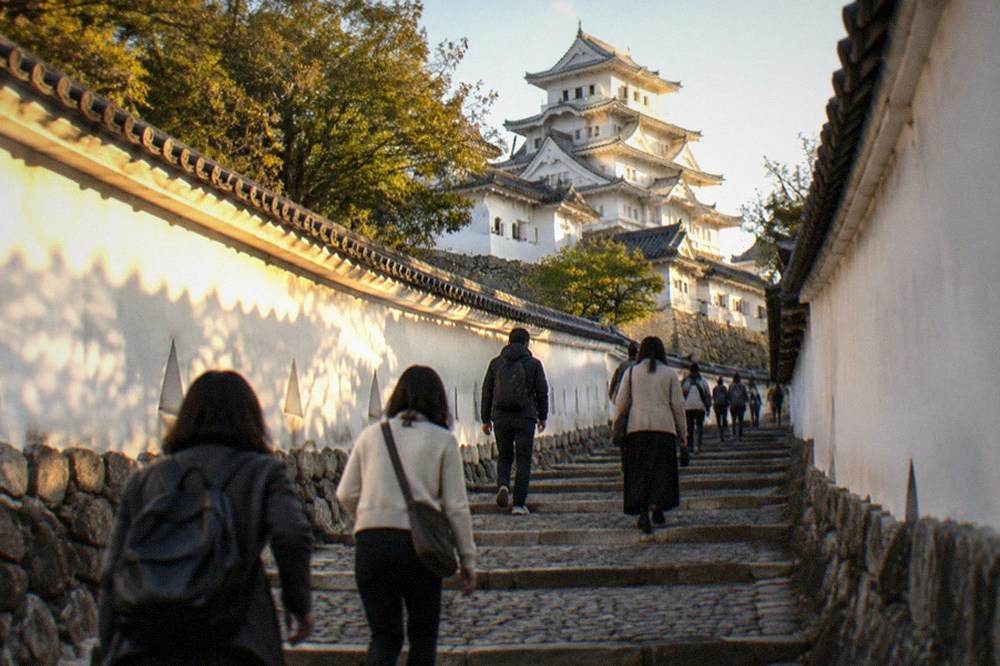
The case for the trip is completeness. Most Japanese castles you can visit today, including the famous ones in Osaka and Nagoya, are concrete reconstructions, because the originals burned or were bombed. Himeji's keep, its inner moats, its gates and its long climbing approach survived, and a major restoration finished in 2015 returned the white plaster walls to their intended brightness. That whiteness is where the nickname comes from: locals have long called it the White Heron Castle, comparing the layered roofs and white walls to a bird about to take flight.
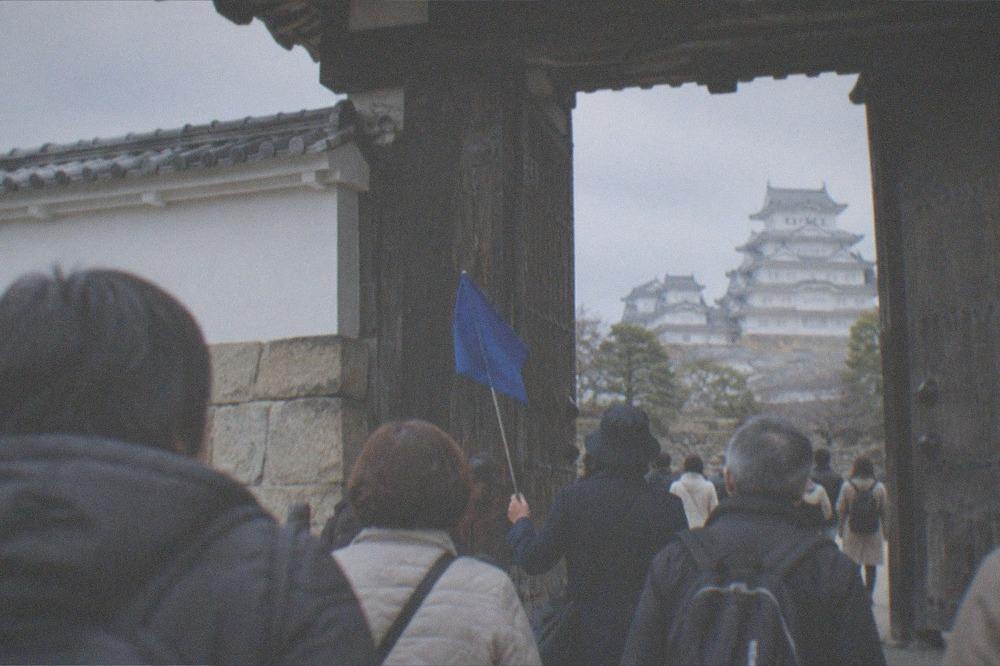
The visit itself is a walk, and a deliberately tiring one. The castle's designers built the approach so that any attacker would have to spiral upward through narrow gates, dead ends and steep stone ramps while exposed from above. As a visitor you follow the same route upward to the keep, which means comfortable shoes matter more than anything else you pack. Allow at least half a day for the castle complex alone, more if you want the surrounding Koko-en garden as well.
The contrast with Kyoto is the point of the day. Kyoto's Nijo-jo Castle charges 800 yen general admission, or 1,300 yen with the Ninomaru-goten Palace included, and what you get is political history: the city's own castle site records that Tokugawa Yoshinobu summoned senior vassals from 40 domains to the palace's Ohiroma on 13 October 1867, announced the return of authority on the 14th, and the Emperor accepted on the 15th. Himeji gives you the other half of the story, the military architecture that the Tokugawa world was built to defend. Doing both on separate days is one of the more satisfying pairings a Kyoto itinerary allows, and our Nijo Castle guide covers the Kyoto half in detail.
How Should You Plan The Day From Kyoto?
Leave Kyoto between 8:00 and 9:00 in the morning, arrive at Himeji before 10:30, give the castle complex four to five hours, and take a late-afternoon train back. The mistake to avoid is treating Himeji as a two-hour stop: the climb to the keep, the queue at busy times and the walk back to the station fill a full day comfortably.
The timing logic is simple. The castle is the most visited castle in Japan, and its busy hours run from late morning through mid-afternoon. An early Shinkansen puts you at the gate before the biggest crowds build, and it leaves you the option of a late lunch in Himeji rather than a rushed one. The walk from Himeji Station to the castle gate runs along a wide main street with shops and cafes, so the approach itself eats twenty minutes each way.
Book the seat, not just the day. Shinkansen travel between Kyoto and Himeji is unreserved-car possible on the slower services, but a reserved seat on a morning train in cherry blossom season or on a weekend is cheap insurance. If you hold a rail pass, seat reservations are included in the pass, so there is no reason not to make one at a ticket office the evening before.
Getting to Kyoto Station in the first place is the other half of the plan. If you are staying downtown, the subway runs 220 to 360 yen by zone, and the Subway and Bus One-Day Pass at 1,100 yen covers unlimited subway and bus use for the day if you want to move around on your return. The bus-only one-day pass no longer exists: sales ended in September 2023 and the last day of use was 31 March 2024, so ignore any guide that recommends it. Our Kyoto bus and subway pass guide compares what is actually on sale now.
| Leg | Option | Cost (adult) | Notes |
|---|---|---|---|
| Airport to Kyoto | JR West HARUKA One-way Ticket | 2,200 yen | Foreign visitors, e-ticket or exchange order; child 1,100 yen |
| Airport to Kyoto | Itami limousine bus | 1,500 yen | About 50 to 55 minutes from the Hachijo exit; contactless cards since 1 March 2026 |
| Within Kyoto | City bus flat fare | 230 yen | Child 120 yen |
| Within Kyoto | Subway by zone | 220 to 360 yen | Five zones |
| Within Kyoto | Subway and Bus One-Day Pass | 1,100 yen | Child 550 yen |
| Kyoto to Himeji | Sanyo Shinkansen | Fare varies by train category | Check reserved and unreserved options; pass holders should confirm covered train categories |
Should You Combine Himeji With Kobe Or Osaka?
Himeji pairs naturally with Kobe, which sits on the way back to Kyoto, and the combination works if you take an early train out and a late one back. Pairing Himeji with Osaka is tighter but possible, since Osaka lies between Kyoto and Himeji on the rail map. The honest advice is to pair it with one city, not both, because the castle alone justifies most of a day.
Kobe is the easier pairing. It is the first major stop after Himeji on the way east, the city is compact around its harbor and its famous beef, and an afternoon there after a morning at the castle makes a full but not frantic day. The harbor district, the Kitano quarter's old western houses and a Kobe beef dinner before the train home is a classic combination. Our Kobe day-trip guide covers the details.
Osaka works in the other direction, as a stop on the return. The complication is that Osaka tempts you into staying: Dotonbori at dinner time has a way of extending a day trip into a late night. If you do combine them, plan the castle in the morning, Osaka in the late afternoon and evening, and accept that you will be back in Kyoto late. Our Osaka day-trip guide lays out what is worth the detour.
The third option, and the one most visitors never consider, is to make Himeji one stop on a longer western loop. Hiroshima and Miyajima are a further Shinkansen ride beyond Himeji, too far for a comfortable single day with the castle included, but a strong candidate for a separate day trip. Our Hiroshima and Miyajima guide and the wider day trips from Kyoto overview list the full menu, from Nara to Koyasan.
What Does A Himeji Day Trip Cost From Kyoto?
The realistic budget is a Shinkansen round trip plus lunch plus a modest entry spend at the castle, with the total dominated by the train fare, and a Japan Rail Pass holder paying effectively nothing extra for the transport beyond the pass itself. Food in Himeji runs cheaper than central Kyoto, and the castle's own entry fees are modest by temple standards.
The train is the swing factor. A reserved seat on a faster service costs more than an unreserved seat on a slower one, and the difference compounds on a round trip. If you hold a nationwide pass, the Kyoto to Himeji leg is inside the pass, which makes the day remarkably cheap once the pass is paid for. If you do not, compare the Shinkansen fare against the slower JR special rapid services on the coastal line, which take much longer but cost far less, a reasonable trade if your time budget is generous and your money budget is not.
On the Kyoto side, the small costs are genuinely small. The subway to Kyoto Station is 220 to 360 yen. Lunch in Himeji, including the local specialty of konjac and the castle-town cafes along the approach street, costs less than an equivalent meal in Gion. Add a coffee or an ice cream on the walk back to the station and the day's non-rail spending stays modest.
| Item | Typical planning range | Notes |
|---|---|---|
| Shinkansen, Kyoto to Himeji, one way | Varies by train category and seat | Reserved seats cost more than unreserved; passes cover the base journey |
| Subway to Kyoto Station | 220 to 360 yen | Five zones, child fares roughly half |
| Castle entry | Modest, set by the castle | Check the official Himeji Castle site for current fees and hours |
| Lunch in Himeji | Cheaper than central Kyoto | Castle-approach cafes and local specialties |
| Loop bus, station to castle | A few hundred yen | The walk takes about twenty minutes and costs nothing |
One Kyoto-side cost to plan for is not on this trip at all but on your accommodation bill. Kyoto's accommodation tax changed on 1 March 2026: a room charged at 20,000 yen or more per night now carries 1,000 yen per person per night, and the top tier, rooms at 100,000 yen and up, carries 10,000 yen. Most guides still quote the old tiers, so check your hotel's own breakdown. The tax applies to the room-only charge, excluding meals and consumption tax.
Is A Guided Tour Better Than Going Independently To Himeji?
Going independently is the better fit for Himeji specifically, because the castle is one train away, signposted in English and self-explanatory once you are inside the gates. A guided tour earns its place when the destination is harder to reach or when you want the logistics handled entirely, which is why the strongest guided options from Kyoto point west to Hiroshima and Miyajima rather than to Himeji.
The independent case rests on friction, or the lack of it. There is no transfer, no booking puzzle beyond a seat reservation, and no language barrier that matters at a castle. You control the timing, which matters because the best hours at the castle are the early ones, and no tour can beat a train you chose yourself for that.
The guided case is real for other destinations. The Osaka/Kyoto/Hiroshima/Miyajima bus tour runs from $115 per person, is rated 4.7 from 1,239 reviews, and takes about 8 hours, covering the sights that are genuinely hard to reach in a day on your own. It has its own page at Hiroshima Miyajima bus tour. If Himeji is not your priority and you would rather have a guided western-Japan day, that is the product that fits. For a taste of what a fully guided day looks like closer to home, the Perfect 1-Day Bus Tour covers Kyoto's headline sights from $102 per person, rated 4.9 from 17,054 reviews over 8 to 9 hours.
For a different register of day trip entirely, the Sagano Romantic Train in Arashiyama sells a one-way ticket from $5.65, rated 4.5 from 4,737 reviews, with the operator's own timetable pricing the standard adult fare at 880 yen and children at 440. Its page is at Sagano Romantic Train ticket, and our Arashiyama guide covers the wider district.
What About The Seasons: When Is The Best Time For This Trip?
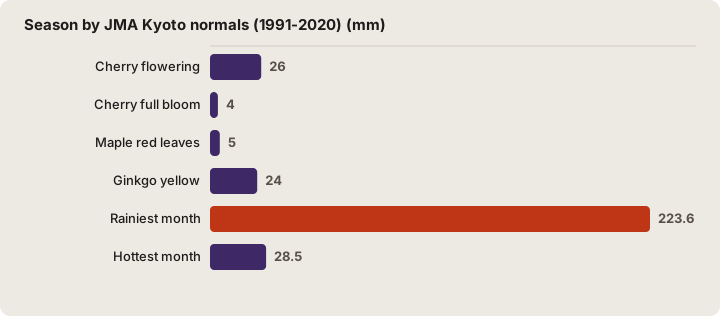
Late March to early April and mid to late November are the two standout windows, because the castle sits inside grounds that carry cherry trees in spring and maples in autumn, and the JMA's own phenology record for Kyoto gives 30 March 2026 as this year's full-bloom date against a 1991-2020 normal of 4 April, with maple red leaves normaling on 5 December. Winter visits are quieter and the white keep photographs beautifully against a clear sky.
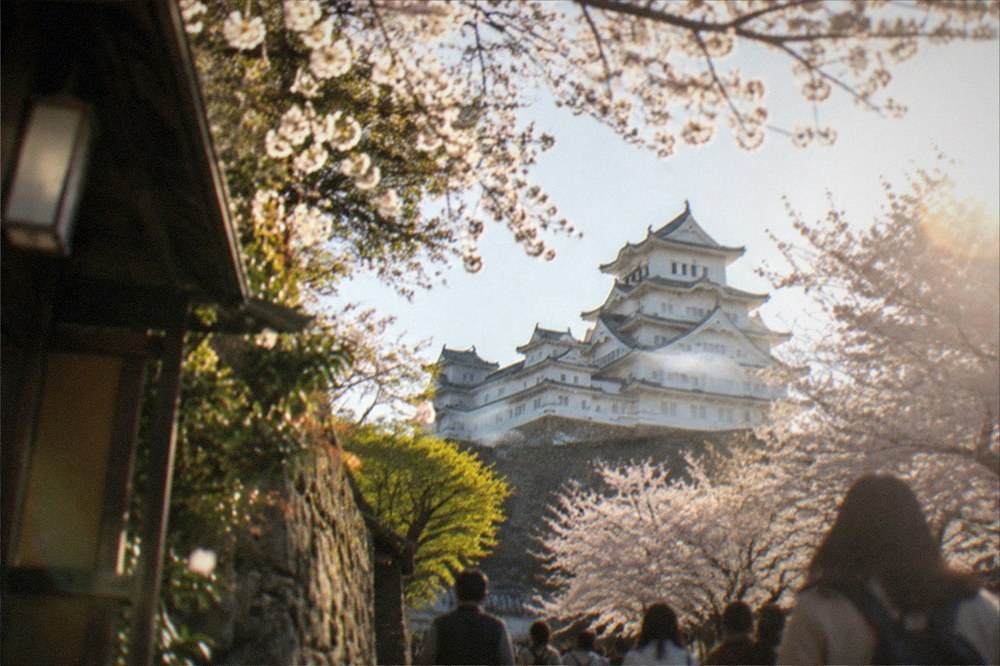
The cherry blossom logic applies with force at Himeji, because the castle's west bailey and surrounding parks are planted with hundreds of cherry trees, and a white castle above pink blossom is one of Japan's most photographed scenes. The trade-off is crowds at their annual peak. The JMA 1991-2020 normals put Kyoto's full bloom on 4 April; in 2026 it came early, on 30 March. If you are timing a trip around blossom, watch the weekly forecasts rather than a fixed date, and expect the Shinkansen to be busy whatever week you pick.
Autumn runs later than most guides claim. The JMA normal for the observatory's maple specimen turning red is 5 December, and in 2025 the observed date was 10 December, though commercial foliage forecasts for the Arashiyama side of Kyoto pointed to late November. The practical reading: the last week of November is the sweet spot for autumn colour in the Kansai region, and Himeji's grounds hold their colour into early December.
| Season | JMA Kyoto normals (1991-2020) | 2026 observed | What it means for Himeji |
|---|---|---|---|
| Cherry flowering | 26 March | 23 March | Peak castle-park blossom roughly a week later |
| Cherry full bloom | 4 April | 30 March | Book Shinkansen seats early |
| Maple red leaves | 5 December | Not yet observed | Late November is the visiting window |
| Ginkgo yellow | 24 November | Not yet observed | Golden grounds, cooling weather |
| Rainiest month | July, 223.6 mm | n/a | Summer trips need a rain plan |
| Hottest month | August, mean 28.5 C | n/a | The castle climb is hot and unshaded |
Summer deserves a warning. Kyoto's wettest month is July, not June, at 223.6 mm against June's 199.7 mm in the JMA 1991-2020 normals, and August is hotter, with a mean daily maximum of 33.7 C. Three of Kyoto's six hottest days on record fell in the summers of 2024, 2025 and 2026. The castle approach is a long, steep, largely unshaded climb, so a summer visit wants an early start, water and a hat. Our Kyoto weather guide carries the full monthly table.
Common Questions About A Himeji Castle Day Trip From Kyoto
How Long Is The Shinkansen From Kyoto To Himeji And Does The JR Pass Cover It?
The fastest direct Shinkansen trains cover Kyoto to Himeji in roughly an hour, with slower all-stations services taking up to about ninety minutes. The nationwide Japan Rail Pass covers the base journey, but the fastest train categories are typically excluded from pass use, so pass holders should board a Hikari or Kodama service and reserve a seat in advance.
Can You Do Himeji Castle As A Day Trip From Kyoto?
Yes, comfortably. The rail journey is roughly an hour each way, the castle is a twenty-minute walk from Himeji Station, and a morning departure with a late-afternoon return gives you four to five hours on site, which is enough for the keep and the main grounds.
How Much Walking Is Involved At Himeji Castle?
A lot. The approach spirals upward through gates and steep stone ramps, and the keep itself is six storeys of stairs. Wear comfortable shoes, and note that the climb is largely unshaded, which matters in July and August when Kyoto's regional climate records a mean daily maximum above 32 C.
Is Himeji Better Than Nijo-jo Castle In Kyoto?
They are different things. Himeji is a military castle with an original six-storey keep; Nijo-jo Castle is a shogunal palace where the 15th shogun, Tokugawa Yoshinobu, proclaimed the end of Tokugawa rule in October 1867. If you have several days in Kyoto, do both on separate days.
Should I Buy A Rail Pass Just For This Trip?
Not for Himeji alone. A nationwide pass only pays off across a longer itinerary of long-distance rides. For a single Himeji day trip, an ordinary Shinkansen ticket is the simpler purchase. Our JR Pass guide for Kyoto works through the break-even logic.
What Else Can I Combine With Himeji In One Day?
Kobe is the natural pairing, sitting on the rail route back toward Kyoto, with its harbor district and famous beef. Osaka also works as a return-leg stop if you accept a late night. Avoid trying to add both, because the castle alone justifies most of a day.
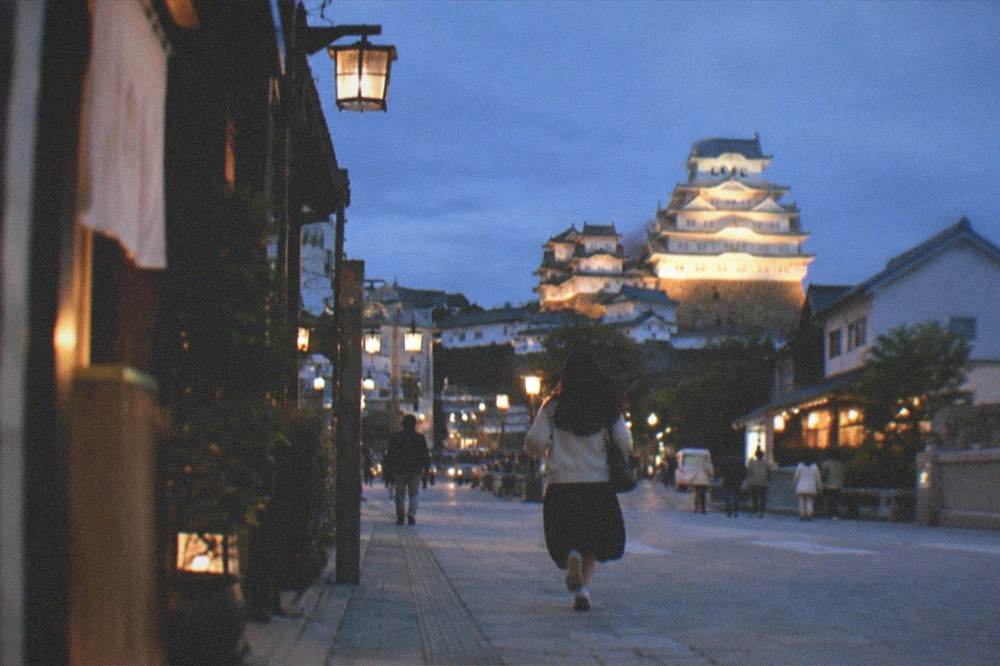
A final word on the return. The evening Shinkansen from Himeji to Kyoto is a calm ride, and arriving back at Kyoto Station puts you inside a station that is a destination in itself, with its food floors and its rooftop views. For everything else the city holds beyond the day-trip map, start with Kyoto Travel Guide's things to do in Kyoto overview, then work outward through the day trips until the itinerary is full.