Is Gion In Kyoto Worth Visiting?
Is Gion in Kyoto worth visiting? An honest verdict on the geisha district: what you actually see, the photography rules, the crowds, and what a first-time visitor should expect.
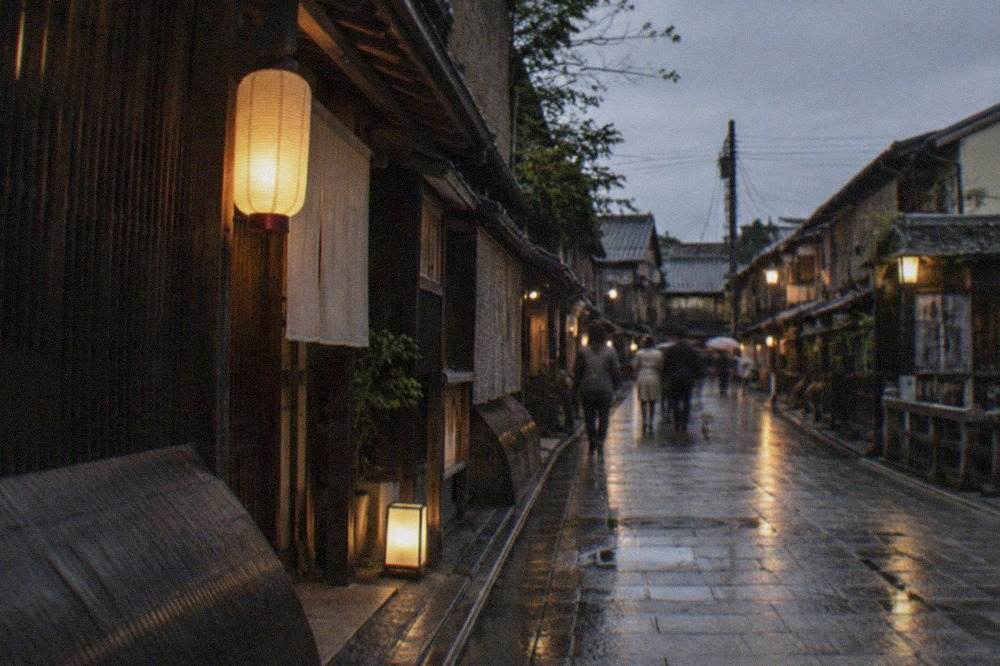
Gion is worth visiting, but not for the reason most people arrive with. The district that spreads east of the Kamo River between Shijo-dori and Yasaka Shrine is one of Japan's six remaining geisha districts, a working entertainment quarter where geiko and maiko still live, train and perform in tea houses that date back centuries. It is not a museum of the past and it is not a place where costumed performers pose for photos. Roughly 20 million people a year walk through it anyway, and the city's 2025 tourism survey recorded 62.79 million visitors to Kyoto overall, a record, with Gion absorbing a large share of that on streets that were built for foot traffic, not tour groups.
The verdict depends almost entirely on when you go and what you understand the district to be. This page walks through the honest version: what Gion actually is, what the photography rules really say, when to go, and how the alternatives compare. More depth on the district itself is in the Gion area guide, and the broader question of whether Kyoto is worth visiting is covered separately. For the full picture of the city beyond it, Kyoto Travel Guide collects everything in one place.
What Is Gion Actually, and Why Is It Famous?
Gion is Kyoto's largest surviving hanamachi, or flower town, an entertainment district where geiko and maiko train, live and perform at exclusive tea houses called ochaya. It grew up around Yasaka Shrine, then called Gion Shrine, which gave the district its name. It is famous because it is one of only six such districts left in Japan and the only one this large, and because its wooden machiya facades survived the modernisation that erased most of the rest of the city.
That history matters for expectations. Gion was never a public attraction. The ochaya system is invitation-based, built on long relationships between establishments and patrons, and a first-time visitor cannot simply walk in and book an evening with a geiko. What the public sees is the architecture, the streets, the shrine at the southern end, and, in the early evening, geiko and maiko moving between appointments in the lanes around Hanamikoji.
The district divides neatly into halves. South of Shijo-dori, Hanamikoji-dori is the postcard street: teahouses, willow-lined lanes, the Ichiriki Ochaya with its distinctive red and white facade. North of Shijo, around Shirakawa, the canal-side lanes are quieter and arguably prettier. The Gion Matsuri, the festival that fills the whole area every July, has its own page, because during those weeks the district is something else entirely.
Is Gion In Kyoto Worth Visiting?
Yes, Gion is worth visiting for almost every traveller, because it is the single largest concentration of preserved wooden machiya streetscape in Kyoto and it sits ten minutes on foot from downtown. It is worth an evening walk at dusk, ideally on the Shirakawa side or the quieter lanes, rather than a midday circuit. It is not worth visiting if the goal is to photograph a geiko up close or to see a performance without a booking, because both are effectively closed to casual visitors.
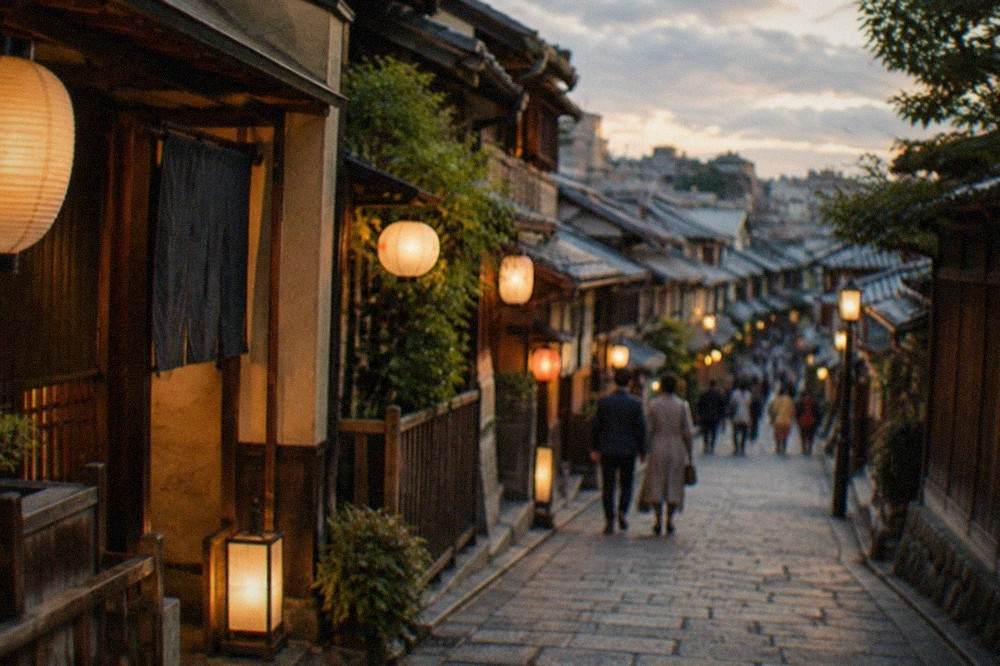
The practical case for going is strong. Gion is free to walk, compact, and adjacent to Yasaka Shrine, the Maruyama Park green space, and the Higashiyama slopes that climb toward Kiyomizu-dera, so it slots naturally into an evening or a half day. The streets after dark, when the lanterns are lit and the day-trip crowds have thinned, are the reason the district keeps its reputation.
The honest caveat is that Gion at midday is a crush. The city's overtourism measures for 2025 and 2026 include dispersal campaigns, etiquette patrols and express buses, and Gion is one of the named focus areas, which tells you the scale of the problem. A visitor who arrives at 11:00 on a Saturday sees tour groups, not atmosphere. The same visitor at 19:00 on a weekday sees a different district entirely.
A guided walk solves the midday problem in a different way, because a guide routes you away from the worst of it and explains what you are looking at. The Gion Hidden Gems & Geisha Culture Tour is the strongest option in the district, a two-hour walk rated 5.0 from 3,835 reviews. If your evening is spoken for, a tea ceremony at Jotokuji Temple gives you the traditional arts in a structured setting instead.
What Are The Photography Rules In Gion?
On the private alleys off Hanamikoji, signs posted by the Gion South Side district council threaten a 10,000 yen penalty for unauthorised photography or entry. The main Hanamikoji street itself is public and photography is allowed there. The city-level guidance from the Kyoto City Tourism Association is about conduct: do not touch, chase or photograph geiko and maiko without permission, and do not enter or photograph private property where prohibited.
The distinction between the public street and the private alleys is the entire point. The lanes east of Hanamikoji, such as the ones running toward Kennin-ji, are private roads owned by residents and tea houses, and the district council's signage is what carries the penalty language. This is council signage, not a municipal ordinance, so the accurate phrasing is "signs threaten a 10,000 yen penalty", never "the city fines visitors" and never "it is illegal". The police are not patrolling for cameras; the residents are asking, in increasingly firm terms, to be left alone in their own streets.
| Rule | Where it applies | Source |
|---|---|---|
| Photography banned, 10,000 yen penalty threatened | Private alleys off Hanamikoji | Gion South Side district council signage |
| Photography permitted | Main Hanamikoji-dori, public streets | Public road |
| No touching, chasing or photographing geiko and maiko without permission | Whole district | Kyoto City Tourism Association guidance |
| No entering or photographing private property | Whole district | Kyoto City Tourism Association guidance |
| Advance permission for photographing rites, drones | Kamigamo Shrine (separate site) | Shrine's own rules |
The conduct guidance deserves emphasis because it is the part people forget. A geiko or maiko walking to an appointment at 18:00 is commuting to work, and chasing her for a photo is both rude and against the published guidance. Never assume one will pose, and never wait at the end of an alley hoping to ambush someone. If seeing the traditional arts up close matters to you, the structured route is better: a booked performance, a festival event, or a guided walk where the etiquette is explained on the spot.
When Is The Best Time To Walk Through Gion?
The best time to walk Gion is early evening, roughly 17:30 to 19:00 on a weekday, when the lanterns are lit, the day-trip crowds have left and the tea houses are beginning their evening business. Early morning, before 08:00, is the quiet alternative and gives empty streets for photography on the public roads. Midday is the worst slot, and Saturday midday is the single most crowded combination.
The reasoning is mechanical rather than mystical. Day visitors to Kyoto, 46.20 million of them in 2025 according to the city's survey, peak in the middle of the day, and Gion sits directly on their route between Kiyomizu-dera and downtown. By late afternoon the buses pull out, and the district returns to the people who actually use it. The evening also happens to be when the machiya facades and lanterns look their best, which is not a coincidence: the district was built to be seen at night.
Season matters less than hour, but it still matters. July brings Gion Matsuri and the whole month is transformed, with the Yamaboko Junko processions on 17 and 24 July according to Yasaka Shrine's own festival calendar. August brings the Gozan no Okuribi bonfires on the 16th, when the surrounding hills glow. Winter is the sleeper pick: the city in the cold months is quiet, and Gion under a light snow is the closest the district comes to its old self.
Is Gion Better Than Downtown Kyoto For A First Visit?
For a first visit, Gion is the better place to spend an evening and downtown Kawaramachi is the better place to eat dinner, and the two are a ten-minute walk apart, so the choice is mostly false. Gion offers the preserved streetscape and the traditional atmosphere; downtown offers the restaurants, the bars and the late-night scene. Staying in Gion itself trades convenience for atmosphere and a higher price.
The comparison is worth making because accommodation drives the decision. A hotel in downtown puts every restaurant within a short walk and the subway and bus network at the door; a ryokan or hotel in Gion puts the quiet lanes outside and means a walk for dinner. The where to stay in Kyoto guide works through the districts in full, and the hotel rankings cover the specifics.
The one thing Gion does better than anywhere else in the city is the evening itself. Pontocho, the narrow alley district just across the river, competes on dining atmosphere, and the two districts are compared directly in the downtown Kyoto or Gion answer. For a first-timer with one evening, the honest sequence is dinner downtown, then the walk across Shijo bridge into Gion as the lanterns come on.
What Does A Gion Visit Actually Look Like?
A realistic Gion visit is a one to two hour walk: down Hanamikoji-dori from Shijo, a look at the Ichiriki Ochaya facade, the Shirakawa canal lanes to the north, and Yasaka Shrine's grounds at the south end, with no geiko encounter guaranteed and none needed. Add a tea house experience or a guided walk if you want structure, and add Kennin-ji, Kyoto's oldest Zen temple, if you want a full half day.
The walk itself is the product. Hanamikoji takes fifteen minutes at a stroll, the Shirakawa lanes another fifteen, and Yasaka Shrine, which is free and open, as long as you like. Kennin-ji at the district's southern edge charges admission and holds the twin dragon ceiling painting. From there the route continues naturally south through the Ninenzaka and Sannenzaka slopes and up to Kiyomizu-dera, which is the classic one day in Kyoto circuit.
What the walk does not include, without booking, is the inside of a tea house. The ochaya system runs on introductions, and the casual visitor's access to the traditional arts is through structured experiences: tea ceremonies, booked performances, or the guided walks that explain what is behind the facades. A one-hour chopsticks making class with an engraving option also runs inside the district itself, for those who want a craft session between walks.
Is Gion Overrated, and What Are The Alternatives?
Gion is not overrated if you visit in the evening with realistic expectations; it is overrated if you expect geisha encounters, or if you only see the midday crowd on Hanamikoji. The genuine alternatives are the Shirakawa lanes inside Gion itself, the Kamishichiken district near Kitano Tenmangu, which is Kyoto's other surviving hanamachi and far quieter, and the Higashiyama slopes for the same preserved streetscape with more variety.
Kamishichiken is the honest insider answer. It is the city's oldest geisha district, a single short street of machiya with a tatami theatre, and it receives a fraction of Gion's foot traffic precisely because it is a twenty-minute bus ride from downtown. Miyagawacho, east of the river and south of Gion, is a fifth district, more residential still. Neither gives you more geiko sightings, because sightings are not the point of any of them; both give you the architecture without the crush.
For the fuller picture of what the city holds beyond its most famous district, the things to do in Kyoto page is the site's master list. If your time is short, the how many days in Kyoto answer will shape the whole plan, and Gion earns its slot in almost every version of it.
Common Questions About Gion In Kyoto
Is Gion in Kyoto worth visiting?
Yes, for the streetscape, the shrine and the evening atmosphere, which are free and genuinely distinctive. It is not worth visiting for a guaranteed geisha encounter, because the tea house system is closed to casual visitors and the conduct guidance asks people not to photograph geiko and maiko without permission.
Can you see geisha in Gion?
You may see geiko or maiko walking to evening appointments in the lanes around Hanamikoji, typically in the early evening, but it is not guaranteed and it is not a performance. The Kyoto City Tourism Association's guidance is to never touch, chase or photograph them without permission. Booked experiences and festival events are the reliable route.
Is photography banned in Gion?
Photography is banned on the private alleys off Hanamikoji, where signs posted by the Gion South Side district council threaten a 10,000 yen penalty. The main Hanamikoji street is public and photography is allowed there. The penalty is council signage, not a municipal fine.
What is the best time of day to visit Gion?
Early evening, roughly 17:30 to 19:00 on a weekday, when the lanterns are lit and the day-trip crowds have gone. Early morning before 08:00 is the quiet alternative. Midday, especially at weekends, is the most crowded.
How much time do you need in Gion?
One to two hours for the walk itself: Hanamikoji, the Shirakawa canal lanes and Yasaka Shrine. Half a day if you add Kennin-ji and continue south toward Kiyomizu-dera, or if you book a tea house experience or guided walk.
Is Gion free to visit?
Yes, the streets and Yasaka Shrine's grounds are free and open at any hour. Kennin-ji charges admission, and tea ceremonies, guided walks and booked performances are paid experiences.
Gion rewards the visitor who arrives in the evening, walks the public streets with the etiquette in mind, and treats any glimpse of a geiko as a bonus rather than the goal. That version of the district is worth the trip every time.