Day Trip From Kyoto To Kinosaki Onsen
Kinosaki Onsen is a classic hot spring town on the Sea of Japan coast, reachable by direct limited express train from Kyoto. This guide covers what is verified, what has to be checked with operators, and how to decide whether it fits your itinerary.
Short answer
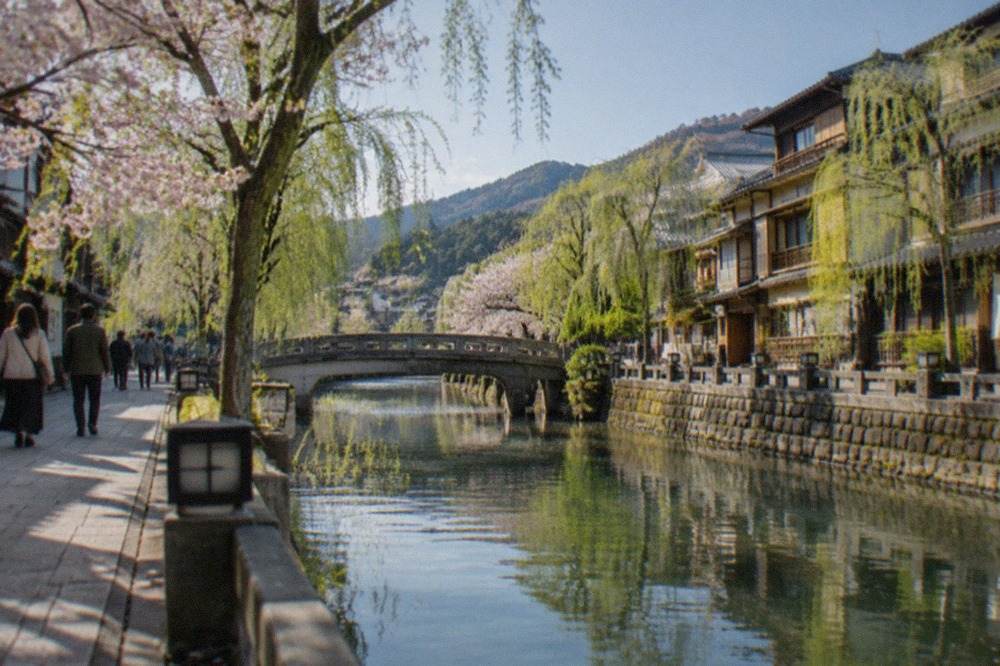
Kinosaki Onsen sits on the JR Sanin Line in Hyogo Prefecture and is served by a direct limited express from Kyoto. The town is built around seven public bathhouses and a canal lined with willows, and it works as a long day trip or an overnight stay.
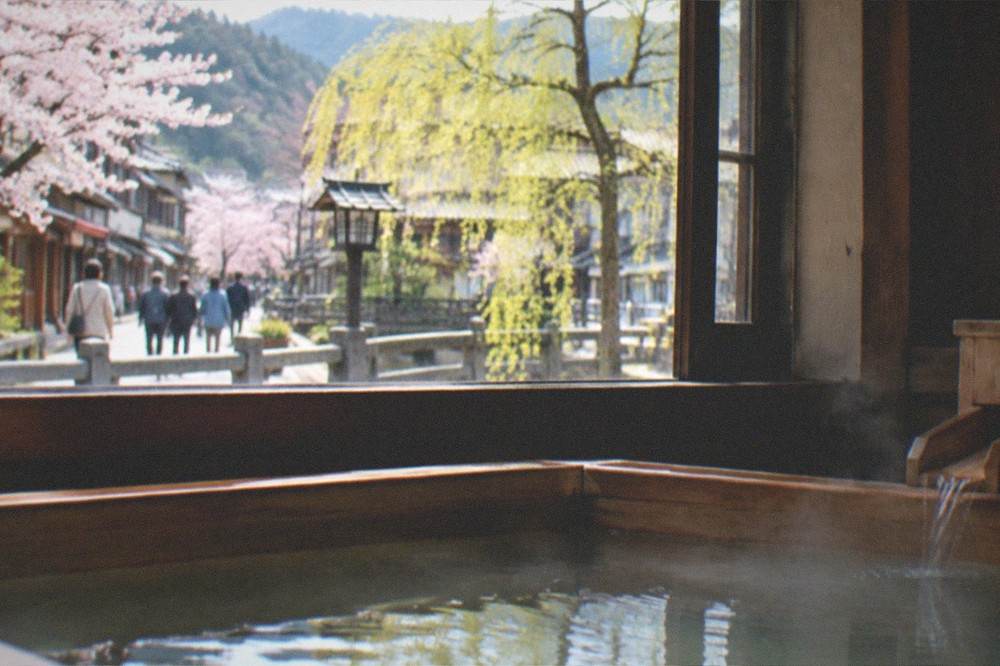
Kinosaki Onsen is a hot spring town on the Sea of Japan coast of Hyogo Prefecture, about two and a half hours by rail from Kyoto in ordinary years, though this site's verified fact pack holds no confirmed journey time for the route and the operator's own timetable is the only source worth trusting for the current figure. The town is unusual among Japanese onsen resorts: rather than one big bathhouse inside a hotel, it is organised around seven public bathhouses scattered along a willow-lined canal, and visitors move between them on foot in yukata and geta. That walk-between-baths rhythm is the whole point of the place, and it is why the town rewards an overnight stay more than a whistle-stop day visit.
This page is part of the Kyoto day trips series on Kyoto Travel Guide, and it is written to a simple honesty rule: where the site's verified fact pack holds a figure, it is printed here; where it does not, the page says so and points you to the operator or venue. Kinosaki is one of those destinations that most guide sites fill with confident numbers, and a surprising number of those numbers are stale or invented. What follows is what can actually be stood behind.
How Long Is The Limited Express From Kyoto To Kinosaki Onsen?
A direct limited express train connects Kyoto Station with Kinosaki Onsen Station on the JR Sanin Line, and the journey is commonly described as taking around two and a half hours, but this site's verified fact pack holds no confirmed running time for the route, so treat the operator's own timetable as the only reliable figure. The service runs several times daily in each direction and is the standard way to make the trip without changing trains. Check the current timetable before locking in a day plan.
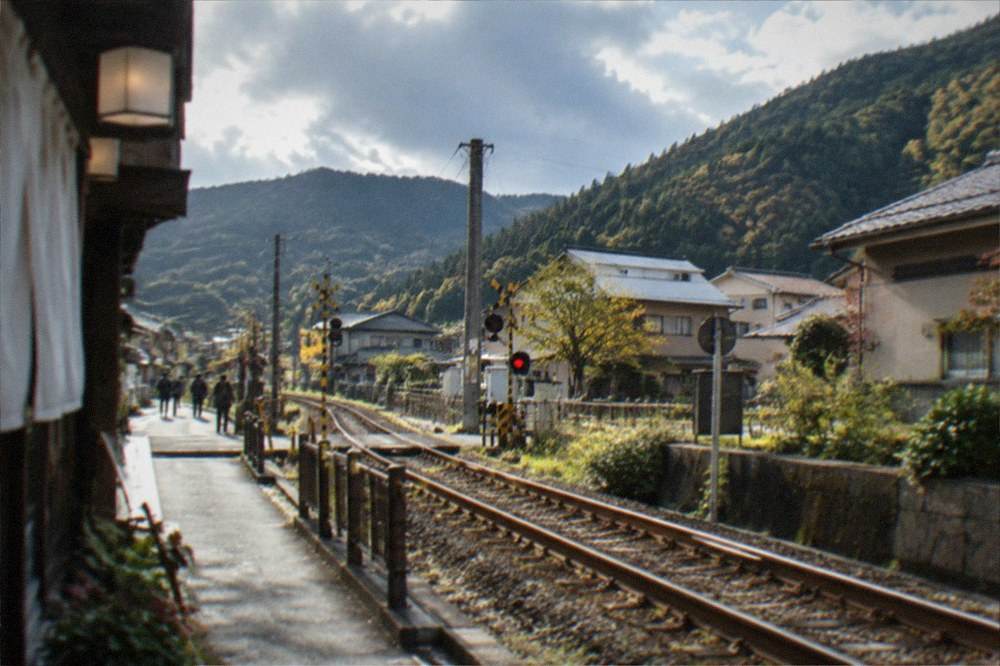
The limited express on this route is the Kounotori, operated by JR West, and it is covered by the Japan Rail Pass if you hold one, though seat reservations are strongly recommended for the morning departures out of Kyoto, especially in the summer holidays and over the New Year period when the town fills up with domestic bath-goers. The route runs north through the mountains of northern Kyoto Prefecture, past Fukuchiyama, and down to the coast at Toyooka before the short final hop to Kinosaki Onsen Station, which sits at the edge of the town centre, a flat ten-minute walk from the canal.
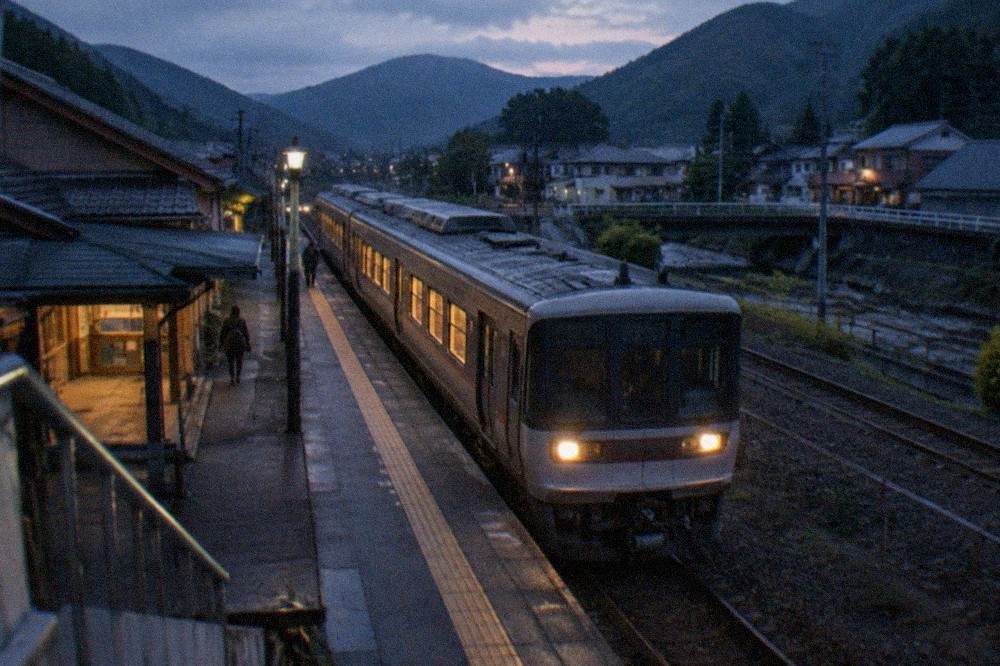
Two honest caveats belong here. First, this site's fact pack, which is built from operators' and official bodies' own pages, does not carry the Kounotori's fare or exact running time, so this page prints neither as fact. The JR West timetable page is the place to confirm both before you travel. Second, if you are travelling on a rail pass, note that the same caution applies to regional JR West products: this site does not recommend a named regional pass for this trip because the status of some JR West regional products is in flux and the verified record does not support a promise either way. The plain fare, paid at the machine or with an IC card where accepted, is the safe default.
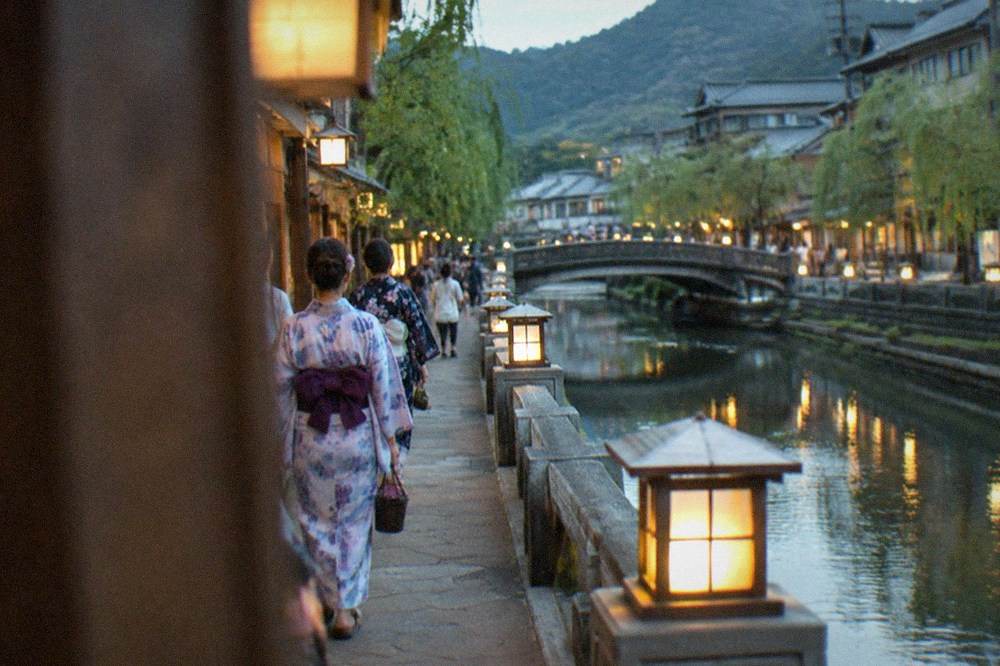
The practical planning question is not really the train time, it is the shape of the day. A day trip means roughly five hours of rail travel for a few hours in town, and the last return departures are early enough that an evening bath-and-dinner session is off the table. That is a defensible trade if your Kyoto days are packed and you want the onsen-town experience at any cost. If you can spare the night, the town changes character completely after the day crowd leaves, when the canal lanterns come on and guests in yukata shuffle between baths until late.
Is Kinosaki Onsen Worth The Trip From Kyoto?
For most visitors, Kinosaki is worth it as an overnight stay rather than a day trip, because the town's core experience, the evening walk between seven public bathhouses in yukata and geta, happens after the last practical return train to Kyoto. As a day trip it delivers a pleasant half-day of baths, canal strolling and crab-season seafood, but you leave before the town is at its best. The stronger use of a scarce Kyoto day is a closer destination.
The honest framing is a trade-off against distance. Kyoto's verified day-trip bench is deep: Nara with its temple and its famous free-roaming deer, Uji for tea and the Byodo-in, Kurama and Kibune for mountain hiking, Ohara for rural temple gardens, all reachable in under an hour. Kinosaki asks for more than double the travel time of any of those. What it offers in exchange is something none of them have: a complete hot spring town, with the bathhouse-hopping culture that Kyoto itself, for all its temples, cannot match inside the city. Kyoto has onsen options of its own, covered in the Kyoto onsen guide, but they are mostly sento and spa facilities, not a historic resort town.
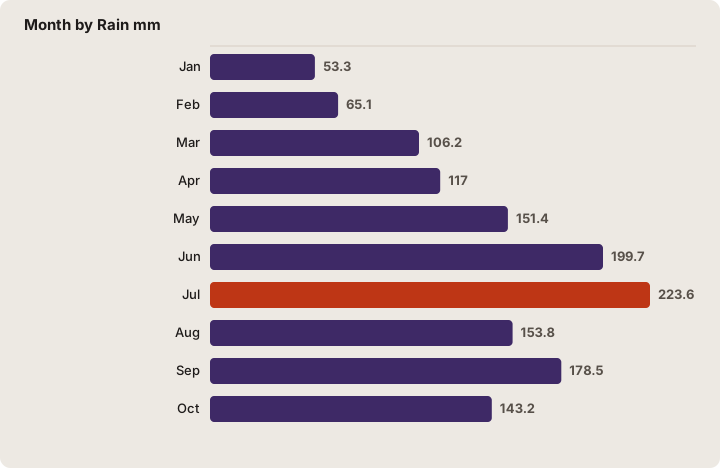
The seasonal argument matters too. Kinosaki is a winter town at heart: the region is one of Japan's snowiest outside the alpine areas, and the combination of falling snow, outdoor hot baths and winter crab from the Sea of Japan is the classic Kinosaki itinerary. In summer the town is green and pleasant but the baths are a hotter sell, and the coast is muggy. If your trip to Kyoto falls between December and February, Kinosaki's case strengthens considerably; in June, the rainy-season argument cuts the other way, as the table further down shows.
If the decision is "one big day out of Kyoto, guided, no logistics", the site's day-trip roster has strong candidates that need no train planning at all:
Each of those is a bookable product with a guide and transport handled, which is a different proposition from riding the Kounotori north on your own. Both approaches are legitimate; they suit different travellers. A guided morning in Nara with an English-speaking guide, for instance, runs about four and a half hours and leaves the afternoon free, while the one-day bus tours to Fushimi Inari, Kinkaku-ji and the bamboo grove compress the classic Kyoto sights into a single outing. The Hozugawa river boat ride pairs naturally with an Arashiyama morning. None of them replaces the onsen-town experience, but each one buys back the hours a Kinosaki day spends on rails.
What Can You Actually Do In Kinosaki Onsen?
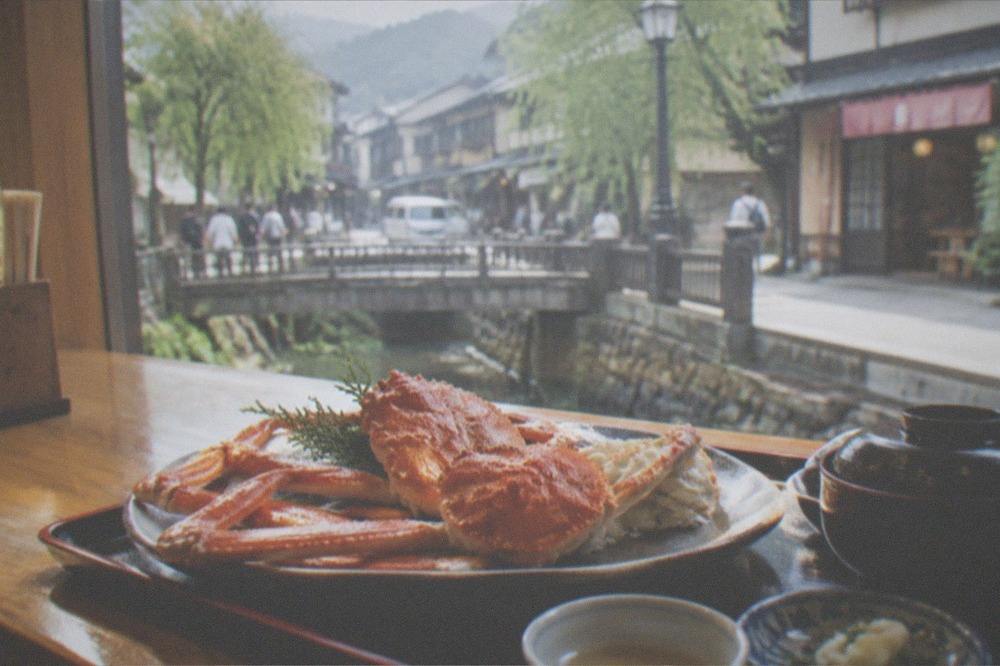
The town's activity list is short and centred on bathing: buy a bathhouse pass covering the seven public baths, walk the canal between them in rented yukata, eat the local seafood, and take the ropeway up Mount Daishu for the view over the Maruyama River and the Sea of Japan coast. There is no temple circuit and no museum circuit; the town is the attraction. Most visitors structure the day as bath, walk, meal, bath.
The seven public bathhouses, the sotoyu meguri, are the institution the town is built around. Ryokan guests get a pass included with their stay, and day visitors can buy one, though this site's fact pack does not carry the current pass price, so confirm it with the town's visitor information rather than a guide page that may be quoting an old season. The baths differ in character: some are cedar-lined and traditional, one is famous for an outdoor cave bath, and the town's own visitor materials describe each one so you can plan a route. The etiquette is standard Japanese onsen practice, tatoo policies vary bathhouse to bathhouse, and towels and basic amenities are provided at the public baths.
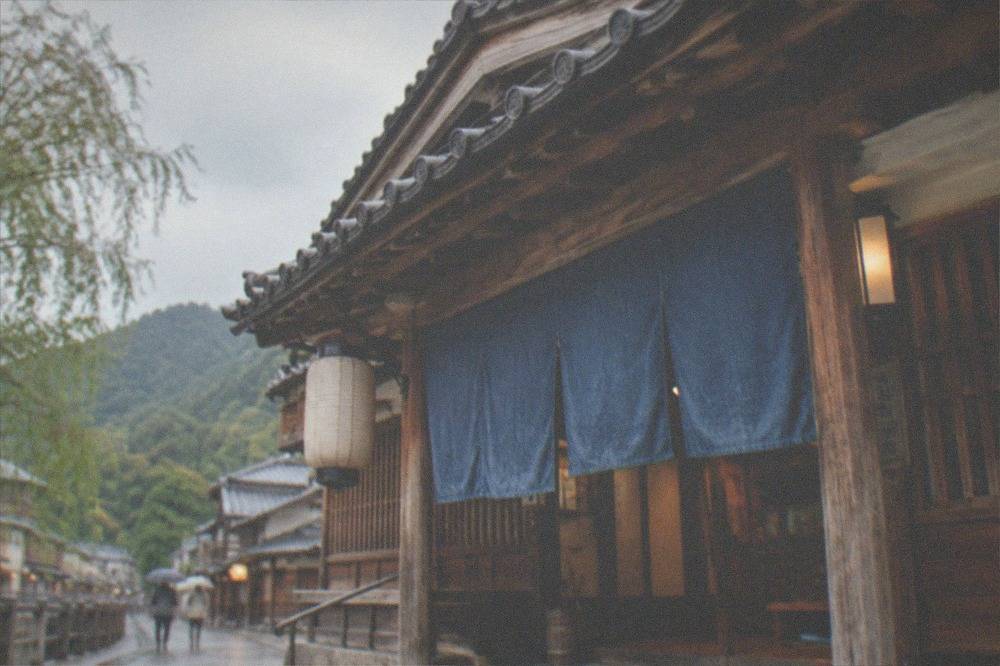
The walking town itself is compact and car-free in feel. The canal runs the length of the centre, arched stone bridges cross it, and willows shade both banks. Yukata rental is a genuine part of the experience here rather than a costume novelty, because the town expects bathers to move between baths in yukata and geta, and many ryokan lend them to guests. Wearing one marks you as participating rather than spectating, and in the evening the streets are full of guests doing exactly that.
Beyond the baths, the Mount Daishu ropeway gives a view over the river town and the coast, and there is a small temple, Onsen-ji, at the base associated with the town's founding legend of an injured stork healed in the hot springs, a story the town tells about its own origins. None of these side attractions carries a verified admission figure in this site's fact pack, so treat any price you read elsewhere as unconfirmed until you check with the operator. The honest position: the baths and the walk are the product, everything else is garnish.
For travellers who decide that a far-flung onsen town is too much for a single day out of a Kyoto itinerary, a guided morning trip to Nara with an English-speaking guide covers a comparable "one big excursion" itch with a fraction of the travel time, and the Nara early morning tour page on this site has the details, including the 4.9 rating from over 1,100 traveller reviews and the roughly four-and-a-half-hour duration.
When Is The Best Time To Visit Kinosaki Onsen On A Kyoto Trip?
Winter is the strongest season for Kinosaki: December to February brings snow to the town, the outdoor baths are at their most atmospheric, and the winter crab season from the nearby Sea of Japan coast is at its peak. The trade-off is that January and February are the coldest and least sunny months of the Kyoto region's year, with mean daily highs around 10 C and 11.6 C, so pack for real winter rather than a mild one.
The climate table below is the verified Kyoto record, JMA 1991-2020 normals for station 47759, and it is the best available proxy for the Kinosaki side of the mountains, with one caveat: the Sea of Japan coast is snowier and cloudier than the Kyoto basin in winter, so treat the winter sunshine figures as an optimistic floor for Kinosaki itself.
| Month | Rain mm | Mean C | Mean daily max C | Sunshine h |
|---|---|---|---|---|
| Jan | 53.3 | 4.8 | 9.1 | 123.5 |
| Feb | 65.1 | 5.4 | 10.0 | 122.2 |
| Mar | 106.2 | 8.8 | 14.1 | 155.4 |
| Apr | 117.0 | 14.4 | 20.1 | 177.3 |
| May | 151.4 | 19.5 | 25.1 | 182.4 |
| Jun | 199.7 | 23.3 | 28.1 | 133.1 |
| Jul | 223.6 | 27.3 | 32.0 | 142.7 |
| Aug | 153.8 | 28.5 | 33.7 | 182.7 |
| Sep | 178.5 | 24.4 | 29.2 | 142.7 |
| Oct | 143.2 | 18.4 | 23.4 | 156.0 |
| Nov | 73.9 | 12.5 | 17.3 | 140.7 |
| Dec | 57.3 | 7.2 | 11.6 | 134.4 |
Two Kyoto-specific facts from this table are worth internalising because most guides get them wrong. July, not June, is the wettest month in the Kyoto region, 223.6 mm against 199.7 mm, and August is both the hottest and the sunniest month. Neither helps the Kinosaki case in high summer: a July day trip north means the wettest month of the year on a route that crosses mountain terrain, and an August visit means a mean daily maximum of 33.7 C in the basin before you even reach a hot bath. The shoulder seasons, late March to May and October to early November, are the compromise picks: mild, drier than midsummer, and still pleasant for the outdoor baths.
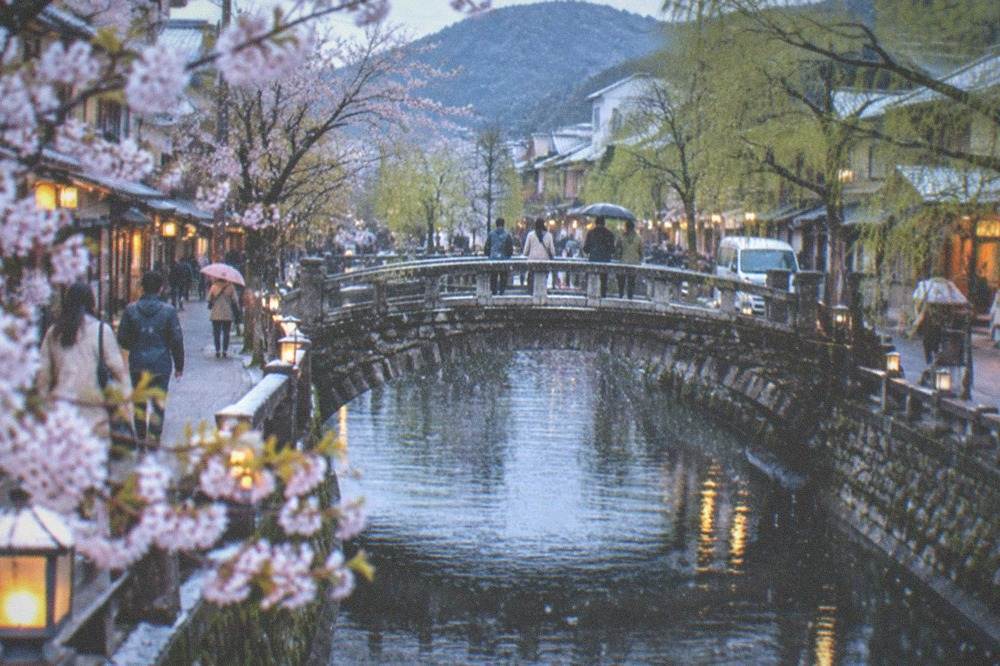
If your Kyoto dates are fixed by the cherry blossom or autumn foliage windows, the verified phenology record gives the anchors. The JMA 1991-2020 normals put Kyoto cherry flowering at 26 March and full bloom at 4 April; in 2026 flowering came on 23 March and full bloom on 30 March. For autumn colour, the maple red-leaf normal at the Kyoto observatory is 5 December, with 2025 observed on 10 December, though that is the observatory's specimen tree, not the mountain-peak colour around Kinosaki, which typically runs earlier. A late-November Kinosaki trip can catch the last of the coast's foliage with the first of the winter bath weather, which is arguably the best-timed window of the whole year.
How Much Does A Kinosaki Onsen Day Trip Cost?
The honest answer is that this site's verified fact pack holds no confirmed rail fare for the Kyoto to Kinosaki limited express, so no total can be printed here as fact. What is verified is the Kyoto-side spending: a city bus ride is a flat 230 yen and the subway runs 220 to 360 yen by zone. Beyond that, budget for the bath pass, meals and yukata rental, each priced by the town and confirmed on arrival.
The reason for the caution is deliberate. Rail fares in Japan revise periodically, regional pass products change, and a figure copied from an older guide is a confident falsehood. The JR West timetable and fare search is the authority for the Kounotori fare, and it is a two-minute check. What can be laid out honestly is the structure of the day's costs, in the table below, with the verified Kyoto-side figures filled in and the Kinosaki-side figures flagged as check-on-arrival.
| Cost item | Verified figure | Where it comes from |
|---|---|---|
| Kyoto city bus, flat fare | 230 yen adult, 120 yen child | City of Kyoto transport bureau |
| Kyoto subway, by zone | 220 to 360 yen adult | City of Kyoto transport bureau |
| Subway and Bus One-Day Pass | 1,100 yen adult, 550 yen child | City of Kyoto transport bureau |
| Kyoto to Kinosaki limited express fare | Not printed; check with the operator | JR West timetable |
| Seven-bath house pass | Not printed; check with the town's visitor information | Kinosaki visitor materials |
| Yukata and geta rental | Not printed; varies by shop | Individual rental shops |
| Mount Daishu ropeway | Not printed; check with the operator | Ropeway operator |
One structural note on the bus pass, because it catches out returning visitors: the old bus-only one-day pass no longer exists. Sales ended in September 2023 and the pass stopped being usable on 31 March 2024, replaced by the Subway and Bus One-Day Pass at 1,100 yen, which the city introduced precisely because the bus-only product concentrated tourists on the most crowded bus lines. Any guide still telling you to grab a 700 yen bus pass is at least two years out of date, and that is a good general test of whether a page's other numbers can be trusted.
For overnight visitors, one Kyoto-side cost change is worth knowing even though it applies to your Kyoto nights rather than Kinosaki itself: the Kyoto accommodation tax changed on 1 March 2026, and the top tier went from 1,000 to 10,000 yen per person per night on rooms of 100,000 yen and up, with the mid tiers rising too. A 20,000-yen Kyoto room now carries 1,000 yen per person per night where it carried 500 before. The full tier table and what it means for budgeting is covered in the site's Kyoto accommodation tax guide.
Where Does Kinosaki Fit Among Kyoto's Day Trips?
Kinosaki is the far end of Kyoto's day-trip spectrum: the only major onsen-town destination on the standard list, best in winter, best as an overnight, and the longest travel commitment of the popular options. If your priority is temples and deer, Nara wins on distance. If it is gardens and tea, Uji wins. If it is hiking, Kurama-Kibune wins. Kinosaki wins only if the thing you want is the bathhouse town itself, and in that case it wins decisively.
The comparison table below lays out the field by what each destination is, deliberately without journey times this site has not verified for every route. The Kyoto-Nara rail figures are the exception, because those are held: the JR Miyakoji Rapid covers Kyoto to Nara in about 45 minutes at 720 yen one-way, and the Kintetsu limited express does it in about 35 minutes at 1,280 yen including the surcharge.
| Destination | What it is | Best season | Verified rail time from Kyoto |
|---|---|---|---|
| Kinosaki Onsen | Onsen resort town, seven public baths | Winter | Not held; check the operator's timetable |
| Nara | Historic capital, temple, free-roaming deer | Spring and autumn | About 45 min JR, about 35 min Kintetsu |
| Uji | Tea culture, Byodo-in, riverside | Spring and autumn | 240 yen JR Nara Line |
| Kurama and Kibune | Mountain villages, hiking, rural temples | Summer and autumn | Not held on this page |
| Amanohashidate and Ine | Sandbar viewpoint, funaya boat houses | Spring to autumn | Not held on this page |
| Ohara | Rural temple gardens, thatched halls | All seasons | Not held on this page |
Two of those neighbours deserve a mention because they share the Kinosaki rail corridor. Amanohashidate and Ine sit on the same northern coast, and travellers with a rental car or a full two days sometimes combine the sandbar viewpoint with the onsen town. Miyama with its thatched houses is also inland of the same region. If the northern coast is the appeal rather than the baths specifically, those pages are the better starting points.
The other honest comparison is with staying in Kyoto itself. The city drew a record 62.79 million visitors in 2025, according to the city's own tourism survey released in June 2026, and 12.68 million of those were foreign visitors. The practical consequence for day-trip planning is that the famous central sights are crowded in every season, and the city's own crowd-management measures, from tourist express buses to the hands-free luggage delivery network, exist precisely because of that pressure. A day out to Kinosaki is, among other things, a day out of the crowd: a town of a few thousand residents has nothing like the density of the Higashiyama lanes in peak season.
What Should You Know Before You Go To Kinosaki Onsen?
Three practical rules cover most of it: reserve your limited express seats in advance, especially in winter and on weekends; plan the bathhouse etiquette in advance, meaning small towel, no clothing in the wash area, hair up and tattoos declared or covered depending on the bathhouse; and decide the day versus overnight question before booking anything, because the last return trains to Kyoto are early enough to cut the evening bath session short. Everything else is ordinary Japanese small-town travel.
On etiquette, the basics are worth restating because the onsen is the point of the trip and the rules are not optional. Wash thoroughly at the shower stations before entering the bath, keep the small towel out of the water, tie long hair up, and keep voices low. The public bathhouses in Kinosaki are accustomed to first-time foreign visitors, and the town's visitor materials publish English guidance, so a first onsen experience here is about as gentle an introduction as Japan offers. Tattoo policies vary by bathhouse and by ryokan, and the town's own information desk is the authority on which baths are relaxed about them.
On luggage, the Kyoto-side infrastructure helps more than most visitors realise. The city's hands-free tourism network, promoted by the Kyoto City Tourism Association, delivers bags between stations, hotels and airports, which means you can leave luggage moving while you ride north with a day pack. If you are doing Kinosaki as the last stop before leaving the region, the northern coast also connects onward toward Kansai's other highlights, and the Himeji Castle and Kobe day-trip pages cover the southern side of that loop.
For travellers who would rather spend their limited Kyoto days closer to the city with a guide handling the logistics, the site's roster includes strong alternatives to a self-planned northern excursion:
Each of those three solves a different planning problem. The Nara early morning tour gets you out before the crowds and back with an afternoon to spare. The one-day bus tour to Fushimi Inari, Kinkaku-ji and the bamboo grove is the efficient first-day-in-Kyoto option, rated 4.8 across more than 5,300 traveller reviews. The Hozugawa river boat ride is the closest thing on the roster to a scenic excursion, a two-hour float down the Hozugawa Kudari route into Arashiyama, and it pairs well with a morning in the bamboo grove. None of them is an onsen town, but each one returns hours to your itinerary that a Kinosaki day spends on rails.
If the appeal of Kinosaki is less the baths than the idea of a traditional Japanese experience inside your Kyoto days, a tea ceremony at Jotokuji Temple is the compact version: seventy minutes, close to the centre, rated 4.9 from 3,758 traveller reviews, and bookable around almost any itinerary. It is the opposite shape of day from a five-hour rail round trip, and for many visitors that is exactly the point.
For a half-day of movement without leaving the city, the Hidden Kyoto e-biking tour, five stars from over 2,000 traveller reviews, covers the quieter back streets at a pace no train trip can match. Between a guided morning, a tea ceremony and an e-bike loop, a visitor can assemble a rich Kyoto day without a single timetable check, which is the honest counter-argument to everything this page has said in Kinosaki's favour.
Common Questions About Kinosaki Onsen Day Trips
How long is the limited express from Kyoto to Kinosaki Onsen?
A direct limited express, the Kounotori, runs from Kyoto Station to Kinosaki Onsen Station, and the journey is commonly described as around two and a half hours. This site's verified fact pack holds no confirmed running time, so confirm the current timetable with the operator before planning your day.
Can you do Kinosaki Onsen as a day trip from Kyoto?
Yes, but it is a long day: roughly five hours of rail travel for a few hours in town, with early final return departures. The evening bathhouse-hopping atmosphere, the town's best feature, is largely lost on a day trip. An overnight stay is the stronger option.
What is Kinosaki Onsen famous for?
Seven public bathhouses spread along a willow-lined canal, which visitors walk between in yukata and geta, plus winter snow and Sea of Japan crab. The town's founding legend tells of an injured stork healed in the hot springs, a story the town tells about its own origins.
When is the best time to visit Kinosaki Onsen?
Winter, December to February, for snow, outdoor baths and crab season. Late November is a strong runner-up, combining the tail of the autumn foliage with the start of the winter bath weather. Midsummer is the weakest window: hot, humid, and in July the wettest month of the regional year.
Do you need to book the limited express in advance?
Seat reservations are strongly recommended, particularly for winter weekends, the summer holidays and the New Year period, when the route carries heavy domestic demand. Reserved seats can be booked at JR ticket offices or machines once you are in Japan.
Can you visit Kinosaki Onsen with a Japan Rail Pass?
The limited express on this route is a JR West service and is generally covered by the Japan Rail Pass, with seat reservations required. This site does not recommend a specific regional JR West pass for the trip, because the verified record does not support a promise about regional pass availability.
The short version of everything above: Kinosaki Onsen is the best onsen-town day trip on Kyoto's list and a genuinely better overnight, the limited express makes it painless to reach, and the figures that matter most, the fare, the running time and the bath pass price, are the three you should confirm with the operators rather than take from any guide page, including this one. Plan the train, book the night if you can, and go in winter if the calendar allows.