Onsen In Kyoto: Real Hot Springs At Kurama, Arashiyama And Ohara
Kyoto is not a hot-spring town, but it sits close to real ones. This guide separates the genuine onsen at Kurama and Ohara from the plain baths and spa facilities inside the city, using verified fares and climate data rather than copied numbers.
Short answer
Kurama, in the mountains north of the city, is the closest genuine hot-spring bathing to central Kyoto, with Ohara as the quiet alternative. Arashiyama offers no real onsen bath of its own; its draws are the river, the bamboo path and the Sagano train, and the soaking is elsewhere.
Kyoto draws a record 62.79 million visitors a year, the city's own 2025 tourism survey reports, and a fair share of them arrive expecting Japan's bathing culture on tap. The city itself is a basin of temples and machiya, not a hot-spring resort, and that distinction matters the moment you start planning. The real onsen, water heated by the earth and pulled from the ground, sits in the mountains at the city's northern edge and in the villages beyond it. Everything inside the flat centre is sento or spa, which is a different thing and often a very good one.
This page, from the Kyoto Travel Guide editorial desk, sorts the three names people usually ask about, Kurama, Arashiyama and Ohara, into what they actually are. Where a fee or a timetable has been verified it appears as a number. Where it has not, and for the mountain baths themselves the fact base holds nothing, the page says so plainly rather than repeating a figure copied from an older guide.
Which Kyoto Onsen Are Real Hot Springs: Kurama, Arashiyama, Ohara?
Kurama, in the forested mountains north of the city, is the closest real hot-spring bathing to central Kyoto, and Ohara, a rural temple village to its east, is the quiet alternative. Arashiyama has no onsen of its own: its river gorge, bamboo path and temples are the reason to go, and the soaking happens back in the city or up at Kurama. Treat any guide that lists an Arashiyama hot spring as a red flag.
That is the short, honest version. The longer version is that "onsen" is a legal and geological category in Japan, not a mood. Under Japan's hot-spring law, water qualifies by temperature and mineral content at the source, and a bathhouse that pipes in heated tap water does not qualify no matter how rustic its tub looks. Kyoto city sits on no notable source. The sources are in the mountains, which is why every genuine onsen day trip from Kyoto involves a train or a bus into hills.
The three names in the question get bundled together because they are the three most marketed day trips, but they are not three baths. Kurama is a mountain hot-spring village with a temple at its top. Ohara is an agricultural valley with temple gardens and a small bathing facility whose current prices are not published in any source this site has verified, so check with the venue directly before you go. Arashiyama is a scenic district on the western edge of the city, and its attractions are listed and priced below, with none of them a hot spring.
What Is The Difference Between An Onsen And A Sento In Kyoto?
An onsen is a bath fed by naturally hot or mineral-rich water from a geothermal source, while a sento is a neighbourhood public bathhouse filled with heated tap water. In central Kyoto almost everything calling itself a bath is a sento or a spa, and both are worth your time, but neither is a hot spring. The distinction is not snobbery: mineral water is the entire point of the onsen tradition, and the law defines it.
A sento in Kyoto costs a few hundred yen, is often beautifully designed, and serves locals as much as visitors. A spa, the kind attached to hotels or operated commercially downtown, adds treatments and saunas at commercial prices. Neither owes you minerals. When a hotel in downtown Kyoto advertises an "onsen-style" bath, the phrase is doing honest work: it means it looks like one.
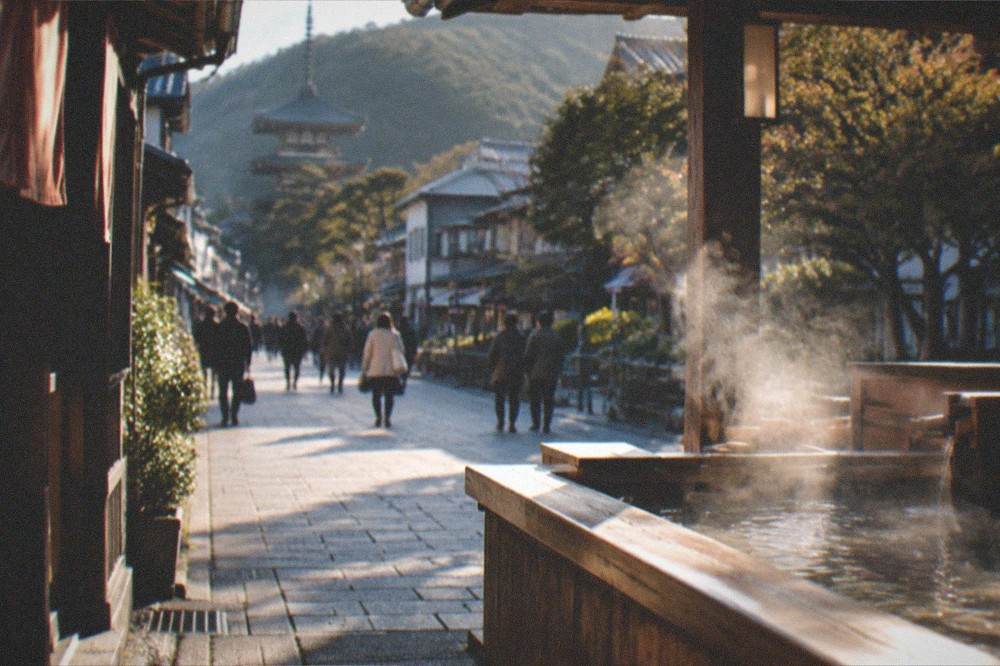
The practical consequence for planning is distance. Real onsen around Kyoto means mountain villages, and mountain villages mean schedules, so a soak becomes a half-day or full-day commitment rather than an evening add-on. The trade is worth it. A bath at the end of a mountain hike, with the cold air on your face and steam off the water, is the experience people are actually picturing when they book Kyoto.
For visitors who want the mountain-and-bath combination handled, a guided hike between Kurama and Kibune is the strongest single day out of this set. The Kurama to Kibune route is covered in detail on our Kurama and Kibune day trip guide, and the guided version, which handles the trail logistics, is worth a look at Check availability alongside our full Kurama-Kibune hike tour page.
Is Kurama The Closest Real Onsen To Kyoto City?
Yes. Kurama, reached by the Eizan railway line out of Demachiyanagi station in the northern city, is the nearest genuine hot-spring bathing to central Kyoto, roughly an hour from the centre door to door. The village sits in cedar forest below Kurama-dera temple, and its baths are fed by the mountain's own source. Kibune, one valley over and connected on foot, adds riverside dining in summer.
The honest gap: this site's verified fact pack holds no admission fee, no hours and no water-chemistry figures for the Kurama baths, because the operator's own pages were not read for this page's numbers. Any specific price printed here would be a guess wearing a confident tone, so the rule is to check the bathhouse's own notice or site before you travel. What is verified is everything around the village: the train that gets you there, the temple trail above it, and the fact that the hike down to Kibune is the best walk in this part of the prefecture.
The mountain itself is the draw as much as the water. Kurama-dera's approach climbs through old cedar, and the trail over the ridge to Kibune is a real hike, muddy after rain and properly cold from November to March. The JMA 1991-2020 normals for station 47759 put January's mean daily minimum at 1.5 C, so a winter soak here is a genuine contrast bath, not a lukewarm gesture.
A guided option makes sense for the ridge trail, which is waymarked but long. The full-day Kurama-Kibune guided hike covers the route with a guide and leaves the bath for the end of the day, which is the correct order of operations.
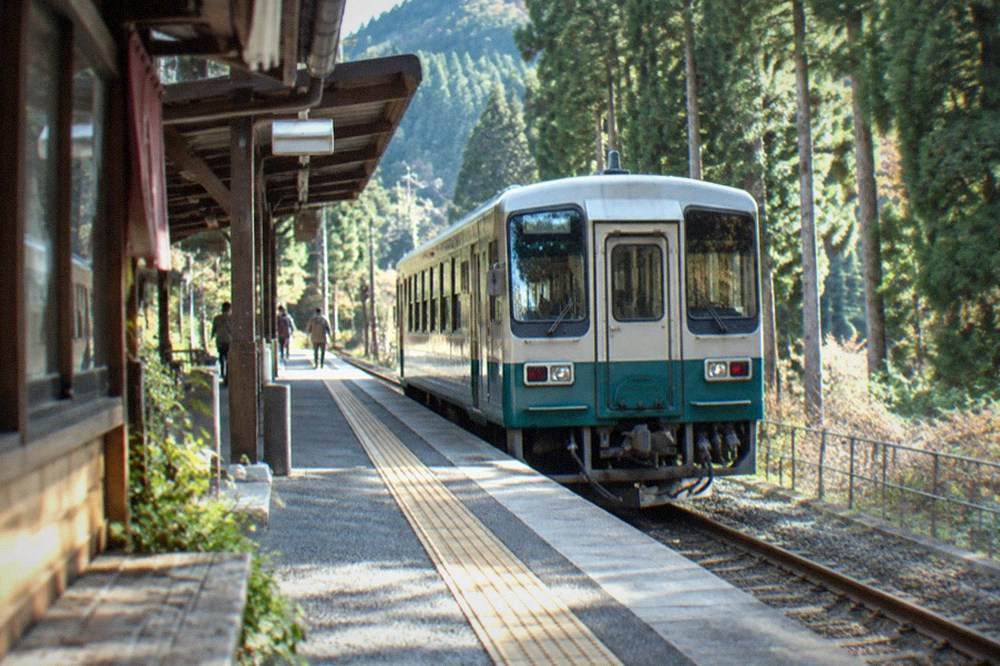
Does Arashiyama Have A Hot Spring?
No. Arashiyama, on the city's western edge, has no onsen bath. Its paid attractions are the Sagano Romantic Train at 880 yen one way for adults, the Hozugawa Kudari river boat at 6,000 yen for adults, Iwatayama Monkey Park at 800 yen, and Tenryu-ji temple's garden at 500 yen, and the bamboo path itself is free. Bathing is not on that list because no hot spring exists in the district.
Arashiyama is worth a full day without a bath, and it is worth being precise about what is there, because the district's own numbers are well verified and often misquoted elsewhere. The operator's ticket page sets the Sagano Romantic Train at 880 yen adult and 440 child one way, with adult defined as 12 and over and child 6 to 12, toddlers free when accompanied. The Hozugawa Kudari, the two-hour river run down the gorge, is priced by its operator at 6,000 yen adult and 4,500 yen from infant to elementary age, with 24 seats on a scheduled shared boat. The widely repeated figure of about 4,100 yen for the boat is stale; do not budget from it.
| Arashiyama attraction | Verified price | Notes |
|---|---|---|
| Bamboo grove path | Free | Public path, open at all hours |
| Sagano Romantic Train | 880 yen adult / 440 child, one way | Adult 12+, child 6-12, toddlers free accompanied |
| Hozugawa Kudari boat | 6,000 yen adult / 4,500 yen child | About 2 hours, 24 seats per shared boat |
| Iwatayama Monkey Park | 800 yen (16+) / 400 yen (4-15) | 9:00-16:00, closes early in bad weather |
| Tenryu-ji garden | 500 yen (high school and up) / 300 yen | Buildings +300 yen, Hatto ceiling 500 yen separately |
The monkey park deserves its caveat: the operator's own page says it closes early if the monkeys head back up the hill or the weather turns, so treat 16:00 as the outer edge, not a promise. The Hozugawa's season runs on a regular timetable from 10 March to 13 December 2026, and it is running. There was a fatal capsizing in March 2023 and service later resumed, but the operator does not publish the resume date, and this site will not print one.
For the full picture of the district, our Arashiyama area guide and the bamboo grove page cover walking times and the monkey park in detail. If you are wondering how long to walk the Arashiyama bamboo grove, that answer exists too.
What About Ohara, And Is It Worth The Trip For A Bath?
Ohara, a farming and temple valley about an hour north of the city by bus, is the quiet alternative to Kurama, with temple gardens, thatched rural architecture and a small local bathing facility. Whether it is worth it depends on what you want: Ohara rewards a slow day of gardens and walking, while Kurama delivers the more dramatic mountain-and-water combination.
The same honesty rule applies. The verified fact pack holds no fee, no hours and no capacity figure for Ohara's bath, and no journey time for its bus route, so none appears here. What can be said from the record is what the valley is: the home of Sanzen-in's mossed gardens, a place where the JMA climate table starts to bite, with January means well below the city's and real snow some years. The station's record low of -11.9 C and deepest snow of 41 cm come from the Kyoto station itself, and the valleys north run colder.
Ohara suits visitors who have already seen the centre and want rural Kyoto without a second train transfer. It pairs naturally with the Ohara day trip guide. If a bath is the single purpose of your trip, Kurama is the better target.
When Is The Best Season For Onsen Around Kyoto?
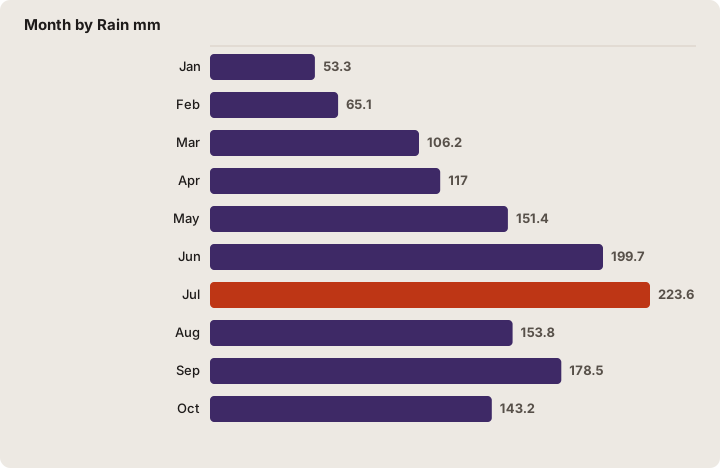
Winter is the best onsen season around Kyoto, and January is the statistical sweet spot: the coldest and driest month in the JMA 1991-2020 normals, with a mean of 4.8 C, a mean daily minimum of 1.5 C and only 53.3 mm of rain. The contrast between mountain air and hot water is the entire point, and Kyoto's real winter, snow record 41 cm, supplies it.
The competing instinct is to bathe in the foliage season, and it is a good one, but it collides with the crowds. The city's 2025 survey counted 62.79 million visitors, and late November concentrates them. The JMA phenology record for the Kyoto observatory puts the normal date for the maple specimen's red leaves at 5 December, later than every mid-November peak claim, and the 2026 forecasts from commercial weather services point to late November and early December for the Arashiyama district. A bath after a December foliage walk gets you the colour and the cold.
| Month | Rain mm | Mean C | Mean daily max C | Mean daily min C |
|---|---|---|---|---|
| Jan | 53.3 | 4.8 | 9.1 | 1.5 |
| Feb | 65.1 | 5.4 | 10.0 | 1.6 |
| Mar | 106.2 | 8.8 | 14.1 | 4.3 |
| Apr | 117.0 | 14.4 | 20.1 | 9.2 |
| May | 151.4 | 19.5 | 25.1 | 14.5 |
| Jun | 199.7 | 23.3 | 28.1 | 19.2 |
| Jul | 223.6 | 27.3 | 32.0 | 23.6 |
| Aug | 153.8 | 28.5 | 33.7 | 24.7 |
| Sep | 178.5 | 24.4 | 29.2 | 20.7 |
| Oct | 143.2 | 18.4 | 23.4 | 14.4 |
| Nov | 73.9 | 12.5 | 17.3 | 8.4 |
| Dec | 57.3 | 7.2 | 11.6 | 3.5 |
One correction that most guides get wrong: July, not June, is Kyoto's wettest month, at 223.6 mm against June's 199.7 mm in the JMA 1991-2020 normals. August is the hottest, mean 28.5 C with a mean daily maximum of 33.7 C, and also the sunniest at 182.7 hours. Summer bathing in the mountains still works, but plan around the heat rather than the rain chart. Our Kyoto weather guide and Kyoto in summer pages carry the full picture.
How Do You Get To Kyoto's Mountain Onsen Areas?
The city bus flat fare is 230 yen for adults and 120 yen for children aged 6 to 11, the subway runs 220 to 360 yen by zone, and the Subway and Bus One-Day Pass costs 1,100 yen, with no bus-only pass any more: sales of that ended in September 2023 and its last day of use was 31 March 2024. The mountain lines to Kurama and Ohara are separate railway and bus fares on top.
Getting to the mountains starts with getting to the edge of the city. The Eizan railway to Kurama leaves from Demachiyanagi, reached by the city's subway and bus network, and the fare for the private railway segment is set by that operator, so buy it separately from any city pass. The bus to Ohara is a rural route with its own fare table. The one-day pass is worth it only for your in-city movement, and the city's transport bureau pages carry the current figures.
| City transport item | Verified fare |
|---|---|
| City bus, flat fare | 230 yen adult / 120 yen child (6-11) |
| Subway, zones 1-5 | 220 / 260 / 290 / 330 / 360 yen adult |
| Subway and Bus One-Day Pass | 1,100 yen adult / 550 yen child |
| Subway One-Day Pass | 800 yen adult / 400 yen child |
| Tourist express EX100 / EX101 | 500 yen adult / 250 yen child per ride |
| Itami Airport limousine bus to Kyoto Station | 1,500 yen adult, about 50-55 minutes |
The EX100 and EX101 tourist express buses run from Kyoto Station towards the Kiyomizu, Gion and Ginkaku-ji side with fewer stops, at 500 yen a ride for adults, and accept the same IC cards. If you are arriving from the airports, the JR West visitor ticket for the HARUKA from Kansai is priced at 2,200 yen to Kyoto, and the Itami limousine bus at 1,500 yen. The city's transport bureau publishes the full fare tables on its own pages.
What Are The Onsen Rules You Should Know Before You Go?
Wash fully at the shower or faucet station before entering the water, never bring a towel into the bath, tie long hair up, and keep your small modesty towel on the edge or on your head rather than in the water. No swimsuits, no phones, no drinking beforehand, and tattoos remain a barrier at many facilities, though policies vary and a private bath, kashikiri, sidesteps the question.
The etiquette is not arbitrary. Shared bathwater is only as clean as the last bather's rinse, and the whole system depends on it. The sequence is: strip fully in the changing room, rinse, soak, rinse again only if you used the wash area after soaking, dry off before returning to the changing room. Drinking alcohol before a hot bath is genuinely dangerous in summer heat, and Kyoto's August mean daily maximum of 33.7 C makes that a live concern rather than a formality.
| Situation | What to do |
|---|---|
| Before entering | Full wash and rinse at the shower station |
| Small towel | Keep it out of the water; fold it on your head or the edge |
| Long hair | Tie it up so it does not touch the water |
| Tattoos | Ask first or book a private bath; policies vary by facility |
| After the bath | Wipe down at the bath's edge before the changing room |
| Eating on the move | Applies to Nishiki Market, not the bath, but the principle of local rules holds |
The Gion conduct rules published by the city's tourism association, no touching or photographing geiko and maiko without permission and no entering private property, are a reminder that Kyoto's rules are local and enforced socially. Respect the signage at a bathhouse the same way.
Is A Kinosaki Onsen Overnight Better Than A Kyoto Day Trip?
For a serious hot-spring trip, yes: Kinosaki Onsen, the classic seven-public-bath town on the Sea of Japan coast, is built entirely around bathing in a way nothing near Kyoto is, with yukata-clad guests walking between sotoyu bathhouses. As a day trip it is too far for comfort; as an overnight it is the real onsen experience that Kyoto cannot supply from inside the city.
The trade-off is time against authenticity. Kyoto's mountain baths are genuine but small, a bath or two attached to a village or an inn, while Kinosaki is a whole town organised around soaking. The fact pack holds no fares or journey times for the Kinosaki route, so check the railway's own pages before committing, but the Kinosaki Onsen day trip page covers the shape of the trip. Visitors deciding between a rushed day and a proper night should take the night.
For those fitting onsen into a shorter visit, the two days in Kyoto itinerary and the half-day itinerary show where a Kurama half-day slots in. First-time visitors should read the first-timer's guide before committing a day to the mountains.
What Should You Eat Around The Mountain Onsen Areas?
The mountain areas pair soaking with the food the valleys actually grow: river fish in Kibune in summer, tofu and shojin ryori temple cooking in the temple valleys, and matcha and sweets back in the city. Kibune's riverside platforms, kawadoko, run over the stream in the warm months and are the single most distinctive meal near any Kyoto onsen area.
Kibune's kawadoko dining is seasonal and priced by each inn, so check the venue, but the experience of eating over flowing mountain water in June or July is unmatched in the region. The temple valleys around Ohara and Kurama serve the tofu traditions covered in our tofu and shojin ryori guide. Back in the city, the matcha guide covers the rest of the day, and the neighborhoods guide places the food streets on the map.
One caution carried over from the city: at Nishiki Market, the official market guidance asks visitors not to eat while walking, but to eat at the stall or a designated area. It is a small rule that captures how Kyoto manages 62.79 million annual visitors, mostly through local convention rather than heavy policing.
Common Questions About Kyoto Onsen
Which Kyoto onsen are real hot springs: Kurama, Arashiyama, Ohara?
Kurama is the closest genuine hot-spring bathing to central Kyoto, and Ohara is the quiet rural alternative. Arashiyama has no onsen at all; its attractions are the Sagano train, the Hozugawa river boat, the monkey park and Tenryu-ji, with the bamboo path free.
Can you visit Kurama Onsen as a day trip from Kyoto?
Yes. Kurama is roughly an hour from central Kyoto via the Eizan railway from Demachiyanagi, and the village combines a temple hike, the ridge trail to Kibune and a hot-spring bath. Check the bathhouse's own notice for current fees and hours, as this site's verified fact pack holds no figures for it.
Does Arashiyama have any hot spring baths?
No. The district's verified paid attractions are the Sagano Romantic Train at 880 yen one way for adults, the Hozugawa Kudari at 6,000 yen, Iwatayama Monkey Park at 800 yen and Tenryu-ji's garden at 500 yen. Bathing is not among them.
Is Ohara worth visiting for its onsen?
Ohara is worth visiting for Sanzen-in's gardens, rural scenery and quiet, and it has a small local bathing facility. If the bath is your main purpose, Kurama is the stronger choice for the mountain-and-water combination.
When is the best time of year for onsen near Kyoto?
Winter. January is Kyoto's coldest and driest month in the JMA 1991-2020 normals, mean 4.8 C with 53.3 mm of rain, and the contrast between mountain cold and hot water is the point of the experience. Early December also pairs a soak with the late foliage.
Are tattoos allowed in Kyoto onsen?
Policies vary by facility and many traditional baths still refuse visible tattoos. A private bath, kashikiri, usually sidesteps the issue, and asking directly before paying is the honest approach.
The Honest Bottom Line On Bathing Near Kyoto
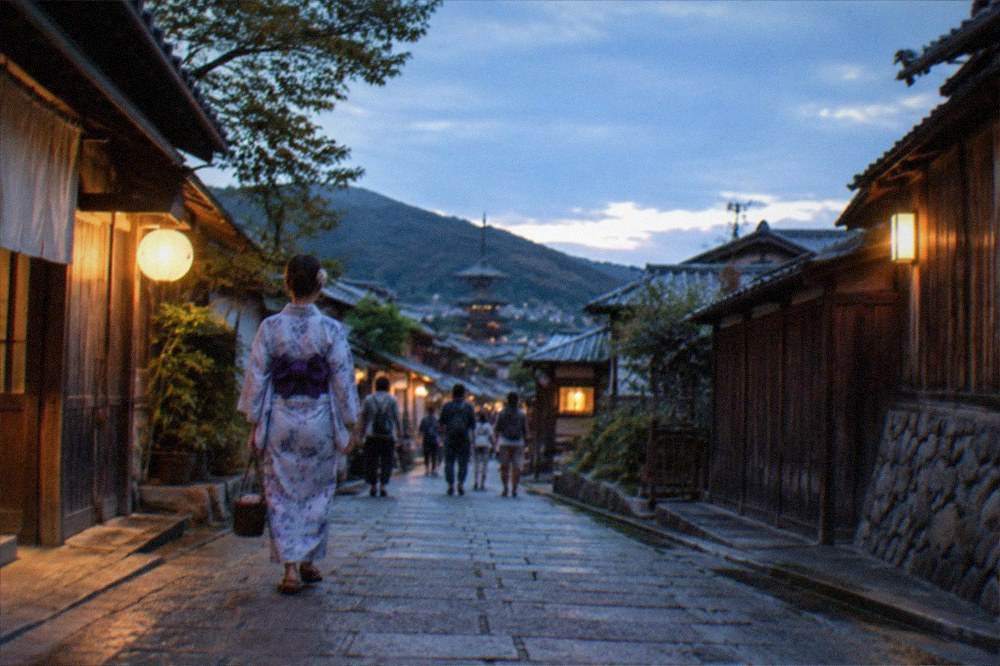
Kyoto will not hand you a hot spring in the city centre, and the honest plan is to travel for the water: Kurama for the closest genuine forest bath, Ohara for a quiet rural soak, and Kinosaki for the full overnight bathing town. Inside the city, sento and hotel spas are honest pleasures at honest prices, and the things to do in Kyoto overview places them among the temples and food that fill the rest of a visit.
Any guide that promises an Arashiyama hot spring is selling the idea rather than the water. What the city offers instead is access: an hour by mountain railway to a genuine forest bath at Kurama, a rural valley at Ohara, and the country's classic bathing town at Kinosaki within an overnight's reach.
Plan the soak around the season the JMA record actually describes: a dry, genuinely cold January, a wet July, a hot August. Pack for the mountain trails, check the bathhouse's own notice for the fee, and give the water the last hour of the day.