Teramachi Street in Kyoto: The Temple Arcade Shopping Guide
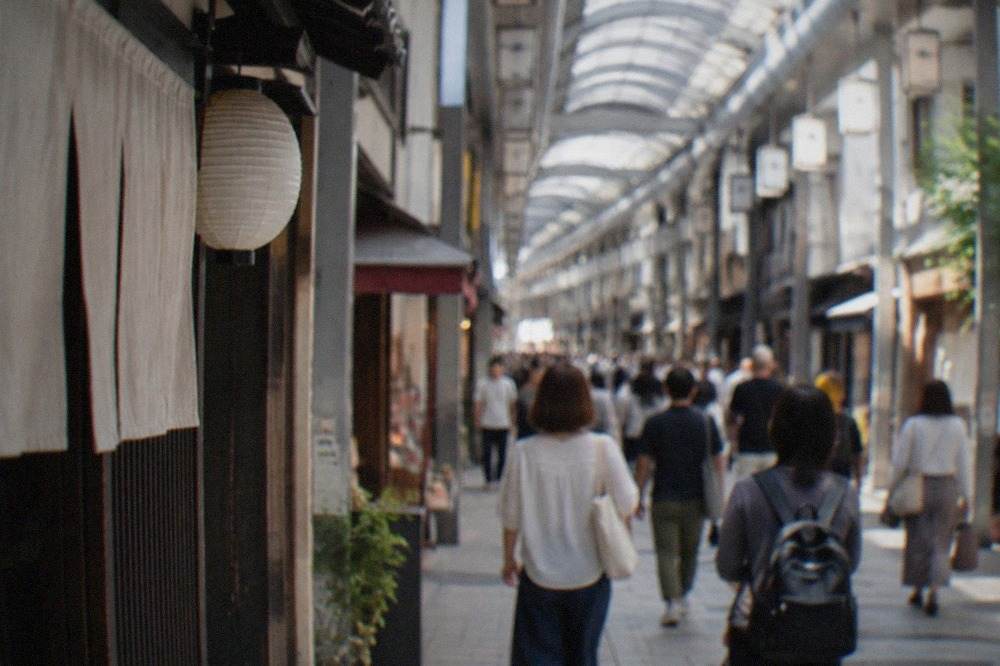
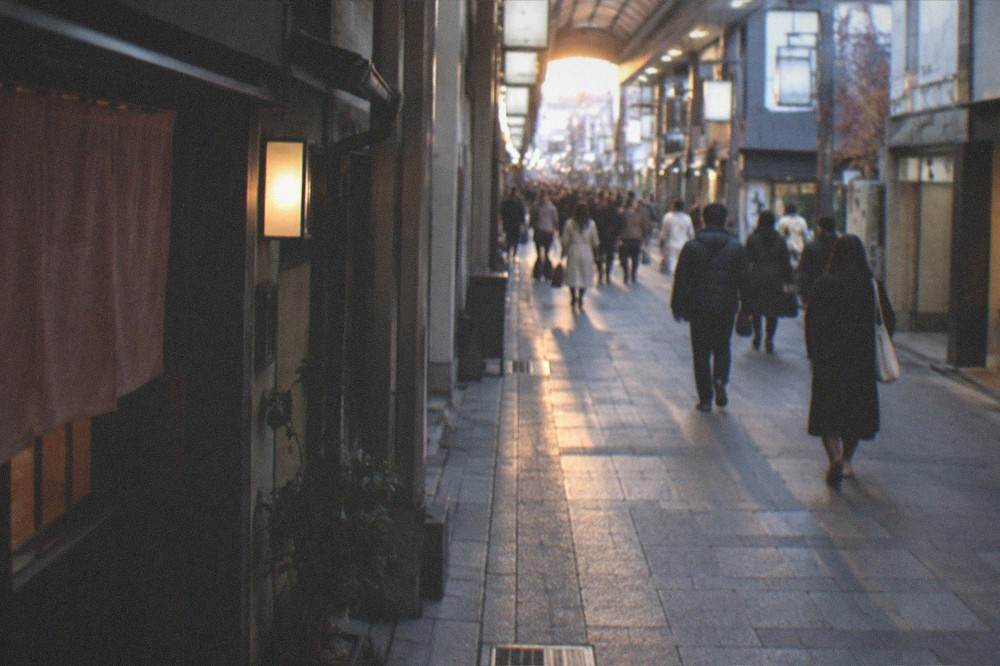
Teramachi Street is Kyoto's temple-town arcade, a covered lane running north from Shijo-dori, and the easiest way to tell it from its neighbour Shinkyogoku is what each one sells.
Short answer
Teramachi Street is the older, narrower covered arcade running parallel to Shinkyogoku between Shijo-dori and Nijo-dori. Teramachi leans toward specialist shops, crafts, tea, incense and temple-related goods near its southern end, while Shinkyogoku is the wider, livelier arcade aimed at casual browsing, snack stalls and youth fashion. The two run side by side one block apart, and most visitors walk both in a single loop with Nishiki Market in between.
Teramachi Street takes its name from the temple town that grew along it, and the name still fits. The covered arcade that runs north from Shijo-dori, one block west of Kawaramachi, mixes incense sellers, tea shops, knife stores and stationers with the souvenir trade that serves the crowds downtown. The city's 2025 tourism survey, released 12 June 2026, recorded a record 62.79 million visitors to Kyoto, and a large share of them pass through this arcade on the walk between downtown Kawaramachi and the Nishiki Market lane one block west. This page explains what the arcade is, how it differs from its neighbour Shinkyogoku, what the nearby temples cost, and how to plan the walk.
What Is The Difference Between Teramachi And Shinkyogoku Arcades?
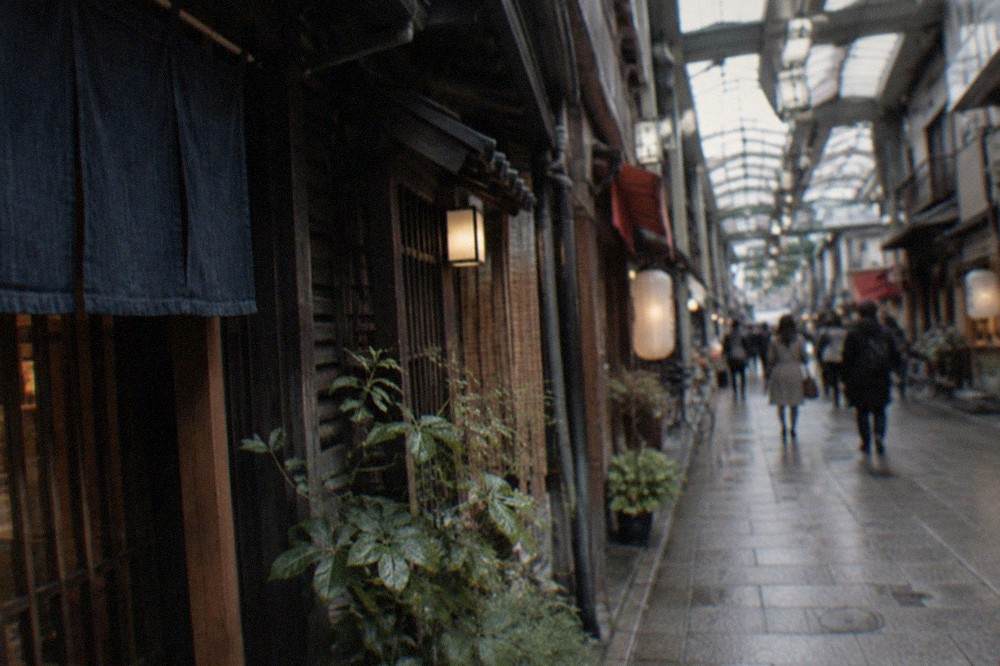
Teramachi Street is the narrower, older-feeling covered arcade running north from Shijo-dori, and it leans toward specialist retail: tea, incense, crafts, knives, paper goods and shops with a temple-town lineage. Shinkyogoku, one block east, is the wider and livelier arcade built for casual browsing, snack stalls, games and youth-oriented stores. The two run parallel, connected by short cross-lanes, and Nishiki Market sits in the block between them, so a single loop covers all three without backtracking.
The practical difference is pace and purpose. Teramachi rewards a shopper who knows what they are looking for: a specific crafts store, a paper shop, a tea merchant. Shinkyogoku rewards drifting. Its wider walkway takes bigger groups, its storefronts shout a little louder, and the snack trade dominates the southern half near Shijo-dori.
The history explains the split. Teramachi, literally "temple town", gathered temples and the trades that served them, and some of that character survives in the incense, rosary and religious-goods shops still trading near the arcade's southern end. Shinkyogoku, "new Kyogoku", was laid out later as an entertainment street, and its modern descendant still carries the amusement-park DNA: game centres, cheap eats and variety retail.
For trip planning, treat the two as one zone with two moods. A comparison helps:
| Feature | Teramachi Street | Shinkyogoku Street |
|---|---|---|
| Character | Specialist shops, crafts, tea, incense, temple goods | Snacks, games, fashion, variety retail |
| Width and feel | Narrower, quieter, more traditional | Wider, louder, more casual |
| Best for | Deliberate shopping, souvenirs with craft value | Grazing, street snacks, families with kids |
| Position | One block west of Kawaramachi | Between Kawaramachi and Teramachi |
| Pairs with | Nishiki Market one block west | Nishiki Market one block west |
Neither arcade charges admission and neither closes as a street; individual shops keep their own hours, the same pattern the Nishiki Market association prints, where each stall sets its own opening times and no unified schedule exists. Plan on the late morning through early evening for the fullest shop coverage.
What Can You Actually Buy On Teramachi Street In Kyoto?
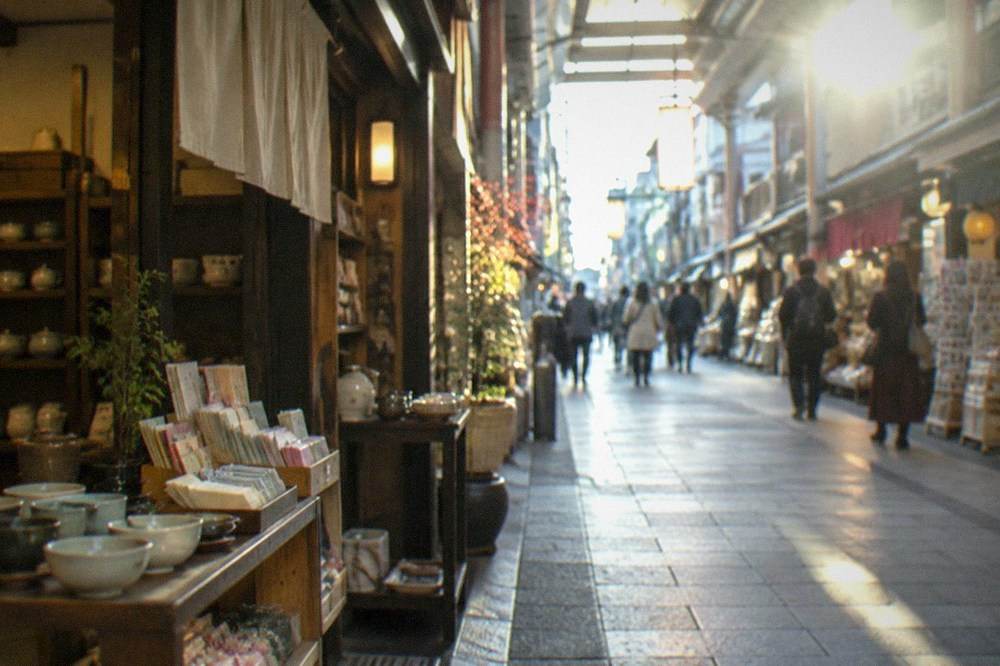
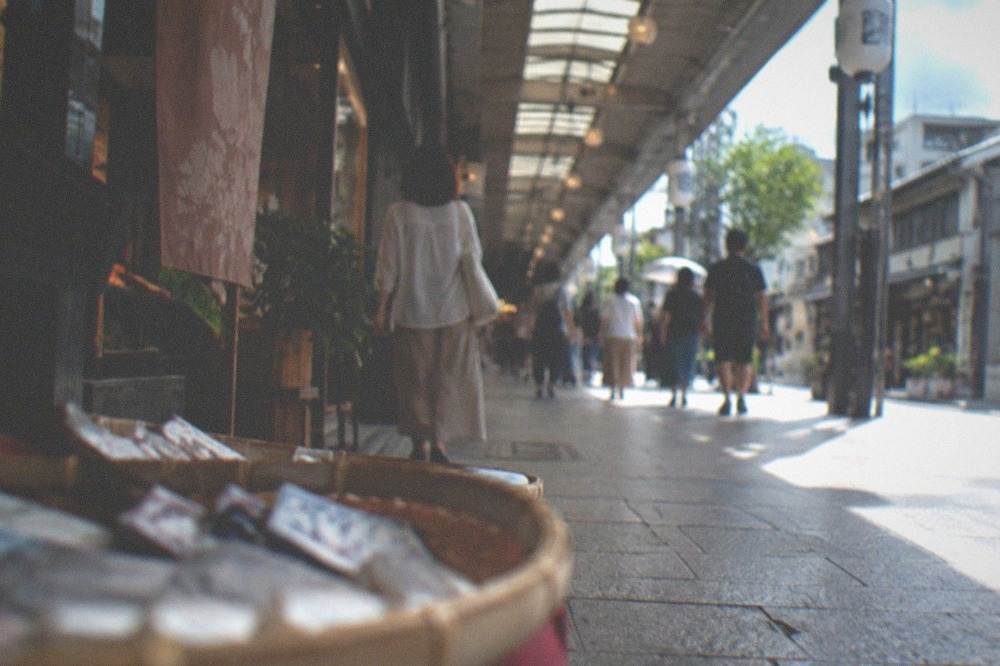
The arcade's core trades are tea and incense, knives and kitchenware, paper and stationery, kimono-related goods, and religious items such as rosaries and altar supplies, plus the usual souvenir layer of snacks, matcha sweets and character goods. Several stores in these categories are long-established specialist shops rather than tourist boutiques, which is the arcade's real selling point over a standard mall. Prices are not fixed by any authority, so treat every figure a shop posts as that shop's own.
The craft end of the arcade is where it earns its keep. A knife from a Teramachi cutler is one of Kyoto's most practical souvenirs, and the shops that sell them typically offer engraving on the spot. Paper stores sell washi by the sheet, useful for wrapping gifts or for a craft project at home. Tea merchants sell matcha and loose leaf by weight, and the difference between ordinary matcha and Uji matcha matters here: Uji is the growing region south of Kyoto, and its leaf commands the premium. Our page on matcha versus Uji matcha breaks down what the label means and when the premium is worth paying.
The food layer is thinner than Nishiki's but real. Sweets shops sell matcha-flavoured confections, and small counters serve quick snacks. For eating while walking, note the rule that applies one block over: Nishiki Market's own guidance asks visitors not to eat while walking, and to eat at the stall or a designated area instead. The same courtesy serves the whole arcade district, where walkways are narrow and crowds dense.
For a fuller shopping plan across the city, including department stores and the arcade district together, see our Kyoto shopping guide. If your question is simply where Kyoto's main shopping street is, the arcade-and-Kawaramachi zone is the answer, and the rest of this Kyoto Travel Guide site covers that geography area by area.
Where Does Teramachi Street Sit On The Kyoto Map?
Teramachi Street runs north from Shijo-dori, one block west of Kawaramachi-dori, through to the Nijo-dori end near the Kyoto City Hall area, with the covered section concentrated between Shijo and Nijo. Nishiki Market sits one block west on the parallel lane, Shinkyogoku one block east, and the whole three-lane bundle sits in downtown Kyoto, roughly ten minutes on foot from the Kamo River and the Pontocho alley district.
This is the most walkable corner of the city. From the arcade's Shijo-dori entrance you can reach the downtown Kawaramachi area immediately, the Pontocho alley within a few minutes, and the Gion district across the river beyond that. The Gion geisha district is close enough that many visitors combine an afternoon of arcade shopping with an evening geisha walk, and our guide to geisha in Kyoto explains what you can and cannot photograph there.
The arcade also sits on the natural walking line to the Higashiyama temple district. Walking south and east from the arcade leads toward the Higashiyama slopes and the temples below Kiyomizu-dera, which makes Teramachi a sensible midday stop between a temple morning and an evening downtown.
How Much Time Do You Need For Teramachi Street And Nishiki Market?
A comfortable arcade visit runs about 90 minutes to two hours: an hour to walk Teramachi and Shinkyogoku at browsing speed, plus 45 minutes to an hour in Nishiki Market if you stop to eat. Shoppers with specific targets, a knife or a tea purchase, spend less; browsers who graze the snack counters can spend half a day. The arcades sit in the middle of downtown, so the visit slots easily between other stops rather than needing its own half-day block.
The honest planning note is crowding. Kyoto's 2025 survey recorded 62.79 million visitors, against 56.06 million in 2024, and day visitors alone numbered 46.20 million. The arcade district absorbs a large share of that daytime flow because it is roofed, flat and free, which makes it the default bad-weather and hot-weather refuge for downtown. On summer afternoons, when the JMA 1991-2020 normals put Kyoto's July mean daily maximum at 32.0 C and August's at 33.7 C, the covered lanes fill accordingly.
Timing follows from that. The arcades are at their calmest in the first hour after shops open and again in the late evening after the snack trade thins. The city's own crowd-management answer is the Kyoto Tourism Comfort forecast, run by the Kyoto City Tourism Association, which publishes a five-level crowd prediction for spots and time slots using location data and weather, and it is worth a check before you set the day's order.
A sample half-day that works: temple or shrine sightseeing in the morning while the arcades are quiet, arcade browsing and a market lunch around midday, then the Kamo River or a museum in the afternoon. Our two days in Kyoto itinerary places the arcade district on exactly this kind of downtown day, and the same structure scales up for longer stays.
What Do The Temples Near Teramachi Street Cost To Visit?
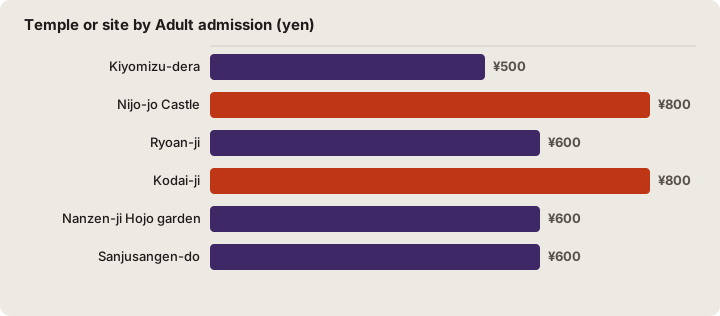
The temples within walking range of the arcade charge admission, and the verified adult fees are: Kiyomizu-dera 500 yen, Nijo-jo Castle 800 yen general with 1,300 yen including the Ninomaru-goten Palace, Ryoan-ji 600 yen, Kodai-ji 800 yen, Nanzen-ji Hojo garden 600 yen and Sanjusangen-do 600 yen. Fushimi Inari Taisha, reachable by rail, is free. Two of these fees changed in 2026, so figures from older guides are unreliable.
The two changes matter. Ginkaku-ji doubled its admission from 500 to 1,000 yen for adults effective 1 April 2026, the temple's first revision in 32 years, and Tofuku-ji revises its fees on 1 November 2026, when the Tsutenkyo bridge and Kaisando area rises to 1,000 yen for adults during the autumn foliage period. Any fee table copied from a 2024 or 2025 guide is therefore wrong for at least one major temple.
| Temple or site | Adult admission | Notes |
|---|---|---|
| Kiyomizu-dera | 500 yen | Single-source figure; hours from 6:00 daily, closing varies by season |
| Nijo-jo Castle | 800 yen | Castle plus Ninomaru-goten Palace 1,300 yen; Honmaru Palace extra, reservation required |
| Ryoan-ji | 600 yen | Hours 8:00-17:00 Mar-Nov, 8:30-16:30 Dec-Feb |
| Kodai-ji | 800 yen | Combined ticket with Entoku-in 1,200 yen |
| Nanzen-ji Hojo garden | 600 yen | Sanmon gate and Nanzen-in ticketed separately |
| Sanjusangen-do | 600 yen | 1,001 Kannon statues, stated by the temple itself |
| Fushimi Inari Taisha | Free | Paths have no closing time |
Sanjusangen-do deserves its line in any downtown-adjacent temple plan: the temple itself states the hall holds 1,001 Kannon statues, and it sits close enough to the arcade district to combine on foot with the Kyoto National Museum quarter. Our Kyoto temples guide covers the full fee picture across the city.
When Is The Best Time To Walk The Teramachi Arcade In Kyoto?
The arcade is walkable year-round because it is roofed, and the seasonal choice is really about the city around it. Spring offers the cherry bloom, which the JMA 1991-2020 normals put at flowering on 26 March and full bloom on 4 April in Kyoto; autumn offers the maple season, with the official red-leaf marker at 5 December, later than most guide claims of a mid-November peak. Summer is hot and wet, with July the wettest month at 223.6 mm of rain.
That last figure surprises people. The JMA 1991-2020 normals for station 47759 show July at 223.6 mm against June's 199.7 mm, so July, not June, is Kyoto's wettest month. A roofed arcade is genuinely useful in that weather, which is part of why the lanes fill on summer afternoons. Heat is the other factor: three of Kyoto's six hottest days on record fell in the summers of 2024, 2025 and 2026, and August's mean daily maximum sits at 33.7 C.
| Month | Rain mm | Mean C | Mean daily max C |
|---|---|---|---|
| January | 53.3 | 4.8 | 9.1 |
| April | 117.0 | 14.4 | 20.1 |
| July | 223.6 | 27.3 | 32.0 |
| October | 143.2 | 18.4 | 23.4 |
| December | 57.3 | 7.2 | 11.6 |
Full monthly figures and what they mean for packing are in our Kyoto weather guide, which also links through to the seasonal deep dives on cherry blossom and autumn leaves. For the arcade specifically, the roof makes winter viable too, and the downtown lanes are notably quieter in the low season between January and early March.
How Do You Get To Teramachi Street In Kyoto?
The nearest subway stations are Kyoto-kawaramachi on the Hankyu line and Shijo on the Karasuma line, both within a few minutes' walk of the Shijo-dori arcade entrance, and city buses stop along Kawaramachi-dori one block east. The flat adult bus fare is 230 yen, subway fares run 220 to 360 yen by zone, and the Subway and Bus One-Day Pass costs 1,100 yen, the product that replaced the abolished bus-only pass.
That pass detail catches out visitors using older guides. The bus-only one-day pass stopped selling at the end of September 2023 and stopped being usable on 31 March 2024; the transport bureau said 90 percent of its buyers were non-residents and the pass concentrated tourists on the buses. The current product is the Subway and Bus One-Day Pass at 1,100 yen adult and 550 yen child, and it also covers the EX100 and EX101 tourist express buses, which run from Kyoto Station toward the Kiyomizu and Gion side at 500 yen a ride paid in cash.
| Transport | Fare | Notes |
|---|---|---|
| City bus, flat adult | 230 yen | Child 6-11: 120 yen |
| Subway, by zone | 220-360 yen | Five zones, adult |
| Subway and Bus One-Day Pass | 1,100 yen | Child 550 yen; covers EX100/EX101 |
| Tourist express EX100/EX101 | 500 yen | Cash or IC; fewer stops, faster |
| ICOCA card | 2,000 yen with 500 yen deposit | Refundable deposit |
Arriving from the airports, the JR West HARUKA one-way ticket for foreign visitors prices Kyoto at 2,200 yen adult from Kansai Airport, and the Itami Airport limousine bus to Kyoto Station costs 1,500 yen adult. Our page on Itami Airport to Kyoto covers the Osaka-side route in full. Once downtown, the arcade is a walk from nearly everywhere in the Kawaramachi quarter, and the city's bus and subway network handles the longer hops to the temple districts.
Where Should You Stay Near The Teramachi Arcade?
The arcade sits in downtown Kyoto, where the practical lodging options cluster around Kyoto Station, the Kawaramachi and Karasuma quarter next to the arcade itself, and the riverside near Pontocho. One cost to budget regardless of hotel grade is the accommodation tax, which changed on 1 March 2026: a room rate of 20,000 to under 50,000 yen now carries 1,000 yen per person per night, and the top tier of 100,000 yen and above carries 10,000 yen, up from 1,000.
The full tier table and what it does to a hotel bill is in our Kyoto accommodation tax guide, and the area-by-area breakdown of where to sleep is in where to stay in Kyoto. The short version for arcade shoppers: staying in the Kawaramachi quarter puts the arcades, Nishiki and the evening restaurant trade within a short walk, at the cost of the highest hotel rates in the city. Staying near Kyoto Station trades that walkability for cheaper rooms and faster day trips, and our Kyoto Station area page covers that quarter.
| Room rate per night | Tax per person per night, from 1 March 2026 | Before |
|---|---|---|
| Under 6,000 yen | 200 yen | 200 yen |
| 6,000 to under 20,000 yen | 400 yen | 400 yen |
| 20,000 to under 50,000 yen | 1,000 yen | 500 yen |
| 50,000 to under 100,000 yen | 4,000 yen | 1,000 yen |
| 100,000 yen and above | 10,000 yen | 1,000 yen |
What Else Is Worth Combining With The Teramachi Arcade?
The arcade pairs naturally with Nishiki Market one block west, the Kamo River and Pontocho a few minutes east, and the Gion district across the river, all walkable. Farther afield, the Fushimi sake district, the Arashiyama bamboo quarter and the Kurama-to-Kibune hiking trail make full half-day or day trips, and the rail connections from the downtown stations reach all of them.
The Kurama and Kibune valley is the counterweight to a shopping day. The full-day guided hike through that valley, with its temple legends and mountain shrines, is the tour this page recommends most for a second or third day in the city, and it makes a clean contrast with the flat, roofed lanes of downtown. Closer to hand, the Arashiyama bamboo grove makes a classic half-day west of the centre, and the Fushimi sake district south of downtown pairs brewery visits with a quieter drinking quarter.
Food planning belongs in the same breath. Street-food counters in and around the arcades cover the quick eats, and the question of Kyoto's most famous food street is answered, perhaps unsurprisingly, one block west of Teramachi, in our page on Kyoto's most famous food street. For a sit-down evening, the izakaya trade around Kawaramachi covers every budget, and the restaurant scene ranges from basement noodle counters to kaiseki houses where the course itself opens above 30,000 yen.
Common Questions About Teramachi Street In Kyoto
What Is The Difference Between Teramachi And Shinkyogoku Arcades?
Teramachi is the narrower, more specialist arcade with tea, incense, crafts and temple-goods shops; Shinkyogoku is the wider, livelier arcade aimed at snacks, games and casual browsing. They run parallel one block apart, with Nishiki Market between them, and most visitors walk all three in one loop.
Is Teramachi Street covered?
Yes, the main shopping stretch between Shijo-dori and Nijo-dori is a roofed arcade, which is why it fills up on rainy and hot days. Individual shops keep their own hours, so late-evening coverage varies.
How far is Teramachi Street from Nishiki Market?
Nishiki Market runs parallel one block west of Teramachi, and the two are connected by short cross-lanes. The walk between them takes a couple of minutes, and most visitors combine them in a single shopping loop.
Is Teramachi Street open on Sundays and holidays?
The arcade street itself never closes and is in fact at its busiest on weekends. Individual shops set their own hours and rest days, the same pattern the Nishiki Market association prints, so a specific store's schedule is worth checking before a dedicated trip.
Can you walk from Teramachi Street to Gion?
Yes. Gion lies across the Kamo River east of the arcade district, and the walk from the Shijo-dori end takes roughly ten to fifteen minutes at a normal pace. Remember the conduct rules in Gion: no touching, chasing or photographing geiko and maiko without permission, and no entering private alleys where signage prohibits it.
Teramachi Street works because it is ordinary Kyoto retail with a temple-town memory, roofed, flat and free to enter, sitting in the middle of the most walkable quarter of a city that drew a record 62.79 million visitors in 2025. Walk it slowly, buy the knife or the tea you actually came for, and let the arcade connect the rest of your downtown day.