Kyoto On A Rainy Day
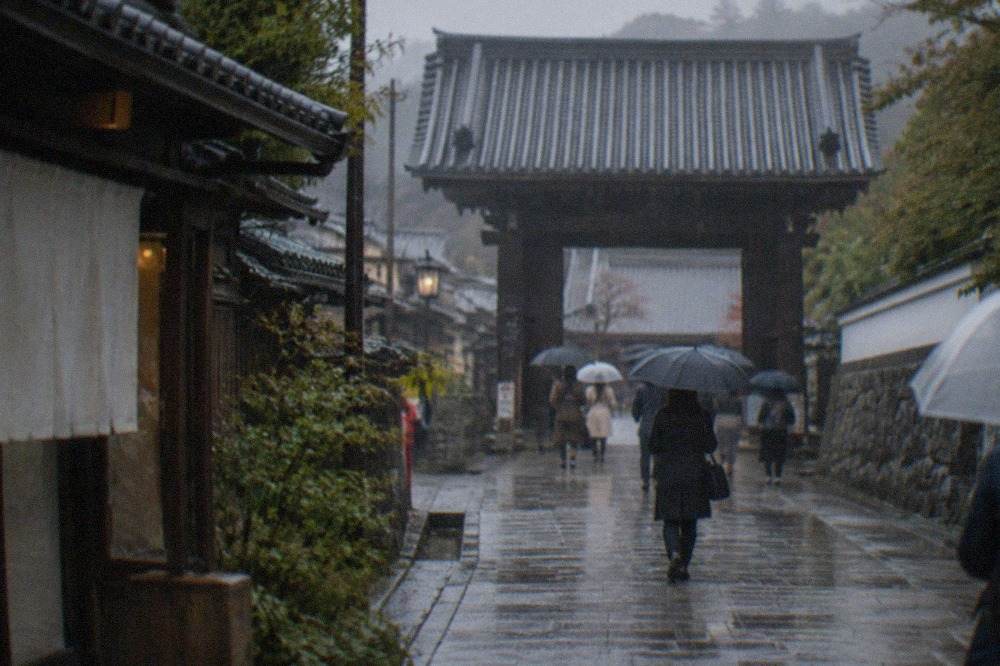
Rain in Kyoto is not a lost day. July is the city's wettest month at 223.6 mm, and the temples, moss gardens and covered markets are built for exactly this weather.
Short answer
Ryoan-ji's rock garden and Kyoto's moss temples look better in rain, Nishiki Market is fully covered, and the Railway Museum, Sanjusangen-do and Nidec Kyoto Tower are strong indoor options with verified hours and fees.
Rain does not cancel Kyoto. The JMA 1991-2020 normals for station 47759 put the city's annual rainfall at 1,522.9 mm, spread across every month of the year, and the buildings that draw 62.79 million annual visitors, a record the city's own 2025 tourism survey reported in June 2026, were designed under roofs, eaves and tiled gates centuries before anyone packed an umbrella. A wet day here changes the plan, not the city. Moss darkens, stone paths deepen in colour, and the crowds that fill the Philosopher's Path in sunshine thin out enough that some gardens feel closer to what their designers intended.
This page lays out a full rainy-day plan built only on verified fees, hours and climate data. It names the temples that genuinely improve in rain, the indoor options with confirmed opening windows, and the transport that keeps you under cover between them. Where a figure has not been verified on a venue's own page, this guide says so plainly instead of guessing.
When Does It Rain Most In Kyoto?
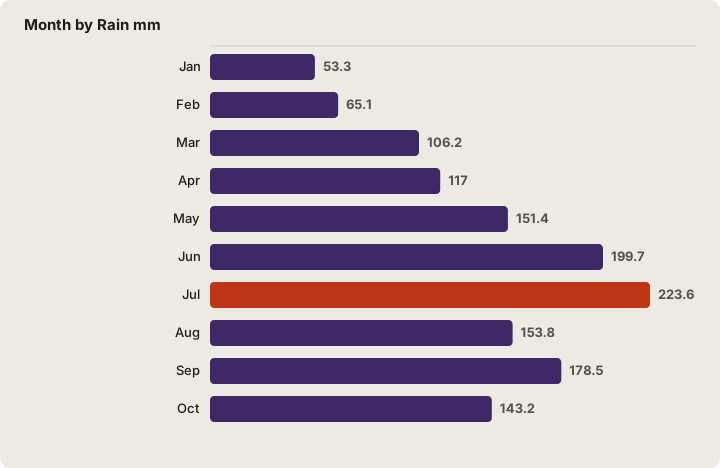
July is Kyoto's wettest month, not June, at 223.6 mm against June's 199.7 mm in the JMA 1991-2020 normals for station 47759. September follows at 178.5 mm, October at 143.2 mm and August at 153.8 mm. January is the driest month at 53.3 mm, and the annual normal is 1,522.9 mm. The rainy season proper runs roughly through June, and typhoon season runs roughly July to October.
The July figure contradicts nearly every guide that tells you June is the wet month. The Japan Meteorological Agency's own normals table, measured at the Kyoto station that has kept records since 1880, shows the peak arriving a month later than the received wisdom. That matters for planning: a late-July visit carries more expected rain than early June, and the wettest calendar month ever recorded at the station was July 1903 at 626.9 mm.
The same records hold a warning about heat. August is the hottest month, mean 28.5 C with a mean daily maximum of 33.7 C, and also the sunniest at 182.7 hours. Three of Kyoto's six hottest days on record fell in the summers of 2024, 2025 and 2026, and July and August 2025 both ranked among the five hottest calendar months ever measured here. A rainy afternoon in high summer can be a relief rather than a loss.
| Month | Rain mm | Mean C | Mean daily max C |
|---|---|---|---|
| Jan | 53.3 | 4.8 | 9.1 |
| Feb | 65.1 | 5.4 | 10.0 |
| Mar | 106.2 | 8.8 | 14.1 |
| Apr | 117.0 | 14.4 | 20.1 |
| May | 151.4 | 19.5 | 25.1 |
| Jun | 199.7 | 23.3 | 28.1 |
| Jul | 223.6 | 27.3 | 32.0 |
| Aug | 153.8 | 28.5 | 33.7 |
| Sep | 178.5 | 24.4 | 29.2 |
| Oct | 143.2 | 18.4 | 23.4 |
| Nov | 73.9 | 12.5 | 17.3 |
| Dec | 57.3 | 7.2 | 11.6 |
Winter deserves respect too. The station's record low is -11.9 C and its deepest snow 41 cm, so a winter rain day can turn to snow, and the city does have a real cold season.
Which Kyoto Temples Look Better In Rain: Ryoan-ji, Saiho-ji, Tofuku-ji?
Ryoan-ji is the strongest of the three in rain: its rock garden sits on a wide veranda you view from under the eaves, admission is a verified 600 yen, and wet weather empties the viewing platform. Tofuku-ji's Tsutenkyo bridge is also 600 yen, rising to 1,000 yen in the autumn foliage period from 1 November 2026. Saiho-ji, the moss temple, improves most of all in rain, but its fee and reservation system are not in this site's verified fact pack, so check with the temple directly.
Ryoan-ji's whole design is a rain-day design. The famous fifteen-stone garden is viewed from the hojo veranda, a wooden floor under a broad roof, which means the viewing position itself is sheltered. The temple's own site sets admission at 600 yen for adults, 500 for high school students and 300 for elementary and junior high, with hours of 8:00 to 17:00 from March to November and 8:30 to 16:30 through winter. Rain darkens the raked gravel's border of moss and quiets the crowd, and the garden's own dedicated page on this site covers the layout in detail.
Saiho-ji, the moss temple in the western hills, is the one that rain transforms. Its garden is roughly a hundred and twenty species of moss, and moss is at its most vivid saturated. This site's verified fact pack holds no admission fee, no journey time and no reservation price for Saiho-ji, and the temple famously takes reservations by post, so treat the visit as something to arrange in advance rather than a drop-in. The moss temple guide explains what is and is not confirmed.
Tofuku-ji is the practical middle option. The Tsutenkyo bridge and Kaisando cost a verified 600 yen for adults and 300 for children, and the temple's own notice revises its pricing on 1 November 2026: the Hojo garden rises from 500 to 600 yen, a new combined ticket appears at 1,000 yen for adults and 500 for children, and the Tsutenkyo bridge rises to 1,000 yen during the autumn foliage period. Rain on the bridge's wooden planks over the Sengyokukan gorge is atmospheric, but the bridge is exposed, so it suits a shower rather than a downpour. More detail sits on the Tofuku-ji page.
| Temple | Adult fee | Hours | Rain verdict |
|---|---|---|---|
| Ryoan-ji | 600 yen | 8:00-17:00 (8:30-16:30 Dec-Feb) | Best: viewed from a covered veranda |
| Tofuku-ji (Tsutenkyo) | 600 yen, 1,000 in foliage season | check with temple | Good, but the bridge is exposed |
| Saiho-ji | not verified, check with temple | by reservation | Most transformed, moss loves rain |
| Nanzen-ji Hojo garden | 600 yen | 8:40-17:00 (16:30 winter) | Good: brick aqueduct, covered walkways |
| Tenryu-ji garden | 500 yen | 8:30-17:00 | Good: borrowed scenery improves in mist |
Nanzen-ji deserves a place in this conversation. Its Hojo garden is 600 yen, the Sanmon gate a separate 600 yen, and the great brick aqueduct in its grounds photographs better in wet weather than in flat sunshine. Tenryu-ji's garden in Arashiyama, 500 yen with buildings at 300 yen more, frames the mountains behind a pond, and mist genuinely improves that borrowed scenery.
If you would rather walk than decide, a guided option keeps the day moving even when the forecast is poor.
What Are The Best Indoor Options In Kyoto On A Rainy Day?
The Kyoto Railway Museum is the strongest full-day indoor option, open 10:00 to 17:00 with last entry at 16:30 and closed Wednesdays, entry 1,500 yen for adults. Sanjusangen-do holds 1,001 Kannon statues under one roof at 600 yen, open every day. Nidec Kyoto Tower's observation deck runs 10:00 to 21:00 at 900 yen, and Nijo-jo Castle's Ninomaru-goten Palace is interior viewing at 1,300 yen combined admission.
Sanjusangen-do is the single most rain-proof sight in the city. The temple's own site states the hall holds 1,001 Kannon statues, a forest of figures you view entirely indoors, and the temple is open every day of the year, 8:30 to 17:00 from April to mid-November and 9:00 to 16:00 through winter. Admission is a verified 600 yen general, 400 for junior high and high school, 300 for elementary. Photography inside is not part of this site's verified record, so check the temple's rules on arrival.
The Kyoto Railway Museum costs 1,500 yen for those 18 and over, 1,300 for university and high school, and 200 yen for children from age 3, and it holds one of the largest indoor collections of rolling stock in the country. The Wednesday closure is the one trap: check the calendar before committing a wet Wednesday to it.
Nijo-jo Castle is partly outdoor, but its centrepiece, the Ninomaru-goten Palace with its nightingale floors, is interior viewing, and combined castle-plus-palace admission is a verified 1,300 yen. Admission stops at 16:00 and the castle closes at 17:00, so it belongs to the morning or early afternoon of a rain day. The Honmaru-goten Palace, reopened after restoration, requires an advance reservation and a separate 1,000 yen ticket. The full fee table is on the Nijo-jo Castle page.
| Indoor sight | Adult fee | Hours | Closed |
|---|---|---|---|
| Kyoto Railway Museum | 1,500 yen | 10:00-17:00, last entry 16:30 | Wednesdays, 30 Dec-1 Jan |
| Sanjusangen-do | 600 yen | 8:30-17:00 (Apr-15 Nov); 9:00-16:00 after | never |
| Nidec Kyoto Tower deck | 900 yen | 10:00-21:00, last admission 20:30 | not verified |
| Nijo-jo Castle + palace | 1,300 yen | admission 8:45-16:00, closes 17:00 | 29-31 Dec |
| Kyoto International Manga Museum | check with venue | check with venue | not verified |
Nidec Kyoto Tower, 900 yen for adults with the deck open to 21:00, works as a rain-day evening: the city's grid glitters wet from 100 metres up, and the last admission at 20:30 leaves room after a late dinner. The Manga Museum's current fee is not in this site's verified fact pack, so confirm before going.
Is Nishiki Market A Good Rainy-Day Option In Kyoto?
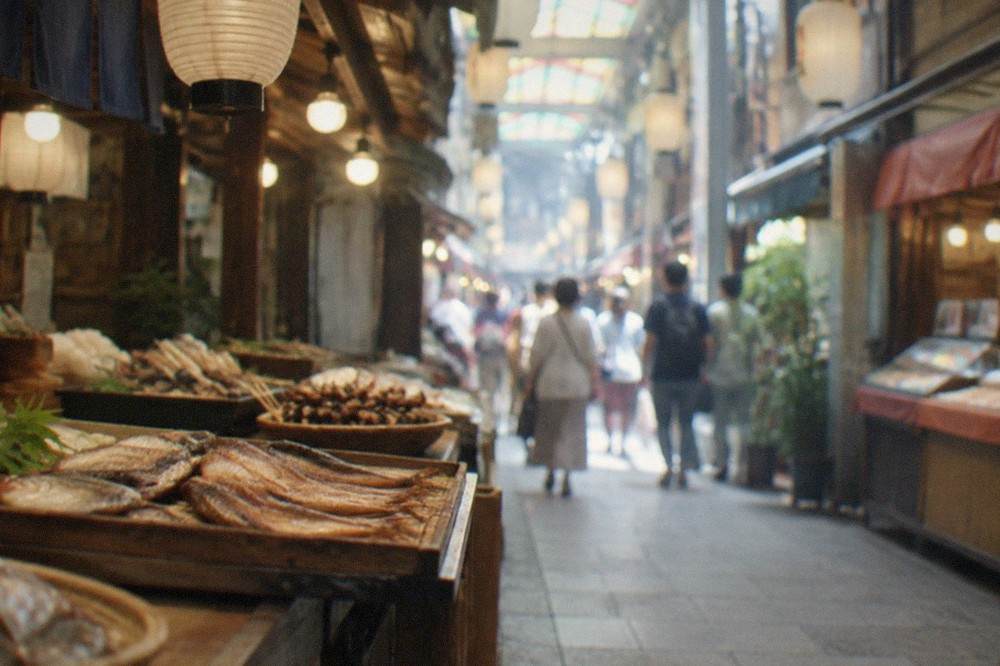
Nishiki Market is one of the best rainy-day places in Kyoto because it is almost entirely covered, a roofed arcade of roughly 100 to 130 shops and stalls running about 400 metres between Shijo and Sanjo. Entry is free. There are no unified market hours: each shop keeps its own, roughly 9 or 10:00 to 17 or 18:00, and stalls ask you to eat at the stall rather than walk while eating.
The covered structure is the whole point on a wet day. The market association prints no unified opening hours, so treat the roughly 9 or 10:00 to 17 or 18:00 window as a planning range, not a promise, and expect some individual closures on particular weekdays. The eating rule matters: eating while walking is discouraged, and stalls ask you to finish at the stall or a designated spot, which keeps the narrow lane functional.
A guided brunch walk turns the market from a dash between awnings into a sit-down meal. The Nishiki Market Brunch Walking Tour runs about three hours, covers seven tastings plus a brunch, and is, rated 4.9 from 1,497 traveller reviews, with the current price on the operator's live listing. Because the whole route is under the market roof, it is one of the few tours in the city whose plan barely changes in rain.
Teramachi and Shinpukan, the covered shopping arcades just east and north of Nishiki, extend the dry walk for another few blocks, and the Kyoto Tower Sando retail strip near the station is under cover as well.
Does Rain Improve Kyoto's Moss Gardens And Landscapes?
Yes, and this is the honest reason not to write off a wet day. Rain saturates moss to its deepest green, darkens temple stone, and clears the haze that flattens the mountains framing gardens like Tenryu-ji's. The trade-off is exposure: Ryoan-ji and Nanzen-ji offer sheltered viewing, while open gardens like the Philosopher's Path and Ginkaku-ji's grounds leave you in the weather for the whole circuit.
Ginkaku-ji is the awkward case. Its grounds are beautiful in rain, but the admission rose to 1,000 yen for adults from 1 April 2026, double the old 500 yen, and much of the circuit is exposed hillside path with only the final stretch under trees. At the new price, a soaked hour on a slippery slope is a weaker buy than Ryoan-ji's covered veranda at 600 yen. The Ginkaku-ji page lays out the fee change and the hours, 8:30 to 17:00 in season and 9:00 to 16:30 through winter.
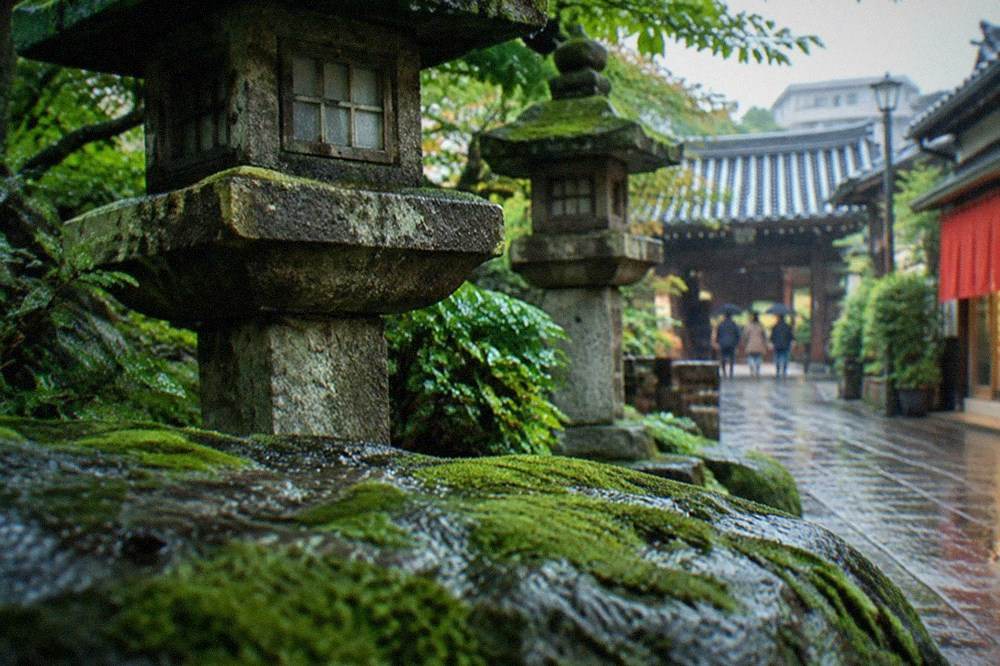
Kodai-ji in Higashiyama takes a middle position: 800 yen admission, or 1,200 combined with Entoku-in, hours 9:00 to 17:30, and a garden whose bamboo grove and stone settings deepen in colour when wet. Daitoku-ji's sub-temples are a cluster of small walled gardens where a short dash between gates is the worst exposure you face.
The one landscape this site can recommend in rain without reservation is Fushimi Inari Taisha. Admission is free, the shrine publishes no fee anywhere on its site, and the torii tunnels are effectively a roofed mountain path for much of the climb. The shrine gives Inariyama as 233 m, and the paths have no closing time, though the shrine publishes only its desk and prayer hours. The Fushimi Inari guide covers the route; wet stone steps demand proper shoes.
How Do You Get Around Kyoto When It Rains?
The subway is the rain-day backbone: fares run 220 to 360 yen by zone, and the Subway and Bus One-Day Pass costs 1,100 yen, valid on both networks. The old bus-only one-day pass no longer exists; sales ended in September 2023 and it stopped being usable on 31 March 2024. City buses charge a flat 230 yen, and the EX100 and EX101 tourist expresses run 500 yen a ride from Kyoto Station toward Kiyomizu and Gion.
The subway matters in rain for a simple reason: its stations connect to the major sightseeing axes, and you spend less time standing at kerbs. The Karasuma line runs north to south through the centre, the Tozai line cuts east to west and stops at Nijo-jo Castle and Higashiyama, and both are underground for their whole length.
| Option | Fare | Notes |
|---|---|---|
| Subway, zones 1-5 | 220 / 260 / 290 / 330 / 360 yen | child half |
| City bus, flat | 230 yen adult, 120 child | luggage may be refused when crowded |
| Subway and Bus One-Day Pass | 1,100 yen adult, 550 child | covers EX100/EX101 |
| EX100 / EX101 tourist express | 500 yen adult, 250 child | Kyoto Station to Kiyomizu, Gion, Ginkaku-ji |
| ICOCA card | 2,000 yen incl. 500 deposit | works on bus, subway, JR |
Buses still work, but they fill fast in rain as everyone abandons walking, and drivers may refuse large luggage on crowded buses under city policy. The EX100 and EX101 expresses were created precisely to move tourists off the ordinary routes; the city's transport bureau pages give the stops. For the practicalities of cards, the ICOCA system charges a 500 yen deposit inside its 2,000 yen purchase price.
One rain-specific tip the fact pack supports: the city's hands-free luggage delivery network exists to keep bags off buses, and it earns its keep doubly in wet weather.
What Does A Full Rainy-Day Itinerary For Kyoto Look Like?
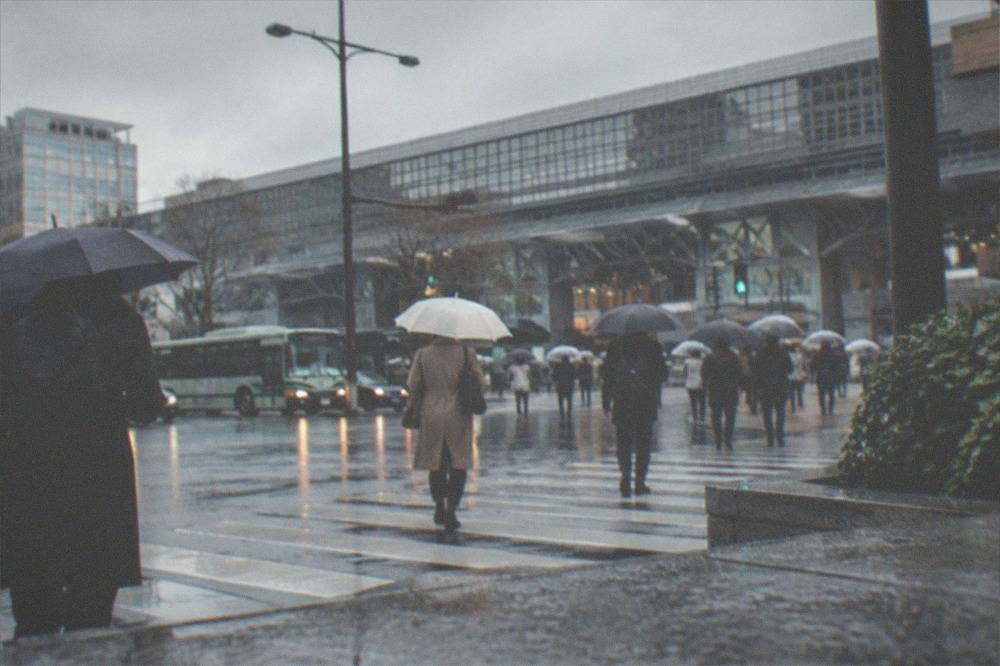
A workable wet-weather day: Sanjusangen-do at opening for 600 yen, then Nijo-jo Castle before the 16:00 admission cutoff at 1,300 yen with the palace, the afternoon under Nishiki Market's roof, and Nidec Kyoto Tower's deck until 21:00 for 900 yen. Every admission on this route is verified, every stop is sheltered or fully indoors, and no leg of it leaves you outdoors for more than a few minutes at a time.
The morning belongs to Sanjusangen-do. Opening at 8:30 from April to mid-November, 9:00 after, the hall of 1,001 Kannon statues is fully indoors and takes an unhurried hour. From there the Tozai subway line runs toward Nijo-jo Castle, whose Ninomaru-goten Palace interiors are the day's second sheltered block. Remember the cutoff: admission stops at 16:00, and the Ninomaru-goten closes every Tuesday in January, July, August and December.
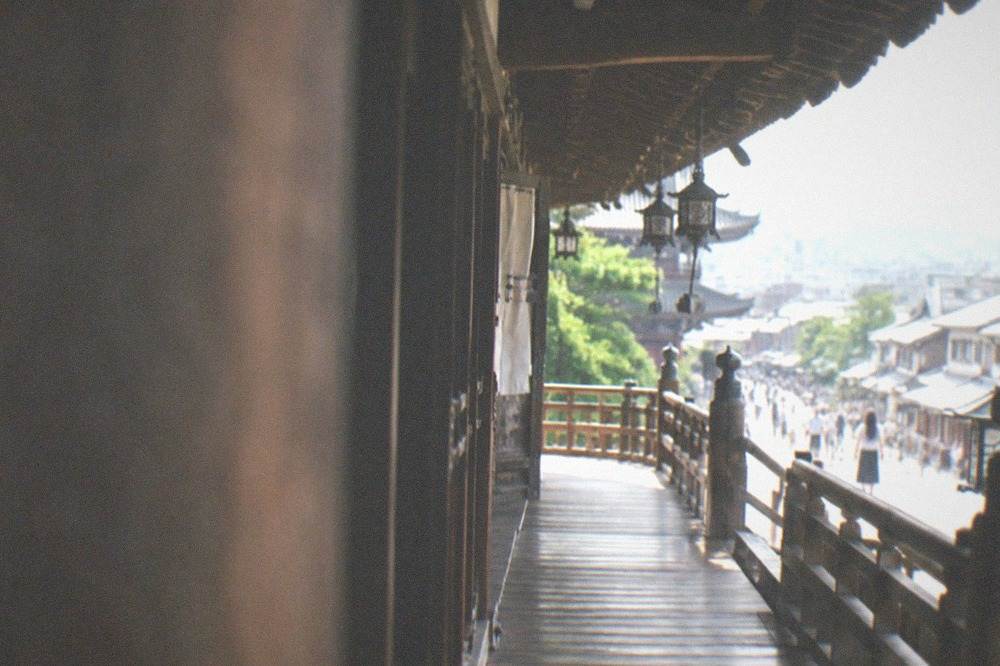
Midday is Nishiki Market. The roofed arcade covers lunch, shopping and coffee, and the arcades of Teramachi extend the dry circuit eastward. If the rain eases, Ryoan-ji is a short bus or taxi hop for the covered veranda; if it does not, the Kyoto Railway Museum holds the afternoon, with the Wednesday closure the only scheduling trap.
Evening closes at the tower or under Pontocho's covered lane. Nidec Kyoto Tower admits until 20:30 and the deck stays open to 21:00, and Pontocho, the narrow lantern-lit alley along the Kamo River, has a partial canopy of eaves and awnings that makes even a drizzly dinner walk atmospheric rather than miserable. The Kyoto at night itinerary extends the evening.
| Time | Stop | Fee | Exposure |
|---|---|---|---|
| 9:00 | Sanjusangen-do | 600 yen | fully indoors |
| 10:30 | Nijo-jo Castle + palace | 1,300 yen | palace indoors, grounds open |
| 12:30 | Nishiki Market lunch | free entry | covered arcade |
| 15:00 | Ryoan-ji or Railway Museum | 600 / 1,500 yen | veranda / indoors |
| 18:00 | Pontocho dinner | varies | partially covered lane |
| 20:00 | Nidec Kyoto Tower deck | 900 yen | indoors |
If the day is only half lost, the one-day plan shows what the route looks like in dry weather, and the master list of options is the things to do in Kyoto page.
Does Rain Ruin Kyoto's Festivals And Night Views?
No major Kyoto festival is cancelled for rain as a rule, and Jidai Matsuri on 22 October is postponed rather than run in heavy rain, with its procession departing at 9:00 in dry years. Temple illuminations like Kodai-ji's autumn night viewing, 23 October to 13 December 2026, generally proceed in showers. The one hard rule is Gozan no Okuribi on 16 August, when entering the hills is prohibited regardless of weather.
The verified calendar from the shrines' and city's own pages: Gion Matsuri runs the whole of July, with the Yamaboko Junko parades on the 17th and 24th; Aoi Matsuri is 15 May, postponed to the 16th if it rains on the 15th; Jidai Matsuri is 22 October; Gozan no Okuribi lights five mountains on 16 August. Rain during Gion Matsuri's month is statistically likely given July's 223.6 mm normal, and the festival has run through eight centuries of it.
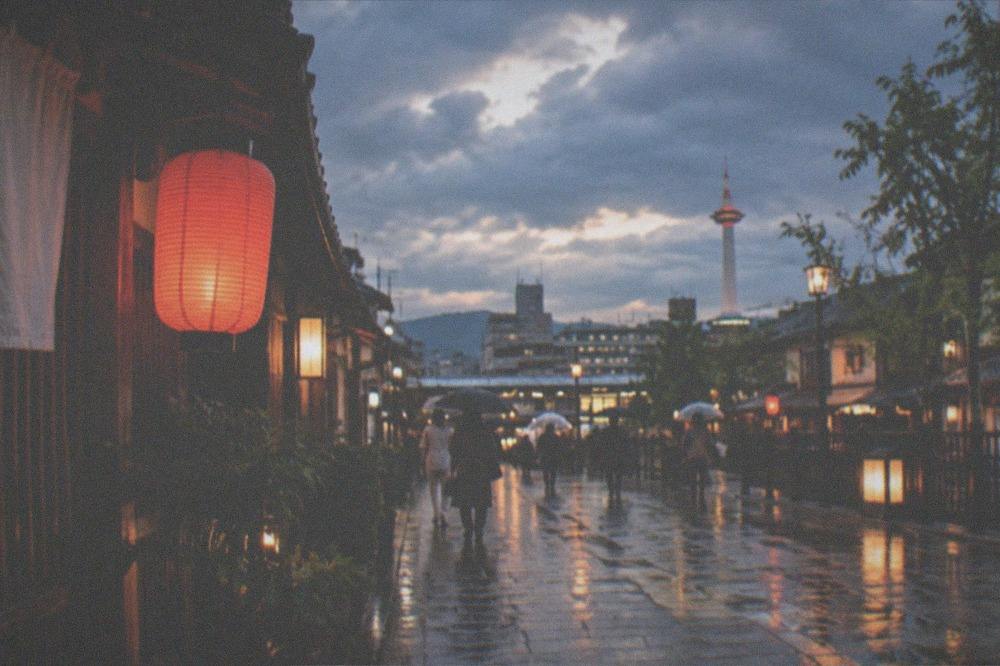
Night views are the quiet winner of a rainy evening. Wet pavement doubles the lantern light of Ninenzaka and Sannenzaka, and the photo spots guide names the lanes that reward a drizzle.
What Should You Pack For A Rainy Day In Kyoto?
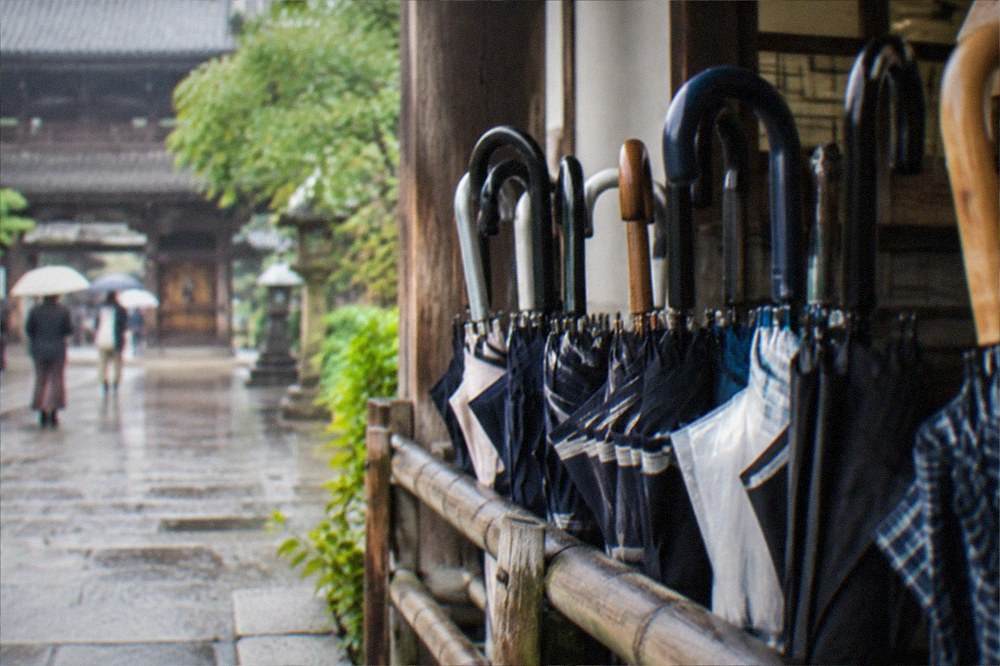
Bring a compact umbrella rather than a raincoat, shoes with real grip for wet temple stone, and a small towel for temple entries where shoes come off. Convenience stores across the city sell clear umbrellas cheaply, and temple floors are polished wood that wet boots track badly. In winter, remember the station record low of -11.9 C and deepest snow of 41 cm: rain can turn to snow, and layers matter.
The shoe point is practical, not stylistic. Temple viewing means removing footwear at many entrances, and the shuffle from wet entry to sock feet happens dozens of times on a rainy circuit. Grip matters most at Fushimi Inari, where the stone steps stay slick for hours after rain, and on the exposed paths around Ginkaku-ji.
For connectivity while rerouting plans on the move, a travel eSIM covers the practical options, and the accessibility notes on this site flag which of the rainy-day indoor sights manage steps and distances well.
Common Questions About Kyoto On A Rainy Day
Which Kyoto Temples Look Better In Rain: Ryoan-ji, Saiho-ji, Tofuku-ji?
Ryoan-ji is the best of the three in rain because its rock garden is viewed from a covered veranda, and admission is a verified 600 yen. Saiho-ji, the moss temple, is transformed by rain, but its fee and reservation system are not in this site's verified fact pack, so arrange it with the temple directly. Tofuku-ji's Tsutenkyo bridge is atmospheric in a shower at 600 yen, rising to 1,000 yen in the autumn foliage period from 1 November 2026, but the bridge itself is exposed.
Is July or June the rainiest month in Kyoto?
July, at 223.6 mm against June's 199.7 mm in the JMA 1991-2020 normals for the Kyoto station. Most guides repeat that June is the wettest month, but the official normals table says otherwise. The rainy season proper runs roughly through June, and typhoon season runs roughly July to October.
Is Nishiki Market open when it rains?
Yes, and it is one of the best rainy-day spots in the city because the market is almost entirely covered. There are no unified hours: each shop keeps its own, roughly 9 or 10:00 to 17 or 18:00, and stalls ask you to eat at the stall rather than walk while eating.
What is the best indoor activity in Kyoto on a rainy day?
Sanjusangen-do, which holds 1,001 Kannon statues under one roof, open every day at 600 yen general admission. The Kyoto Railway Museum is the other full-afternoon option at 1,500 yen, open 10:00 to 17:00 but closed on Wednesdays.
Do Kyoto temples close when it rains?
No major Kyoto temple in this site's verified fact pack closes for rain. Hours follow season, not weather: Ryoan-ji runs 8:00 to 17:00 in season and 8:30 to 16:30 in winter, Sanjusangen-do shifts to 9:00-16:00 from 16 November, and Nijo-jo Castle stops admitting at 16:00 year-round. Iwatayama Monkey Park does close early if weather turns, but it is an outdoor site.
Is Fushimi Inari climbable in the rain?
The paths have no closing time and admission is free, so yes, but the stone steps stay slick. The torii tunnels give partial cover for much of the lower climb. The shrine gives Inariyama as 233 m, and proper footwear matters more than the umbrella.
A rainy day in Kyoto is a different city rather than a lesser one: moss at full colour, covered verandas built for exactly this weather, a roofed market in the middle, and an observation deck open to 21:00 for the close. Build the day around the verified closing windows, keep the subway as the spine, and the rain becomes the reason the plan works. More wet-weather-proof ideas sit in the full things to do in Kyoto round-up from Kyoto Travel Guide.
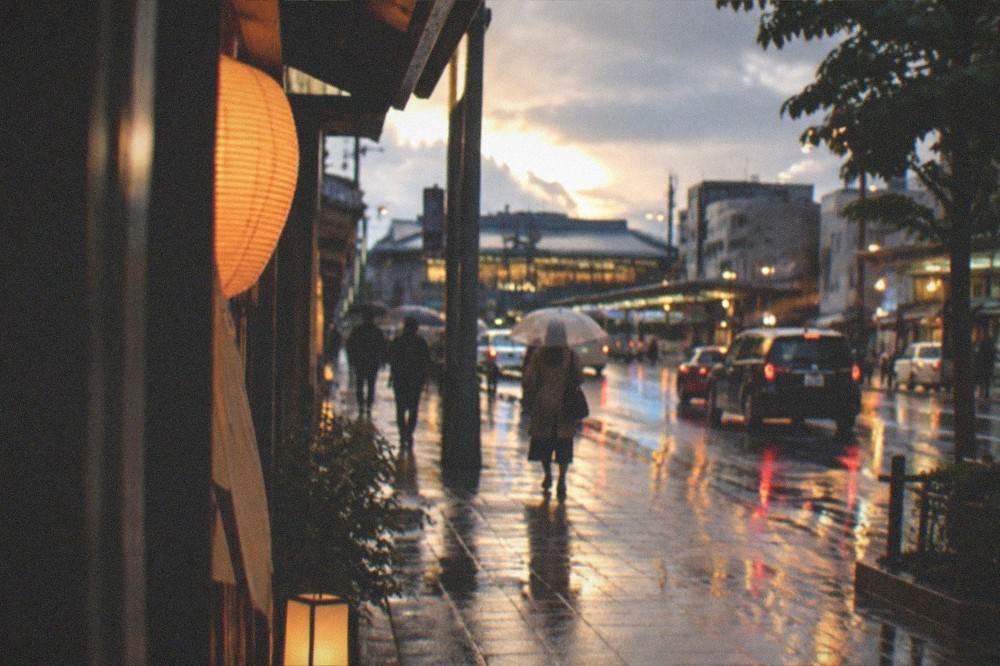
If the rain settles in for the whole afternoon, a tea ceremony is the most sheltered hour in the city, and the Jotokuji Temple ceremony runs about 70 minutes entirely indoors. For the evening, the izakaya crawl under Kawaramachi's arcades keeps the night dry without ending it early.
A cooking class is the other all-weather block worth naming: the small-group washoku bento class runs about two and a half hours indoors, and it turns a washed-out afternoon into dinner you made yourself.
Whichever way the forecast breaks, the verified fees and hours above will hold, and the rain, in a city built of tile and moss and covered corridors, was never really the problem.