Cycling And Bike Rental In Kyoto: Costs, Routes And Rules
Kyoto's flat grid and riverside paths make it one of Japan's easiest cities to cover on two wheels. This guide sets out what a day of bike rental costs, where the rental shops cluster, which routes earn their pedals, and the local rules that catch visitors out.
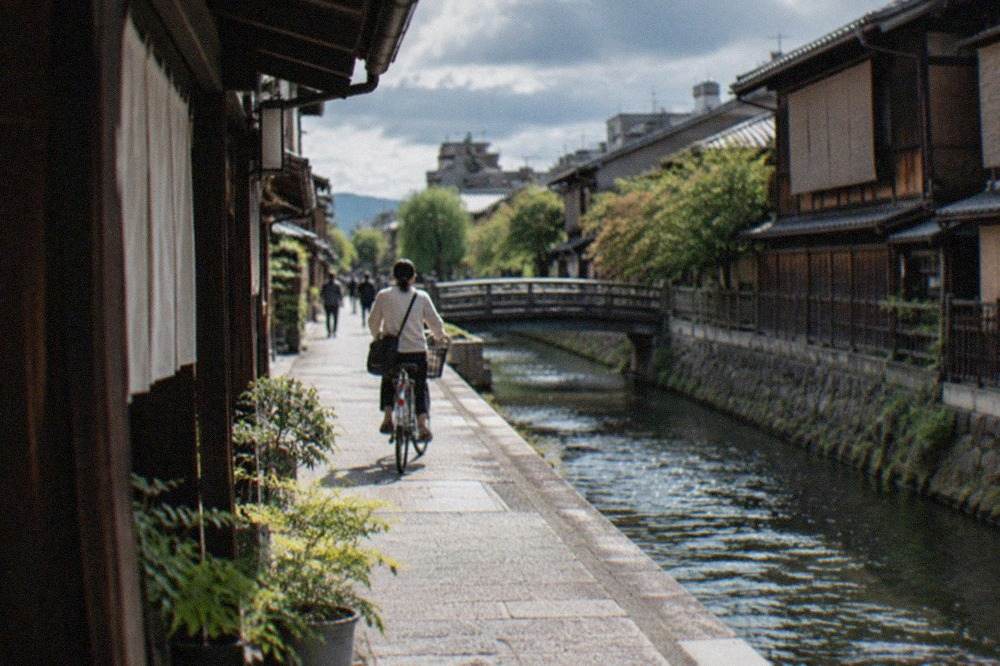
Short answer
There is no citywide standard bike rental price in Kyoto: each shop sets its own day rate for city bikes, e-bikes and children's seats, so the honest answer is to compare a few shops near your hotel or Kyoto Station and confirm the rate, deposit and return time at the counter before you ride off.
Kyoto recorded 62.79 million visitors in 2025, the city's own June 2026 survey release confirms, and a large share of them move between sights on buses that the same survey's dispersal campaigns are trying to relieve. Cycling is the quiet counter-argument. The city sits on a flat river basin, its main sights string along two shallow rivers and a canal system, and the grid of streets north of the station is forgiving to anyone with a map app and a bell. This guide covers what a day of bike rental in Kyoto costs, where to rent, which routes work, and the rules that genuinely differ from home.
How Much Does A Day Bike Rental Cost In Kyoto?
There is no single official day rate, because Kyoto has no citywide rental scheme and every shop prices its own fleet. A typical counter rents city bikes, e-bikes and sometimes children's seats as separate day rates, with a deposit and a return deadline that vary by shop. The honest planning number is therefore the shop's own rate card, checked on the day, rather than a figure copied from an older guide.
What you can pin down in advance is the shape of the bill. Most shops around Kyoto Station, Shijo and Arashiyama charge by the day, ask for a deposit or an ID hold, and set a return time in the late afternoon or evening. E-bikes cost more than standard city bikes. Some shops offer multi-day discounts, and a few around the station run early opening hours aimed at day-trippers.
The comparison that matters more than the rental rate itself is what cycling replaces. A single Kyoto City Bus ride is a flat 230 yen for adults and 120 yen for children aged 6 to 11, the city's transport bureau confirms, and subway fares run from 220 to 360 yen by zone. The Subway and Bus One-Day Pass costs 1,100 yen for adults and 550 yen for children. If a rental bike's day rate lands below the pass price and you plan three or more hops between sights, the bike pays for itself in fares alone, before counting the time saved waiting at bus stops. Our broader budget breakdown for a Kyoto trip puts transport in context.
There is also a timing dimension to the value. The bus-only one-day pass was abolished in 2024, with sales ending in September 2023 and the last day of use on 31 March 2024, so any guide still recommending a 700 yen bus pass is steering you toward a product that no longer exists. The current pass is the combined subway-and-bus product at 1,100 yen, which is a fair benchmark for what a day of independent movement costs in Kyoto, and a useful ceiling to measure a bike rental day rate against. Our guide to the bus and subway passes works through the arithmetic for different itineraries.
Is Kyoto A Good City For Cycling?
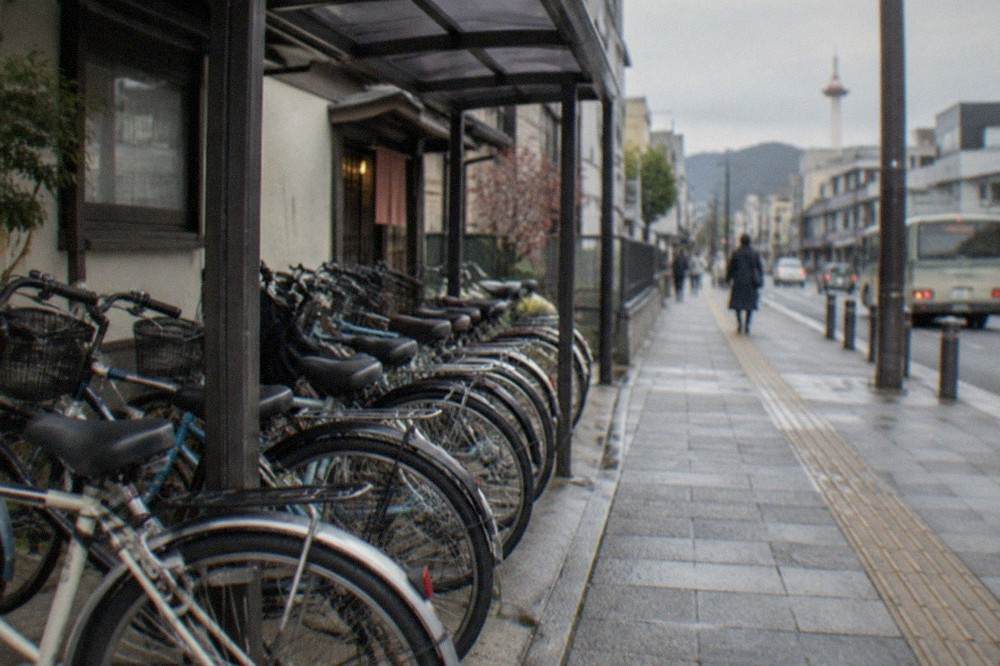
Yes, and for reasons that are structural rather than scenic. The city centre sits on flat ground between the Kamo and Takano rivers, the major sights sit on a grid of streets that rarely demands a hill, and the riverside paths let you cover the north-south length of the centre without sharing a lane with buses. The trade-offs are summer heat, crowded pavements near the big sights, and limited parking at the popular temples.
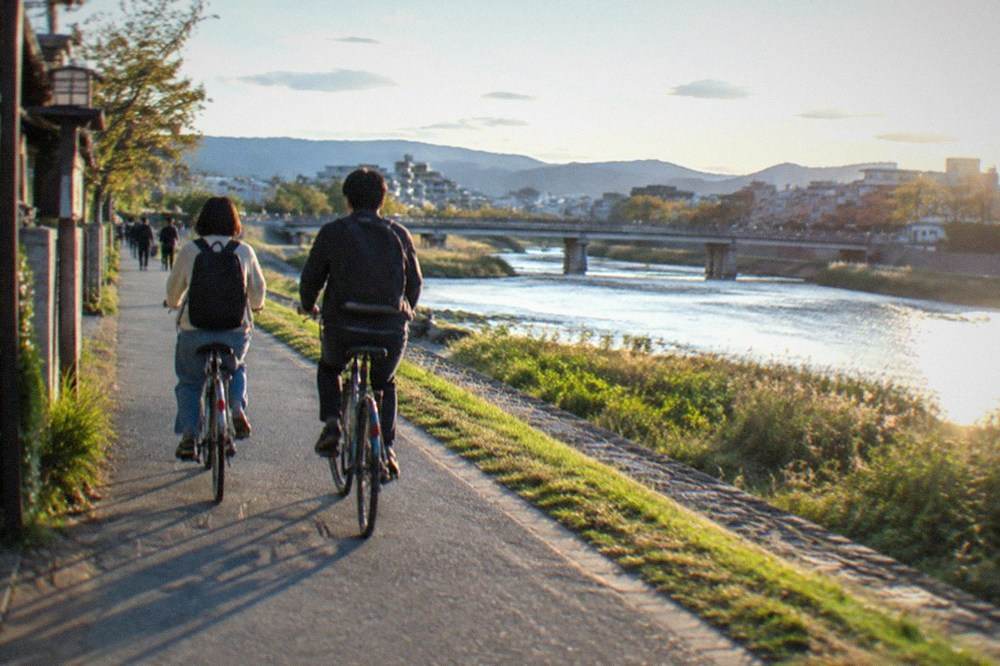
The geography is the argument. Central Kyoto between Kyoto Station and the Kamo River is dead flat, and the Philosopher's Path, the Kamo River banks and the Lake Biwa Canal route all run on dedicated or low-traffic paths. Distances that feel long on a bus map, such as Kyoto Station to the Nishiki Market area or Gion to Nanzen-ji, are short rides. The city's tourism association even promotes cycling as part of its dispersal campaigns, encouraging visitors to spread out by time and place rather than packing onto the same bus lines.
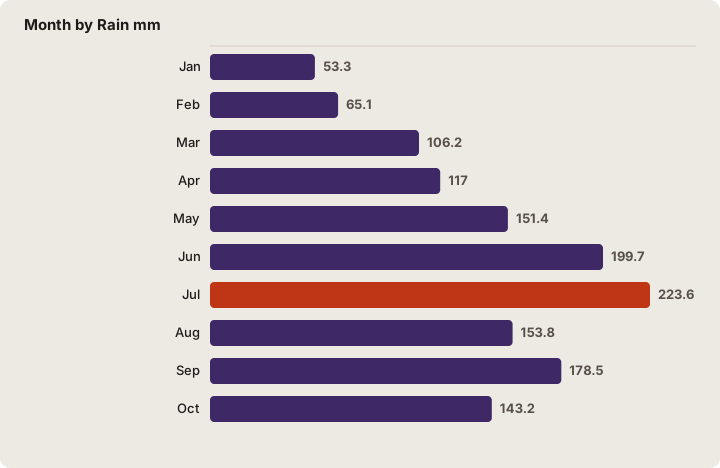
The honest counterweights: July and August are brutal on a bike, with mean daily highs of 32.0 C and 33.7 C respectively in the JMA 1991-2020 normals, and July is also the wettest month at 223.6 mm of rain. Pavements near Kiyomizu-dera and Gion are thick with pedestrians, where dismounting is the polite and usually mandatory move. And bicycle parking at major temples is limited, so a lockable object matters more than a lockable bike.
If you would rather not plan the navigation yourself, a guided ride bundles bike, route and lunch into one booking. The North Kyoto bike tour with lunch runs 5 to 6 hours from $105 per person and is rated 4.9 from 1,115 reviews, and it covers ground most first-time visitors never reach.
Where Can You Rent Bikes In Kyoto?
Rental shops cluster in four zones: around Kyoto Station's north and central exits, along the Shijo-Kawaramachi downtown strip, near the east end of the Arashiyama tourist area, and close to the major hotels north of Oike. Most hotels and ryokan also keep a small fleet or a partner shop, and several chains around the station take online reservations for standard bikes, e-bikes and child seats.
Kyoto Station is the practical default if you arrive by train, since the HARUKA express from Kansai Airport and the shinkansen both deposit you there, and the station's north side puts you on flat streets within a minute. Downtown Shijo suits anyone staying near the Kawaramachi nightlife strip, and it is the best base for a market-and-river loop. Arashiyama shops serve the west-side itineraries, though the bamboo grove and monkey park area is better treated as a destination you ride to than a place to ride around, given pedestrian density.
Two practical notes. First, luggage: riding with a suitcase is miserable and discouraged, so pair a rental day with the luggage storage and delivery options the city actively promotes to keep buses clear. Second, returns: many shops close early evening, so a full-day rate with a 17:00 or 18:00 return deadline shapes your evening plans. Ask about overnight or next-morning return options if you want to ride to dinner.
A third note applies to families. Child seats and children's bikes are common at the bigger shops but not universal, and the small counters near the station sometimes run out on spring weekends. If you are travelling with children under 13, who must wear helmets by law, reserve in advance rather than counting on walk-up availability, and check whether the shop's child seats are front-mounted or rear-mounted, since the front style suits toddlers and the rear suits older children.
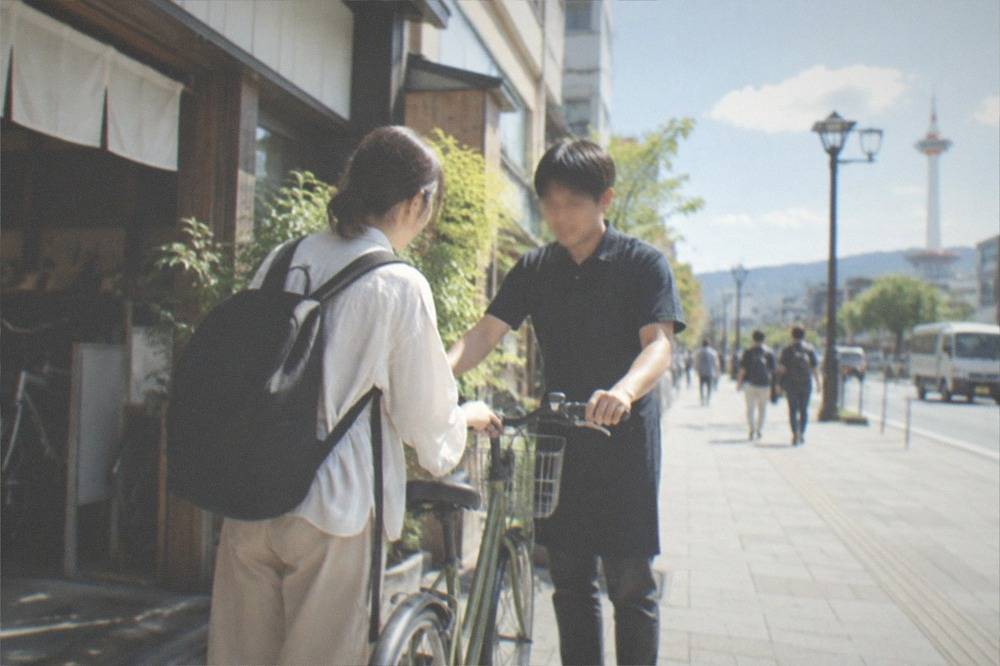
For visitors who prefer to leave the bike itself to someone else, an e-bike option covers more ground with less sweat: the Hidden Kyoto E-Biking tour runs 3 hours 45 minutes from $115 per person, rated 5 from 2,089 reviews.
What Are The Best Cycling Routes In Kyoto?
The classic first-day loop runs the Kamo River path north from Shijo, cuts east past Nanzen-ji and the Philosopher's Path to Ginkaku-ji, then returns through the back streets of Higashiyama to downtown, roughly a half-day at a relaxed pace. The second standard ride is the Lake Biwa Canal path east out of the city, and the third is the flat west-side run from downtown toward Arashiyama.
The east-side loop is the one most guides describe because it strings the highest density of sights along the least traffic. The canal path from Nanzen-ji toward Lake Biwa is a designated cycling route on gentle gradients, and it is the closest thing Kyoto has to a car-free ride of real length. The west-side run to Arashiyama passes Nijo-jo Castle, where the city's own castle site records that the 15th shogun, Tokugawa Yoshinobu, proclaimed the return of political authority to the Emperor in 1867, a worthwhile stop en route.
Costs along the way, using each venue's own published fees:
| Stop on the east loop | Adult admission | Notes |
|---|---|---|
| Nijo-jo Castle | 800 yen | 1,300 yen with Ninomaru-goten Palace |
| Nanzen-ji grounds | free | Hojo garden 600 yen, Sanmon gate 600 yen, separately |
| Ginkaku-ji | 1,000 yen | Doubled from 500 on 1 April 2026 |
| Kiyomizu-dera | 500 yen | Figure is single source, not printed by the temple |
| Fushimi Inari Taisha | free | The shrine publishes no fee anywhere on its site |
For the west-side run, the Arashiyama walking tour with monkeys and temple garden is a foot-based alternative once you arrive, since the bamboo grove itself is a walking path rather than a riding one, and Iwatayama Monkey Park charges 800 yen for ages 16 and over and 400 yen for ages 4 to 15, cash only, per the park's own site.
A note on pacing the east loop: the Philosopher's Path segment is narrow and pedestrian-heavy in cherry season, when the JMA observatory's blossoms draw the year's densest crowds, so ride it before 9:00 or after 16:00 if you are visiting between late March and mid-April. The back streets of Higashiyama south of Gion are calmer, but they narrow to lane width around Ninenzaka and Sannenzaka, where walking is the only polite option. More of these guides are collected on Kyoto Travel Guide.
When Is The Best Season To Cycle In Kyoto?
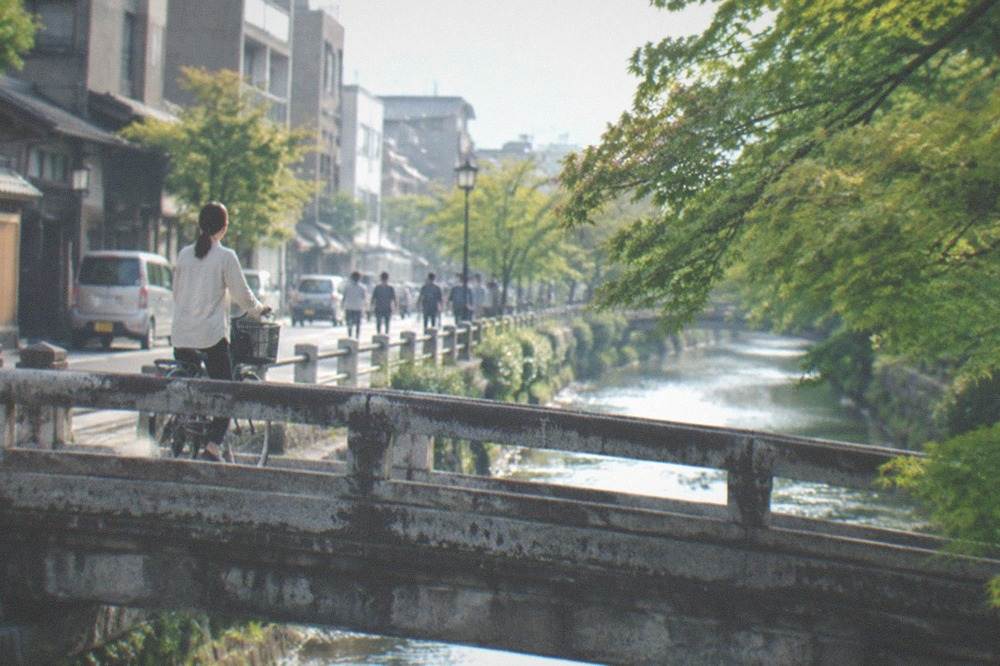
March to May and October to early December are the best cycling windows: dry, mild and outside the summer heat. April is the standout at a 20.1 C mean daily high and 117 mm of rain, while October offers 23.4 C and 143.2 mm. Avoid mid-July and August if heat is a concern, since the mean daily highs run 32.0 C and 33.7 C, and July is the wettest month of the year.
The full picture from the JMA 1991-2020 normals for Kyoto station:
| Month | Rain mm | Mean daily max C | Cycling verdict |
|---|---|---|---|
| Jan | 53.3 | 9.1 | Cold but dry and uncrowded |
| Feb | 65.1 | 10.0 | Same, with the fewest daylight hours |
| Mar | 106.2 | 14.1 | Good, pre-blossom crowds |
| Apr | 117.0 | 20.1 | Excellent, but peak crowds |
| May | 151.4 | 25.1 | Warm, greener, fewer visitors |
| Jun | 199.7 | 28.1 | Rainy season, humid |
| Jul | 223.6 | 32.0 | Wettest month plus heat, the worst mix |
| Aug | 153.8 | 33.7 | Hottest month, ride early morning only |
| Sep | 178.5 | 29.2 | Humid, typhoon tail risk |
| Oct | 143.2 | 23.4 | Excellent, foliage building |
| Nov | 73.9 | 17.3 | Prime foliage month, crowds at peaks |
| Dec | 57.3 | 11.6 | Cold, dry, quiet |
Three of Kyoto's six hottest days on record fell in the summers of 2024, 2025 and 2026, per the JMA station records, so treat the summer rows seriously: if you ride in July or August, do it before 9:00 and finish by noon. Cherry blossom timing is also shifting earlier than the guidebook norm: the JMA observatory recorded flowering on 23 March 2026 against a 1991-2020 normal of 26 March, and full bloom on 30 March against a normal of 4 April. For the maple season, the JMA's official red-leaf marker for its specimen tree is 5 December, later than the mid-November peak most guides claim for Arashiyama, so a late-November ride catches strong colour with slightly thinner crowds. Our month-by-month breakdown covers the trade-offs in more depth.
What Are Kyoto's Rules For Cyclists?
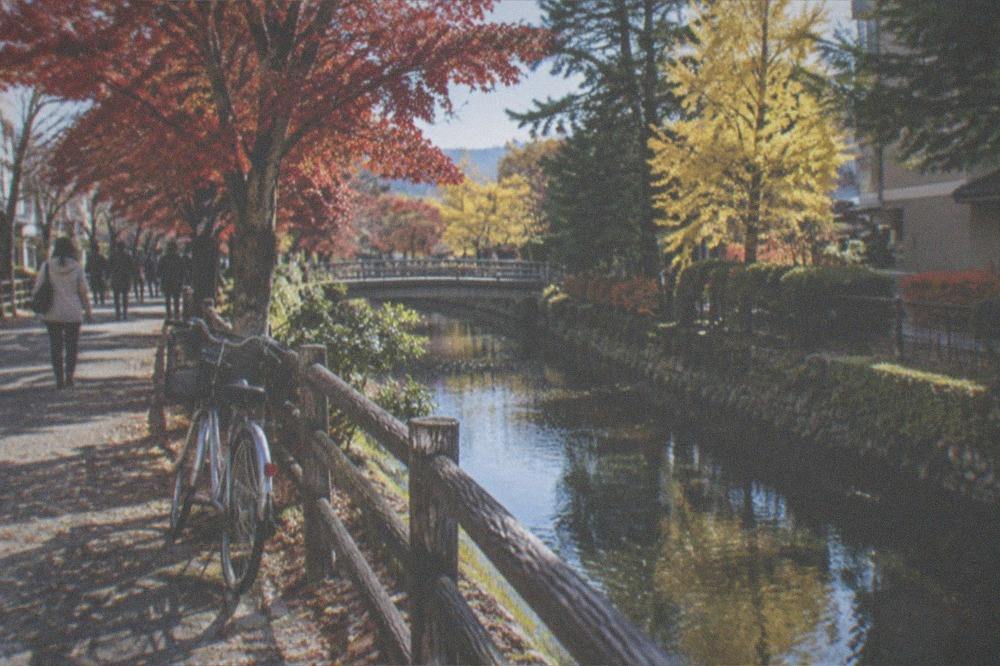
Ride on the road where one exists, keep to the left, and use your bell early and often. Helmets are recommended for all ages but only compulsory for children under 13 in Japan. Riding on the pavement is tolerated in practice in designated zones, but dismount in the crowded lanes of Gion, Ninenzaka and the Arashiyama bamboo path, and never ride through a shrine precinct or temple grounds.
The specifics that catch visitors out are local rather than national. In Gion, the city's tourism association publishes conduct guidelines that prohibit touching, chasing or photographing geiko and maiko without permission and forbid entering private property, and signs posted by the district council on the private alleys off Hanamikoji threaten a 10,000 yen penalty for unauthorised entry or photography, so walk those lanes rather than ride them. Kamigamo Shrine requires advance permission for photography of rites and any drone flight. At Nishiki Market, the market's own site asks visitors not to eat while walking, which also rules out riding through with food.
Parking is the other enforcement point. Abandoned bikes near stations get impounded, and the areas around Kyoto Station and Shijo have designated bicycle parking, some of it paid. Ask your rental shop where they recommend parking near your route, since they know which temple lots tolerate visitors' bikes and which do not. And on the transport side, remember that large luggage can be refused on crowded city buses, another reason cycling pairs well with the city's hands-free luggage delivery services.
A quick reference for the conduct rules that matter most to a cyclist:
| Situation | The rule | Source |
|---|---|---|
| Riding with children under 13 | Helmet compulsory | National road traffic law |
| Gion private alleys | No entry or photography, 10,000 yen penalty on signage | Gion South Side district council signs |
| Geiko and maiko | No touching, chasing or photos without permission | Kyoto City Tourism Association guidelines |
| Nishiki Market | Do not eat while walking | Market's own site |
| Crowded heritage lanes | Dismount and walk | Standard practice, enforced socially |
| Bus luggage | Large items may be refused by drivers | City policy |
Bike Rental Or A Guided Bike Tour In Kyoto?
Rent if you know where you want to go, are comfortable reading a map app on the move, and want the cheapest day out. Book a guided bike tour if you want the route, the bike, the lunch and the history handled for you, if you are travelling with children, or if your time in Kyoto is short enough that navigation errors cost more than the tour price. The guided options run from about $105 to $115 per person for a half to full day.
The comparison, from the current listings:
| Option | From | Rating | Duration |
|---|---|---|---|
| Bike Tour Exploring North Kyoto plus Lunch | $105 per person | 4.9 from 1,115 reviews | 5 to 6 hours |
| Hidden Kyoto E-Biking tour | $115 per person | 5 from 2,089 reviews | 3 hours 45 minutes |
| Self-guided rental, one day | Shop's own day rate | n/a | Your choice |
The self-guided floor is genuinely cheap, and the freedom is real: a rental day lets you linger at Kinkaku-ji for its 500 yen admission, then double back for a second pass along the Kamo River at dusk. But a guided tour earns its margin on the first visit, because the guide handles the temple timing, knows which lanes to walk, and can explain what you are riding past. The North Kyoto bike tour in particular covers districts that most first-timers never reach on a rental, and the e-bike version flattens the few slopes the city does have.
There is a middle path worth naming, too: rent for the days you want full freedom and book a single guided ride for the one day you want depth. Many visitors do exactly this, taking a self-guided day along the river paths and then a guided morning through the northern districts, where the storytelling is the product as much as the transport. Whichever mix you choose, book the guided portion ahead in spring and autumn, when the popular rides fill first.
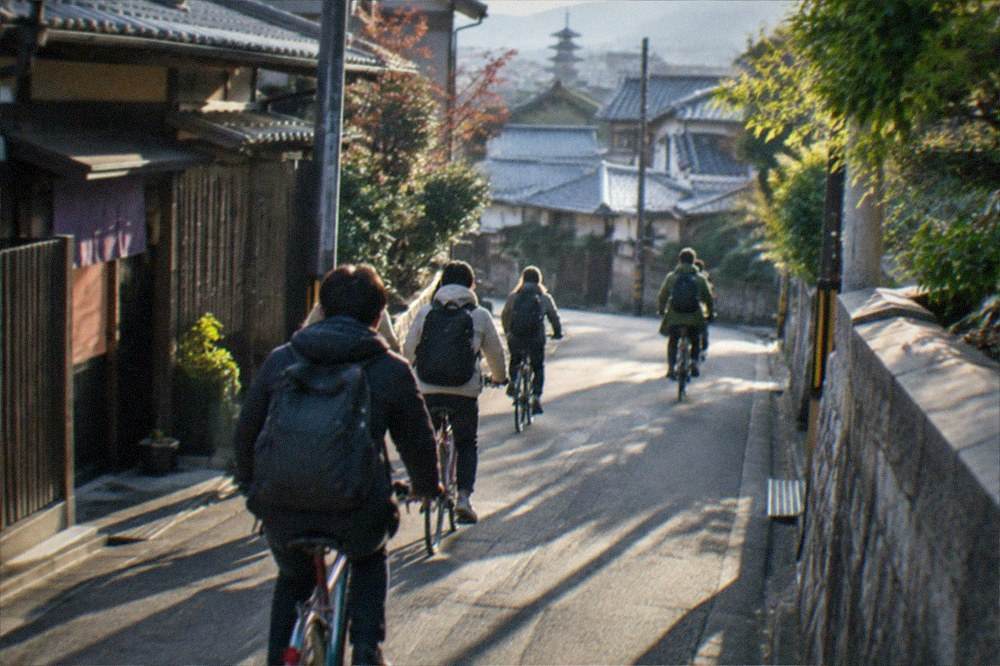
For everything else a Kyoto visit needs beyond two wheels, our main things-to-do roundup is the place to start, and Kyoto Travel Guide covers the transport passes, the temple fees and the seasonal timing in depth.
Common Questions About Bike Rental In Kyoto
How Much Does A Day Bike Rental Cost In Kyoto?
There is no citywide rate. Each shop sets its own day price for city bikes, e-bikes and child seats, with its own deposit and return deadline, so compare two or three shops near your accommodation and confirm the terms at the counter before riding off.
Do I Need A Helmet To Cycle In Kyoto?
Helmets are compulsory for children under 13 and recommended for everyone else. Most rental shops provide helmets free or for a small charge, and taking one is sensible given the shared pavements.
Can I Cycle On The Pavement In Kyoto?
Riding on the pavement is tolerated in designated zones, but the rule of thumb is road where a road exists, left side, and dismount in crowded heritage lanes such as Gion's alleys, Ninenzaka and the Arashiyama bamboo path.
Is Kyoto Flat Enough For A Casual Cyclist?
The central basin between the station and the northern temples is essentially flat, and the Kamo River and canal paths add traffic-free riding. The few slopes sit at the edges, such as the approach toward Kurama in the north, and an e-bike removes even those.
Where Should I Not Ride In Kyoto?
Walk the private alleys off Hanamikoji in Gion, where council signage threatens a 10,000 yen penalty for unauthorised entry or photography, and dismount through Ninenzaka, Sannenzaka and the bamboo grove. Shrine and temple grounds are walking spaces.
Can I Take A Rental Bike On Kyoto's Buses Or Subway?
Practically, no. Buses may refuse large items outright and a bicycle does not fit the subway's rules for everyday use, so plan routes that start and finish at the rental shop, or ask the shop about one-way options.
Cycling will not fix every Kyoto itinerary, but for the flat, sight-dense centre it beats waiting for a bus, and in April or October it is simply the best way to see the city. Pick the shop with the terms that suit your day, ride the river paths early, and walk the lanes that ask to be walked.