Is The Nanzen-ji Grounds Free, And What Do The Sanmon Gate And Hojo Cost?
The temple grounds at Nanzen-ji cost nothing to enter, while the Sanmon gate and the Hojo garden each charge 600 yen for a general-admission adult, ticketed separately. Here is the full price grid, the seasonal hours, and how the temple stacks up against Kyoto's other head temples.
Short answer
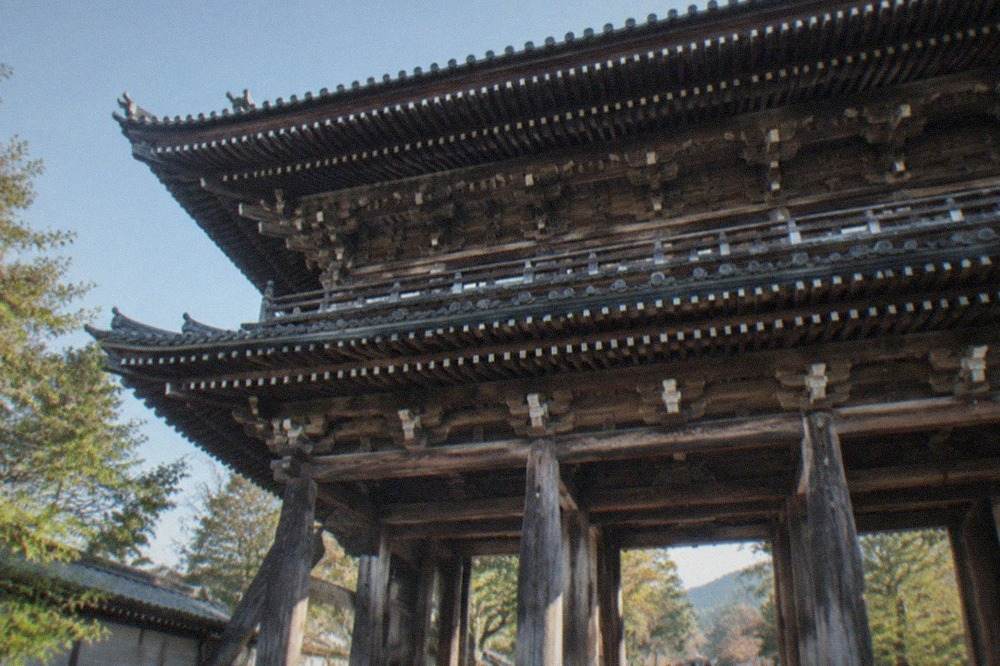
Yes, the Nanzen-ji grounds are free to walk, including the famous brick aqueduct. The Sanmon gate costs 600 yen general, 500 high school, 400 elementary and junior high. The Hojo garden costs the same, 600 / 500 / 400, ticketed separately. Nanzen-in, a third area, is 500 / 450 / 350.
Nanzen-ji sits at the foot of Kyoto's eastern hills where the city gives way to the Higashiyama range, and it works differently from almost every other major temple in town. The grounds are a public space you can walk into without paying a yen, and the temple charges only for the parts you choose to enter: the great Sanmon gate, the Hojo garden, and the small Nanzen-in precinct. That structure makes it one of the most flexible temple visits in Kyoto, because a budget traveller and a garden enthusiast can spend an hour each in the same place and pay wildly different amounts. The temple's own visit page prints every figure, and this guide uses those numbers, plus the seasonal hours and the comparison with Kyoto's other head temples, so you can plan the stop properly.
Is The Nanzen-ji Grounds Free, And What Do The Sanmon Gate And Hojo Cost?
Yes, the Nanzen-ji grounds are free to enter, and that includes the brick aqueduct, the outer paths and the approach to the Sanmon gate. Inside the grounds, two areas charge separately: the Sanmon gate at 600 yen general, 500 high school, 400 elementary and junior high, and the Hojo garden at the same 600 / 500 / 400. A third area, Nanzen-in, charges 500 / 450 / 350.
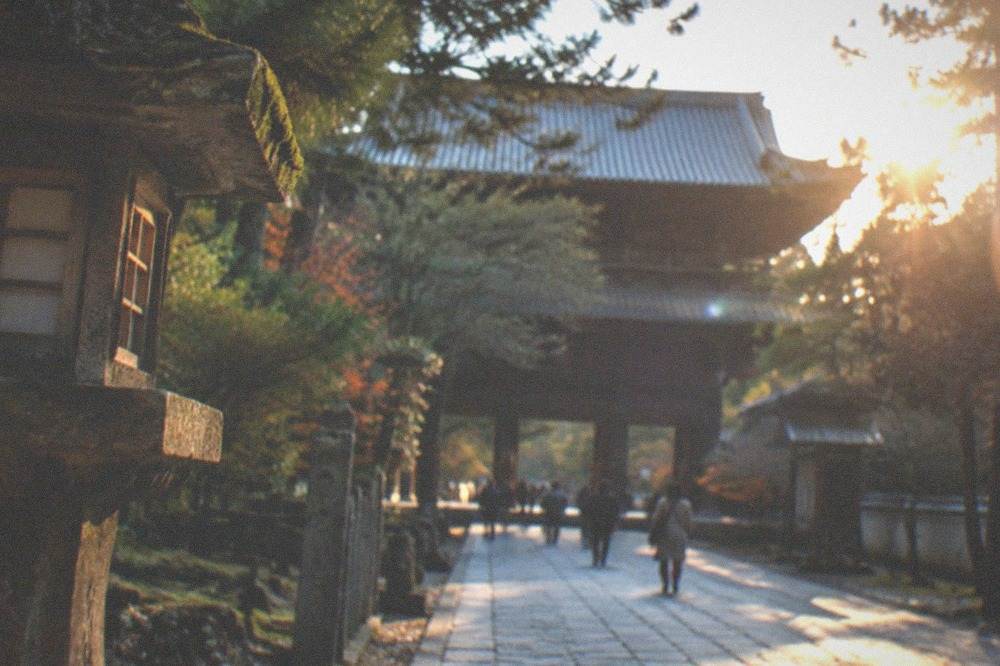
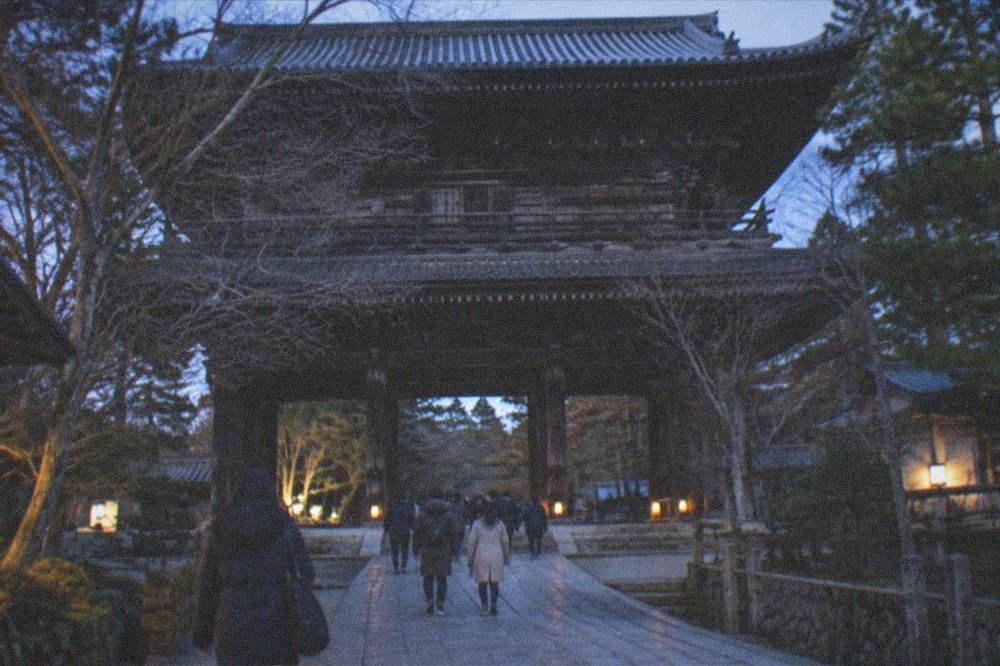
The free part is larger than most visitors expect. You can walk the whole outer precinct, stand under the Sanmon and photograph it, follow the tree-lined canal path to the Lake Biwa Canal aqueduct with its arched brick spans, and climb partway into the wooded hillside without ever showing a ticket. What you pay for is access up into the gate's upper storey, the Hojo dry-landscape garden and its buildings, and the Nanzen-in sub-precinct with its pond garden.
| Area | General | High school | Elementary and junior high | Notes |
|---|---|---|---|---|
| Grounds, aqueduct, outer paths | Free | Free | Free | Open whenever the precinct is |
| Sanmon gate | 600 yen | 500 yen | 400 yen | Upper storey access |
| Hojo garden and buildings | 600 yen | 500 yen | 400 yen | Dry landscape garden |
| Nanzen-in | 500 yen | 450 yen | 350 yen | Pond garden, separate precinct |
| Group rates (30 or more) | 500 / 450 / 350 | 450 / 350 / 300 | 350 / 300 / 300 | Discounted per area |
Those group rates matter if you are travelling with a class or an organised party of 30 or more, because the per-area discount applies across all three ticketed zones. A disability handbook holder plus one companion enter free, a policy the temple shares with several of its peers in the city. The temple's own visit page is the source for all of these figures, and it is worth a read before you go, because the fee structure at Kyoto temples has shifted twice recently: Ginkaku-ji doubled its adult fee to 1,000 yen from 1 April 2026, and Tofuku-ji revises its fees on 1 November 2026. A guide written two years ago is already wrong about two of Nanzen-ji's neighbours.
How Much Time Do You Need At Nanzen-ji In Kyoto?
A walk through the free grounds, the aqueduct and the approach to the Sanmon takes about 45 minutes at a relaxed pace. Adding the Sanmon gate and the Hojo garden brings the visit to about 90 minutes, and adding Nanzen-in pushes it past two hours. Most visitors budget between one and two hours and see the two main ticketed areas.
The variable is the hillside. The outer grounds run from the processional entrance at the bottom up a long stone-paved approach to the Sanmon, and the aqueduct sits off to the side along the canal, so the free circuit involves real walking on inclined paths. The Hojo garden is a contemplative space rather than a long one, and the Sanmon's upper storey is a single room with a view, so neither ticketed area adds much distance, only time spent looking.
If you are combining Nanzen-ji with the Philosopher's Path, which begins a short walk north along the canal, the temple is the natural southern anchor of that route. Walked end to end, temple to Ginkaku-ji, the path plus temple visit fills a morning comfortably. The Philosopher's Path guide covers the full route and where to break it.
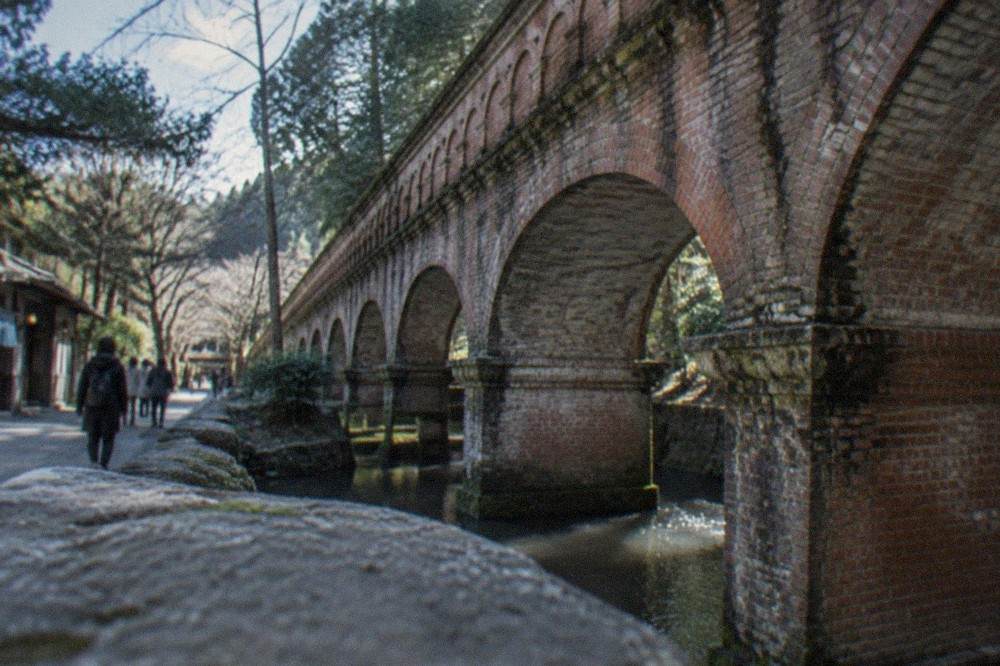
The aqueduct deserves more of your time than its usual role as a photo stop suggests. The brick arches carry the Lake Biwa Canal through the temple grounds, a Meiji-era engineering work that still moves water, and the path beside it is one of the quieter corners of the precinct even when the front approach is busy. Because it is outside the ticketed zones, it is also the best free thing at the temple.
What Are Nanzen-ji's Opening Hours In Kyoto?
Nanzen-ji opens at 8:40 every day and closes at 17:00 from 1 March to 30 November, with reception ending 20 minutes before closing. In winter, 1 December to 28 February, it closes at 16:30. There are no general visits from 28 to 31 December. The free outer grounds follow the same rhythm as the ticketed areas.
The temple's own visit page prints those hours, and the winter shortening is the detail that catches people out, because a midwinter itinerary built around a 17:00 close will leave you standing at a shut gate. The temple does open at New Year, so the 28 to 31 December closure is a fixed year-end gap rather than an extended holiday shutdown.
| Period | Hours | Last reception |
|---|---|---|
| 1 March to 30 November | 8:40-17:00 | 16:40 |
| 1 December to 28 February | 8:40-16:30 | 16:10 |
| 28 to 31 December | No general visits | none |
Morning is the better half of the day here, and not only for the light on the Sanmon. The temple sits inside the Okazaki museum district, and the whole eastern half of the city, from Heian Shrine through the galleries to Ginkaku-ji, absorbs tour groups from late morning onward. An 8:40 arrival puts you ahead of that wave with time to spare.
Which Sub-Temples And Gardens Are Worth Paying For At Nanzen-ji?
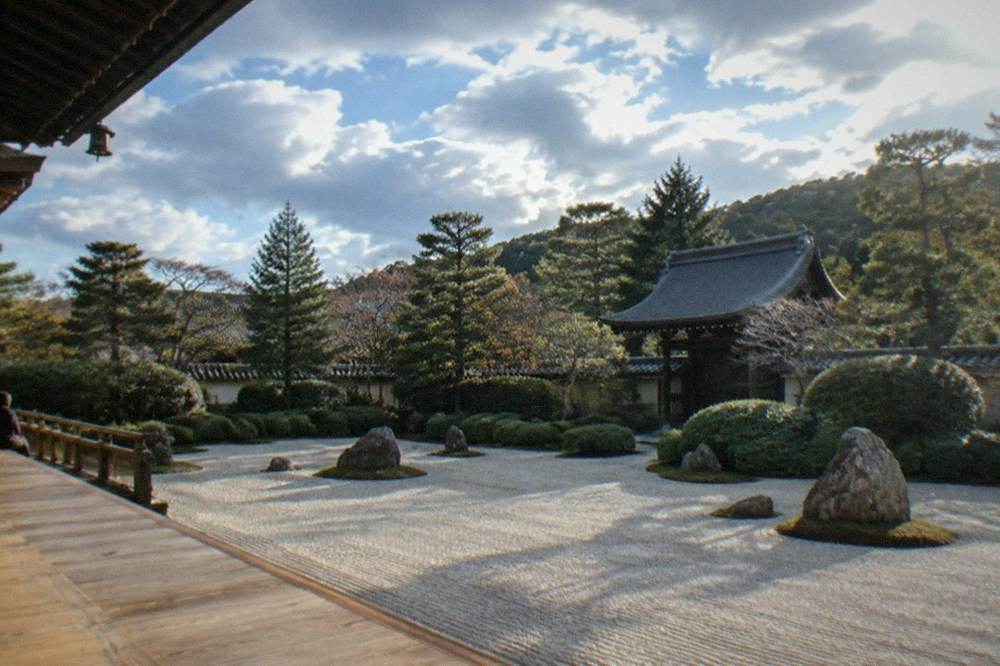
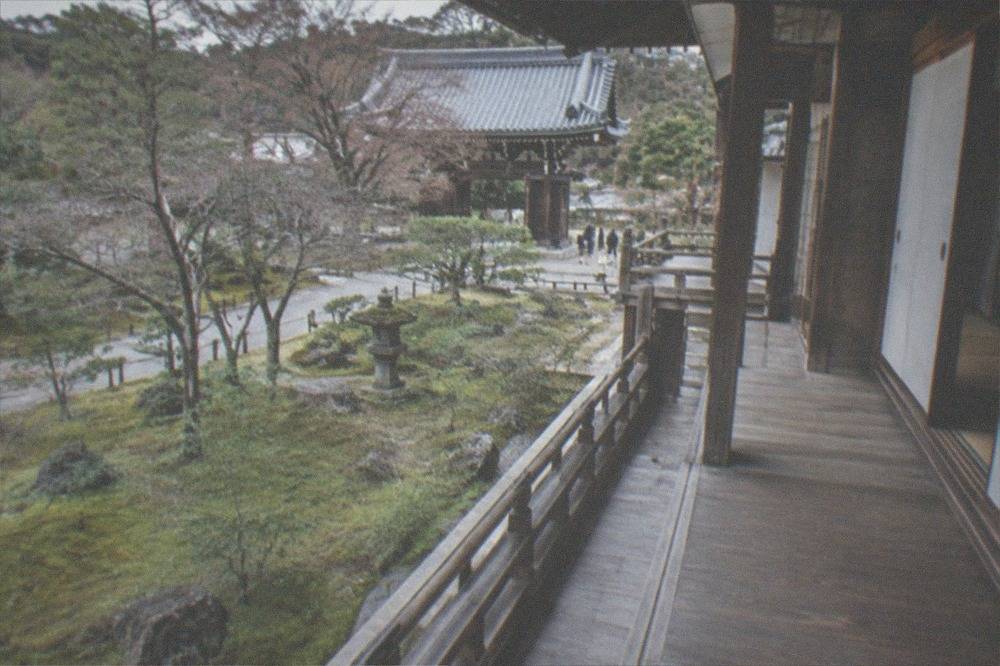
The Hojo garden is the strongest paid ticket at Nanzen-ji, a raked-gravel dry landscape attached to the head priest's former residence, and at 600 yen it is priced level with Ryoan-ji's famous rock garden. The Sanmon's upper storey is the second choice, worth it for the view over the roofline. Nanzen-in, at 500 yen, suits visitors with extra time and an interest in pond gardens.
Each of the three is ticketed separately, so you build your own visit. The Hojo garden is the one most comparable to the canonical Zen gardens of Kyoto, and if your frame of reference is Ryoan-ji or the gardens covered in the Kyoto zen gardens guide, the Hojo holds its own: a horizontal composition of gravel, clipped shrubs and stone, viewed from a veranda rather than walked through.
The Sanmon is a different proposition. The gate itself is free to stand beneath and photograph; the ticket buys the stairs to the upper level, where the view opens over the temple roofs toward the city. It is a short experience, ten or fifteen minutes, and the price of a full adult ticket for it is the reason to think about what you want from the visit before paying for everything.
Nanzen-in, the smallest of the three, is a pond garden at the temple's eastern edge. At 500 yen general it is the cheapest ticket on the site, and it is the one to drop first if time is short.
| Ticket | Best for | Time needed | Verdict for a first visit |
|---|---|---|---|
| Hojo garden | Zen garden, architecture | 30-40 min | Pay for it |
| Sanmon gate | View, the gate's scale | 10-15 min | Pay if unhurried |
| Nanzen-in | Pond garden, quiet corner | 20-30 min | Optional |
| Grounds and aqueduct | Free walking, photos | 45-60 min | Always |
How Does Nanzen-ji Compare With Kyoto's Other Big Zen Temples?
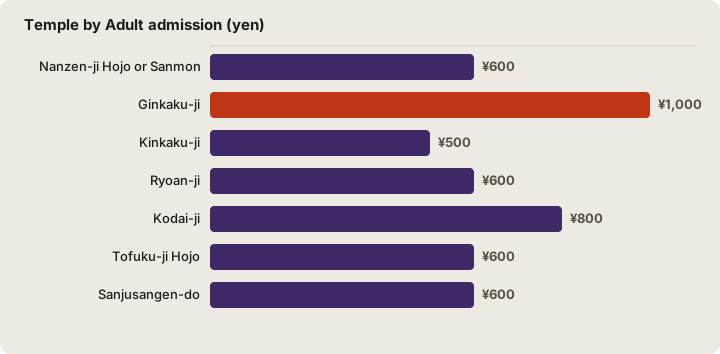
Nanzen-ji is one of the cheapest major temple visits in Kyoto: 600 yen for its headline garden, against 1,000 yen at Ginkaku-ji after its April 2026 doubling, 800 at Kodai-ji, and 600 at Ryoan-ji. Only the free grounds of Fushimi Inari Taisha and the Kyoto Imperial Palace undercut it outright, and among paid temples only Kinkaku-ji and Kiyomizu-dera at 500 yen come in lower.
That comparison is worth making carefully, because the fee landscape shifted under everyone's feet in 2026. Ginkaku-ji, the Silver Pavilion at the top of the Philosopher's Path, doubled its adult admission from 500 to 1,000 yen effective 1 April 2026, the temple's first change in 32 years. Tofuku-ji, south of the station, revises its fees on 1 November 2026, with the Hojo garden rising from 500 to 600 yen and a new 1,000 yen combined ticket. Any guide quoting 2024 prices is wrong about both.
| Temple | Adult admission | Child / school | Notes |
|---|---|---|---|
| Nanzen-ji Hojo or Sanmon | 600 yen | 500 / 400 | Each area ticketed separately |
| Ginkaku-ji | 1,000 yen | 500 | From 1 April 2026, doubled |
| Kinkaku-ji | 500 yen | 300 school | Fee set 1 April 2023 |
| Ryoan-ji | 600 yen | 500 / 300 | Rock garden |
| Kodai-ji | 800 yen | 400 | 1,200 combined with Entoku-in |
| Tofuku-ji Hojo | 600 yen from 1 Nov 2026 | 300 | Was 500 |
| Sanjusangen-do | 600 yen | 400 / 300 | 1,001 Kannon statues |
What Nanzen-ji gives you that none of those do is the free layer. At Kinkaku-ji or Kiyomizu-dera the fee is the gate, and there is no meaningful visit without it. At Nanzen-ji the grounds, the approach and the aqueduct are genuinely free, so the temple works as a budget stop and a paid one at the same time. The Kyoto on a budget guide goes deeper on which of the city's famous sites cost nothing and which do not.
Scale is the other difference. Nanzen-ji is a head temple, the senior institution of its line of Rinzai Zen, and its precinct is a whole neighbourhood of sub-temples, wooded hills and canal paths rather than a single focused compound. That is closer to Daitoku-ji in the north of the city than to the compact walled gardens elsewhere.
If the temple leaves you wanting more of Kyoto's religious landscape, the guided hikes into the Kurama and Kibune mountains north of the city pair a temple circuit with forest trails and a hot spring stop, a different register from the flat garden visits of the eastern hills.
How Do You Get To Nanzen-ji And Combine It With The Philosopher's Path?
The nearest subway station is Keage on the Tozai Line, about a 10 minute walk from the temple's entrance, and the temple is also the southern starting point of the Philosopher's Path walk to Ginkaku-ji. A standard adult subway fare in Kyoto runs 220 to 360 yen depending on zone, and the city bus flat fare is 230 yen.
Keage station is the practical answer for most visitors because it drops you at the bottom of the approach with no climbing through residential streets. The Tozai Line connects directly to Kyoto Station via Karasuma, so the trip from the station area is one transfer and a short walk. Bus routes serve the Okazaki district too, and the tourist express buses that run from Kyoto Station toward the Kiyomizu side, the EX100 and EX101, charge a flat 500 yen adult fare and are covered by the Subway and Bus One-Day Pass, which costs 1,100 yen.
That pass is the one to know about, because the old bus-only one-day pass no longer exists; sales ended in September 2023 and the last day of use was 31 March 2024. The current product combines subway and bus, and if you are moving between Nanzen-ji, downtown and the station in one day it usually pays for itself.
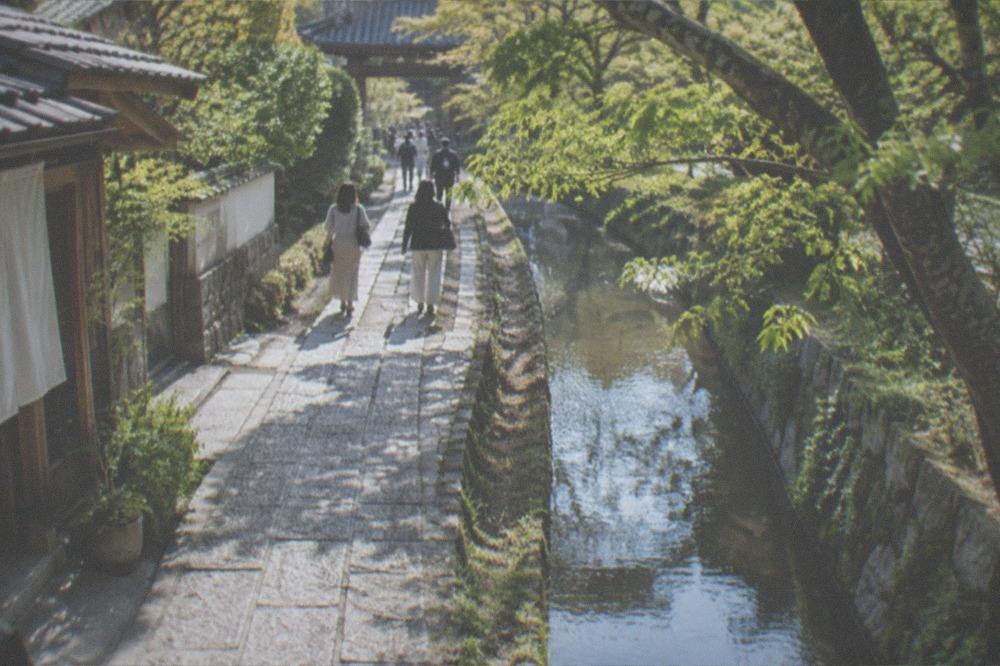
The classic pairing is Nanzen-ji plus the Philosopher's Path. The path follows the canal north from the temple district toward Ginkaku-ji, roughly a 30 minute walk with stops, and it passes Eikan-do, one of the city's celebrated autumn-colour temples, along the way. In reverse, starting at Ginkaku-ji and finishing at Nanzen-ji leaves you at the subway for the ride back, which is the better logistics.
For a full eastern-Kyoto day, the sequence that works is Nanzen-ji at opening, the aqueduct, then the path north with Eikan-do, finishing at Ginkaku-ji before its afternoon crowds. The Okazaki area guide covers the museum district between the temple and Heian Shrine if you want to fold the galleries in.
What Do The Visitor Numbers Say About Nanzen-ji's Crowds?
Kyoto recorded 62.79 million visitors in 2025, a record, with 12.68 million of them foreign, according to the city's own tourism survey released in June 2026. Nanzen-ji absorbs its share of that, but its free grounds and multi-entrance layout spread people out more than single-gate temples manage, and the city's crowd comfort forecast covers the Okazaki area in real time.
The survey numbers are the context for every Kyoto itinerary now. Day visitors grew faster than overnight guests, 46.20 million against 16.59 million staying the night, which means the daytime pressure on the eastern temple corridor is concentrated between mid-morning and mid-afternoon. Nanzen-ji's layout helps: the approach, the aqueduct and the hillside paths give the crowd somewhere to go that is not a queue.
The city runs a Tourism Comfort Forecast that grades crowd levels for spots and areas by time slot, built from location data, weather and day of the week, and it is the tool to check the night before. The shrine at Fushimi Inari links to it from its own site, and the temple district here is covered by the same system. Early morning remains the reliable answer: an 8:40 arrival puts you inside the grounds before the tour buses from the station complete their run.
What Is The Best Season For Nanzen-ji In Kyoto?
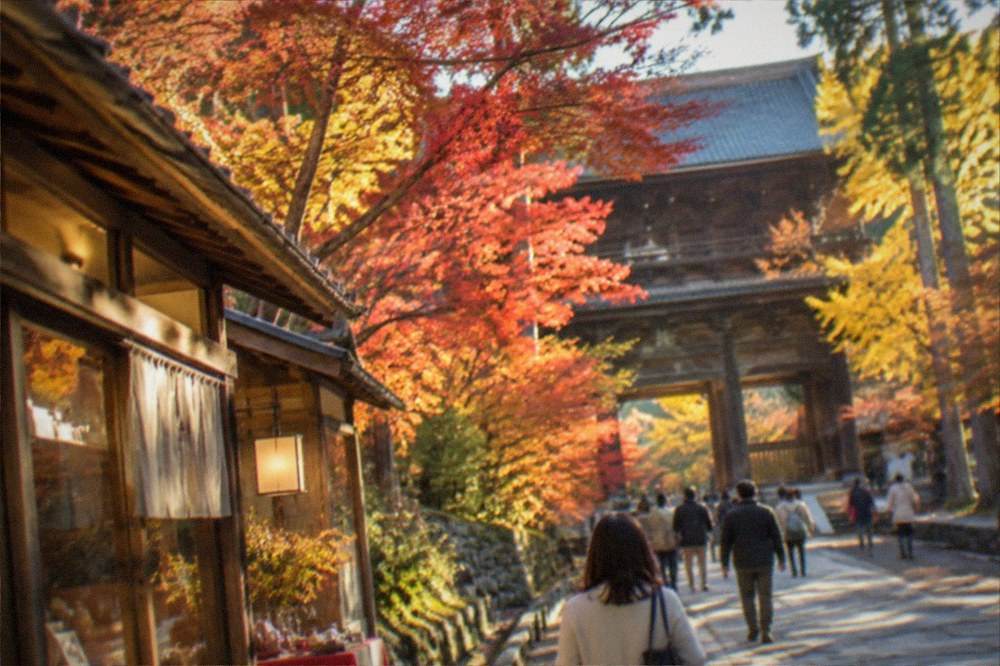
Autumn is the strongest season at Nanzen-ji, with the JMA normals putting Kyoto's maple red-leaf marker at 5 December and the 2025 observation on 10 December, later than most guides claim. Spring runs late March to early April for cherry blossom, with the 2026 full-bloom date recorded as 30 March. Summer is hot and humid, with a July mean of 27.3 C, and winter is cold, dry and quiet.
The phenology figures come from the Japan Meteorological Agency's Kyoto observatory, which tracks the same specimen trees year on year, and they are the honest baseline for timing a visit. The 1991-2020 normal for maple red leaves is 5 December, and the 2025 observation ran five days later at 10 December, which means the late-November crowds that fill Eikan-do and the eastern temples are often a week or more ahead of the actual colour peak. The JMA date is the observatory's specimen turning rather than a district-wide peak, so treat it as the official marker rather than a promise.
| Season | JMA marker | What it means at Nanzen-ji |
|---|---|---|
| Cherry full bloom | Normal 4 April; 2026 was 30 March | Canal-side trees along the approach |
| Ginkgo yellow | Normal 24 November | Golden colour on the hillside paths |
| Maple red leaves | Normal 5 December; 2025 was 10 December | Peak colour later than guidebook weeks |
| Wettest month | July, 223.6 mm | Rain, heat, fewer visitors |
| Coldest month | January, mean 4.8 C | Quiet grounds, clear views |
The summer figures deserve respect. July is Kyoto's wettest month at 223.6 mm against June's 199.7 mm, a reversal of the usual assumption, and three of the city's six hottest days on record fell in the summers of 2024, 2025 and 2026. The hillside paths at Nanzen-ji offer shade that the exposed approaches at other temples do not, but an early start is still the summer plan.
Winter is the sleeper season. The grounds are free, the crowds thin, and the temple's 16:30 winter close still leaves a full day of usable light. The Kyoto in winter guide makes the case for the whole city.
Whichever season you pick, the same logic holds: the free grounds cost you nothing but time, the two 600 yen tickets buy the gate view and the garden, and the rest of eastern Kyoto is a canal walk away. If you would rather have a guide handle the day, the options below cover a mountain hike, a museum ticket and a free city walk.
The free walking tour in that list runs on GuruWalk with a local guru leading a tip-based route through central Kyoto, and it pairs well with a morning at Nanzen-ji because the temple's own grounds already cost nothing.
Common Questions About Nanzen-ji
Is The Nanzen-ji Grounds Free, And What Do The Sanmon Gate And Hojo Cost?
The grounds are free, including the aqueduct and the outer paths. The Sanmon gate charges 600 yen general, 500 high school, 400 elementary and junior high. The Hojo garden charges the same 600 / 500 / 400, and Nanzen-in charges 500 / 450 / 350. Each area is ticketed separately.
Can You Enter Nanzen-ji Without Paying?
Yes. The outer grounds, the approach to the Sanmon and the brick aqueduct are free to walk. Only the gate's upper storey, the Hojo garden and Nanzen-in require tickets.
How Long Does a Visit To Nanzen-ji Take?
About 45 minutes for the free grounds, around 90 minutes adding the Sanmon and the Hojo garden, and over two hours if you include Nanzen-in. Most visitors spend between one and two hours.
When Is Nanzen-ji Open?
From 8:40 daily, closing at 17:00 from 1 March to 30 November and 16:30 in winter, with reception ending 20 minutes before closing. There are no general visits from 28 to 31 December.
Is Nanzen-ji Worth It Compared With Other Kyoto Temples?
At 600 yen for its headline garden it is priced level with Ryoan-ji and below Ginkaku-ji's 1,000 yen post-April-2026 fee, and its free grounds make it the most flexible major temple visit in the city.
Nanzen-ji rewards the visitor who treats it as a district rather than a single gate: free paths and a working canal first, then a choice of two or three modest tickets, then the walk north along the Philosopher's Path toward the rest of eastern Kyoto. The fee structure is on the temple's own page, the hours shift with the season, and the colour peaks later than the guidebooks say, so arrive early, pay for what interests you, and let the grounds do the rest. For the wider picture of what the city offers beyond this precinct, start with Kyoto Travel Guide's overview of the temples, gardens and walks that define a visit here.