How Steep Is The Climb To The Iwatayama Monkey Park And How Long Does It Take?
The monkey park above Arashiyama rewards a genuinely steep hillside climb with a free-roaming troop of Japanese macaques and one of the best views over Kyoto. Here is what the climb involves, what it costs and how to plan the day around it.
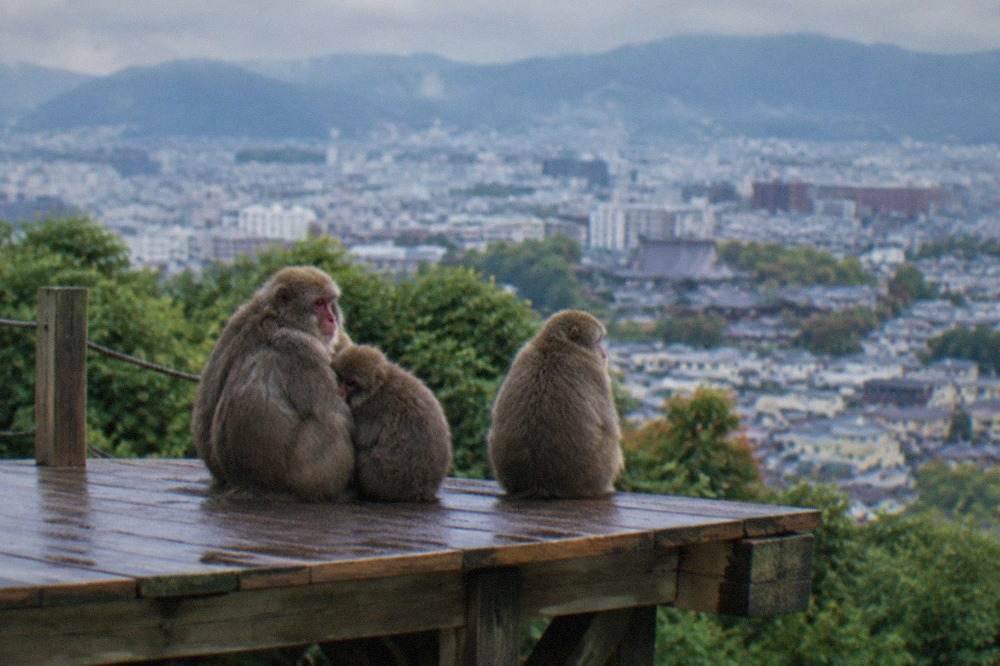
Short answer
The climb to Iwatayama Monkey Park is a continuous, steep uphill walk on stone steps and unpaved mountain path, taking most visitors roughly 20 to 30 minutes uphill. Admission is 800 yen for ages 16 and over and 400 yen for ages 4 to 15, cash only, and the park is open 9:00 to 16:00 with the summit area until 16:30.
Iwatayama Monkey Park sits on the hillside directly behind Arashiyama's main street, and the park's own notice board is unusually honest about what it asks of visitors: a steep mountain trail, cash-only admission, and closing times that bend to the weather and to the monkeys themselves. The reward at the top is a wild troop of Japanese macaques living free on the hillside, plus a viewing platform that looks straight down over the city of Kyoto. This page covers the climb itself, the fees and hours the park publishes, the rules inside, and how to fit the monkeys into a full Arashiyama day alongside the bamboo grove, Tenryu-ji and the river.
How Steep Is The Climb To The Iwatayama Monkey Park And How Long Does It Take?
The climb is a continuous, steep uphill walk on stone steps and unpaved mountain path, with no lift, no road access and no shortcuts. The park publishes no official walking time, so plan on roughly 20 to 30 minutes uphill at a steady pace for most adults, longer with small children or anyone unsteady on their feet. Benches sit along the trail, and the descent is faster but harder on the knees.
The trail begins a short walk inland from Togetsukyo bridge, at the end of a lane behind the Arashiyama riverside street. The first section is stepped and shaded, and it steepens as it climbs through the trees. The surface is a mix of stone steps and compacted earth, which can be slippery after rain, so closed shoes with grip matter more than they do anywhere else on an Arashiyama day. The park's own site warns that it closes early when the weather turns bad, which is worth reading as a hint about the trail's condition too.
What surprises many visitors is not the length but the gradient. Arashiyama's riverside is flat and easy, and the monkey park is the one part of the district that asks for real effort. The monkeys are not in cages or enclosures; they live on the hillside, and the park is essentially a managed viewing area at the top of their territory. That is the trade: a genuine climb in exchange for animals behaving as they would anyway, plus a panorama over the Kyoto basin that few other spots in the city match without a tower ticket.
A practical way to think about timing: the park is open 9:00 to 16:00, with the summit area until 16:30 and last entry about 30 minutes before closing. If you arrive at the gate at 15:00 you still have time, but you will be climbing with the day-trip crowds thinning and the light softening, which many people find is the best hour on the hill anyway. For more on pacing the whole district, see how long the Arashiyama bamboo grove walk takes.
| Climb Fact | What To Expect |
|---|---|
| Surface | Stone steps plus compacted earth, slippery after rain |
| Gradient | Continuous steep uphill, no flat approach |
| Typical uphill time | Roughly 20 to 30 minutes for most adults |
| Rest stops | Benches along the trail |
| Access | Foot traffic only, no lift or road access |
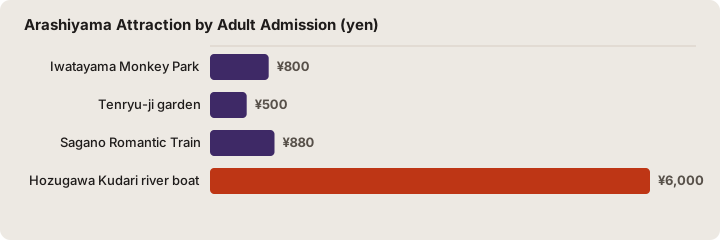
What Does Iwatayama Monkey Park Cost And When Is It Open?
Admission is 800 yen for visitors aged 16 and over and 400 yen for ages 4 to 15, with children 3 and under free, and the park takes cash only. Opening hours are 9:00 to 16:00, with the summit area open until 16:30 and last entry about 30 minutes before close. The park closes on 1 January, on bad weather days, and early if the monkeys retreat up the hill.
The cash-only rule catches a lot of people out, because the rest of Arashiyama is fully set up for IC cards and contactless payment. The nearest ATMs are back on the main street, a few minutes downhill from the gate, so it is worth checking your wallet before you start climbing. The fee is small by Kyoto standards; compare it with the temples below and the park holds up well on value, especially since the main attraction, the monkeys themselves, costs nothing extra once you are inside.
| Arashiyama Attraction | Adult Admission | Notes |
|---|---|---|
| Iwatayama Monkey Park | 800 yen | Cash only, ages 16 and over; ages 4 to 15 pay 400 yen |
| Bamboo grove path | Free | Public path, open around the clock |
| Tenryu-ji garden | 500 yen | High school and up; buildings add 300 yen, Hatto ceiling 500 yen separately |
| Sagano Romantic Train | 880 yen one way | Child 440 yen; roughly March to December season |
| Hozugawa Kudari river boat | 6,000 yen | Child 4,500 yen, about two hours on the water |
The early-closing rule deserves emphasis. The park's own site states plainly that it closes early if the monkeys go back up the hill, and in bad weather. This is not a marketing hedge; the animals are wild and the park is their habitat, so on a hot afternoon or a wet day they may simply not be at the summit when you arrive. Going in the morning, when the troop is usually feeding and active on the lower slopes near the viewing area, gives you the best odds of a full visit.
The park's calendar is simple: closed 1 January, otherwise daily. There is no seasonal closure of the kind the Sagano Romantic Train has, and no reservation system, so you simply turn up, pay cash and climb. If you are building a full Arashiyama itinerary, our Arashiyama area guide puts the monkey park in sequence with everything else on the hillside.
What Will You See At The Top Of Iwatayama Monkey Park?
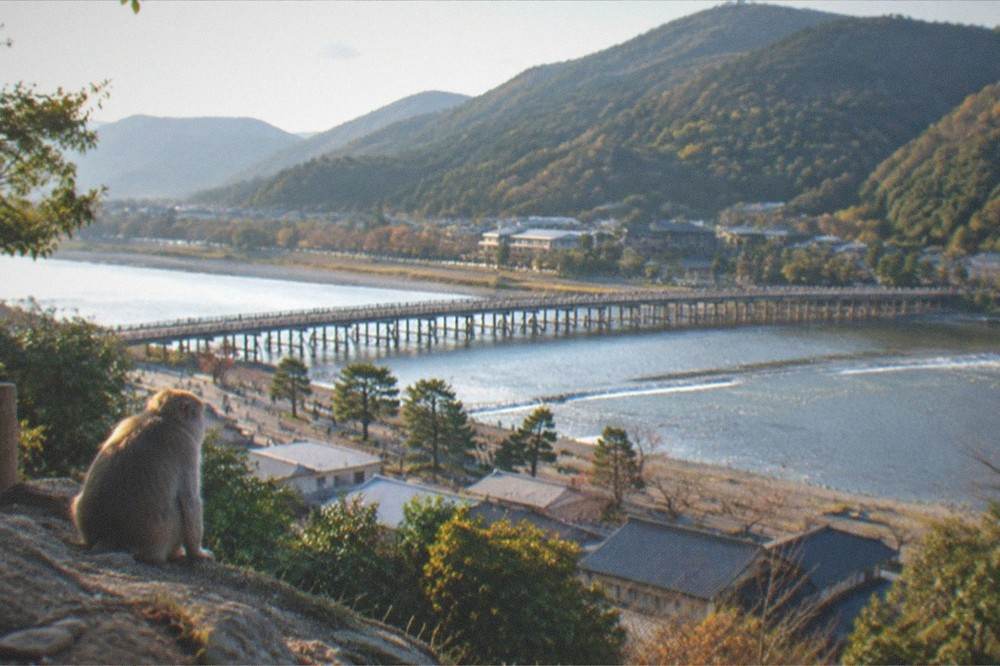
At the summit you find a wild troop of Japanese macaques roaming freely around a fenced viewing area, an open rest area with benches, a small shop and hut, and a wide terrace looking out over the Katsura river, Togetsukyo bridge and the whole Kyoto basin. The monkeys are fed and managed by staff but live uncaged on the hillside, so they move through and around the visitor space on their own terms.
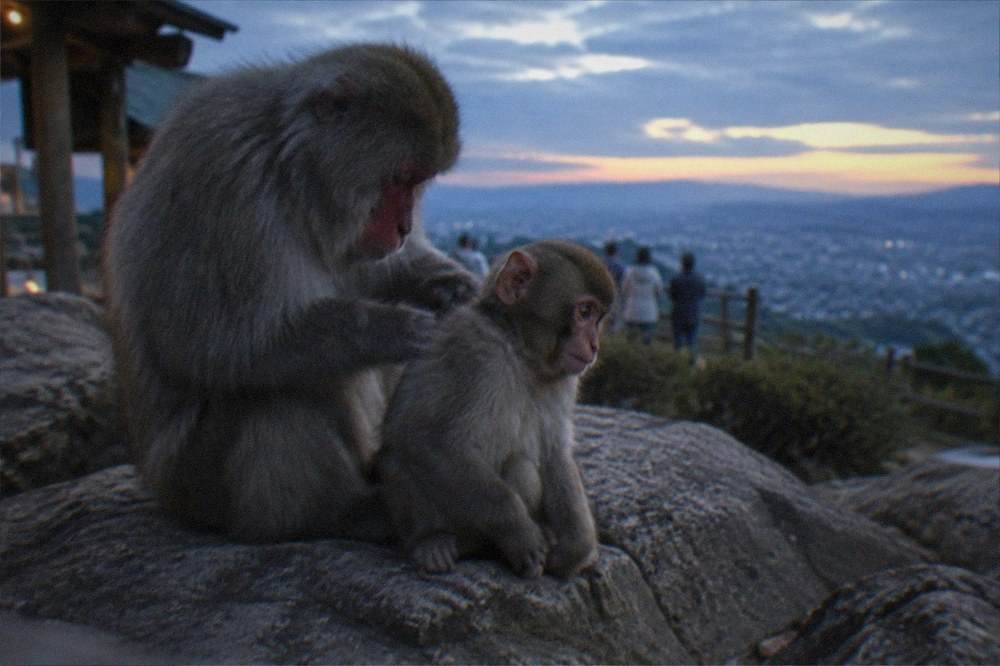
The macaques at Iwatayama are Japanese snow monkeys, the same species famous for bathing in hot springs in Nagano. Here there is no spring, just a hillside territory that the troop treats as home. Visitors watch from inside the rest area while the monkeys lounge on the roof, groom each other on the platform rails and stroll past within a metre or two. The park's design is unusual in Japan: rather than cages, there is a loose agreement that humans stay in the designated space and the monkeys range wherever they like, which reverses the usual zoo relationship.
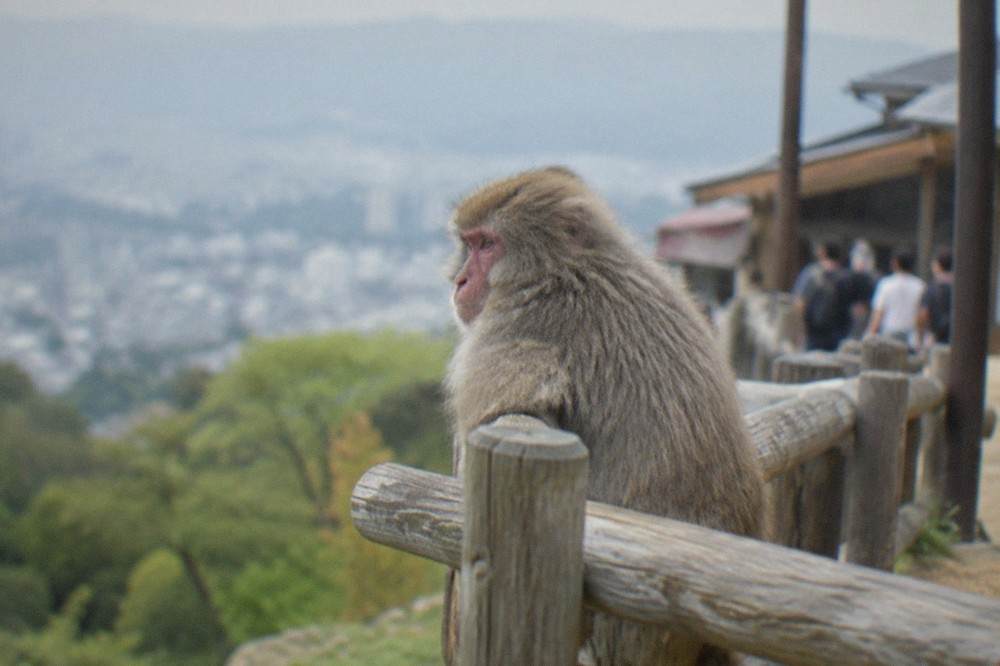
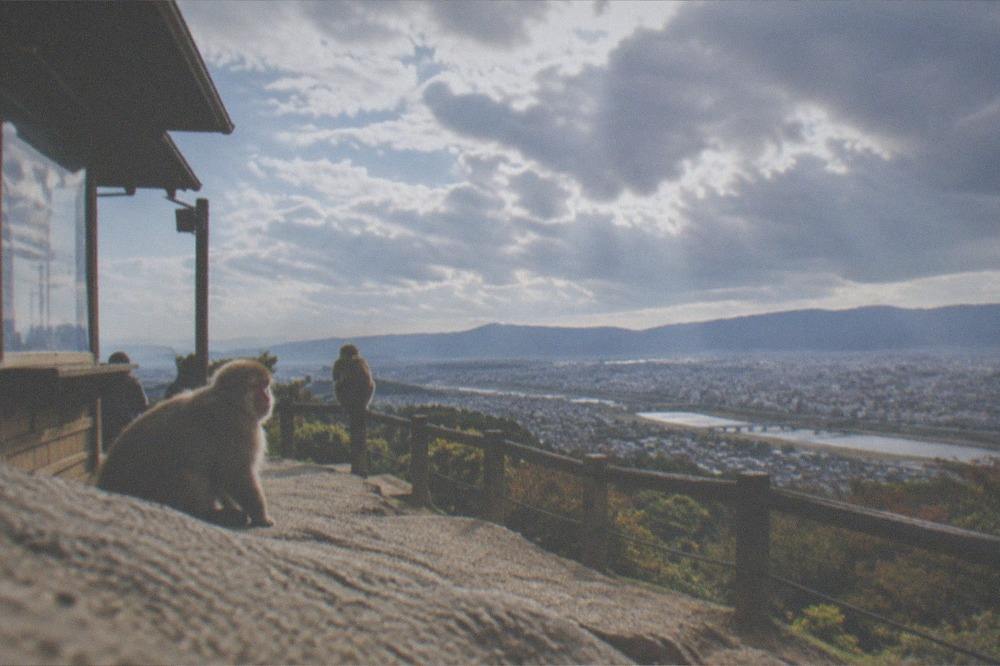
The view is the second reason to make the climb. From the terrace the city of Kyoto spreads out below the hill, with the river curving past Togetsukyo and the rooftops running to the plain beyond. On clear days it is one of the better free panoramas in the city, once you have paid the admission and done the walk. Photographers should note that the light is best late morning and mid afternoon; at noon in summer the sun is high and the haze thickens over the basin.
Feeding is allowed only from inside the staffed hut, where small bags of apple slices or peanuts are sold for a coin or two, and only through the wire mesh window. Handing food directly to a monkey, or carrying visible food outside the hut, is against the rules and the staff enforce it firmly. The rule exists for good reason: fed monkeys become bold monkeys, and bold monkeys get removed. The troop here has been managed for decades, and the discipline inside the park is a large part of why it still works.
Is The Iwatayama Monkey Park Climb Suitable For Children And Older Visitors?
The climb is suitable for healthy children of school age and most adults, but it is a genuine mountain trail and should be treated as one. Toddlers will need to be carried, and carriers are safer than strollers because the path has steps, roots and unpaved sections. Older visitors with knee or heart trouble should expect a slow, sweaty ascent with bench stops, and hot summer days make the climb measurably harder.
Families do this climb constantly, and the monkeys at the top are among the most reliable child-pleasers in Kyoto, which is why the park features in most family itineraries including our Kyoto with kids itinerary. The practical advice is about the trail, not the destination: shoes with grip, water in warm months, and a realistic sense that the uphill section takes longer than the flat riverside walk below. Small children who can walk a hill unaided will manage it with rest stops; children who cannot should ride in a carrier, because a stroller is close to useless on the steps.
For older visitors, the honest framing is that this is the most physically demanding of Arashiyama's standard attractions. Everything else in the district, the bamboo grove, Tenryu-ji's garden, the riverside, is flat. If the climb is not appealing, the alternative is to enjoy the district's flat circuit and skip the hill; the district guide in our Kyoto neighborhoods overview lays out a low-effort route. Nobody should feel the monkeys are obligatory.
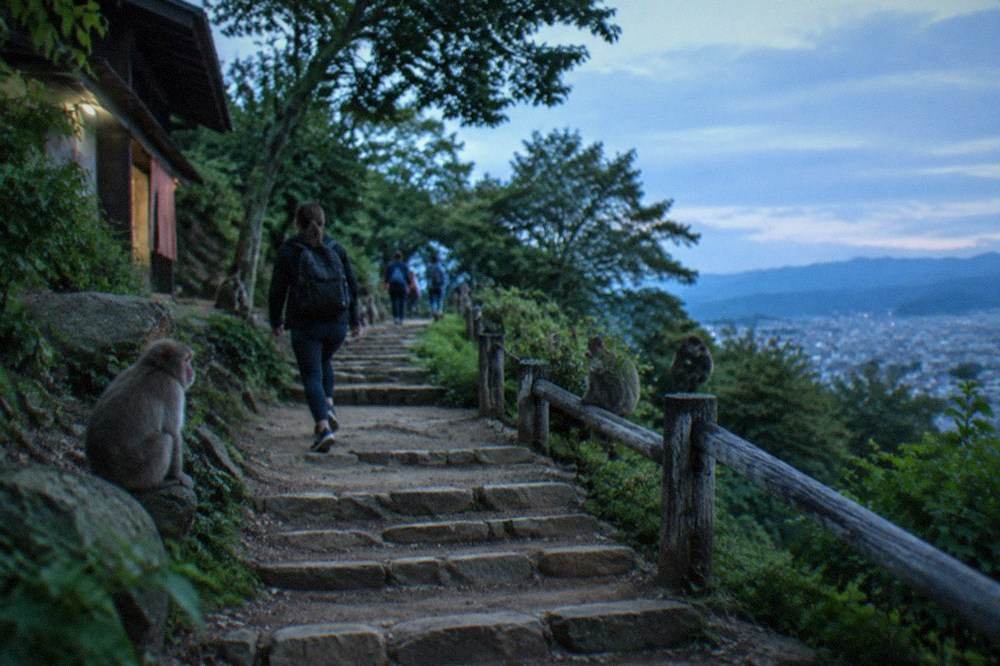
Summer deserves a specific warning. Kyoto's July and August are brutally hot, with the JMA 1991-2020 normals putting the mean daily maximum at 32.0 C in July and 33.7 C in August, and the trail is shaded only in patches. Climbing at 14:00 in August is a different proposition from climbing at 09:30 in October. Go early in the warmer half of the year, carry water, and use the benches; the park's own early-closing policy in bad weather is a reminder that this is a hillside, not a theme park. Our Kyoto in summer guide covers heat tactics across the city.
How Do You Get To Iwatayama Monkey Park From Kyoto Station?
From Kyoto Station, take the JR Sagano Line one stop to Saga-Arashiyama Station, about 15 minutes, then walk roughly 10 to 15 minutes through the district to the monkey park gate behind the riverside street. The alternative is the Hankyu line to Arashiyama Hankyu Station via Katsura, followed by a slightly longer walk across Togetsukyo bridge. The trailhead is signposted in English from the main street.
The city bus also serves Arashiyama from central Kyoto, and the flat 230 yen adult fare applies, but the buses into Arashiyama are among the most crowded in the city and the subway does not reach the district at all. The train is almost always the better answer. If you are staying near Kawaramachi or Shijo, the Hankyu route is direct enough; from Kyoto Station or anywhere on the Karasuma line, JR wins. Our Kyoto buses guide explains why the old bus one-day pass no longer exists and what replaced it, and the Kyoto subway guide covers the rest of the network.
| Route To Arashiyama | Rough Time | Notes |
|---|---|---|
| JR Sagano Line, Kyoto Station to Saga-Arashiyama | about 15 minutes | Closest station to the monkey park trailhead |
| Hankyu line via Katsura to Arashiyama Hankyu | about 25 minutes | Best from Kawaramachi and Shijo areas |
| City bus from central Kyoto | 40 minutes or more | Crowded on weekends and in foliage season |
| Randen tram from Shijo-Omiya | about 25 minutes | Scenic but slow; terminates at Arashiyama |
Once in the district, the walk to the gate is straightforward: head for Togetsukyo bridge, turn inland along the river road just before the bridge, and the lane to the park entrance is signposted on the left. The gate is a small hut at the bottom of the trail, where you pay cash and get a brief safety talk. From there the climb begins immediately; there is no flat approach. Other pages covering the same trip are gathered on Kyoto Travel Guide.
Coming from farther afield, the same JR Sagano Line connects with the Kansai airport and Shinkansen corridors at Kyoto Station, and our Tokyo to Kyoto guide covers the long-distance leg if you are arriving the same morning.
What Can You Combine With The Monkey Park In Arashiyama?
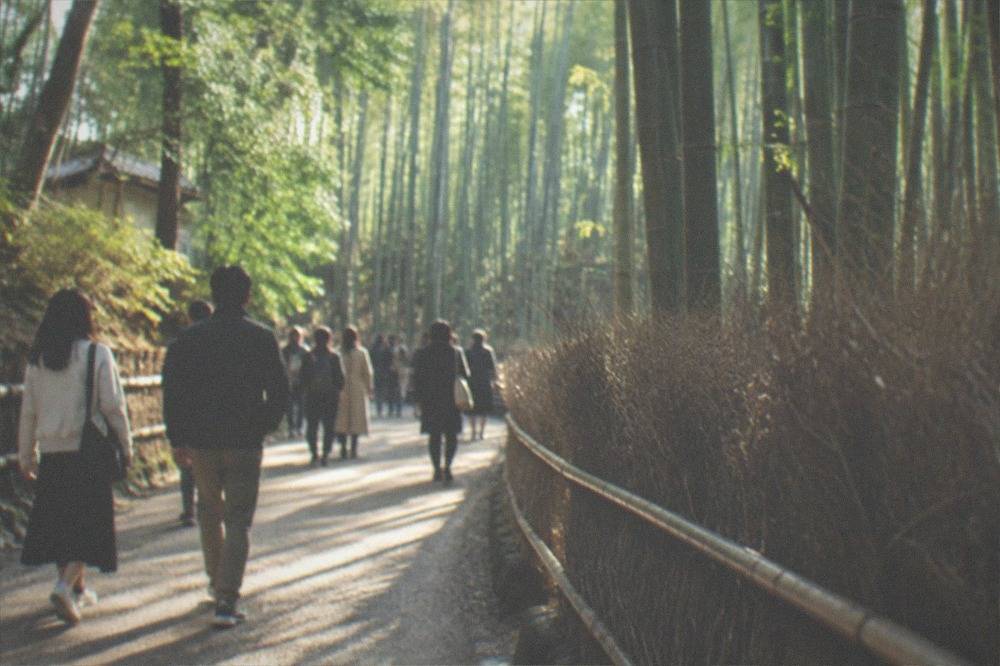
The natural pairing is the monkey park with the bamboo grove, Tenryu-ji and Togetsukyo bridge, all within a 15 minute walk of each other, followed by either the Sagano Romantic Train or the Hozugawa Kudari river boat for the afternoon. A full Arashiyama day easily fills five to six hours, and adding the monkey climb at the start, before the crowds thicken, is the sequence most guides recommend.
The geography makes the planning simple. Everything sits in a compact strip: the bamboo grove and Tenryu-ji at the top of the main street, Togetsukyo and the riverside at the bottom, and the monkey trailhead tucked behind the river road. A morning that starts with the monkeys means you climb in cooler air and come down to a late breakfast or lunch on the main street, then work through the grove and temple before the afternoon departure. Our Arashiyama bamboo grove guide covers the grove in detail.
The two river experiences are where the day's budget decisions live. The Sagano Romantic Train runs along the Hozu gorge on a sightseeing line, 880 yen one way for an adult, and pairs naturally with the monkey park because the train's Torokko stations sit a short walk north of the district. The Hozugawa Kudari is the bigger commitment at 6,000 yen for an adult and about two hours on the water, but it is the more memorable ride: a traditional flat-bottomed boat shooting the rapids of the Hozu gorge, ending back at Togetsukyo. The Hozugawa river boat guide covers it fully. Doing the boat in the afternoon after the morning climb is a classic Arashiyama day.
If you would rather not plan it yourself, guided options bundle the district efficiently. A five-hour Arashiyama walking tour covers the grove, the monkeys and a temple garden in one outing, and there is a variant that swaps the monkeys for a sake brewery visit. For a wider sweep of the city's headline sights, a one-day bus tour of Kyoto's UNESCO sites includes the bamboo grove alongside Fushimi Inari and Kinkaku-ji.
What Are The Rules Inside Iwatayama Monkey Park?
The core rules are: do not feed the monkeys outside the staffed hut, do not touch or chase them, do not stare directly into their eyes, keep food and plastic bags out of sight, and follow the staff's instructions on where to stand. Feeding happens only through the mesh window of the hut with food bought there. The monkeys are wild, and the park's management depends on visitors not breaking the habituation boundary.
The eye-contact rule is the one people forget. Direct staring reads as a threat to macaques, and a threatened monkey is an unpredictable one. Photographs are fine and the animals are used to cameras, but the park asks visitors not to shove lenses into faces or chase individuals for a shot. These rules mirror the general etiquette that applies across the city's sacred and animal sites, from shrine precincts to the deer of Nara.
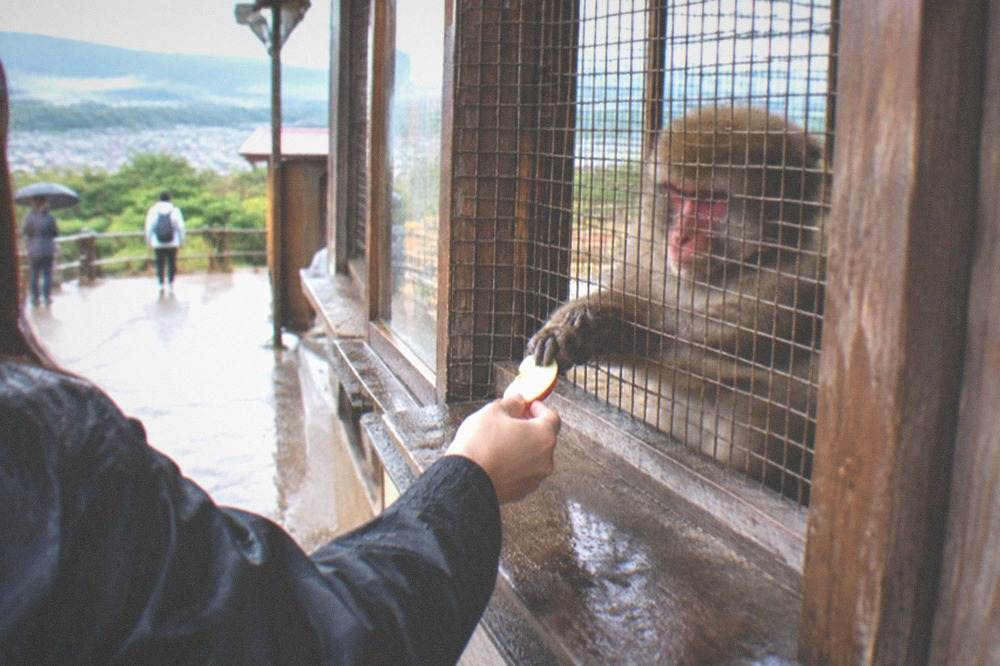
The cash-only hut sells small portions of fruit and nuts, and the feeding window is genuinely the highlight for children: a macaque's hand reaching through the mesh to take an apple slice is the moment people remember. Outside the hut, keep anything edible inside a closed bag. A visible snack, or a rustling plastic bag, will attract attention you do not want. The staff are used to enforcing this and will tell you plainly; treat it as part of the experience rather than a scolding.
There is no time limit inside once you have climbed, and the summit area has toilets and vending machines, which is worth knowing before you commit to the trail. The monkeys come and go from the summit on their own schedule, which is why the park warns it may close early when the troop moves uphill. If the summit is quiet when you arrive, waiting 20 minutes on a bench often changes the picture.
When Is The Best Time Of Day To Visit The Monkey Park?
Morning is the best time: the troop is most active and feeding in the first hours after the 9:00 opening, the climb is cooler, and the trail is quieter before the midday tour groups arrive. Weekday mornings beat weekends decisively, and in July and August the early start is close to mandatory given Kyoto's summer heat, with mean daily highs above 32 C in both months.
The crowd logic in Arashiyama runs from the district's overall popularity. Kyoto recorded a record 62.79 million visitors in 2025 according to the city's own tourism survey, released in June 2026, and Arashiyama absorbs a large share of the day-visitor flow. The bamboo grove is at its densest between 10:00 and 15:00, and the monkey trail sees the same wave about an hour later. Being at the gate at 9:00 puts you ahead of it.
Season matters too. Spring and autumn are the beautiful months, and autumn in particular: the hillside behind the park turns colour in late November, and the JMA's own marker for Kyoto maple red leaves is a normal date of 5 December, later than most guides claim. The Kyoto autumn leaves guide covers the foliage calendar. Winter is cold but clear, with January the driest month at 53.3 mm of rain on the 1991-2020 normals, and the monkeys with their thick coats are at their most photogenic in the cool air. The park closes on 1 January only.
Rain is the one thing that ruins the plan outright, because the park closes in bad weather and the trail gets slippery. Kyoto's wettest month is July at 223.6 mm on the same normals, so summer visitors should build a wet-weather alternative; the Kyoto rainy day guide has options. The city's crowd-comfort forecast is worth a glance the evening before.
Is The Monkey Park Worth The Climb Compared With Other Kyoto Attractions?
For families and anyone who wants to see wild animals rather than a curated garden, yes: 800 yen for free-roaming macaques and a hilltop panorama is strong value, and no other Kyoto attraction offers it. For visitors prioritising temples, gardens and food, the climb competes poorly for time with the grove, Tenryu-ji and the river, and skipping it costs nothing essential to understanding Arashiyama.
The honest comparison is with what else 800 yen buys in this city. Kinkaku-ji charges the same 500 yen it has since April 2023, and Ginkaku-ji doubled to 1,000 yen in April 2026, so the monkey park sits mid-table on price while offering something categorically different: living animals in their own habitat. The Kyoto temples guide covers the sacred side of the city; the monkeys are the exclamation mark on the natural side.
The decision usually comes down to legs and time. If you have one morning in Arashiyama and the climb is unappealing, the flat circuit of grove, temple garden and bridge is a complete visit in itself, and the three days in Kyoto itinerary shows how it fits a wider trip. If you have the time and the inclination, the monkeys are the district's most distinctive offering, and the view alone justifies the walk for many people.
For anyone pairing the monkeys with the river, the Hozugawa Kudari ends its run right at Togetsukyo, which makes a morning climb and an afternoon boat a natural single day. The operator's timetable runs the regular service from 10 March to 13 December 2026, so the pairing works across most of the visiting year.
Whichever way you build the day, the guided and self-guided options below cover the district's most popular combinations, from walking tours that include the monkeys to full-day sweeps of Kyoto's headline sights.
Common Questions About Iwatayama Monkey Park
How Steep Is The Climb To The Iwatayama Monkey Park And How Long Does It Take?
The climb is a continuous steep uphill on stone steps and unpaved mountain path. The park publishes no official walking time; plan on roughly 20 to 30 minutes uphill for most adults, longer with small children, and a faster but knee-heavy descent.
How much does Iwatayama Monkey Park cost?
Admission is 800 yen for ages 16 and over and 400 yen for ages 4 to 15, with children 3 and under free. The park takes cash only, so arrive with yen notes.
What are the opening hours?
The park is open 9:00 to 16:00, with the summit area until 16:30 and last entry about 30 minutes before closing. It is closed on 1 January, in bad weather, and early if the monkeys retreat up the hill.
Can you feed the monkeys?
Only from inside the staffed hut, through the mesh window, using food bought there. Feeding or showing food anywhere else in the park is against the rules and strictly enforced.
Is the climb safe for children?
School-age children manage it with rest stops. Toddlers should be carried in a carrier rather than a stroller, since the path has steps and unpaved sections. Benches sit along the trail.
How do you get to the monkey park?
Take the JR Sagano Line from Kyoto Station to Saga-Arashiyama, about 15 minutes, then walk 10 to 15 minutes to the trailhead behind the Arashiyama riverside street. The trailhead is signposted from the main street.
The monkey park is the one part of Arashiyama that asks for effort before it gives anything back, and that is exactly why it stays memorable after the bamboo photos blur together. Climb in the morning, carry cash, keep the snacks hidden, and the hillside does the rest.