Best Cafes In Kyoto
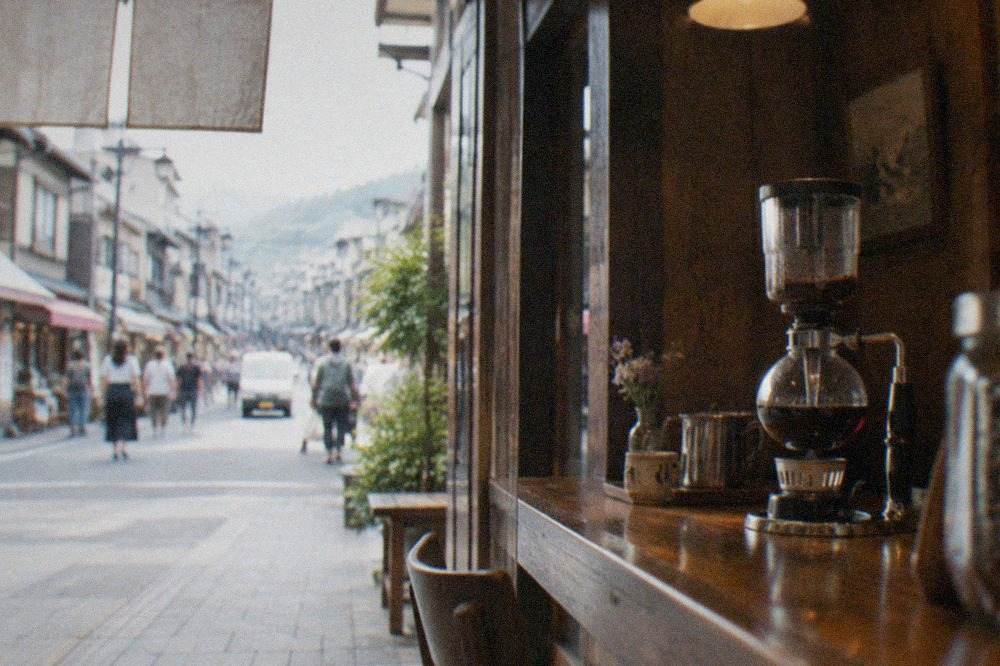
Kyoto's cafe scene runs on two clocks: the century-old kissaten serving siphon coffee in wood-panelled rooms, and the modern matcha and specialty coffee wave. Here is how both work, which names carry the reputation, and how to plan a cafe day around verified fees, weather and crowd data.
Short answer
The three kissaten most named by Kyoto locals and guides are Inoda Coffee near the Imperial Palace, Smart Coffee downtown, and Rokuyosha near Kyoto Station, each a sit-down morning institution rather than a takeaway counter. Pair them with the city's matcha cafes and a small set of verified planning facts and a cafe-first day in Kyoto is easy to build.
Kyoto's cafe culture is older than most of its visitors assume. The city's kissaten, the classic Japanese coffee shops with siphon brewers, deep leather booths and morning set menus, have been serving the same dark roast since long before specialty coffee arrived, and they sit alongside one of the densest matcha cafe scenes in the country. The city's own tourism survey, released in June 2026, recorded 62.79 million visitors in 2025, a record, and a good share of them spent at least one morning queueing for a famous pancake or a seat at a mahogany counter. This guide covers both halves of the scene: the historic kissaten that define the city's coffee identity, and the newer matcha and third-wave rooms, with the verified fees, climate and crowd data you need to plan the day around them.
What Makes Kyoto's Kissaten Culture Different From Modern Cafes?
A kissaten is a licensed sit-down coffee shop in the pre-war Japanese tradition: table service, a house blend roasted dark, food like thick toast, omurice and hotcakes, and an expectation that you settle in for an hour, not a queue-and-go counter. Kyoto's kissaten are unusually concentrated and unusually old, several of them neighbourhood institutions for generations. The modern cafe wave is different: matcha rooms tied to the city's tea heritage, and specialty bars with lighter roasts.
The distinction matters for planning. A kissaten breakfast is a seated, unhurried affair, and the famous ones fill up between opening and mid-morning, especially on weekends. The matcha rooms cluster around the temple districts of Higashiyama and Arashiyama, which means they are best combined with early temple visits rather than a lazy midday start. Specialty coffee bars sit mostly downtown, around Kawaramachi and Karasuma, where the evening izakaya crawl begins later.
The city's tourism association now publishes a crowd comfort forecast that rates major spots and time slots on a five-level scale using location data and weather, and it is the single most useful planning tool for a cafe-first day. The general pattern it confirms: the temple-adjacent cafes peak from late morning, while the downtown kissaten are busiest at breakfast and again in the mid-afternoon break.
Which Kyoto Kissaten Are Worth The Wait: Inoda, Smart Coffee, Rokuyosha?
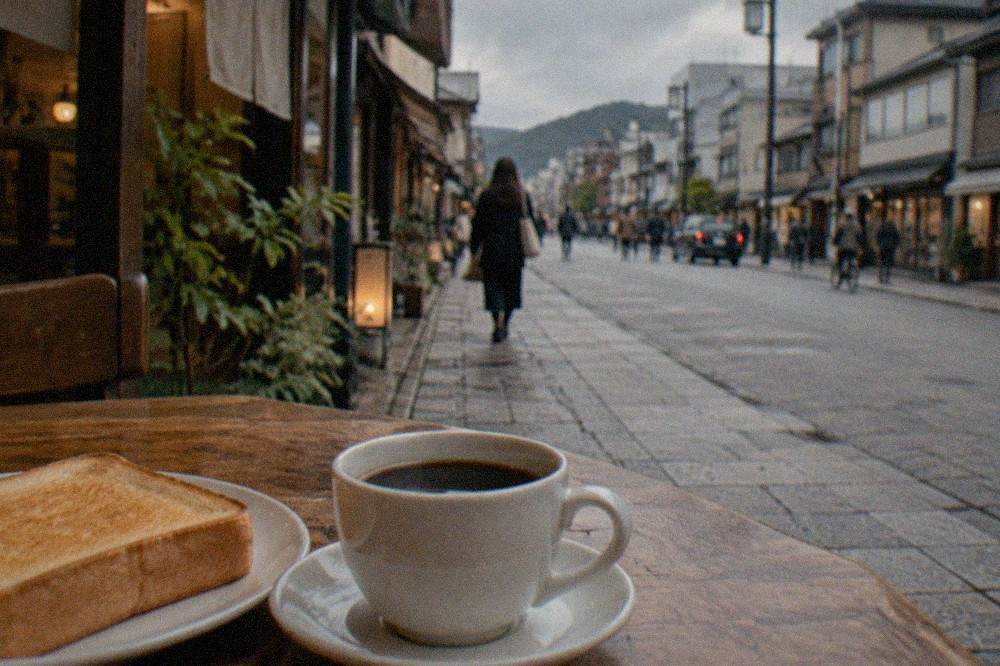
Inoda Coffee near Nijo-dori is the grand name of the three, a long-established house known for its Arabian pearl roast, its uniformed waiters and its morning set, and most visitors rate it worth the wait for the room alone. Smart Coffee on Teramachi downtown is the pudding institution, its custard pudding being the item people queue for. Rokuyosha near Kyoto Station is the coffee purist's pick, a roaster whose reputation rests on the beans rather than the decor.
Those three names come up in almost every conversation about Kyoto's classic coffee, and each earns its reputation differently. Inoda is the experience: the wood-panelled main shop, the silver siphon pots, the feeling of having stepped into a film set. Smart Coffee is the food: the pudding predates the cafe boom by decades and remains the reason the line forms. Rokuyosha is the cup itself, and its location near the station makes it the practical first or last stop of a trip.
A useful way to think about the wait itself: these are seated rooms with limited covers, so the queue is a function of table turnover rather than hype. Arriving within the first hour of opening, or after the 11:00 brunch rush subsides, usually shortens it considerably. The city's crowd comfort forecast covers the surrounding districts, and the temples nearby open far earlier than the cafes, so a sunrise walk followed by an opening-time breakfast inverts the usual day and beats both queues at once.
That inversion is exactly what a guided early-morning tour is built for. The Kyoto Early Morning Tour with an English-speaking guide runs 5 to 6 hours from $82 per person, rated 4.9 from 1,998 reviews, and clears the headline sights before the mid-morning peak, handing you back a late morning with the cafe district already in reach.
The kissaten circuit also connects naturally to the rest of the city's food identity. If your cafe day stretches into lunch and dinner, the Kyoto ramen guide covers the city's noodle institutions, and the broader Kyoto food guide maps the specialties worth booking ahead for.
Where Can You Find The Best Matcha Cafes In Kyoto?
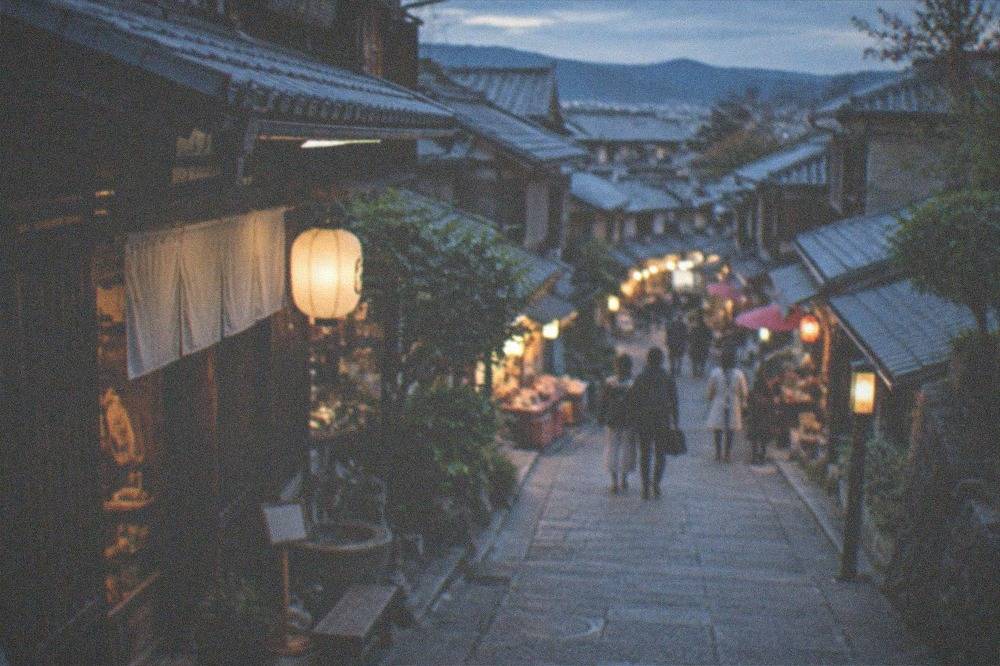
Kyoto's matcha cafes concentrate in three zones: the Higashiyama slopes around Ninenzaka and Sannenzaka below Kiyomizu-dera, the Arashiyama riverside near the bamboo grove, and the downtown Uji-tea retail strip around Teramachi, where several historic tea merchants operate their own cafe counters. The strongest matcha in the city is tied to Uji, the tea-growing region south of Kyoto, and the difference between a parfait room and a tea merchant's own counter is the difference between dessert and tea.
The Higashiyama cluster is the most scenic and the most crowded. Its lanes rise from the Kiyomizu-dera approach, and the temple's own schedule matters because the cafes inherit its rhythm: Kiyomizu-dera opens at 6:00, far earlier than any cafe, so the smart sequence is temple first, then the descending lanes as the shops open. The temple's FAQ sets the opening time, and its admission is 500 yen, a figure the temple does not itself print in English, so treat it as widely reported rather than official.
Arashiyama's matcha rooms sit along a riverside walk that also holds the bamboo grove, Tenryu-ji and the monkey park hill. Tenryu-ji's garden admission is 500 yen for high school age and up, verified on the temple's own visit page, with the buildings at an extra 300 yen, so a combined garden-and-matcha morning is easy to budget. The site's Arashiyama bamboo grove guide maps the full sequence.
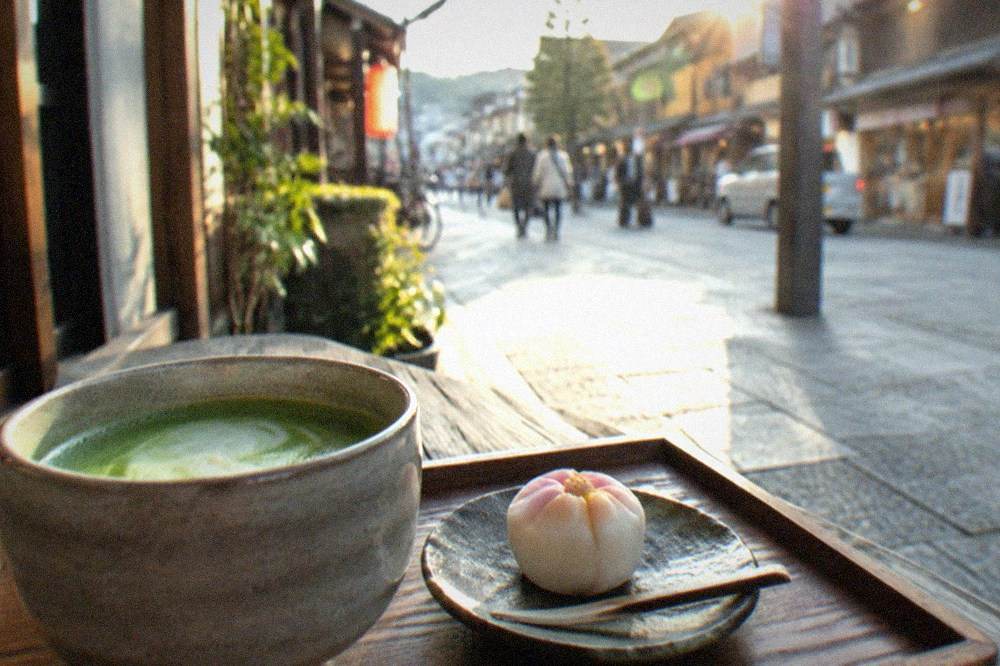
The tea-ceremony route deserves its own mention, because it is the most Kyoto way to consume matcha and it is bookable. The tea ceremony at Jotokuji Temple runs about an hour and ten minutes from $29 per person, rated 4.9 from 3,758 reviews, and it teaches the full temae rather than just serving the bowl. The Kyoto tea ceremony guide on this site covers what to expect in detail.
For a fuller comparison of matcha experiences, from the historic merchants to the modern parfait counters, read the matcha in Kyoto guide.
If the morning is already spoken for, a guided start solves the sequencing problem in one booking: you get the headline sights early and hand the afternoon back to the cafes.
How Do You Build A Cafe Day Around Kyoto's Temples And Fees?
The workable formula is an early temple, a mid-morning kissaten, and a matcha stop in the afternoon, because Kyoto's temples open at 8:30 or 9:00 while the kissaten open around 7:00 or 8:00 and the matcha rooms open around 10:00. The verified temple fees on the likely route are Kinkaku-ji at 500 yen, Ginkaku-ji at 1,000 yen since its April 2026 doubling, Ryoan-ji at 600 yen, Tenryu-ji garden at 500 yen and Kodai-ji at 800 yen.
The Ginkaku-ji figure is the one to watch. The temple's own notice, dated January 2026, doubled the adult admission from 500 to 1,000 yen effective 1 April 2026, the first change in 32 years, and most older guides still print 500. Kinkaku-ji, by contrast, has held 500 yen since April 2023. The two pavilions bookending the Philosopher's Path now cost 1,500 yen combined, and the site's Ginkaku-ji and Kinkaku-ji guides cover both in depth.
| Stop on a northern cafe-temple route | Admission (verified) | Hours (verified) |
|---|---|---|
| Kinkaku-ji | 500 yen general, 300 yen primary and middle school | 9:00-17:00 |
| Ryoan-ji | 600 yen adult, 500 high school, 300 elementary and junior high | 8:00-17:00 Mar-Nov, 8:30-16:30 Dec-Feb |
| Ginkaku-ji | 1,000 yen adult, 500 child, from 1 April 2026 | 8:30-17:00 Mar-Nov, 9:00-16:30 Dec-Feb |
| Philosopher's Path | free | public path |
| Nanzen-ji Hojo garden | 600 yen general | 8:40-17:00 Mar-Nov |
The northern route is the classic pairing: Kinkaku-ji or Ryoan-ji in the first hour, then the Philosopher's Path south toward Nanzen-ji, where the cafe options shift from kissaten to temple-adjacent tearooms. Nanzen-ji's Hojo garden costs 600 yen general admission, verified on the temple's own visit page, and the site's Nanzen-ji guide covers the aqueduct and sub-temples.
Kodai-ji, in Higashiyama, runs 800 yen adult admission and holds its autumn night illumination from 23 October to 13 December 2026, which pairs an evening temple with a nearby cafe dinner. The Higashiyama district guide on this site maps the whole area.
For the practical side of the day, a small-group food walk through Nishiki Market handles the midday grazing: the market's own association prints no unified hours, each shop keeps its own, roughly 9 or 10:00 to 17 or 18:00, and stalls ask you to eat at the stall rather than walk. The Nishiki Market brunch walking tour, 3 hours from $74 per person with 7 tastings plus brunch, rated 4.9 from 1,497 reviews, is the structured way through it.
When Is The Best Season For A Kyoto Cafe Trip?
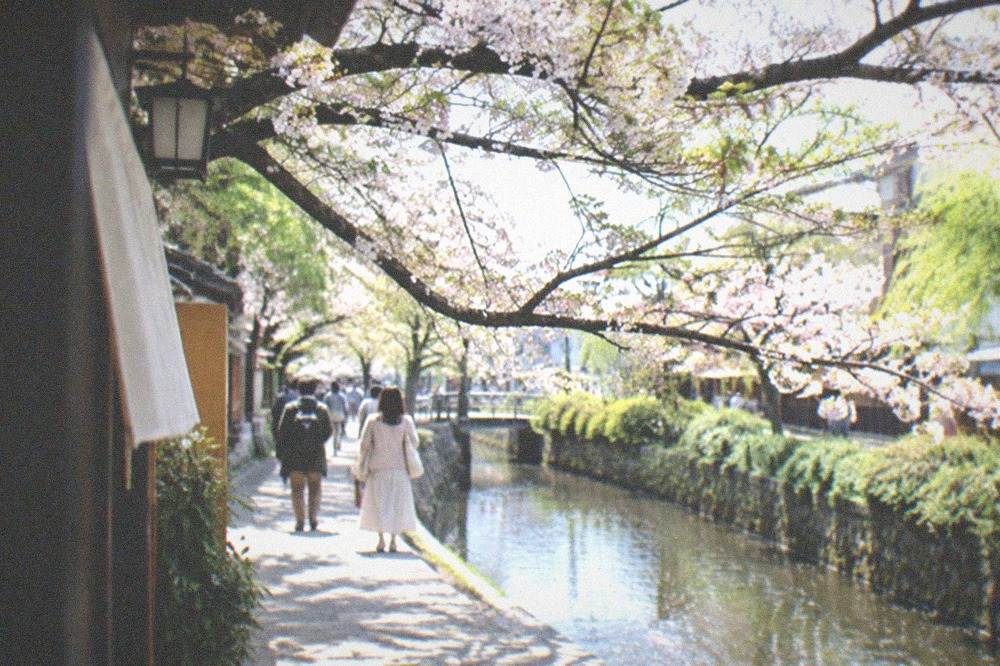
The two best windows are late March to early April for cherry blossoms and late November to early December for autumn colour, both anchored by verified Japan Meteorological Agency data: the 1991-2020 normal for cherry flowering in Kyoto is 26 March with full bloom on 4 April, and the normal for the maple red-leaf marker is 5 December, later than most guides claim. In 2026 the cherries flowered on 23 March and reached full bloom on 30 March.
The phenology table is worth carrying, because the cafe terraces and riverside seats are at their best in these windows and the crowd data follows the colour.
| Event | 2026 observed | 1991-2020 normal | 2025 observed |
|---|---|---|---|
| Cherry flowering | 23 March | 26 March | 27 March |
| Cherry full bloom | 30 March | 4 April | 5 April |
| Maple red leaves | not yet observed | 5 December | 10 December |
| Ginkgo yellow leaves | not yet observed | 24 November | 25 November |
| Plum flowering | 22 February | 22 February | 11 March |
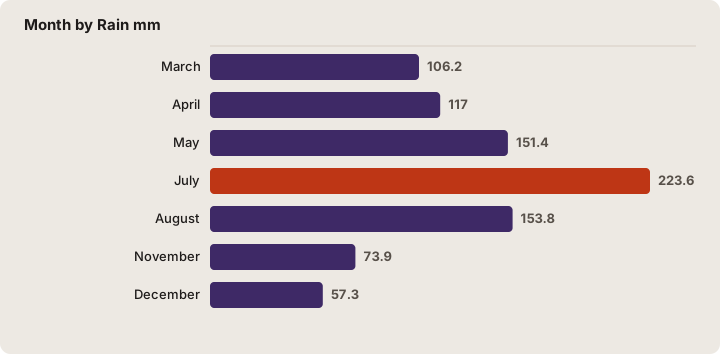
Weather matters as much as timing. The JMA 1991-2020 normals for Kyoto show July as the wettest month at 223.6 mm, ahead of June at 199.7 mm, a reversal of the usual guidebook claim, and August as the hottest with a mean of 28.5 C and a mean daily high of 33.7 C. January is both the coldest month, mean 4.8 C, and the driest, 53.3 mm, which makes it the quiet season for indoor cafe time even if the terraces are shut.
| Month | Rain mm | Mean C | Mean daily max C |
|---|---|---|---|
| March | 106.2 | 8.8 | 14.1 |
| April | 117.0 | 14.4 | 20.1 |
| May | 151.4 | 19.5 | 25.1 |
| July | 223.6 | 27.3 | 32.0 |
| August | 153.8 | 28.5 | 33.7 |
| November | 73.9 | 12.5 | 17.3 |
| December | 57.3 | 7.2 | 11.6 |
The Kyoto weather guide carries the full monthly table, and the best time to visit guide on this site weighs the seasons against the festivals.
Which Kyoto Neighborhoods Have The Best Cafe Scenes?
Four districts carry the scene: downtown Kawaramachi and Karasuma for the classic kissaten and specialty coffee, Higashiyama for matcha rooms on the temple slopes, Arashiyama for riverside tearooms, and the Kyoto Station area for practical pre-departure stops including Rokuyosha. Downtown holds the density and the history, Higashiyama holds the view, and the station area holds the convenience, which makes a multi-district cafe day a transport question more than a coffee question.
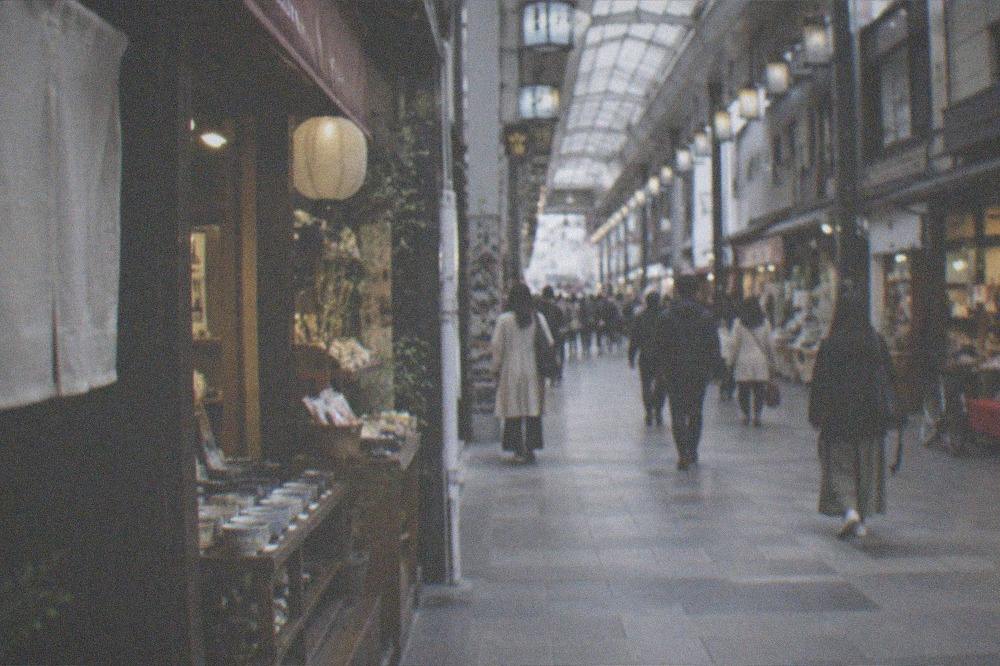
Downtown is where the kissaten cluster, along the covered Teramachi and Shinkyogoku arcades and the lanes off Karasuma. Smart Coffee sits on Teramachi itself, and the arcade means a rainy-day cafe crawl here needs no umbrella. The downtown Kawaramachi guide on this site maps the arcades, bars and department-store basements, and the Kyoto Station area guide covers the station's own cafe and food levels, useful on arrival and departure days.
Higashiyama's lanes, Ninenzaka and Sannenzaka, hold the postcard matcha rooms, and their stone paving means sensible shoes matter more than anywhere else in the city. The Ninenzaka and Sannenzaka guide on this site covers the walk down from Kiyomizu-dera.
Arashiyama is the half-day district: bamboo grove, Tenryu-ji, the riverside and the Sagano Romantic Train, whose one-way fare is 880 yen adult and 440 yen child, verified on the operator's own ticket page. The site's Arashiyama guide ties it together.
How Do You Handle Crowds And Etiquette In Kyoto's Cafes?
The verified crowd facts are these: Kyoto drew a record 62.79 million visitors in 2025, up from 56.06 million in 2024, and the city now runs a five-level crowd comfort forecast, tourist express buses at 500 yen a ride, and a hands-free luggage delivery network, all designed to thin the peak. Etiquette in the cafes themselves is straightforward: kissaten are seated rooms where lingering is normal, and the wider city rules on private alleys and geiko photography apply on the walk between them.
The Gion rules matter on any route that passes through, because several popular cafe walks cross the district. The Kyoto City Tourism Association's own guidelines state it plainly: do not touch, chase or photograph geiko and maiko without permission, and do not enter private property or photograph it where prohibited. Signs on the private alleys off Hanamikoji threaten a 10,000 yen penalty for unauthorised photography, set by the district council, not the city police. The Gion guide covers the district, and the site's etiquette guide collects the rest.
The transport side of crowd management is cheap and documented. The tourist express buses EX100 and EX101 charge 500 yen adult, 250 yen child, and run from Kyoto Station to the Kiyomizu side with fewer stops, and the Subway and Bus One-Day Pass costs 1,100 yen adult, 550 yen child. The old bus-only one-day pass no longer exists; sales ended in September 2023 and use ended 31 March 2024. The site's bus and subway guides carry the details.
| Getting around for a cafe day | Fare (verified) | Notes |
|---|---|---|
| City bus flat fare | 230 yen adult, 120 yen child | applies citywide |
| Subway fare by zone | 220 to 360 yen adult | zones 1 to 5 |
| Subway and Bus One-Day Pass | 1,100 yen adult, 550 yen child | replaces the abolished bus-only pass |
| Tourist express EX100 / EX101 | 500 yen adult, 250 yen child | station to Kiyomizu side, fewer stops |
Can You Eat Well Around Kyoto's Cafes Without Breaking The Budget?
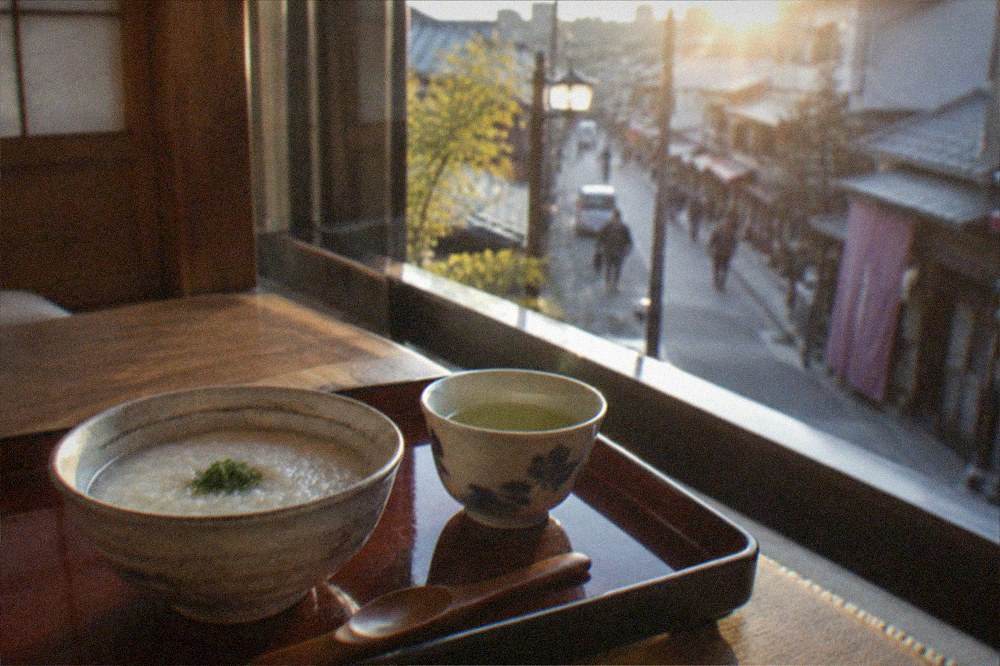
You can, and the verified numbers prove the ceiling sits far above the cafes. At Hyotei, one of Kyoto's most famous kaiseki houses by Nanzen-ji, the restaurant's own site prints kaiseki from 31,625 yen at lunch and from 37,950 yen at dinner in the main building, while the same kitchen's annex serves asa-gayu rice porridge at 5,445 yen and a Shokado bento at 7,260 yen, tax and service included. The kissaten breakfast sits far below both.
Those are Hyotei's own published prices, not a city average, and they should never be generalised into what kaiseki costs in Kyoto. But they frame the day well: a kissaten morning set, a market or noodle lunch, and either the annex of a famous house or a full kaiseki booking, which Hyotei takes from two people. The kaiseki guide and the best restaurants in Kyoto guide on this site cover the booking side.
For the everyday tier, the site's street food and budget guides map what a cheap cafe-and-snack day actually looks like, and the trip cost guide totals a whole stay, including the new accommodation tax tiers.
A cafe day also pairs well with the city's indoor options when the rain arrives, and July will bring it. The Kyoto museums guide covers the rainy-day roster, including the Railway Museum at 1,500 yen general admission, verified on its own site, and the site's rainy day guide sequences a full wet-weather plan.
For travellers weighing the whole trip, the question of whether Kyoto rewards the time is answered in detail at is Kyoto worth visiting, and the first-timer logistics live in the site's first-time visitors guide.
How Do You Combine A Kyoto Cafe Day With A Longer Itinerary?
The cleanest fit is to treat the cafe circuit as the connective tissue between the headline sights: a kissaten breakfast before an early temple, a matcha stop between districts, and a riverside or downtown room for the evening, which slots into the site's one-day, two-day and three-day itineraries without displacing anything. The early-morning tour handles the pre-cafe sightseeing, the food and tea experiences fill the midday, and the northern and eastern temple routes supply the walking between them.
The one day in Kyoto guide is the template to modify, and the three days in Kyoto guide stretches it. If the trip extends beyond the city, the site's day trips guide covers Nara, Uji and Osaka, and the Kyoto versus Osaka guide answers the split-stay question.
For a deeper cultural layer than a cafe visit, the kimono tea ceremony at Kyoto Maikoya in Nishiki runs an hour and a half from $53 per person, rated 4.9 from 1,114 reviews, and combines the dressing and the bowl in one sitting.
The outdoor alternative is the Kurama to Kibune hike, north of the city, a full-day 8-hour guided route from $210 per person rated 5 from 82 reviews, which ends at a mountain onsen village and returns you to the city in time for dinner.
Common Questions About Kyoto Cafes
Which Kyoto Kissaten Are Worth The Wait: Inoda, Smart Coffee, Rokuyosha?
All three, for different reasons: Inoda Coffee for the wood-panelled room, uniformed service and pearl roast, Smart Coffee for the custard pudding and arcade location downtown, and Rokuyosha for the roast itself near Kyoto Station. Arrive within the first hour of opening or after the 11:00 rush to keep the wait short.
Do Kyoto's kissaten open early enough for breakfast?
The classic kissaten are morning institutions and generally open in the 7:00 to 8:00 range, earlier than the matcha rooms, which open around 10:00. The temples open earlier still, Kiyomizu-dera at 6:00, so a temple-then-breakfast sequence beats both queues.
Is a cafe day in Kyoto expensive?
The cafes themselves are modest compared with the city's ceremonial dining: at Hyotei, the restaurant's own site prints kaiseki from 31,625 yen at lunch while the same house's annex serves asa-gayu at 5,445 yen and a Shokado bento at 7,260 yen. A kissaten breakfast sits far below both. Add temple admissions of 500 to 1,000 yen per site and transport at 230 yen a bus ride or 1,100 yen for the subway and bus day pass.
When is the best month for cafe terraces in Kyoto?
Late March to early April for the cherry blossom, and late November to early December for the autumn colour. The JMA normals put cherry full bloom at 4 April and the maple red-leaf marker at 5 December; in 2026 the cherries reached full bloom on 30 March. Avoid July if you want to sit outside: it is the city's wettest month at 223.6 mm in the 1991-2020 normals.
Can you do a Kyoto cafe crawl in the rain?
Yes. The downtown arcades around Teramachi are covered, the kissaten are indoor seated rooms by design, and the museum roster, including the Railway Museum at 1,500 yen general admission, fills the gaps. The rainy day guide on this site sequences a full wet-weather plan.
The short version: pick your kissaten for the room, your matcha counter for the tea, and let the temples set the clock. Kyoto rewards the early start more than any other city in Japan, and the coffee is the excuse, not the reason. For everything beyond the cup, the Kyoto Travel Guide homepage collects the full site, from itineraries to the temple and festival guides that a cafe-first day hangs between.