Why Are The Red Lanterns On The Kifune Shrine Steps So Photographed?
Kifune Shrine sits in the mountains north of Kyoto, and its lantern-lined stairway has become one of the city's most shared images. This page explains the scene, the shrine's role as the head of Japan's water shrines, and how to plan a visit without inventing numbers the shrine does not publish.
Short answer
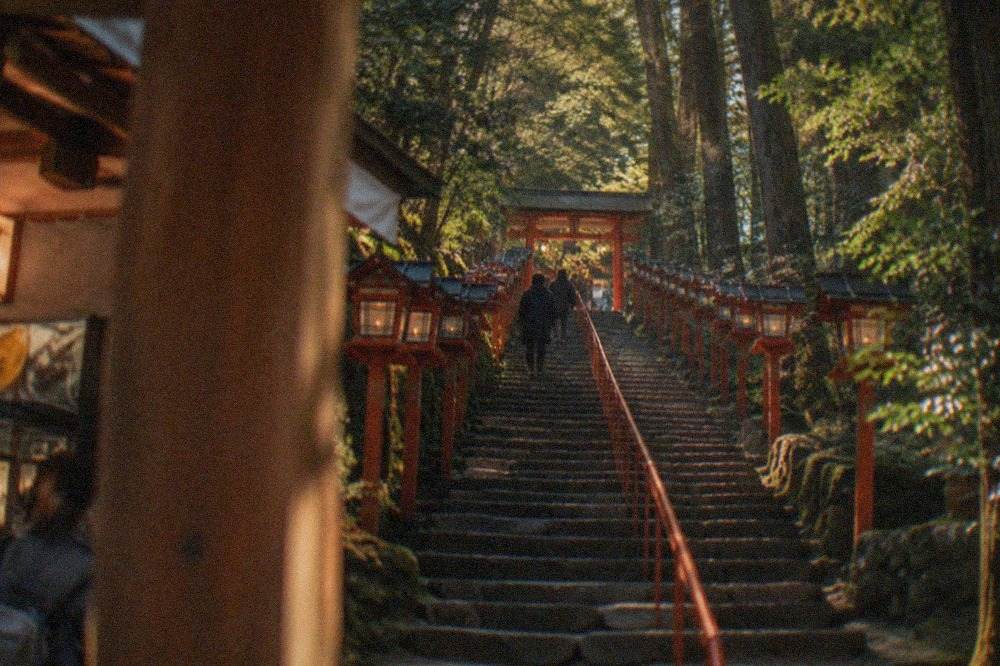
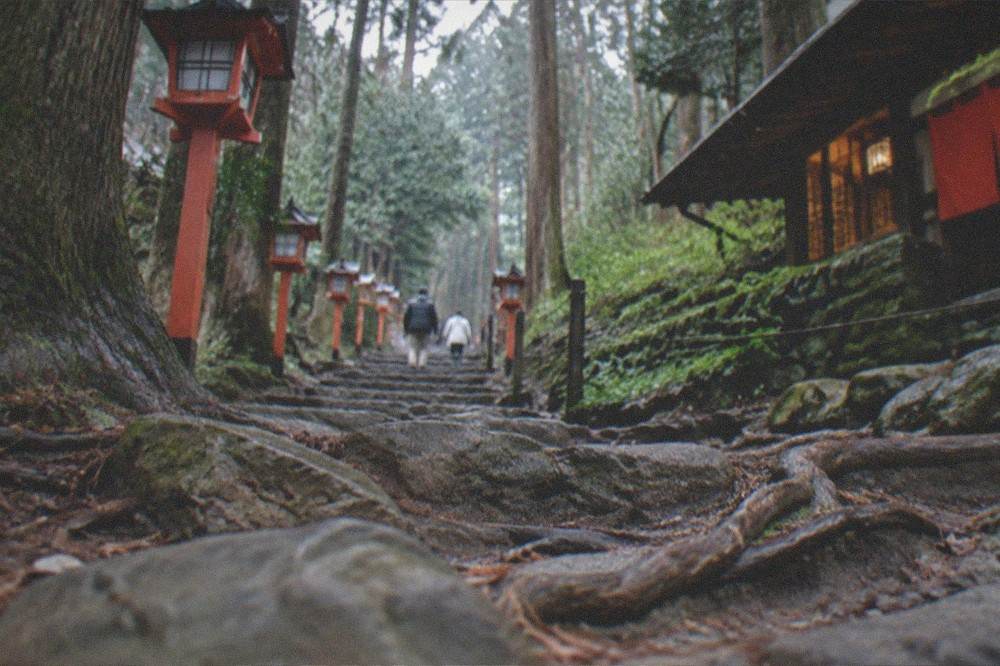
Kifune Shrine's stone stairway is lined with rows of old iron lanterns that glow green with age and frame a straight climb through cedar forest to the main hall. The composition, a symmetrical corridor of light and stone, is what photographers come for. The shrine itself is the head shrine of water worship in Japan and sits in Kibune, a mountain village about an hour from central Kyoto by rail.
Kifune Shrine's stairway works as a photograph for reasons that are partly physical and partly historical, and both are worth understanding before you make the trip. The shrine sits in Kibune, a narrow valley village in the mountains north of Kyoto city, where the Kifune River runs cold and fast through cedar forest. The approach is a straight run of stone steps rising from the village to the main hall, and the lanterns that line it are not modern decoration. They are old cast-iron lanterns donated over generations, and their surfaces have weathered to the pale green of aged bronze and copper, a colour that reads almost luminous against the dark cedar behind it.
The mountain setting matters as much as the objects. Kyoto's city shrines sit among buildings, so a photograph of them is always partly a photograph of the modern city. Kifune is different: the valley walls close in on both sides, the air is cooler than downtown even in August, and the frame is filled with forest, water and stone rather than signage and wires. Add snow in winter or fresh green in early summer and the same stairway becomes a different picture entirely, which is why the same location keeps reappearing in Kyoto photo essays across every season.
This page covers the scene itself, the shrine's role in Japanese religion, the practicalities of getting there, and the honest numbers. One caution up front: the verified fact base behind this site does not carry Kifune Shrine's admission fee, opening hours or founding year, because the shrine does not publish them in a form this site's research could verify. Where a figure is not verified, this page says so plainly rather than guessing.
Why Are The Red Lanterns On The Kifune Shrine Steps So Photographed?
The stairway photographs well because it compresses everything visitors associate with Kyoto into one symmetrical frame: aged iron lanterns glowing green with verdigris, a straight stone climb through cedar forest, and a shrine hall waiting at the top. The lanterns are donated votive objects, not stage dressing, and their uniform spacing creates a natural leading line. In snow, the same steps turn into one of the most shared winter images in Japan.
The visual power of the scene comes from repetition. Dozens of lanterns stand in two disciplined rows, each one the same shape, each one a slightly different shade of weathered green. The eye travels up the corridor they form, and the shrine gate and main hall close the composition at the top. Photographers describe this as a built-in leading line, and Kifune has one of the most obliging in the country.
The lanterns themselves carry meaning that a casual viewer might miss. They are votive gifts, given over many years by worshippers, businesses and local families, and the shrine keeps them standing as a record of that patronage. That is why they look old: they are old. The green surface is natural oxidation of the metal, the same chemistry that colours old copper roofs, and it cannot be faked quickly. A newly installed lantern looks orange-brown; a century-old one looks like it has grown out of the mountain.
Season changes the photograph completely, which is unusual for a fixed structure. In deep winter, heavy snow sits on each lantern cap and on the steps between them, and the whole corridor reads black, white and pale green. In early summer the surrounding forest is at its densest green. In autumn the cedar stays dark while the valley's deciduous trees turn around it. Kyoto's official phenology record gives the city's maple normal as 5 December for the observatory's specimen tree, with 2025 observed on 10 December, and while the mountain valleys north of the city run on their own clock, that late normal is a useful warning against the "mid-November peak" claims most guides repeat.
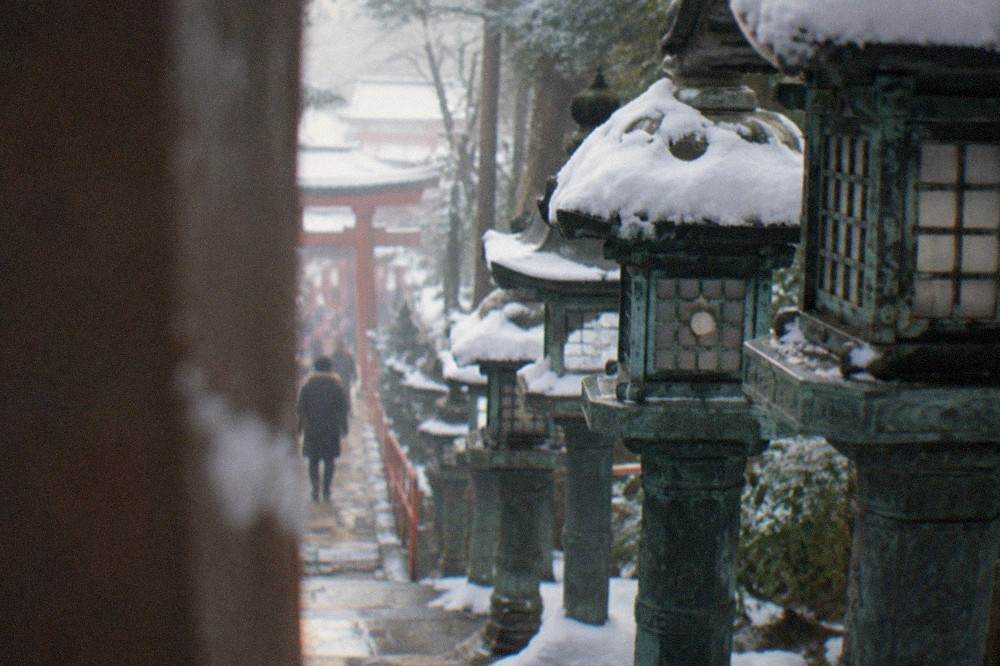
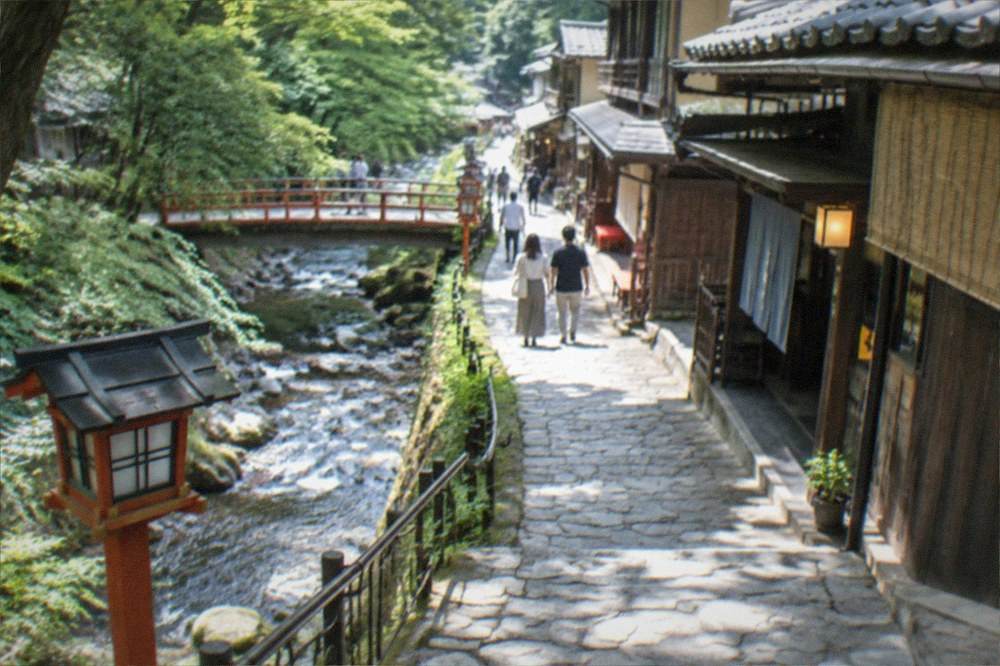
There is a practical reason the photographs look so clean, too. Kibune is a small village with one road in, and the shrine stairway sits above it, away from traffic. Compared with the crowded approaches of Kyoto's city shrines, the frame is easy to keep free of strangers, especially in the first hour after dawn. The shrine's own popularity is real, but the mountain location filters out most of the day-trip crowd that fills Fushimi Inari and Yasaka Shrine by mid-morning.
What Is Kifune Shrine, And Why Do Water And Rain Belong To It?
Kifune Shrine is the head shrine of water worship in Japan, the spiritual centre of roughly 500 shrines nationwide named Kifune or Kibune that enshrine the same water deity. Located in the Kibune valley north of Kyoto, it has been a place of prayer for rain, clear skies and pure water for well over a millennium, and the mountain river running past its halls is treated as the deity's own presence.
The shrine's religious identity is water. Farmers prayed here for rain in drought and for clear skies in a wet summer, and the imperial court historically sent envoys to the mountain for exactly that purpose. The tradition that grew around those prayers includes a famous piece of folklore: a black and a white horse were once kept at the shrine, and the colour of the horse sent up the mountain signalled which weather was being requested. White for rain, black for clear skies, in the version most often told. That story is tradition rather than a dated historical record, and it should be read that way, but it explains why small black horse figures remain a common offering at the shrine today.
The shrine complex actually has three parts spread up the valley: the main hall near the river, the inner shrine higher on the mountainside, and a third hall at the top of a long climb. Most photographs of the lantern stairway show the approach to the main hall, and most visitors see only that section. The upper halls take real effort to reach and reward it with forest and quiet rather than another famous view.
| Kyoto shrine or temple | What it is known for | Admission |
|---|---|---|
| Kifune Shrine | Water worship, lantern stairway, mountain setting | Not published in a form this site could verify; check with the shrine |
| Fushimi Inari Taisha | About 10,000 torii across the whole mountain, enshrined 711 | Free, verified on the shrine's own site |
| Yasaka Shrine | Gion district shrine, Gion Matsuri's spiritual home | No general admission fee charged for the grounds |
| Heian Shrine | Giant vermillion gate and garden | Grounds free; garden charges admission, check the shrine's notice |
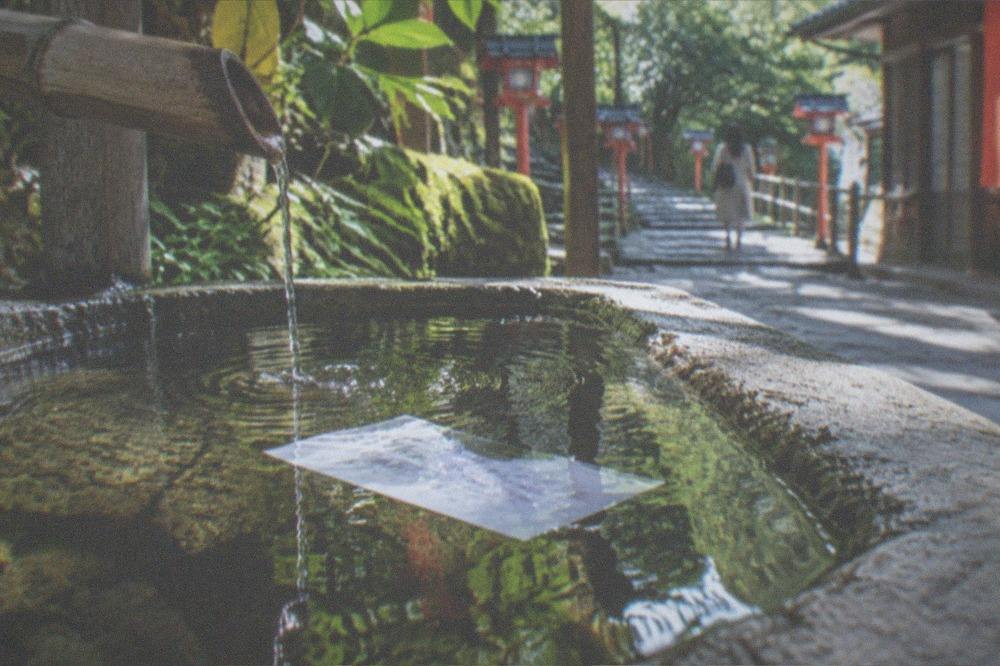
The water theme runs through everything a visitor actually does here. The shrine's paper fortunes, the omikuji sold at the hall, are the water-divination type: you float the paper on the shrine's stream and the characters appear as the water soaks through. It is one of the more theatrical fortune rituals in Japan, and it exists because the shrine's whole identity is water. The cold river itself, running fast and clear beside the village, is the reason the shrine was built where it was.
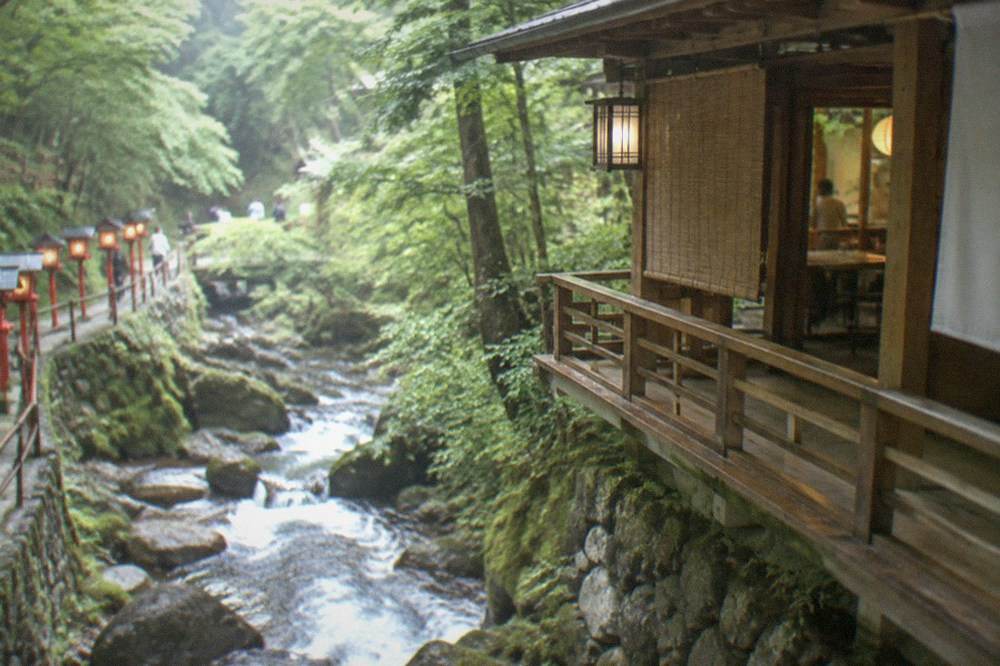
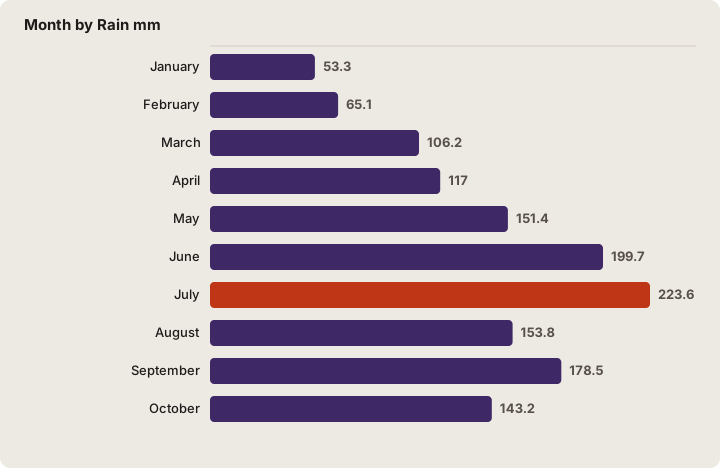
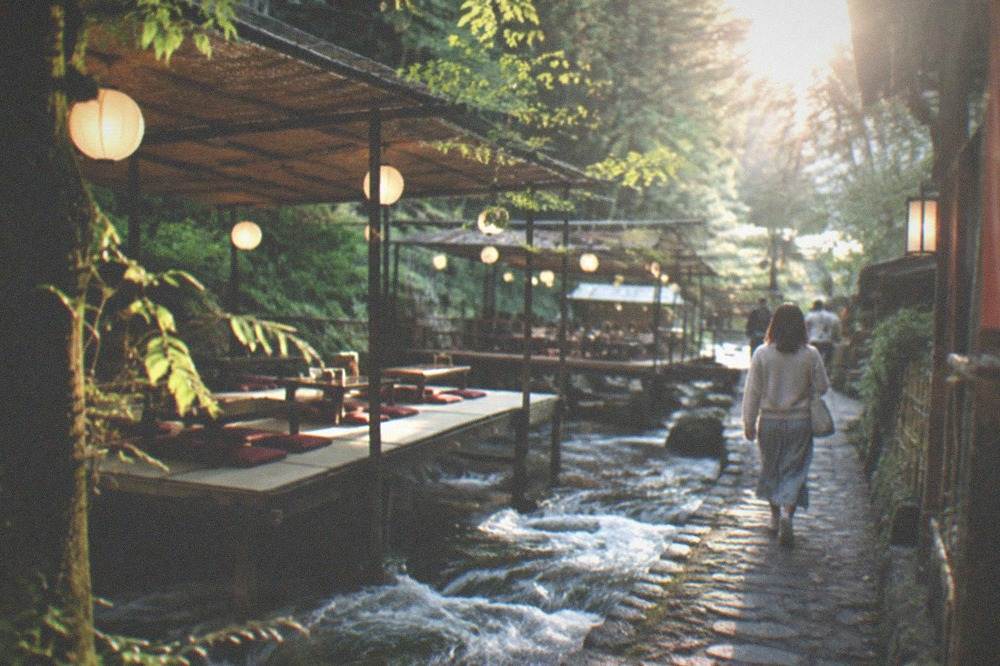
Kibune's other famous tradition is the summer dining that happens on platforms built over the river, called kawadoko. From late spring through summer, restaurants along the stream serve meals on floors laid a hand's width above the water, and the point is the temperature: the river keeps the platform noticeably cooler than the valley air. Kyoto's climate record makes the appeal obvious, since July averages 223.6 mm of rain and a mean daily maximum of 32.0 C, and August is hotter still at 33.7 C. Prices, dates and reservations for kawadoko change yearly and are set by each restaurant, so this page prints none of them; book directly with the house you want.
If the mountain-shrine combination appeals, a guided walk removes the planning burden. The Kurama to Kibune route is the classic pairing, and a local guide handles the train connections and the trailhead.
How Do You Get To Kifune Shrine From Central Kyoto?
There is no single through train, so every route to Kifune Shrine involves reaching the Eizan Railway's Kurama Line from Demachiyanagi Station in northern Kyoto, then riding to Kibune-guchi Station and taking a short bus or a walk of roughly 20 to 30 minutes up the valley road to the village. The shrine sits above the village from there. Total journey time from Kyoto Station is on the order of an hour to an hour and a half depending on connections.
The honest caveat: this site's verified fact base carries Kyoto's bus, subway and airport fares in detail, but it does not carry Eizan Railway fares or a verified door-to-door journey time for Kibune, so no exact fare or minute count is printed here. The structure of the trip is well established, though. From Kyoto Station you take the JR Nara Line or the Karasuma subway line north to the Demachiyanagi interchange area, and from Demachiyanagi the Eizan Railway main line runs toward Kurama. Kibune-guchi is the stop for the village.
| Leg | Operator or line | Verified fare |
|---|---|---|
| Kyoto city bus, any single ride | Kyoto City Bus | Adult 230 yen, child 120 yen |
| Kyoto subway, by zone | Kyoto Municipal Subway | Adult 220 to 360 yen by zone |
| Subway and Bus One-Day Pass | Kyoto Municipal Transportation Bureau | 1,100 yen adult, 550 yen child |
| Eizan Railway Demachiyanagi to Kibune-guchi | Eizan Railway | Not in this site's verified fact base; check the operator's fare table |
The one-day pass is worth knowing about even though it will not cover the Eizan leg, because the bus-only one-day pass no longer exists. Sales of that old product ended in September 2023 and its last day of use was 31 March 2024; the current product is the Subway and Bus One-Day Pass at 1,100 yen, and the transportation bureau's own explanation for the abolition was that roughly 90 per cent of pass buyers were non-residents and the pass concentrated tourists on the buses. If you are spending the morning in the city before heading north, the combined pass can still pay for itself across a few rides.
The Eizan Railway ride is itself part of the attraction. The line runs out of the city grid and into the narrow valleys, and one stretch of the Kurama Line is famous for maple colour in autumn, when the train slows through a tunnel of leaves. The Kyoto Autumn Leaves guide on this site covers the season in more depth.
Once you are at Kibune-guchi, there is a seasonal bus up the valley road, and in good weather the walk from the station to the village is a pleasant climb through forest. From the village, the shrine stairway is signposted and short. Visitors with mobility concerns should note that the approach is a stone stairway in a mountain valley, and the Kyoto accessibility guide on this site covers the city's general situation; for the specific conditions at the shrine, contact the shrine directly before you travel.
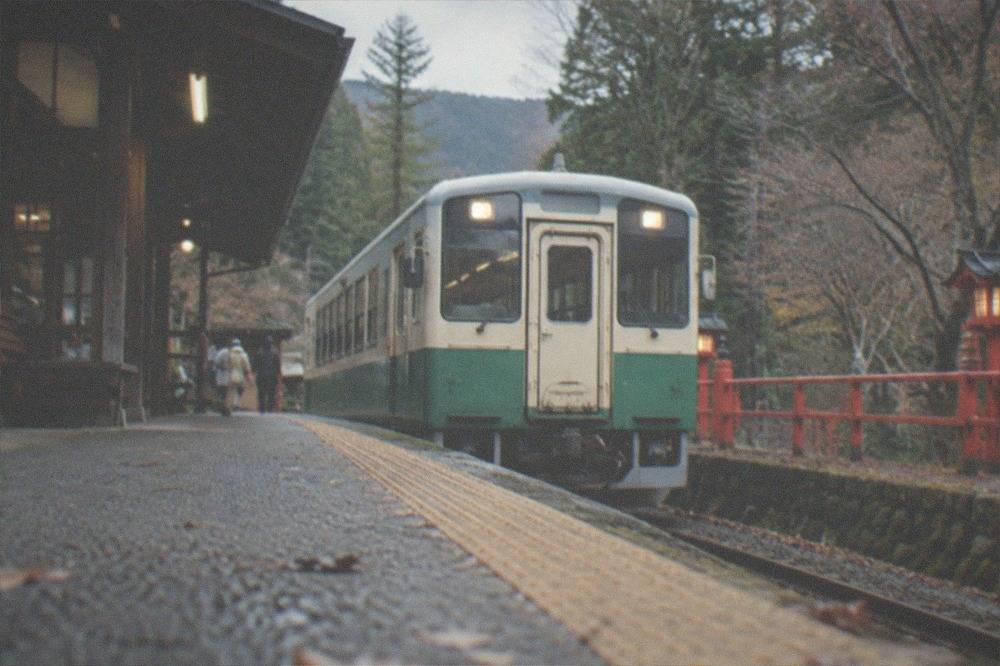
For travellers building a full day around the shrine, the standard shape is Kurama in the morning and Kibune in the afternoon, or the reverse. The two villages sit on opposite sides of the same mountain and are connected by a hiking trail over the ridge, which is the route the guided walks use. The Kurama and Kibune day-trip guide on this site lays out that pairing in detail.
The trail itself is a real mountain hike, not a paved stroll, with root, rock and elevation, and the right footwear matters more than most visitors expect. The guided version covers the same ground with a local guide and hot springs at the Kurama end, rated 4.9 from 63 traveller reviews, running about 4 hours from $80 per person. Check availability through the operator's live listing for current dates and prices.
When Is The Best Time Of Year To Visit Kifune Shrine?
Deep winter and early summer are the two strongest seasons for the stairway itself: January and February bring the heavy snow that turns the lantern corridor into the black-and-white image the shrine is famous for, while June and early July bring the fresh green of the cedar forest and the start of kawadoko riverside dining. Autumn colours the valley from late October, and the mountain runs ahead of the city's early-December maple normal.
The climate record for Kyoto, from the Japan Meteorological Agency's 1991 to 2020 normals at the city station, gives the background. The mountains north of the city run several degrees cooler than these figures, and snow that never reaches downtown Kyoto settles regularly in Kibune, which is the whole reason the winter photographs exist.
| Month | Mean temperature C | Mean daily maximum C | Rain mm | Sunshine hours |
|---|---|---|---|---|
| January | 4.8 | 9.1 | 53.3 | 123.5 |
| February | 5.4 | 10.0 | 65.1 | 122.2 |
| March | 8.8 | 14.1 | 106.2 | 155.4 |
| April | 14.4 | 20.1 | 117.0 | 177.3 |
| May | 19.5 | 25.1 | 151.4 | 182.4 |
| June | 23.3 | 28.1 | 199.7 | 133.1 |
| July | 27.3 | 32.0 | 223.6 | 142.7 |
| August | 28.5 | 33.7 | 153.8 | 182.7 |
| September | 24.4 | 29.2 | 178.5 | 142.7 |
| October | 18.4 | 23.4 | 143.2 | 156.0 |
| November | 12.5 | 17.3 | 73.9 | 140.7 |
| December | 7.2 | 11.6 | 57.3 | 134.4 |
Two readings of that table matter for this trip. First, July is Kyoto's wettest month at 223.6 mm, ahead of June at 199.7 mm, which surprises visitors who assume the rainy season ends when June does. Second, summer heat is now a planning factor in itself: three of Kyoto's six hottest days on record fell in the summers of 2024, 2025 and 2026, and July 2025 was among the five hottest months ever measured at the city station. A mountain valley that runs cooler than downtown is a genuine summer advantage, and it is one reason Kibune's riverside dining season exists at all.
For cherry blossom, the mountain is not the destination. The city's JMA record puts 2026 flowering at 23 March and full bloom at 30 March, against normals of 26 March and 4 April, and the Kyoto cherry blossom itinerary on this site covers the city-side spots. Kibune's value is in the seasons the city cannot offer: reliable snow, cold water and forest colour.
The autumn timing deserves a specific warning. The widely repeated "mid-November peak" for Kyoto maple is not what the official record shows for the city, where the maple normal is 5 December and 2025 was observed on 10 December. Mountain valleys like Kibune and Kurama do colour earlier than the city observatory's specimen tree, and the commercial foliage forecasts place the Arashiyama area around late November in 2026, but this site's verified fact base does not carry a Kibune-specific forecast. Treat late October through late November as the window and check the shrine or the local railway's seasonal notices closer to your date.
What Does A Visit To Kifune Shrine Actually Involve?
A visit is short at the main hall and long in the valley: the lantern stairway, the hall at the top, the water fortunes floated on the stream, and then the river itself, walked along the village road past the kawadoko platforms. Most of an hour covers the shrine proper. The rest of the day is the train ride, the village, the food, and, if you take the ridge trail, the hike over to Kurama and its temple and hot springs.
The stairway is the first act, and it rewards arriving before the crowds. The stone steps are steep but short, and the lanterns stand close enough on both sides that the corridor effect is immediate. Photography is unrestricted on the public approach, which distinguishes Kifune from some of Kyoto's more fraught photography situations. In Gion, by contrast, signs posted by the Gion South Side district council on the private alleys off Hanamikoji threaten a 10,000 yen penalty for photography, and the city-level guidance from the Kyoto City Tourism Association asks visitors not to touch, chase or photograph geiko and maiko without permission. The Higashiyama area guide covers that district's rules in detail. None of that tension exists on a mountain stairway.
At the hall, the standard shrine etiquette applies: a bow at the gate, purification at the water basin, an offering and a prayer at the hall. The water fortunes are the shrine's signature purchase, and the ritual is part of the fun. You buy the paper, float it face-down on the shrine's stream, and watch the characters bloom as the water soaks in. The fortune stays readable after it dries, and many visitors take theirs home.
Beyond the main hall, the upper shrines are a quieter proposition. The inner shrine sits further up the mountainside, and the third hall at the top of the valley is a genuine climb through forest with very few visitors. Neither is required, and neither changes the photographs that brought you here, but both are the difference between a shrine visit and a mountain visit.
The village below is the third act. Kibune is a single road along the river with a handful of historic inns and restaurants, and the kawadoko platforms stand over the water through the warm months. This site's fact base holds no Kibune restaurant prices, and kawadoko menus change yearly, so the honest advice is to book directly with the house and expect a premium over city dining, since the platform season is short and the setting is the product. For city-side eating at verified prices, the guides to Kyoto food and Nishiki Market on this site carry the detail.
What Does A Trip To Kifune Shrine Cost, And What Nearby Sites Charge?
The shrine's own admission figure is not in this site's verified fact base, so no number is printed here; the honest budget is built from the verified transport fares, roughly 500 to 700 yen each way from central Kyoto depending on route, plus food, plus the optional hike. For comparison, Kyoto's major temples charge between 500 and 1,000 yen, a range that changed twice in 2026, so any fee copied from an older guide may now be wrong.
The transport side is fully verifiable, and it is the part most visitors underestimate. A city bus ride is 230 yen flat, the subway runs 220 to 360 yen by zone, and the Eizan leg from Demachiyanagi is a separate private-railway fare this site has not verified, so check the operator's fare table. A round trip to Kibune is therefore a few hundred yen in city transport plus the railway fare each way, plus any bus up the valley road.
| Site | Adult admission | Note |
|---|---|---|
| Kinkaku-ji | 500 yen | Fee set 1 April 2023 |
| Ginkaku-ji | 1,000 yen | Doubled from 500 on 1 April 2026 |
| Ryoan-ji | 600 yen | |
| Tenryu-ji garden | 500 yen | Buildings plus 300, Hatto ceiling 500 separately |
| Sanjusangen-do | 600 yen | 1,001 Kannon statues, stated by the temple |
| Nijo-jo Castle | 800 yen | 1,300 yen with the Ninomaru-goten Palace |
| Kifune Shrine | Not verified | Check with the shrine |
That temple table is included for planning, not decoration. If you are pairing a Kibune day with a city day, the fee stack adds up quickly, and the 2026 changes are the trap: Ginkaku-ji doubled to 1,000 yen from 1 April 2026, its first revision in 32 years, and Tofuku-ji revises its fees on 1 November 2026 with a new 1,000 yen combined ticket and the Tsutenkyo bridge rising to 1,000 yen during the autumn foliage period. A guide written last year is wrong on at least one of these.
For the free side of the ledger, the verified list is short and solid. Fushimi Inari Taisha publishes no fee anywhere on its site, the Kyoto Imperial Palace states it is open to all visitors with no advance application necessary, the Arashiyama bamboo path is a free public right of way, and walking Gion, Pontocho and the Philosopher's Path costs nothing. The free things to do in Kyoto guide on this site expands that list.
If the shrine stairway is your main photographic goal, it is worth comparing it honestly against Kyoto's other famous shrine scenes before you commit a day. The comparison below uses only what this site has verified.
| Scene | What you get | Crowd character |
|---|---|---|
| Kifune lantern stairway | Symmetrical lantern corridor, forest, snow in winter | Filtered by distance; thin early and late |
| Fushimi Inari Senbon torii | Thousands of vermilion gates, enshrined 711, free entry | Heavy; the paths have no closing time, so dawn works |
| Ninenzaka and Sannenzaka | Preserved machiya streets below Kiyomizu-dera | Heavy midday, thin at dawn |
| Yasaka Shrine and Maruyama Park | Open city shrine, evening lanterns | Busy but diffuse |
The Ninenzaka and Sannenzaka guide covers the preserved-street alternative, and the most beautiful shrine in Kyoto answer page makes the broader comparison. Kifune's advantage is that it cannot be replicated downtown: the combination of mountain, water and iron lanterns exists in exactly one place.
What Should You Combine With Kifune Shrine In One Day?
The classic pairing is Kurama, on the other side of the same mountain, reached either by the ridge hiking trail between the two villages or by train around the mountain. Kurama adds a mountain temple, a hot spring and a cable car, making a full day that balances the shrine's quiet with a proper forest hike. The alternative is to stay in the valley and give the whole day to Kibune's river, dining and upper shrines.
The trail between the villages is the version that turns the trip into something memorable. It climbs through cedar forest over the ridge, passes a small shrine at the top, and descends toward Kibune, and it takes a solid couple of hours at a visitor's pace. It is a real hike with real elevation, so weather and footwear matter. In snow the trail is not a casual proposition.
Guided options exist for good reason. The Kurama and Kibune guided hike covers the mountain with a local guide, and the roster on this site also carries small-group cultural experiences that pair well with a mountain day, since they sit at the city end of the same railway line. The Kendo and Samurai Experience with Uniform and Gear, rated 4.8 from 1,183 reviews and running about 2 hours from $103 per person, is a strong morning-before-the-mountains choice, and the Tea Ceremony Class Experience, from $8.05 per person and rated 4.3 from 592 reviews, is the low-cost counterpart.
For travellers without a full day, the honest advice is that Kibune does not compress well. The travel time each way eats a half-day trip, and the village's appeal is precisely its unhurried character. A better half-day mountain alternative from the same Demachiyanagi interchange is the Arashiyama bamboo grove side of the city, which the what is so special about Arashiyama answer page covers. If Kyoto itself is your first visit, start with the one day in Kyoto itinerary and save Kibune for a second trip.
Common Questions About Kifune Shrine
Why Are The Red Lanterns On The Kifune Shrine Steps So Photographed?
The stairway lines up dozens of weathered votive lanterns in two symmetrical rows up a straight stone climb through cedar forest, creating a natural leading line to the shrine gate. The lanterns' aged green surfaces, the mountain setting away from city clutter, and the dramatic seasonal changes, especially snow, make the same structure yield a striking photograph in every season.
Is Kifune Shrine Free To Enter?
This site's verified fact base does not carry Kifune Shrine's admission fee, because the shrine does not publish it in a form the research could verify, so no figure is printed here. Check with the shrine directly before your visit. For comparison, Fushimi Inari Taisha in the city publishes no fee anywhere on its site and is free to enter.
How Do You Get To Kifune Shrine?
Take the subway or JR to Demachiyanagi in northern Kyoto, then the Eizan Railway Kurama Line to Kibune-guchi Station, and finish with the valley bus or a walk of roughly 20 to 30 minutes to the village. The shrine stairway sits above the village. City-side fares are verified at 230 yen per bus ride and 220 to 360 yen by subway zone; the Eizan fare is not in this site's verified base, so check the operator's fare table.
When Is The Best Time To Visit Kifune Shrine?
January and February for snow on the lanterns, June and early July for fresh green and the start of riverside dining, and late October through November for autumn colour in the valley. July is Kyoto's wettest month at 223.6 mm in the JMA 1991 to 2020 normals, so bring rain gear if you go in summer.
Can You Hike Between Kurama And Kibune?
Yes, a ridge trail connects the two villages through cedar forest and takes a solid couple of hours at a visitor's pace. It is a genuine mountain hike with roots, rock and elevation, so it needs proper footwear and is not a casual stroll in snow. Guided versions run the same route with a local guide.
What Is Kifune Shrine The God Of?
Water. Kifune Shrine is the head shrine of water worship in Japan, historically a place of prayer for rain, clear skies and pure water, and roughly 500 shrines nationwide named Kifune or Kibune are affiliated with it. The mountain river running past its halls is treated as the deity's presence, and the shrine's floating paper fortunes are a water-divination ritual.
Kifune Shrine rewards the traveller who gives it a full day: the lantern stairway at dawn, the river along the village, a meal over the water in summer or snow on the steps in winter, and the ridge trail to Kurama if your legs are willing. Build the day around the Eizan Railway's timetable rather than a tight itinerary, check the shrine's own notices for anything time-sensitive, and let the mountain set the pace. For everything else Kyoto holds, the Kyoto Travel Guide homepage is where this site's full coverage begins.