Which Kyoto Temples Have Step-Free Routes: Kinkaku-ji, Heian Shrine, Nijo Castle?
Kyoto's hills, gravel paths and temple steps make step-free planning harder than in flatter cities, but the city's own published fees, hours and transport rules let you build a realistic accessible route.
Short answer
Nijo Castle is the strongest of the three for step-free visiting, with paved grounds and an 8:45 to 16:00 admission window; Kinkaku-ji has a compact garden route but slopes and crowds; Heian Shrine's giant torii and forecourt are reachable on level ground from the nearest subway stop. Fees are 800 yen at Nijo Castle and 500 yen at Kinkaku-ji, and Heian Shrine charges no general admission.
Kyoto recorded 62.79 million visitors in 2025, the city's own tourism survey reports, and it built most of its famous sights long before anyone drew an access map. The result is a city of gravel temple courtyards, stone steps and hillside shrines, sitting next to a subway network that is genuinely modern and lift-equipped. Planning a wheelchair or step-free visit here is not about avoiding the famous places, it is about knowing which of them reward the effort and in what order.
The honest starting point: Kyoto's temples were built on hillsides on purpose, and the sites themselves publish far less access detail than a European museum would. What this guide can do is anchor every fee, hour and transport fact in what the venues and the city actually print, so the plan survives contact with the ground. The Kyoto Travel Guide fact base behind this page was read directly from the castle's, the temples' and the transport bureau's own pages in September 2026, which matters because two temple fees changed this year and one changes again in November.
Which Kyoto Temples Have Step-Free Routes: Kinkaku-ji, Heian Shrine, Nijo Castle?
Of the three, Nijo Castle is the most step-free-friendly, with level paved grounds and admission from 8:45 to 16:00; Heian Shrine offers a flat, open forecourt reachable from a lift-served subway station; Kinkaku-ji has a sloped garden path with stepped viewpoints. Fees run 800 yen at Nijo Castle and 500 yen at Kinkaku-ji, while Heian Shrine charges no general admission. None of the three publishes a formal step-free route map, so plan on terrain and effort, not guarantees.
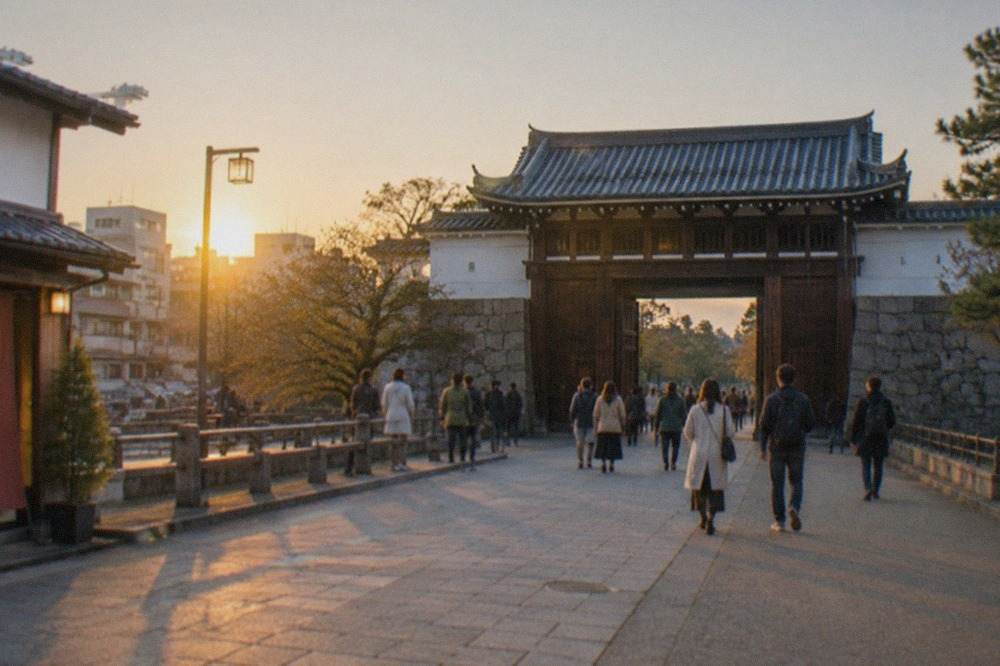
That last sentence matters. The castle's own site prints fees, hours and closures in detail but no accessibility statement; the same is true of Kinkaku-ji's operator, Shokoku-ji, and of Heian Shrine. Any guide promising a certified ramp-by-ramp route at these three is filling a gap with invention. What is verifiable is the ground itself: Nijo-jo Castle sits on flat land in the city centre, Heian Shrine's approach from Okazaki is level parkland, and Kinkaku-ji's garden climbs the hillside around the pond.
For Nijo-jo Castle, the practical detail is that the Ninomaru-goten Palace, the famous interiors with the nightingale floors, involves removing shoes and moving through raised rooms, while the castle grounds, gates and outer gardens are walkable paved space. The Honmaru-goten Palace, reopened after restoration, requires an advance reservation and a further 1,000 yen on top of castle admission, so it needs planning rather than improvisation. The castle stops admitting at 16:00 and closes at 17:00, and the Ninomaru reception runs to 16:10, so an afternoon visit should start by mid-afternoon.
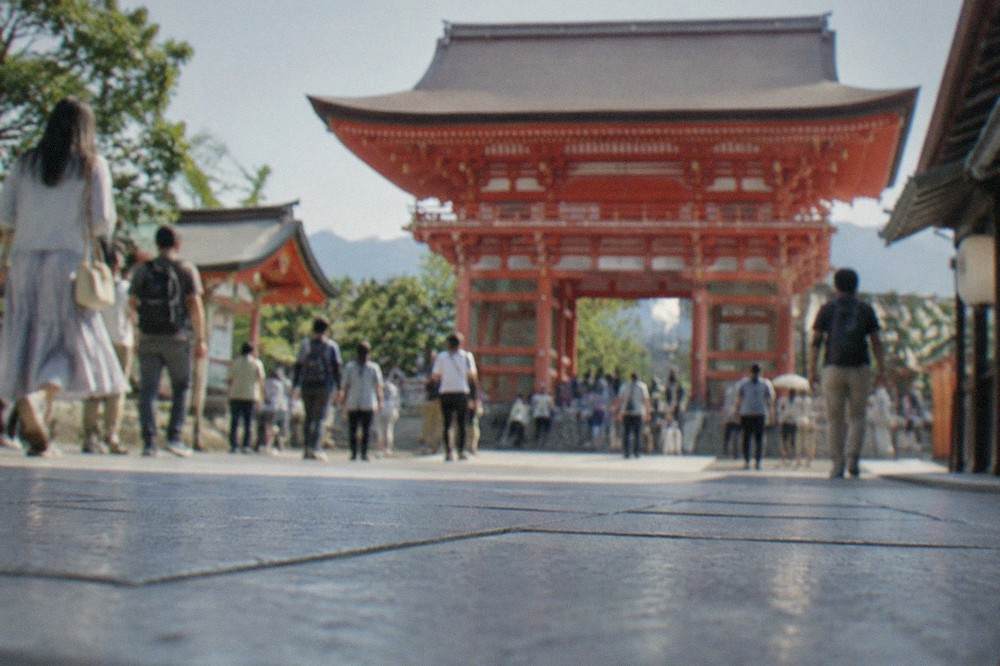
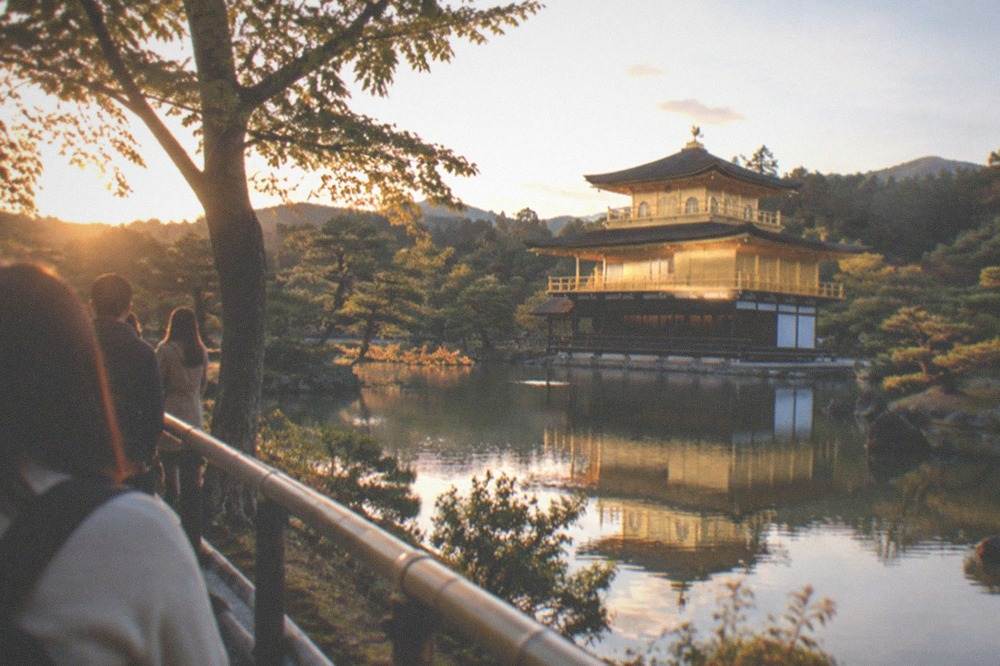
Heian Shrine, covered in detail on the Heian Shrine attraction page, is the easiest of the three to reach without steps: the shrine sits at the edge of the Okazaki museum district, and the approach through the giant torii and the wide forecourt is level ground. The inner garden, which charges admission, involves gravel paths, so the forecourt and the approach are the reliable part. Kinkaku-ji is the hardest sell of the three for a wheelchair user: the 500 yen garden route circles the pond on paths that climb, and the best viewpoints of the pavilion sit on terraces reached by steps. The pavilion itself is viewed from outside, so a companion-assisted partial circuit still delivers the famous reflection shot from the near shore.
What Does Accessible Kyoto Actually Cost in Temple Fees?
The verified fee card for the sites on a step-free Kyoto plan runs 800 yen at Nijo Castle, 1,300 yen including the Ninomaru-goten Palace, 500 yen at Kinkaku-ji, and no general admission at Heian Shrine, Fushimi Inari Taisha or the Kyoto Imperial Palace. Ginkaku-ji doubled to 1,000 yen on 1 April 2026, and Tofuku-ji revises its fees on 1 November 2026, so any fee list copied from a 2024 guide is already wrong in at least two places.
Fees are the easy part of access planning, because the venues print them. The table below is the verified card for the sites most likely to appear on an accessible itinerary, with the 2026 changes flagged.
| Site | Adult fee | 2026 change to know | Step-free reality |
|---|---|---|---|
| Nijo-jo Castle | 800 yen; 1,300 with Ninomaru-goten | Honmaru-goten extra 1,000, advance reservation | Level paved grounds; palace interiors raised |
| Kinkaku-ji | 500 yen | none this year | Sloped garden path, stepped viewpoints |
| Heian Shrine | no general admission | none | Level forecourt; gravel inner garden |
| Ginkaku-ji | 1,000 yen | doubled from 500 on 1 April 2026 | Hillside path, the least flat of the big names |
| Sanjusangen-do | 600 yen | none | Single level hall interior |
| Nanzen-ji Hojo garden | 600 yen | none | Gravel courtyard terrain |
| Fushimi Inari Taisha | free | none | Approach is level; the mountain is not |
| Kyoto Imperial Palace | free | none | Open to all, no advance application |
The Ginkaku-ji doubling is worth pausing on for budgeting, not just accuracy. At 1,000 yen the Silver Pavilion now costs twice Kinkaku-ji's 500, and its garden route is the steeper walk of the two, so for a step-free visit the Golden Pavilion is both the cheaper and the more practical pavilion. The full temple landscape, including the Tofuku-ji revision that lifts the Tsutenkyo bridge ticket to 1,000 yen during the autumn foliage period, is laid out on the Kyoto temples guide.
How Do You Get Around Kyoto in a Wheelchair?
Kyoto's subway is the step-free backbone: fares run 220 to 360 yen by zone, every line connects through lift-equipped stations, and the Subway and Bus One-Day Pass costs 1,100 yen. City buses charge a flat 230 yen but involve steps at boarding, so the subway plus the EX100 and EX101 tourist express buses, at 500 yen a ride, are the reliable core. The bus-only one-day pass no longer exists; the product is the combined Subway and Bus pass.
The transport bureau's own fare pages are the source here, and they settle several arguments at once. The subway's two lines, the Karasuma and Tozai, cross at Karasuma Oike and Shijo, and the Tozai line serves Nijo-jo-mae station, which is the castle's stop. Higashiyama station on the Tozai line is the subway point for Heian Shrine and the Okazaki district. That gives two of this page's three headline sites direct, lift-served rail access, which is the single most useful fact in accessible Kyoto planning.
Kinkaku-ji is the exception that proves the rule: the Golden Pavilion has no subway stop nearby, and the city buses that serve it are the flat-fare 230 yen fleet, which board via steps. The EX100 and EX101 tourist expresses run from Kyoto Station to the Kiyomizu side and on to Gion, Okazaki and Ginkaku-ji, with fewer stops and a 500 yen adult fare payable in cash or by IC card. The city introduced them explicitly to spread visitors off the crowded local buses.
| Transport | Fare | Step-free notes |
|---|---|---|
| Subway, zones 1 to 5 | 220 / 260 / 290 / 330 / 360 yen | Lifts at stations; Tozai line serves Nijo-jo-mae and Higashiyama |
| City bus, flat fare | 230 yen adult, 120 yen child | Steps at boarding; luggage and wheelchairs a known problem |
| EX100 / EX101 tourist express | 500 yen adult, 250 yen child | Fewer stops, faster, cash or IC |
| Subway and Bus One-Day Pass | 1,100 yen adult, 550 yen child | Covers subway and city buses |
| Subway One-Day Pass | 800 yen adult, 400 yen child | Subway only |
| ICOCA card | 2,000 yen with 500 yen deposit | Rechargeable IC card for buses, subway and rail |
Taxis fill the Kinkaku-ji gap, and they are the practical answer wherever the subway does not reach. For a step-free day that includes the Golden Pavilion, a taxi to Kinkaku-ji followed by the subway between the flat-served sites is the pattern that works with the least friction. An IC card such as ICOCA, bought with a 500 yen deposit, covers the subway, the express buses and the local fleet without handling coins at every gate.
What Does a Realistic Step-Free Day in Kyoto Look Like?
Start at Nijo-jo Castle from Nijo-jo-mae station in the morning while admission runs from 8:45, take the Tozai line to Higashiyama for the level Heian Shrine forecourt and Okazaki, and give Kinkaku-ji a separate half-day reached by taxi. The sequencing is driven by verified closing windows: the castle stops admitting at 16:00, and winter afternoons end early everywhere, with Ginkaku-ji closing at 16:30 from December and Nanzen-ji at 16:30 in winter.
The reason to front-load the castle is not just the 16:00 admission cutoff. The Ninomaru-goten reception closes at 16:10, and the palace also closes every Tuesday in January, July, August and December unless that Tuesday is a holiday, with the whole castle shut 29 to 31 December. A morning slot also avoids the worst of the coach groups that the city's own overtourism measures were designed to disperse.
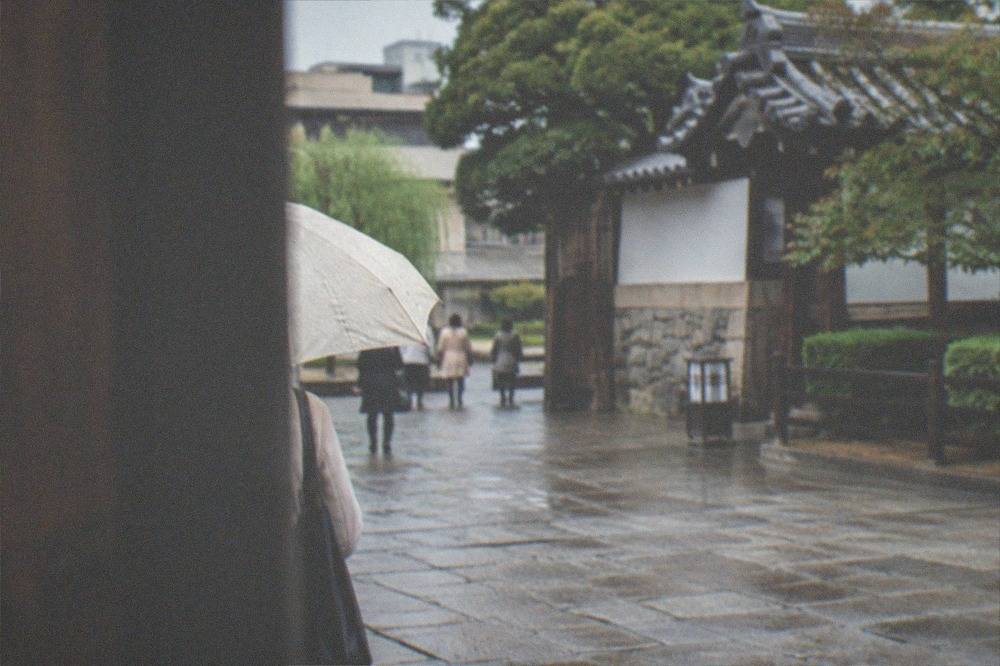
The afternoon half of that day belongs to Okazaki. Heian Shrine's torii and forecourt are free and level, and the district around them holds the Kyoto City Zoo, the museum quarter and flat parkland, all connected by short, level walks from Higashiyama station. The shrine is also on the EX100 route, so a visitor staying near Kyoto Station can ride the express bus straight into the district without a transfer. For evening planning, the Kyoto at night itinerary keeps to the flat downtown core around Kawaramachi and the Kamo River, which is one of the city's genuinely level, pleasant wheelchair routes.
Kinkaku-ji deserves its own half-day rather than a rushed add-on. The 500 yen garden is compact, but the slopes and the crowd density mean a wheelchair user will want a companion, an unhurried window and a taxi waiting rather than a bus connection. Pairing it with the nearby Ryoan-ji, 600 yen with the same Shokoku-ji heritage, works for ambulant visitors who manage steps, but the rock garden's approach is gravel, so treat both as effort-managed rather than step-free.
Which Other Kyoto Sites Work for Step-Free Visits?
Beyond the headline three, the strongest step-free picks are the Kyoto Imperial Palace, which states it is open to all visitors with no advance application, Fushimi Inari Taisha's level approach and main shrine grounds, which charge nothing, and Sanjusangen-do's single-level hall, at 600 yen. The weakest are the Sagano Romantic Train's hillside stations, the Hozugawa Kudari boats and the Philosopher's Path's canal-side slopes, which reward ambulant visitors far more than wheelchair users.
The Imperial Palace is the quiet star of accessible Kyoto. The Imperial Household Agency's English page states plainly that the palace is open to all visitors and that no advance application is necessary, and entry is free. The palace sits in the Kyoto Gyoen park, flat former palace grounds that are among the most wheelchair-friendly open space in the city centre. Hours are not printed in a form this site can verify, so check the agency's page for the current schedule rather than trusting a guidebook's table.
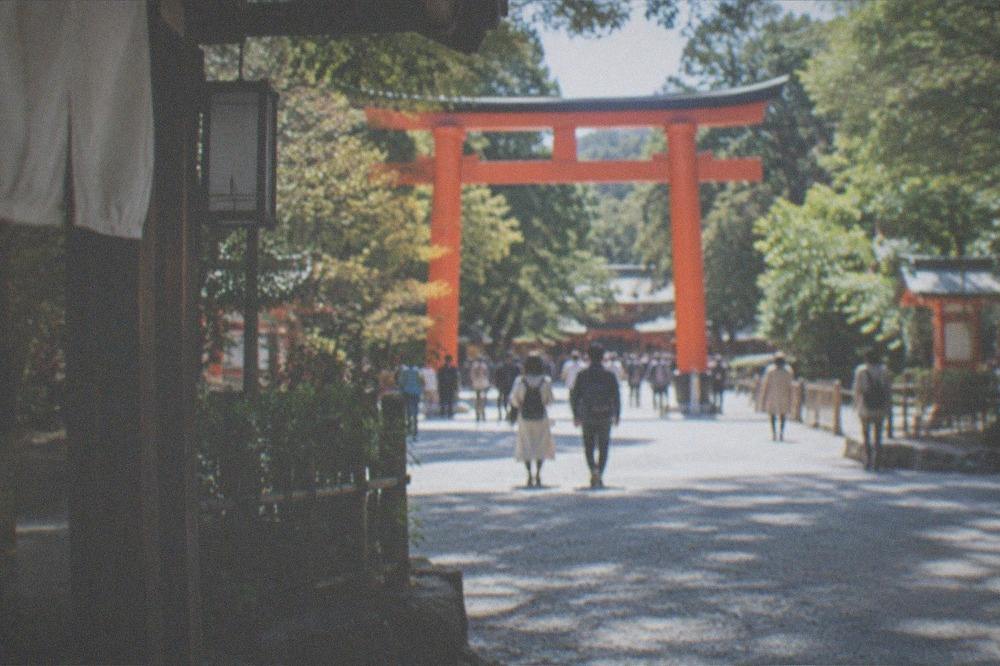
Fushimi Inari, covered fully on the Fushimi Inari shrine page, is free and its main precinct is level ground at the base of Inariyama. The shrine publishes desk and prayer hours only, and the mountain paths have no closing time, but the full torii tunnel climb is a mountain hike, not a step-free route. The realistic accessible visit is the main shrine buildings and the start of the approach, which is where most of the photography happens anyway. The shrine dates its founding to 711, when, by its own account, Irogu no Hatanokimi enshrined the deities on Inariyama at imperial order, and it is the head shrine of about 30,000 Inari shrines nationwide.
Sanjusangen-do is a single long hall holding 1,001 Kannon statues, a temple-stated figure, and its interior is one level space, which makes it one of the few big-name temples where the whole point of the visit is reachable without stairs. Admission is 600 yen general, and the hall opens 8:30 to 17:00 from 1 April to 15 November, 9:00 to 16:00 through the winter, open every day.
The sites to deprioritise on mobility grounds are equally worth naming. The Sagano Romantic Train in Arashiyama, 880 yen one way, serves beautiful scenery from stations built into the valley side, and the Hozugawa Kudari boats, 6,000 yen adult, are river boats boarded from the bank. The Iwatayama Monkey Park is a genuine hill climb, 800 yen and cash only, with a 20-minute ascent to the summit. None of these is impossible for a determined traveller with support, but none belongs on a step-free plan built around ease.
When Should You Visit Kyoto for Easier Access Conditions?
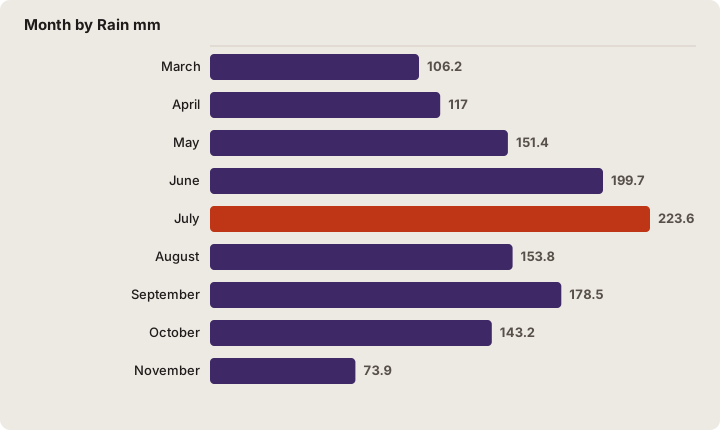
Late March to April and October to November give Kyoto's most comfortable walking temperatures, but the verified crowd data argues for the shoulders: the city drew 62.79 million visitors in 2025, and the JMA normals show July is the wettest month at 223.6 mm and August the hottest at a 28.5 C mean. For a step-free visit, May, June before the rain peaks, and late autumn after the foliage rush offer level-path weather without peak crush.
The climate table below comes from the Japan Meteorological Agency's 1991 to 2020 normals for Kyoto station, and it is the basis for any honest seasonal advice. The detail most guides get wrong is the rain: July, not June, is Kyoto's wettest month, 223.6 mm against 199.7 mm. August is both the hottest month and the sunniest, and a 33.7 C mean daily high on sloped temple paths is a genuine access problem, not a comfort footnote.
| Month | Rain mm | Mean C | Mean daily max C | Sunshine h |
|---|---|---|---|---|
| March | 106.2 | 8.8 | 14.1 | 155.4 |
| April | 117.0 | 14.4 | 20.1 | 177.3 |
| May | 151.4 | 19.5 | 25.1 | 182.4 |
| June | 199.7 | 23.3 | 28.1 | 133.1 |
| July | 223.6 | 27.3 | 32.0 | 142.7 |
| August | 153.8 | 28.5 | 33.7 | 182.7 |
| September | 178.5 | 24.4 | 29.2 | 142.7 |
| October | 143.2 | 18.4 | 23.4 | 156.0 |
| November | 73.9 | 12.5 | 17.3 | 140.7 |
Crowds compound terrain. The city's 2025 survey recorded 62.79 million visitors, a record, with 46.20 million of them day visitors, and the city has responded with dispersal measures including the tourist express buses and the morning and evening campaigns. The cherry and maple peaks are the hardest times to move gently: JMA's 2026 full bloom fell on 30 March against a normal of 4 April, and the maple red-leaf marker, the official observatory date, is 5 December, far later than the mid-November peak most guides claim. The cherry blossom itinerary and the autumn leaves itinerary cover those seasons if you are locked to them.
What Should Wheelchair Users Know About Kyoto's Rules and Costs?
The rules that most affect an accessible trip are the Gion alley photography ban, enforced by district-council signage threatening a 10,000 yen penalty, the Nishiki Market rule against eating while walking, and the accommodation tax change of 1 March 2026, which lifted the top tier from 1,000 to 10,000 yen per person per night. None of these blocks a step-free visit, but all three change how a day and a budget should be built.
The Gion rules deserve precision because most coverage blurs them. The city's tourism association publishes conduct guidelines: do not touch, chase or photograph geiko and maiko without permission, and do not enter private property or photograph where prohibited. The stricter measures, the private-alley entry bans and the 10,000 yen penalty, come from the Gion South Side district council's signage on the private lanes off Hanamikoji, not from a city ordinance, so describe them as signs threatening a penalty, never as a city fine. Gion's main streets remain public and walkable, and the flat grid around Hanamikoji and Shijo is one of downtown Kyoto's easier wheelchair areas.
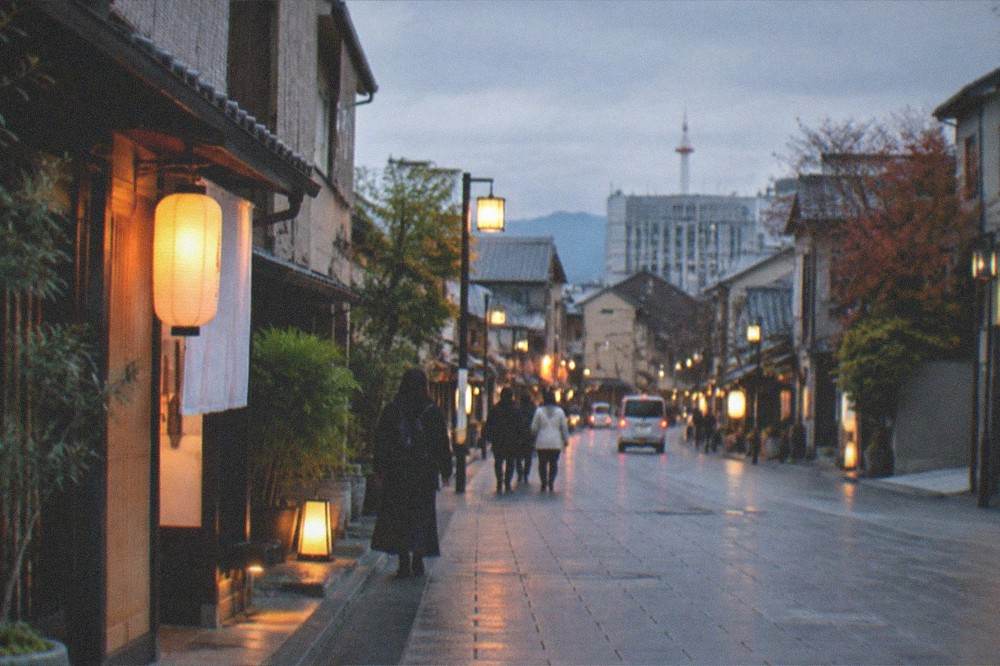
The accommodation tax change is the budget line most visitors will not have seen. From 1 March 2026 the tiers run 200 yen for rooms under 6,000 yen, 400 yen up to 20,000, 1,000 yen up to 50,000, 4,000 yen up to 100,000, and 10,000 yen at 100,000 and up, per person per night on the room-only charge. For a traveller paying for an accessible room, which tends to sit in the mid tiers, the doubling from 500 to 1,000 yen on a 20,000 yen room is real money across a week. The budget guide and the free things to do guide cover the other side of the ledger.
Nishiki Market's rule matters for pacing: the market's own guidance is that eating while walking is not permitted, and visitors eat at the stall or a designated spot, which is worth knowing before planning a rolling lunch through the arcade. The market has no unified hours, each shop keeps its own, roughly 9 or 10:00 to 17 or 18:00, so no single opening time should be trusted as official. The covered arcade is flat, but narrow and crowded at lunch.
Should You Book a Guided Tour for an Accessible Kyoto Visit?
A guided visit solves the problem this page cannot: local knowledge of which gate, which lift and which timing works on the day. The Nijo Castle history walk on GuruWalk, a free tip-based tour led by a local guide, covers the samurai history of the castle, and the paid Nijo Castle World Heritage tour at 41 dollars includes admission plus a licensed guide, while the Early Morning Tour with an English-speaking guide from 82 dollars covers the highlights before the midday crush.
The GuruWalk option deserves the honesty note this site always attaches to it: the Nijo Castle the Samurai Secret walk is a free, tip-based tour on GuruWalk, not one of this site's products, which is why it is named here. Admission is not included in that walk, so budget the 800 yen, or 1,300 yen with the Ninomaru-goten Palace, separately. The paid alternative, the Nijo Castle World Heritage guided tour, includes admission and runs about an hour and a half with a licensed guide, which is a sensible length for a castle visit built around the 16:00 admission cutoff.
For a first visit that needs to cover more ground, the Early Morning Tour with an English Speaking Guide runs 5 to 6 hours from 82 dollars with a 4.9 rating across 1,998 reviews, and its morning slot aligns with the dispersal logic the city itself promotes. One caution applies to any group tour for a wheelchair user: confirm the mobility arrangements with the operator before booking, because temple terrain varies site by site and no tour listing states ramp details reliably. The things to do overview covers the wider selection for a longer stay.
Common Questions About Accessible Kyoto
Which Kyoto Temples Have Step-Free Routes: Kinkaku-ji, Heian Shrine, Nijo Castle?
Nijo Castle offers the most step-free-friendly visit of the three, with level paved grounds, an 800 yen admission and a 1,300 yen ticket including the Ninomaru-goten Palace. Heian Shrine's torii, forecourt and approach are level and free. Kinkaku-ji, at 500 yen, has a sloped garden with stepped viewpoints, so it suits companion-assisted visits best. None of the three publishes an official step-free route map, so plan on terrain and support rather than certified routes.
Is the Kyoto Subway Wheelchair Accessible?
Yes, the subway is the step-free backbone of the city. Fares run 220 to 360 yen by zone, the Karasuma and Tozai lines interchange at lift-served central stations, and the Tozai line serves Nijo-jo-mae for Nijo Castle and Higashiyama for Heian Shrine directly. The Subway and Bus One-Day Pass costs 1,100 yen and covers the subway plus the city bus network.
Is Fushimi Inari Accessible for Wheelchair Users?
The main shrine precinct and the level approach are accessible and free, but the torii tunnel and the mountain paths above it are a sustained uphill hike with steps and uneven surfaces, not a step-free route. The shrine publishes no closing time for the paths, only desk and prayer hours. The realistic accessible visit is the base precinct, which holds most of the main buildings and the famous first gates.
How Much Does the Accommodation Tax Cost in Kyoto Now?
From 1 March 2026 the tax runs 200 yen per person per night on rooms under 6,000 yen, 400 yen up to 20,000, 1,000 yen up to 50,000, 4,000 yen up to 100,000, and 10,000 yen on rooms of 100,000 yen and up. The charge applies to the room-only rate, excluding meals and consumption tax. Most mid-range accessible rooms fall in the 1,000 yen tier.
Can You Visit Nijo Castle in a Wheelchair?
The castle grounds, gates and outer areas are largely level and paved, making the site one of central Kyoto's more workable wheelchair visits. The Ninomaru-goten Palace interiors involve removing shoes and moving through raised rooms, and the Honmaru-goten Palace requires an advance reservation plus a further 1,000 yen. Admission runs 8:45 to 16:00, the castle closes at 17:00, and the Ninomaru reception closes at 16:10.
When Is the Best Season for a Step-Free Kyoto Trip?
May and late October to November offer the best mix of comfortable temperatures and manageable crowds for a slower-paced visit. July is Kyoto's wettest month at 223.6 mm on the JMA normals, and August is the hottest at a 28.5 C mean with a 33.7 C mean daily high, which is punishing on sloped temple paths. The cherry and maple peaks bring the year's heaviest crowds on top of a record 62.79 million visitors in 2025.
Whichever of those options carries the day, the same rule from the top of this page still applies: confirm the mobility arrangements with the operator directly, because the terrain facts above come from the venues and the city, and the operator is the one who knows the route on the day.
The pattern that holds all of this together is simple: build the day around the Tozai line, give the castle the morning, keep Okazaki and the downtown grid for the level afternoons, and treat the hillside names as effort-managed extras rather than obligations. Kyoto's oldest sites were never designed for level access, but the city around them, its subway, its express buses and its flat river corridors, was, and a plan built on the verified fees and hours above will hold up on the ground.