What Is So Special About Arashiyama?
Arashiyama is special for its bamboo grove, the Hozugawa river gorge, a UNESCO Zen temple garden and a mountain of wild monkeys, all inside one walkable district west of Kyoto.
Arashiyama sits where the Hozu river leaves the mountains and widens into the Katsura river, on the western edge of Kyoto, and almost everything that makes it special comes from that geography. The bamboo grove is free to walk, the garden at Tenryu-ji is a UNESCO World Heritage property, the Sagano Romantic Train runs up the gorge at 880 yen one way, and the Hozugawa Kudari boat takes about two hours to come back down it for 6,000 yen adult and 4,500 yen child. The district holds all of that within walking distance of one another, which is rarer in Kyoto than it sounds. This page lays out what each piece is and how they fit together, with the verified numbers a planning decision actually needs.
What Is So Special About Arashiyama?
Arashiyama is special because it compresses four very different experiences into one walkable river district: a free public bamboo path, a UNESCO-listed Zen temple garden at Tenryu-ji, a mountain troop of wild macaques at Iwatayama, and the Hozu gorge itself, crossed by the Sagano Romantic Train and descended by the Hozugawa Kudari boat. No other Kyoto district puts a mountain gorge, a World Heritage garden and open bamboo grove within a 20-minute walk of one another.
The depth is the point. Most Kyoto districts are flat and built; Arashiyama ends in forested ridges. The bamboo path, the monkey park and the boat all run against a backdrop of mountains that change colour through the year, and the JMA phenology record for Kyoto puts the maple red-leaf marker at 5 December on the 1991 to 2020 normal, later than most guides claim, so the district's autumn colour stretches deep into the season. For a first sense of how the pieces connect, our Arashiyama area guide walks the whole district end to end.
The bamboo grove itself deserves its own note: it is a free public path with no closing time, and the question of how long it takes to walk is answered separately, because the honest answer depends entirely on the hour you arrive.
Why Is The Bamboo Grove In Arashiyama So Famous?
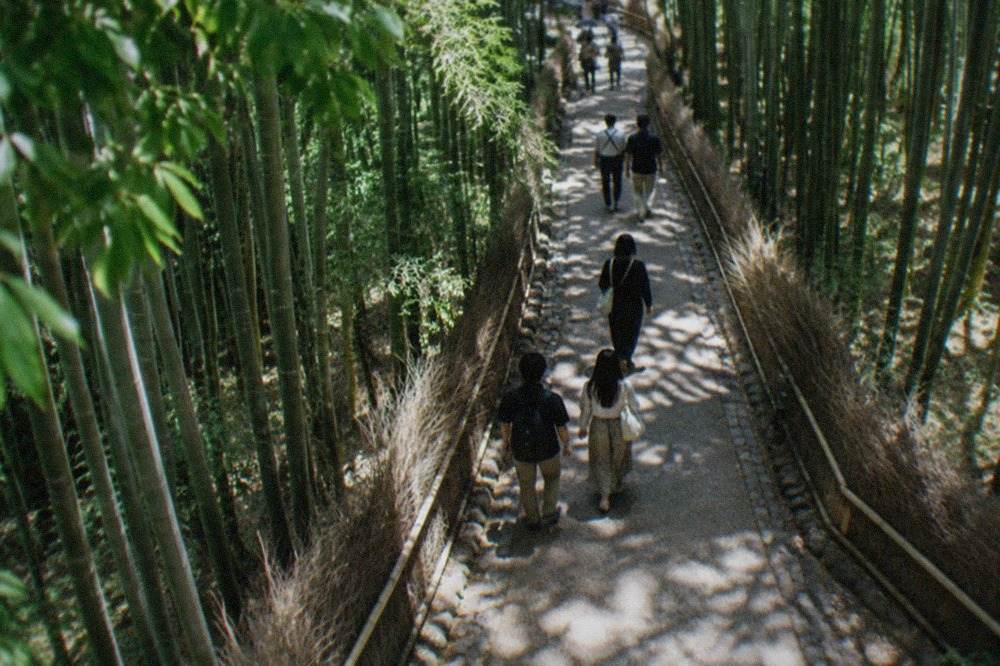
The grove is famous for scale and sound rather than any single monument: a dense stand of moso bamboo, some of it around 15 metres tall, lines a free public walking path between Tenryu-ji and Okochi Sanso with no closing time and no admission. The path is open around the clock, which is why dawn visits are the standard advice for photographers. The bamboo itself is the attraction, and there is nothing else to pay for or queue behind.
What the fame does not tell you is how short the walk is and how quickly it fills. The grove is a corridor, not a park, and by mid-morning it carries a steady stream of visitors in both directions. The practical specialness of the place is that it sits at the top of the district's spine: you exit the grove near the northern entrance of Tenryu-ji, walk the temple's garden east, and come out near the Togetsukyo bridge, which is the whole Arashiyama circuit in about an hour of easy walking. The bamboo path is free, and no primary source confirms any enforced one-way system or crowd rule on it, so plan around the crowds yourself: early, or late afternoon when the day-trip buses leave. This is the kind of district where the Kyoto Travel Guide coverage earns its keep, because the pieces are close together but the timing choices are not obvious.
What Is The Hozu Gorge And Why Does It Define Arashiyama?
The Hozu gorge is the mountain valley the Hozu river cut west of Arashiyama, and two operators run it: the Sagano Romantic Train, a sightseeing railway at 880 yen adult one way and 440 yen child, and the Hozugawa Kudari, a roughly two-hour boat descent at 6,000 yen adult and 4,500 yen child. The gorge is the reason Arashiyama exists as a scenic destination at all; the bridge and the bamboo are its front door.
The boat is the older story. The Hozugawa Kudari descends the same stretch of river the train follows, on scheduled shared boats of 24 seats, with charters at 144,000 or 162,000 yen. Its regular timetable runs 10 March to 13 December 2026 and it is operating. One honest note the operator's own site carries: there was a fatal capsizing in March 2023, and service later resumed, though the operator does not publish the resume date, so any specific date you read elsewhere is unverified. The widely repeated fare of about 4,100 yen is also stale; the operator's own ticket page sets 6,000 and 4,500. If you want the ride, the Hozugawa river boat page covers the practical details, and the related tour below is the ticket itself.
The train is the gentler half. The Sagano Scenic Railway runs roughly March to December, and its ticket page prices the standard one-way fare at 880 yen for adults 12 and over and 440 for children 6 to 12, with toddlers free when accompanied. A closed-day pattern of most Wednesdays is reported but is a lead rather than a published timetable fact, so check the operator's own schedule before locking a plan.
What Else Makes Arashiyama Worth The Trip Beyond The Bamboo?
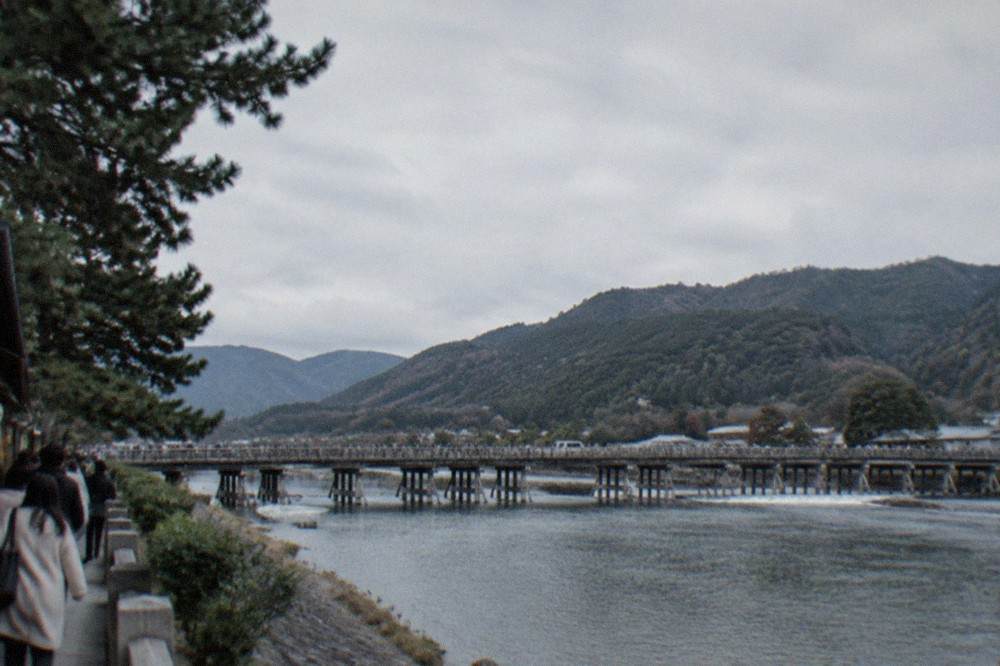
Beyond the bamboo, Arashiyama holds Tenryu-ji, a UNESCO World Heritage Zen temple whose garden is ticketed separately from its buildings and dragon-ceiling hall; Iwatayama Monkey Park, a 20-minute uphill walk to a free-roaming troop of Japanese macaques at 800 yen for visitors 16 and over and 400 for ages 4 to 15; and the Togetsukyo bridge, the district's landmark crossing over the Katsura river.
Tenryu-ji is the cultural weight of the district. Its garden admission is 500 yen for high school age and up and 300 yen for elementary and junior high, with the buildings at garden fee plus 300 yen and the Cloud Dragon ceiling in the Hatto at 500 yen separately. The garden's borrowed scenery, the mountains behind it, is the reason it is on the World Heritage list. The monkey park is the other kind of special: the monkeys are wild, not fed by visitors, and the park closes early in bad weather or when the troop moves back up the hill, so treat 9:00 to 16:00 as a window rather than a promise. Our Iwatayama Monkey Park guide covers the climb and what to expect at the top.
When Is The Best Time To Visit Arashiyama?
The best time to visit Arashiyama is early morning year-round, and the best seasons are late March to early April for cherry blossom and late November into December for maple colour. Kyoto's cherry full-bloom normal is 4 April on the 1991 to 2020 JMA record, and the maple red-leaf normal is 5 December, later than most guides state, which pushes Arashiyama's foliage peak past the crowd peak.
The numbers behind that, from the JMA 1991 to 2020 normals for Kyoto station: March averages 106.2 mm of rain against April's 117.0 mm, and July is the wettest month of the year at 223.6 mm, ahead of June's 199.7 mm. Summer is hot and crowded; August's mean daily maximum is 33.7 C. If you want the full climate picture before choosing dates, the Kyoto weather guide has the month-by-month table, and the city's own crowd comfort forecast, published through Kyoto Tourism Navi, grades congestion at major spots by time slot, which is the single most useful planning tool for the bamboo path.
| Season | What Arashiyama gives you | Verified marker |
|---|---|---|
| Late March to early April | Cherry blossom along the Katsura river | Full-bloom normal 4 April, JMA 1991-2020 |
| May | Fresh green bamboo, mild temperatures | May mean 19.5 C |
| Late November to December | Maple colour on the gorge slopes | Red-leaf normal 5 December, JMA 1991-2020 |
| July to August | Deepest green, but wettest and hottest | July rain 223.6 mm, August mean high 33.7 C |
How Do You Fit Arashiyama Into A Kyoto Trip?
Arashiyama works as a half-day or a full day depending on how much of the gorge you take on. The core circuit, bamboo grove plus Tenryu-ji garden plus Togetsukyo bridge plus the monkey park, is a comfortable half day on foot. Adding the Sagano Romantic Train, the Hozugawa Kudari boat or both turns it into a full day, because the boat alone runs about two hours and the train and boat operate from opposite ends of the gorge.
The routing logic is simple: arrive from the south through the bamboo path, come down through Tenryu-ji, cross Togetsukyo, then choose. The monkey park entrance is just south of the bridge. The train and boat stations are a short walk north on the same side. If you are building a whole Kyoto plan around it, the two-day Kyoto itinerary places Arashiyama on day two, and the first-time visitors itinerary shows how it competes with the eastern hills for a first day. Visitors weighing it against the Higashiyama side of the city should also read why Kiyomizu-dera is so famous, because those two compete for the same morning.
Common Questions About Arashiyama
What Is So Special About Arashiyama?
It compresses a free bamboo path, a UNESCO-listed Zen garden, a wild monkey troop and a boat-and-train river gorge into one walkable district on Kyoto's western edge, which no other part of the city manages.
Is the bamboo grove free?
Yes. The bamboo path is a free public walkway with no closing time. Tenryu-ji, the monkey park, the train and the boat all charge, but the grove itself does not.
How much does the Hozugawa Kudari boat cost?
The operator's own ticket page sets 6,000 yen adult and 4,500 yen child from infant to elementary age, for a ride of about two hours. The widely repeated figure of about 4,100 yen is stale.
How much is the Sagano Romantic Train?
The standard one-way fare is 880 yen for adults 12 and over and 440 yen for children 6 to 12, with toddlers free when accompanied, per the operator's ticket page.
Can you see monkeys in Arashiyama?
Yes, at Iwatayama Monkey Park, a roughly 20-minute uphill walk south of Togetsukyo bridge. Admission is 800 yen for visitors 16 and over and 400 for ages 4 to 15, and the park closes early in bad weather or when the monkeys move back up the hill.
Is Arashiyama worth it outside peak seasons?
Yes. The maple red-leaf normal for Kyoto is 5 December, later than most guides claim, so early December often still holds colour after the November crowds thin, and the grove and gorge are open through the train's roughly March to December season.
Arashiyama earns its place on a Kyoto itinerary because it is the one district where the city's culture and its raw geography sit in the same frame: a World Heritage garden at the foot of a bamboo hill, a bridge over a river that starts as a mountain gorge, and a boat that still runs that gorge the way it has for generations. Pick your season against the JMA normals rather than the guidebook folklore, arrive early, and let the district's own shape, not a checklist, decide how far up the valley you go.