When Does Kyoto's Rainy Season Start And End?
Most guides tell you Kyoto's rainy season is June and leave it there. The Japan Meteorological Agency's own 1991-2020 normals for the Kyoto station tell a more useful story: July, not June, is the wettest month, and the summer that follows is hotter and sunnier than almost any guide admits.
Short answer
Kyoto's rainy season (tsuyu) runs roughly from early June to mid-July, but the JMA 1991-2020 normals show July is actually the city's wettest month at 223.6 mm, ahead of June's 199.7 mm. August is the hottest and sunniest month. The season is a planning fact, not a reason to stay away.
Most guides tell you Kyoto's rainy season is June and leave it there. The Japan Meteorological Agency's own 1991-2020 normals for station 47759 tell a more useful story: July, not June, is the wettest month, at 223.6 mm against June's 199.7 mm, and the summer that follows is hotter and sunnier than almost any guide admits. The rainy season, tsuyu, is real, but it is a planning fact rather than a reason to stay away, and the numbers below, all from the JMA and from venue operators' own pages, are what you should actually plan around.
When Does Kyoto's Rainy Season Start And End?
Kyoto's rainy season, tsuyu, typically begins in early June and ends in mid-to-late July, when the North Pacific high pushes the stationary rain front north. But the JMA 1991-2020 normals for the Kyoto station complicate that picture: July averages 223.6 mm of rain against June's 199.7 mm, so the wettest calendar month often arrives after the front has nominally cleared. Plan for rain from early June through late July, and for the heaviest monthly totals in July itself.
The mechanics are simple. A stationary front, the Baiu front, stalls over the Japanese archipelago in late spring and produces long stretches of overcast, drizzle and occasional heavy falls. When it lifts, usually in the second half of July, the region flips abruptly into full summer heat. That flip is why the two months bracket the season so differently: June is grey, humid and persistently damp, while July mixes intense downpours with genuinely hot, bright days.
The city's own tourism numbers show visitors have noticed none of this. The Kyoto City Tourism Survey for 2025, released on 12 June 2026, recorded a record 62.79 million visitors for the year, with 16.59 million overnight stays. People come in every month, rain or not, and the survey reports satisfaction above 90 percent for both Japanese and foreign visitors. The season shapes what you pack and how you schedule your day, nothing more.
One distinction matters for planning. Tsuyu rain is usually light to moderate and comes in long grey stretches. The heavier, shorter, more dramatic rain arrives with typhoon season, which runs roughly from July to October. September averages 178.5 mm on the JMA normals, more than May or October, and a single typhoon day can deliver a large share of that in hours. Neither makes the city unvisitable; both are easier with the right shoes.
How Much Rain Does Kyoto Actually Get Each Month?
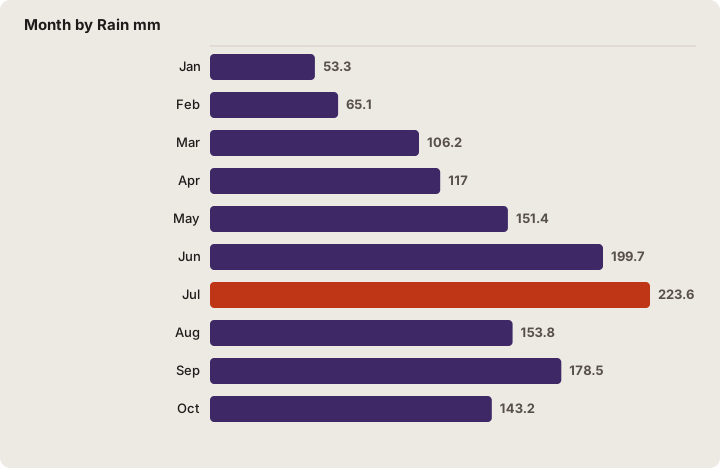
The JMA 1991-2020 normals for Kyoto station put annual rainfall at 1,522.9 mm, spread unevenly across the year: July is wettest at 223.6 mm, June second at 199.7 mm, September third at 178.5 mm, while January is driest at 53.3 mm. August, often assumed to be drier than June, still averages 153.8 mm but is also the sunniest month at 182.7 hours, because its rain falls in short, heavy bursts rather than all-day drizzle.
Here is the full monthly table from the JMA normals for station 47759, the official 30-year average for the city:
| Month | Rain mm | Mean C | Mean daily max C | Mean daily min C | Sunshine h |
|---|---|---|---|---|---|
| Jan | 53.3 | 4.8 | 9.1 | 1.5 | 123.5 |
| Feb | 65.1 | 5.4 | 10.0 | 1.6 | 122.2 |
| Mar | 106.2 | 8.8 | 14.1 | 4.3 | 155.4 |
| Apr | 117.0 | 14.4 | 20.1 | 9.2 | 177.3 |
| May | 151.4 | 19.5 | 25.1 | 14.5 | 182.4 |
| Jun | 199.7 | 23.3 | 28.1 | 19.2 | 133.1 |
| Jul | 223.6 | 27.3 | 32.0 | 23.6 | 142.7 |
| Aug | 153.8 | 28.5 | 33.7 | 24.7 | 182.7 |
| Sep | 178.5 | 24.4 | 29.2 | 20.7 | 142.7 |
| Oct | 143.2 | 18.4 | 23.4 | 14.4 | 156.0 |
| Nov | 73.9 | 12.5 | 17.3 | 8.4 | 140.7 |
| Dec | 57.3 | 7.2 | 11.6 | 3.5 | 134.4 |
Read the June and July rows together and the practical picture appears. June has the least sunshine of any summer month, 133.1 hours, which is what people actually mean when they complain about tsuyu: not the volume of water but the weeks of flat grey light. July gets more rain in absolute terms, 223.6 mm, but also more sun, because it arrives in downpours between bright spells. Photographers generally prefer July; walkers with a bad umbrella generally prefer neither.
The station's long records add context that most guides skip. Kyoto has a real winter, not a mild one: the record low is -11.9 C, set on 16 January 1891, and the deepest snow on record is 41 cm from 26 January 1954. At the other end, three of the six hottest days ever recorded at the station fell in the summers of 2024, 2025 and 2026, and July and August 2025 were both among the five hottest calendar months ever measured here. The rainy season sits at the front door of that heat.
A rainy-day plan is easier to make before you travel than on the morning the sky opens, and Kyoto's indoor options, from kimono rental to museums and craft workshops, fill quickly when everyone in the city has the same idea at the same time. The selection above is a reasonable starting shortlist, and the sections below explain what each kind of activity is actually like.
How Hot And Humid Is Kyoto After The Rain Stops?
August is Kyoto's hottest month, with a mean temperature of 28.5 C and a mean daily maximum of 33.7 C, and it is simultaneously the sunniest month at 182.7 hours of sunshine. Overnight relief is limited: the mean daily minimum in August is 24.7 C. July is nearly as hot, averaging 27.3 C with a mean daily maximum of 32.0 C and nights holding at 23.6 C, so the end of the rainy season flows directly into sustained heat.
The humidity is the part the table cannot show. When the Baiu front lifts, the moisture it leaves behind does not, and the perceived temperature in late July and August runs well above the thermometer reading. This is why Kyoto's summer festivals are structured around early mornings and evenings: Gozan no Okuribi, the bonfire lighting on five mountains, takes place on 16 August, and the city's tourism association promotes early-morning and off-peak visiting as an overtourism measure, with dispersal campaigns running through 2025 and 2026.
For pacing, treat the hours between 11:00 and 15:00 in July and August as indoor hours by design rather than by accident. Temples with covered corridors, museums, tea ceremonies and shopping arcades absorb that block well, and the early and late light is better for photographs anyway. The city's own crowd tool, the Kyoto Tourism Comfort Forecast, publishes five-level crowd predictions for spots and time slots using location data and weather, and it is worth a look the evening before any summer sightseeing day.
If a wet or sweltering afternoon has already reshaped your plans once, you know the value of a booked fallback. A kimono rental with hairstyling is a good one: it is indoors, it takes an hour and a half or so, and the studio keeps you dry while the weather decides what it is doing.
Is The Rainy Season A Bad Time To Visit Kyoto?
No, and the numbers say so plainly: the 2025 city survey recorded 62.79 million visitors, a record, with satisfaction above 90 percent among both Japanese and foreign travellers. Rain in Kyoto is rarely all-day: June averages 133.1 sunshine hours, more than January's 123.5, and the rain that does fall often comes in stretches you can schedule around. The main costs are photographic grey skies, humid walking conditions and crowded indoor attractions on the wettest days.
The honest trade-off runs the other way too. June brings hydrangeas at temples across the city, fewer tour buses at the major sights than spring or autumn, and hotel rates that sit below the cherry-blossom and foliage peaks. The crowds are measurably thinner than the record-setting months: the 2025 survey counted 46.20 million day visitors against 16.59 million overnight stays, and the school-trip cohort, 670,000 students, is largely absent in June.
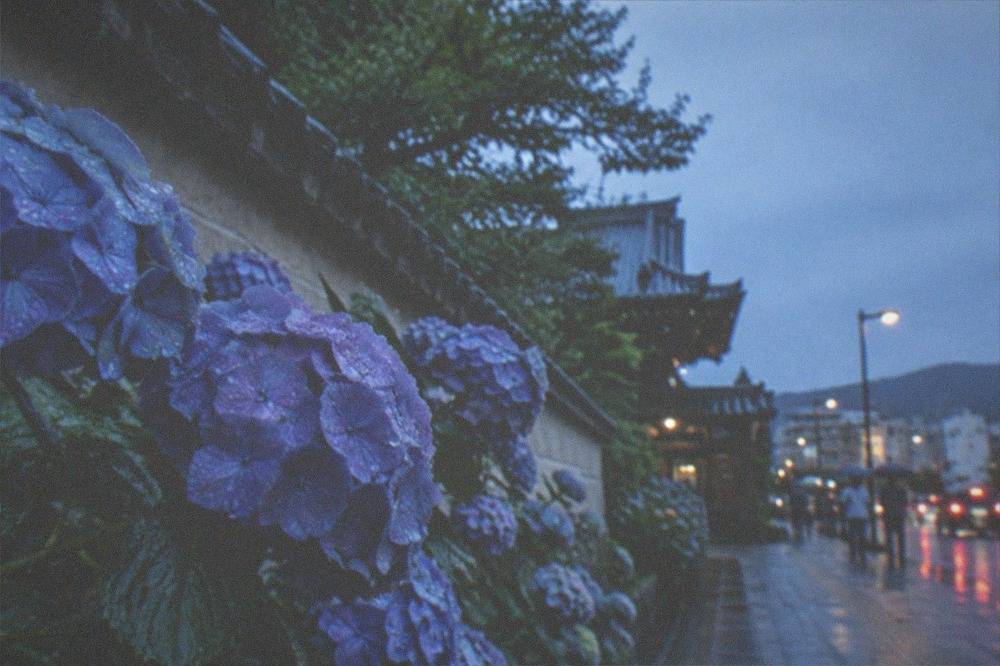
What the season does punish is bad footwear and rigid plans. A fixed-hour itinerary built around five outdoor temples collapses in a day of steady drizzle, while a plan with one anchor sight and one flexible indoor block per day survives anything. The rainy-day itinerary on this site is built exactly for that shape of day, and the general Kyoto weather guide covers the rest of the year.
What Should You Pack For Kyoto's Rainy Season?
Pack for three conditions at once: sustained drizzle, sudden heavy downpours, and 32 C heat between them. The essentials are quick-dry shoes with real grip, a compact umbrella you can carry all day, a light rain shell, and clothes that survive humidity. A plastic bag or dry pouch protects phones and paper temple maps, and a small towel handles both sweat and rain. Cash matters too: Iwatayama Monkey Park, at 800 yen for adults, is cash only.
Umbrellas are the one item you can safely buy in the city rather than pack. Convenience stores sell clear plastic ones cheaply, and losing one to a shrine umbrella stand is a Kyoto rite of passage rather than a disaster. What you cannot buy cheaply at 9:00 outside Kiyomizu-dera is dry socks, so bring more of those than you think you need.
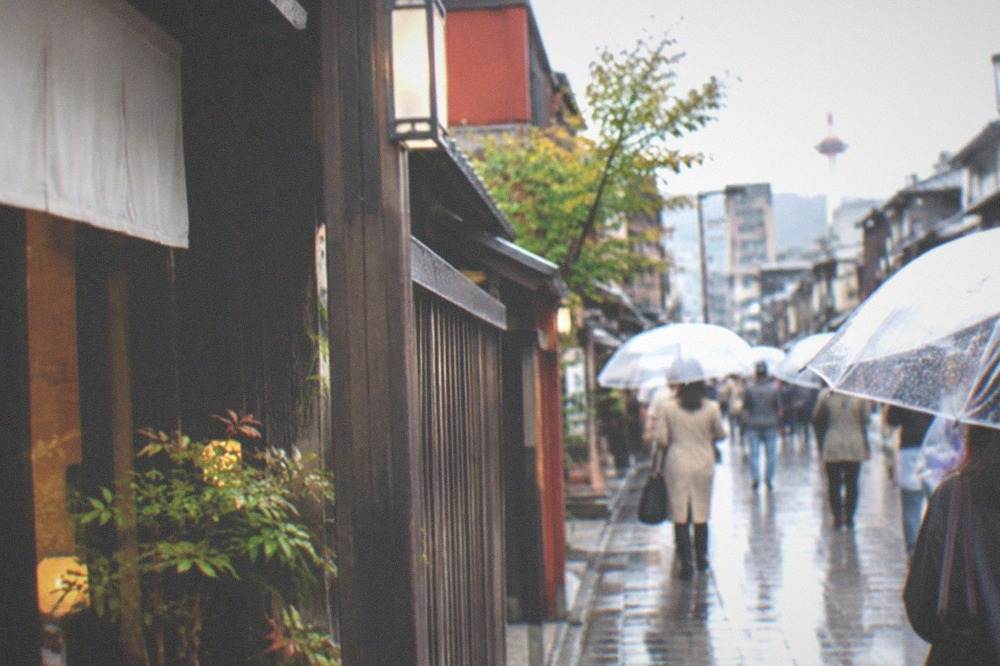
Footwear deserves its own sentence or two. Kyoto's temple approaches, the lanes of Gion and the slopes of Ninenzaka and Sannenzaka are stone, flagstone or packed earth, and they become genuinely slick when wet. Sandals without grip, smooth leather soles and anything you cannot walk in all day are all mistakes here. Trail-style sneakers or any shoe with a soft wet-grip outsole are the correct call from June through September.
What Are The Best Rainy-Day Activities In Kyoto?
The strongest wet-weather anchors are indoors and mostly cheap: Sanjusangen-do and its 1,001 Kannon statues at 600 yen, the Kyoto Railway Museum at 1,500 yen for adults, Nijo-jo Castle's Ninomaru-goten Palace with the combined 1,300 yen ticket, and a tea ceremony from roughly 29 to 79 dollars depending on the house. Museums, covered shopping arcades and cooking classes fill the rest. The fee table below is from each venue's own published rates.
| Venue | Adult admission | Hours | Notes |
|---|---|---|---|
| Sanjusangen-do | 600 yen (group 550) | 1 Apr-15 Nov 8:30-17:00; 16 Nov-31 Mar 9:00-16:00 | 1,001 Kannon statues; open daily |
| Nijo-jo Castle | 800 yen; with Ninomaru-goten Palace 1,300 yen | admission 8:45-16:00, closes 17:00 | Honmaru Palace needs advance reservation, 1,000 yen extra |
| Kyoto Railway Museum | 1,500 yen (18+) | 10:00-17:00, last entry 16:30 | Closed Wednesdays and 30 Dec-1 Jan |
| Nidec Kyoto Tower | 900 yen | 10:00-21:00, last admission 20:30 | Observation deck above the station |
| Ryoan-ji | 600 yen | Mar-Nov 8:00-17:00; Dec-Feb 8:30-16:30 | Rock garden viewable from the hojo veranda |
| Byodo-in (Uji) | 700 yen | garden 8:45-17:30 | Phoenix Hall interior plus 300 yen |
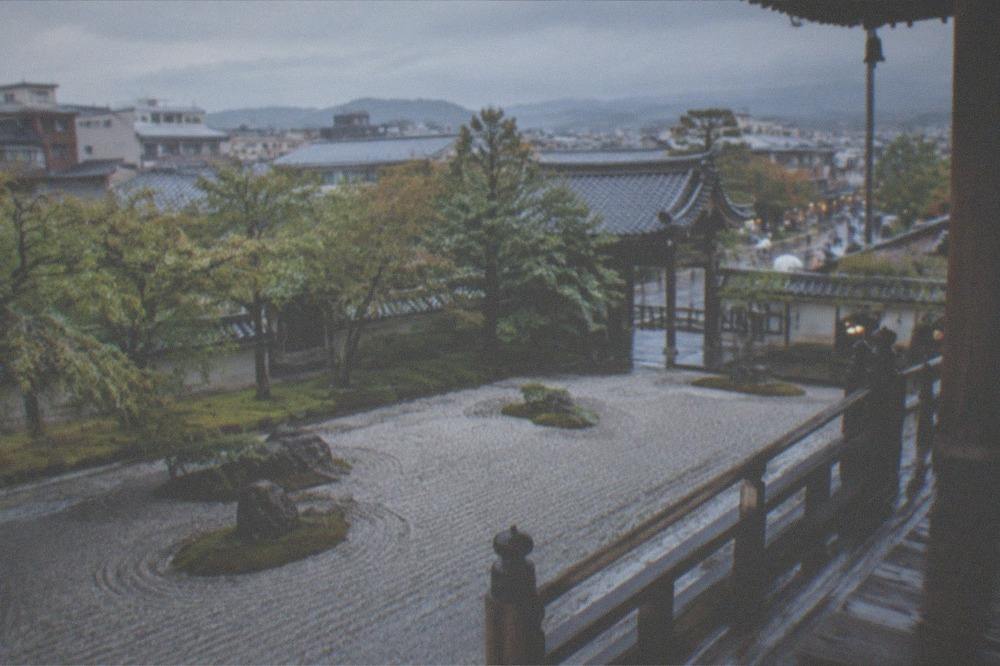
The temples deserve a specific note, because rain changes them rather than closing them. Ryoan-ji's rock garden is viewed from a covered veranda, so a wet afternoon there is a completely workable plan, and the moss at Saiho-ji and other garden temples is at its most saturated colour after rain. Uji's Byodo-in, a short train ride away, keeps its garden open in all weather and its museum indoors. The temples guide covers which halls have covered approaches and which are pure outdoor walks.
Food is the other half of a rainy day. Nishiki Market's covered arcade makes it the single best wet-weather walk in the city centre, though the market's own rules ask visitors to eat at the stall rather than while walking, and shops keep their own hours, roughly 9 or 10:00 to 17 or 18:00, with no unified schedule. A bowl of ramen is the other obvious answer; the ramen guide maps the central shops, most of which queue you indoors. For a longer sit, the restaurant guide includes several reservation-friendly options near covered arcades.
A kimono rental with hairstyling included is the rainy-day activity that turns the weather into a backdrop rather than an obstacle: the dressing happens indoors, the studios are central, and wet stone lanes photograph beautifully in silk. It is also one of the few Kyoto activities that improves in grey light, when the colours read richer and the crowds thin.
How Does Rain Affect Kyoto's Cherry Blossoms And Festivals?
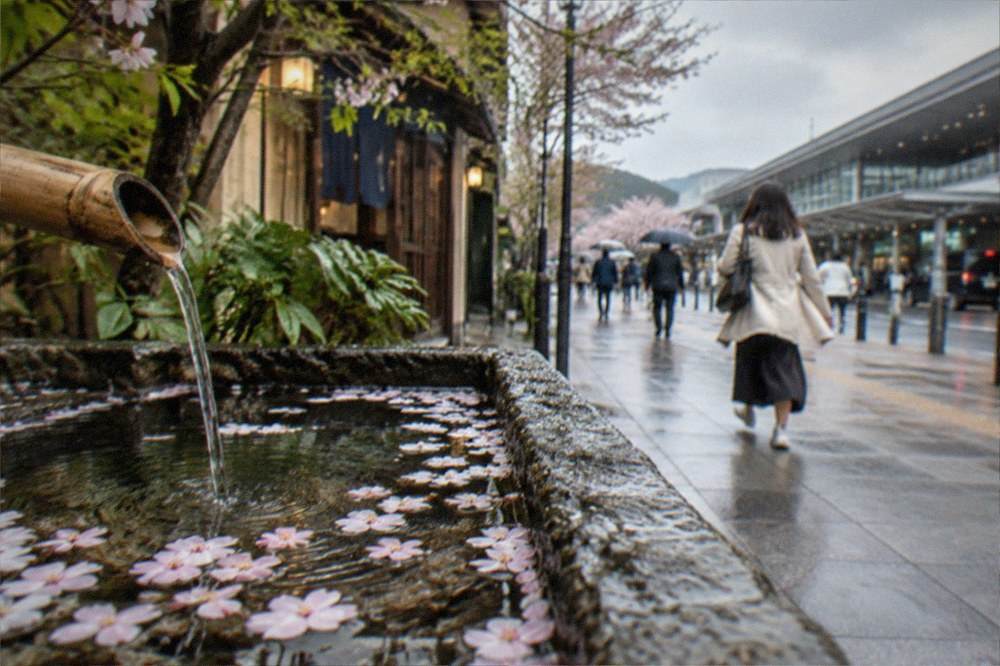
Rain matters most at the edges of the season: the JMA normals put cherry flowering at 26 March and full bloom at 4 April, and heavy rain in that window strips petals fast. In 2026 the observatory recorded flowering on 23 March and full bloom on 30 March, about a week ahead of normal.
The festivals are largely rain-proof in scheduling terms: Gion Matsuri runs the whole of July, Aoi Matsuri is 15 May with a rain postponement to the 16th, and Jidai Matsuri on 22 October postpones in rain.
The blossom timing deserves the detail, because it is the one place where rain and calendar collide for spring travellers:
| Event | 2026 observed | 1991-2020 normal | 2025 observed |
|---|---|---|---|
| Cherry flowering | 23 March | 26 March | 27 March |
| Cherry full bloom | 30 March | 4 April | 5 April |
| Plum flowering | 22 February | 22 February | 11 March |
| Ginkgo yellow | not yet recorded | 24 November | 25 November |
| Maple red | not yet recorded | 5 December | 10 December |
The maple row carries a caveat worth knowing. The JMA normal for red leaves, 5 December, is the observatory's own specimen tree turning, not the Arashiyama foliage peak, so treat it as the official marker rather than the best week; private forecasts for 2026 put the Arashiyama area's colour near the end of November. The cherry blossom itinerary and the autumn leaves guide handle both seasons in depth.
For the summer festivals, rain is a scheduling nuisance rather than a cancellation. Gion Matsuri's two grand processions, the Yamaboko Junko of 17 and 24 July, run in the heart of the wettest month and proceed in ordinary rain; the festivals guide gives the full calendar. Gozan no Okuribi on 16 August is an evening mountain event where a rain shell matters more than an umbrella. The one etiquette point the city itself stresses, from its published visitor guidelines, is behaviour in Gion: no touching, chasing or photographing geiko and maiko without permission, and no entering private alleys, where signs posted by the district council threaten a 10,000 yen penalty for unauthorised photography or entry.
Should You Plan Around Typhoons In Kyoto?
Typhoon season in Japan runs roughly from July to October, and September averages 178.5 mm of rain on the JMA normals, third-wettest after July and June. A typhoon day in Kyoto typically means a few hours of very heavy rain and wind rather than a flooded city, and the practical response is simple: keep one fully indoor day in reserve, check train status before travelling, and never plan a mountain hike or a Hozugawa Kudari boat ride, which runs about two hours on the river, on a typhoon day.
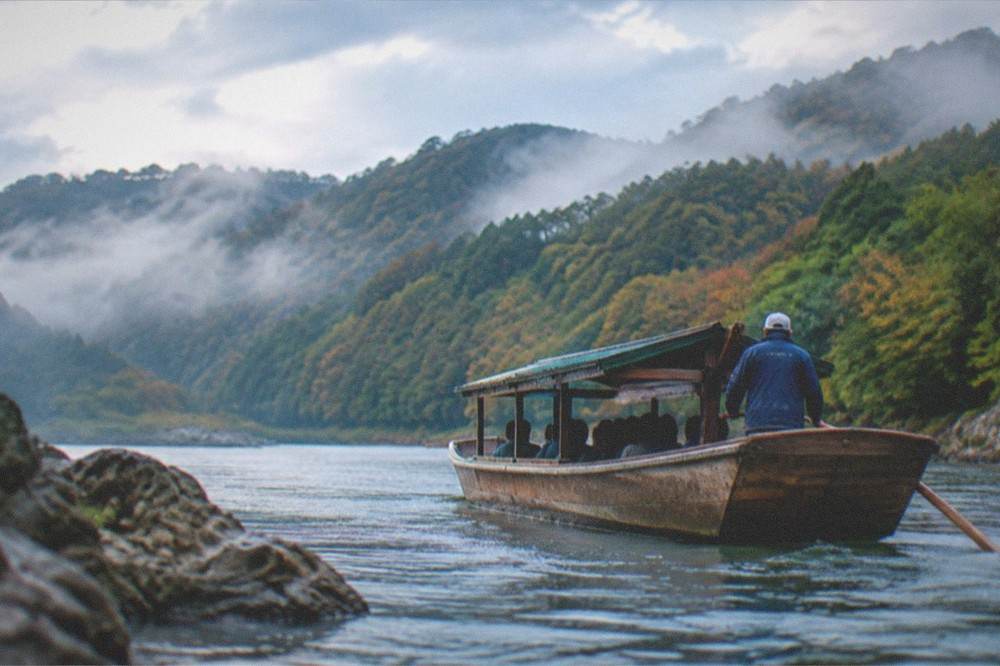
The Hozugawa Kudari is the clearest example of weather-dependent planning in the region. The operator's own timetable runs the regular season from 10 March to 13 December, with reduced winter service and a closure from 29 December to 4 January, and the adult fare is 6,000 yen with children at 4,500. Boats do not run in dangerous conditions, and the operator posts same-day ticket and waiting-time notices. The Sagano Romantic Train on the same side of the city, 880 yen one way for adults, runs roughly hourly through its season and is a fair-weather ride with open-window cars.
Mountain walks deserve the same caution. The Kurama to Kibune hike, the trails above Kiyomizu-dera and the paths around Ohara all turn slippery and, in typhoon aftermath, occasionally blocked. The city's approach cameras and the shrine's own links to the Kyoto Tourism Comfort Forecast are the live tools for judging a marginal morning at Fushimi Inari, whose paths have no closing time and where the shrine's FAQ counts about 10,000 torii across the whole mountain.
For a typhoon-watch afternoon, the Samurai Ninja Museum's skip-the-line basic ticket at 23 dollars is the kind of small, indoor, centrally located booking that rescues a washed-out day, and it is close enough to the covered Teramachi arcades to pair with them.
The fuller samurai experience, an hour and three quarters with a 5.0 rating from 1,470 reviews, goes further: real sword handling under instruction, indoors, with a schedule that survives any weather Kyoto can produce in June.
Between the kimono studios, the samurai and ninja workshops and the museums above, a wet week in Kyoto fills faster than most visitors expect, and the bookings that matter are the ones made before the forecast turns. These three are the strongest of the bunch for a rainy-day shortlist:
Whichever you choose, book the indoor block for the day the forecast looks worst and keep the flexible outdoor sightseeing for the windows of dry weather in between.
Common Questions About Kyoto's Rainy Season
When does Kyoto's rainy season start and end?
Kyoto's rainy season, tsuyu, typically starts in early June and ends in mid-to-late July. The JMA 1991-2020 normals add a twist: July averages 223.6 mm of rain against June's 199.7 mm, so the wettest calendar month often arrives just as the season is nominally ending. Plan for rain from early June through late July.
Is June or July the rainiest month in Kyoto?
July, on the official 30-year normals. July averages 223.6 mm and June 199.7 mm at the Kyoto station. June feels wetter to many visitors because its rain comes as long grey drizzle with only 133.1 hours of sunshine, the least of any summer month, while July's heavier totals fall in shorter downpours between bright spells.
Should I visit Kyoto during the rainy season?
Yes, if you pack for it. The city recorded a record 62.79 million visitors in 2025 with satisfaction above 90 percent, and June brings hydrangeas, thinner crowds and lower hotel rates than spring or autumn. The trade-offs are grey skies for photography, humid walking conditions and busier indoor attractions on the wettest days.
What shoes should I wear in Kyoto's rainy season?
Quick-dry shoes with real wet grip. Kyoto's temple approaches and the stone lanes of Gion, Ninenzaka and Sannenzaka become slick in rain, and a full sightseeing day here is a long walk on stone. Smooth leather soles and gripless sandals are the two most common footwear mistakes from June through September.
Does it rain all day during tsuyu in Kyoto?
Usually not. Rain in June often comes in long stretches rather than continuous downpours, and June still averages 133.1 sunshine hours, more than January. The practical pattern is several hours of drizzle or showers with dry windows between them, which is why a flexible plan with one indoor block per day works better than a fixed outdoor itinerary.
What is there to do in Kyoto when it rains?
Plenty, and much of it is cheap: Sanjusangen-do's 1,001 Kannon statues at 600 yen, the Kyoto Railway Museum at 1,500 yen, Nijo-jo Castle's combined 1,300 yen ticket with the Ninomaru-goten Palace, the covered Nishiki Market arcade, tea ceremonies, cooking classes and the Teramachi shopping arcades. Ryoan-ji's rock garden is viewed from a covered veranda, so it works in rain too.
The rainy season, in the end, is one of Kyoto's more honest seasons. The city is at its greenest, the stone lanes are at their most photogenic under an umbrella, and the crowds that fill the record-setting totals in the city's own survey data are measurably thinner than in cherry-blossom and foliage weeks. Pack the right shoes, keep an indoor block in every day's plan, and let the JMA's own numbers, not a guidebook's folklore about June, set your expectations. For everything outside the wet weeks, the Kyoto Travel Guide homepage is the full index, and the where-to-stay guide picks up exactly where this page leaves off.