Is It Safe To Walk Around Kyoto Late At Night?
Kyoto after dark: what the city's own rules, transport schedules and 2025 visitor survey actually say about walking around Kyoto late at night.
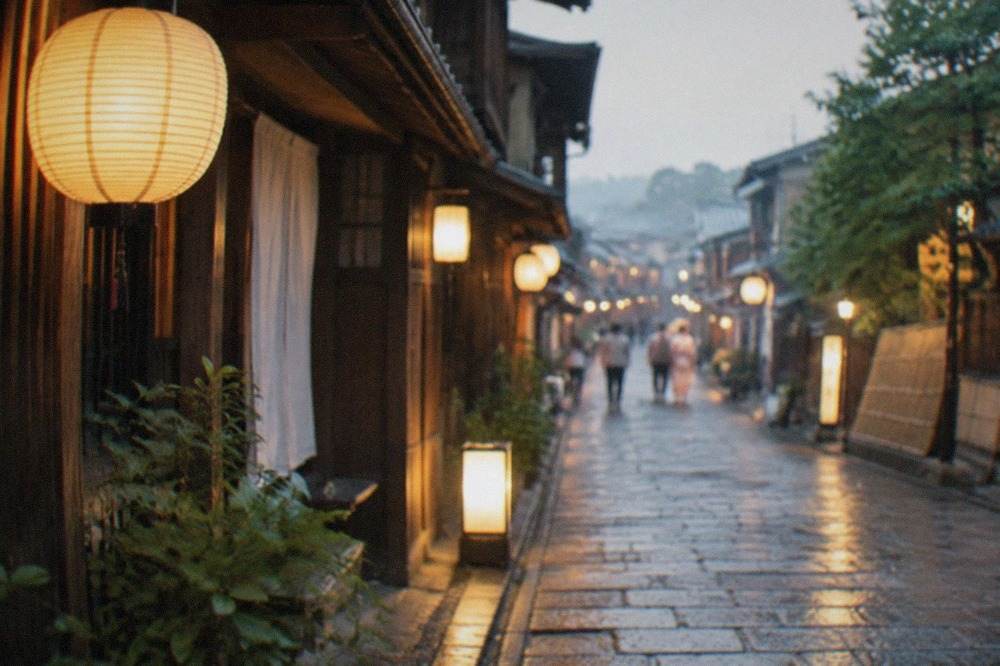
Kyoto recorded 62.79 million visitors in 2025, the city's own tourism survey released in June 2026 reports, and 16.59 million of them stayed the night. That is an enormous number of people moving through the city after sunset, between the last temple closing and the final trains. The honest answer about safety is that Kyoto's own institutions publish the rules that matter, and none of them is about violent crime. They are about geisha, private alleys, bicycle traffic and the last bus home.
Is It Safe To Walk Around Kyoto Late At Night?
Yes, in the practical sense that matters to a visitor: the city's own published guidance for nighttime walking concerns conduct toward geiko and maiko, respecting private property and catching the last train, not personal danger. Kyoto's tourism association issues etiquette rules for Gion rather than warnings about crime, and the 2025 survey recorded over 90 per cent satisfaction among both Japanese and foreign visitors. The real nighttime risks are logistical: missed last buses, bicycle traffic and closed temple gates.
The city's official tourism channels treat nighttime Kyoto as a management problem, not a hazard. The Kyoto City Tourism Association's guidance for Gion, published under the title "A Message from Southern Gionmachi", asks visitors not to touch, chase or photograph geiko and maiko without permission, and not to enter private property or photograph it where prohibited. That is the tone of everything official you will read about Kyoto after dark: rules of respect, not advisories about danger.
What the city does publish in hard numbers is scale. The 2025 survey counted 46.20 million day visitors against 16.59 million overnight guests, which means most people in Kyoto on any given evening are not staying there. They are heading back to Osaka or Tokyo on late trains, which is why the stations get busy rather than the back streets getting scary.
One honest caveat: this site's fact base holds no Japan-wide crime statistics and no comparative safety ranking, and we will not invent one. What follows is what Kyoto's own institutions actually say, from the tourism association's conduct rules to the transport bureau's last departures.
What Are The Rules For Walking In Gion At Night?
The Kyoto City Tourism Association asks visitors not to touch, chase or photograph geiko and maiko without permission, and not to enter or photograph private property where prohibited. Signs posted by the Gion South Side district council on the private alleys off Hanamikoji threaten a 10,000 yen penalty for unauthorized photography or entry. The main Hanamikoji road itself remains public and photographable.
Gion is where nighttime walking in Kyoto needs the most care, and almost none of that care is about your safety. It is about the people who live and work there. The conduct guidance exists because the district's residents asked for it, after years of crowds following working geiko down alleys with cameras.
The geography matters. Hanamikoji, the main street, is public and photography is allowed. The narrow private alleys running off it, on the stretch between Shijo-dori and Kennin-ji, are posted with signs from the district council, and those signs carry the 10,000 yen penalty. This site's fact base records the penalty as council signage on private roads, not a municipal fine, which is the accurate way to describe it.
| Rule | Where it applies | Who set it |
|---|---|---|
| No touching, chasing or photographing geiko and maiko without permission | Southern Gion, citywide guidance | Kyoto City Tourism Association |
| No entering or photographing private property where prohibited | Gion's private alleys and residences | Kyoto City Tourism Association |
| 10,000 yen penalty signage | Private alleys off Hanamikoji | Gion South Side district council |
| Photography permitted | Main Hanamikoji public road | No restriction |
A guided evening walk is one way to see Gion's lantern-lit streets with the context and the boundaries made explicit. The Gion Magical Night Walking Tour runs 1 hour 40 minutes, is rated 4.9 from 4,616 reviews and starts from $22 per person, and you can Check availability alongside it.
If you are weighing Gion against downtown for an evening base, the downtown Kyoto or Gion comparison breaks down the trade-offs in detail.
Which Kyoto Areas Are Best For Walking After Dark?
The areas the city itself promotes for evening visits are Higashiyama's temple surroundings, the Kamo river banks, Pontocho alley and downtown Kawaramachi, all of which stay active through dinner hours. Kodai-ji runs night illuminations from 17:00 to 22:00 with reception until 21:30, and its 2026 autumn night viewing runs 23 October to 13 December. Kiyomizu-dera's seasonal night viewings extend hours to 21:30.
Nighttime Kyoto is not only bars and lanterns. Several temples formally open after dark during set seasons, which gives an evening walk a destination rather than a drift. Kodai-ji in Higashiyama is the clearest example: its published hours run 9:00 to 17:30 normally, but night illumination runs 17:00 to 22:00, and the 2026 autumn season is dated 23 October to 13 December on the temple's own site.
Kiyomizu-dera does the same thing on a larger scale. Its 2026 schedule, published on the temple's access page, extends closing to 21:30 with last entry at 21:00 during the spring night viewing window of 27 March to 5 April, and again from 21 to 30 November for the autumn viewing. Regular hours are 6:00 to 18:00 for most of the year.
The practical shape of a safe, comfortable evening is a loop: Higashiyama's sloped lanes around Kodai-ji and Kiyomizu-dera, down through Ninenzaka and Sannenzaka, then the flat ground of the Kamo river and Pontocho for dinner. The Kyoto at night itinerary maps exactly this kind of route with timings.
Two things to plan around rather than worry about. The slopes around Kiyomizu-dera are unlit stone in places, so a phone torch helps after the temple closes. And Eikan-do and other illumination venues draw heavy crowds in late November; the JMA's maple red-leaf normal for Kyoto is 5 December at the observatory's specimen tree, so the official marker runs later than most guides claim, but the illumination venues peak well before it.
How Late Do Kyoto Trains And Buses Run?
The city bus flat fare is 230 yen for adults and 120 yen for children aged 6 to 11, and subway fares run 220 to 360 yen by zone, but the schedules end earlier than most visitors expect, with last buses on many central routes leaving well before midnight. The Subway and Bus One-Day Pass costs 1,100 yen adult and 550 yen child and covers both networks for a calendar day.
The genuine nighttime risk in Kyoto is being stranded, not being robbed. The city's transport bureau publishes the fares and the rules plainly, and the two facts that catch visitors out are the early finish and the pass structure.
The bus-only one-day pass no longer exists. Sales ended on 30 September 2023 and the pass stopped being usable on 31 March 2024; the transport bureau's own explanation was that roughly 90 per cent of buyers were non-residents and the pass concentrated tourists on the buses. The replacement is the Subway and Bus One-Day Pass at 1,100 yen for adults and 550 yen for children, which the city prices on its fares page.
| Ticket or fare | Adult | Child | Notes |
|---|---|---|---|
| City bus flat fare | 230 yen | 120 yen | Ages 6 to 11 |
| Subway by zone 1 to 5 | 220 to 360 yen | 110 to 180 yen | Zone-based |
| Subway and Bus One-Day Pass | 1,100 yen | 550 yen | Calendar day |
| Subway One-Day Pass | 800 yen | 400 yen | Subway only |
| Tourist express EX100 / EX101 | 500 yen | 250 yen | Kyoto Station to Kiyomizu, Gion, Ginkaku-ji |
The EX100 and EX101 tourist express buses are worth knowing for evening positioning as much as daytime. The EX100 runs from Kyoto Station past Gojo-zaka for Kiyomizu, through Gion and the Okazaki museum district to Ginkaku-ji; the EX101 runs direct to the Kiyomizu side, and the city's page gives EX101 a morning frequency of every 7 to 8 minutes on operating days. Fares are 500 yen adult and 250 yen child, and the Subway and Bus One-Day Pass is accepted.
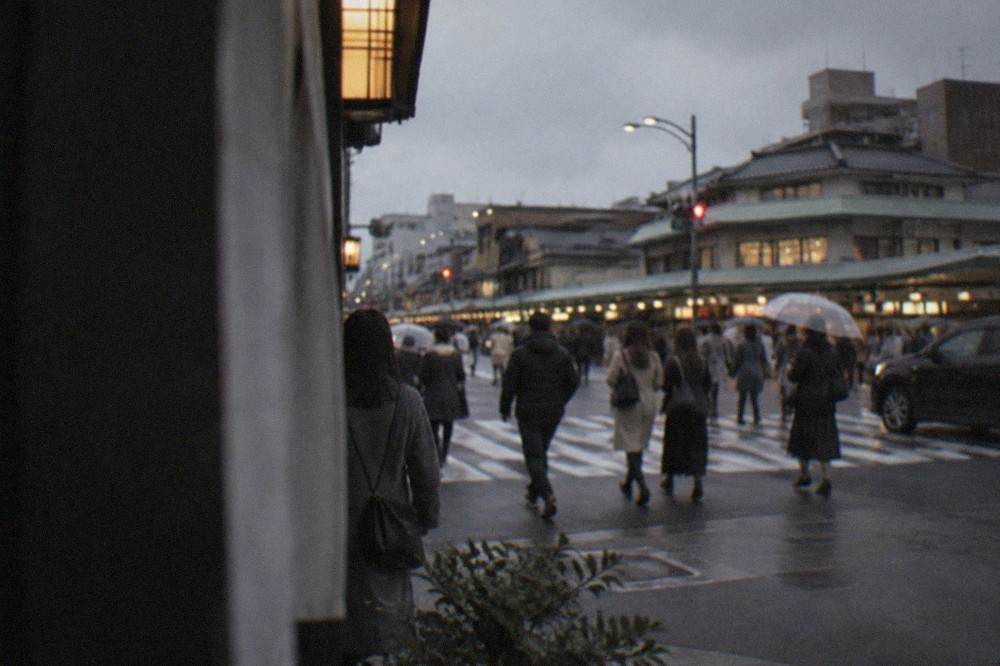
After the last bus, the walk from downtown Kawaramachi back toward Kyoto Station is long but straightforward along Shijo-dori and Karasuma-dori, both of which stay lit and busy. A taxi is the alternative; the taxi and ride-hailing guide covers how they work. If late trains matter to your plans, the Kyoto vs Osaka comparison is relevant, since Osaka's last departures run later and many visitors stay there.
What Should You Watch Out For On Kyoto Streets At Night?
The documented nighttime hazards are private-alley signage in Gion, bicycle traffic on shared streets, summer heat that persists after dark, and July's rain, which at 223.6 mm is Kyoto's wettest month ahead of June's 199.7 mm in the JMA 1991-2020 normals. Three of Kyoto's six hottest days on record fell in the summers of 2024, 2025 and 2026, so evening temperatures in July and August can stay high.
None of these is dramatic, but each one is real and each is documented by the body that measures it.
Bicycles first. Kyoto's shared streets carry heavy bicycle commuter traffic, and the city's transport policy actively pushes visitors toward trains and away from buses to reduce congestion, which keeps the bike lanes full. Walking on the road side of a narrow street while looking at a phone is the single most common way visitors have a bad nighttime moment in Kyoto.
Weather second, and this is where the JMA record is more useful than folklore. July, not June, is Kyoto's wettest month: 223.6 mm against 199.7 mm in the 1991-2020 normals for station 47759. August is hotter, with a mean daily maximum of 33.7 C, and the record table shows three of the six hottest days ever measured in the city fell in the summers of 2024, 2025 and 2026, including 39.7 C on 23 July 2026. An evening walk in that weather needs water, not just a route.
Third, the rules that carry penalties. Beyond Gion's alley signage, Kamagamo Shrine requires advance permission for photography of rites and any drone flight, and the Gozan no Okuribi bonfire night on 16 August prohibits entering the hills entirely. If you are planning around that night, the Gozan no Okuribi guide covers the viewing logistics.
Fourth, closing gates. Kyoto's temples close early: Kinkaku-ji shuts at 17:00 year-round, Ginkaku-ji at 17:00 in summer and 16:30 in winter. Night walking in Kyoto happens between closed temples and lit streets, not inside the grounds, except at the specific illumination venues and dates above.
Is A Guided Night Walk Worth It In Kyoto?
For a first evening, a guided walk solves three things at once: a route through the lantern districts, the conduct rules explained by someone who knows them, and company on streets that empty after 21:00. The Gion Magical Night Walking Tour runs 1 hour 40 minutes from $22 per person and is rated 4.9 from 4,616 reviews, making it the highest-reviewed night product this site carries.
The value case is straightforward. Gion's rules are easy to break by accident, the geography of public road versus private alley is invisible to a newcomer, and the district's atmosphere changes completely once the dinner crowds thin. A guide covers all three.
The alternative for a daytime orientation before an evening on your own is the Perfect 1-Day Bus Tour, 8 to 9 hours from $102 per person and rated 4.9 from 17,054 reviews, which covers the headline sites so your evening is free. The Kyoto Travel Guide homepage collects the full range if you are still building the itinerary.
Common Questions About Walking Around Kyoto Late At Night
Is it safe to walk around Kyoto late at night?
Yes, in the practical sense that the city's own guidance concerns conduct and logistics rather than crime. The Kyoto City Tourism Association's rules for Gion ask visitors not to touch, chase or photograph geiko and maiko without permission, and district council signage on private alleys carries a 10,000 yen penalty. The genuine risks are missing the last bus and sharing narrow streets with bicycle traffic.
Can you photograph geisha in Gion at night?
On the main Hanamikoji public road, yes. The private alleys off it are posted with signs threatening a 10,000 yen penalty for unauthorized photography or entry, set by the Gion South Side district council. The citywide guidance from the tourism association also prohibits photographing geiko and maiko without their permission.
What time do Kyoto buses stop running?
Many central city bus routes finish well before midnight, and the transport bureau's flat fare of 230 yen applies whenever they run. The Subway and Bus One-Day Pass at 1,100 yen covers a calendar day, not a night. After the last departure, taxis and the walkable downtown grid are the alternatives.
Is Gion or downtown Kyoto better at night?
Gion offers the lantern-lit historic streets and the geisha districts, with strict conduct rules attached. Downtown Kawaramachi and Pontocho offer the restaurants, bars and late activity, and stay busy later. Many visitors do both in one evening, walking Gion first and eating downtown after.
Are Kyoto temples open at night?
Most close by 17:00 or 18:00, but a set of seasonal night illuminations extends hours at specific venues. Kodai-ji runs illuminations 17:00 to 22:00, with its 2026 autumn season from 23 October to 13 December, and Kiyomizu-dera extends to 21:30 during its spring and autumn viewing windows.
Does it rain at night in Kyoto in summer?
It can. July is Kyoto's wettest month at 223.6 mm in the JMA 1991-2020 normals, wetter than June at 199.7 mm, and August is the hottest month with a mean daily maximum of 33.7 C. Summer evening walks call for an umbrella option and water.
The short version: Kyoto after dark is a city of etiquette rules and early trains, and the visitors who have a rough night are the ones who missed the last bus out of Higashiyama, not the ones who met trouble. Walk the lit main streets, respect the posted alleys in Gion, carry the one-day pass if the buses are still running, and check the illumination calendars before you set out.