What Does Tenryu-ji Cost For The Garden, The Buildings And The Cloud Dragon Ceiling?
Tenryu-ji sells three separate tickets, and most visitors only buy one of them. Here is what each costs, what the temple's own site says about hours and closures, and how the Cloud Dragon ceiling actually works.
Short answer
The Tenryu-ji garden costs 500 yen for high school age and up and 300 yen for elementary and junior high. The buildings, the Hojo and its corridors, add 300 yen on top of the garden fee. The Hatto Cloud Dragon ceiling is a separate 500 yen ticket, and it is not open every day.
Tenryu-ji sits at the foot of the Arashiyama hills, and it sells its visit in pieces. The garden is one ticket. The buildings are a second, and only as an add-on to the first. The Hatto and its painted Cloud Dragon are a third, sold separately again, and closed on days the temple publishes in advance. Most guides blur the three together, quote one number, and leave you at the gate wondering why the price on the board does not match the price in your notes. The temple's own visit page, which this article follows throughout, sets all three fees plainly, and the honest answer is that a full Tenryu-ji visit costs more than the single figure most people arrive expecting.
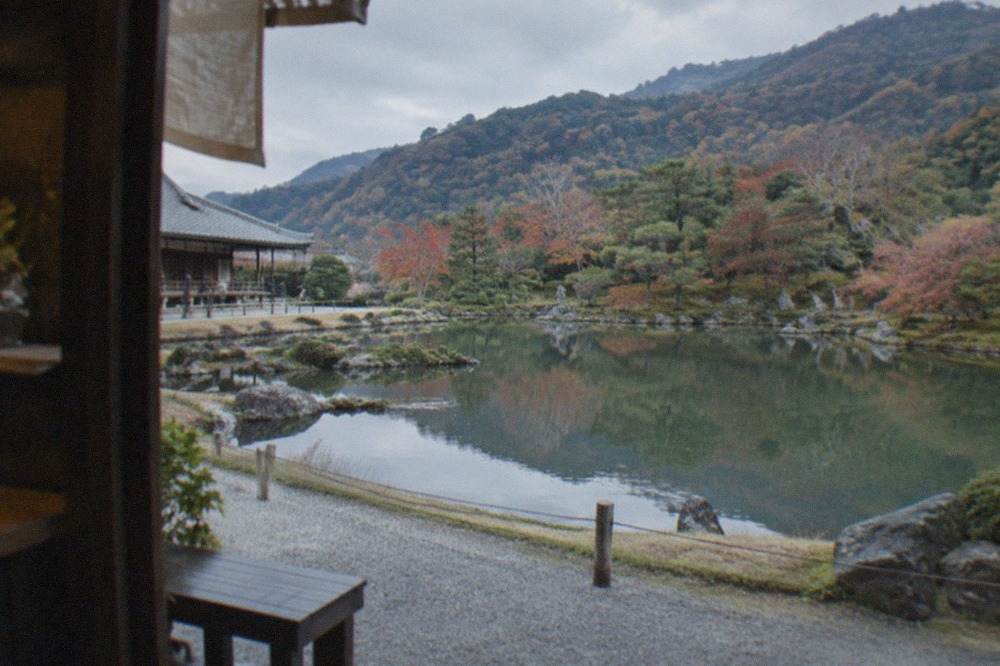
The temple is also the anchor of the whole western side of the city. It is one of the UNESCO World Heritage sites in the Kyoto listing, it backs directly onto the Arashiyama bamboo grove, and its Sogenchi pond garden is one of the few in the city designed to pull the far hills into the frame. This page lays out the verified fees, the hours, the closure dates, and how the three tickets stack against each other and against every other temple fee in Kyoto, so you can decide what is worth paying for before you reach the ticket window.
What Does Tenryu-ji Cost For The Garden, The Buildings And The Cloud Dragon Ceiling?
The Tenryu-ji garden costs 500 yen for visitors of high school age and up, and 300 yen for elementary and junior high school ages. The buildings, meaning the Hojo and the surrounding corridors, are an additional 300 yen on top of the garden fee, so garden plus buildings is 800 yen for an adult. The Hatto, with its Cloud Dragon ceiling painting, is a separate 500 yen ticket, and the temple publishes specific closure dates for it.
Those are the temple's own numbers, printed on its official visit page. The structure matters as much as the figures. You cannot buy the buildings without the garden: the 300 yen is strictly an add-on. The Hatto stands apart entirely, and it is the one people most often miss, partly because it is the one with restricted viewing.
Here is the full breakdown in one place:
| Ticket | High school and up | Elementary and junior high | Notes |
|---|---|---|---|
| Garden only | 500 yen | 300 yen | The Sogenchi pond garden and grounds |
| Garden plus buildings | 800 yen | 600 yen | Adds the Hojo and corridors, 300 yen on top of the garden |
| Hatto, Cloud Dragon ceiling | 500 yen | 500 yen | Separate ticket, not sold as part of either package, closed on published dates |
A family of two adults and two junior high school children pays 1,000 yen for the garden alone, and each added layer raises the total again: the buildings ticket takes the same family to 1,200 yen, and the dragon adds 2,000 yen more if everyone goes up. That last line is where the budget quietly doubles, and it is the reason to know the closure calendar before you commit to the walk over.
How Do Tenryu-ji's Fees Compare With Kyoto's Other Big Temples?
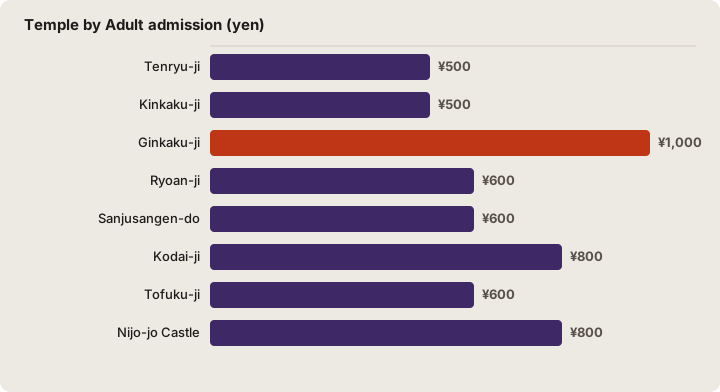
Tenryu-ji's 500 yen garden fee sits in the middle of Kyoto's temple price band, but its three-tier structure makes it the only major temple that charges separately for buildings and for a ceiling painting. Kinkaku-ji charges 500 yen for everything, Ryoan-ji 600, Kodai-ji 800, and Nijo-jo Castle starts at 800 yen, while Ginkaku-ji doubled to 1,000 yen in April 2026, making it the most expensive single ticket in the city.
The comparison is worth making carefully, because Kyoto's temple fees moved twice in 2026 and older guides are now wrong in both directions. Ginkaku-ji doubled from 500 to 1,000 yen for adults from 1 April 2026, its first rise in 32 years. Tofuku-ji revises on 1 November 2026, with the Hojo garden going from 500 to 600 yen, a new 1,000 yen combined ticket, and the Tsutenkyo bridge rising to 1,000 yen during the autumn foliage period. If you read a fee in a guide dated 2024 or 2025, check it before you budget.
| Temple | Adult admission | What it covers | Change to know about |
|---|---|---|---|
| Tenryu-ji | 500 yen | Garden only | Buildings plus 300, Hatto 500 separately |
| Kinkaku-ji | 500 yen | Everything | Fee set 1 April 2023 |
| Ginkaku-ji | 1,000 yen | Everything | Doubled from 500 on 1 April 2026 |
| Ryoan-ji | 600 yen | Garden and grounds | Stable |
| Sanjusangen-do | 600 yen | The hall of 1,001 Kannon statues | Stable |
| Kodai-ji | 800 yen | Garden and buildings | 1,200 combined with Entoku-in |
| Tofuku-ji | 600 yen | Tsutenkyo bridge and Kaisando | 1,000 yen in foliage season from 1 Nov 2026 |
| Nijo-jo Castle | 800 yen | Castle grounds | 1,300 with Ninomaru-goten Palace |
Against that table, Tenryu-ji's pricing is neither cheap nor steep, it is simply modular. A garden-only visit at 500 yen buys you the Sogenchi pond, the borrowed view of the Arashiyama hills, and the north gate that exits straight into the bamboo grove. That is arguably the best 500 yen in the city if your day is about the walk rather than the interiors. The buildings add corridors and tatami rooms; the Hatto adds a single dramatic ceiling. For more on how the city's temple fees stack up as a whole, see the Kyoto temples guide, and for the other end of Arashiyama, the Arashiyama bamboo grove page covers the free side of the district.
If you would rather have someone else sequence the district, the walking tour below is the strongest fit: it covers the bamboo grove, the monkey park and the Tenryu-ji garden in one five-hour run.
When Is Tenryu-ji Open, And When Is The Cloud Dragon Closed?
Tenryu-ji opens at 8:30 and closes at 17:00, with last admission at 16:50, every day of the year. The Hatto, where the Cloud Dragon ceiling hangs, is closed on specific published dates, including 28 to 30 October 2026 and 2 January 2027, so the dragon cannot be seen on those days regardless of which ticket you hold. The temple does not publish a separate winter hours schedule the way Ryoan-ji and Ginkaku-ji do.
The uniform hours are a small gift for planners. Several of the city's temples split their year: Ginkaku-ji runs 8:30 to 17:00 from March to November but 9:00 to 16:30 in winter, and Ryoan-ji does the same. Tenryu-ji keeps one clock all year, which makes it a reliable first stop on an Arashiyama morning, especially since the bamboo grove next door is a free public path with no gate at all.
| What | Hours or dates | Source |
|---|---|---|
| Tenryu-ji grounds | 8:30-17:00, last admission 16:50 | Temple's visit page |
| Hatto closure dates | 28-30 October 2026, 2 January 2027 | Temple's visit page |
| Bamboo grove next door | Free public path, no gate hours | Public right of way |
| Iwatayama Monkey Park, nearby | 9:00-16:00, summit until 16:30 | Monkey park's own site |
The 8:30 opening pairs well with the district's rhythm. The bamboo grove is at its worst between 10:00 and 15:00, when the tour buses land, and the city's own crowd measures, the tourist express buses and the dispersal campaigns it ran through 2025 and 2026, exist precisely because 62.79 million people visited Kyoto in 2025, a record. Arriving at Tenryu-ji for 8:30, doing the garden while the light is still low across the pond, and exiting north into the grove before the crowds build is the standard good sequence, and it costs nothing extra to arrange.
Is The Cloud Dragon Ceiling Worth The Extra 500 Yen?
The Hatto's Cloud Dragon ceiling is a large painted dragon spanning the ceiling of the temple's lecture hall, and at 500 yen it is the most expensive single element of a Tenryu-ji visit per minute of viewing. It is a separate ticket from both the garden and the buildings, it closes on published dates including late October 2026, and it is the part of the temple that most first-time visitors skip without ever realising they were offered it.
The honest framing is this: the dragon is dramatic, the room is dark and quiet, and the viewing is brief. If your interest in Tenryu-ji is the garden, and for most people it is, the 500 yen is better spent elsewhere in the district, on the monkey park at 800 yen for ages 16 and up or on lunch. If you are completing the temple properly, or you have already paid for the buildings and want the full interior set, the dragon closes the sequence.
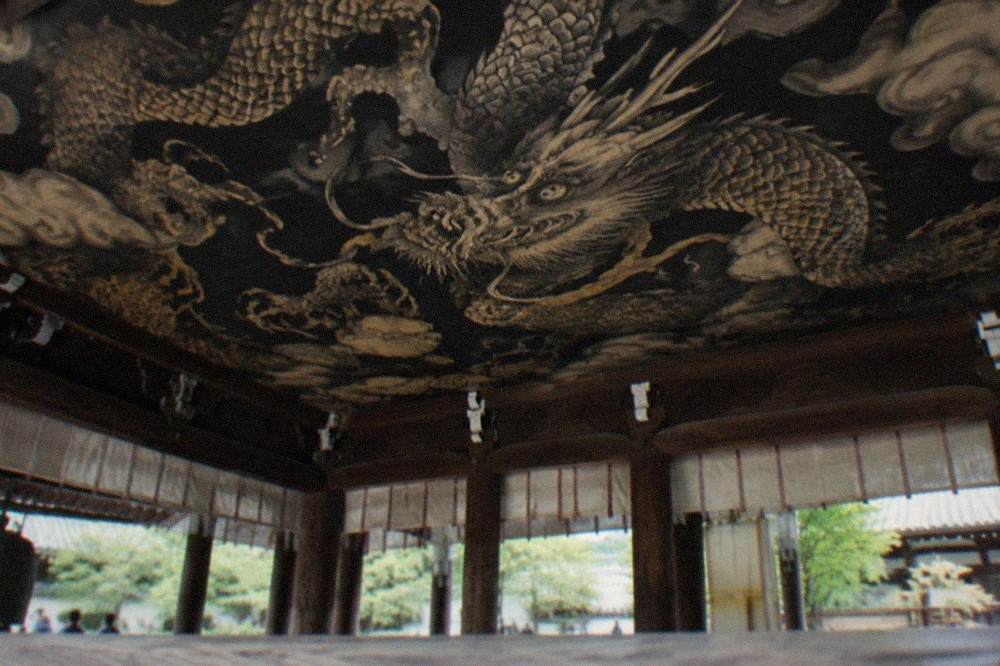
What the 500 yen buys, mechanically, is entry to the Hatto, the dharma hall, where the ceiling painting fills the space above you. The temple lists the hall's closure dates on its visit page, and those are the only hard exclusions: on 28 to 30 October 2026 and 2 January 2027 the ticket simply is not sold. There is no combined ticket that folds the dragon into the garden or building fees, so the maximum an adult pays inside Tenryu-ji is 1,300 yen across all three tickets.
For travellers weighing the whole district rather than one temple, this is the decision point where a guided option starts to earn its price, since a good guide sequences the garden, the grove and the monkeys without the standing-around time.
What Is The Sogenchi Garden, And Why Do People Call It A Borrowed Landscape?
The Sogenchi pond garden is Tenryu-ji's core attraction, laid out around a large pond with the hills of Arashiyama and Kameyama drawn into the view beyond the temple boundary as if they were part of the design. It is the reason the 500 yen garden ticket exists as a standalone product, and it is one of the gardens credited to the monk Muso Soseki, the temple's founding abbot, whose work also shaped other famous Kyoto gardens.
The technique is called borrowed scenery, and Tenryu-ji is one of its clearest examples in the city. The designer did not need to build a mountain backdrop; the real ones sit behind the pond and read as part of the composition. That is also why the garden rewards the early hour: low light across the water flattens the view less, and the crowds that fill the viewing platforms after mid-morning break the illusion. Other pages covering the same trip are gathered on Kyoto Travel Guide.
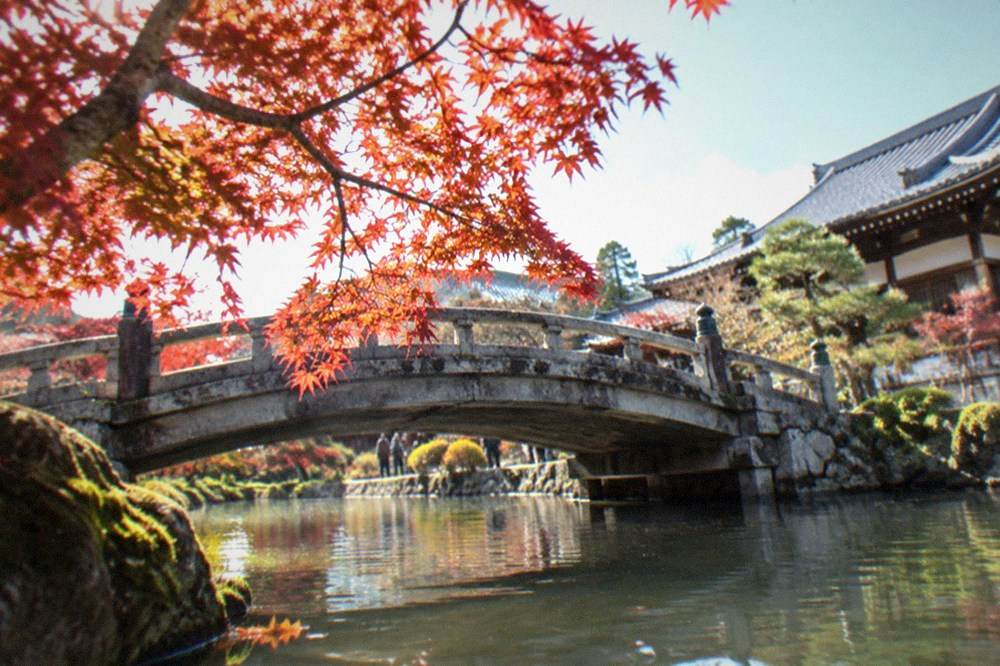
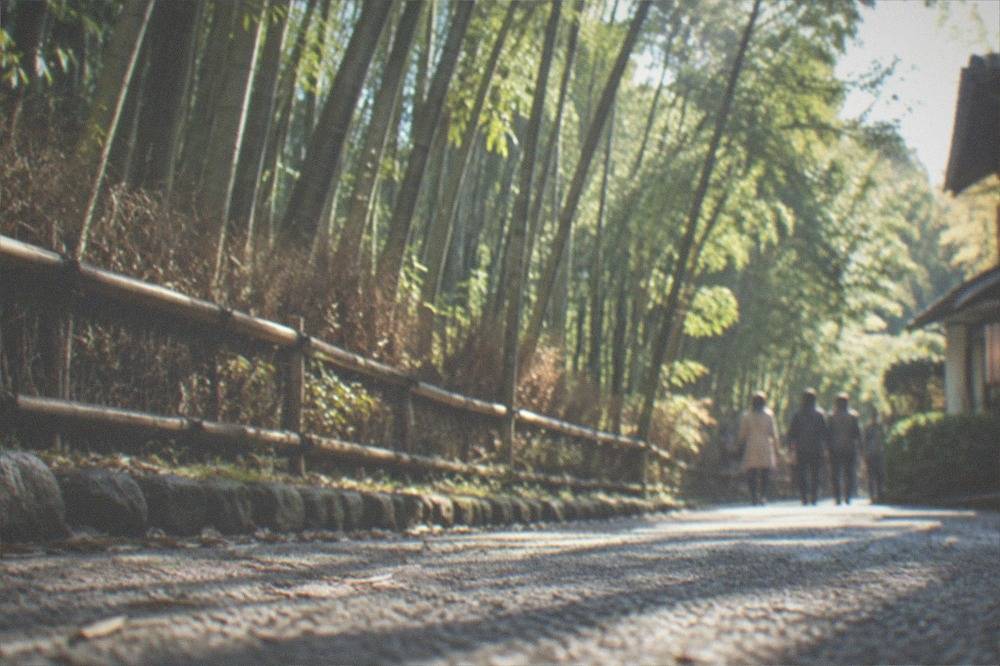
The garden is also the through-route for the district. The north gate of Tenryu-ji opens onto the Arashiyama bamboo grove, so the standard walk is: enter at the main gate, do the Sogenchi pond circuit, exit north, and land directly in the bamboo. Doing it in that order means you pay the 500 yen and get both the garden and the grove in one continuous line, with no backtracking. For the wider picture of Kyoto's garden tradition, the Kyoto zen gardens guide places Tenryu-ji alongside Ryoan-ji's dry landscape at Ryoan-ji and the moss at Saiho-ji.
How Much Does A Full Day In Arashiyama Cost?
A full Arashiyama day built around Tenryu-ji costs 1,300 yen per adult in attraction fees if you buy every Tenryu-ji ticket, 800 yen more for the Iwatayama Monkey Park, and 880 yen for a one-way ride on the Sagano Romantic Train, with the bamboo grove, the Katsura riverbank and Togetsukyo bridge all free. City transport adds 230 yen per bus ride or 220 to 360 yen on the subway, so the paid layers are easy to mix and match to a budget.
The district is unusually kind to budgets because its two most famous features, the bamboo grove and the riverbank, cost nothing. The paid layers are the temple, the monkeys and the train, and you can take or leave each one.
| Arashiyama item | Adult cost | Notes |
|---|---|---|
| Bamboo grove | Free | Public path, no gate |
| Tenryu-ji garden | 500 yen | Core ticket |
| Tenryu-ji buildings | +300 yen | Add-on only |
| Tenryu-ji Hatto ceiling | 500 yen | Separate, closed 28-30 Oct 2026 |
| Iwatayama Monkey Park | 800 yen | Ages 16 and up, cash only, ages 4-15 pay 400 |
| Sagano Romantic Train | 880 yen one way | Child 440, operator's own ticket page |
| Hozugawa Kudari boat | 6,000 yen | Adult fare, about 2 hours, operator's site |
| Togetsukyo bridge and riverbank | Free | Always open |
The monkey park deserves its line in the budget: it is a genuine hike up the hill, not a zoo, and the 800 yen is cash only, which catches people out. The Sagano Romantic Train's 880 yen one-way fare is the operator's own published price, with children at 440, and the Hozugawa Kudari river boat at 6,000 yen for an adult is the district's big-ticket item, running about two hours downriver from Kameoka. The boat and the train pair naturally, since the train takes you upriver and the boat brings you back down.
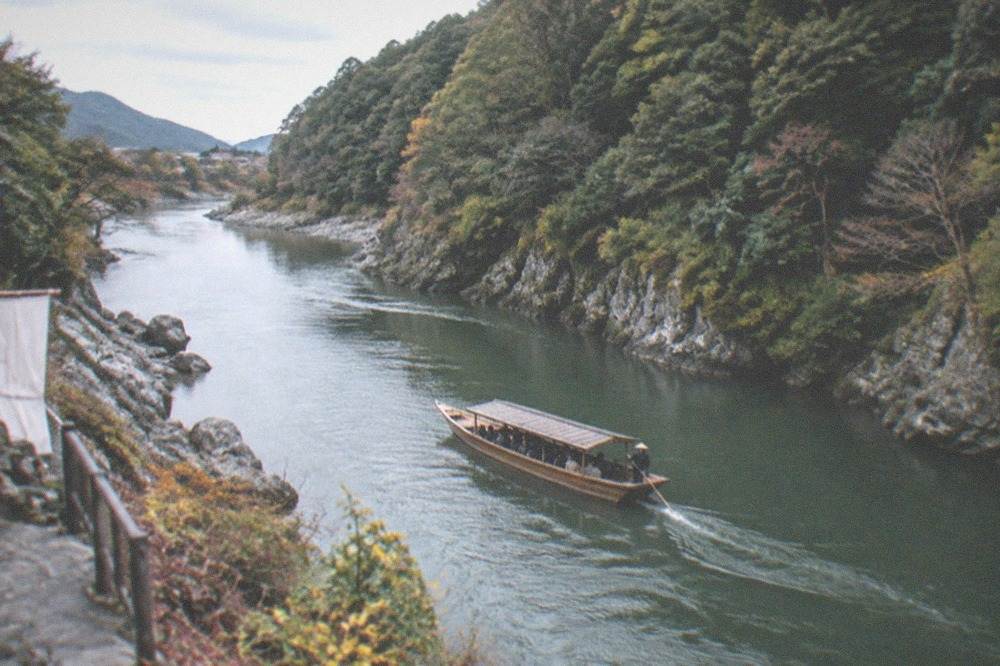
For the river option, the white-water version below covers the same valley with a guide:
How Do You Get To Tenryu-ji, And What Does The Trip Cost?
The cheapest route to Tenryu-ji is the JR Sagano Line from Kyoto Station to Saga-Arashiyama, followed by a walk of roughly ten minutes to the temple gate, with the city bus flat fare at 230 yen per adult ride and the subway running 220 to 360 yen by zone. The one-day product that covers both is the Subway and Bus One-Day Pass at 1,100 yen, and the old bus-only pass no longer exists, having ended use on 31 March 2024.
That last point matters, because a lot of published advice still tells you to buy a bus day pass. The city withdrew it: sales ended in September 2023 and the last day of use was 31 March 2024, with the transport bureau noting that most buyers were visitors and that the pass concentrated them on the buses. The current product is the combined Subway and Bus One-Day Pass at 1,100 yen for adults and 550 for children, which breaks even at roughly four bus rides.
| Transport item | Fare | Notes |
|---|---|---|
| City bus, flat fare | 230 yen adult, 120 child | Ages 6-11 pay child |
| Subway by zone | 220-360 yen adult | Five zones |
| Subway and Bus One-Day Pass | 1,100 yen adult, 550 child | Breaks even at about four rides |
| Tourist express buses EX100/EX101 | 500 yen adult | Runs Kyoto Station to the Gion and Ginkaku-ji side |
The EX100 and EX101 express buses are worth knowing about even though they serve the eastern side of the city rather than Arashiyama, because they show the direction the city has moved: fewer stops, a 500 yen flat fare, and coverage by the one-day pass, all part of its response to record crowds. For the western run, the JR Sagano Line to Saga-Arashiyama is the standard choice, and the Keihan line to Arashiyama serves the southern end of the district. The Kyoto buses guide and the Kyoto subway guide cover the networks in detail.
What Are The Rules Inside Tenryu-ji And The Wider Arashiyama Area?
Inside Tenryu-ji the standard temple rules apply: photography is generally fine in the garden, restricted in the buildings, and the Hatto is a quiet viewing space. The wider district's rules are mostly about respect and flow: the bamboo grove is a free public path with no enforced one-way system confirmed on official sources, Nishiki-style eating-while-walking rules do not apply here, and the city's conduct guidelines for Gion, banning touching or chasing geiko and maiko, set the tone for behaviour citywide.
The practical rules that actually affect a Tenryu-ji visit are few. Shoes come off for the tatami rooms if you buy the buildings ticket. The garden paths are gravel, so choose footwear accordingly. The monkey park up the hill is cash only and closes early if the monkeys retreat in bad weather, per the park's own site. And the temple's closure dates for the Hatto are published, so check them against your travel dates if the dragon is on your list.
One thing worth knowing that most first-page guides do not mention: the city runs a live crowd-forecast tool, the Kyoto Tourism Comfort Forecast, which rates expected congestion at major spots by time slot, and Fushimi Inari links to it from its own homepage. It is the closest thing to a real-time answer to "will Arashiyama be packed at 10:00", and it is free to check before you set out.
Should You Visit Tenryu-ji On A Tour Or On Your Own?
Tenryu-ji is easy to visit independently, since the fees are simple, the hours are constant and the north gate exits into the bamboo grove. A guided Arashiyama tour adds value when you want the district sequenced for you, or when you have only one day in Kyoto and need the whole city compressed.
The five-hour Arashiyama walking tour at 50 dollars, rated 5 from 1,781 reviews, and the full-day Kyoto bus tour at 102 dollars, rated 4.9 from 17,054 reviews, are the two strongest fits.
The independent route suits anyone comfortable with trains and a map: arrive for the 8:30 opening, buy the garden ticket at 500 yen, exit north into the grove, and build outward from there. The guided route suits anyone who would rather not think about sequencing, or who wants the temple's history unpacked rather than read off a plaque. The full-day bus tour is the answer for the one-day-in-Kyoto case, since it folds the major sites into a single loop.
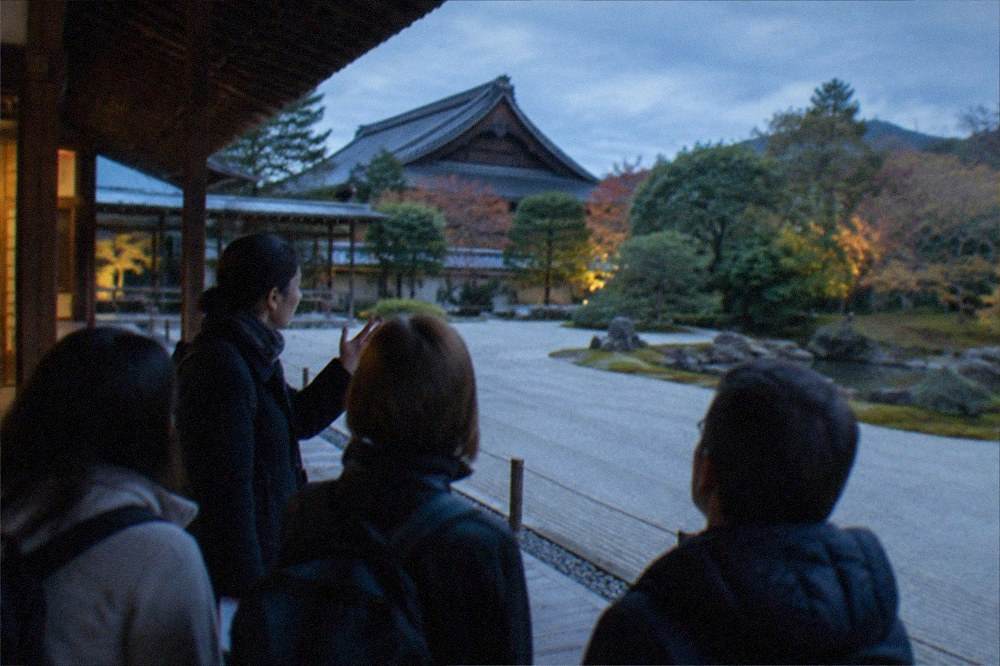
For the one-day compression option:
For planning beyond Arashiyama, the things to do in Kyoto page maps the whole city, and the one day in Kyoto itinerary shows how a temple-heavy western morning pairs with an eastern afternoon.
Common Questions About Tenryu-ji Temple
What Does Tenryu-ji Cost For The Garden, The Buildings And The Cloud Dragon Ceiling?
The garden costs 500 yen for high school age and up and 300 yen for elementary and junior high. The buildings add 300 yen on top of the garden fee, and the Hatto with its Cloud Dragon ceiling is a separate 500 yen ticket. An adult buying all three pays 1,300 yen in total.
Is Tenryu-ji Worth It If You Only Visit The Garden?
Yes. The Sogenchi pond garden is the temple's core attraction, it uses the Arashiyama hills as borrowed scenery, and the north gate exits directly into the bamboo grove, so the 500 yen garden ticket carries most of the value of a visit on its own.
Can You Enter The Bamboo Grove Through Tenryu-ji?
The temple's north gate opens onto the bamboo grove path, and the grove itself is a free public path with no gate or fee. The standard sequence is to enter Tenryu-ji at the main gate, circuit the garden, and exit north into the bamboo.
When Is The Cloud Dragon Ceiling Closed?
The Hatto closes on dates the temple publishes in advance, including 28 to 30 October 2026 and 2 January 2027. On those days the 500 yen dragon ticket is not sold at all, so check the temple's visit page against your travel dates.
How Long Do You Need At Tenryu-ji?
The garden alone takes most visitors 30 to 45 minutes at a viewing pace. Adding the buildings brings the visit toward an hour, and the Hatto ceiling adds a short timed viewing on top. A full three-ticket visit fits comfortably inside a half-day Arashiyama plan alongside the grove and the riverbank.
Is Tenryu-ji Included In Any Kyoto Day Tour?
Yes. The Arashiyama walking tours in this site's roster include the Tenryu-ji garden alongside the bamboo grove and the monkey park, and the full-day Kyoto bus tours cover the city's major sites in one loop. Check each tour's live listing for what the current itinerary includes.
The short version of all of the above: buy the 500 yen garden ticket without hesitation, add the 300 yen buildings fee if the interiors matter to you, and treat the 500 yen dragon as a deliberate choice rather than a default. Time the visit for the 8:30 opening, walk out through the bamboo, and the temple will have done exactly what its design promises, which is to hand you the whole Arashiyama valley in a single morning for less than the price of lunch.