How Many Rakan Statues Stand At Otagi Nenbutsu-ji And Who Carved Them?
Otagi Nenbutsu-ji, tucked in the hills above Arashiyama, fills its grounds with carved stone rakan, each with a different face. The count you read in most guides does not come from the temple's own publications, and this page explains what is actually verified, who is said to have carved them, and how to plan the visit.
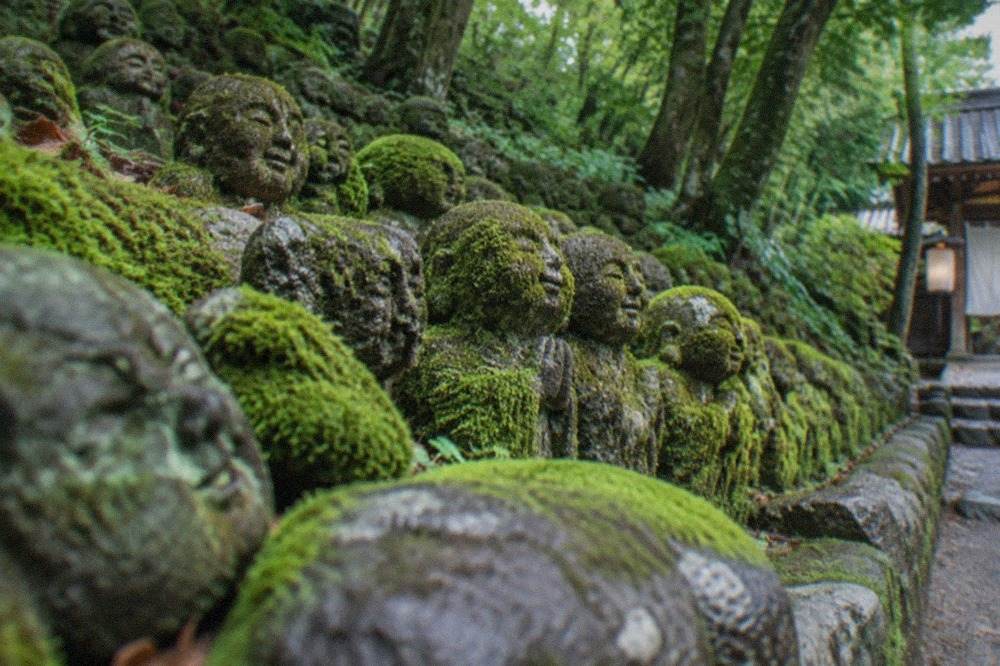
Short answer
Otagi Nenbutsu-ji's grounds are filled with hundreds of individually carved stone rakan, disciples of the Buddha, each with a distinct expression. The widely repeated count is not printed by the temple in any source this site has verified, so treat the number as a guidebook figure rather than an official one.
How Many Rakan Statues Stand At Otagi Nenbutsu-ji And Who Carved Them?
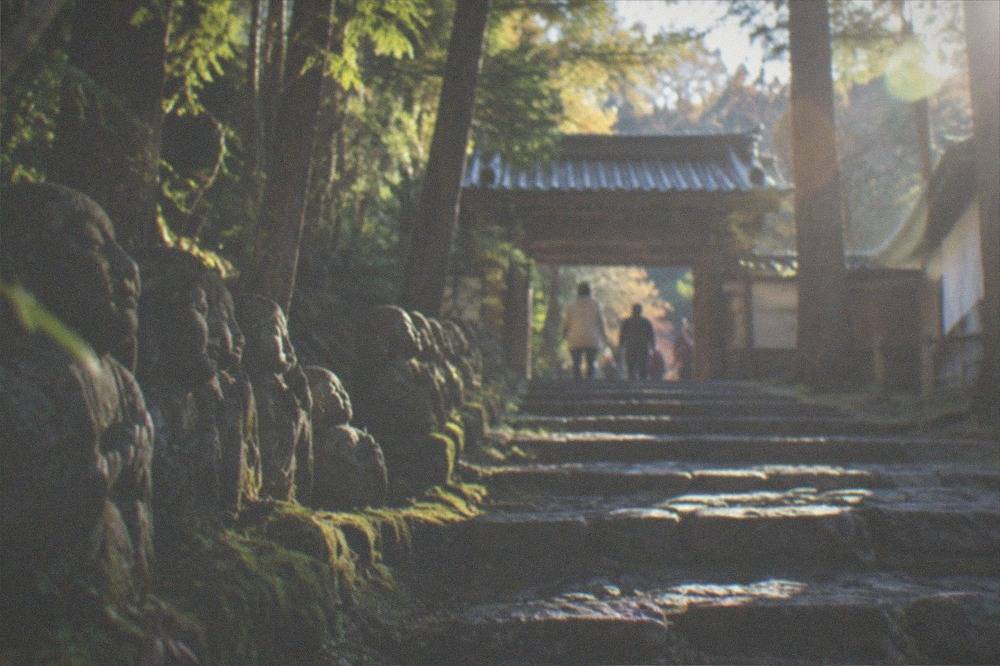
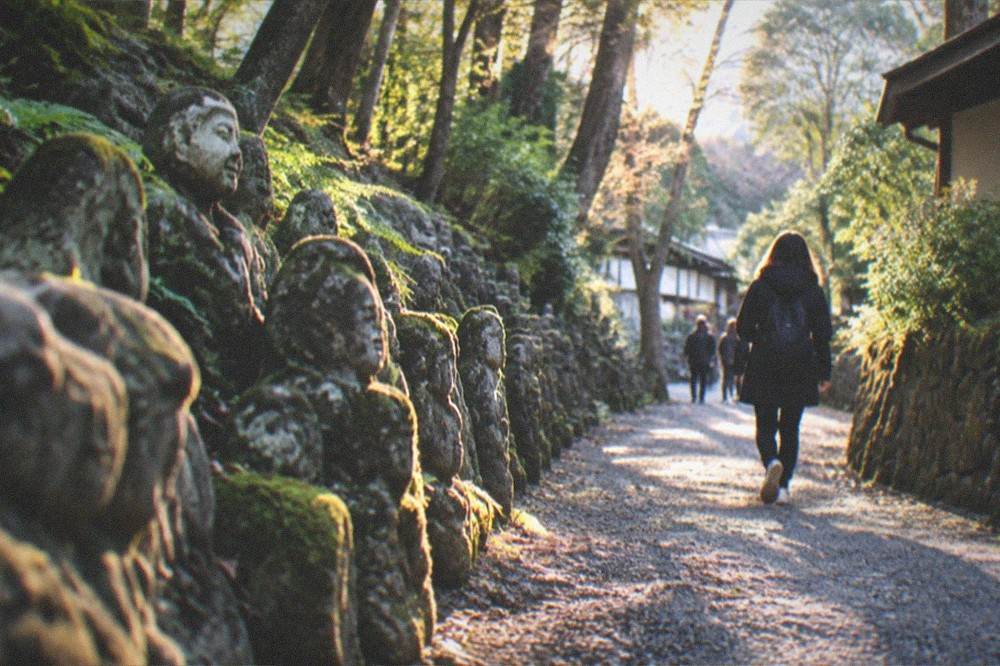
Tucked into the hills at the far western edge of Arashiyama, well past the bamboo grove and the day-trip crowds, Otagi Nenbutsu-ji is one of Kyoto's strangest and most quietly moving sights: a hillside terraced with small carved stone figures, each one a rakan, a disciple of the Buddha, and each one with a face unlike any of its neighbours. Some grin, some squint, some hold a tennis racket or a sake cup, and all of them are slowly being swallowed by moss.
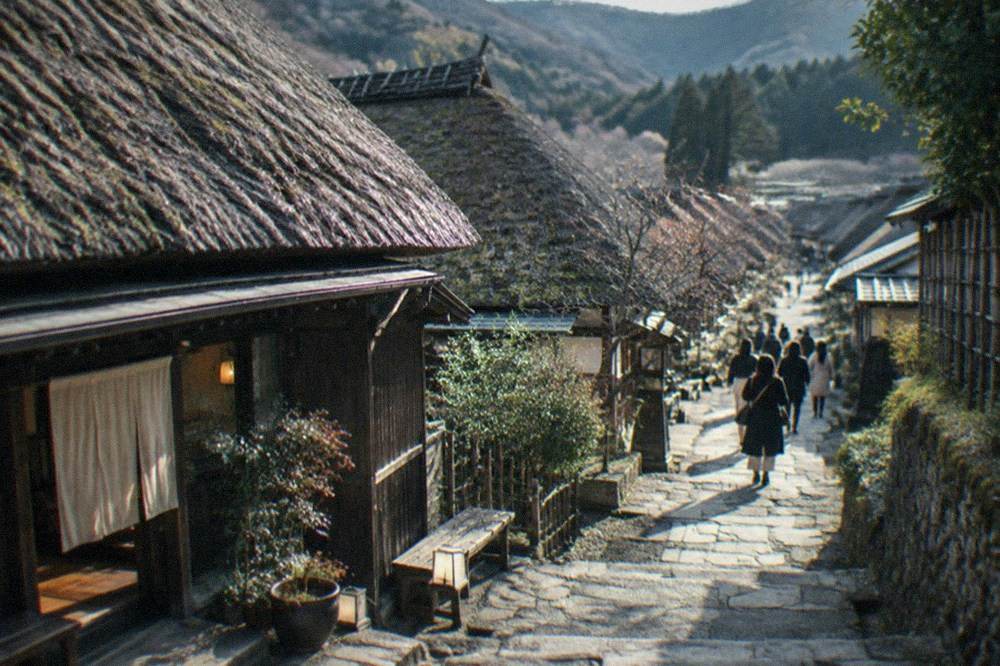
The temple rewards the effort it takes to reach, and the effort is real: it sits at the end of the Saga-Toriimoto preserved street, deep in the Adashino area, a long uphill walk or a short bus ride from the Arashiyama you came for. This page, from the editorial desk at Kyoto Travel Guide, sets out what is actually verified about the statues, what is guidebook lore, how to get there, and how to fold it into an Arashiyama day that also takes in the bamboo grove and the river.
How Many Rakan Statues Stand At Otagi Nenbutsu-ji And Who Carved Them?
The temple's grounds are filled with hundreds of individually carved stone rakan, each with a different face, and the widely repeated exact count does not appear in any source this site has verified on the temple's own publications. Treat the number you see in most guides as a guidebook figure, not an official one. The carving is credited to local people and students working over several years from the late 1970s into the 1980s, each carver giving their figure its own expression.
That last sentence deserves its caution spelled out. The story told at the temple and repeated in nearly every guide is that after the temple was restored in the post-war decades, visitors and local volunteers, including schoolchildren and university students, were invited to carve their own rakan under the guidance of a stone-carving teacher, and that the project ran for roughly a decade. It is a wonderful story and it is very likely true, but the temple's own English-language materials are thin, and this site's rule is simple: a number or a date that the temple itself does not print is a tradition, not a statistic.
What you can verify with your own eyes, and what no source disputes, is the effect. The figures are arranged in ranks across stepped terraces on the hillside behind the main hall. They are carved from stone, they are roughly knee to waist height, and no two faces match. Photographs are permitted in the grounds, which is a genuine difference from, say, the interior of Sanjusangen-do, where the 1,001 Kannon statues that the temple itself states stand in that hall cannot be photographed.
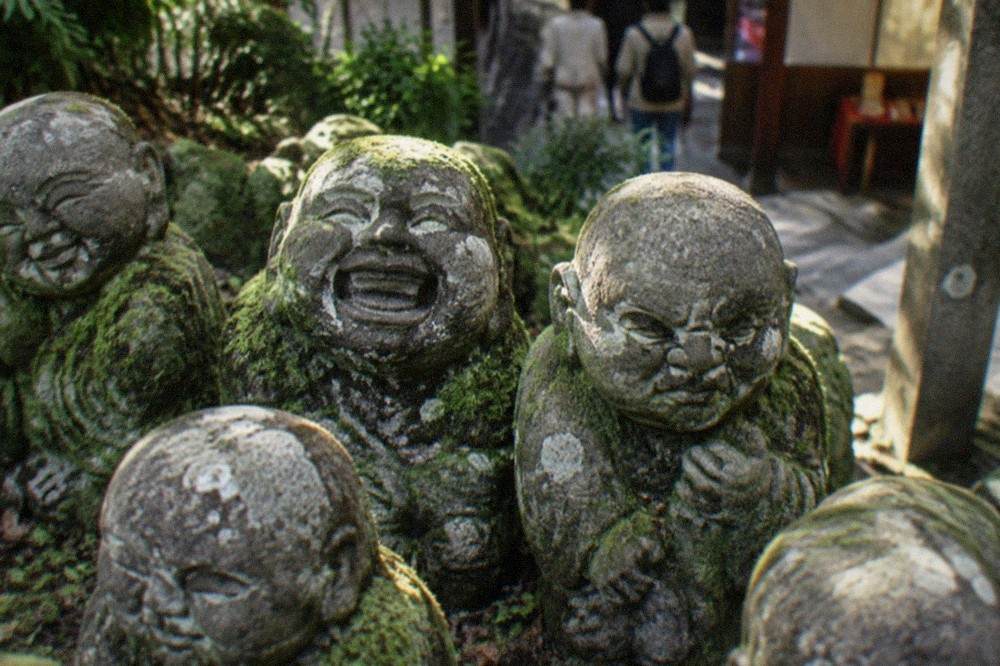
The contrast with Sanjusangen-do is worth a paragraph of its own, because the two temples answer the same impulse in opposite ways. Sanjusangen-do, formally Rengeo-in, holds 1,001 gilded wooden Kannon statues inside a single vast hall, a statement of imperial wealth and workshop discipline, and the temple's own site states that count plainly. Otagi Nenbutsu-ji scattered its rakan outside, under trees, in the rain and the moss, and let amateurs carve them. One is a monument; the other is closer to a folk project. Both are worth your morning, and they sit at opposite ends of the city.
Where Is Otagi Nenbutsu-ji And How Do You Get There From Central Kyoto?
Otagi Nenbutsu-ji stands in the Adashino area at the far north-western edge of Arashiyama, reached from Kyoto Station by the JR Sagano Line to Saga-Arashiyama Station in about 15 minutes, then a 30 to 40 minute uphill walk or a short local bus ride. From the bamboo grove it is a further 20 to 30 minutes on foot past the Saga-Toriimoto preserved street.
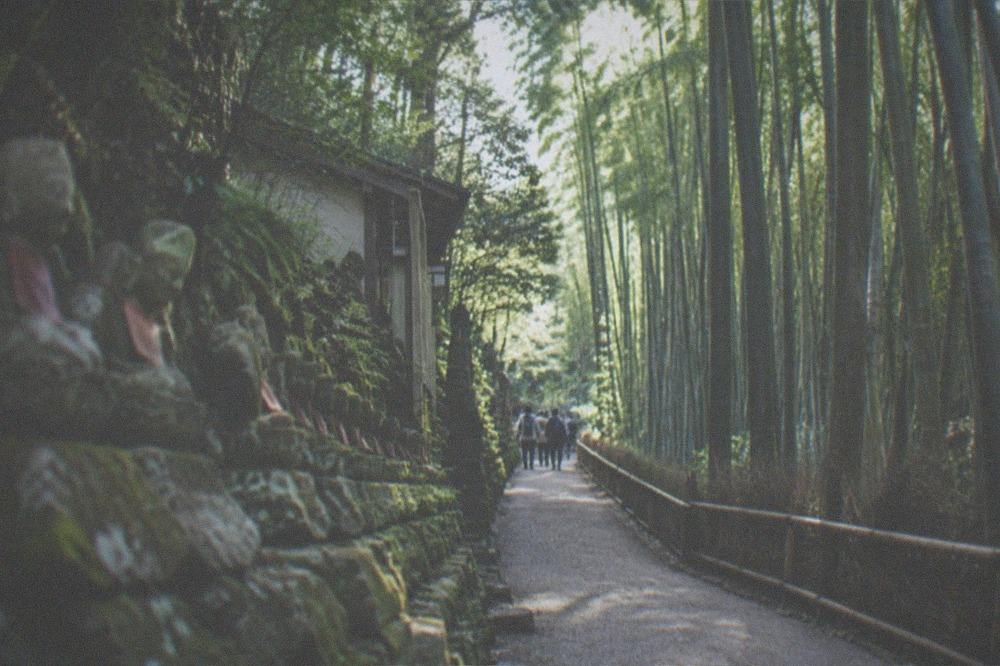
The walk itself is half the point. The route from the Arashiyama main drag runs north past Tenryu-ji, whose garden admission is 500 yen with buildings at 300 yen more, then through the bamboo path, which is free and has no closing time, and out the other side into residential lanes. The final stretch, the Saga-Toriimoto preserved street, is a short row of thatched and timbered buildings that most visitors never see because they turn back at the bamboo. If you are willing to walk, the temple is the reward at the end of the best walk in west Kyoto.
For transport, the honest planning table looks like this. Note that this site's verified transport figures come from the city's own pages, and the bus-only one-day pass is dead: sales ended in September 2023 and the pass stopped being usable on 31 March 2024. The current product is the Subway and Bus One-Day Pass at 1,100 yen.
| Option | Fare (verified) | Notes |
|---|---|---|
| Kyoto City Bus flat fare | 230 yen adult, 120 yen child (6-11) | City's own fare page |
| Kyoto subway | 220 to 360 yen by zone | Zones 1 to 5, city's own fare table |
| Subway and Bus One-Day Pass | 1,100 yen adult, 550 yen child | Replaces the abolished bus-only pass |
| Tourist express EX100 / EX101 | 500 yen adult, 250 yen child | Runs Kyoto Station toward Kiyomizu, Gion, Ginkaku-ji; not this temple's side of town |
| JR Sagano Line, Kyoto Station to Saga-Arashiyama | Roughly 240 yen | Then walk or local bus uphill |
If walking is not an option, the local Arashiyama buses serve the area, but their frequency thins out in the afternoon, and the last stretch of road to the temple is narrow with no sidewalk in places. Most visitors who come by bus take it one way and walk back down through Toriimoto.
A reasonable pairing for the same day is the Sagano Romantic Train, whose operator prices the standard one-way fare at 880 yen for adults and 440 yen for children, running roughly hourly through the Hozugawa gorge. The Hozugawa Kudari river boat, at a verified 6,000 yen adult and 4,500 yen child for the roughly two-hour run, is the other classic Arashiyama add-on. The temple, the train and the boat together make a full western-Kyoto day; the temple and the bamboo grove alone make a good half of one.
What Does It Cost To Visit Otagi Nenbutsu-ji And Kyoto's Other Temples?
Otagi Nenbutsu-ji charges a small admission, and the figure most guides quote is a few hundred yen, but this site has not verified it on the temple's own publications, so check the notice at the gate rather than budgeting from a number printed here. What is firmly verified is the wider fee landscape: Kyoto's temples charge between 500 and 1,000 yen at the major names, and two of them changed their fees in 2026.
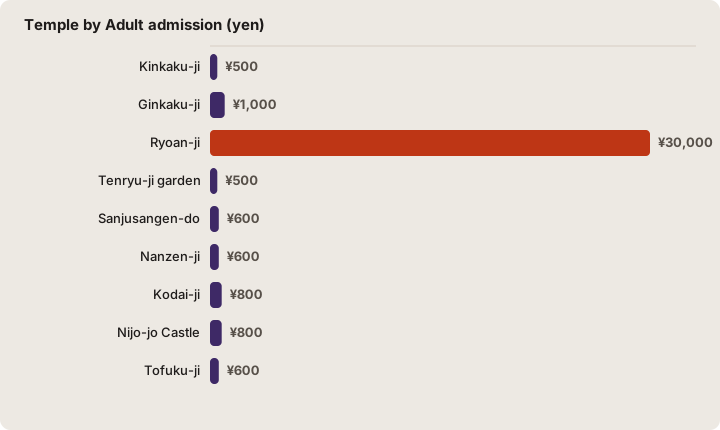
That fee landscape matters more than any single temple's gate price, because a day in Kyoto is a day of small admissions stacking up. The table below is this site's verified set, every figure read on the venue's own page.
| Temple | Adult admission | 2026 change |
|---|---|---|
| Kinkaku-ji | 500 yen (300 school) | None; last revision 1 April 2023 |
| Ginkaku-ji | 1,000 yen (500 child) | Doubled from 500 on 1 April 2026 |
| Ryoan-ji | 600 yen (500 high school, 300 elementary and junior high) | None announced |
| Tenryu-ji garden | 500 yen, buildings plus 300, Hatto ceiling 500 separately | None announced |
| Sanjusangen-do | 600 yen (400 and 300 concessions) | None announced |
| Nanzen-ji | Hojo garden 600, Sanmon gate 600, separately | None announced |
| Kodai-ji | 800 yen, or 1,200 combined with Entoku-in | None announced |
| Nijo-jo Castle | 800 yen, or 1,300 with Ninomaru-goten | None announced |
| Tofuku-ji | Tsutenkyo bridge 600 | From 1 Nov 2026: Hojo 600, new 1,000 combined ticket, bridge 1,000 in foliage season |
The lesson for the Otagi Nenbutsu-ji visitor is that the far-west temples are cheap individually and the day adds up. If you pair the temple with Tenryu-ji, the monkey park (Iwatayama Monkey Park charges 800 yen for 16 and over, 400 for ages 4 to 15, cash only, per the park's own site) and the Sagano train, a full Arashiyama day for two adults lands somewhere around 6,000 to 8,000 yen in admissions and fares before lunch.
One more cost that catches people out: the Kyoto accommodation tax changed on 1 March 2026, and the top tier now runs to 10,000 yen per person per night on rooms of 100,000 yen and up. The tiers, verified on the city's own pages, are 200 yen under 6,000, 400 yen from 6,000 to under 20,000, 1,000 yen from 20,000 to under 50,000, 4,000 yen from 50,000 to under 100,000, and 10,000 yen at 100,000 and up. It is charged on the room rate excluding meals, and most guides still quote the old maximum of 1,000.
When Is The Best Time Of Day And Season To Visit Otagi Nenbutsu-ji?
Morning is the stronger time, both for light and for crowd flow, because most Arashiyama visitors arrive mid-morning, tour the bamboo grove, and turn back before the temple's end of the valley. Season-wise, late autumn and early spring are the sweet spots: the JMA normals put Kyoto's maple red leaves at 5 December and cherry full bloom at 4 April, and the moss on the rakan photographs best when the air is damp.
The timing logic is simple. The temple is the farthest point of the Arashiyama walk, so it naturally empties as the day goes on and feet give out, but the whole valley fills up by late morning. Arriving at Saga-Arashiyama by 8:30, walking the bamboo before the tour groups, and reaching the temple by 10:00 gives you the terraces in near-silence. The temple keeps temple-style hours, opening in the morning and closing in the late afternoon, and like most Kyoto temples it does not run evening visits outside special illumination seasons.
For seasons, the verified climate picture from the JMA 1991-2020 normals for station 47759 is below. Note the headline fact that runs against most guidebooks: July, not June, is Kyoto's wettest month.
| Month | Rain mm | Mean C | Mean daily max C | Sunshine h |
|---|---|---|---|---|
| March | 106.2 | 8.8 | 14.1 | 155.4 |
| April | 117.0 | 14.4 | 20.1 | 177.3 |
| July | 223.6 | 27.3 | 32.0 | 142.7 |
| August | 153.8 | 28.5 | 33.7 | 182.7 |
| October | 143.2 | 18.4 | 23.4 | 156.0 |
| November | 73.9 | 12.5 | 17.3 | 140.7 |
November is the connoisseur's month. The 2025 maple red-leaf observation at the JMA Kyoto observatory came on 10 December against a normal of 5 December, and the private foliage forecasts for 2026 point at late November for the Arashiyama area, so the last week of November is the highest-probability window for the temple's maples framing the mossy rakan. July and August are the months to be careful with: three of Kyoto's six hottest days on record fell in the summers of 2024, 2025 and 2026, and the uphill walk to the temple has little shade on the road sections.
What Makes The Rakan Different From Other Kyoto Statuary?
A rakan is an arhat, a disciple who has attained enlightenment, and Kyoto's other great rakan collections present them as formal religious icons; Otagi Nenbutsu-ji's figures are carved as individuals, with faces that read as portraits of the people who carved them. The difference is devotional seriousness on one side and something closer to folk art on the other, and it is why the temple photographs like nothing else in the city.
The formal tradition is easiest to see at Sanjusangen-do, where the 1,001 Kannon statues the temple itself counts stand in ranks of perfect symmetry, each flanked by attendants carved to a canonical iconography. That hall is one of the most overwhelming interiors in Japan. But it is an interior, and a dark one, with photography prohibited and the figures seen from a single axis.
Otagi Nenbutsu-ji inverts every one of those terms. The statues are outside, distributed rather than ranked, carved by hands that were learning rather than mastered, and each carries the personality of its maker. A widely repeated tradition, one the temple does not itself assert in the materials this site has read, holds that if you walk the terraces slowly you will find one figure with your own face. Treat that line the way this site treats the statue count: as a lovely story attached to the place, not as a claim the temple publishes.
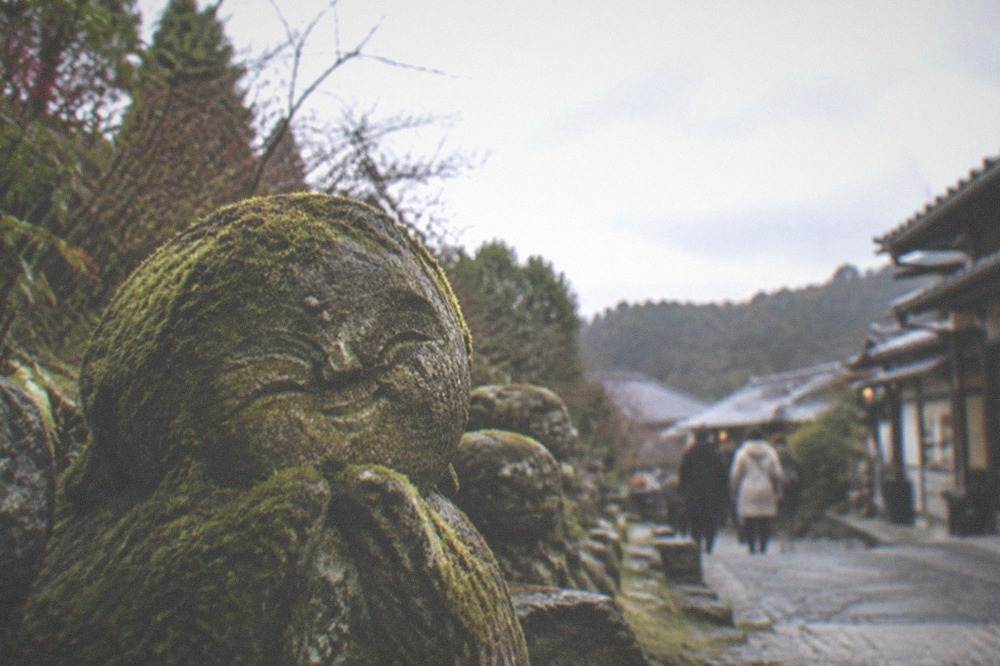
The moss is not decoration; it is the mechanism by which the temple ages. Kyoto's annual rainfall runs to 1,522.9 mm per the JMA normals, spread across every month, and the shaded hillside holds that moisture. Figures carved in the late 1970s and 1980s have now spent four decades in that humidity, and the stone faces soften a little every year. It is a slow-motion lesson in the same aesthetic you can see in the moss of Saiho-ji, the moss temple, on the other side of the city, though Saiho-ji requires advance reservation and Otagi Nenbutsu-ji does not.
How Does Otagi Nenbutsu-ji Fit Into An Arashiyama Day?
The natural order is bamboo grove first, then Saga-Toriimoto street, then Otagi Nenbutsu-ji at the far end, optionally looping back via the Sagano Romantic Train or the Hozugawa Kudari boat landing. Done in that order the temple caps a walk of roughly 4 to 5 kilometres from Saga-Arashiyama Station, and the whole circuit, with the temple, fills five to six hours at a relaxed pace.
A concrete plan for a first Arashiyama day:
- JR Sagano Line from Kyoto Station to Saga-Arashiyama, arriving by 8:30.
- Tenryu-ji garden at opening, 8:30, before the bamboo path fills.
- The bamboo path north, free, no closing time on the path itself.
- Saga-Toriimoto preserved street, a short pause.
- Otagi Nenbutsu-ji, the destination of this page.
- Return on foot, or divert to the Sagano train at Torokko-Saga Station for the gorge ride.
The Iwatayama Monkey Park sits on the south side of the river and pairs well if your legs are willing, but combining the monkey hill's 20-minute uphill climb with the temple walk makes for a long day. Families with young children usually pick one hill or the other. For the fuller picture of the valley, the Arashiyama area guide covers the grove, the bridge and the river in detail, and the bamboo grove page does the same for the path itself.
If the weather turns, the valley has fewer indoor refuges than central Kyoto does. The rainy day itinerary is the better plan B, and the honest note is that a wet morning at the temple, with the moss at full colour and the crowds gone, is not a consolation prize. Carry the umbrella in July especially; the JMA normals show 223.6 mm of rain in that month alone.
What Should You Wear And Bring To Otagi Nenbutsu-ji?
Wear shoes with grip and clothes you can walk uphill in for half an hour, because the route from the bamboo grove is on pavement and gentle incline, and the temple's own grounds are stepped terraces of stone and earth. Bring cash for the admission and for anything in the Adashino area, since small temples and small shops in this valley do not reliably take cards.
The shoe advice is not filler. The terraces are stone, they are damp most of the year, and the moss that makes the statues beautiful makes the footing slick. Sandals on a wet November morning are a bad plan. Beyond that, the usual Kyoto temple etiquette applies: quiet voice, no climbing on the figures, no touching the statues, and photography is fine in the grounds, which distinguishes it from the interiors of the great statue halls.
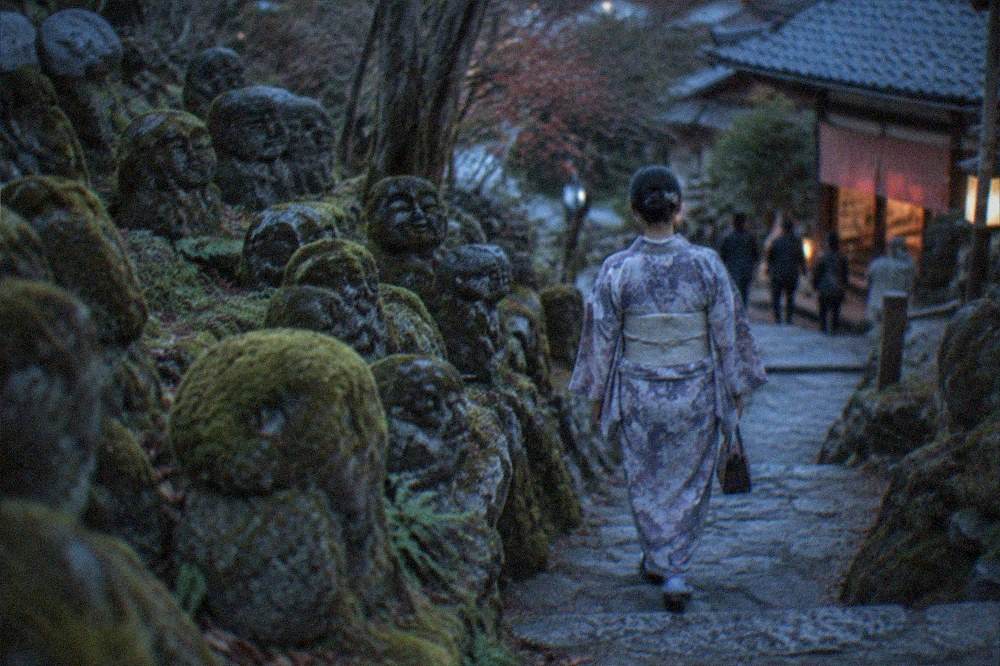
One popular way to visit the valley is in a rented kimono, and Arashiyama is one of the two districts, with Gion and Higashiyama, where that genuinely works, because the walk is flat-ish, scenic and away from the worst crowds. The standard rental option from this site's roster starts from about $17, and the kimono rental guide covers what the price includes and what to expect from hairstyling options.
For food, plan around the valley rather than the temple: the Adashino end has a handful of small teahouses and soba shops, but the reliable eating is back toward the Arashiyama main street and downtown. The Kyoto food guide covers the city's dining landscape, and the Arashiyama guide notes where the valley's lunch options cluster. If you are pushing on to a splurge dinner, the only kaiseki prices this site can honestly print are Hyotei's own, by Nanzen-ji: kaiseki from 31,625 yen at lunch and 37,950 at dinner in the main building, while the same house's annex serves asa-gayu at 5,445 yen and a Shokado bento at 7,260 yen. Those are Hyotei's figures for Hyotei's rooms, not a Kyoto norm.
Is Otagi Nenbutsu-ji Worth The Detour From Arashiyama?
For most travellers with five or more hours in the valley, yes: it is the least crowded and most distinctive stop in Arashiyama, and the walk to it passes the best-preserved street in the district. For a visitor with three hours or less, the honest answer is no; the bamboo grove, Tenryu-ji and the river will fill that time, and the temple's magic depends on arriving unhurried.
The case for the detour is the case this whole page has been making. The temple is the only place in Kyoto where folk carving, moss, hillside and silence combine at scale, and it is the natural end point of the valley's best walk. The case against is distance and stamina: it adds roughly an hour of walking round trip to the standard Arashiyama loop, and on a hot July afternoon, when the mean daily maximum sits at 32 C, that hour is a cost.
The compromise, if you want the temple without the full walk, is the local bus from the Arashiyama main street toward the Adashino area, which cuts the walking to the last few hundred metres. Either way, go in the morning, go in a month with moisture in the air, and give the terraces the slow circuit they deserve. The faces are the whole point, and the faces reward attention more than they reward a photograph.
For the wider planning picture, the things to do in Kyoto overview ranks the city's sights, and the hidden gems guide places this temple among the places the day-trip crowds miss.
Common Questions About Otagi Nenbutsu-ji
How Many Rakan Statues Stand At Otagi Nenbutsu-ji And Who Carved Them?
Hundreds of carved stone rakan fill the temple's terraced hillside, each with a different face. The exact count repeated in most guides is not printed in any temple publication this site has verified, so treat it as a guidebook figure. The carving is credited to local people and students working from the late 1970s into the 1980s, each carver giving their figure its own expression.
Is Otagi Nenbutsu-ji Free To Enter?
No. The temple charges a small admission at the gate. This site has not verified the figure on the temple's own publications, so check the notice at the entrance rather than budgeting from a number quoted in a guide.
How Do I Get To Otagi Nenbutsu-ji From Kyoto Station?
Take the JR Sagano Line to Saga-Arashiyama Station, about 15 minutes, then walk 30 to 40 minutes uphill through the bamboo path and the Saga-Toriimoto preserved street, or take a local bus toward the Adashino area for the last stretch.
Can You Take Photos Of The Rakan Statues?
Yes, photography is permitted in the temple grounds, which distinguishes it from statue halls like the interior of Sanjusangen-do. Common sense applies: do not climb on or touch the figures.
When Is The Best Time Of Year To Visit?
Late November, when the maples are at peak and the moss is at its greenest, is the strongest window. The JMA normals put the maple red-leaf marker at 5 December and private forecasts for 2026 point at late November for the Arashiyama area. Morning visits are quieter in every season.
Is Otagi Nenbutsu-ji Suitable For Children?
Yes, with caveats. The walk from Arashiyama is long for small legs, and the grounds are stepped stone terraces that are slick when wet. Families usually choose between this temple's hill and the Iwatayama Monkey Park's climb rather than doing both in one day.
The honest summary: Otagi Nenbutsu-ji is the temple that rewards the traveller who walks twenty minutes farther than the crowd is willing to, and its carved faces, whoever counted them and whoever carved them, are among the most human objects in a city full of monuments.