Why Can't You Take Pictures Of Geisha In Kyoto?
Photography is restricted on Gion's private alleys because of resident privacy and years of tourist harassment. Here is what the rules actually say, where they apply, and what a 10,000 yen sign really means.
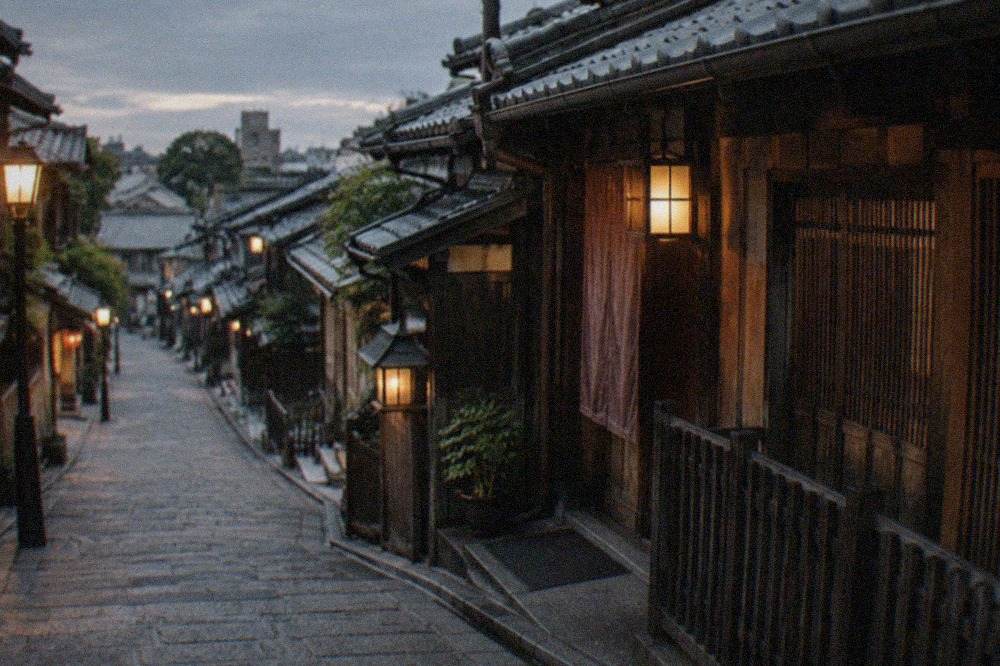
Gion's private alleys are lined with houses, teahouses and the homes of the people who keep one of Japan's most demanding traditional professions alive, and after years of visitors blocking lanes, chasing women down streets and pointing cameras into doorways, the district's residents pushed back. The result is a set of rules most visitors only discover when they are standing in front of a sign they cannot read. This page explains what the rules are, who set them, where they apply and what they mean for anyone hoping to see geiko and maiko in Kyoto.
Why Is Photography Restricted In Kyoto's Geisha Districts?
Photography is restricted because Gion is a private residential neighbourhood, not a public attraction, and years of tourist harassment led its district council to act. On the private alleys off Hanamikoji-dori, signs posted by the Gion South Side district council threaten a 10,000 yen penalty for unauthorized photography or entry. The main street of Hanamikoji remains public and photography is allowed there.
The distinction that matters is property, not celebrity. Hanamikoji-dori, the famous willow-lined street at the heart of Gion, is a public road, and taking pictures along it is permitted. The narrow lanes running off it are private roads maintained by the district's residents and businesses, and entry itself is restricted to the people who live and work there. The signs at the alley mouths, written in Japanese and English, warn that photography and unauthorized entry on these private roads carry a 10,000 yen penalty.
That penalty is council signage, not a municipal ordinance enforced by police. It was put up by the Gion South Side district council, a body of local residents and business owners, after a string of incidents that made international news: visitors chasing maiko to get a photo, grabbing their kimono sleeves, and in one widely reported case in 2019, a maiko being spat at by a tourist demanding a picture. The council's answer was to close the alleys to the public and post the penalty signs.
The city-level guidance is separate and is about conduct rather than money. The Kyoto City Tourism Association publishes four guidelines that apply across the entertainment districts: do not touch, chase or photograph geiko and maiko without permission, and do not enter private property or photograph it where that is prohibited. Both layers of rules exist for the same reason. The women crossing Gion in the evening are commuting to work, often in elaborate dress they have spent an hour putting on, and the district is their workplace and home.
What Happens If You Photograph A Geisha In Kyoto Anyway?
On a public street, nothing automatic happens, because there is no law against photographing a person in a public place in Japan. On the private alleys, you risk the 10,000 yen penalty posted on the council's signs and, more immediately, being asked to leave. The practical consequence most visitors report is confrontation with residents, security staff or other tourists willing to point out the rules.
The legal background is worth understanding, because it explains why the rules look the way they do. Japan has no general law against photographing people in public. What it does have are nuisance laws, and Kyoto has used them: in the widely reported 2019 incident, the tourist who spat at a maiko was prosecuted under Kyoto Prefecture's nuisance prevention ordinance, not a photography law. The photography restrictions in Gion rest on property rights, which is why they apply to private alleys and not to Hanamikoji's main street.
The etiquette layer is broader than the signage. Even where photography is legal, chasing a geiko or maiko down a street to get a shot is harassment under the city's guidelines, and touching them is worse. A maiko hurrying to an appointment in full dress is balancing tall wooden okobo sandals and a heavy hairstyle that took an hour to construct. Being pursued by a camera is not a small thing for her, and the district has spent years saying so.
A guided walk is one of the better ways to understand all of this in context, and the Gion Hidden Gems & Geisha Culture Tour covers the district's rules and history with a guide who can answer questions about what is and is not appropriate. The rest of this page covers the specifics.
Where Exactly Are The Photography Bans In Gion?
The bans cover the private alleys off Hanamikoji-dori, particularly on the east side of the street between Shijo-dori and Kennin-ji, including lanes such as Kosode-koji. The main stretch of Hanamikoji itself is a public road where photography is allowed. Shirakawa and the lanes around it are separately regulated residential areas, and Kamigamo Shrine requires advance permission for photographing rites and for any drone flight.
The geography trips people up because the boundary is invisible until you see a sign. Hanamikoji-dori runs east from Shijo-dori, and its main carriageway is public. The moment you turn into one of the small lanes, you are on private road maintained by the district, and the signs at the entrance say so. The east-side alleys between Shijo-dori and Kennin-ji are the ones most affected, because they sit directly on the route between the ochaya teahouses and the major venues where geiko and maiko perform.
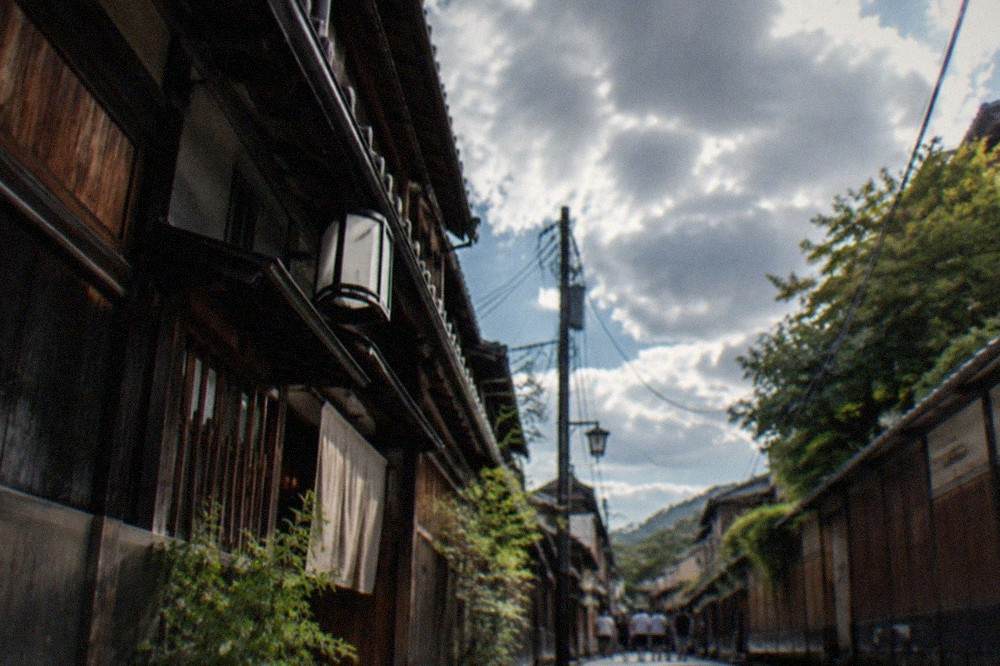
Elsewhere in the city the rules differ. Shirakawa, the canal-side lane in Gion Shirakawa with its willows and preserved machiya, is residential and the same courtesy applies even where signage is thinner. Kamigamo Shrine has its own published rule: photography of its rites and any drone flight require advance permission. The general principle across all of Kyoto's traditional districts is that the more private the space, the stricter the rule.
Here is how the main areas compare:
| Area | Status | Photography |
|---|---|---|
| Hanamikoji-dori, main street | Public road | Allowed |
| Private alleys off Hanamikoji | Private roads, council signs | Banned, 10,000 yen penalty posted |
| Gion Shirakawa canal lane | Residential lane | Strongly discouraged, respect privacy |
| Yasaka Shrine grounds | Public shrine | Allowed, except where rites are restricted |
| Kamigamo Shrine rites | Religious ceremonies | Advance permission required |
Can You Ever Take Pictures Of Geiko And Maiko Legally?
Yes, with permission or in the right setting. Public performances, shrine festivals and official events are photographed openly, and some venues and tours arrange moments where photography is welcome. What you cannot do is photograph a geiko or maiko without her consent while she is moving through the streets on private roads, or pursue her for a shot anywhere.
Permission is the dividing line. At the Gion Matsuri, at shrine festivals, and at public stage events, geiko and maiko appear in scheduled roles and photography from public viewing areas is normal practice. Some tea ceremony experiences and cultural performances explicitly permit photos of the performers at set points, and those settings are the honest way to get the picture. The five geisha districts of Kyoto each hold public dances, most famously the Miyako Odori in Gion each spring, where photography policies are posted and often allow non-flash shots during a designated portion of the program.
What never becomes acceptable is the ambush. Waiting outside an ochaya at dusk to photograph women as they arrive at work, following them down a street, or stepping into a private alley to frame a shot are all behaviours the district has explicitly asked visitors to stop, and the signage exists because asking nicely did not work. Nobody should be told to wait for a geiko to appear, and no guide should promise that one will. The full index of guides sits on Kyoto Travel Guide.
The alternative to street photography is a cultural experience, and Kyoto has several that put you in the room with the tradition rather than chasing it. A tea ceremony class experience in Kyoto is one option; a walk with a guide who explains the district is another.
Why Did Gion Ban Photography In The First Place?
The ban grew out of a decade of escalating tourist behaviour in a residential neighbourhood: crowds blocking the alleys, cameras pointed into doorways and windows, and repeated harassment of geiko and maiko, including the 2019 spitting incident that made national news. The district council closed the private alleys to the public and posted penalty signs in 2024 after earlier warnings failed.
The pressure built alongside Kyoto's visitor numbers. The city's own 2025 tourism survey, released in June 2026, recorded 62.79 million visitors in a single year, a record, and Gion absorbs a disproportionate share of them because it sits at the top of every Kyoto itinerary. The city's tourism association has responded with dispersal campaigns, express buses and etiquette messaging, and the geisha districts have responded with their own rules, because the residents bear the cost.
The timeline of the restrictions runs roughly like this:
| Year | Development |
|---|---|
| 2019 | A maiko is spat at by a tourist demanding a photo; the incident is prosecuted under nuisance laws and reported worldwide |
| 2019 onward | The district council begins posting signs on private alleys banning photography and unauthorized entry |
| 2024 | The Gion South Side district council closes private alleys to the public and posts 10,000 yen penalty signs |
| 2025-2026 | The city tourism association publishes conduct guidelines covering geiko, maiko and private property citywide |
The deeper reason is that Gion's privacy is what makes the profession possible. An ochaya operates on long-standing relationships between hosts, patrons and performers, and the discretion of the district is part of the product. A geisha's professional identity is separate from her private life, and the alleys are where the two meet. Photographing the transition is not a technicality; it is the one thing the district asked visitors not to do.
How Should You Behave Around Geisha In Kyoto?
Follow four rules: keep to public streets, never touch, chase or block a geiko or maiko, ask before any photograph and accept a no immediately, and stay out of private alleys entirely. The Kyoto City Tourism Association's guidance says not to photograph geiko and maiko without permission and not to enter or photograph private property where prohibited.
The practical version is simple. If you see a geiko or maiko on a public street in the evening, you can watch, and you can greet her, but the camera stays down unless she indicates otherwise. If she is walking with purpose, she is going to work, and the correct response is to step aside. If you want a photograph, the honest routes are a public festival performance, an official dance recital, or a cultural experience where photography is part of the program.
For context on the wider district, the Gion neighbourhood guide covers what else there is to see, and the guide to geisha in Kyoto explains the profession, its districts and its calendar in detail. Neither requires you to point a camera at anyone.
If a guided walk is the way you want to experience Gion, the standout option is the Gion Hidden Gems & Geisha Culture Tour, a two-hour walk rated 5 from 3,835 reviews that spends its time on the public streets and explains the rules from the inside. It is a way to learn the district without ever needing to test its patience.
Common Questions About Photographing Geisha In Kyoto
Why Can't You Take Pictures Of Geisha In Kyoto?
Because Gion is a private residential district and years of tourist harassment led its district council to ban photography and entry on the private alleys off Hanamikoji, with signs threatening a 10,000 yen penalty. The city's tourism association separately asks visitors not to photograph geiko and maiko without permission.
Is Photography Of Geisha Illegal In Kyoto?
No Japanese law bans photographing people in public. The Gion restrictions rest on property rights over the private alleys, and the penalty on the signs is posted by the district council, not by police. Conduct such as chasing or touching a geiko or maiko can fall under nuisance ordinances.
Can You Take Pictures On Hanamikoji Street?
Yes. The main street of Hanamikoji-dori is a public road and photography is allowed. The ban applies to the private alleys running off it, which are marked with signs.
Where Can You See Geisha In Kyoto Respectfully?
Public festival appearances, the spring and autumn dance recitals held in the geisha districts, and cultural experiences such as tea ceremonies or guided district walks. Chasing or waiting to ambush a geiko or maiko on the street is never appropriate.
What Is The Fine For Photographing In Gion's Alleys?
The signs posted by the Gion South Side district council threaten a 10,000 yen penalty for unauthorized photography or entry on the private roads. It is a council-posted penalty on private property, not a city-issued fine.
The rules in Gion are not an attack on photography; they are a neighbourhood defending the conditions its profession needs to survive. Keep to the public streets, respect the signs, and if you want the photograph, earn it in a setting where it is welcome. That is the whole of the etiquette, and it costs nothing to follow.