What Is Kyoto Style Cooking?
Kyoto style cooking, called washoku or kyo-ryori, is Japan's temple-shaped cuisine: seasonal, vegetable-led, lightly seasoned and built on dashi. Here is what defines it and how to taste it.
What Is Kyoto Style Cooking?
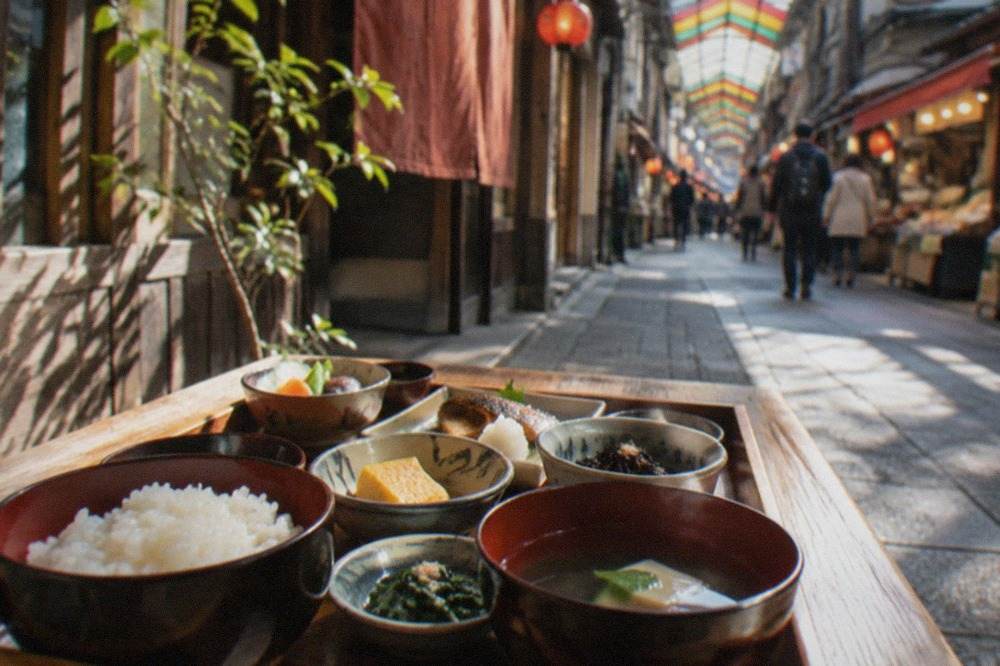
Kyoto style cooking, usually called kyo-ryori or described as Kyoto's branch of washoku, is a cuisine of restraint. Rice, seasonal vegetables, tofu, pickles and a light dashi broth do most of the work, because for a thousand years this was a capital of temples and an imperial court, not a fishing port. The sea is far away, so Kyoto cooks learned to extract depth from kombu, shiitake and vegetables instead of relying on raw fish, and Buddhist vegetarian kitchens turned that constraint into shojin ryori, one of the world's most refined plant-based traditions. The result is food that tastes quiet, seasonal and precisely made, and it is the reason a bowl of tofu or a pickle course can carry a whole meal here.
What Is Kyoto Style Cooking?
Kyoto style cooking is the traditional cuisine of Japan's old capital: a seasonal, vegetable-led branch of washoku built on dashi, tofu, pickles and rice rather than on seafood, shaped by Buddhist temple kitchens, the imperial court and the city's distance from the coast. It is lightly seasoned on purpose, because the point is the ingredient's own taste at its exact moment in the year.
Three historical forces made it what it is. First, geography: Kyoto sits in a mountain basin, and before refrigeration fresh ocean fish rarely arrived in good condition, so the city's cooks built flavour from kombu dashi, dried fish, river fish, tofu and vegetables. Second, religion: Zen temples practised shojin ryori, the vegetarian cooking that refined sesame, miso and vegetable technique over centuries, and much of it leaked into everyday Kyoto home cooking. Third, the imperial court and the tea ceremony: court cooking brought formality and the kaiseki structure, while tea-ceremony cuisine, cha-kaiseki, brought the idea that one tray, a few small dishes and a bowl of rice can be a complete act of hospitality.
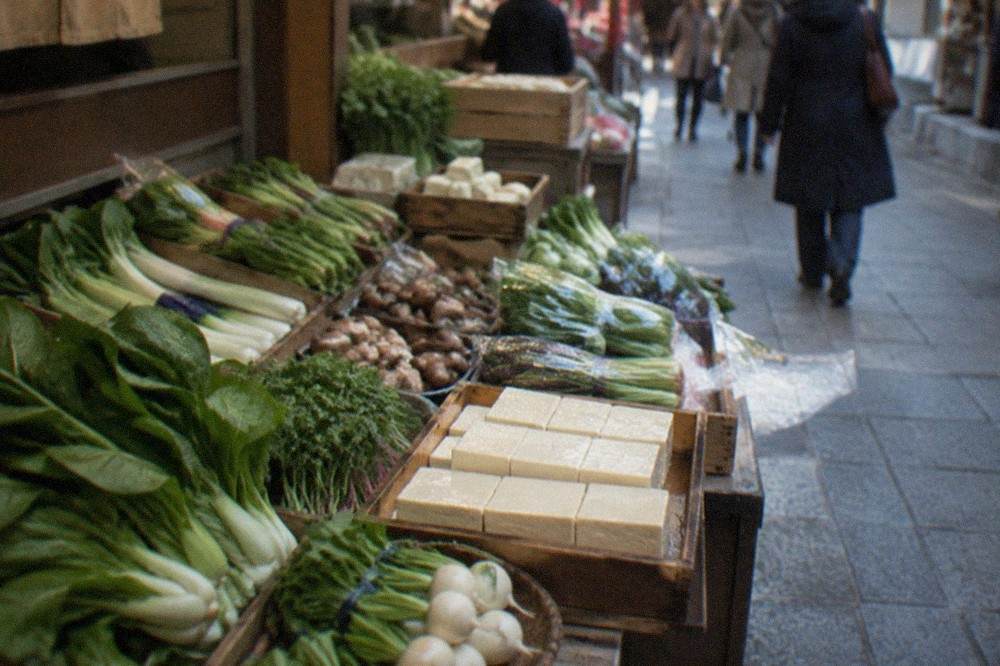
The practical signature is the box of Kyoto vegetables, kyoyasai. The city's surrounding hills grow specific cultivars, from the round Kamo eggplant to shogoin turnips and mibuna greens, and menus change with what is harvested rather than with what ships well. Seasonality is not decoration here; it is the calendar the kitchen follows.
What Foods Define Kyoto Style Cooking?
The core dishes are yudofu and other tofu preparations, shojin ryori temple cooking, obanzai home-style vegetable side dishes, Kyoto pickles such as senmaizuke, kaiseki course menus, matcha sweets and the kyoyasai vegetables themselves, including Kamo eggplant and shogoin turnip. Together they cover the range from a 5,000 yen tofu lunch to a 30,000 yen-plus kaiseki dinner.
Yudofu, tofu simmered in kombu broth, is the most famous single Kyoto dish, associated with the temple district of Nanzen-ji where the Zen kitchens perfected it. Obanzai is the home-cooking layer: small seasoned vegetable dishes, often with dashi, designed to use the whole vegetable and waste nothing. The pickle tradition runs deep because preservation was necessary through cold winters, and senmaizuke, the paper-thin turnip pickle, is the classic example.
Kaiseki is the formal peak, and the honest price picture comes from one house that publishes its own menu: at Hyotei, near Nanzen-ji, the kaiseki course in the main building starts from 31,625 yen at lunch and 37,950 yen at dinner, while the same restaurant's annex serves morning rice porridge from 5,445 yen and a shokado bento from 7,260 yen. Those are Hyotei's own published prices, not a city-wide average, but they show the real spread: the same kitchen, the same cuisine, two very different formats.
| Kyoto dish | What it is | Where it comes from |
|---|---|---|
| Yudofu | Tofu simmered in kombu broth with ponzu | Zen temple kitchens, Nanzen-ji area |
| Shojin ryori | Fully vegetarian Buddhist cooking, no fish or meat | Zen temples |
| Obanzai | Home-style seasoned vegetable side dishes | Kyoto households |
| Senmaizuke | Paper-thin pickled turnip | Kyoto pickle tradition |
| Kaiseki | Multi-course seasonal menu | Tea ceremony and court cuisine |
| Kyoyasai dishes | Preparations of Kamo eggplant, mibuna, shogoin turnip | Kyoto's surrounding farmland |
For the market-side view of these ingredients, the Nishiki Market ingredient walk is the practical introduction, and the broader Kyoto food guide covers where each of these dishes is eaten.
How Did Temple Cooking Shape Kyoto Cuisine?
Buddhist temples, especially the Zen monasteries around Nanzen-ji and Daitoku-ji, shaped Kyoto cooking by forbidding meat and fish in their kitchens, which forced centuries of refinement in sesame, miso, tofu and vegetable technique, and that shojin ryori tradition then spread into ordinary Kyoto home cooking and restaurant menus.
The mechanism was restriction turned into craft. Without animal stock, temple cooks learned to make dashi from kombu and dried shiitake, to grind sesame into rich sauces, and to cut, press and simmer tofu until it carried a meal. Goma-dofu, sesame tofu, is the clearest example: a dish with no tofu in it at all, just ground sesame, kudzu starch and skill. When those techniques left the temples, they became the city's defaults, which is why Kyoto's food tastes lighter and more vegetable-centred than Osaka's or Tokyo's.
The tea ceremony added a second layer. Cha-kaiseki, the small meal served before thick matcha, values restraint and the season's single best ingredient over abundance, and that aesthetic still governs how a Kyoto course meal is portioned. The tea culture also made matcha and wagashi, the sweets that accompany it, part of the city's food identity; the difference between matcha and Uji matcha goes back to the nearby Uji tea fields that supplied the capital.
How Is Kyoto Cooking Different From The Rest Of Japan?
Kyoto cooking differs from the rest of Japan mainly by being lighter, sweeter and more vegetable-centred: it uses white miso rather than the darker, saltier miso of other regions, relies on tofu and pickles rather than coastal seafood, and treats subtle seasoning as the goal rather than bold flavour, the opposite of Osaka's food culture, which runs on richness and frying.
The comparison with Osaka is the sharpest one, because the two cities are an hour apart and eat almost opposite diets. Osaka, a port and merchant city, built its identity on okonomiyaki, takoyaki and strong dashi; Kyoto, a landlocked temple and court city, built its identity on simmered vegetables and quiet broth. Kyoto's shiro-miso, the sweet white miso used in its soup and its famous saikyo-zuke grilled fish, is markedly less salty than the red miso of Nagoya or the standard blends of Tokyo. Everything else covered here is indexed on Kyoto Travel Guide.
A second difference is the meal structure. Kyoto formalises food into courses, kaiseki, or into the one-tray format of rice, soup, pickles and a few small dishes, while much of the rest of the country eats a single-dish lunch culture. That structure is why a Kyoto lunch can feel like a composed meal even at a modest price.
| Element | Kyoto approach | Typical contrast elsewhere |
|---|---|---|
| Miso | Sweet white (shiro) miso | Darker, saltier blends |
| Protein | Tofu, river fish, vegetables | Ocean seafood, pork, beef |
| Seasoning goal | Restraint, ingredient first | Bolder, richer seasoning |
| Signature cooking | Simmering, pickling, steaming | Grilling, frying (Osaka style) |
| Meal format | Course structure, small dishes | Single-plate dishes |
Can You Learn Kyoto Style Cooking Yourself?
Yes, and Kyoto is one of the best places in Japan to do it, because the city's cooking classes teach the home version of this cuisine directly: making dashi from kombu, preparing obanzai vegetable dishes, folding a bento, and in some classes making noodles or sweets from scratch, usually in small groups of a few hours with an English-speaking instructor.
The small-group washoku bento class is the natural fit for this question, because it covers exactly the structure described above: rice, soup, seasonal side dishes and the seasoning logic that holds them together. A ramen-making class takes a different slice of the tradition, teaching the noodle and broth craft that Kyoto also practises, while a market brunch walk teaches the ingredient side, tasting the pickles, tofu and vegetables before they are cooked. Doing a class and a market walk on consecutive days is the most efficient way to understand both halves of the cuisine, the raw and the cooked.
Where Should You Eat Kyoto Style Cooking?
The honest answer is to match the format to your budget: a yudofu restaurant near Nanzen-ji or a shojin ryori lunch at a temple for a mid-price meal, an obanzai pub in downtown Kyoto for the home version, a market stall run at Nishiki for pickles and snacks, and one kaiseki dinner at a published-menu house such as Hyotei, whose own site lists kaiseki from 31,625 yen and its annex porridge from 5,445 yen, if you want the formal peak.
The one practical warning is about the temple lunch. Shojin ryori at major temples is often reservation-only and can cost as much as a mid-range dinner, so it is a planned meal rather than a walk-in. The obanzai option is the opposite: small places around downtown Kawaramachi and Pontocho serve the home cooking at prices closer to an ordinary dinner out, and the best restaurants in Kyoto and the Kyoto signature dish guide cover where each format is done well. For a first visit, the stronger combination is a simple tofu lunch and one good kaiseki dinner, rather than two formal meals on consecutive nights.
Common Questions About Kyoto Style Cooking
What Is Kyoto Style Cooking?
It is the city's traditional cuisine: a vegetable-led, lightly seasoned branch of washoku built on dashi, tofu, Kyoto pickles and seasonal vegetables, shaped by Buddhist temple kitchens, the imperial court and Kyoto's distance from the sea.
Is Kyoto food the same as washoku?
Washoku is the broader Japanese culinary tradition, while Kyoto cooking is a regional expression of it. Kyoto's version leans more heavily on tofu, temple techniques, sweet white miso and course structure than the national average.
What is the most famous Kyoto dish?
Yudofu, tofu simmered in kombu broth, is the most internationally famous, closely followed by kaiseki course menus and the city's pickles, especially senmaizuke.
Is Kyoto style cooking vegetarian?
Partly. Shojin ryori, the temple tradition, is fully vegetarian, and much of the home cooking is vegetable-centred, but standard Kyoto restaurant food often uses fish in the dashi and serves grilled fish, so vegetarians should look specifically for shojin ryori venues.
How much does a kaiseki meal cost in Kyoto?
It depends entirely on the house. At Hyotei, one of the most famous kaiseki restaurants, the restaurant's own published menu starts kaiseki from 31,625 yen at lunch, while its annex serves rice porridge from 5,445 yen and a bento from 7,260 yen. Those are that restaurant's prices, not a city-wide range.
Can I cook Kyoto style food at home?
Yes, the core is learnable: kombu dashi, seasoned vegetable side dishes, rice and pickles form the base, and that is exactly what Kyoto's small-group cooking classes teach in a single session.
Kyoto style cooking is, in the end, a cuisine of decisions made a thousand years ago and never really reversed: no nearby ocean, so dashi and tofu; temples at the centre of the city, so vegetables refined into art; a court and a tea culture, so form and seasonality over abundance. Eating it well means following those same lines, from a bowl of simmered tofu near a Zen temple to a tray of small dishes that changes completely by the following month.