What Is Kyoto's Signature Dish?
Kyoto's signature dish is kaiseki, the multi-course seasonal dinner that grew out of the tea ceremony. Here is what it is, what it costs at a famous house, and the humbler dishes locals actually eat.
What Is Kyoto's Signature Dish?
Kyoto's restaurant culture was shaped by three forces most cities never had at once: the imperial court, the Buddhist temples and the tea ceremony. The court demanded refinement, the temples demanded vegetarian discipline, and the tea ceremony demanded that food be matched to the moment. Out of that came a city where the signature dish is not one recipe but a whole style of eating, and where the most famous version of it costs more per person than most people's hotel night. The city's 2025 tourism survey recorded 62.79 million visitors, and a large share of them came asking exactly this question.
Is Kaiseki The Signature Dish Of Kyoto?
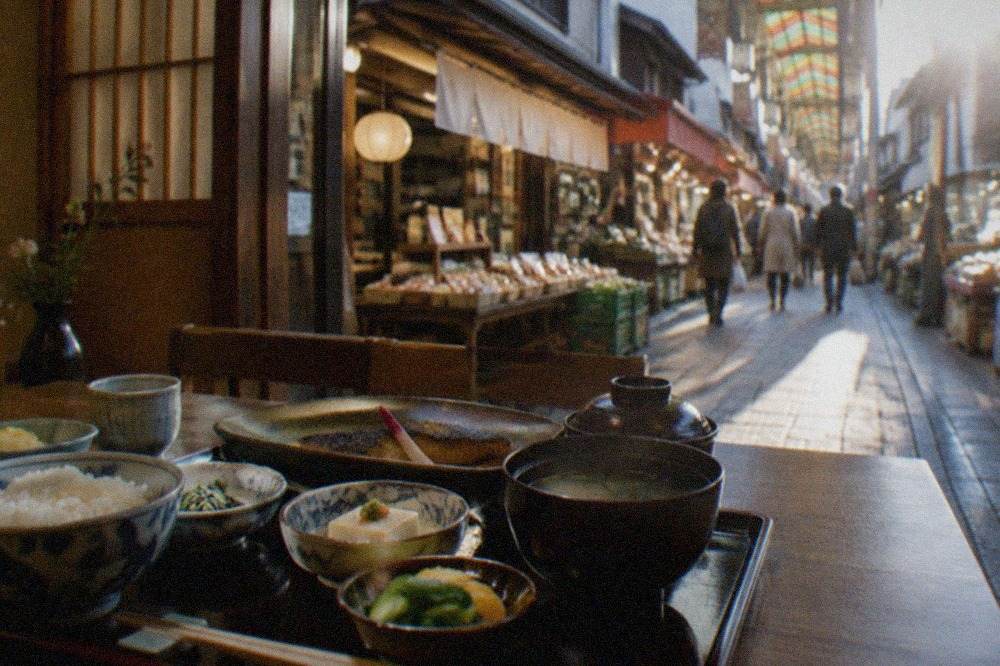
Yes, kaiseki is the dish Kyoto is known for: a multi-course dinner built around seasonal ingredients, served one course at a time in a fixed sequence that moves from light to rich. It grew out of the tea ceremony, where a small meal preceded the tea, and Kyoto remains its centre. At Hyotei, one of the city's most famous kaiseki houses by Nanzen-ji, the course itself starts above 30,000 yen, which tells you what the top of this tradition looks like.
Hyotei's own front page prints its prices, tax and service included: kaiseki from 31,625 yen at lunch and from 37,950 yen at dinner in the main building. Those are Hyotei's prices for its own rooms and dates, not a Kyoto norm, and no honest guide should turn one restaurant's menu into a citywide average. What the numbers do show is the shape of the tradition: kaiseki is event dining, booked ahead, taken slowly.
The word itself carries a story. It originally referred to a warm stone that tea masters held against the stomach to quiet hunger before tea, and the meal that followed kept the name. That origin explains the portion philosophy: kaiseki is deliberately modest per course. Eight or so small plates, each matched to the season, arranged so the meal ends before it tires you.
What makes it Kyoto's signature rather than simply Japan's is the supply chain. The city sits in a basin ringed by mountains that give it distinct vegetables, and Kyoto's growers have supplied specific cultivars to specific kitchens for centuries. The cuisine's reliance on those local vegetables, more than any single technique, is what ties it to this city.
A kaiseki meal follows a rough order most houses still observe: a small appetiser to open, a soup, sashimi where the kitchen allows fish, a simmered dish, a grilled course, something vinegared or steamed, rice with pickles, and a sweet to close. The exact count varies by house and season. What never varies is the principle that each course arrives alone, so you meet it without competition, and that the menu is rewritten as the market changes rather than held fixed through the year.
What Is Obanzai, The Home-Style Kyoto Cooking?
Obanzai is Kyoto's everyday home cooking: a set of small vegetable-forward side dishes, typically simmered or seasoned with dashi, made to be eaten together with rice rather than served as a formal sequence. Where kaiseki is the city's ceremony, obanzai is its kitchen table, and it is the honest answer when the question is what people in Kyoto actually eat on a Tuesday.
The style leans on the same local vegetables that kaiseki uses, but treats them plainly. A simmered pumpkin, a sesame-dressed green, dried fish rehydrated and cooked with sugar and soy: dishes designed to use what the season and the larder hold, without waste. Restaurants in the downtown lanes around Kawaramachi serve obanzai sets at lunch and dinner, and izakaya versions pile the same dishes onto shared tables late at night.
For a visitor, obanzai is also the practical entry point to Kyoto food. You do not need a reservation weeks ahead or a translator on the phone. A set lunch of several small dishes costs a fraction of kaiseki, and it teaches the palate the city runs on: dashi first, then the vegetable. If you want to go deeper on where locals actually eat rather than where guidebooks send you, our piece on where locals eat in Kyoto breaks the neighbourhoods down.
Where Does Yudofu Fit In Kyoto's Temple Food?
Yudofu, tofu simmered at your table in a light kombu broth, is the signature dish of Kyoto's temple dining tradition, tied to the Buddhist vegetarian cooking called shojin-ryori that temple kitchens developed over centuries. It is strongest in the temple districts of Nanzen-ji and around Arashiyama, where restaurants serving it line the approach roads, and it peaks in demand during the cold months.
The logic of the dish is restraint. Kyoto's water is soft, historically kind to tofu making, and the city's tofu came to be treated as a centrepiece rather than filler. In yudofu, a square of it is warmed in broth, dipped in a simple sauce with scallion and ginger, and eaten with rice. That is the whole dish. Shojin-ryori, the fuller temple cuisine, extends the same principle into a complete vegetarian meal, and it exists partly because Buddhist precepts barred the kitchens from meat and fish, which forced real invention with vegetables, beans and dashi.
The temple connection is not decoration. Nanzen-ji, the great Zen head temple of the Rinzai sect, sits in the neighbourhood where yudofu restaurants cluster, and the walk between its grounds and the Philosophers Path passes several of them. A tofu lunch is the natural midpoint of that walk on a cold day.
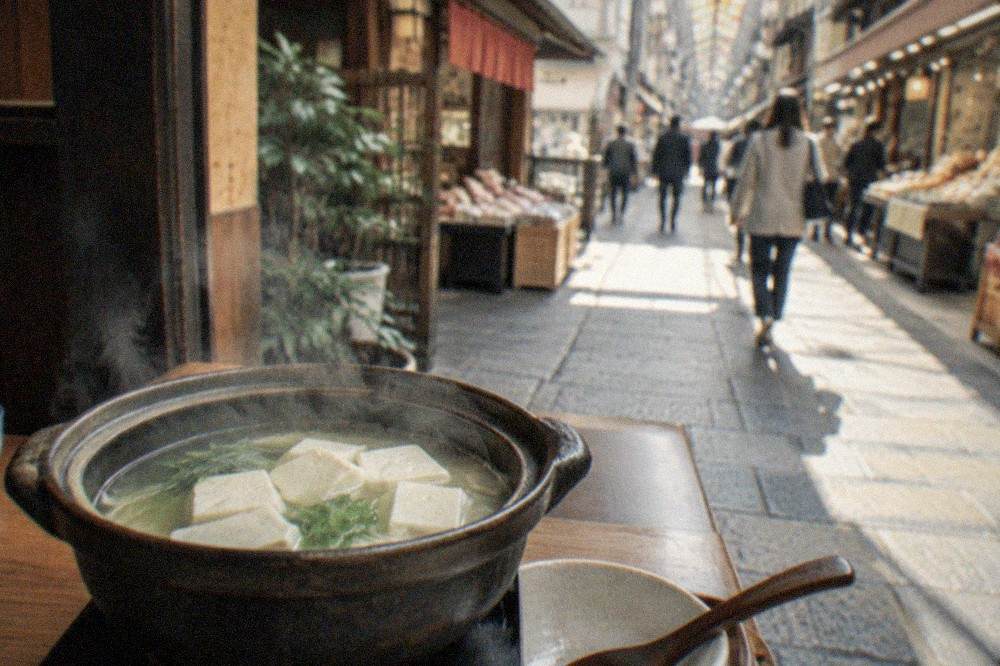
One honest caution: yudofu restaurants in the tourist strips can be ordinary, and the temple-adjacent ones fill at midday in autumn and spring. Going at opening time, or on a weekday, gets you the same pot with less queue.
How Much Does Kaiseki Actually Cost In Kyoto?
At Hyotei, the restaurant's own published prices run from 31,625 yen for lunch kaiseki and 37,950 yen at dinner in the main building, while the same house's annex serves rice porridge and a bento from about 5,445 to 7,260 yen. Those figures are Hyotei's alone and cannot be generalised, but they show the real spread: the top of the tradition crosses 30,000 yen, while the same kitchen feeds you for a fifth of that downstairs.
The annex detail is the useful one for travellers. Hyotei's annex serves asa-gayu, morning rice porridge, at 5,445 yen in season, and a shokado bento at 7,260 yen. Same address, same lineage, radically different bill. This pattern repeats across Kyoto's food culture: famous houses run cheaper annexes or lunch services, and the traveller who books the annex eats the same craft at a fraction of the price. More of these guides are collected on Kyoto Travel Guide.
| Item at Hyotei | Price, tax and service included | Where and when |
|---|---|---|
| Kaiseki, lunch | from 31,625 yen | main building, 12:00-15:00 |
| Kaiseki, dinner | from 37,950 yen | main building, 17:00-21:30 |
| Asa-gayu, morning porridge | 5,445 yen | annex, 16 March to 30 November, 8:00-11:00 |
| Shokado bento | 7,260 yen | annex, 12:00-14:00 |
| Uzura-gayu, quail porridge | 5,445 yen | annex, 1 December to 15 March |
Reservations at the main building are taken from two people, so a solo traveller looking at the top tier needs a companion or a different house. For the wider picture of what an evening out costs across the city, from standing bars to full dinners, our how much dinner costs in Kyoto answer lays out the tiers.
Where Should You Eat Kyoto's Signature Dishes First?
Start with Nishiki Market for grazing, the Kawaramachi and Pontocho lanes for obanzai and izakaya versions, and a temple-district restaurant for yudofu, then decide whether kaiseki is worth the booking effort for your dates. Nishiki's covered arcade packs centuries of food retail into about 400 metres, and it is the fastest way to taste the city's pickles, tofu, confections and dashi culture in one walk.
Nishiki has rules worth knowing before you go. The market's own guidance discourages eating while walking, and the honest etiquette is to buy at a stall and eat it there, beside the stall. Shops keep their own hours, typically from around 9 or 10:00 to 17 or 18:00, with irregular closures, so there is no single official opening time: mornings are the safe bet. Our Nishiki Market food street guide covers the layout stall by stall.
Matcha deserves a line of its own, because Kyoto is where Japan's tea culture is centred and the city's confectioners build whole menus around it. The distinction that matters is origin: Uji, the tea growing district just south of the city, is where the most prized leaves come from, and the difference between ordinary matcha and Uji matcha is the difference between a label and a place. Our matcha versus Uji matcha explainer settles it.
| Dish or style | What it is | Best setting for a first taste |
|---|---|---|
| Kaiseki | Seasonal multi-course dinner in fixed sequence | Booked restaurant, evening, from two people |
| Obanzai | Home-style simmered vegetable side dishes | Downtown set lunch or izakaya, no booking needed |
| Yudofu | Table-simmered tofu in kombu broth | Temple district restaurant, cold months |
| Shojin-ryori | Buddhist vegetarian full meal | Temple restaurant or shojin-ryori specialist |
| Matcha sweets | Tea-centred confections and parfaits | Nishiki arcade or a downtown tea house |
Which Season Changes The Menu Most?
Autumn changes Kyoto's menus most, because the signature ingredients are seasonal and the city's restaurants rewrite their courses around them: chestnuts, matsutake mushrooms, persimmon and the first winter root vegetables all arrive within weeks of each other, and the maple season pushes temple-district dining to its yearly peak. Spring runs a close second, with bamboo shoots and the brief wild herb season.
The timing is worth planning around if food is the reason for the trip. A kaiseki menu in late October and a menu in late April can share almost nothing but the format, and the same is true of the obanzai counters, which follow whatever the mountain growers send down. The JMA phenology record gives the official markers: Kyoto's maple red leaves turned on 10 December in 2025 against a 1991 to 2020 normal of 5 December, so the dining peak tends to sit in late November and early December rather than mid-November, which is where most outside guides put it.
The hike above Fushimi Inari is a fitting pairing for a food trip, oddly enough: the shrine's own history ties Inari to rice, the grain at the base of the whole cuisine, and the trails come back down into a district of street food and small restaurants. Eating well after walking Inariyama is a long-established local pattern, not a tour invention.
Common Questions About Kyoto's Signature Dish
What Is Kyoto's Signature Dish?
Kaiseki, the seasonal multi-course dinner that grew out of the tea ceremony, is the dish Kyoto is famous for. The city's everyday signature is obanzai, its home-style vegetable cooking, with yudofu as the signature of its temple districts.
Is Kaiseki Worth The Price In Kyoto?
At the top houses it is event dining: Hyotei's own menu starts above 30,000 yen for the course. The same houses often run annexes or lunch services at a fraction of the price, which is the smarter first taste for most travellers.
What Is The Difference Between Kaiseki And Obanzai?
Kaiseki is a formal, booked, sequenced multi-course meal; obanzai is a loose set of home-style side dishes eaten with rice. One is ceremony, the other is Tuesday.
Can You Eat Vegetarian Easily In Kyoto?
Yes. Buddhist shojin-ryori, the temple vegetarian tradition, is centuries old and still served in temple districts, and yudofu is naturally vegetarian. Our [vegetarian Kyoto guide](/guides/kyoto-tofu-shojin-ryori/) covers where to eat it.
Where Can You Try Kyoto Foods Without A Reservation?
Nishiki Market for grazing, obanzai set lunches downtown, and izakaya counters in the Kawaramachi lanes. Kaiseki and shojin-ryori restaurants generally need booking ahead.
Which Season Has The Best Food In Kyoto?
Autumn, when chestnuts, matsutake and persimmon arrive together and the temple districts hit their dining peak, roughly late November into early December. Spring's bamboo shoots and wild herbs run it close.
The short version, then: if you eat one thing in Kyoto, eat a kaiseki course if the budget allows it, and an obanzai lunch plus a pot of yudofu if it does not. Both come from the same basin, the same vegetables and the same dashi, and both tell you what this city's kitchens have been doing for the last few hundred years.