What Is The Most Beautiful Street In Kyoto?
Ninenzaka and Sannenzaka, the two preserved stone slopes below Kiyomizu-dera, are the most beautiful streets in Kyoto. Here is why, plus the other lanes worth your time.
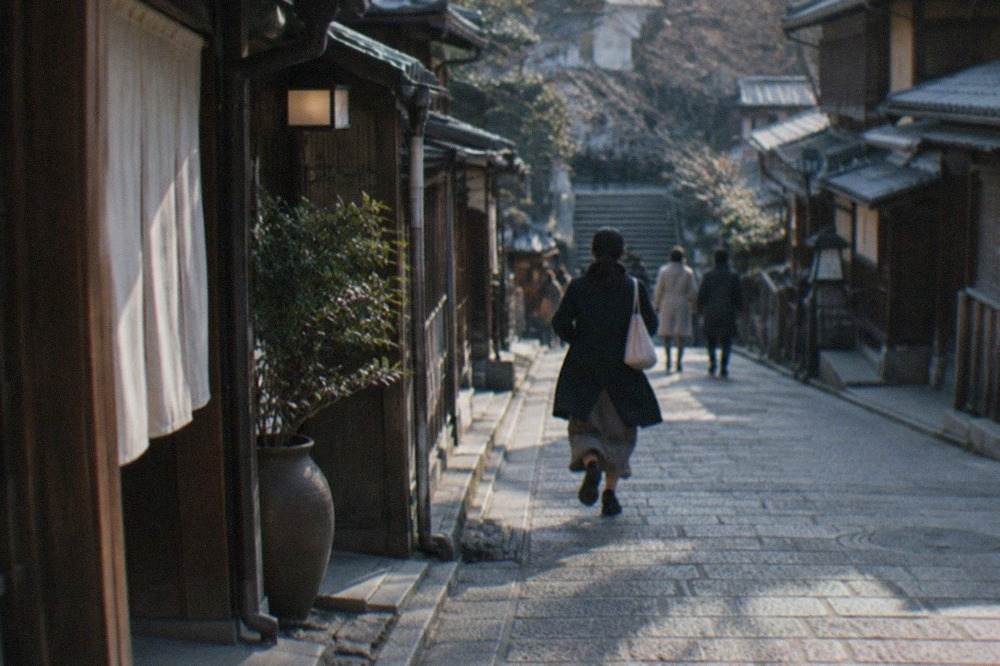
The stone slopes of Ninenzaka and Sannenzaka, climbing toward Kiyomizu-dera in eastern Kyoto, are the answer most guides give to this question, and for once the consensus is right. Two adjoining lanes of preserved machiya shopfronts, stone paving and tiled roofs, laid out on a hill that ends at one of Japan's most famous temple gates, give these streets a completeness that nowhere else in the city matches. Gion's Hanamikoji is more theatrical, Pontocho more intimate, but neither closes the composition the way the Sannenzaka slope does.
What Is The Most Beautiful Street In Kyoto?
The most beautiful street in Kyoto is Sannenzaka, the stone-paved slope that runs up from Ninenzaka toward Kiyomizu-dera, usually named together with its neighbour as the Ninenzaka-Sannenzaka district. Together they form the largest preserved historic streetcape in the city, a linked pair of sloping lanes lined with machiya townhouses, and they finish at the gate of a temple that opens at 6:00, before almost every other sight in Kyoto.
The pairing matters. Ninenzaka is the wider, gentler of the two, bending around tea houses and souvenir shops in buildings that are largely original or faithfully rebuilt after fires. Sannenzaka is steeper and tighter, its stone steps forcing a slower pace that photographers have exploited for decades. Walk down rather than up and the composition reverses: tiled roofs stacked on the hill, the temple gate behind you, and the whole lane framed by telegraph poles and maples.
The district sits inside the city's Higashiyama preservation area, which is why the frontages have survived at all. Kyoto rebuilt in timber and tile here rather than concrete, and the result is the closest thing the city has to an Edo-period street that still functions as a shopping street. Our Ninenzaka and Sannenzaka guide covers the shops and tea houses lane by lane.
The practical catch is popularity. The city's 2025 tourism survey, released 12 June 2026, recorded a record 62.79 million visitors across the year, up from 56.06 million in 2024, and day visitors alone accounted for 46.20 million. The slopes below Kiyomizu-dera absorb a large share of that, so timing matters more than route. The temple opens at 6:00, per its own FAQ, which makes an early walk the single most effective move on this page.
Why Do Ninenzaka And Sannenzaka Look So Different From The Rest Of Kyoto?
Because they sit inside a designated preservation district where machiya frontages, stone paving and rooflines are protected, and because the slope itself is original medieval street geometry rather than a reconstruction. Most of Kyoto burned repeatedly and was rebuilt in concrete, so a linked pair of sloping timber streets leading to a major temple is rare enough that the city chose to conserve it.
Fire shaped this district the way it shaped everything in Kyoto. The slopes were rebuilt in timber after the fires of the Edo period, and the modern preservation rules kept them that way, which is why the lane reads as a continuous period streetscape rather than a street with a few old buildings on it. The stone steps on Sannenzaka are uneven on purpose: they were laid for foot traffic and palanquin bearers, not delivery vans.
The other reason is the temple at the top. Kiyomizu-dera has drawn pilgrims up this hill for centuries, and the street economy that served them, tea, sweets, incense, lodging, never had a reason to leave. Shops selling yatsuhashi sweets and matcha soft serve are the current layer of a very old retail tradition. The temple itself charges 500 yen for adults and high school students, and its spring and autumn night viewings extend hours to 21:30 on specific dates, per the schedule on the temple's access page.
A short detour off the slopes adds two more preserved pockets. Kodai-ji, a five-minute walk south, charges 800 yen for adults and holds autumn night illuminations from 23 October to 13 December 2026, per its own fee page. Ryoan-ji is across the city, but the smaller temples around the slopes, Chion-in and Yasaka Shrine to the north, extend the walkable historic quarter well beyond the two famous lanes. Our Kiyomizu-dera guide maps the full sequence.
Is Hanamikoji In Gion More Beautiful At Night?
Hanamikoji, the willow-lined main street of Gion, is Kyoto's most beautiful street after dark, when the lanterns are lit and the wooden teahouse fronts stop needing daylight to be read. In daytime it is a pleasant lane; at night it becomes the definitive Gion image, and the geiko and maiko who work the teahouses are part of the scenery only in the sense that they pass through it.
Gion rewards a different kind of looking. The street is flat where Sannenzaka climbs, wide where Pontocho narrows, and its beauty is architectural rhythm: machiya after machiya, each with a discreet entrance and a nameplate, punctuated by willows. The Gion area guide covers the district's five hanamachi and what each is for.
There are rules, and they matter more here than anywhere else in the city. The Kyoto City Tourism Association's conduct guidelines are explicit: do not touch, chase or photograph geiko and maiko without permission, and do not enter or photograph private property where it is prohibited. Off the main street, signs posted by the Gion South Side district council on the private alleys threaten a 10,000 yen penalty for unauthorised photography or entry. Those alleys are private roads, and the signage is the council's, not a city ordinance, but the instruction is the same either way: stay on Hanamikoji itself, where photography is allowed.
A guided night walk solves the etiquette problem neatly, because the guide knows which fronts are private and which stories are real. The Magical Gion Night Walking Tour, rated 4.9 across 4,616 reviews and running an hour and forty minutes, is built exactly around this street after dark.
What Other Streets In Kyoto Deserve The Title?
Pontocho, the narrow alley between the Kamo River and Kawaramachi, is the strongest runner-up, a single-lane strip of restaurants and bars along the riverbank that becomes the city's best evening walk. Teramachi and Shinmachi downtown offer the covered arcade version, and the Philosopher's Path offers the garden version, so the honest answer depends on whether you want architecture, water or trees.
Pontocho is two metres of stone alley running a kilometre between Shijo and Sanjo, and its beauty is density: no cars, no signage wider than a doorway, and the river on one side. In summer the restaurants build platforms over the water, and the lane becomes the one street in Kyoto that is genuinely better in July than in April. The Pontocho alley guide maps the good stretches.
Teramachi, the covered arcade running north from Shijo, is the practical beauty: a temple street turned bookseller street turned shopping arcade, with the small shrine tucked mid-lane. It is the street locals actually use, which gives it a texture the tourist lanes cannot copy. The Teramachi street guide separates the arcade's worthwhile blocks from the filler.
Here is how the main candidates compare:
| Street | Character | Best Time | The Catch |
|---|---|---|---|
| Sannenzaka and Ninenzaka | Preserved stone slopes, machiya, temple gate | 6:00 to 8:00 | Heaviest crowds of any lane in the city by mid-morning |
| Hanamikoji, Gion | Willow-lined teahouse street | After dark | Strict photography rules; private alleys off-limits |
| Pontocho | Narrow riverbank alley of restaurants | Evening, or summer with river platforms | Very little to see in daytime |
| Teramachi arcade | Covered temple-turned-shopping street | Any weather, any hour | Modern shopfronts dilute the historic feel |
| Philosopher's Path | Canal-side walk under cherry trees | Cherry season, early morning | Not a street in the shopping sense; no frontages |
The Philosopher's Path earns its place on looks alone in late March and early April. The JMA phenology record for Kyoto puts full bloom at 30 March in 2026 against a 1991-2020 normal of 4 April, and the 2025 bloom at 5 April, so the last week of March and first week of April is the window the observatory's own data supports.
When Should You Walk Kyoto's Most Beautiful Streets?
Walk the Sannenzaka slopes between 6:00 and 8:00, because Kiyomizu-dera opens at 6:00 and most day-trippers do not arrive before 10:00; walk Hanamikoji after the lanterns come on; and avoid the middle of the day entirely in July and August, when the JMA 1991-2020 normals put mean daily highs at 32.0 and 33.7 C. The city's own crowd tools, the Kyoto Tourism Comfort Forecast, exist precisely because 62.79 million people visited in 2025.
The Comfort Forecast, run by the city's tourism association, uses smartphone location data, weather and day-of-week patterns to predict crowd levels at specific spots by time slot. It is the only crowd tool with real data behind it, and it is free. Check it the night before and shift your walk accordingly.
Season matters as much as hour. The same JMA normals that make July the wettest month, 223.6 mm against June's 199.7 mm, also make it the season of lantern-lit evenings and river platforms, so summer rewards the night streets over the morning ones. Autumn is the reverse: the red-leaf marker at the Kyoto observatory turned on 10 December in 2025 against a normal of 5 December, later than the mid-November peak most guides claim, but the Arashiyama and Higashiyama street trees colour through late November, which is when the slopes photograph best.
For fees you will pass on the walk, this is the current picture:
| Sight Near The Slopes | Adult Admission | Hours To Plan Around |
|---|---|---|
| Kiyomizu-dera | 500 yen | Opens 6:00; closes 18:00 most of the year, later for seasonal night viewings |
| Kodai-ji | 800 yen | 9:00 to 17:30; autumn illuminations 23 October to 13 December 2026 |
| Ginkaku-ji | 1,000 yen | 8:30 to 17:00 in season; fee doubled in April 2026 |
| Ryoan-ji | 600 yen | 8:00 to 17:00 in season |
| Kinkaku-ji | 500 yen | 9:00 to 17:00 year-round |
Note that Ginkaku-ji's fee doubled from 500 to 1,000 yen from 1 April 2026, the first rise in 32 years per the temple's own notice, so any guide still quoting 500 yen is out of date. The Kyoto temples guide carries the full fee table.
Is There A Beautiful Street Outside Central Kyoto?
Yes, and the strongest is the cedar-lined approach to Kifune Shrine in the northern mountains, where lantern-lit stone steps climb through forest an hour from the city centre. Kurama and Ohara offer the same trade: a lane that is beautiful because it leads somewhere, not because it is lined with shops, and the mountain streets stay quiet even in peak season.
The mountain versions answer a different question. Ninenzaka is beautiful because people built it; the Kurama-to-Kibune trail is beautiful because nobody built it, just a shrine road, a river and cedar. Kifune's stone stairway of lanterns is the single most photographed rural street in Kyoto prefecture, and in winter the snow on those lanterns is the image the prefecture itself uses.
The trade-off is access: Kurama and Kibune sit at the end of the Eizan railway, roughly an hour from Kyoto Station door to trailhead. A guided hike handles the logistics and the trail-finding, and the Kurama and Kibune hiking tour, rated 5 from 82 reviews over a full 8 hours, is the version that pairs the mountain lanes with a temple and a riverside lunch. For travellers with a spare day and tired feet from the city lanes, it is the better use of a second day in the hills.
Common Questions About Kyoto's Most Beautiful Street
What Is The Most Beautiful Street In Kyoto?
Sannenzaka, together with its neighbour Ninenzaka, is the most beautiful street in Kyoto: a preserved pair of stone-paved machiya lanes climbing to Kiyomizu-dera's gate. Hanamikoji in Gion is the strongest alternative after dark, and Pontocho is the best evening lane along the river.
Is Sannenzaka Free To Walk?
Yes, both slopes are public streets with no admission. The temple at the top, Kiyomizu-dera, charges 500 yen for adults and high school students, and Kodai-ji nearby charges 800 yen, but the lanes themselves cost nothing.
Can You Photograph Geisha On Hanamikoji?
You may photograph the street itself on the main Hanamikoji road. The city's tourism association guidelines prohibit touching, chasing or photographing geiko and maiko without permission, and signs posted by the district council on the private alleys off the main street threaten a 10,000 yen penalty for unauthorised entry or photography.
When Is The Best Time To Walk The Higashiyama Slopes?
Between 6:00 and 8:00. Kiyomizu-dera opens at 6:00, and the bulk of the city's 46.20 million day visitors arrive from mid-morning, so the two hours after opening are the only ones when the lanes still feel like a neighbourhood.
Is Pontocho Better Than Ninenzaka?
They do different jobs. Pontocho is an evening lane of restaurants along the Kamo River, at its best after dark and in summer when the river platforms are up. Ninenzaka and Sannenzaka are daytime architecture, at their best early in the morning. Walk both, at their own hours.
How Do I Avoid Crowds On Kyoto's Beautiful Streets?
Go early, check the city's Kyoto Tourism Comfort Forecast before you set out, and save the shopping arcades like Teramachi for the crowded midday hours, since they are covered and unaffected by weather. The city's own 2025 survey recorded 62.79 million visitors, so timing is the only lever you fully control.
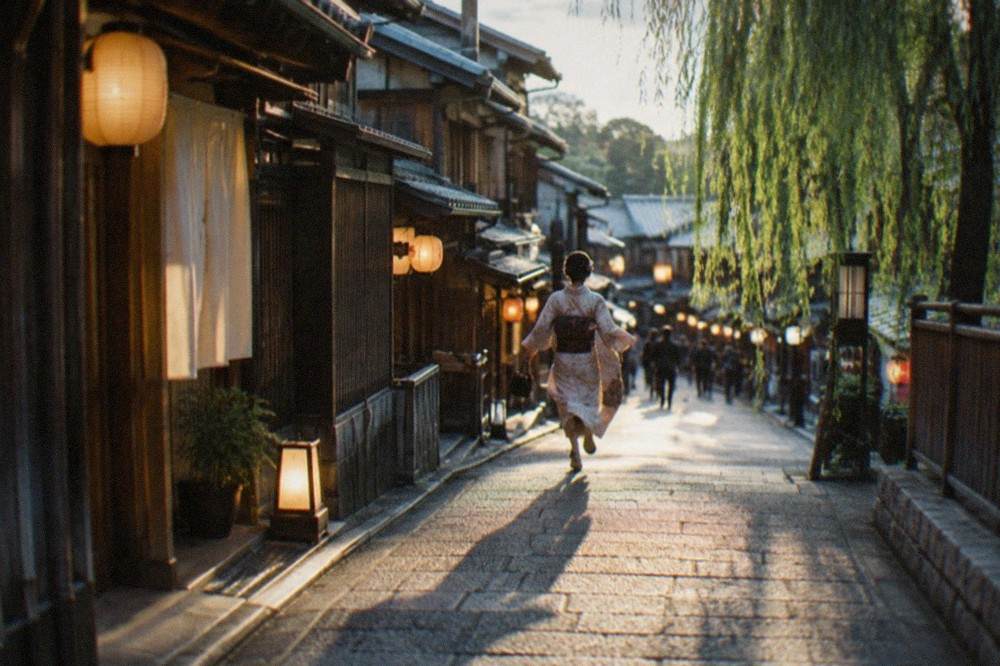
The honest summary is that Kyoto does not have one most beautiful street so much as one per hour of the day: Sannenzaka at dawn, Teramachi at noon, Pontocho at dinner and Hanamikoji once the lanterns are lit. Start on the slopes before the city wakes up, and the rest of the day arranges itself. For everything else the city holds beyond its lanes, the things to do in Kyoto page is the full catalogue, and this Kyoto Travel Guide covers every district the streets run through.