Why Is Kiyomizu-dera So Famous?
Kiyomizu-dera is Kyoto's most visited temple, famous for its hillside main hall, seasonal night illuminations and its position above the Higashiyama lanes. Here is what the verified record says.
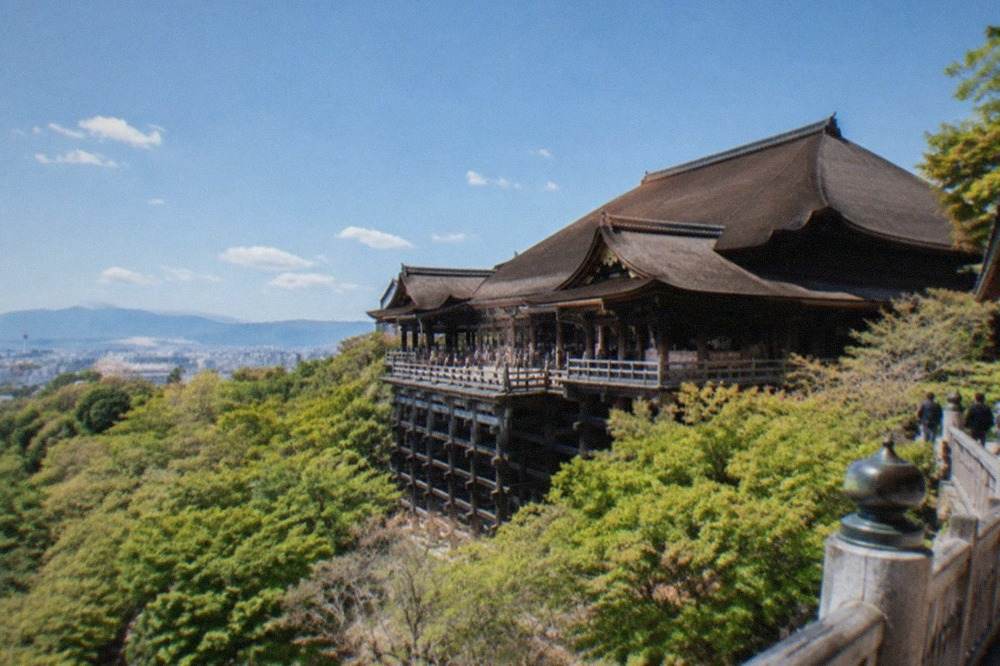
Kiyomizu-dera occupies one of the most dramatic building sites in Japan: a wooden hall raised on tall pillars against the slope of a wooded mountain on Kyoto's eastern edge, with the whole city visible from its stage. The temple's own FAQ states it opens at 6:00 every day, earlier than almost any other major sight in the city, and its closing time shifts with the seasons and special viewings. Below it, the stone lanes of Higashiyama climb and dip toward the gate, which makes a visit here as much a walk through an old neighbourhood as a temple call. The city's 2025 tourism survey counted 62.79 million visitors to Kyoto in total, a record, and Kiyomizu-dera is reliably at the front of that queue. This page is part of Kyoto Travel Guide, where every figure is checked against the venue's own site.
What Is Kiyomizu-dera Known For?
Kiyomizu-dera is known for three things together: a main hall and stage built on a steep hillside overlooking the entire city, a 6:00 a.m. daily opening that lets visitors see it before the crowds arrive, and seasonal night illuminations in spring and autumn when the temple stays open until 21:30. No other major temple in Kyoto combines a panoramic setting, an early opening and ticketed evening viewing in one site.
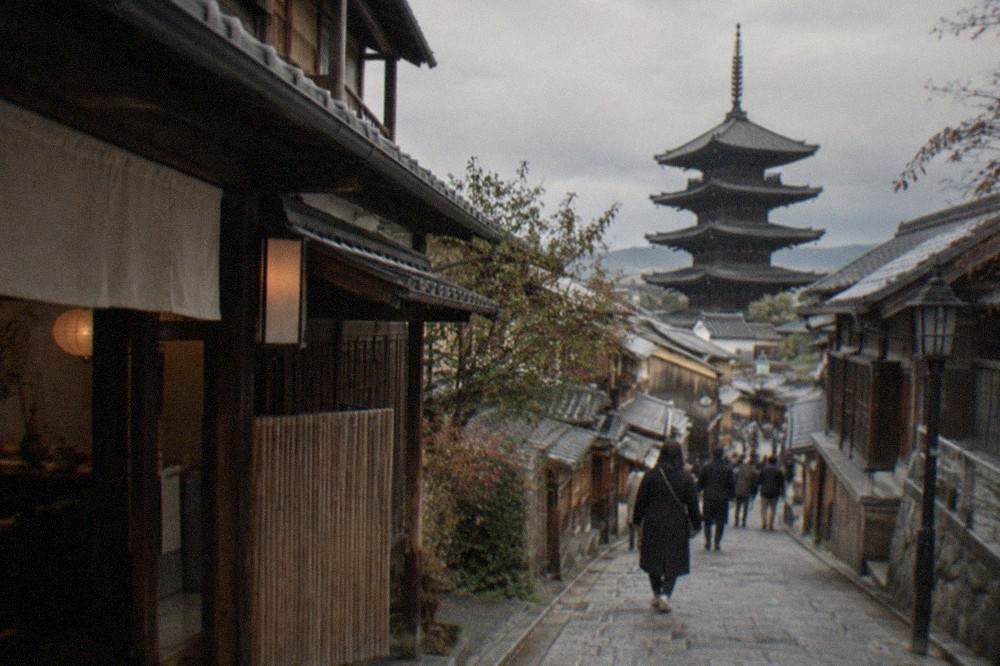
The setting does most of the work. The temple stands high on Higashiyama, and the approach from the city is a steady climb through preserved streets, so the visitor arrives already primed by the neighbourhood. The Higashiyama area around the temple is one of the few parts of central Kyoto where the old street pattern and building scale survive largely intact, and the lanes directly below the temple, Sannenzaka and Ninenzaka, are the most photographed in the city. The temple and its approach function as a single route, which is why almost every first-time Kyoto itinerary puts them together.
The second pillar of its fame is access. The temple's FAQ confirms the gates open at 6:00 daily, which is unusually early for a charging temple, and the temple's published schedule shows closing times moving between 18:00 in regular season and 21:30 during special night viewings. A visitor who arrives at opening gets the stage and the grounds in near-silence, something that is effectively impossible two hours later. The Kyoto crowds guide covers the timing maths in detail, but the short version is that the difference between 6:30 and 9:30 at this temple is the difference between a quiet hillside and a procession.
The third is the night illumination. The temple's own access schedule lists the special viewing windows: 27 March to 5 April 2026 for the spring cherry season, 14 to 16 August, and 21 to 30 November for autumn, all running to 21:30 with last entry at 21:00. These dates change each year, so the temple's site is the authority to check before planning around them, but the pattern is stable: two illuminations a year timed to the blossom and the maples, plus a short summer window.
How Much Does Kiyomizu-dera Cost and When Is It Open?
Admission is widely reported at 500 yen for adults and high school students, though the temple itself does not print the figure on its own site, so treat it as the going rate rather than an official price. The gates open at 6:00 every day of the year. Closing time varies: 18:00 in regular season, 18:30 in high summer, and 21:30 during the spring, summer and autumn night viewings, with last entry at 21:00.
That fee caveat matters more here than at most temples. Kinkaku-ji, Ginkaku-ji and Ryoan-ji all publish their admissions on their own pages, and Ginkaku-ji doubled its adult fee to 1,000 yen from 1 April 2026, so stale figures circulate widely across the city's temple list. Kiyomizu-dera's 500 yen is consistent across current reporting and the temple has announced no change, but it is a single-source figure and this site labels it as such. The temple's FAQ does confirm two exemptions, verified directly: holders of a disability handbook plus one companion enter free, and teachers escorting school trips enter free with ID and an itinerary.
The hours are the more useful verified fact. The temple's FAQ gives the 6:00 opening, and its seasonal schedule gives the closing pattern, reproduced below from the temple's own access page.
| Period (2026) | Hours | Note |
|---|---|---|
| 1 Jan to 26 Mar | 6:00-18:00 | Regular season |
| 27 Mar to 5 Apr | 6:00-21:30 | Spring night viewing, last entry 21:00 |
| 6 Apr to 30 Jun | 6:00-18:00 | Regular season |
| 1 Jul to 13 Aug | 6:00-18:30 | Summer hours |
| 14 to 16 Aug | 6:00-21:30 | Summer night viewing |
| 17 to 31 Aug | 6:00-18:30 | Summer hours |
| 1 Sep to 20 Nov | 6:00-18:00 | Regular season |
| 21 to 30 Nov | 6:00-21:30 | Autumn night viewing, last entry 21:00 |
| December | 6:00-18:00 | Regular season |
Night-viewing dates shift every year, so confirm them on the temple's own schedule before committing an evening. The restoration picture is clean: no repair, scaffolding or closure affecting visits has been announced for 2026 or 2027, and the temple's site lists normal operations and its 2026 events.
If a guided visit appeals, a Kiyomizu-dera and Fushimi Inari day tour pairs the temple with the shrine on the city's other side, from $57.05 per person with a 4.6 rating from 341 reviews.
When Is the Best Time to Visit Kiyomizu-dera?
The best time to visit Kiyomizu-dera is either the last week of March into the first days of April for cherry blossom, or the second half of November for autumn colour, with the JMA normals putting full bloom at 4 April and the official maple red-leaf marker at 5 December. In 2026 the cherry trees reached full bloom on 30 March, six days ahead of the normal. Arriving at 6:00 on a weekday beats any seasonal advantage.
The Japan Meteorological Agency's Kyoto observatory tracks both markers, and its record is the only one worth planning against. The 1991-2020 normals put flowering at 26 March and full bloom at 4 April, and the maple red-leaf observation at 5 December. That December date is the observatory's specimen tree turning, not the peak colour on the Higashiyama slopes, which run earlier, but it corrects the common guide claim that mid-November is the official marker. The two most recent years both came in early: full bloom on 5 April in 2025 and 30 March in 2026.
| Marker | 2026 | 2025 | 1991-2020 normal |
|---|---|---|---|
| Cherry flowering | 23 March | 27 March | 26 March |
| Cherry full bloom | 30 March | 5 April | 4 April |
| Maple red leaves | not yet observed | 10 December | 5 December |
| Ginkgo yellow leaves | not yet observed | 25 November | 24 November |
The spring illumination window, 27 March to 5 April in 2026, is deliberately built around these dates, which is why it is the single most crowded week of the temple's year. The autumn illumination, 21 to 30 November, sits slightly ahead of the official maple marker and catches the Higashiyama slopes at their best. Both are worth doing once, but they invert the temple's usual logic: the night viewings are packed by design, while the 6:00 opening is empty by design. A visitor who wants the stage to themselves should take the dawn; a visitor who wants the trees lit from below should take the queue. The autumn leaves itinerary builds a full route around the second choice.
How Does Kiyomizu-dera Compare With Kyoto's Other Famous Temples?
Kiyomizu-dera's reported 500 yen admission sits at the cheap end of Kyoto's major temples: Kinkaku-ji charges 500, Ryoan-ji 600, Sanjusangen-do 600, and Ginkaku-ji doubled to 1,000 yen in April 2026. What separates Kiyomizu-dera is not the fee but the hours, since it is the only one of the group opening at 6:00 and running ticketed night viewings, and it sits at the centre of a walkable historic district rather than a single-visit compound.
The comparison is worth making because most visitors compress three or four of these temples into one or two days, and the fees add up. The verified figures, all from the temples' own pages except Kiyomizu-dera's single-source rate, are set out below.
| Temple | Adult admission | Source status |
|---|---|---|
| Kinkaku-ji | 500 yen | verified, temple page |
| Kiyomizu-dera | 500 yen | single source, not printed by temple |
| Ryoan-ji | 600 yen | verified, temple page |
| Sanjusangen-do | 600 yen | verified, temple page |
| Nanzen-ji (Hojo garden) | 600 yen | verified, temple page |
| Kodai-ji | 800 yen, or 1,200 combined | verified, temple page |
| Nijo-jo Castle | 800 yen, or 1,300 with palace | verified, castle site |
| Ginkaku-ji | 1,000 yen from 1 April 2026 | verified, temple notice |
The structural difference matters more than the price list. Kinkaku-ji and Ginkaku-ji are view-and-move-on sites: one celebrated building, a circuit of the grounds, done in under an hour. Kiyomizu-dera is the anchor of a district. The temple, the Otowa waterfall side of the grounds, the stage view, then the descent through Sannenzaka and Ninenzaka to the tea houses below, is a half-day at minimum. That is why the temple anchors the one day in Kyoto itinerary rather than appearing as a stop on it.
It is also why the temple earns its early opening. Almost every other major temple in the city opens between 8:00 and 9:00, so a 6:00 arrival at Kiyomizu-dera is not just quieter than the same temple at midday, it is quieter than anywhere else in Kyoto at that hour.
How Do You Get to Kiyomizu-dera and Beat the Crowds?
The fastest public route is the EX101 tourist express bus from Kyoto Station to the Gojo-zaka stop near the temple's base, at 500 yen per adult ride, running every 7 to 8 minutes in the morning on operating days. The alternative is the subway to Kiyomizu-Gojo or Higashiyama station and a 20 to 25 minute uphill walk. Arriving for the 6:00 opening beats any transport choice for avoiding crowds.
The EX100 and EX101 expresses were created precisely to thin the ordinary buses on the temple routes, and the city's transport bureau confirms the EX101 runs direct from Kyoto Station to the Gojo-zaka side of Kiyomizu. The fare is 500 yen adult, 250 yen child, paid in cash or by IC card, and the Subway and Bus One-Day Pass at 1,100 yen is accepted on it. The EX100 continues past the temple to Gion, the Heian Shrine area and Ginkaku-ji, which makes it a practical spine for an eastern-Kyoto day.
The city also publishes a Tourism Comfort Forecast, a five-level crowd prediction built from smartphone location data, weather and time of day, covering individual spots and time slots. It is the only crowd tool grounded in live data rather than folklore, and the temple's neighbour Fushimi Inari links to it directly from its own site. Checking it the evening before a visit, then targeting the 6:00 opening, is the reliable combination. For a fuller eastern-Kyoto day, a guided tour covers both ends of the district with a guide, which answers the question most first-time visitors have: how the temple, the lanes and the shrine connect on foot and by bus in one loop. Visitors with more time can read why Fushimi Inari is so famous for the other half of the pairing.
What Should You Know Before You Go?
Three practical points shape a Kiyomizu-dera visit more than anything else: the 6:00 opening is the single biggest crowd advantage in Kyoto, the 500 yen admission is a reported rate rather than a temple-published figure, and the night-viewing windows in spring and autumn change dates every year and need checking on the temple's own schedule. Beyond that, wear shoes that grip, because the approach lanes are steep, stone-paved and often wet.
The climb is the underrated part. Sannenzaka and Ninenzaka are stepped, uneven and busy, and the temple grounds themselves slope hard. Visitors with mobility constraints should read the city's accessibility material before committing to the full route, and anyone visiting in the July to September window should check the climate record first: the JMA 1991-2020 normals show July as the wettest month of the year in Kyoto at 223.6 mm, ahead of June at 199.7 mm, and August as the hottest with a mean daily maximum of 33.7 C. A 6:00 start in August is not just quieter, it is materially cooler.
Eating is solved by the district rather than the temple. The lanes below are dense with shops selling the sweets Kyoto is famous for, and the surrounding Higashiyama blocks hold some of the city's oldest tea houses and confectioners. The approach is the reward structure of the whole visit: temple first, then a slow descent with breakfast.
Common Questions About Kiyomizu-dera
Why Is Kiyomizu-dera So Famous?
Its wooden main hall and stage stand on a steep Higashiyama hillside with the whole city below, it opens at 6:00 daily, earlier than any other major temple in Kyoto, and it runs spring and autumn night illuminations until 21:30. The preserved lanes of Sannenzaka and Ninenzaka climb to its gate, making the temple the anchor of Kyoto's most walkable historic district.
How much is Kiyomizu-dera admission?
Widely reported at 500 yen for adults and high school students, but the temple does not print the fee on its own site, so treat it as the going rate rather than an official price. Holders of a disability handbook plus one companion enter free, verified on the temple's FAQ, and teachers escorting school trips enter free with ID and an itinerary.
What time does Kiyomizu-dera open?
6:00 every day, confirmed on the temple's own FAQ. Closing time varies by season: 18:00 in regular season, 18:30 in high summer, and 21:30 with last entry at 21:00 during the spring, summer and autumn night-viewing windows.
When are the Kiyomizu-dera night illuminations?
In 2026 the temple's schedule lists 27 March to 5 April for spring, 14 to 16 August for summer, and 21 to 30 November for autumn, all to 21:30. The dates change every year and are timed to the cherry blossom and maple colour, so check the temple's own access page before planning an evening.
Is Kiyomizu-dera under restoration?
No. The temple's official site announces no restoration, repair, scaffolding or closure affecting visits for 2026 or 2027, and lists normal operations and its 2026 events.
How do you avoid the crowds at Kiyomizu-dera?
Arrive for the 6:00 opening. The city's Tourism Comfort Forecast, a five-level crowd prediction built from smartphone location data, weather and time of day, can be checked the evening before. The EX101 tourist express bus from Kyoto Station reaches the Gojo-zaka stop near the temple for 500 yen per adult ride.
The short answer to why this temple, of all Kyoto's temples, carries the fame it does: it combines the city's best building site, its earliest opening and its most atmospheric approach into one visit, and it does so at the cheapest admission tier among the major temples. The things to do in Kyoto overview places it in the full context of the city, but for most visitors the choice is simpler. Go at dawn, descend slowly, and let the lanes finish the morning.