Who Is Buried At Fushimi Inari?
Nobody is buried at Fushimi Inari. The stone markers on the mountain are otsuka worship stones, not graves, and the shrine's own history explains what they actually are.
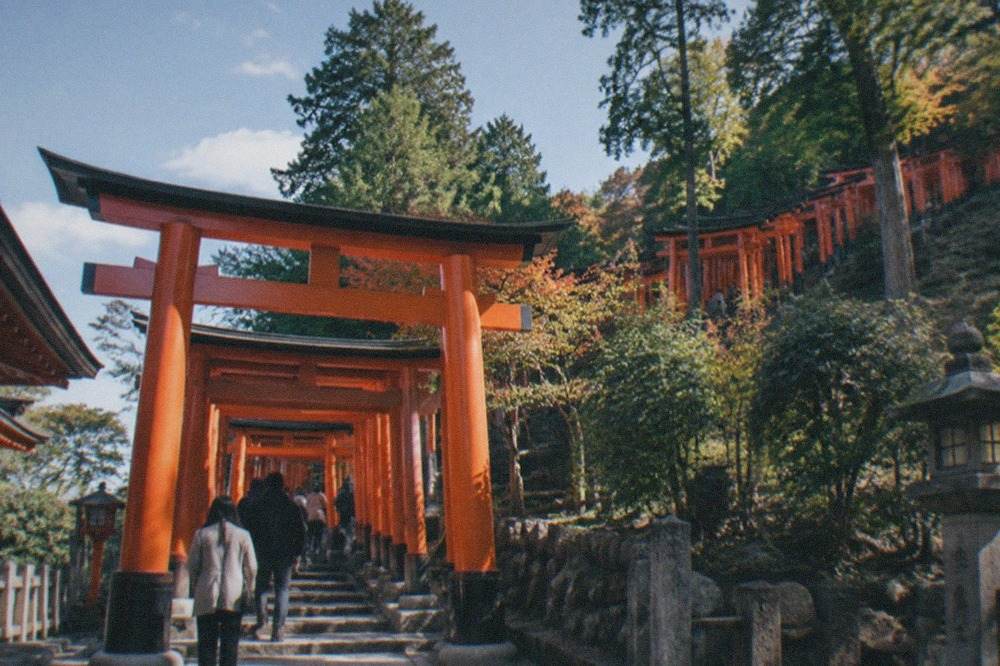
Fushimi Inari Taisha is a working Shinto shrine, and in Shinto practice the deities are enshrined rather than people interred, so nobody is buried on Inariyama. The stone markers hikers pass on the way up are otsuka, worship stones carved with the names of Inari's deities, dedicated by companies and devotees as acts of devotion. The shrine's own history dates the enshrinement of Inari Okami to 711, and it hedges even that with "is said to be", because tradition and archaeology are different things.
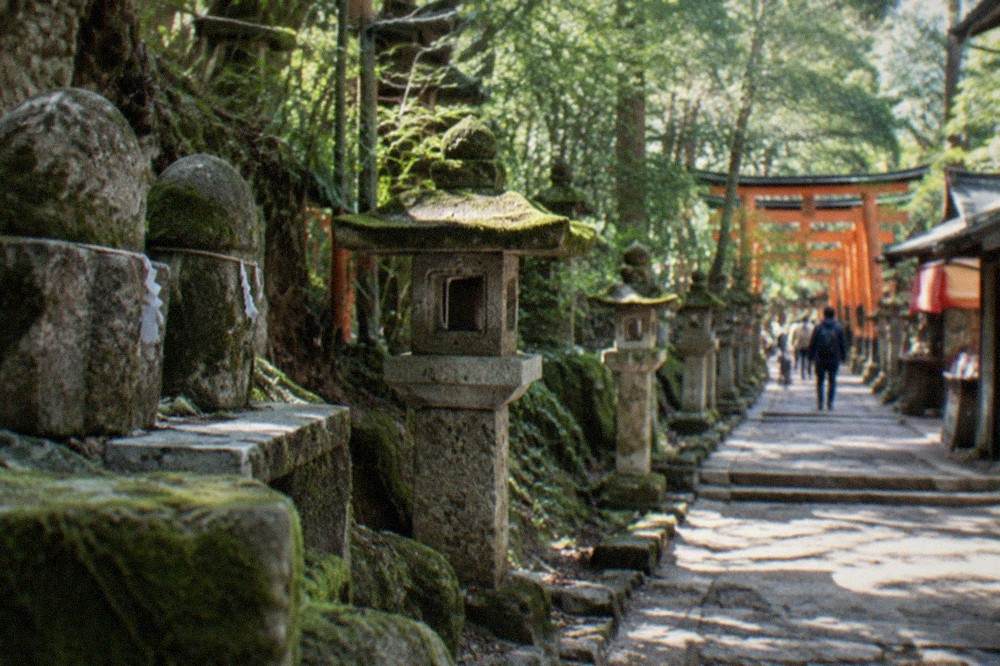
The question is a fair one. The mountain is covered in what look, at a glance, like gravestones: small stone monuments in rows, some weathered, some fresh, many with lanterns and names carved into them. Kyoto has temple cemeteries elsewhere in the city that look similar. But the shrine's own account of the mountain is unambiguous about what these objects are and why they were placed there, and the answer runs through the shrine's founding story, the nature of Inari worship, and the way Japanese companies have adopted the mountain over the last century and a half.
Who Is Buried At Fushimi Inari?
Nobody is buried at Fushimi Inari Taisha. It is a Shinto shrine on Inariyama, a 233 m hill in southern Kyoto, and Shinto enshrines deities rather than burying people. The stone monuments on the trails are otsuka, worship stones carved with deity names and dedicated as acts of devotion, often by businesses. The shrine's own pages state that Inari Okami was enshrined here in 711 and make no mention of any burial.
The confusion usually comes from two directions. First, the otsuka genuinely resemble the stone grave markers used in Japanese Buddhist cemeteries, and there are thousands of them along the mountain paths. Second, people sometimes mix up Fushimi Inari with the large cemetery at nearby temples, or they assume that a site this old must hold tombs. It does not. The shrine's history page, which is the primary source for everything in this article's founding account, describes a founding by enshrinement: a deity taking up residence on a hill, not a person being laid to rest under one.
If you are planning a visit, the practical pages matter more than the burial question. Entry to the shrine is free, the shrine prints no admission fee anywhere on its site, and the paths have no closing time, though the shrine publishes only desk and prayer hours. For the climb itself, our guide to how long it takes to walk up Fushimi Inari covers the timing, and the broader question of why Fushimi Inari is so famous explains how a district shrine became one of the most visited places in Japan.
What Are The Stone Markers On The Mountain At Fushimi Inari?
The stone markers are otsuka, worship stones that carry the names of Inari's deities. Companies, trade associations and individuals have dedicated them over many decades, and each one marks a place of prayer rather than a place of burial. They sit beside the roughly 10,000 torii of all sizes the shrine counts across the whole mountain, and they are the reason the trails read, to an unfamiliar eye, as a cemetery.
The otsuka tradition is tied to Inari's role as a deity of commerce and prosperity. A business that dedicates a stone on Inariyama is planting a permanent act of worship on the mountain of the head shrine, which is why so many of the carvings name companies rather than people, and why the stones are often tended with lanterns and offerings. The shrine is the head shrine of the Inari faith: its own pages say Inari shrines nationwide are "said to be some thirty thousand", so the correct phrasing is about 30,000, never an exact count. Every one of those shrines is affiliated with this one.
The mountain's objects, in the shrine's own words:
| Object | What it is | Who placed it |
|---|---|---|
| Otsuka stones | Worship stones carved with deity names, objects of prayer | Companies, associations, individuals |
| Senbon Torii | The famous tunnel of donated torii gates along the main ascent | Donors, mostly businesses, since the Edo period |
| About 10,000 torii | The shrine's count of gates of all sizes across the whole mountain | Donors over centuries |
| Altars and sub-shrines | Worship points for Inari's deities across Inariyama's peaks | The shrine and its predecessors |
A note on the most repeated error about this site: the "about 10,000 torii" figure belongs to the whole mountain, in the shrine's own FAQ wording, not to the Senbon Torii tunnel alone. Guides that print "10,000 gates in the tunnel" are transferring a mountain-wide count onto one photogenic section of trail. The tunnel is dense and spectacular, but it is a fraction of the total.
Why Does Fushimi Inari Have No Graves?
Shinto does not practice burial on shrine ground. Shrines enshrine kami, deities, in objects and places, and Fushimi Inari's founding story is an enshrinement story: the shrine says Inari Okami took up residence on Inariyama in 711, at the direction of a Hata clan ancestor acting on an imperial order from Empress Genmei. Nothing in the shrine's own account involves death, burial or human remains.
The founding legend, as the shrine tells it, involves a rice cake turning into a swan. The story comes from the Yamashirokoku Fudoki, an ancient provincial record: Irogu no Hatanokimi, an ancestor of the Hata clan, performed a rite, a rice cake he used as a target flew off as a white swan, and where the swan landed on Inariyama, rice grew. The name Inari is connected to "ina", rice. The shrine says Irogu no Hatanokimi received an imperial order from Empress Genmei to enshrine three deities on three peaks of the mountain, on the first Day of the Horse of the second month of 711. Everything else covered here is indexed on Kyoto Travel Guide.
That dating matters for how the question is answered. The shrine counted 2011 as the 1300th anniversary of the enshrinement, and its history page hedges with "is said to be" and notes that faith on the mountain may be older still. So the careful phrasing is that the deity was enshrined in 711, never that anything was "built in 711", and certainly never that anyone was buried then. The dated chronology the shrine prints is worth reading as written:
| Year | Event, in the shrine's own chronology |
|---|---|
| 711 | Inari Okami enshrined on Inariyama by Irogu no Hatanokimi, on imperial order from Empress Genmei |
| 827 | Timber from Toji used in shrine buildings; the junior fifth rank granted |
| 908 | Repairs by Fujiwara Tokihira |
| 927 | Listed in the Engishiki, the official register of shrines |
| 942 | The highest court rank granted to the shrine |
| Around 1000 | Sei Shonagon climbs the mountain and writes of it in the Pillow Book |
Sei Shonagon's visit is the detail most first pages of search results skip. One of Heian Japan's most famous court writers recorded an ascent of Inariyama a thousand years ago, which means the mountain has been a destination for a very long time, long before torii donations became a business custom. The shrine prints this in its own chronology.
Is Fushimi Inari A Cemetery Or A Shinto Shrine?
Fushimi Inari Taisha is a Shinto shrine, the head shrine of the roughly 30,000 Inari shrines across Japan, in the shrine's own "said to be some thirty thousand" wording. There is no cemetery on Inariyama and no burial function. The graves that visitors sometimes picture belong to Buddhist temples elsewhere in Kyoto, which do maintain large urban cemeteries as part of their grounds.
The distinction is a real one in Japanese religious practice. Shinto shrines and Buddhist temples sat side by side for most of Japanese history, often blended, and were formally separated only in the Meiji era. Temples bury and memorialise the dead; shrines enshrine kami. When you walk the Inariyama trails past rows of stone monuments, you are walking past objects closer to votive plaques than to headstones: each otsuka is a declaration of devotion placed on the mountain of the head shrine, and the carvings name deities, not the deceased.
For visitors who want the fuller picture of the city's sacred sites, our guides to Kyoto's shrines and the Fushimi Inari shrine page cover the rest of the network, and the Fushimi area guide explains the sake-brewing district at the foot of the hill. The shrine's own site is the source for the "about 10,000 torii" count and the free entry, and its front page links to the Kyoto Tourism Comfort forecast and the shrine's own approach cameras, which are the honest way to check crowds before setting out.
What Should Visitors Know About The Otsuka Stones At Fushimi Inari?
Visitors should treat the otsuka stones as active religious objects, not as ruins or curiosities. They are privately dedicated, they are tended by their sponsors, and the shrine's conduct expectations apply across the whole mountain. The paths have no closing time, entry is free, and the full circuit of Inariyama takes most walkers a couple of hours, which makes an early start the standard advice for anyone wanting the tunnel to themselves.
The practical realities of a visit are simple and worth setting out plainly:
| Practical fact | Detail |
|---|---|
| Admission | Free; the shrine prints no fee anywhere |
| Paths | No closing time; the shrine publishes desk and prayer hours only |
| The mountain | Inariyama, 233 m |
| Torii | About 10,000 across the whole mountain, per the shrine's FAQ |
| Crowd tool | The shrine links the Kyoto Tourism Comfort forecast and its approach cameras |
Because the mountain is free, always open and extremely popular, it anchors most first-visit plans. The city's 2025 tourism survey, released in June 2026, recorded 62.79 million visitors to Kyoto across the year, a record, and Fushimi Inari absorbs a large share of them. The shrine's own answer to crowding is the linked comfort forecast; ours is a set of timing strategies in the Kyoto crowds guide. The shrine also appears on most free things to do in Kyoto lists for the obvious reason, and it features in our Kyoto photo spots guide because the tunnel photographs best before the mid-morning rush.
The strongest way to see the mountain for the first time is with a guide who knows the side paths, and the bus circuit above pairs the shrine with Kinkaku-ji and the Arashiyama bamboo grove in a single day, which suits visitors with only a short stay in the city.
Common Questions About Who Is Buried At Fushimi Inari
Who is buried at Fushimi Inari?
Nobody. Fushimi Inari Taisha is a Shinto shrine, and Shinto enshrines deities rather than burying people. The stone monuments on the mountain are otsuka, worship stones dedicated by companies and devotees, not graves.
Are the stone markers on Inariyama graves?
No. They are otsuka, worship stones carved with the names of Inari's deities. Many were dedicated by businesses seeking prosperity, which is why company names appear on so many of them.
When was Fushimi Inari founded?
The shrine dates the enshrinement of Inari Okami on Inariyama to 711, by Irogu no Hatanokimi acting on an imperial order from Empress Genmei. The shrine hedges its own account with "is said to be", and counted 2011 as the 1300th anniversary.
How many torii gates does Fushimi Inari have?
About 10,000 torii of all sizes across the whole mountain, in the shrine's own FAQ wording. The Senbon Torii tunnel is the most photographed section, but the count belongs to the entire mountain, not the tunnel alone.
Does Fushimi Inari charge admission?
No. Entry is free, and the shrine prints no fee anywhere on its site. The paths have no closing time, though the shrine publishes only desk and prayer hours.
Why do companies dedicate stones at Fushimi Inari?
Inari is a deity of commerce and prosperity, and Fushimi Inari is the head shrine of the roughly 30,000 Inari shrines across Japan, in the shrine's own "said to be some thirty thousand" wording. Dedicating an otsuka on the head shrine's mountain is a permanent act of business devotion.
The short answer holds all the way down: nobody is buried at Fushimi Inari, because nothing about the mountain was ever a burial place. It is the head shrine of a 1,300-year-old enshrinement, and every stone on the slope is a prayer rather than a grave.