How Long Does It Take To Walk Up Fushimi Inari?
The honest answer to how long the Fushimi Inari climb takes, with the route stages, what to see at each level, and when to go to dodge the crowds.
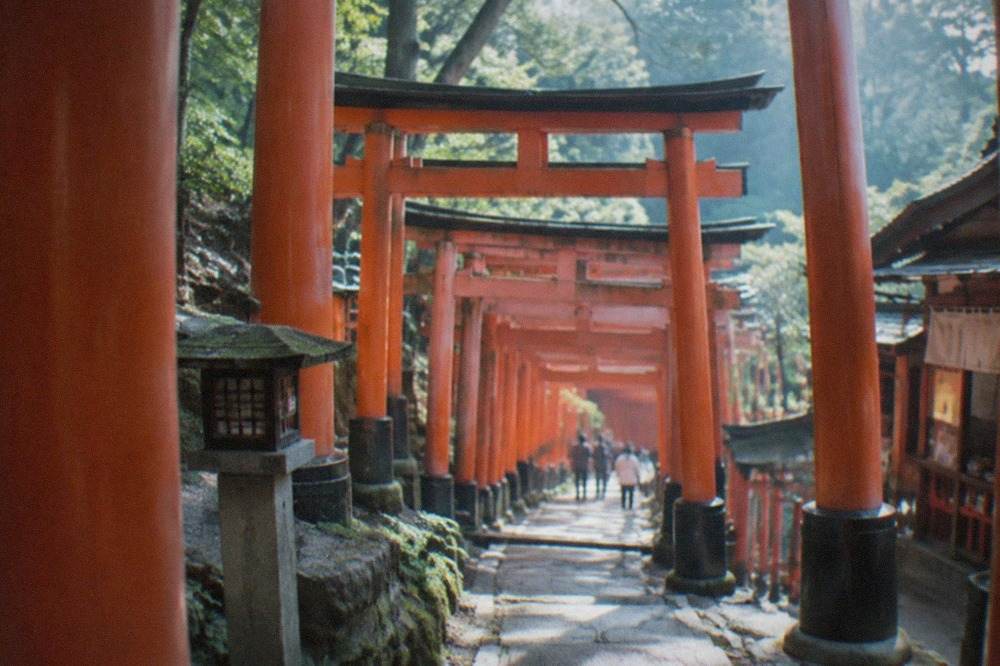
Fushimi Inari Taisha is the one major Kyoto sight that costs nothing to enter and never closes its paths, which is exactly why the timing question matters more here than anywhere else. The shrine prints no fee anywhere on its site, and it publishes desk and prayer hours only, so the mountain paths have no closing time at all. That freedom cuts both ways: you can climb at dawn or at midnight, but the crowd you meet depends almost entirely on the hour you choose.
The mountain itself, Inariyama, stands 233 m tall, which sounds trivial until you are on the stone steps in July heat. The JMA 1991-2020 normals put July at a mean daily maximum of 32.0 C and August at 33.7 C, and three of Kyoto's six hottest days on record fell in the summers of 2024, 2025 and 2026. Heat, not distance, is what slows most climbers down.
How Long Does It Take To Walk Up Fushimi Inari?
Most walkers should allow two to three hours for the full circuit to the summit of Inariyama and back, at a steady pace with photo stops. If you only walk the Senbon Torii tunnels and turn back at the Yotsutsuji viewpoint, about 45 minutes to one hour is realistic. Entry is free and the paths have no closing time, so the length of your visit is entirely your own choice.
Those ranges are planning figures, not shrine statements, and the spread between them is wide for good reason. The full loop covers roughly four kilometres of path, almost all of it uphill on the way out and downhill on the return, and the terrain shifts from paved approach to packed earth to worn stone steps. Fit walkers moving fast do it in well under two hours. Families with children, photographers waiting for gaps in the torii tunnels, and anyone climbing in summer heat routinely take three or more.
The single biggest variable is not fitness but crowding. The city's 2025 tourism survey counted 62.79 million visitors to Kyoto in a single year, a record, and Fushimi Inari is free, central and open around the clock, which makes it the default first stop for an enormous share of them. In the middle of the day the tunnel sections can slow to a shuffle, and the photo stops stretch. If you want the two-hour version, start before 8:00 or after 17:00.
The second variable is how far you actually go, which deserves its own breakdown.
What Are The Stages Of The Fushimi Inari Climb?
The route splits into four natural stages: the shrine grounds and the entrance torii, the famous Senbon Torii tunnel sections, the Yotsutsuji intersection viewpoint about two-thirds of the way up, and the summit shrine at 233 m. Most people who abandon the climb quit between the tunnels and Yotsutsuji, where the steps steepen and the crowds thin out.
The approach is flat, paved and fast. You pass the main hall, the fox statues and the wish stones, and most of the crowd never leaves this level, which is why the lower paths feel packed while the upper mountain is often near empty. The shrine's own FAQ says there are about 10,000 torii of all sizes across the whole mountain, a phrasing worth holding on to, because almost every competing guide wrongly claims 10,000 gates in the tunnel alone. The two tunnel sections are dense and spectacular but short.
| Stage | Approximate time one way | What you get |
|---|---|---|
| Shrine grounds and main hall | 10-15 min | Main hall, fox statues, wish stones, flat paved paths |
| Senbon Torii tunnels | 15-20 min | The famous dense gate tunnels, two parallel sections |
| Yotsutsuji viewpoint | 30-40 min from the base | A view over southern Kyoto, teahouse, toilets, benches |
| Summit of Inariyama | 45-60 min from the base | Small summit shrines, quiet forest, the start of the descent loop |
The Yotsutsuji intersection is the natural decision point. It sits about two-thirds of the way up, it has benches and a teahouse, and it is where the view opens up over the city. Turning back here gives you the tunnels, a real viewpoint and a manageable total of about an hour. Pushing on to the summit adds a quieter, steeper stretch through cedar forest and a string of small shrines clustered around the top, plus the loop path down the far side of the mountain. The summit itself is unmarked grandeur-free, a cluster of modest shrine buildings rather than a panorama, and many walkers find the descent through the quieter back paths the best part of the whole circuit.
The descent loop rejoins the main route near the tunnels, so you do not retrace your steps. That matters for timing: the way down is faster than the way up for almost everyone, and the back side is where you meet the thousands of small otsuka, worship stones bearing deity names. These are not graves, and nobody is buried on this mountain, a point our page on who is buried at Fushimi Inari covers in detail.
When Is The Best Time Of Day To Walk Up Fushimi Inari?
Early morning, before 8:00, is the best time to climb Fushimi Inari, because the paths have no closing time and the crowd builds from mid-morning onward. The hour after sunrise gives you near-empty tunnels, cooler air and better light through the gates. Late evening also works, and the shrine is lit at night, but the upper forest paths are unlit and steep.
The shrine links to the Kyoto Tourism Comfort forecast from its own site, a five-level crowd prediction tool run by the city tourism association using smartphone location data, weather and time of day. It is the closest thing to a live crowd gauge for the mountain, and it is worth a look the evening before you go. The city's wider dispersal campaigns, which our guide to Kyoto crowds unpacks, push visitors toward early and late hours for exactly this reason.
Season matters as much as hour. The JMA phenology record for Kyoto puts the 1991-2020 normal for cherry flowering at 26 March and full bloom at 4 April, and the shrine's approach is lined with cherry trees, so late March and early April combine blossom with the year's biggest crowds. Autumn brings the same double effect. Mid-winter, by contrast, is quiet, cold and often clear, with January's mean temperature at 4.8 C, and the climb is genuinely pleasant in a way July never is. More of these guides are collected on Kyoto Travel Guide.
One timing trap deserves a flag: many first-time visitors pair Fushimi Inari with Kiyomizu-dera and Gion in a single morning, assuming the climb takes 30 minutes. It does not, unless you turn around at the first tunnel. Budget the full two to three hours if the summit is the goal, and build the rest of the day around it rather than the reverse.
Is The Fushimi Inari Climb Difficult?
The Fushimi Inari climb is moderate rather than hard, with about four kilometres of path and a 233 m height gain, mostly on stone steps and packed earth. No equipment or booking is needed, entry is free, and the main obstacles are heat, humidity and crowds rather than technical difficulty. Reasonable shoes matter more than fitness, and you can turn back at any point.
The paths are walked daily by school groups, elderly worshippers and tourists in sandals, so nothing on the route requires scrambling. What it does require is respect for the weather. July, not June, is Kyoto's wettest month, with 223.6 mm of rain against June's 199.7 mm in the JMA 1991-2020 normals, and the summer mean daily maximum sits above 32 C for both July and August. A midday summer climb is a heat-management exercise: carry water, take the shade breaks, and the teahouse at Yotsutsuji is a sensible halfway target.
Winter brings its own caution. The stone steps hold frost and the upper paths are unlit, so an evening climb from November through February means finishing in the dark unless you carry a light. The shrine publishes no closing time for the paths, which is a genuine freedom, but it is also the reason nobody is coming to sweep the mountain at 18:00. If night climbing appeals at all, our page on walking around Kyoto late at night has the wider picture.
For clothing, think temple, not trail: this is an active Shinto shrine, and modest dress is the norm even on a sweaty climb. The mountain is also a living place of worship rather than a park, which our piece on why Fushimi Inari is so famous explains through its history, including the enshrinement of Inari Okami in 711 and the shrine's status as head shrine of about 30,000 affiliated Inari shrines nationwide, in the shrine's own hedged phrasing.
Should You Take A Tour Or Walk Fushimi Inari Yourself?
Walking Fushimi Inari yourself is the default choice, because entry is free, the route is impossible to lose and no booking is needed. A guided tour earns its price when you want the mountain's history explained, or when Fushimi Inari is one stop in a packed day that also covers Kinkaku-ji and Arashiyama, where a bus tour saves hours of transit.
The self-guided case is strong. The path is a single obvious loop, the shrine's own site covers the practicalities, and the free price is hard to beat, which is why the mountain also appears on our list of free things to do in Kyoto. The guided case is about context and logistics. A guide turns the otsuka stones, the fox imagery and the 711 founding story into something you actually understand rather than photograph, and a hiking-focused guide knows the quiet upper paths and the timing that dodges the tunnels at their worst.
For visitors with one day in the city, the arithmetic changes. Fushimi Inari, Kinkaku-ji and the Arashiyama bamboo grove sit at three corners of a spread-out city, and stitching them together on public transport eats half the day. That is exactly the gap a bus tour fills, and the comparison is similar to the one we make for the Arashiyama bamboo grove walk time, where the walking itself is short and the transit is the cost.
Common Questions About Walking Up Fushimi Inari
How long does it take to walk up Fushimi Inari?
Plan on two to three hours for the full circuit to the 233 m summit and back at a steady pace. If you turn around at the Yotsutsuji viewpoint, about two-thirds of the way up, allow 45 minutes to one hour for the round trip. Entry is free and the paths have no closing time.
Can you walk Fushimi Inari at night?
Yes. The shrine publishes no closing time for the mountain paths, and the lower tunnels are lit. The upper forest paths are unlit, so carry a light if you plan to climb past the tunnels after dark, and expect stone steps to be slippery in rain or frost.
How many torii gates are at Fushimi Inari?
The shrine's own FAQ says there are about 10,000 torii of all sizes across the whole mountain, not 10,000 in the famous tunnel, which is the error most guides make. The dense Senbon Torii sections are a small, spectacular fraction of the total.
Is the Fushimi Inari climb suitable for children?
Generally yes. The route is about four kilometres on paths and stone steps with no technical difficulty, and families turn back at Yotsutsuji routinely. The main caution is summer heat, with mean daily maxima above 32 C in July and August, so carry water and go early.
Do you need tickets or a reservation for Fushimi Inari?
No. The shrine charges no admission and prints no fee anywhere on its site. No booking, pass or time slot is needed, which is one reason the mountain gets crowded: it is free, central and open around the clock.
The honest summary: give Fushimi Inari the time the mountain deserves, not the half-hour most itineraries pretend it takes. Start early, decide at Yotsutsuji whether the summit is calling, and treat the descent loop as part of the visit rather than the way out. For everything else on the mountain, the Fushimi Inari shrine guide at Kyoto Travel Guide covers the history, the etiquette and the practicalities in full.