What Are The Top 5 Zen Temples In Kyoto?
The five Zen temples worth your time in Kyoto, with current verified admission fees, hours and what makes each one different, from Ryoan-ji's rock garden to Tofuku-ji's autumn maples.
Kyoto is the historical centre of Rinzai Zen in Japan, and the temples that tradition built are not a blur of identical halls. Ryoan-ji holds the most famous dry rock garden in the world. Tenryu-ji sits at the mouth of the Arashiyama bamboo district. Nanzen-ji anchors the Philosopher's Path end of the city. Ginkaku-ji doubled its admission in April 2026, a fact many guides still have not caught up with, and Tofuku-ji rewrites its whole fee card on 1 November 2026. This page sets out the five that earn their place, what each charges, and how to choose between them.
What Are The Top 5 Zen Temples In Kyoto?
The five Zen temples that consistently rank highest for visitors are Ryoan-ji for its 15-stone rock garden, Tenryu-ji for the garden that borrowed the Arashiyama mountains as scenery, Nanzen-ji for scale and the brick aqueduct, Ginkaku-ji for the Higashiyama hills and the Silver Pavilion, and Tofuku-ji for the Tsutenkyo bridge over a valley of maples. All five charge admission, all belong to the Rinzai school, and each sits in a different corner of the city.
Ryoan-ji, Tenryu-ji and Nanzen-ji are also UNESCO World Heritage sites, as is Ginkaku-ji, and Tofuku-ji is the head temple of its own branch of Rinzai. That matters for planning: these are not quiet neighbourhood temples but institutions with national histories, and they draw crowds to match. The city's 2025 tourism survey counted a record 62.79 million visitors across Kyoto, and the temple corridors absorb a large share of them.
The order below is not a strict ranking. A first-time visitor with one temple slot should read the comparison table further down and pick by location and season rather than by reputation alone.
Why Is Ryoan-ji The Most Famous Zen Temple In Kyoto?
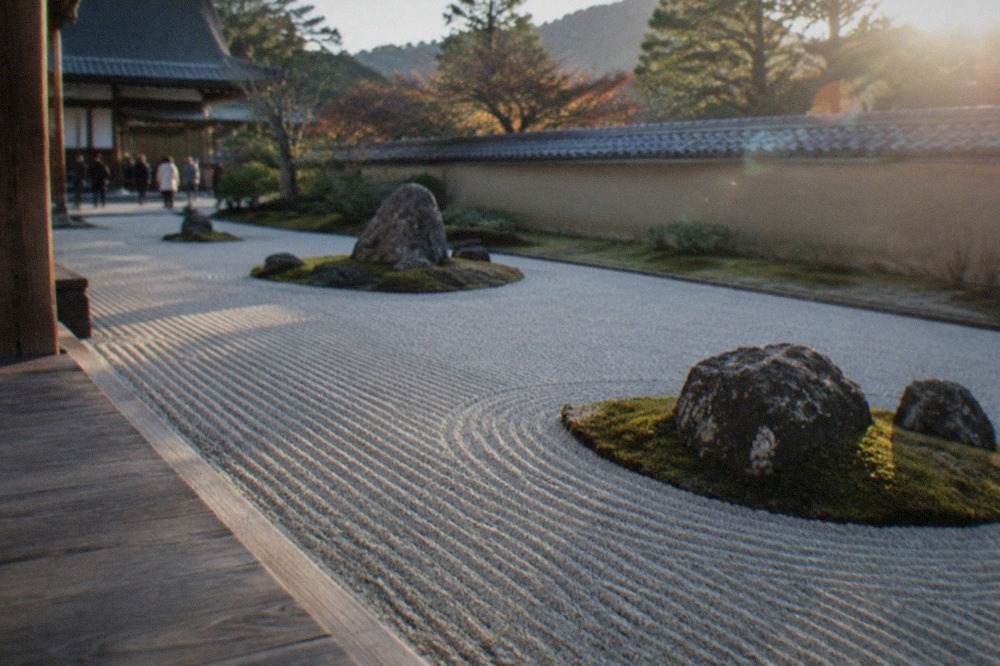
Ryoan-ji owns the dry landscape garden everyone pictures when they hear the word Zen: a rectangle of raked gravel holding 15 stones arranged in five groups, planted so that from any ordinary vantage point at least one stone is always hidden. The temple belongs to the Myoshin-ji branch of Rinzai Zen, admission is 600 yen for adults, 500 for high school students and 300 for elementary and junior high, and hours run 8:00 to 17:00 from March to November, 8:30 to 16:30 in winter.
The garden's date and designer are not printed by the temple as settled facts, and the stones themselves are the only green-free composition of its kind at this scale in Kyoto. What the temple does verify is the frame: a broad veranda, a clay wall that has been re-plastered over centuries, and oil-burnished earth rather than ornament. The stillness is the exhibit.
Ryoan-ji sits in the north-west of the city, a short bus ride from Kinkaku-ji, which is formally Rokuon-ji and charges 500 yen. The two pair naturally in a morning, and the full temples guide covers how to sequence the whole cluster. Go early: the veranda fills by mid-morning and the garden reads very differently with forty people on it.
Why Do Visitors Pair Tenryu-ji With The Arashiyama Bamboo Grove?
Tenryu-ji is the reason most people are in Arashiyama at all: its Sogen-chi garden, laid out in the 14th century, is framed so that the mountains beyond the temple wall read as part of the design, a technique the temple's own English pages describe as borrowed scenery. The garden costs 500 yen for high school age and up, the buildings add 300 yen, and the Cloud Dragon ceiling painting is a separate 500 yen. Hours are 8:30 to 17:00, last admission 16:50.
The temple is the largest of the five in land area and the historical head of the Gozan, the five great Zen monasteries the shogunate ranked above all others. Its survival record is its own story: fire destroyed the buildings repeatedly across the centuries, and the garden is the layer that persisted, which is why the landscape rather than the halls carries the World Heritage listing.
The practical reason to pair it with the grove is geography. The bamboo path begins a few minutes' walk from the north gate, and the Sagano Romantic Train, 880 yen one way for adults, runs from the far end of the district up the Hozugawa gorge. The Arashiyama bamboo grove guide lays out the full route, including the Iwatayama Monkey Park at 800 yen for visitors 16 and over, cash only.
Is Nanzen-ji Or Tofuku-ji Better For Autumn Colour In Kyoto?
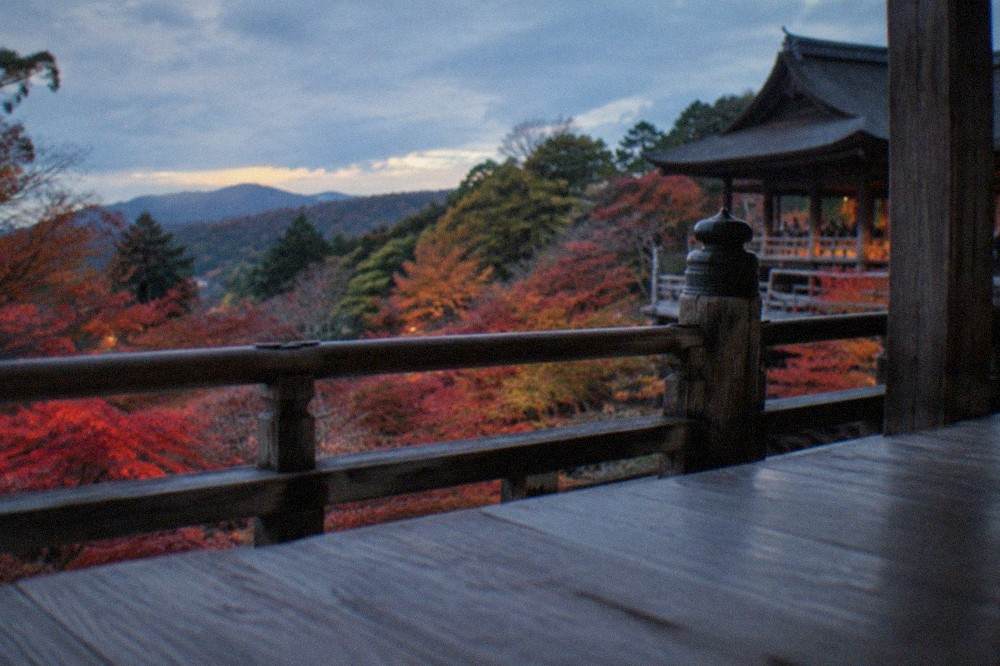
Tofuku-ji is the stronger autumn temple, and the reason is the Tsutenkyo bridge, a covered walkway crossing a narrow valley of maples that turn as one mass. The temple revises its fees on 1 November 2026: the bridge and Kaisando area stays 600 yen for adults but rises to 1,000 yen during the foliage period, the Hojo garden goes from 500 to 600 yen, and a new 1,000 yen combined ticket appears.
Nanzen-ji is the better all-season temple, with the Hojo garden at 600 yen and the Sanmon gate at 600 yen, ticketed separately.
The foliage timing deserves a caveat most guides skip. The JMA observatory's marker for kaede maple red leaves in Kyoto has a 1991 to 2020 normal date of 5 December, and in 2025 the observed date was 10 December. That official marker is the observatory's own specimen tree, not the Arashiyama or Tofuku-ji peak, so treat it as a calendar anchor rather than a promise. The 2026 commercial forecasts for the Kyoto area point to late November. Everything else covered here is indexed on Kyoto Travel Guide.
Nanzen-ji's autumn case rests on scale: a brick aqueduct from the Meiji era crossing the temple grounds, a two-storey gate you can climb, and the whole complex sitting at the start of the Philosopher's Path, which is free to walk. Hours are 8:40 to 17:00, 8:40 to 16:30 from December to February, with no general visits from 28 to 31 December. The zen gardens guide compares the garden styles across both temples in more depth.
How Much Do Kyoto's Zen Temples Cost To Enter?
Every temple on this list charges admission, and two of the five changed their fee cards recently: Ginkaku-ji doubled from 500 to 1,000 yen for adults on 1 April 2026, its first rise in 32 years, and Tofuku-ji's foliage-period bridge ticket rises to 1,000 yen from 1 November 2026. Ryoan-ji is 600 yen, Tenryu-ji's garden 500, Nanzen-ji's Hojo garden 600. Any fee card copied from a 2024 or 2025 guide is now wrong for two of the five.
The full verified fee card for the five, with hours:
| Temple | Adult admission | Child admission | Hours | Note |
|---|---|---|---|---|
| Ryoan-ji | 600 yen | 300 yen (elem./JH) | 8:00-17:00; Dec-Feb 8:30-16:30 | Rock garden only |
| Tenryu-ji | 500 yen | 300 yen (elem./JH) | 8:30-17:00, last entry 16:50 | Buildings +300, Hatto +500 |
| Nanzen-ji | 600 yen (Hojo) | 400 yen (elem./JH) | 8:40-17:00; winter 8:40-16:30 | Sanmon gate 600 separately |
| Ginkaku-ji | 1,000 yen | 500 yen | 1 Mar-30 Nov 8:30-17:00; winter 9:00-16:30 | Doubled 1 April 2026 |
| Tofuku-ji | 600 yen | 300 yen | Varies by sub-temple | Foliage period 1,000 yen from 1 Nov 2026 |
Ginkaku-ji, formally Jisho-ji, earns its slot on the list for the path itself: a climb through the moss and raked-sand grounds with the Higashiyama hills above and the pavilion below. At 1,000 yen it is now twice the price of Kinkaku-ji, and for a first visit the golden pavilion is the better use of the fee if you must choose, but the two are far apart and most itineraries fit both. The Ginkaku-ji guide covers the approach from the Philosopher's Path.
When Is The Best Time Of Day To Visit Kyoto's Zen Temples?
The strongest window is the first hour after opening, because every temple on this list opens between 8:00 and 8:45 and the tour groups arrive from around 10:00, and the second-best window is the last hour before final admission, when Tenryu-ji stops admitting at 16:50 and Ryoan-ji's winter day ends at 16:30. Nanzen-ji and Ginkaku-ji both thin out after 15:00, and Tofuku-ji's bridge is at its quietest before 9:00 even in the foliage period.
The city's own crowd tool is worth checking before you commit. The Kyoto Tourism Comfort Forecast, run by the city's tourism association, predicts a five-level comfort rating per spot, area and time slot using location data and weather, and Fushimi Inari links to it from its own front page. It is the closest thing to a live crowd gauge Kyoto publishes.
One structural point: Zen temples close early by design, and the winter hours are a full hour shorter at Ryoan-ji and Nanzen-ji. A plan that puts two temples after lunch in December will usually fail. The one day in Kyoto itinerary sequences the eastern temples for the morning for exactly this reason.
Which Kyoto Zen Temple Should You Choose If You Only Have Time For One?
For a first visit with a single slot, Ryoan-ji is the strongest pick, because the rock garden is the one Zen image with no substitute elsewhere in the city, the 600 yen fee is mid-range, and it pairs with Kinkaku-ji in the same morning. If your visit falls between late October and early December, swap it for Tofuku-ji, because the Tsutenkyo bridge over the maple valley is a seasonal experience that exists nowhere else in Kyoto at that scale.
For travellers based in the east, Ginkaku-ji and Nanzen-ji bracket the Philosopher's Path and can be walked in sequence with the path between them, free, in about half a day. For anyone staying near Kyoto Station, the early morning tour with an English-speaking guide covers the eastern highlights in five to six hours before the crowds build, rated 4.9 from 1,998 reviews.
Daitoku-ji in the north deserves an honourable mention as the compound alternative: a walled complex of sub-temples rather than one great hall, quieter than all five above, and covered in its own Daitoku-ji guide. If your list is already full, skip it without guilt.
Common Questions About Zen Temples In Kyoto
What Are The Top 5 Zen Temples In Kyoto?
Ryoan-ji, Tenryu-ji, Nanzen-ji, Ginkaku-ji and Tofuku-ji. All five are Rinzai Zen institutions, all charge admission, and four of the five are UNESCO World Heritage sites. Kodai-ji in Higashiyama and the Daitoku-ji complex are the usual sixth and seventh picks.
Are Kyoto's Zen temples free to enter?
No. Every temple on this list charges admission: Ryoan-ji 600 yen, Tenryu-ji from 500 yen, Nanzen-ji from 600 yen, Ginkaku-ji 1,000 yen and Tofuku-ji 600 yen outside the foliage period. The free sacred sites in Kyoto are shrines such as Fushimi Inari Taisha, which publishes no fee anywhere on its site, and the Kyoto Imperial Palace, which states it is open to all with no advance application.
Which Kyoto Zen temple has the best garden?
Ryoan-ji for the dry landscape garden, Tenryu-ji for a strolling garden with borrowed mountain scenery, and Tofuku-ji for the maples seen from the Tsutenkyo bridge. The three are different kinds of garden, so the honest answer depends on whether you want stillness, a walk or colour.
Is Ginkaku-ji really 1,000 yen now?
Yes. The temple's notice sets the adult fee at 1,000 yen from 1 April 2026, doubled from 500, with children at 500 yen, the first change in 32 years. Any guide still quoting 500 yen is out of date.
Can you see autumn leaves at Kyoto Zen temples at night?
At some, yes. Kodai-ji runs night illuminations from 23 October to 13 December 2026, with reception until 21:30, and Kiyomizu-dera runs seasonal night viewing on dates the temple publishes each year. Ryoan-ji, Tenryu-ji, Nanzen-ji, Ginkaku-ji and Tofuku-ji do not offer night access.
How many Zen temples are in Kyoto?
Hundreds. Kyoto is the historical centre of Japanese Rinzai Zen, whose head temples include the Myoshin-ji and Daitoku-ji complexes in the city, each of which contains dozens of sub-temples. The five on this list are the ones with the gardens, scale and access that most visitors are looking for.
The five temples above cover the whole spread of what Zen Kyoto does: a garden you sit still for, a garden you walk through, a mountain gate you climb, a hillside path and a maple valley. Pick two rather than all five on a short trip, pay attention to the 2026 fee changes at Ginkaku-ji and Tofuku-ji, and give the quieter one the last hour of its day.